




Abstract
Historically, glaciers have been seen as pristine environments. However, recent research has shown that glaciers can accumulate and store contaminants over long timescales, through processes such as atmospheric deposition, sedimentation, glacial hydrology and mass movements. Studies have identified numerous anthropogenically derived contaminants within the global cryosphere, including the six we focus on here: fallout radionuclides; microplastics; persistent organic pollutants; potentially toxic elements; black carbon and nitrate-based contaminants. These contaminants are relatively well-studied in other environments; however, their dynamics and role in glaciated systems is still poorly understood. Therefore, it is important to assess and quantify contaminant levels within the cryosphere, so that current and future threats can be fully understood and mitigated. In this first progress report (Part I: Inputs and accumulation), we review the current state of knowledge of six of the most common anthropogenic contaminants found in the cryosphere, and consider their sources, transportation, accumulation and concentration within glacial systems. A second progress report (Part II: Release and downstream consequences) will outline how these contaminants leave glacial systems and the consequences that this release can have for communities and ecosystems reliant on glacial meltwater.
Keywords
I Introduction
Glaciers and ice sheets make up 10% of the Earth’s surface and are often perceived as timeless and unspoilt environments (Hedblom et al., 2020), storing nearly 80% of the planet’s freshwater (DeBeer et al., 2020). However, research has shown that glacial systems can receive and amass contaminants from external sources, which have been deposited onto the ice surface via processes including: precipitation, atmospheric transfer and anthropogenic activities. These contaminants are substances that can be harmful to people and the environment when introduced into air, water, soil or food. The considerable lifespan of glaciers, plus the slow rate of movement of sediment and other materials through glacier systems, means that they have the potential to accrue contaminants continuously for up to a millennium, potentially to levels above the threshold for environmental concern (Port of London Authorities, 2021).
Understanding global and local transportation and accumulation mechanisms helps us to build the foundations of our knowledge so that we can identify research gaps and areas of future concern for contamination in glacial environments. In this report (Part I), we review current empirical research and understanding of six anthropogenic contaminants commonly identified within the cryosphere, including key sources, and modes of transportation, deposition and accumulation in glacial environments. We also consider the main release processes for these contaminants and their potential downstream impacts (Part II). Figure 1 depicts the narrative of both of these reports. The scope and framing of these two progress reports. Asterisks denote either *Discussed in Part I, or **Discussed in Part II.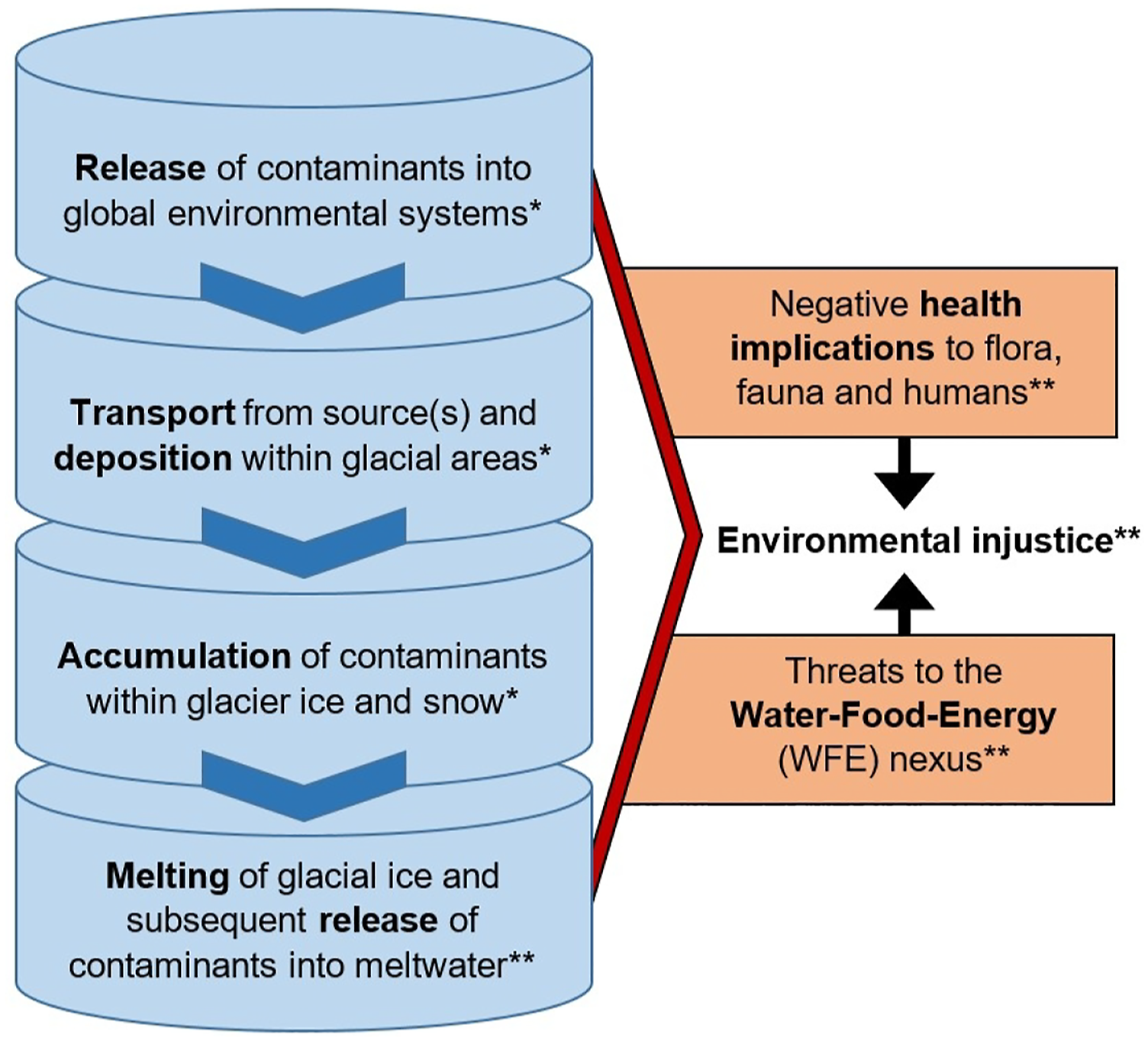
II Contaminants in glaciated environments
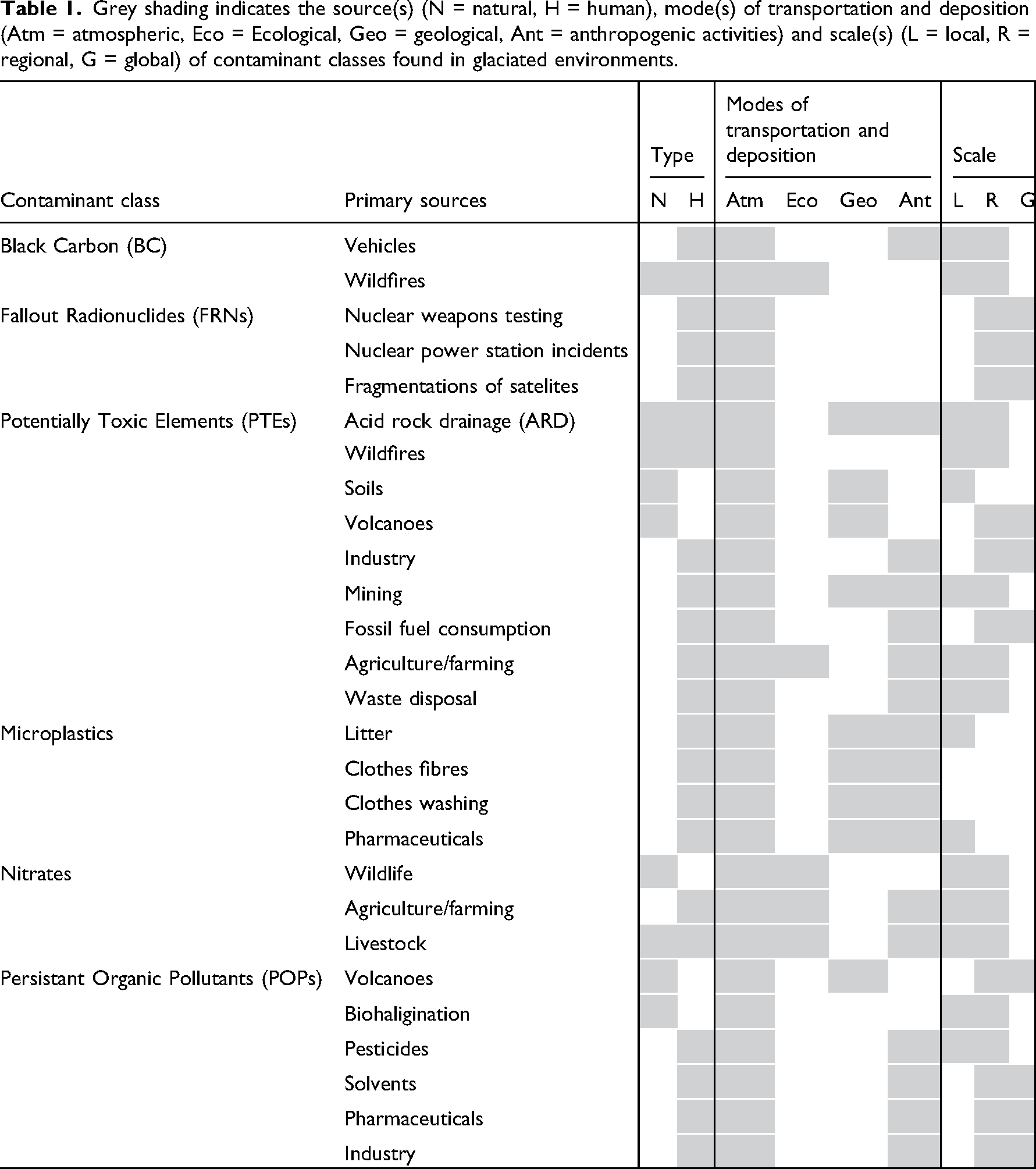
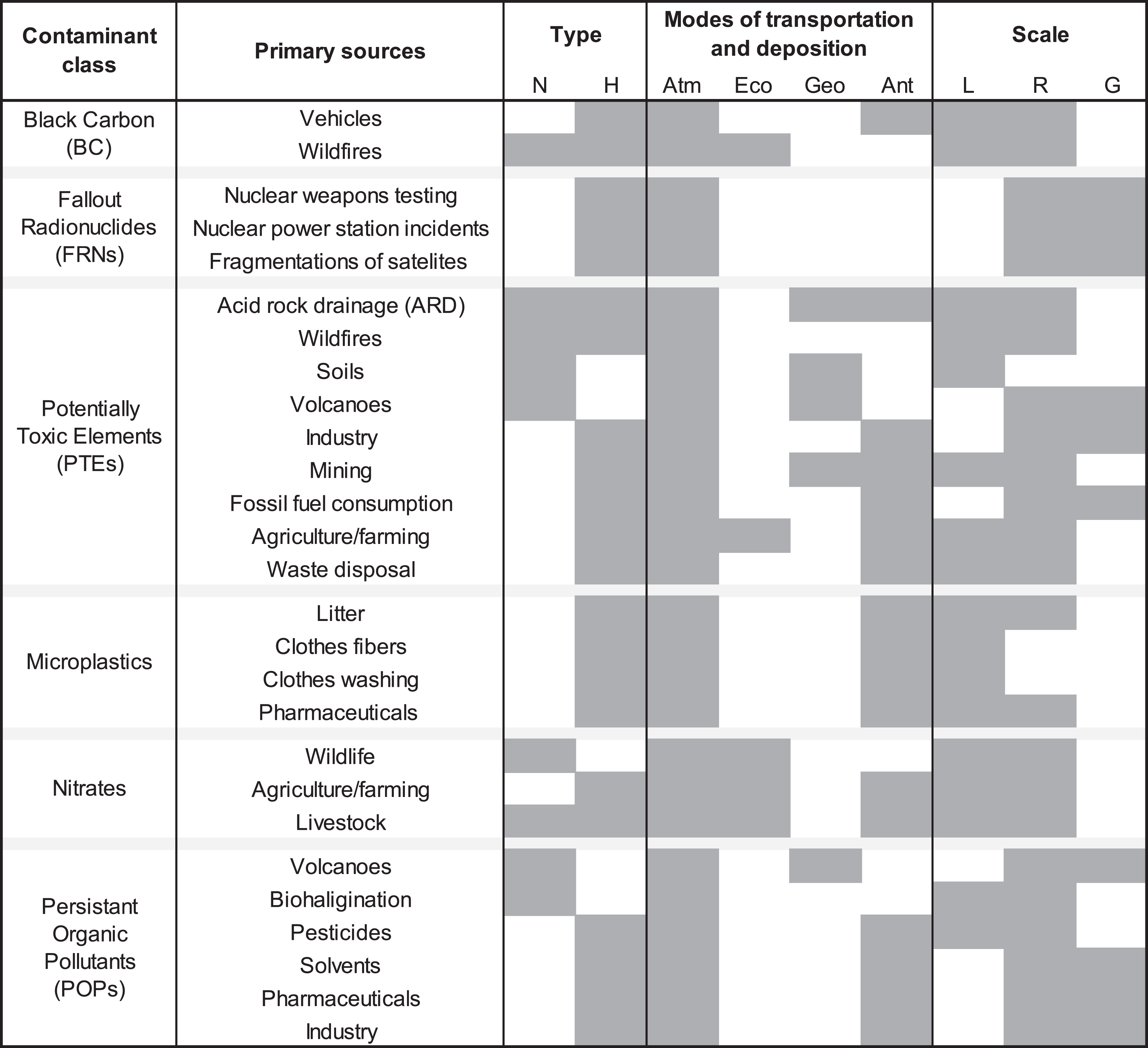
Grey shading indicates the source(s) (N = natural, H = human), mode(s) of transportation and deposition (Atm = atmospheric, Eco = Ecological, Geo = geological, Ant = anthropogenic activities) and scale(s) (L = local, R = regional, G = global) of contaminant classes found in glaciated environments.
2.1 Black carbon
Black Carbon (BC) is a product of incomplete combustion, such as automobile exhausts, crop burning and forest fires (Gramsch et al., 2020; Stohl et al., 2007; Treffeisen et al., 2007). Biomass burning has been found to be the primary source of cryospheric BC globally (Bond et al., 2013; Crutzen and Andreae, 2016). The frequency and intensity of wildfires are expected to increase as our climate warms (Dupuy et al., 2020; Halofsky et al., 2020) and so BC deposits on glaciers are also likely to increase. For BC to fall in significant quantities on a glacier, typically the source must be within several hundred kilometres. This causes particular issues for Andean glaciers receiving BC from Amazonian fires (Magalhães et al., 2019; Rowe et al., 2019) and in the Himalayas from biomass burning in India (Gul et al., 2021; Panicker et al., 2021). Similarly, glaciers close to cities and urbanised areas are more susceptible to BC contamination due to exhaust fumes and industry (Gramsch et al., 2020; Rowe et al., 2019). Elevated concentrations of BC deposits on glaciers have also been linked to nearby cities where populations use older, less energy efficient vehicles (Cereceda-Balic et al., 2019; Liu et al., 2019; Natural Resources Defence Council, 2014), for example, on glaciers of the Cordillera Real, Bolivia (Wiedensohler et al., 2018).
Research on BC contamination within the cryosphere has mainly focused on its capacity to alter precipitation and regional weather patterns (Li et al., 2016; Liu et al., 2015; Targino et al., 2009; Wang et al., 2018). However, the impacts of BC in other environments have been found to have mutagenic, carcinogenic and teratogenic effects on humans and animals (Guzzella et al., 2016), as well as reducing plant productivity (Foereid et al., 2011; Major et al., 2010). Furthermore, BC deposited on glaciers decreases the albedo of the ice due to the dark nature of the particles, thus increasing the rate of glacial melt and subsequently the release of other legacy contaminants (Gramsch et al., 2020; Kang et al., 2020: 202; Santra et al., 2019). Unlike other contaminants, the short atmospheric lifespan of BC means that it has a limited geographical window in which to spread. Therefore, targeting the reduction of BC emissions directly at the source would help to ensure that risk of BC contaminant release during glacier recession is minimised in the future.
2.2 Fallout radionuclides
Fallout radionuclides (FRNs) have both natural and artificial origins, such as cosmic radiation, weapons testing and release from nuclear power incidents, for example, Chernobyl and Fukushima (Appleby, 2008; Onda et al., 2020). There is evidence that even low to moderate doses of FRNs within drinking water can increase cancer risk and genetic malformations (WHO, 2008). FRNs have been found in most regions of the global cryosphere, but research has predominantly focused on activity in the northern hemisphere due to the location of many FRN sources, including areas such as the European Alps, Canada, Svalbard, Scandinavia and the Caucasus (Baccolo et al., 2020; Clason et al., 2021; Łokas et al., 2016, 2018, 2021; Owens et al., 2019). FRNs found in high concentrations include 137Cs, 241Am and 210Pb, with some of the highest concentrations found in cryoconite, an organic rich glacial sediment (Baccolo et al., 2020; Łokas et al., 2019). Studies conducted soon after Chernobyl expected 137Cs to reach ‘safe’ levels within 20–30 years (i.e. 2007–2017) based on the half-life of 137Cs (Davidson et al., 1987; Huda et al., 1988). However, research recently found mean activities of 1900–2600 Bq kg−1 of 137Cs in European cryoconite (Baccolo et al., 2020), which are above safe levels as defined by the World Health Organization (WHO, 2008), demonstrating that our current assumptions and known understanding of FRN contamination may not be comprehensive enough for environmental risk assessments in glaciated regions. While some FRNs are decreasing in the environment due to their half-life (e.g., 137Cs; half-life of ∼30 years), others are increasing as they are produced in response to the decay of their parent radionuclide. This means FRNs will persist in the environment for multiple generations, impacting on both ecosystem and human health in the future from release into meltwaters, especially for local communities.
2.3 Potentially toxic elements
The term potentially toxic elements (PTEs) describes metals and trace elements that are known to be environmentally toxic above certain concentrations, such as arsenic, mercury, chromium and lead (Tchounwou et al., 2012; Zhang et al., 2019). They can have natural origins, such as weathering of rocks, forest fires and volcanic eruptions (Łokas et al., 2016), along with anthropogenic origins, such as industry, mining, fossil fuel combustion and agriculture (Łokas et al., 2019). Furthermore, geological erosion from glaciers mobilises PTEs that were originally stored in rocks and can increase their levels in glacial meltwaters and proglacial sediments, such as iron in Peruvian glacial environments (Guittard et al., 2015, 2017).
Concentrations of most PTEs found in glaciated environments are at levels close to, or higher than those described in the European Environmental Quality Standards (Port of London Authorities, 2021). The susceptibility to bioaccumulation of PTEs at all trophic levels and biomagnification in higher trophic levels has led to concerns about the impact on downstream ecosystems and communities that rely on glacial meltwater (Binda et al., 2020; Fortner et al., 2011; Zhu et al., 2020). Human activities have led to a nearly tenfold increase in the deposition of PTEs since the start of the industrial era (Casella et al., 2022; Łokas et al., 2019). Intensified mining activities and the demand for global resources for manufacturing and production is likely to increase the quantity of PTEs in the future (Tchounwou et al., 2012). This could be detrimental to plants, animals and humans, especially with bioaccumulation within the food chain (AMAP, 2005). More research is needed on the potential uptake of PTEs in glacial-riverine systems and downstream aquatic environments, including the interactions between PTEs and other contaminants.
2.4 Microplastics
Microplastics are human-made, petroleum-based particles <5 mm (Liss, 2020) resulting from the breakdown of macroplastics. Their small size makes them susceptible to long-range atmospheric transport and mobilization within hydrological systems. As such, microplastics have been found in all environmental systems sampled to date (Allen et al., 2019; Dris et al., 2016; Haixin et al., 2022; Jiang et al., 2019; Nelms et al., 2018). Previous studies have investigated microplastics within sea ice (Geilfus et al., 2019; Kanhai et al., 2020; Kelly et al., 2020; Obbard et al., 2014; Peeken et al., 2018), but only recent studies have started to look at the presence of microplastics in terrestrial glacier systems (Ambrosini et al., 2019; Ásmundsdóttir and Scholz, 2020; Cabrera et al., 2020; Napper et al., 2020; Stefánsson et al., 2021). Microplastics can enter glacial landscapes via precipitation or anthropogenic interactions, but there is currently a lack of research on of the impact of microplastics for humans and ecosystems within glacio-fluvial catchments. The longevity of the particles mean that they will continue to be present in the environment for numerous generations, thus it is important that we better understand the potential socio-environmental implications
2.5 Nitrogen-based contaminants
Nitrogen-based contaminants (NBCs) refer to ionic forms of dissolved nitrogen, including nitrates and ammonium. High concentrations of NBCs have been found in glaciated environments, due to atmospheric transfer and direct deposition from animal presence on glaciers (Barman and Naik, 2017; Goyenola et al., 2020; Lori et al., 2018; Ollivier et al., 2011; Yang et al., 2015; ZhenZhu et al., 2019). NBC levels are increased by anthropogenic activities involving nitrogen-based compounds, such as fertilizers and by-products from agriculture, septic systems, and bird or livestock manure (Hastings et al., 2013; Hong et al., 2011; Howarth et al., 2012; Kim et al., 2014; Meter et al., 2016). High concentrations of NBCs in glacial meltwater could have significant impacts on downstream ecosystems and water quality, including changes to pH, increased algal and bacterial activity, reduced oxygen levels and increased toxicity from NBCs such as ammonia (Chen et al., 2019; Williams et al., 1998). As global populations continue to increase, NBC levels will rise as agricultural practices increase to meet the global food demands.
2.6 Persistent organic pollutants
Persistent organic pollutants (POPs) are a group of 28 chemicals that have been found to have adverse impacts on humans and ecosystems (UNEP, 2017). Most POPs result from the use of pesticides, solvents, pharmaceuticals and industrial chemicals. However, some POPs are naturally occurring in volcanoes and some biosynthetic pathways (El-Shahawi et al., 2010). The terrestrial spatial variability and bioaccumulation of POPs has been widely studied and is recognised internationally as a chemical risk for food safety (Codex Alimentarius Commission, 2018). POPs are subjected to atmospheric transfer and thus have been detected in places where they had not previously been used, geographically far from their original source (Barra et al., 2005; Zhang et al., 2008), including environments such as polar regions and high-altitude mountain ranges (Daly and Wania, 2005; Wania and Mackay, 1993). The introduction of the Stockholm Convention has led to a reduction in the use of substances containing POPs (UNEP, 2017), however, legacy POP reserves still exist. High concentrations of POPs released into glacial meltwater systems could still pose significant health risks to humans and ecosystems downstream (Santolaria et al., 2015).
III Transport and deposition of contaminants in glaciated environments
Many components of the cryosphere (e.g. sea ice, glaciers, snow, frozen ground) have been found to serve as ‘reservoirs’ for contaminants (Wang et al., 2019). The majority of external sources of contaminants originate from industrialised areas around the globe and are then transported by long-range atmospheric transport, prevailing winds and global circulation patterns (Duncan and Bey, 2004; Knap, 2012; Macdonald et al., 2005; Stohl, 2006). Contaminants are then deposited into glacial environments through windblown dust or wet precipitation (Gabbi et al., 2015; Kozak et al., 2015). There are also more localised mechanisms, such as anthropogenic and ecological activities, that deposit contaminants either directly into glaciated environments, or accumulate them in situ (Figure 2). Transport pathways and processes of deposition for contaminants (purple arrows) within glaciated environments, including identification of potential risks into downstream environments (yellow arrows).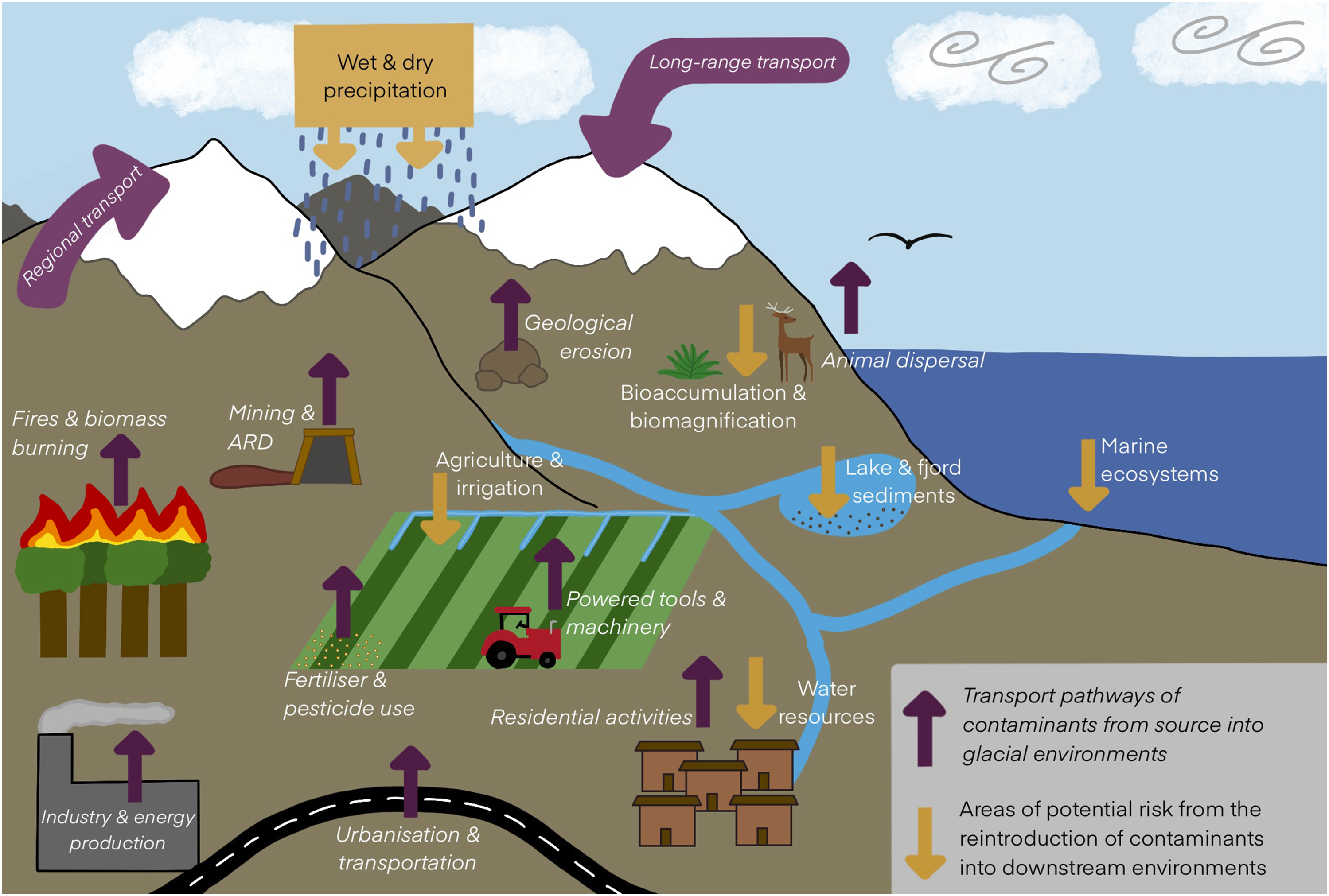
3.1 Atmospheric transport
Most of the contaminant classes discussed in Section 2 are prone to degradation within the environment. Their volatility and ability to bond to aerosols means that they are easily transported into the upper atmosphere (Daly and Wania, 2005). The Intertropical Convergence Zone acts as a barrier to particulate contaminants transported in the atmosphere, as the high temperatures and low pressure drives air upwards and back towards the poles, resulting in minimal atmospheric mixing (Schneider et al., 2014). This generally leads to higher concentrations of contaminants in the hemisphere where they originated. For instance, the Chernobyl disaster and numerous weapons testing took place in the northern hemisphere during the last century, and therefore there is a notable difference in FRN concentrations found in glaciers in the northern hemisphere compared to the southern hemisphere (Baccolo et al., 2020).
In addition to polar regions, high-altitude mountain environments can be receptor regions for atmospherically transported contaminants, due to cold condensation processes, promoted by low temperatures and falling snow (Bizzotto et al., 2009; Guzzella et al., 2016). Once in the atmosphere, contaminants are deposited by either wet or dry precipitation. Wet precipitation is the process whereby atmospheric gases mix with suspended water. In the atmosphere, particulates and contaminants are then washed out through rain, snow or fog. This has been noted to be the most efficient fallout mechanism of contaminants, due to the effectiveness of scavenging particulate matter from the atmosphere (Pinglot et al., 2001). For example, areas that received heavy precipitation during the passage of the Chernobyl cloud (29 April to 10 May 1986) were more strongly affected by FRN contamination than areas that received low precipitation (Tieber et al., 2009). Glacial environments in locations that are exposed to high levels of precipitation are prone to increased contaminant deposition from wet precipitation and thus to potential risk from contamination, for example, monsoon rains in the Himalayas, extreme El Niño-Southern Oscillation events in the South American Andes and snowstorms in the Arctic.
Dry deposition is the process of particulates falling from the atmosphere without a hydrological component. This normally occurs when the density of the particulate matter becomes too high and can no longer be carried by atmospheric winds (Wu et al., 1992). Glaciated environments near areas prone to forest fires, volcanic activity and dust storms can be subjected to both higher levels of contamination and sedimentation from dry deposition (Du et al., 2017; Kang et al., 2019; Kozak et al., 2015; Manca et al., 2012; Müller-Tautges et al., 2016). Temperate-zone mountain regions, which tend to receive high levels of precipitation while being close to contaminant sources, are also susceptible to higher accumulation of contaminants from dry deposition. These include the European Alps, which are situated in close proximity to the highly populated and anthropized regions of Europe (Ferrario et al., 2017a; Kelly and Gobas, 2003; Kirchgeorg et al., 2016).
3.2 Geological processes
As glaciers move through landscapes they erode rock surfaces in contact with the ice. Local geomorphology, orography, valley shape, steepness and geologic hardness can all have impacts on both the erosion of rock surfaces by glaciers and the movement of airborne contaminants into atmospheric circulations (Belan et al., 2018; Hawkings et al., 2020; Saavedra et al., 2020). Particle size and the geochemical composition of sediment can also influence contaminant content and distributional characteristics in the sediment (Huang and Lin, 2003). Contaminants within sediments and larger geological debris created by freeze thaw, abrasion and plucking processes are temporarily entombed by glaciers and then distributed downslope along through melting.
A further potential contaminant transfer pathway in glacial systems is acid rock drainage (ARD). This is a chemical reaction between oxygen, water and sulphide minerals such as pyrite, which results in a low pH solution with high concentrations of dissolved metals and PTEs (Duran et al., 2019). ARD can be exacerbated by anthropogenic earth disturbance, for example, mining and construction activities as seen in the Peruvian Andes (Guittard et al., 2017; Santofimia et al., 2017). It also occurs naturally as part of weathering and erosion processes, such as those prominent in glaciated regions. The extent of ARD varies due to localised geomorphology, climate and the distribution of periglacial deposits (Csavina et al., 2011; Dold et al., 2013; Santofimia et al., 2017). However, glacier retreat over certain geologies can lead to ARD and increased levels of contaminant release (Zarroca et al., 2021).
3.3 Localised anthropogenic activities
Awareness that mountain glaciers are expected to continually retreat and vanish (Zekollari et al., 2019), in addition to improved accessibility and an increase in disposable income in many Western societies, means that more individuals are taking part in activities like mountaineering, glacier walks and snow sports (Furunes and Mykletun, 2012; Wang and Zhou, 2019; Welling et al., 2015). This growth in glacier tourism has led to an increase in the direct deposition of contaminants by humans. For example, plastic fibres from outdoor clothing and vehicles can fall onto the ice (Napper et al., 2020), while vehicle use can release BC and PTEs via exhaust particulates and fuel dumps (Amaro et al., 2015; Huddart and Stott, 2020). Furthermore, equipment such as clothing, food containers and empty oxygen tanks, along with other litter, are often left by tourists on glaciers (Parolini et al., 2021). Similarly, the lack of permanent bathroom facilities means that human waste products are often left out in the open (Goodwin et al., 2012). This waste matter can accumulate and release products unwanted by the human body, such as pathogens (Alm et al., 2018), NBCs (Lu et al., 2017) and PTEs (Wang et al., 2012) into the environment (Goodwin et al., 2012). Alongside tourist activity, research and monitoring equipment abandoned on glaciers will eventually melt out into downstream environments or reach the sea via calving. Limited research has been conducted on the impact of legacy equipment for local environments, particularly in glacial systems. Therefore, both the glaciological community and broader scientific community should be mindful of what we introduce to and leave in glaciated environments.
Other anthropogenic activity such as resource extraction can mobilise contaminants into glaciated systems from within the lithosphere (Csavina et al., 2011; Guittard et al., 2017; Li, 2018). This can introduce large quantities of contaminants into glacial environments, especially in areas with informal mining activities such as those used in India (Barve et al., 2011) and Peru (Williams, 2014). Furthermore, farming activities can also promote the deposition of contaminants into glacial systems, notably those associated with fertiliser, herbicide and pesticide use (McIntyre, 2007). This is a particular issue in agriculture intensive areas, such as in the foothills of the Italian Alps (Ferrario et al., 2017b; Rizzi et al., 2019), the Himalayas (Wang et al., 2006) and Qinghai-Tibetan Plateau (Haixin et al., 2022).
IV Contaminant accumulation and concentration mechanisms
Once deposited within glaciated environments, hydrological, geological, and biogeochemical processes can act to accumulate and concentrate contaminants, potentially above probable effect levels (PELs) and other thresholds for concentrations of environmental concern (Port of London Authorities, 2021). Incorporation of contaminants into the snowpack, and subsequently firn and ice, creates layers of legacy contaminants (Pogorzelski et al., 2021). These temporary reservoirs store contaminants until the ice melts, causing concentrated peaks of contamination release during melt periods (Bizzotto et al., 2009; Meyer et al., 2006; Meyer and Wania, 2008; Pogorzelski et al., 2021). This section outlines some of the most common accumulating and concentrating mechanisms for glacial contaminants.
4.1 Transfer by glacial hydrological processes
The large scale movement of meltwater and precipitation through glaciers happens in several ways, including supraglacial, englacial and subglacial channels and spaces (Gooseff et al., 2011; Wright et al., 2014). Small-scale hydrological flows also happen within and in-between ice crystals (Fountain and Walder, 1998). As water moves through ice, it picks up sediment and contaminants and carries them through the system. If the glacier is on top of unfrozen soil or sediment, meltwater reaching the bed can transport contaminants into the substrate, potentially reaching the water table. If the glacier is on an impermeable bedrock or frozen substrate, the meltwater will travel along the basal layer, releasing contaminants in the proglacial area (Eyles, 2006). Glacial lakes and fjords, often situated within close proximity to glaciers, are an efficient accumulating mechanism, becoming repositories for contaminants, which can settle within sediments due to the low velocity of the water (Clason et al., 2021; Mohan et al., 2018; Zhu et al., 2020). These lakes are rapidly growing in response to climate change and glacier retreat (Shugar et al., 2020). Their low turbulence and limited dilution in these sediment sinks means that contaminants can accumulate, posing risks to aquatic life and flora within the vicinity.
The morphology of the ice can also influence the movement of contaminants and sediments. For instance, valley glaciers will move materials through the system much faster than large ice sheet outlet glaciers (Antoniazza and Lane, 2021; Choudhary et al., 2020; Lawson, 1982; Mao et al., 2020). Additionally, melting of the upper layers of snow, firn and ice will expose contaminants stored deeper within the glacier, increasing contaminant accrual and potentially accelerating melting processes (Gul et al., 2021). These mechanisms can create concentrated pockets of contaminant-rich sediment in the lower parts of glaciers, which could be environmentally harmful if released in a short period of time. This may also decrease downstream water quality through the amplification of sedimentary budgets and the increase of sediment and contaminant loads under future melt (Staniszewska et al., 2021).
Understanding the effects of rapid snowpack melt are of great ecotoxicological importance, since predicted anthropogenic climate warming is likely to result in large changes in the magnitude and duration of seasonal snow cover (Houghton, 2001). Rapid melting of snowpack generates higher concentrations of contaminant release into aquatic systems, compared to prolonged melt processes (Bizzotto et al., 2009; Lafrenière et al., 2006). In contrast, reduced snowpack and elevated temperatures, along with summer precipitation, leads to increased glacial melt and subsequent mobility of contaminants into downstream environments (Javadinejad et al., 2020). Hence, it is important for us to fully understand the dynamics and relationship between increased snow melt, environmental change and contaminant release so that we can protect essential water resources from the effects of global temperature rise.
4.2 Accumulation and concentration in cryoconite
Cryoconite is a sediment found on glacier surfaces and comprises both biogenic and geogenic materials (Figure 3). Fine mineral particles within cryoconite, such as silts, clays and organic matter, have adhesive properties that help to bind contaminants to them (Owens et al., 2019). Similarly, the filamentous morphology and sticky nature of microorganisms that live on cryoconite, such as extremophiles, cyanobacteria and microbes, helps cryoconite to entangle debris and contaminants within the sediment (Cook et al., 2016; Huang et al., 2019; Pittino et al., 2018). These microorganisms can also accelerate the decomposition of metal ions into toxic and more bioavailable forms, such as mercury into methylmercury by sulphur-reducing microbes (St. Pierre et al., 2019; Staniszewska et al., 2021). This makes cryoconite very efficient at storing potentially toxic contaminants, which may result in negative downstream effects on glacier-fed ecosystems under climate warming scenarios (Hodson et al., 2010). A cryoconite hole on Pastoruri Glacier in the Peruvian Andes. Cryoconite is now known to be an efficient accumulator of contaminants such as fallout radionuclides and heavy metals cryoconite (photography by Wilmer Sánchez Rodríguez, Peru 2020).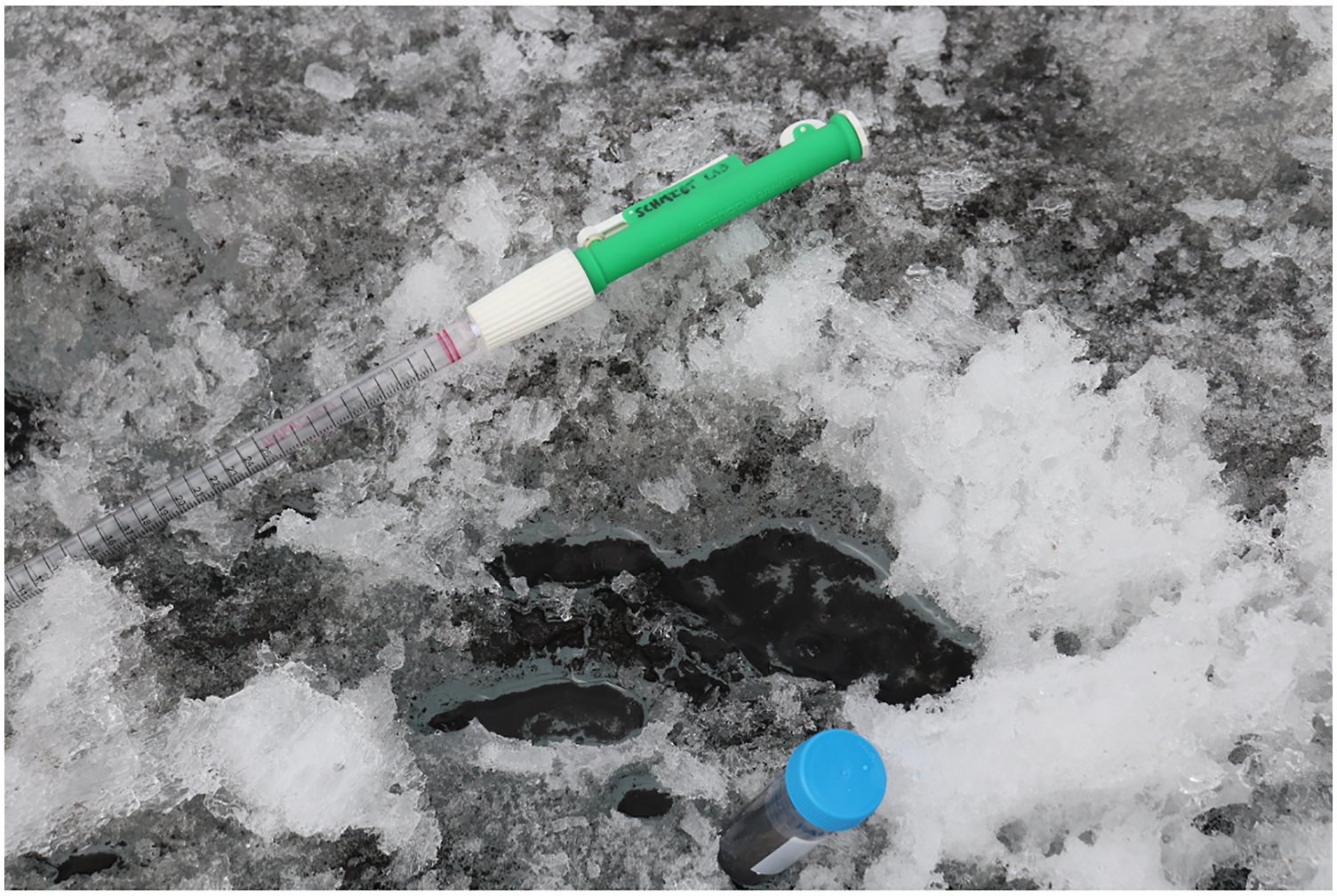
Previous research on cryoconite has often focused on microorganism ecosystems and the ability of cryoconite to accumulate nutrients (Poniecka et al., 2020; Poniecka and Bagshaw, 2021). However, recent research has shown that cryoconite can also act as a sink for pollutants including BC, FRNs and PTEs (Clason et al., 2021; Cong et al., 2018; Fortner and Lyons, 2018; Li et al., 2017; Łokas et al., 2018). Larger pockets of cryoconite called ‘cryoconite holes’ vary in size, but typically have dimensions of 10–100cm3 (MacDonell and Fitzsimons, 2008, 2012). They also have the potential to become substantially larger through melting, collapse and merging with other holes (Fountain et al., 2004). Consequently, this accumulates a larger mass of contaminants for as long as there is a source of legacy contaminants within the melting ice, firn, or snow (Bagshaw et al., 2013; Stock et al., 2014). The release of cryoconite into meltwater could act to increase contaminant loads downstream, but more research is required to understand this further.
4.3 Microbial influence on contaminant mobility and fate
Biological processes are often omitted when analysing the mobility and fate of contaminants in the cryosphere. Microorganisms on Alpine glaciers were previously shown to be able to degrade contaminants such as POPs (Margesin et al., 2002) and have more recently been found to degrade even complex organic compounds at low temperatures (Poniecka et al., 2020; Sanyal et al., 2018). Microbial phyla have a major role in controlling the mobility, toxicity and degradation of contaminants, such as FRNs, PTEs and POPs, through the production and turnover of organic matter (Ferrario, et al., 2017b; Iurian et al., 2015; Pittino et al., 2018). This is particularly relevant in places of high microbiological activity, such as cryoconite holes (Poniecka et al., 2020; Simonoff et al., 2007).
Substantial changes to microbial communities could lead to a negative chain of events within the wider environment and higher trophic levels of the food chain (Cappa et al., 2014; Gralka et al., 2020). Bacteria in other environments, such as aquatic ecosystems, have been shown to form biofilms on surfaces of microplastics (Bowley et al., 2021; Oberbeckmann et al., 2015), some of which are able to degrade plastic (Zettler et al., 2013). These biofilms could be detrimental to some ecosystems, but could also be utilised in a positive way to reduce the risk from toxic contaminants (Cappa et al., 2014). Further research is required to better understand and model biological influence on the accumulation and biodegradation of contaminants in glacial environments.
V Summary
Anthropogenic contamination has been detected in glacial and proglacial environments around the globe from various sources and due to a range of transportation and accumulation mechanisms. Previous research has begun to quantify the level and spatial distribution of contaminants within the cryosphere. This progress report has explored the sources and transport pathways of six contaminant classes found in glacial environments and have identified significant gaps in current understanding of the process involved in their accumulation and how this affects contaminant loads in glaciers. More research is required on contaminant transport through anthropogenic, geological and ecological modes so that locoregional risks can be better identified. The next progress report (Part II: Secondary release and downstream consequences) discusses what happens to contaminants once they leave glacial systems through secondary release mechanisms, and the potential risks they could pose downstream for ecosystems and humans in glacial regions.
Footnotes
Acknowledgements
The authors are very grateful to Leigh O’Regan for language editing and proofreading.
Declaration of conflicting interests
The author(s) declared no potential conflicts of interest with respect to the research, authorship, and/or publication of this article.
Funding
The author(s) received no financial support for the research, authorship, and/or publication of this article.
