



Abstract
Metabolisms of energy in society and space are predicated upon human labour, in ways that are often poorly recognized in relation to the global climate challenge. I synthesize and interrogate existing scholarship on the relationship between energy and labour across different spatio-temporal contexts, so as to reveal the overlapping networks that bind energy workers, consumers and producers. Drawing upon geographical, feminist, social practice and political ecology insights, I propose a research agenda that foregrounds the role of social reproduction – through capital-labour regimes and the gendered division of labour – in shaping the circulation and contestation of energy use.
I Introduction
Energy is commonly defined as the ‘capacity to do work’ (Hicks, 1983: 529). This trope has been challenged within the physical sciences for being more a description of one property of energy rather than of its essence (ibid). At the same time, human labour and work have played an important role in the theorization of energy in the social sciences. Daggett (2019) has placed energy processes at the heart of an inquiry into the different types of labour that have been mobilized and performed by the exploitation of hydrocarbon resources since the dawn of industrialization. On the pages of this journal, Cederlöf (2019) has considered the materialities of energy in relation to different modalities of social power, discussing the complex socio-ecological work involved in sustaining energy metabolisms, and the ability of workers to shape these processes across different parts of the energy system. Such contributions, as well as those of Malm (2016) and Nikiforuk (2012), foreground the role of energy’s thermodynamic and material properties in configuring social processes. However, by positing energy as an ‘analytical concept with physical and political-economic dimensions’ (Cederlöf, 2019: 1) they also open a wider set of unanswered questions, extending beyond uneven ecological exchange and entropy onto the diverse socio-spatial articulation of infrastructure-shaping labour across the ‘energy chain’ (Chapman, 1989).
The relationship between labour and energy is an issue of pressing scholarly and policy importance. The need for a ‘just transition’ towards a more climate-friendly future (Jasanoff, 2018) has taken centre stage in many decision-making arenas, with numerous academic studies focusing on ‘enabling and emancipatory change’ (Scoones et al., 2020: 68) so as to promote ‘socially equitable transformations’ (ibid) in line with the Sustainable Development Goals. Emerging from trade union organizing in response to environmental regulations as early as the 1970s, just transitions debates have sought to reconcile the complex trade-offs between ecological and social priorities in energy systems change. The movement towards ‘global environmental and climate concerns’ (White, 2020: 4) has necessitated the incorporation of multiple recognition, distributional and procedural justice contingencies. A further layer of complexity has been added by the Covid-19 pandemic, which has shifted labour-induced energy demand to the residential environment of the home (Bouzarovski, 2020), while reinforcing and deepening gender and class inequalities (Corbera et al., 2020).
Transformations in the nature of work have been a cornerstone of energy transitions in the history of humanity – from muscular power and biomass to coal, and from coal to oil (Smil, 2003). Malm (2016) convincingly demonstrates how the advent of steam power helped engender ‘the division of and organization of labour that we recognize as typically capitalist’ (p. 93). In light of global efforts to promote a low-carbon transition, however, there is a notable absence of commensurate research on the manner in which patterns of labour and employment are implicated in the utilization and development of renewable energy, as well as new forms of energy storage and transmission. Equally missing from many mainstream energy debates is the extensive body of scholarship on the embeddedness of energy consumption in various forms of domestic labour (Bell et al., 2020; Petrova and Simcock, 2019). Feminist thinking has highlighted how industrialization, mechanization and the introduction of electrical appliances into the modern home has created ‘more work for mother … because there is no one left to help her with it’ (Cowan, 1983: 201). Crucially, gendered labour in the home has demonstrably driven the electrification of the household realm during the 20th century (Gooday, 2016; Rees, 2019), and continues to play a key role in the low-carbon transition (Strengers et al., 2019). While it has been shown that residential electrification has historically been key driving force behind the expansion of energy generation (Nye, 1999), energy demand – and production-related forms of work and labour traditionally have been – and continue to be – regarded in conceptually disparate realms.
This paper seeks to connect the multiple theoretical and socio-material registers in which the relationship between energy and labour has been examined and discussed to date. Inspired by Hernández’s (2015) ‘energy continuum’ metaphor, I unpack how human labour mobilizes and articulates energy metabolisms across a wide array of spatial contexts, through overlapping socio-technical networks that bind energy workers, consumers and producers. I draw upon work in energy geographies (Baka and Vaishnava, 2020; Calvert, 2015), as well as feminist, social practice and political ecology insights (Barca, 2019b; Huber, 2013; Hui and Walker, 2018; Strengers and Kennedy, 2020), to argue that the multi-scalar geographies of labour are poorly theorized in relation to the whole of the energy system: from resource recovery to the generation, transmission, distribution and consumption of energy. One of my starting premises is that theorizations of extractive energy labour have both been detached from, and privileged over, domestic labour involved in sustaining and practicing energy demand. In response, the paper illuminates different forms of energy system-related work that have received limited attention in the literature, including the extraction of rare earth metals for batteries, labour involving the transmission and distribution of energy, the work of socio-technical intermediaries in moderating energy demand, as well as informal practices in communities with limited access to power grids. I delineate the conceptual implications of moving towards an integrated exegesis of the labour-energy nexus, extending across systems of provision (Southerton et al., 2004; Fine et al., 2017) and foregrounding various forms of hitherto marginalized labour practices.
The paper’s understanding of labour itself builds on eco-feminist perspectives that extend beyond the ‘wage labour relation and toward a broader conception of work’ (Barca, 2019b: 213). Following this line of scholarship, as well as the contributions of authors like McDowell (2014), I use the terms work and labour interchangeably in the paper, while being aware of the specific historical contexts and meanings that they are imbibed with (Frayssé, 2014). Additionally, I am inspired by Marxist and social-ecological accounts of the relationships between energy and work more broadly (Hornborg, 2020; Moore, 2018) to emphasize the importance of relations of reproduction – in terms of capital-labour regimes as well as the gendered division of labour – in shaping both the circulation of energy and the political contestation of the same. Given energy’s material embeddedness (Bridge, 2018; Huber, 2019), I examine energy-related work primarily in relation to different forms of extraction, conversion and consumption. This approach embodies a metabolic analytic, which, while cognisant of the diversity of metabolic perspectives on the ‘dynamic and processual characteristics of technological and infrastructural regimes’ (Harrison and Popke, 2018: 166) – from ecological economics, to industrial and political ecology – foregrounds a human geography approach focused on the ‘diverse infrastructures and territorial configurations associated with different forms of geo-material agency’ (ibid, 167). In keeping with recent developments in energy geographies and energy-related social science more generally (Castán Broto and Baker, 2018; Hui and Walker, 2018; Johnson and Derrick, 2012), I approach resources through a relational lens – as contact points in socio-technical networks connected to systems of provision (Svensson, 2021). I argue in favour of moving beyond the casting of labour as an abstract component in the constitution of energy systems, onto the diverse lived experiences and practices of energy resource-related work, forms of resistance and contestation, and the agencies of workers themselves. Underpinning this claim is a broader contention about energy’s socio-natures: that energy resources are created and (re)made by human work, and that their integrated labour geographies reveal hidden and evolving inequalities.
The paper commences with a discussion on how recent scholarship across a variety of disciplines – particularly the emergent field of energy geographies, as well as social practice scholarship focusing on energy – has highlighted the co-evolution and interdependence of energy supply and demand. The advent of ‘whole-systems’ perspectives on energy is also considered here. I then review the relatively sizeable body of work on energy production and labour, emphasizing the predominance of hydrocarbon resources at the expense of work associated with other energy carriers and dynamics. This is followed by a reflection on the relationship between labour and energy demand, with the purpose of calling attention to the role of gender, domesticity and social relations in enabling and configuring a multiplicity of energy circulations across time and space. Both of these sections rely on the organizing logic of a historical energy transitions approach, while recognizing the challenges, limitations and positionalities associated with constructing linear narratives of energy system change (Masera et al., 2000). The conclusion of the paper seeks to synthesize the relatively disparate strands uncovered in the analysis, while commenting on the changing – and sometimes unchanging – role of labour dynamics and relations in the movement towards a low-carbon future. The conclusion also reflects on the debate’s emergent and possible contribution to human geography more broadly, as well as the generic analytical tools that it affords.
II A Whole-Systems Perspective on Energy Flows
The emergence of energy geographies – termed an ‘academic borderland’ by Calvert (2015) – has helped challenge many previously well-established interpretations of the relationship between energy and society. One of these has been the understanding of territorial and place-based contingencies in the transformation of energy systems. Rather than being cast as a background scene for the conduct of energy operations, the spatial distribution and socio-technical substance of infrastructural activities in this sector have been shown to play an active role in shaping both its character and trajectories of change over time (Bridge, 2018). In particular, the character, progression and diffusion of low-carbon interventions are contingent upon the attributes of, and interrelations among, the geographical locations that they seek to encompass (Bouzarovski and Haarstad, 2019; Taylor Aiken, 2016; Truffer et al., 2015). Energy formations themselves manifestly mould trans-local power geometries, forms of uneven development, and structures of feeling more broadly (Boyer, 2014; Figus et al., 2019; Gailing and Moss, 2016; Sahakian and Bertho, 2018). This is partly achieved by privileging some forms of infrastructural knowledge over others, with masculine, colonial and corporate voices taking precedence (Bell et al., 2020; Mookerjea, 2019; Wilson, 2018). There is now a variegated understanding of the different modalities of ecological and technical expertise implicated in the making of energy resource extraction, transport and use (Barry, 2013). Such work has extended beyond conventional debates around resource exploitation and siting controversies (Aragao and El-Diraby, 2019; Cashmore et al., 2019; Stasik, 2018) to encompass topics as diverse as the legitimation of alternative interpretations of the environmental risks associated with nuclear power (Topçu, 2008), the introduction of intersectional and decolonial knowledge to solar power production (Lennon, 2017), and local people’s contestation of neoliberal forest resource exploitation (Petrova, 2014).
Energy geographies scholarship has also elucidated the material, political and economic interdependencies among different elements of the energy system. This has been a recurrent theme in most contributions to the field, even if some of its earlier flag-bearers (Chapman, 1989; Manners, 1971) have spoken of the spatial underpinnings of energy resources, industries and markets in predominantly descriptive terms. One of the key advances has been made by Harrison (2013) who uses the lens of a historical geographical materialist approach to show how electricity consumers were ‘produced’ so as to enable a ‘tremendous growth in power production’ (p. 479) by private companies. Alongside the establishment of new regulatory and tariff structures, this process hinged upon particular visions of rural modernization and electrification involving changing expectations around cleanliness, safety, and health, as well as the aggressive – and gendered – marketing of electric appliances (Dini, 2021).
The inherently relational perspective embedded in contemporary conceptualizations of the spatialities of energy (Bouzarovski and Haarstad, 2019) has been aided by the emergence of a host of novel perspectives on the ‘energetic metabolism of societies’ (Sorman and Giampietro, 2013). Human ecology-inspired metabolic approaches form the basis of a novel theorization of energy justice proposed by Hornborg (2020), offering an comprehensive account of the relationships among labour dynamics, energy flows and the socio-natural exchange of resources – both between and within different societies. While metabolic thinking and whole-systems perspectives originate from different intellectual traditions, they share the determination to provide an integrative interpretation of energy relations and circulations in society. At the same time, various research strands in the broader fields of Science and Technology Studies and social practice theory have long recognized that structural change in the supply has been contingent upon the transformation of energy demand (Nye, 1999; Shove and Walker, 2014).
The concept of a socially and materially interconnected energy system is also mirrored in thinking around ‘networked energy citizenship’ (Kuch and Titus, 2014), which seeks to link the diverse urban and rural alliances – and their associated civic practices – with the socio-natural character of energy circulations: ‘bubbling rivers, pipeline routes and new duties thrust upon landholders’ (p. 35). Connecting to a wider domain of work on citizen participation in energy-related policy processes (Parkins et al., 2018), this line of thinking can unsettle the elision between capitalist energy consumers and democratic citizens, by ‘moving away from individualist and economistic perspectives’ (Lennon et al., 2020: 191) and positioning participation within ‘collective contexts of engagement’ (ibid) – both emergent and potential.
III Disjointed Landscapes of Energy Production and Labour
From the variegated understandings of infrastructure and resource configuration offered by contemporary thinking in the domain of energy geographies, I now explore how landscapes of extraction connect to the interface between energy and labour. In comparative terms, practices, identities and struggles of human work associated with energy recovery and generation have traditionally received the greatest amount of academic attention in the social and environmental sciences. Yet even here, some forms of energy circulation have received comparatively more attention, and there is an unequal understanding of the myriad types and amounts of labour that are needed in order to ‘confront complex systems and seek to alter them to produce relatively simple ends’ (White, 1995: 110). While relevant research has revealed how energy and labour are interconnected in the case of specific resources (e.g. oil, coal and hydropower), the question remains as to whether any general insights can be inferred about the whole of the continuum of energy supply and demand, beyond a broad affirmation of the metabolic importance of labour for energy extraction.
The scholarship that I interrogate has been sourced from a variety of disciplinary settings – bringing together a set of knowledges that have rarely conversed with each other. My underlying intention in creating such a juxtaposition is to demonstrate that, as a whole, the geographies of the energy-labour nexus possess their own characteristic forms of socio-spatial flow, difference and inequality. What is more, the variegated spatial elements of the energy-labour relationship have changed alongside historical energy transitions (from coal to oil, nuclear and renewables). In seeking to draw out the broader connections and commonalities that underpin these reconfigurations, I argue that energy extraction work involves at least three types of socio-technical relations, extending across variegated spatial sites and practices of resource recovery. First, through human labour, energy resources are imbued with particular socio-cultural meanings, and vice-versa, the process of resource recovery shapes the identities of workers themselves. Second, the extraction and production of energy are associated with ancillary forms of labour that are contingent upon the distinct geographical supply chains of different resources. Third, the various modalities of labour organizing – as well as contestations of resource use – are also predicated by, and configure in turn, the nature of extractive activities themselves. I explore each of these propositions in relation to energy transitions across time, and in the Global North and South alike, while acknowledging that the literature on such topics has been embedded in colonial, racial and gendered relations of power.
One of the best-known tropes in the conceptual realm of energy resource labour is the moulding of coal miners as distinctive political, environmental, and cultural subjects. These processes, otherwise stemming from the essence of work in the sector, have been associated with a long history of scholarship, advocacy and activism – particularly in the Global North (Barca, 2014; Lahiri-Dutt, 2016; Newell and Mulvaney, 2013). Through its encounter with labour, coal has transcended its original material nature to mobilize a much wider set of meanings and metaphors – as evidenced, for instance, by the widespread use of the ‘at the coalface’ idiom to connote difficult and challenging work (Ackroyd, 2017). There is widespread acknowledgment that the specifics of extractive labour in the coal mining industry have led to the emergence of specific professional and personal identities. Allsop and Calveley (2009) link this to the autonomy of the coal worker as the reservoir of unique knowledge, skills and social relations, while Della Bosca and Gillespie (2018) emphasize the powerful role of generational sentiments, familial histories and community belonging in mining locations. Altogether, such contributions point to the importance of ‘emotions, affects and co-constituted relations with place’ (Ey, 2018: 8) in the context of resource extraction, emphasizing that the masculinist erasure of emotion has foreclosed both emancipatory politics and analytical horizons. The exclusion of gendered labour from the extraction of coal (Jenkins, 2014) has been mediated through the marginalization of women’s livelihood building activities (Lahiri-Dutt, 2016), as well as practices of care and friendship (Measham and Allen, 1994). Of no less importance is the emergence of a specific ‘family labour system’ (Mark-Lawson and Witz, 1988) in some settings, and the imposition of specific value systems such as honour and shame (Behzadi, 2019) in others.
The wider labour geographies of coal mining have brought about their own environmental and spatial patternings. In the broader literature, mining towns have attracted extensive attention due to the assembly of highly structured and specialized labour markets, associated with the reliance on a single non-agricultural resource (Marais et al., 2018). Viewed through a metabolic lens, this points to a close alignment between circuits of labour, energy and capital, coalescing in particular locations (Ekers and Prudham, 2018). Such juxtapositions are powerfully illustrated by Gibson’s (1991) exploration of the construction of Central Queensland’s mining towns through ‘capitalist-class’ processes of value production, extraction and distribution. However, the labour-energy nexus in the case of coal is also associated with severe socio-environmental impacts, generating ‘sacrifice zones’ with complex social, economic and ecological implications (Cottle, 2013). What is more, most coal mining regions and towns have suffered greatly as a result of the demise of Fordism and the concurrent destruction of the collective ecological, cultural and economic ‘spaces of working-class life’ (Smith, 2015: 567). Within the Scottish context, Gibbs (2018) argues that the management of coalfield closures has been associated with a specific ‘moral economy’ (p. 124), which was operationalized by ‘preserving community cohesion through the provision of transfers to nearby collieries and the bolstering of local labour markets’ (p. 148) alongside consultation practices and the ‘exercise of the worker voice”’ (ibid).
The establishment, practice and dismantling of labour systems associated with coal extraction have been met by multiple forms of protest and resistance. There is a significant body of knowledge on the character of organized labour in this sector. Relevant contributions have explored the effects of labour unions on wages, employment and mine operation (Boal and Pencavel, 1994) as well as the linkages between unionism, the preservation and articulation of cultural heritage, and emergent struggles for social justice (Novoa, 2018). It has been argued that labour strife combined with the oil shocks of the 1970s to give rise to a ‘distinctive set of social formations and relations of production’, allowing policymakers to start developing ‘electricity into the signature fuel – and material medium – of a sweeping cybernetic restructuration of the global energy system’ (Thomas, 2018: 95). Modalities of resistance and political contestation among labour unions and miners more broadly have been examined with reference to locations across the world, including Japan (Lim et al., 2019), South Africa (Harvey, 2016), Nigeria (Kraus, 2018) and Illinois (Boal, 2017).
Struggles around the social and environmental impacts of coal mining – particularly in terms of efforts to overcome ‘capitalism’s “jobs versus environment” trap’ (Stevis and Felli, 2016: 35) – have also been the subject of academic debate in the energy and labour domain, notably in Chomsky and Striffler’s (2014) exploration of how ‘Latin American voices are challenging both the global economic order and traditional concepts of economic development’ (p. 194) as well as Feng’s (2020) work on the contradictions that underpin, and reconciliations between, coal labour, environmental justice and place attachment in the Appalachian coalfields. At the same time, an emergent body of work based in the Global South has emphasized the role of indigenous communities in shaping the politics of extractive labour in the coal sector. Here, O’Faircheallaigh (2013) has underlined the ‘cultural, institutional and political contexts in shaping women’s participation’ (p. 1789) that can explain the divergent outcomes of negotiations with mining companies in Australia and Canada, while Jenkins (2015) calls for greater recognition of Andean women’s strategic roles in anti-mining activism given the ‘increasingly violent and confrontational nature of state responses to such resistance’ (p. 456).
The energy-labour relationship changes once the analytical focus moves beyond coal onto other forms of hydrocarbon extraction (Mitchell, 2011). While much has been written about the land-use patterns, political economies and geopolitical relations associated with oil and gas production – two energy configurations that are often considered alongside each other due to their physically conterminous character and linked regulatory architecture (Beckman and Bernard, 2018; Högselius, 2012; Lin, 2016; Moe and Kryukov, 1998) – comparatively less explicit and systemic attention has been paid to labour dynamics and relations in these sectors (but see, for oil Atabaki et al., 2018). Relevant research, originating from a variety of disciplines, has scrutinized the composition of labour markets in the two industries (Cai et al., 2019), multinational corporation labour contracting in conventional oil and gas (Ajonbadi, 2015), labour migration and regional geopolitics in oil-rich countries (Thiollet, 2011), youth transitions to employment associated with oil and gas expansion (Darkwah, 2013), gender inequality and female labour participation in the oil sector (Ross, 2008), as well as labour migration associated with both conventional and unconventional oil development (Ferguson, 2011). There is a distinctive literature on the labour market dynamics associated with boom-and-bust cycles brought about by unconventional gas development in particular, and the corollary implications for urban and regional development in affected regions (Komarek, 2016; Marchand, 2012).
Overall, there is limited evidence to suggest that the strong dynamics of generational and place identity associated with coal are matched in the case of conventional oil and gas development; and even less so in the case of unconventional hydrocarbons (Atabaki et al., 2018; Collinson, 1998; Matz and Renfrew, 2015; Rhodes, 2019; Wright and Griep, 2019). Rich (2016) finds that the fossil fuel industry has been ‘romanticizing Rust Belt identities’ (p. 292) centring on shale gas extraction in order to marginalize ‘possibilities for ecologically sensible alternatives’ (ibid). Organized labour – and other forms of resistance – in the oil and gas sectors have generally been less visible compared to coal (Bini and Petrini, 2019). However, Ehsani (2018) uses the notion of an ‘oil complex’ – taking into account ‘midstream’ and ‘downstream’ operations such as refineries and ports alongside the more conventional focus on upstream extraction – as a basis for critiquing the marginalization of oil workers’ skills, habits, experiences and political cultures. This, in turn, fragments and reduces ‘the possibilities of more radical and collective engagements by those working in the sector’ (p. 17). The relative exclusion of oil and gas workers from mainstream policy and science debates has also been linked to the organizational structure of the two sectors, their specific labour intensities and employment profiles, as well as the spatially distant, mobile and pliant nature of the resources that they involve (Huber, 2013). Also worth noting are the extensive links between labour activism and grassroots struggles against oil and gas development, with their distinctive and impactful character (McNeill and Thornton, 2017; Patch, 2008; Perreault and Valdivia, 2010).
The conceptual landscape of labour and energy becomes even more splintered when other forms of energy resource recovery are considered. Research on hydropower development and labour relations shows that investment in this sector has exerted significant effects on employment patterns – if only mainly concentrated in periods of dam construction and associated infrastructure expansion (Koschel, 2013). Workers involved in such undertakings have been iconic in the symbolic representation of megaprojects as technological sublimes (Nye, 1996) and hybrid socio-natural effects (White, 1995). In much of the literature, the labour of solar or wind power installations are principally discussed in relatively narrow and technocratic terms – in terms of job generation or employment market functions (Friedman et al., 2011; Wei et al., 2010); although, for instance, a recent contribution by Partridge (2020) highlights how the activities of renewable energy producers based in the agricultural sector – ‘solar farmers’ – act in ways that challenge existing relationships between labour, land-use and livelihoods across multiple material sites. Mulvaney (2019) convincingly highlights low labour standards in the solar sector. The nuclear power sector also has a highly specific labour architecture – from its extractive component until the end of the production chain (Hecht, 2012). In this domain, there is a substantive literature on the connections between organized labour and nuclear policy (Suzuki, 2016) – often with an emphasis on environmental issues (Savage et al., 2013) – but much less has been said about the specific experiences, motivations and identities of workers in the sector as they relate to the material nature of the resource involved (yet see Ebner et al., 2016 for a health perspective).
The low-carbon transition to renewable energy and increased energy storage – part and parcel of the process of electrification – is contingent upon ‘upstream’ forms of labour, particularly in terms of the extraction of rare earth metals. There is a growing body of knowledge on the highly exploitative, insecure and dispossessive working practices in the mineral extraction industry, for example (Sovacool, Hook, Martiskainen, Brock, et al., 2019; Wan, 2019). It should also be noted that the downstream production of electricity and heat from hydrocarbons, renewable resources and nuclear power also require various forms of work. During the last three decades, the electricity sector in most countries of the Global North has been subject to various forms of privatization and liberalization, resulting in a ‘new managerialism and the marketisation of workplace relations’ (Fairbrother and Poynter, 2001: 311). This has led to the dismantling of vertically integrated power utilities, with electricity generation, transmission, distribution and supply functions being separated into different companies – each with its own employment practices and relations.
To summarize: discussions of the labour implications of different forms of energy resource extraction, circulation and contestation have taken place in relatively disparate conceptual spheres. There is also a discernible imbalance in this body of work, in favour of focusing on the labour implications of upstream hydrocarbon recovery, at the expense of wider production networks and renewable supply chains, as well as less visible forms of employment and labour organizing. Essentially, in addition to being dominated by a form of ‘extractive primacy’ (Walker et al., 2006: 411), theorizations of the relationship between energy and labour tend to sidestep the ‘supply chain capitalism’ (Tsing, 2009) involved in the circulation of energy circulations. This is despite multiple policy comparisons of the different amounts of jobs generated by various forms of energy recovery (Buchsbaum and Benson, 1979; International Energy Agency, 2020), as well as the increasingly unified perspective on energy systems as a whole offered by labour environmentalism and just transition perspectives (Abraham, 2017; Barca, 2019a; Kenfack, 2019; Satheesh, 2020). As a whole, relevant research also displays a lack of attention towards the day-to-day experiences, practices and perspectives of workers in different types of energy installations and industries beyond the hydrocarbon sector. Historically, the literature has demonstrated a discernible tendency to romanticize large-scale, well-organized extractive practices that purport to ‘know and appreciate nature through work and labor’ (White, 1995: 1), against more mundane, embodied and incremental forms of extractive work.
IV Energy Demand and Labour: Gendered, Unequal, Socio-Material
I now move to a discussion of how energy consumption is shaped and conditioned by different scaffoldings of human work. Here, my intention is to explore the vast realm of social reproduction, which is deeply implicated in shaping the sites and dynamics of energy demand, as well as the nature of domestic work itself. Starting from the premise that the consumption of energy has historically been closely intertwined with different forms of labour (Mouhot, 2011; Nikiforuk, 2012; Penna, 2019), I chart the various elements of this relationship across the both Global North and South, and with respect to different forms and sites of demand (biomass resources, the domestic domain, informal settlements, low-carbon transitions). I highlight how the locations and articulations of demand-enabling labour often surpass the physical boundaries of residential and industrial sites – traditionally seen as principal sites of energy consumption – by intervening in broader ‘thermodynamic flows: hastening, retarding, redirecting, collecting, converting, or producing thermal energy’ (Oppermann and Walker, 2019: 129). Analogous to the structure of the previous section, I adopt an energy transitions approach, moving from the consumption of ‘traditional’ resources, onto more ‘modern’ carriers such as electricity and building energy retrofits. But there are significant limitations and positionalities that need to be recognized here. A third of the world’s people, primarily in the Global South, still rely on biomass to meet their energy needs (International Energy Agency, 2017) – in itself challenging the construction of a linear timeline from which to approach energy demand labour – and much of the mainstream literature on the energy demand-labour relationship has been developed from a Northern and settler colonialist perspective (Allan et al., 2021).
A useful point of departure, if one were to follow a historical approach, would be the distinctive literature on the labour implications of producing and consuming subsistence-based energy resources such as charcoal, firewood and agricultural residues. The systems of provision associated with such energy carriers are typically much shorter, and characterized by a close correspondence between sites of production and consumption. Their recovery, transport – and in some cases sale – involves diverse forms of work, even though organized labour is rare (Petrova, 2014; Walsh, 2019). They remain widespread at the global scale, even if the workforce involved in the sector is chiefly female, low-income and chiefly concentrated in the Global South (Austin and Mejia, 2017; Burke and Dundas, 2015; Stabridis and Van Gameren, 2018). Fuelwood has been connected to a set of infrastructural, economic and social crises across the Global South (Agarwal, 1986). At the same time, expanding biofuel economies have increased the share of wage labour while increasing precarity and insecurity (Baka, 2013). In the Global North, however, biomass fuels are rarely discussed in conjunction with other forms of energy resource-related labour. One of the few exceptions are historical analyses of the ‘organic energy regime’ (Warde, 2019), whose labour characteristics are underpinned by a ‘logic of storage in a world of living flows’ (ibid, 479). Similar arguments are present in research that focuses on the ‘working body’ as a source of energy and warmth (Jerstad, 2016).
In the Global North, the industrial revolution led to a profound change in the social, economic and technical foundations of the relationships between work and energy demand (Wrigley, 2018). According to Malm (2016), the rise of a fossil economy was connected by the utilization of steam ‘as a form of power exercised by some people against others’ (p. 108); his work provides a Marxist interpretation of the relationship between carbon-based development and capital accumulation. During the industrial revolution, energy consumption became associated with a much wider set of economic spheres beyond the home – factories, commerce, public space – involving multiple forms of work and labour organization (Chabrol, 2016; Tomory, 2012; Trew, 2014). Electrification had a dramatic impact upon labour practices – both on the industrial floor and outside it (Fouquet, 2008). The artificial illumination of factories became entangled with wider labour dynamics, by being cast as a ‘force of production’ (Isenstadt, 2018), a method for the ‘commodification of vision’, and a technique for the regulation of both public and private realms. Modulations in the intensity and character of interior and exterior light allowed for the wholesale transformation of work both within and without the home, via changes to diurnal rhythms, physical spaces, and geographic divisions of labour (Ekirch, 2015; Ludtke, 2020). Apart from lighting, electricity consumption both required and became embedded in the performance of nearly all forms of productive and reproductive labour – with extensive impacts on economic flows and reconfigurations at multiple scales (Hidvegi and Wolf, 2019; Nielsen, 2017; Wajcman, 2009).
Energy demand is intimately tied up with the material and social character of reproductive labour within the home (Duffy, 2007; Trentmann, 2016). A substantive body of work has evidenced how the development, diffusion and utilization of modern energy technologies have been contingent upon gendered identities, practices and difference (Button, 2018; Hankin, 2012; Petrova and Simcock, 2019). Wilson (1992: 105) neatly sums up what has now become a familiar line of argument: ‘women were offered a new vision of comfort and family life, yet were increasingly imprisoned in the genteel interior, and the new consumerism also increased the amount of domestic work they had to do’. Extensive empirical evidence supports this claim: based on data from the Australian time use survey between 1965 and 1985, for example, Bittman et al. (2004) show that women’s unpaid working time was not significantly reduced by the advent of home energy technologies; and instead there were even increases in work as a result of the continued persistence of inequal divisions of labour in the home. Such contingencies extended to the domain of industrial design and advertising, where, in Italian industrial design for instance, the connection between the washing machine and women was a ‘central theme’ (Paris, 2016: 635) in the development and projection of a series of specific meanings and identities. But women have not been passive recipients of appliance technologies delivered to the domestic realm. As shown by Clendinning (2004) in the case of the English gas industry, they played a key role in ‘engendering sales and challenging gendered assumptions about the corporate sphere’ (p. 3), principally by acting as the simultaneous protagonists, suppliers and consumers of energy technologies in the home. At the same time, household appliances have led to increased female formal employment only to a limited extent (Coen-Pirani et al., 2010).
The entanglement between domestic labour, gendered difference and energy consumption has also been articulated in the Global South (Feenstra and Özerol, 2021; Skutsch, 2005). The specific historical trajectories of urbanization and industrialization have combined with the expansion of access to electricity in the domestic and commercial sector to produce place-specific scaffoldings of power and inequality. In South Africa, work associated with energy consumption serves as a focal point for the mediation of gender identities and generational roles, allowing men and women alike to mould and navigate their everyday spaces (Meintjes, 2001). Rural electrification in this country has been shown to increase female employment and migration patterns – principally by ‘releasing women from home production and enabling microenterprises’ (Dinkelman, 2011: 3078) – even if female wages have dropped in the process. Similar dynamics have been observed in Nigeria (Omotoso and Obembe, 2016), India (Richmond and Urpelainen, 2019) and Peru (Dasso and Fernandez, 2015), where, for men, ‘electricity increases available time to work, and economies of scale increase the payoff of focusing on one occupation instead of having two’ (ibid, 14), while women are likely to move from agricultural work alongside obtaining higher employment and earnings. The employment benefits of rural electrification in the Global South have traditionally been one of the main supporting pillars for arguments in favour of ambitious electrification programmes (Mathur and Mathur, 2005; Vernet et al., 2019), although this has come to be contested in recent years – in the Global South and North alike – thanks to the development of more nuanced and comprehensive perspectives on a wider variety of energy carriers, social processes and geographical contexts (Füllemann et al., 2020; Hirmer and Guthrie, 2017; Jaglin and Verdeil, 2017; López-González et al., 2020; Peters and Sievert, 2016).
More recently, the advent of low-carbon transitions has been complicating the labour implications of energy demand. The entry of an entire new host of technologies in the home is tantamount, in Røpke et al.’s (2010) words, to a new round of electrification associated with radical socio-technical transformations. Such work emphasizes how energy consumption associated with information technology plays an important supporting role in various types of unpaid labour, including do-it-yourself care and maintenance, as well as volunteer activities in community groups and political parties. There is an emphasis on the expansion of working from home and the associated changes in urban development and transport needs – a trend that has dramatically intensified in 2020, as a result of the extensive shift to home-working due to the COVID-19 pandemic (Bouzarovski, 2020). Teleworking, however, is not without its perils: there are multiple challenges associated with mental health, interpersonal relations, household dynamics and social inequality (Gálvez et al., 2020; Hallin, 2020) and the effects on energy savings may be negligible (Hook et al., 2020). What is more, Strengers and Kennedy (2020) convincingly demonstrate how new information technologies in the home rarely challenge the established power calculus of domestic labour associated with energy consumption. Their contribution adds to a broader body of scholarship on the complex entanglements among domestic labour, technology and digitalization, where the effectiveness of new policy instruments to manage energy demand is challenged by wider socio-technical inequalities and practices within and beyond the household (Anderson, 2016; Jarrett, 2015).
The global climate mitigation imperative is, as a whole, adding further challenges to an already fractured and unjust landscape of energy demand labour. Many of the forms of work associated with this emergent ‘system of practice’ (Eon et al., 2018) are subject to incumbent dynamics of exclusion or inequality, including the wider racial and post-colonial inequalities that underpin energy flows (Bednar and Reames, 2020; Dawson, 2020; Jürisoo et al., 2019). Dynamics of political contestation are also at play here, involving direct organizing to support popular protests against particular government decisions (Koycheva, 2016), the ‘electrical activism’ of advocacy groups (Wood, 2016), as well as more subtle forms of everyday resistance (Larrington-Spencer et al., 2020). At the same time, the construction of low-carbon systems per se is a complex political and material endeavour that requires diverse and – in many instances – unpaid or informal labour (Kivimaa et al., 2019). Moore (2019) uncovers the labour that intermediary workers – building tradespeople, energy advisors, designers, consultants – perform in assembling the motivations, technologies, competences and contractual relations associated with low-carbon building retrofits. Their highly elaborate work is a key prerequisite for the establishment of low-carbon energy regimes, thanks to the interpretation, translation and negotiation of new infrastructural standards and circulations.
To summarize: what to make of the overlapping threads of energy demand and human labour – can any overarching relationship and commonalities be discerned through the lens of a whole-systems perspective? For one, it is clear that the terrain of energy consumption and social reproduction is labourful in ways that overflow the limits of the domestic. Demand-mediating and -enabling work includes material sites, activities and experiences that have not been traditionally connected to the practice of energy consumption. Importantly, this calculus also includes various forms of low-carbon transition, and new energy resource frontiers (Thoyre, 2021) connected to the improvement of residential energy efficiency. The challenge posed by Barca’s (2019b) call to dealienate ‘both industrial and meta-industrial labour’ (p. 207) thus becomes even greater, bringing into sharp focus the emergent tensions between abundance and scarcity in the context of the low-carbon energy and labour relationship (Bliss, 2021).
V Discussion and Conclusion
Socially useful energy cannot be recovered, transformed, transported and consumed without intersecting networks of human labour. These overlapping skeins bind ‘intimate and mundane human activities to some of the most “monstrous” energetic movements of the Earth’ (Clark and Yusoff, 2014: 206). At the same time, energy circulations in society mould the character and experience of labour itself. But an explicit ‘energy labour’ perspective is still in its infancy, even if some of the social, spatial, political and economic relations that could fall under its aegis have already been tackled through a variety of theoretical approaches, including practice theory (Shove and Walker, 2014), energy cultures (Strauss et al., 2013) and political ecology (Cederlöf, 2019). I have argued that the advent of whole-systems energy approaches (Sahakian and Bertho, 2018; Sovacool, Hook, Martiskainen and Baker, 2019) – focusing on provision networks as opposed to more narrowly-defined dynamics of extraction or consumption – invites us to conceptualize the entirety of labour processes, relations and contestations associated with energy generation and use. Part of this exercise involves revealing and tracing the multiple linkages between energy and work in society, previously made in mutually disconnected analytical registers and debates.
An integrated perspective on the articulation of the labour-energy nexus across the energy continuum also reveals the complex taxonomies of work involved in recovering, converting and consuming energy resources – lending credence to relational understandings of energy extraction and circulation (see Figure 1). This approach transcends two relatively distinct intellectual traditions on the subject: one, stemming from a Marxist tradition, that sees labour-energy nexus in relatively broad terms – as a metabolic relation contributing primarily to the mobilization of hydrocarbon resources – and another, wherein the focus is on the more concrete experiences, typologies and socio-economic implications of energy-related labour. Extending across both strands of thinking, a geographical perspective on energy and labour (building on the precepts articulated by authors such as Strauss, 2018) can help crystalize the multifaceted worlds of work implicated in driving energy transformations. To understand these shared dynamics, I have looked back towards historical transitions – where comparisons have taken place across different horizons of change – in the context of present and future energy challenges. However, the evolving energy-labour nexus is complicated by intensifying circuits of capital exchange, with energy metabolisms taking place across an ever-growing array of spatial contexts. What is more, the low-carbon transition is a labour-intensive project in ways that are poorly understood, binding energy resources in unpredictable ways, and operating across new socio-technical arenas. A taxonomy of human work across the energy continuum, implicated in the making of energy resources.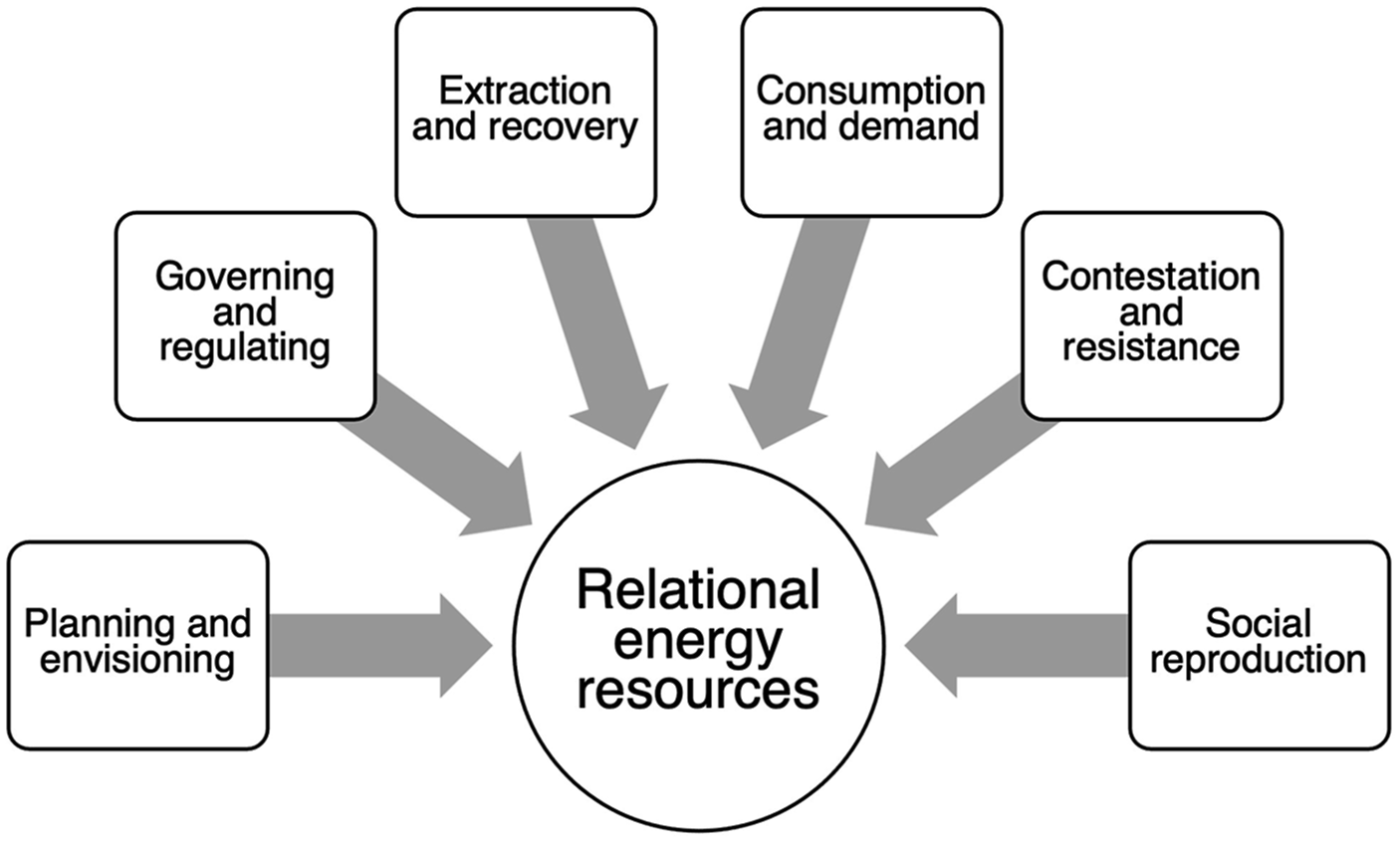
How might human geography respond to such challenges, and what does a whole-systems perspective on the labour-energy nexus bring to the table? There are at least two ways in which an integrated labour-energy approach allows us to think differently about the spatialities of social, political and infrastructural power – literally and figuratively. First, it has the power to unsettle dominant understandings of how labour and energy circulations interact with and shape each other. Energy resources, infrastructures and metabolisms determine where and how work takes place – there is a complex spatiality to energy-related labour, operating at multiple scales and involving a specific set of socio-technical granularities (Bell et al., 2020; Burke and Dundas, 2015; Patton, 2019; Sandwell, 2019). What is more, variations in access to energy resources create differences in the nature of work required for their circulation, and as such play a role in driving wider social disparities: not all forms of energy-related labour are created equal. Energy transitions from one fuel to another are not only predicated upon changes in the nature of work (Penna, 2019), but in a (pre- and post-) capitalist context, involve explicit efforts to exert control and dominance over workers through the agency of energy technologies and resources themselves (Malm, 2016; Nikiforuk, 2012). Notably, labour dynamics associated with fossil fuels differ greatly from those that characterize renewable resources, in terms of geographic distribution, the nature of employment and the products of work. Of importance here are the volumetric geographies of energy extraction (Huber and McCarthy, 2017) and the ‘metrological labour’ involved in the socio-technical construction of subterranean resources (Kama, 2020). Multiple forms of political struggle and labour power also affect the course of energy policy restructuring dynamics (Prinz and Pegels, 2018). Tensions between different types of energy resource and demand regimes, therefore, also represent tensions among the different types of labour associated with them.
Second, a focus on the entirety of energy-labour relations – and their geographies across chains of provision – unearths a myriad of processes and contingencies whose significance requires further recognition in mainstream energy and social science debates. I have sought to give visibility to a much wider variety of socio-material circulations, contestations, modalities and spatialities of energy-related labour than those described in the existing literature on the topic. In terms of the geographies of oil and labour, for instance, the traditional focus on ‘upstream extraction, such as fields, offshore platforms and pipelines’ (Ehsani, 2018: 16) is displaced by the more nuanced understandings of the collective agencies of energy resource workers, thanks to the inclusion of ‘midstream and downstream industrial operations (refineries, petrochemicals and ports) that do require sustained concentrations of substantial and variegated workforces in dedicated built environments, over extended periods of time’ (ibid). As I have argued above, moving beyond an extractive primacy can also challenge existing conceptualizations of political struggle, by emphasizing the more subtle dynamics of protest and resistance linked to energy demand and transit. An overcoming of extractivist logics can also help expose the experiences and implications of energy-related labour; human work aiding the circulation of energy in society is ‘always in the making’ (Baptista, 2019: 1), necessitating multiple – and highly gendered – activities of care, maintenance and repair.
The urgency of the global climate imperative is generating much debate around the types of work that are necessary and desirable as a result of the changing ‘political ecologies of labour’ (Coe, 2021). A large part of the conversation is, rightfully, concentrated on the direct number of jobs associated with different energy industries, new forms of exploitation associated with low-carbon extraction, and modalities of labour organizing that may or may not be present in this context. However, no fuel is ‘labourless’ (Sica, 2021) – even resources that seem to require fewer workers and shorter supply chains. A more nuanced attentiveness to sites of energy demand and social reproduction not only expands the horizons of work cultures and practices implicated in the making of energy systems (Carr, 2017), but also questions the nature of energy resources themselves, by integrating a wider set of socio-technical relations beyond the immediate material embeddedness of energy resources.
Malm (2016: 26) contends that ‘anthropogenic climate change … has its roots … inside a sphere of human praxis that could be summed up in one word as labour [original emphasis]’. Yet in a connected world, progressive socio-technical action is closely dependent upon the ability to articulate shared political visions and build solidarity across different spatial scales and fora (Almeida, 2019; Balmaceda et al., 2019). The energy-labour nexus offers a wide reservoir from which to source new emancipatory potentials, while pointing to research gaps in existing knowledge and tools. Possible pathways for future inquiry involve examining how different forms of energy-related labours connect, where and how injustices happen, and who wields metaphorical and physical power. More broadly, an energy geography of labour can be used to provide insights into the functioning of capitalism itself, by revealing new modalities and experiences of human work – for example, with regard to the activities of infrastructural and organizational intermediaries (Hiteva, 2017). In an era of changing socio-technical flows, underpinned by a movement towards decentralized systems, ‘with multiple points of energy generation’ (Wood, 2016: 174), an integrated and critical perspective on the spatialities of work in the energy continuum can open the path for challenging the foundations of global energy injustice through new forms of political activism and engagement, embodying solidarities, agencies and forms of care.
Footnotes
Acknowledgements
In addition to the EPSRC-funded CREDS FAIR project (Award no: EP/R035288/1), the author also wishes to acknowledge the POWERTY (Renewable energies for vulnerable groups) project, part of the Interreg Europe programme, and co-financed by the European Regional Development; and the ENPOR project, which received funding from the European Union’s Horizon 2020 research and innovation programme under grant agreement 899385. Special thanks are due to the editor and anonymous referees for their dedicated, diligent and constructive comments on earlier versions of this manuscript.
Declaration of Conflicting Interests
The author(s) declared no potential conflicts of interest with respect to the research, authorship, and/or publication of this article.
Funding
The author(s) disclosed receipt of the following financial support for the research, authorship, and/or publication of this article: This paper is based on insights from the FAIR project (Fuel and Transport in the UK’s Energy Transition), supported by the UK’s Centre for Demand Solutions via UK Research and Innovation.
