




Abstract

Photograph by Chrystal Cherniwchan
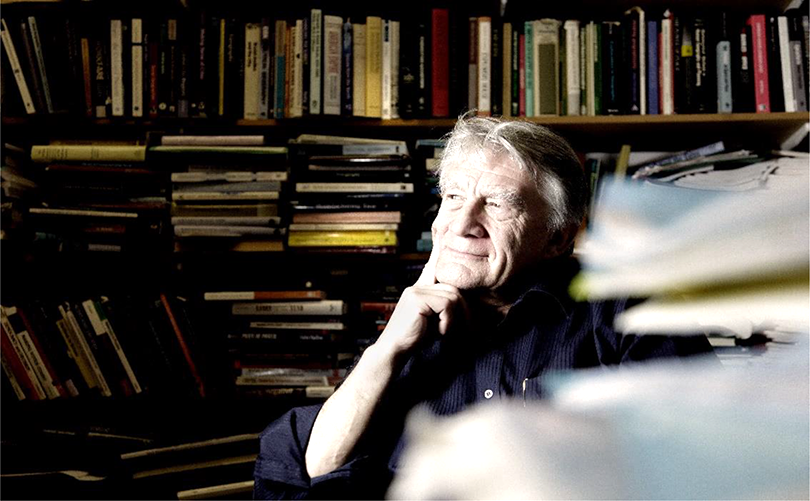
The incomparable Ron Johnston has gone. The sadness is immense, and felt at all points of the compass. Like the sun rising in the morning, you always assumed Ron would be there – bright, warm, kind, funny and full of energy. He was Geography’s most extraordinary cartographer and navigator. Not only did he help us see the complex, fast changing and sometimes fractured intellectual landscape we have together created. He also carved new paths across it, while extending its frontiers. His passion for Geography was boundless, and he was loved greatly by very many colleagues, students and collaborators. Though Ron Johnston’s loss is very hard to bear, his legacy is so large and wide ranging that he’ll be with us for many years to come.
Ron was born to Louis and Joyce Johnston in the town of Swindon, England (population around 50,000 in the early 1940s). His early life unfolded in the dark shadow of the 20th century’s second global conflagration. He came of age as the British welfare state was being constructed, deindustrialisation kicking in, empire ending and the first waves of non-white immigrants arriving. A very capable student at the Commonweal School, in 1959 he headed north to Manchester. Where Swindon had a working-class population, focused on locomotive manufacture, Manchester (and neighbouring Salford) was altogether larger, grittier and more economically diverse. Ron was the first in his family to attend university. In fact, he almost did not leave Swindon for lack of encouragement and suitable guidance. Supported by a Wiltshire County scholarship, he graduated with honours in Geography in 1962, having met Rita (his future wife) during his time in Manchester. His degree course was pretty traditional, with not even Hartshorne’s (1939) influential The Nature of Geography featuring much in the curriculum. Ron’s undergraduate dissertation was focussed on his place of birth. It was entitled ‘Swindon: A railway town in transition’. Unusually for that time, he stayed on at Manchester to complete a master’s thesis. Supervised by Walter Freeman (who had just published One Hundred Years of Geography, 1961), it focussed not on one town but several places in one region. It was entitled ‘Aspects of the social geography of Nidderdale, Wensleydale and the northern part of the Vale of York’. It was inspired by the early work of the American ‘space cadets’ who were fomenting the so-called Quantitative Revolution across the Atlantic and North Sea (Freeman lent Ron papers presented at the 1960 IGU Lund meeting on urban geography, whose proceedings were edited by Knut Norborg and published in 1962 by CWK Gleerup). Encouraged by another notable Manchester geographer – the climatologist Percy Crowe, an early user of statistical methods (see Johnston, 2019) – Ron looked for spatial order in the often messy social landscape. It presaged a great deal more to come.
The next decade laid the foundations for Ron’s enormous professional success. A young bundle of high energy and ambition, he moved to Melbourne in 1964. He both taught and conducted doctoral research at Monash University. Ironically, his Manchester bachelor’s degree, completed in the original ‘shock city’ (the term was Asa Briggs’), contained little-to-no urban geography. His relocation to another large city saw him continue his master’s degree interest in spatial patterns, only now focussed at the urban scale. Produced in just two years, his thesis ‘Residential structure and urban morphology’ was examined in 1966. At that time, Ron was greatly influenced by two paradigm-shifting texts, namely Frontiers in Geographical Teaching (Chorley and Haggett, 1965) and Locational Analysis in Human Geography (Haggett, 1965). The year of his PhD viva, Ron published ‘Central places and the settlement pattern’ (Johnston, 1966) in the Annals of the Association of American Geographers. One of his first major publications, it chimed with the pioneering work collected some months later in Chorley and Haggett’s (1967) Models in Geography.
Nineteen sixty-six also saw him move to the University of Canterbury in New Zealand to take-up his first permanent academic position. This relocation occurred with two very young children. Eight hugely productive years in Christchurch followed. Among the most notable outcomes of his years at Canterbury University were not one but two sole authored books: Urban Residential Patterns (Johnston, 1971) and Spatial Structures (Johnston, 1973). He assumed his first role as a journal editor, at the New Zealand Geographer. Ron also saw his first masters and PhD students through to completion – for instance, Mike Poulsen, who went on to work at Macquarie University in Sydney. He formed lasting professional and personal relationships with many of these students, both in the Antipodes and, later, back in the UK. By the time he left Canterbury he had been promoted twice (from Lecturer to Senior Lecturer to Reader). He had also spent productive periods overseas, at the University of Toronto and the London School of Economics. Sheffield University in England appointed him a professor in 1974 at the age of just 33 – an astonishing achievement even today, never mind five decades ago. His ten post-Manchester years had been ones of massive productivity, new collaborations, and a determination to master new knowledge and skills (often with little-to-no guidance: see Johnston, 1984) – and all this far from the major centres of geographical research in Europe and North America.
Ron returned home after a period of great growth in British universities. By 1974, Geography was a far better-established discipline than it was in the 1950s, when he began his studies at Manchester. The scientific and quantitative ‘revolution’ was a key reason for this, but Geography was experiencing a Marxist (and later feminist) turn on its human side, while becoming more specialised and fragmented across the board. Ron quickly sought a rapprochement between the elements of positivism some were leaving behind (notably David Harvey) and the new radical human geography emerging. During his 18 years at Sheffield, he became a major intellectual force at home and overseas. His accomplishments are far too numerous to list. With hindsight, publication highlights were the appearance of: Multivariate Statistical Analysis in Geography (1978), one of several attempts by ‘spatial scientists’ to demonstrate the value of statistical data and advanced quantitative techniques; the book Geography of Elections (1979, with Peter Taylor), marking Ron’s new (and in time highly influential) interest in political geography; Political, Electoral and Spatial Systems (1979a), which offered a broader take on how geography is politically consequential; Geography and Geographers (1979b, the first of many editions, later co-authored with James Sidaway), an authoritative take on Anglo-American academic geography after 1945; and The Dictionary of Human Geography (1981, coedited with D. Gregory, P. Haggett, D. M. Smith and D. R. Stoddart), a pioneering reference work targeted at degree students and their teachers.
I was an undergraduate at Oxford in the 1980s (Sheffield University was one of my four other choices, and put on the best open day: if I’d gone there he might have taught me). By then Ron had completed a stint as Head of Department at Sheffield, even as he researched, published and taught with unremitting intensity. Two edited books of his had a significant impact on me at that time. I can still recall the excitement of reading them: they were A World in Crisis? (co-edited with Peter Taylor, 1986) and The Future of Geography (Johnston, 1985). Another book, Philosophy and Human Geography (1983), forced me to think hard about how ontology, epistemology, methods, research questions and data can somehow fit together in a discipline where no orthodoxy prevailed. And then there were the many stimulating articles, such as ‘Four fixations and the quest for unity in Geography’ (Johnston, 1986a). From afar, Ron had a big influence on my thinking, as he did on thousands of other degree students worldwide through his many lucid publications.
Other notable activities during his Sheffield years were his editorships (from 1979) of the present journal (Progress in Human Geography) and of Environment and Planning A. Both newish ventures at the time, they went on to become key parts of Anglophone Geography’s research infrastructure. Ron was a major reason for their success, as his several co-editors will attest. In 1990 Ron became President of the then Institute of British Geographers. This overlapped with a three-year period as Pro-Vice-Chancellor for Academic Affairs at Sheffield University (1989–92).
Ron’s experiences in senior university leadership inspired him to apply for the position of Vice-Chancellor at the University of Essex. His three years in this role (1992–5) were not especially happy ones. Fortunately, he was able to return to full time research and teaching in short order. He became a Professor of Geography at Bristol University in the mid-1990s. Not only was he able to join an internationally leading department; he was also close to Swindon (whose professional football team he had never stopped supporting). His quarter century in the School of Geographical Sciences was marked by the enthusiasm, productivity and collegiality that had served Ron so well earlier in his career. Where many academics run low on energy or simply choose to take their foot off the gas (for good reason), Ron elected to be a full participant in his department and in Geography more widely. Important and original research was conducted, alone and with an array of ongoing collaborators. For instance, there were methodological innovations in the area of urban social geography, one of Ron’s long-standing specialisms (e.g. Poulsen et al., 2002). There were also fundamental empirical insights into voting behaviour in elections in the UK and beyond, with important implications for intra-national political boundaries, political campaigning and public spending (e.g. Johnston and Pattie, 2006). The list goes on.
During his Bristol years Ron also updated Geography and Geographers, The Dictionary of Human Geography (in which he wrote over two hundred well-informed entries) and several other influential books. More broadly, he advocated for Geography at the British Academy (he was elected a Fellow in 1999), the Academy of Social Science (he was a foundation fellow, elected in 1999) and through countless publications in reference works and edited books outside the discipline. His outstanding research into electoral geography also had an impact in the discipline of Politics, especially in the UK. In large part, this is because he published frequently in several of the discipline’s journals. It also helped that talented former students (notably David Cutts, Ed Fieldhouse Charles Pattie, and Andrew Russell) went on to occupy prominent positions in university Politics departments. Moreover, Ron had direct involvement in the things he studied. Notably, at one point he was Deputy Electoral Commissioner and Member of the Boundary Committee for England. Relatedly, he won the ‘political communicator of the year’ award from the Political Studies Association (the Politics equivalent of the RGS-IBG) in 2011, for the work he did around the Parliamentary Voting System and Constituencies Act, which changed the way constituency boundaries are drawn in the UK.
Those who knew Ron Johnston will realise that I’ve barely scratched the surface of his extraordinary career. There’s so much more one could say about his remarkable contributions since he arrived in Christchurch 54 years ago. Let me therefore offer some summary observations in place of a more comprehensive reckoning. First, Ron was a passionate and highly accomplished all-rounder. He loved research, he enjoyed teaching, he was a capable administrator, and he made important leadership contributions locally (Sheffield and Essex especially, but also Bristol more indirectly) and nationally. He took full advantage of the opportunities afforded him, in turn creating for himself more opportunities than most of us could ever imagine being presented with in a lifetime. Second, Ron’s academic influence through his writing and speaking was unusually wide. He was a leading figure in urban geography, in political geography, in the history and philosophy of Geography, and in quantitative research methods.
Third, Ron was a driven, disciplined self-starter but also a willing collaborator and a constructive critic of others. Never selfish, he was generous with his time and would offer clear, helpful but always candid insights to students and his peers. He was humble enough to learn from others, even in his later years; there was no hint of self-regard or arrogance about him. Never mind his over 1000 (co)authored publications, his work as a journal editor, book editor, reference writer and assessor of professorial appointments has had a formative impact on Anglophone Geography. He was the best kind of disciplinary gate keeper: primarily, he cared about the discipline, not his own place in it. Fourth, Ron was both affected by and greatly affected Geography in the three countries where he worked, while projecting more widely too. Though this is most obviously the case in the UK, Ron also maintained research interests in Australia and New Zealand long after he left their shores. The many warm, and often moving, tributes that have poured in since his sudden death testify to his great influence in Europe, the Antipodes and beyond. Interestingly, though he never worked there, Ron conducted important research in and on the United States.
Above all else, Ron Johnston had a deep and lasting passion for Geography – both the discipline and the complex world that geographers study. Though he often specialised, he always saw the threads as part of an uneven real life tapestry. The tapestry is what matters, whether seen up close or at a larger scale. This was reflected in Ron’s wide reading, and the pleasure he got from seeing connections. It was reflected too in his Bristol title, Professor of Geography. Like so many others it began, Ron once said, with maps: a fascination with ‘the what of where’, and how to represent it. A leitmotif of his research and teaching was to describe and explain geographic concentration, similarity (pattern) and variety. For him, context mattered, which is not to say that he favoured a retreat to idiography (far from it). Bolstered by his encounter with Marxist political economy and ‘welfare geography’ from the early 1970s, a running normative theme in his work was justice and equality. Ultimately, his was a politics of social democracy, one quite far to the Left of the current centre in the UK, USA and Australia.
Unsurprisingly, Ron not only received numerous accolades, but the highest ones too. The Murchison Award of the Royal Geographical Society came his way in 1985 for contributions to political geography. Five years later, the RGS awarded him the Victoria Medal for ‘contributions to human geography’. In 1999 he was given the 10th Prix Vautrin Lud by the annual Festival Internationale de Géographie. A decade ago the AAG bestowed a lifetime achievement award upon him. Then, in 2011, he was awarded an OBE. By then, several honorary degrees had been awarded to him as well. Who could have predicted that the 1940s boy with humble Swindon origins would achieve so, so much in a lifetime?
Clearly, Ron’s life as an academic was lived richly. But his personal life was rich too. He was, by all accounts, a devoted husband and father. He played sports in his younger years (especially cricket and football), maintained his support for Swindon FC over eight decades, and was also an accomplished campanologist. He even wrote authoritative publications about this hobby (e.g. Johnston, 1986b). As Charles Pattie (personal communication) reports, ‘One of the attractions for him was that it [bell ringing] was a hobby that demanded total mental and physical concentration and coordination, so it was a good way of “switching off” from work. But – Ron being Ron – he rang to a very high standard.’
Those who knew Ron well – for my part, I knew him only slightly – will miss him terribly. Former colleagues and students speak of his kindness, good humour, sharp mind, enthusiasm, warmth, fair-mindedness, sense of responsibility, honesty, integrity, sense of the absurd and humanity. He was variously a friend, mentor, teacher and valued colleague to literally hundreds of people in Geography. In the last week (I write in early June 2020), more than one person has emailed to say it was the privilege of a lifetime to know him. What a tribute to Ron. As for Progress in Human Geography, he had a formative impact on the journal over very many years. He also published in Progress on several occasions, particularly about geographers and their professional biographies (e.g. Johnston, 2010). In the handover period to new editors some 15 years ago, I remember how much I enjoyed his West Country accent (he never lost it) and his wonderful laugh. There seemed to be a permanent twinkle in his eyes.
The light of geographer Ron Johnston burned bright in our discipline for well over 50 years. He was that rare thing, in any field of endeavour: a living legend. The example he set us derives not from his prodigious productivity – who could possibly match that? Instead, it derives from the way he conducted himself in all areas of his professional life. Though he’s now gone, Ron’s words and deeds will continue to inspire many in Geography to realise their own potential as researchers, teachers and colleagues. There will never be another geographer like him. All the more reason to celebrate and treasure the exceptional legacy of Ronald John Johnston. 1
Footnotes
Acknowledgements
I would like to thank the following for information and insight about Ron Johnston the geographer and man: Mike Batty, Veronica, Della Dora, Derek Gregory, Wendy Larner, David Manley, Alec Murphy, Charles Pattie, Mike Poulsen and James Sidaway. David, Charles and James were especially helpful.