




Abstract
This study analyses birth mothers’ primary motivations for placing their child for adoption, aiming to provide a more comprehensive understanding of the factors influencing these choices. The researchers examined open-ended survey question responses from 768 birth mothers who placed a child for private domestic adoption. Four key themes emerged: (1) lack of resources and support for parenting; (2) respondents’ desire for an ideal family environment for their child; (3) present life circumstances; and (4) beliefs and pressures related to adoption. Responses also highlighted the complexity and multifaceted nature of birth mothers’ placement decisions, with many offering several factors that contributed to their decision-making. These results can inform future research, impact service delivery and improve public discourse regarding motivations for placement.
Plain language summary
This study examines why birth mothers decide to place their children for adoption. The researchers looked at survey responses from 768 birth mothers who placed a child for private domestic adoption and asked what their primary motivation was for choosing an adoptive placement. The researchers identified four key themes: (1) lack of resources and support for parenting; (2) respondents’ desire for an ideal family environment for their child; (3) present life circumstances; and (4) beliefs and pressures related to adoption. Many birth mothers listed multiple reasons for placing their child for adoption, which highlighted the complexity of this decision. These results can inform future research, impact service delivery and improve public discourse regarding motivations for placement.
Introduction
There are over 3.5 million children born in the US annually (Hamilton et al., 2022). Each year, there are also over two million unplanned pregnancies (National Center for Health Statistics, 2023). In comparison to the number of births and unintended pregnancies each year in the US, the decision to place one’s child for a private domestic adoption is relatively rare (Koh et al., 2022). Though more frequent in prior decades, when there were years with well over 100,000 private domestic adoptions annually, it was still a relatively uncommon pregnancy outcome (Chandra et al., 1999; National Committee For Adoption, 1985). In recent decades in the US, far more children have been adopted from foster care than all other types of adoption (Children’s Bureau, 2024; Koh et al., 2022). Despite the relative infrequency, there are still many thousands of private domestic adoptions annually, with each one carrying concomitant short-term and long-term consequences for adoptees, birth families, adoptive families and the wider community.
While there is reporting of administrative data such as that of Jones (2008), which helps describe the demographic characteristics of birth parents (e.g., age, race, marital status, etc.), there are fewer insights into their motivations for placement. Such research is important for dispelling myths and reducing the stigma that is often associated with placing a child for adoption and, in turn, promoting more nuanced and understanding public discourse. By understanding the complexities of these placement decisions, adoption professionals can refine their practices and be more responsive to the needs of expectant parents considering adoption. These findings can also inform laws and regulations that support ethical adoption practices and protect the decision-making autonomy of expectant parents.
Literature review
Research about pregnant women in general and birth mothers in particular can be challenging. Historically, pregnant women have often been purposefully excluded from medical research due to concerns about the impact on the pregnancy (Blehar et al., 2013). Additionally, researchers often find it difficult to access the population of birth mothers due to the prevalence, historically, of confidential placements, which poses significant challenges in reaching this population (Wiley and Baden, 2005). An additional challenge is that reporting of adoption figures is a complex and ever-changing process (Koh et al., 2022). Scholarship about expectant parents and adoption has often focused on why expectant parents do not choose adoption in response to an unintended pregnancy (e.g., Sisson et al., 2017). More frequently, the literature regarding birth mothers looks at post-adoption views and experiences, including enquiries into satisfaction, openness and grief (Cushman et al., 1993; Grotevant, 2020; Hanlon et al., 2023; Wiley, 2017).
Researchers have also noted demographic differences, including observations that mothers who choose to place for private adoption are more likely to be higher educated than mothers who choose to parent (Bachrach et al., 1992) and that mothers who choose to place for adoption come from a higher average socioeconomic background than mothers who choose parenting (Kalmuss et al., 1992). While such findings provide notable correlations between demographic characteristics and adoption decisions, they do not offer explicit explanations as to why these mothers choose adoptive placements for their children.
Understanding the reasons why some parents choose to place their children for adoption requires hearing from these parents about their motivations for picking adoption instead of alternative options. One characteristic that some researchers have found is that birth mothers are not making decisions based primarily on their own wellbeing, but instead pursuing what they believe is best for their child. Ellison conducted a study of women’s perspectives related to an unplanned pregnancy (comparing those who chose single parenting, adoption and abortion) and found that ‘birth mothers were the only group to rate what they thought was best for their child more highly than their own needs’ (2003: 333). Clutter (2017) also found that birth mothers made their decisions based on what they thought was best for their children; similar findings have been found by other researchers (Hanlon et al., 2023; Kenny, 2007). One of the motives identified by Chippendale-Bakker and Foster is that women who place for adoption, ‘…do so out of a belief it will offer a better life for their children than they are able to provide’ (1996: 349).
Contrasted with this, researchers have identified that some birth mothers were motivated by desires to reach particular milestones in life before parenting, including findings that birth mothers have higher educational aspirations than mothers who chose to parent (Kalmuss et al., 1992). For birth mothers who are motivated in this regard, their decisions were made with specific goals for themselves in mind (Kenny, 2007). This motivation makes sense intuitively: it is widely understood that parenting a young child is a demanding task that would add significant difficulty to completing an education, advancing a career or reaching particular financial goals. However, this reasoning only explains why the expectant mother did not choose parenting, and it does not address why they chose adoption instead of abortion. Therefore, it is important to consider the work of Sisson (2015), Kenny (2007) and others who identify some expectant mothers who rule out the option of abortion due to their personal values or religious views.
Additional scholarship emphasises the limited agency and options for some expectant parents, presenting these expectant mothers’ decisions towards adoption as less of a choice and more the result of lacking alternative options (Sisson et al., 2017; Sisson, 2024). This research identifies experiences in which women have first sought an abortion or noted a desire to parent, but structural barriers, such as restrictive abortion laws, financial hardship or lack of support systems, precluded them from these options. For example, Sisson’s (2024) research highlights the experiences of these birth mothers, who ultimately placed a child for adoption, but often reported lacking the resources, support or information necessary to pursue their preferred path.
Extant literature about birth mothers’ motivations to place a child for adoption does not present a singular vision or simplistic understanding of why expectant parents choose adoption. Though not uniform in their findings, it may be that multiple and seemingly incongruous findings are each accurate descriptions for segments of this population; after all, these decisions are made by individuals with different values, beliefs, life circumstances and future goals. It should be no surprise that motivating factors differ among a diverse population of expectant parents.
Building on this base of knowledge, this paper adds to the literature on birth parent motivations by examining birth mothers’ answers to a direct request to share in their own words what their primary motive was for making an adoptive placement. Given the limited knowledge about birth mother motivations, the approach taken in this research was exploratory, seeking to learn from this population. Increasing this understanding will allow social workers and other service providers to better support expectant parents in making an informed, self-determined decision.
Methods
Study sample and data collection methods
This study utilised data originally collected for a larger study that explored birth parents’ experiences before, during and after they placed a child for private domestic adoption (Hanlon et al., 2023). In the autumn of 2022, an anonymous online survey was conducted with birth parents, both mothers and fathers, who made a private domestic adoption placement (i.e., they did not have their parental rights involuntarily terminated). Participants were recruited through a network of professionals and organisations involved in the adoption process; to incentivise participation, a $25 gift card was offered to 50 randomly selected survey participants. The only age-related eligibility criterion was that participants be 18 years of age or older at the time of survey completion; no upper age limit was set.
In total, 2,164 individuals completed the survey either partially or completely. Of these, 682 were excluded from further analysis due to the significant amount of missing data, and 83 were excluded due to the responses indicating that they were not likely to be birth parents (e.g., if responses indicated the respondent was an adoptive parent it was excluded). This led to a sample of 1,399 participants: 1,160 birth mothers and 239 birth fathers. The original study’s primary contribution was a relatively large body of descriptive statistics that provided insights into birth parents’ demographic characteristics. It also examined their pre- and post-adoption experiences, including factors that contributed to satisfaction or dissatisfaction with the adoption decision, experiences of stigma and how these experiences changed over time.
This study focused on participants’ responses to the question, ‘Can you briefly tell us what your primary motive was in making an adoptive placement?’ Participants were asked to respond based on their most recent adoptive placement if they placed two or more children for adoption. Among the 1,399 participants, 862 (768 birth mothers and 94 birth fathers) provided a response to this question. Considering the significant disparity in response numbers between birth mothers and birth fathers, this study only used the responses of 768 birth mothers. This decision was made to prioritise consistency and clarity, ensuring that the findings reflect a more uniform data set and are not coloured by the differences between birth mother and birth father reflections. Ethical approval for this study was obtained from The Catholic University of America’s Institutional Review Board (no. 22-0058) with which the authors, who were involved in the original study, are affiliated.
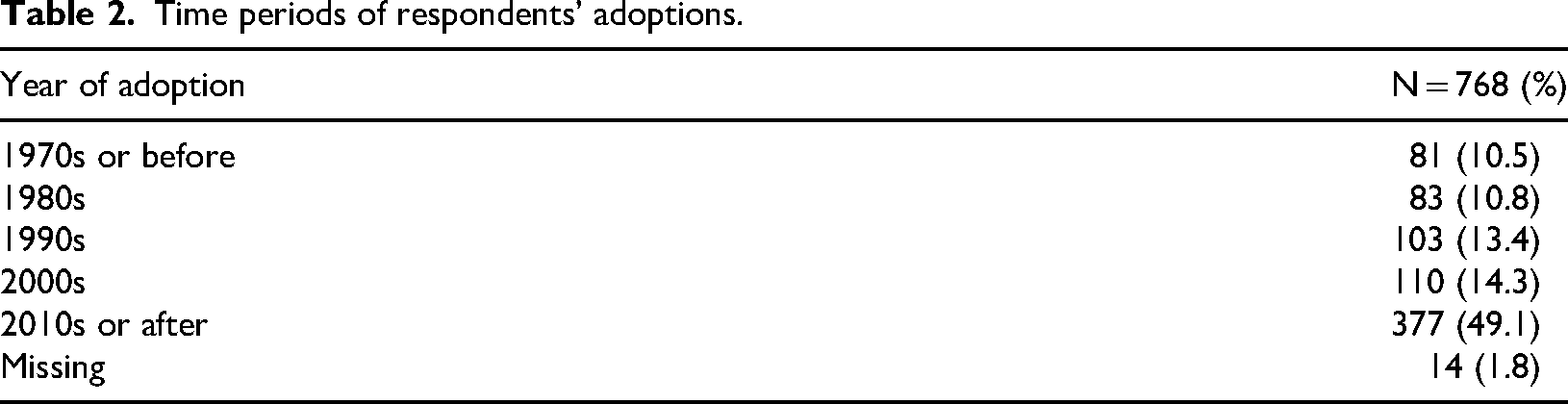
This study is based on the responses of 768 birth mothers whose age at the time of the survey was 41.5 years on average (SD = 14.29), ranging from 18 to 83. The majority of the participants in this study identified themselves as white (78.4%) and had some college education (82.8%). Slightly over half of them (54.6%) were reportedly married at the time of the survey, and close to three-quarters of them (72.6%) had religious affiliation. The demographic characteristics of the study sample are presented in Table 1. The time periods in which respondents placed their child for adoption varied widely, with the plurality placing in the 2000s or after (49.1%). The time periods of respondents’ adoptions are presented in Table 2.
Demographic characteristics of study sample.
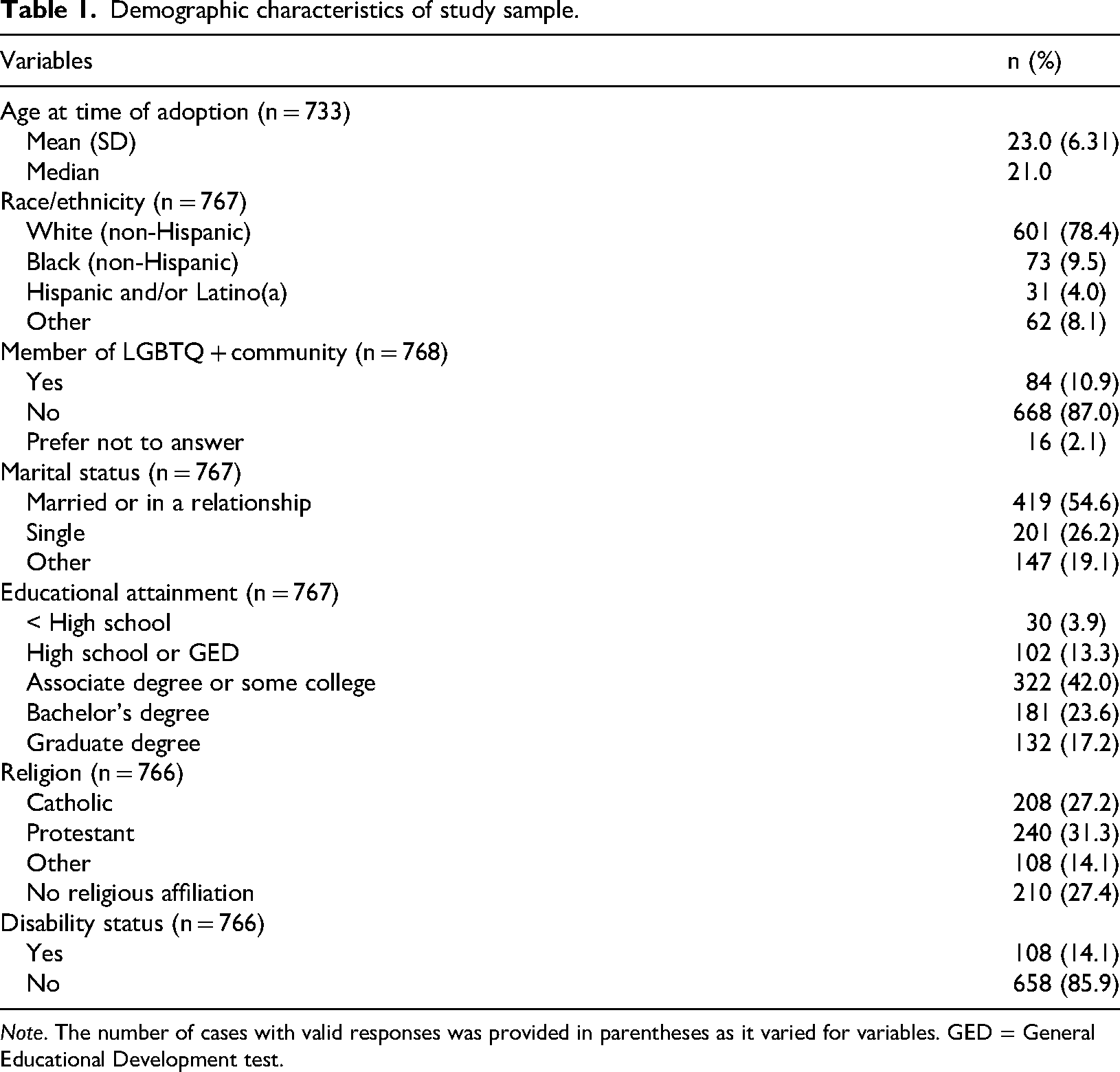
Note. The number of cases with valid responses was provided in parentheses as it varied for variables. GED = General Educational Development test.
Time periods of respondents’ adoptions.
Data analytic methods
Participants’ responses to the open-ended question on their motives were qualitatively examined. While interpretive phenomenological analysis (IPA) is a widely used method in human science research, the conciseness of participant responses – prompted by the survey’s request for brevity – did not allow for the depth of interpretation that this methodology requires. Therefore, the researchers chose to conduct a descriptive thematic analysis, highlighting patterns and presenting the responses as they were written rather than interpreting respondents’ underlying meaning or intent. According to Padgett (2016), thematic analysis is one of the most common activities across qualitative approaches because it allows for inductive coding and ‘exists independently of theoretical or epistemological frameworks’ (Braun and Clark, 2006, as cited in Padgett, 2016: 224). It is at its core a way of examining raw data for patterns or topics that come up in the data recurrently.
Following a six-step framework (Braun and Clark, 2013; Kiger and Varpio, 2020), four members of the research team completed the thematic analysis. Each reviewer familiarised themselves with the content and then began a process of coding the data individually. Researchers then individually grouped the initial codes into common themes and subthemes. The team met twice to review and refine the codes and themes as a group, collaboratively examining and resolving any differences in interpretation. The research team then finalised the codes and met to determine the main themes and the relationships among themes. Once completed, one team member drafted a description and analysis of the themes, which was subsequently reviewed and finalised by the rest of the research team.
Results
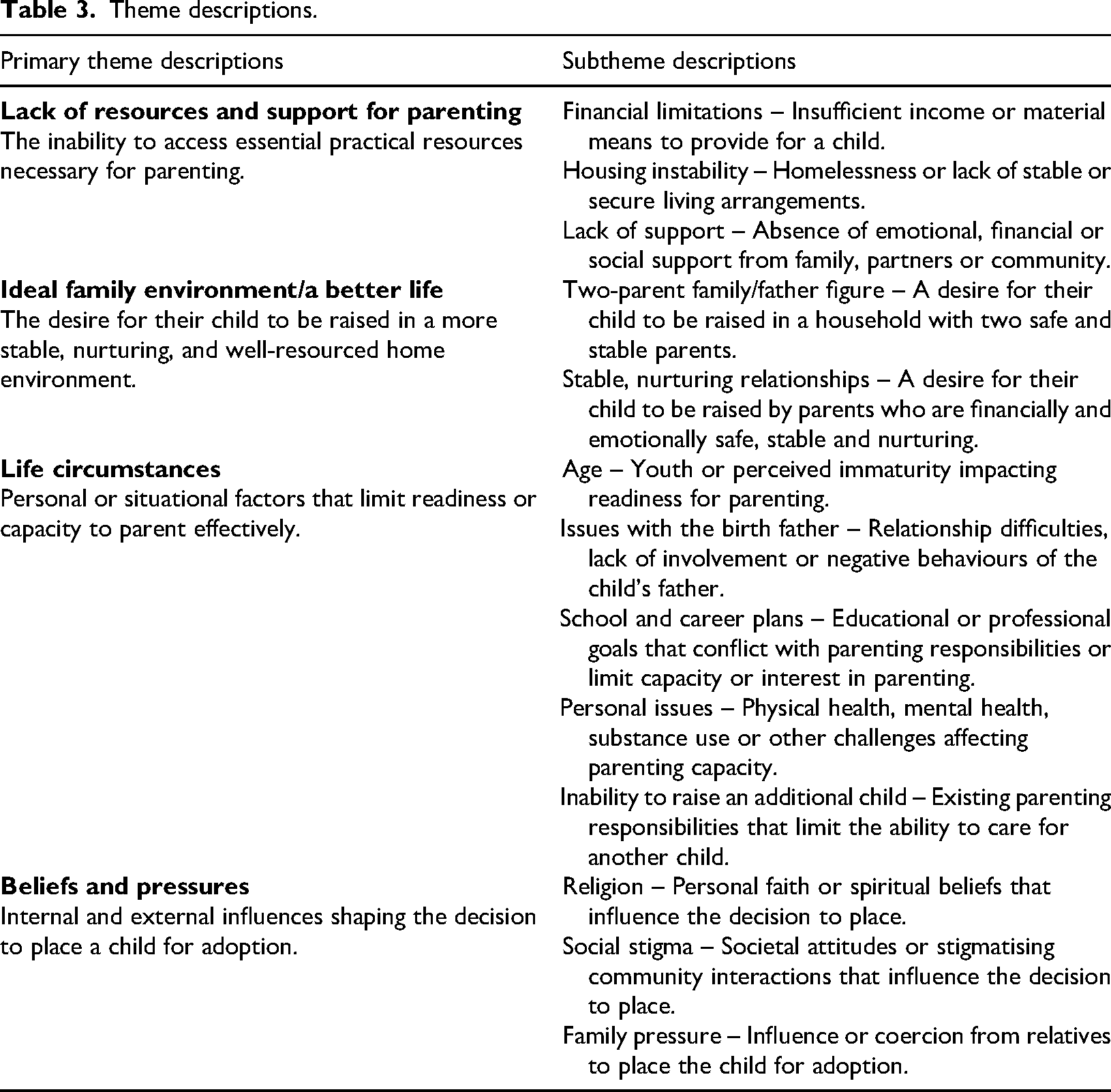
This section examines the motivations of birth mothers in placing their children for adoption. The researchers reached the final decision about codes that resulted in the four main themes and several subthemes to emerge from participants’ reflections. They were, in order of salience: (1) ‘Lack of resources and support for parenting', with the subthemes of ‘financial limitations', ‘housing instability' and ‘lack of support’; (2) ‘Ideal family environment/a better life' from the participant’s perspective, with the subthemes of ‘two-parent family/father figure' and ‘stable, nurturing relationships'; (3) ‘Life circumstances', including the subthemes of ‘age', ‘issues with the birth father', ‘school and career plans', ‘personal issues' and the ‘inability to raise an additional child'; and (4) ‘Beliefs and pressures', with subthemes of ‘religion', ‘social stigma' and ‘family pressure'. Brief descriptions of themes and subthemes are presented in Table 3. More than half of the respondents spoke about one of two themes: ‘Lack of resources and support for parenting’ and ‘Ideal family environment/a better life’. Across each of the four primary themes, it is evident that birth mothers’ placement decisions were complex and multifaceted, with 425 out of 768 (55.3%) respondents providing multiple factors that contributed to their decision. This is reflected in the data presented under each theme. Participant responses also varied widely in length and detail, ranging from a single word to 380 words, with an average length of 19.7 words.
Theme descriptions.
Lack of resources and support for parenting
Participants frequently indicated that they lacked the resources and support to adequately parent their children. Specifically, financial limitations were one of the most common motivations for placing a child for adoption, with over 27% of respondents citing it as a factor influencing their decision. This included some respondents who reported experiencing poverty and unemployment. Sisson (2024) also identifies financial hardship as a characteristic of those who are making decisions about adoption. Many participants offered responses that directly and succinctly noted their financial status such as, ‘financial hardship’, or ‘not financially stable to parent’. Some offered a more detailed picture of their available resources, referencing their income at the time and explaining that it was not enough to meet a child’s needs or provide the life they ‘deserved’, overlapping with the second theme of offering their child a ‘better life’. An example of this is: ‘Financial; I was essentially homeless and not making enough at my full-time job to sustain myself and a child.’ Another respondent shared, ‘I was not able to financially provide for a baby and give them the life they deserved'. Another participant explained: At the time I was not in a place I felt I could provide for my son. I would have had to work 2 or more jobs to make ends meet and he would have been raised by someone in daycare instead of me. I felt I couldn’t properly care for a baby. And I didn’t want to be a burden to my family. I quit a job to move away to another state to have my son and place him with [agency name]. I would have [had] to find another job when I moved back home, then [would have] had to rely on my mom to care for him.
Respondents also noted that housing instability was their primary motivation for placement, sharing that they ‘didn’t have a stable place to live’ or were ‘homeless living out of [their] car’. Unsurprisingly, this response often intersected with financial limitations and job insecurity. For example, ‘… no support, was going to be homeless, no job, had nothing to give or provide except love’. Another participant wrote that she was motivated to place due to a ‘Lack of resources and finances to take care of a baby. I was homeless and poor'. This ties to a broader pattern seen across the data: the absence of basic resources for parenting, such as housing and income, often co-occurred with and was likely compounded by a lack of intangible support.
Respondents described experiences of being unsupported in multiple ways, with several offering specific details about a lack of emotional, financial or parenting support. One participant wrote, ‘I was alone with little to no contact with family, no support system and didn’t have the financial means to raise a child on my own'. Another shared, ‘My family environment was broken, and I didn’t feel I had the support system in place for raising a child'. These responses touched on the importance of community and familial support systems, both emotionally and for day-to-day parenting needs such as childcare. Participants also discussed support in the context of their placement decision, as some felt their friends and family would not support the decision to parent. For instance, one wrote, ‘lack of supportive people advocating for me to parent’, as their primary reason to place a child for adoption. Lack of parenting support was also noted from a variety of sources, most commonly birth fathers, partners and parents. For example, ‘My parents both said they would not support me, financially or otherwise, if I kept her. I felt like I had no other choice because I wanted her to have a good life’. There was also notable overlap in many responses that highlighted both relationship issues and a lack of support, whether that involved being a single parent or having an unsupportive partner. Another respondent reported her family, the child’s biological father and her current boyfriend did not support a decision to parent. She said: I was young [20 years old], didn’t know what I was doing in my life – my boyfriend suddenly just couldn’t help me raise a child that wasn’t his… I couldn’t rely on my family… I was a waitress… I wanted better for her… and the biological father told me to get an abortion and was just a big hassle.
Additionally, many responses that noted financial limitations also noted a lack of support. One participant stated, ‘My main reason for placing my son up for adoption was because of financial reasons and a lack of support'. Another explained, ‘I did not think I could financially care for a child. I did not know if [sic] any resources that I could use to help me parent'. This highlights how familial and community support can often supplement limited financial resources and vice versa. It also illustrates how isolated birth mothers may lack the strategies, connections or avenues needed to access financial assistance and supportive services for single or under-resourced parents.
Ideal family environment/a ‘better life’
Many participants discussed their motivations for placement in the context of their desires and goals for their child’s life. This is consistent with prior research identifying that some birth mothers are motivated to choose adoption to provide for their child’s best interest (Kenny, 2007; Sisson, 2015). One of the most common motivations discussed by respondents was a general desire to give their child a ‘better life’. For example, one respondent wrote, ‘I was dealing with a lot at the time and wanted the best for her’. Respondents often outlined characteristics of the ideal family environment for their child. Many wished for their children to be raised in a two-parent family. One participant shared, ‘I was young (17) and desired for my child to have things I could not provide for him at that time. These things include [a] two parent home, financial stability, etc’. Some respondents specifically mentioned a desire for their child to be raised with a father figure, with some also explaining that the birth father would not be involved in the child’s life for a variety of reasons. For example, one wrote, ‘I wanted to give my daughter a chance to have two parents, especially a dad, who would always be there for her’. Another explained: The birth father was not coming home from college so I would have been a single parent the first 4 years and we didn’t feel that was fair to our child. I wanted to provide a stable and loving home where he could flourish and receive the support from two parents in a stable environment. To ensure that she had an opportunity to grow up in a safe, happy, healthy, supportive environment full of people who could give her the life she deserves. I was too unwell, mentally traumatized, steeped in extreme depression, and unable to see any way out of that headspace, even prior to relinquishment.
While discussing this motivation, some participants also detailed concerns about their present life circumstances and home environments. For example, one participant noted, ‘[the] Relationship status between [the] birth father and myself was [so] beyond dysfunctional that I knew I wanted a better life for [my child]’. Another described: My son deserved a better life than what I could provide to him at my time of pregnancy. I was on drugs, homeless and lost. The moment I found out I was pregnant I knew he wasn’t supposed to be my child to raise. I wanted what was best for him.
Similar to other themes and subthemes, the insights presented here overlap with those identified throughout this analysis, reflecting the inherently multifaceted nature of birth mothers’ decision-making processes. This theme, centred on the idea of an ‘ideal family environment’, highlights that birth mothers often made placement decisions not only in response to their perceptions of their limited resources, abilities or life circumstances, but also based on what they hoped their child could gain.
Life circumstances
In contrast to the previous theme, many participants indicated that their primary motivation for placement was related to their life circumstances, which often restricted their willingness or ability to parent. Due to the brevity of some responses, it was sometimes unclear whether participants felt their life circumstances prevented them from being able to suitably parent or if they felt capable of adequately parenting but wished for their children to have even more than they could provide. It was also sometimes unclear whether participants believed their life circumstances limited their personal capacity and readiness to parent or if those circumstances limited their access to the resources needed to adequately parent their child. For these reasons, this theme is closely tied to (and likely overlaps with) the first theme, the lack of resources. While similar to this theme, life circumstances include broader factors that may affect one’s readiness or capacity to parent, whereas lack of resources refers to practical deficits that directly affected respondents’ ability to care for a child.
Common subthemes for life circumstances included age, issues with the birth father, school and career plans, personal issues and the inability to raise an additional child. When discussing age, participants expressed feeling ‘too young to be a parent’ or simply stated their age at the time of placement, which was often during their teenage years. One respondent reported, ‘I was too young [15 years old] to feel competent to parent a child’. Several also discussed issues with the birth father, often citing relationship problems, the presence of domestic violence or the father’s substance misuse. Respondents detailed two relationship issues that had motivated them to place their child for adoption: to protect their child from unsafe and unstable environments and to retain the ability to leave their abuser. Participants also discussed inadequate support from the child’s father, providing reasons such as fathers’ disinterest in parenting, financial instability or engaging in harmful behaviours. For instance, one participant reported that the child’s father was ‘doing illegal things’. A few also noted that their partners told them to place the child or to have an abortion.
Others discussed motivations to complete school or focus on their careers, with one respondent writing, ‘[I] Needed to finish college and find a job'. This often co-occurred with barriers such as age or financial limitations. Additionally, participants discussed a variety of personal issues, including poor physical health, mental health challenges, substance misuse and unplanned pregnancies. These respondents often explained that these personal issues limited their capacity or ability to adequately parent, as one respondent stated: ‘I could hardly care for myself due to [my] disability so I didn’t feel I could fully care for a child appropriately.’ Another shared, ‘I also had used drugs and was uncertain I would be able to get/stay clean once he was born’. Furthermore, those who discussed unplanned or unexpected pregnancies expressed feelings of being unprepared, with several noting that they became aware of their pregnancies very late. These barriers to parenting are differentiated from the first theme as they involve factors that affect personal parenting capacity and often have lifelong impacts.
Furthermore, 67 respondents noted that they were already parenting other children when they decided to place their child for adoption. Some explained that this limited their capacity or resources to parent the child they placed and expressed a desire to do what was best for both the child(ren) they were parenting and the child they placed. For example, ‘I was already taking care of four young children by myself without any other support financially or physically and I believed it was the better choice for me, my other children, and my adopted child'. A smaller group of respondents also expressed that adoption was their ‘only option’, with one stating, ‘… I had nowhere to go this was the only choice I had’. Additionally, throughout the themes and subthemes in this analysis, several participants highlighted feelings of lack of readiness. Some solely referred to a lack of resources and financial preparedness, while others also indicated a lack of emotional and mental readiness.
Beliefs and pressures
Finally, respondents detailed a variety of personal, familial and societal beliefs and pressures as their motivation to place their children for adoption. Many respondents discussed their personally held faith or beliefs as significant motivators, similar to existing research that finds faith and beliefs often motivate expectant parents to rule out abortion (Kenny, 2007; Sisson, 2015). For instance, one respondent shared that she, ‘Felt the Lord told me to’ and that placing her child was a ‘step of obedience’. Another participant shared: At the time I was a Christian, raised in a home that believes the Bible literally and compares adoption to how God brings believers into his family. I was raised to believe it was a beautiful thing. And everyone around me believed there was another mother that would be better for my son than me simply because I had had sex before marriage – so I guess I believed it too.
Many respondents referenced the feeling that societal pressures and stigmas compelled them to place their children for adoption. They believed that parenting their child would have subjected them to judgement and unwanted scrutiny due to their age or marital status at the time. This is consistent with prior research identifying past societal stigma on those who are unmarried and pregnant (Ellison, 2003). One respondent shared, ‘Unmarried mothers were not accepted in 1967/68. I was forced to relinquish’. Another disclosed: Also in my little town in Ohio in the mid 70’s, having a child out of wedlock was looked down upon. My last name was well known in the community & I didn’t want to make my parents [sic] life more difficult.
Respondents expressed that they felt societal stigmas would affect their lives, as well as the lives of their children and other family members. For example, one participant remarked, ‘I was influenced by the social stigma of unwed motherhood. I believed my son would be treated badly because he was a “bastard”’. Several respondents also mentioned how these stigmas and pressures influenced the support offered by their loved ones. Additionally, participants shared experiences of family pressure and coercion. Some even reported that they were not given a choice and that the decision to place was forced or coerced. One participant wrote, ‘I did not make the decision, it was my parents’ decision’. Another shared, ‘[my] Parents strongly encouraged me to consider adoption as I was only 16 and had my life to live. I was pressured for sure’.
Discussion
The themes identified from the large sample of respondents in this study did not divert significantly from the findings of prior studies. What did emerge was how many of these themes overlapped with one another for individual respondents. Despite being prompted to indicate a primary motivation for placement, most respondents offered several factors that contributed to their decision. For example, one respondent shared, ‘I had no home, money, no support, I felt abandoned and rejected by society’, highlighting subthemes of housing instability, financial limitations, lack of support and stigma. Responses like these often included motivations across multiple themes and subthemes identified in this study. Another participant response showcased this intersection of multiple themes by writing, ‘Wanted to finish college. Not emotionally or financially ready to be a parent. I felt someone else would give my child a better situation. Wanted two parent family’. This complexity along with the wide variety of motivations provided by respondents cautions against a one-size-fits-all understanding of birth mothers’ motivations for choosing adoption, both at the population level (i.e., different birth mothers have different reasons) and at the individual level (i.e., a birth mother might have multiple compelling reasons why adoption was the outcome of her pregnancy).
Implications for research
Although the survey prompt requested that respondents share their primary placement motivation, most respondents provided multiple motivations. As a result, it is not clear how those respondents perceive the weight of each motivation given. For those who only listed one motivation, it is possible they had other motivations they chose not to include because of the way the question was phrased. To address this, future research into birth mother motivations could approach this question differently than this study by first asking birth mothers to list all their motivations and then asking them to rank or weight those they identify. It may also be helpful to learn from in-depth interviews or focus groups to allow for richer detail and an opportunity for birth mothers to further expound on their motivations.
In pursuing more in-depth research, along with focusing on motives, there is an opportunity to get more information from those who indicate particular life circumstances, constraints or other factors contributing to their decision-making. For example, in this study, some birth mothers mention experiencing homelessness, drug use or describe themselves as young, and these are all topics that could be probed to better understand the impact they have on individuals’ decision-making.
While it was outside of the scope of this study, examining birth fathers’ distinct perspectives and motivations for placing a child for adoption is a critical area for future research. Their perspectives are underrepresented in existing literature, and additional research can offer valuable insights into both their unique role in the placement process and their specific needs.
Implications for practice and policy
The beliefs and pressures noted in this study highlight that some birth parents were interested in parenting but chose to place their children due to restrictive or coercive factors. This shows a side of adoption that needs greater attention and commitment to improving practices further. While environmental and personal factors may be outside the scope of adoption reforms, there are opportunities for improved practices, such as expanded resources and counselling for expectant parents. Pre-adoptive screenings and services can assess expectant mothers and provide an opportunity to identify supportive resources, reflect on their decision-making and discuss any concerns or apprehensions they may have. Adoption agency staff and other providers can create an environment where the decision to parent is just as supported as the decision to place, and where social workers can help identify and mitigate coercive situations. These providers can also support kinship care options if that is something expectant parents are interested in exploring.
Beyond familial or institutional pressures, it is important to consider the characteristics of expectant parents’ environments and personal lives to identify if there are ways to support them to make a free, informed decision about adoption. Factors such as stigma, limited resources and financial instability, which were highlighted as primary motivations in this study, can compel an expectant mother to consider placement, despite having a desire and capacity to parent. The insights gathered from this analysis can be used to advocate for expectant parents who wish to parent and need additional resources to adequately meet their children’s needs. For lower-income expectant parents, additional government support or services could put these mothers in a better position to make a non-coerced decision.
While it is crucial to acknowledge the existence of birth mother coercion, the public discourse and public perception may also fail to recognise many birth mothers’ decision-making autonomy, devaluing their informed, non-coerced decisions. This study also highlights the multifaceted nature of the decision to place a child for adoption, including motivations that come from informed and supported decisions. These data can help expand this narrative, recognising and respecting the placements as an informed choice made by birth mothers. Unfortunately, placement decisions are often stigmatised or pathologised, with the choice to place a child frequently regarded as wrong or a failure of the parent.
Practitioners and policymakers should recognise that a view of private domestic adoption that assumes all placements are either coerced or that all placements are the first and only option desired by expectant parents is too myopic a view to hold and may prevent further improvements in the field. Both of these realities can be true for different individuals, and there remains room for many other experiences as well.
Limitations
Examining responses to a specific question about motivation can provide helpful insights, but presenting the findings as we do in this paper offers just one facet of a much larger array of birth mothers’ situations. Providing a larger picture of the sociocultural and environmental context is outside the scope of this paper but would give a richer account of the contours in which expectant parents are deciding to place their children for adoption. For example, societal views towards pregnancy-related choices impact the decisions women make when they have an unintended pregnancy (Ellison, 2003; Smith et al., 2016). More directly, an expectant mother’s social support, housing status, finances and other issues will almost certainly be factors weighed into the decision-making, even if not directly addressed in responding to a question about motivation.
There were also limitations in this study due to the non-probability sampling method of obtaining survey respondents. This method of selection is vulnerable to participation and sampling bias that limits the ability to generalise to the larger population of birth mothers. Given that there is no baseline of demographic data on birth mothers in the US, it is impossible to know how similar our fairly heterogeneous sample is to the larger population. The heterogeneity of time periods may result in differing motivations for adoption, since motives for placing children for adoption may change over time. Additionally, by soliciting respondents through adoption-related organisations this sample is comprised of birth mothers who are connected to such organisations; it is not known whether that would lead to different responses from birth mothers who did not hear about or choose to respond to the survey.
Conclusion
This study contributes to current literature and offers a more nuanced understanding of adoption placements. It is important to note that the ideals presented in this analysis, such as offering a ‘better life’ or an ‘ideal family’, directly reflect the perspectives of the respondents as presented throughout the data and were not established by the researchers. Across all the themes identified in this study, it is evident that the decision to place a child for adoption is both complex and multifaceted. These results can inform future research and improve public discourse regarding motivations for placement. They can also be used by policymakers to ensure that resources are available for both those who would prefer to parent but need more assistance and those who choose to place for adoption and would benefit from ongoing support. This research can be used by social workers and other service providers who support expectant parents to cultivate an appreciation for the complexity and difficulty faced by those making a pregnancy-related decision and to understand what dynamics are present for expectant parents considering adoption.
Footnotes

Funding
The author(s) disclosed receipt of the following financial support for the research, authorship, and/or publication of this article: the original study was funded by The Opt Institute. Additionally, open access funding was provided by the Morgridge Family Foundation.
Declaration of conflicting interests
The author(s) declared no potential conflicts of interest with respect to the research, authorship, and/or publication of this article.