




Abstract
Children who have experienced trauma require emotionally responsive parenting to support them to make sense of their early stories and build healthy relationships. Foster care can be an important resource for these children, but the task can be challenging. This study uses Interpretative Phenomenological Analysis to explore the lived experiences of foster carers in holding the stories of trauma and loss brought by the children in their care. Ten local authority foster carers were interviewed, all caring for children aged between eight and 13 years and placed with them on a long-term basis. Three superordinate themes were identified from the analysis: (1) Processing the story; (2) Holding different stories; and (3) The personal and professional. ‘Processing the story’ highlighted the emotional task engaged in as carers tried to make sense of and process their child’s story, for themselves and their child. ‘Holding different stories’ captured the different ways in which the foster carer and the child’s story interacted. ‘The personal and professional’ explored the challenge of managing the personal task of care within the wider professional context, and the relationships carers held with the professional team around them. The importance of acknowledging the considerable emotional task of caring for children who have experienced trauma was identified.
Plain Language Summary
Children in foster care have often experienced a history of trauma, loss and neglect. They often have complex emotional needs and require skilled and sensitive parenting. Foster care can be a valuable resource for these children. However caring for children who have experienced trauma is an emotionally demanding task.
This study aimed to better understand the experiences of foster carers who are caring for children who have experienced trauma and loss. Ten local authority foster carers were interviewed. All 10 carers were caring for children between the ages of eight and 13 years old. The children were all placed with the foster carers on a long-term basis. The researcher used semi-structured interviews and analysed the data using Interpretative Phenomenological Analysis.
The research findings highlight the difficult emotional task that foster carers undertake. They show the emotional demands involved in caring for children who have experienced trauma and loss. They demonstrate the challenges involved in working with the child’s wider family. They show the difficulties foster carers experience in having to balance their role as carers with their role as professionals, and the challenges involved in working with other professionals around the child. The research underlines the importance of understanding the complexity of the fostering task and the importance of providing appropriate support to help foster carers fulfil their role.
Introduction
The Stories Of Children In Care
Children come into foster care with a multitude of stories and experiences including neglect, complex trauma and disrupted attachments (Department for Education, 2021). These experiences can have a profound impact on children’s emotional health and development (Coman and Devaney, 2011; McAuley and Davis, 2009: The Fostering Network, 2016).
Stories Of Attachment
First recognised by Bowlby (1958, 1969, 1978), attachment is a fundamental survival mechanism whereby an infant develops an attachment relationship with a primary carer for the purpose of having their needs met. Children in care have a higher incidence of attachment difficulties than the general population (Herwig, 2022; Tarren-Sweeney, 2008; Turner et al., 2019). An early period of developmental sensitivity to attachment formation suggests the importance of early parenting experiences in shaping attachment development (Opendak and Sullivan, 2016). Inconsistent, neglectful or abusive early parenting can result in children lacking the opportunity to develop the blueprint for trusting relationships with adult caregivers (Kenrick, 2000; Schofield and Beek, 2009) and developing negative internal models of themselves and the world (Bowlby, 1973; Hillman et al., 2020) and insecure or disorganised attachment styles (Bacon and Richardson, 2001). These models and attachment styles can then transfer to future fostering relationships (Guishard-Pine et al., 2007; Munro and Hardy, 2006). The consequences of difficulties in attachment relationships are far reaching and can lead to low self-esteem (Seim et al., 2021; Solomon and George, 2011), poor emotional regulation (Turner et al., 2019), challenging behaviours (McLean et al., 2013), relational problems (Ratnayake et al., 2014), educational difficulties (Bergin and Bergin, 2009; Philips, 2007) and future mental health difficulties (National Institute for Health and Care Excellence [NICE], 2015).
Stories Of Trauma And Neglect
Experiences of complex trauma and neglect prior to entering care can have a profound impact on the neurological development of children (Carrion and Wong, 2012; McLean, 2016), with disruption to the development of the limbic and cortical areas of the brain – responsible for emotional regulation, learning and attention – as survival is prioritised over higher aspects of functioning (Hughes and Baylin, 2012). The consequence is arousal and sensory difficulties in children (Treisman, 2016), impulsivity, poor emotional regulation (Woolgar and Scott, 2014) and difficulties with learning and attention (Children’s Bureau, 2017).
Stories Of Loss
Children in care have frequently been separated from important relationships. England’s Children’s Rights Director found that 18% of children in care had lost contact with their birth mother, 46% had lost contact with their birth father and 81% had been separated from a sibling (Morgan, 2009). Boss (1999, 2007) coined the term ‘ambiguous loss’ to describe a loss that remains unclear and without closure. Boss identified the difficulties in processing such losses, leaving children stuck in feelings of shock, anger, powerlessness and deep sadness (Boss, 2016; Mitchell, 2018).
Adoption research has shown the importance of supporting children to retain contact with significant people in their lives when they move to permanent homes (Neil et al., 2019). Rather than a model of transferring attachments, new attachment relationships are formed with new carers and supported by children retaining early attachment relationships. Ruptured attachments can result in experiences of grief, abandonment and disconnection (Debiec, 2018; Kenrick, 2000), leaving children struggling to process early relational trauma within the context of the loss of those early relationships (Holland and Crowley, 2013), in addition to managing divided loyalties between their birth and foster families (Dansey et al., 2018).
Stories of trauma, loss and disrupted attachments have been correlated with higher levels of mental health difficulties (McAuley and Davis, 2009; Millward et al., 2007), social, emotional, and behavioural difficulties (McCarthy et al., 2003) and poorer educational attainments (Liabo et al., 2012). Recent research around epigenetics has, however, highlighted the capacity of individuals to heal when offered appropriate relational conditions (Hughes et al., 2019; Siegel, 2012). The importance of foster care in providing these conditions cannot be underestimated.
The Therapeutic Potential Of Foster Care
Foster care can offer an opportunity to process experiences of trauma and neglect, as children bring their early stories into the fostering relationship (Ludy-Dobson and Perry, 2010). Herman (1992) argues that psychological trauma results from disempowerment and disconnection from others and, as such, can only be healed within a relational context. Conditions identified as important for healing are emotional safety, connection and containment (Treisman, 2016).
Containment (Bion, 1962) refers to the process of carers ‘holding’ a child’s emotional experience so that those experiences can be processed and integrated by the child. Throughout this paper the term ‘holding’ refers to the process of being emotionally present alongside the child in their experience of trauma and loss. Foster care can offer this to children: a safe relational space to process and integrate early experiences (Golding, 2007).
Through ‘holding’ the child’s early story, carers can support children to: make sense of their stories (Bell, 2021); process experiences of trauma and loss, moving from a shame response to a more positive sense of self (Walker, 2018); process previously unbearable experiences and develop higher levels of emotional regulation (Whitwell, 2004). Through holding relationships with birth families, carers can support children to make sense of early relational dynamics and develop alternative relational blueprints (Griffin, 2004).
The Impact Of Holding The Stories
Providing a space for children to process trauma and loss is an enormous task. Research has found high levels of compassion fatigue and secondary trauma in professionals repeatedly exposed to stories of trauma (Killian, 2008; Whitfield and Kanter, 2014). Foster carers take stories of trauma into their homes, and research has found them to experience high levels of compassion fatigue (Bridger et al., 2020; Hollett, 2021; Ottaway and Selwyn, 2016). There are problems with recruitment and retention (Foster and Kulakiewicz, 2022; The Fostering Network, 2021) and significant levels of placement breakdowns (Khoo and Skoog, 2014; Van Rooij et al., 2019). The impact of a placement breakdown on children has been correlated with increased behavioural difficulties (Newton et al., 2000; Rubin et al., 2007), poor academic performance (Pecora et al., 2006) and compounded feelings of loss and mistrust (Unrau et al., 2008). Carers can experience guilt, shame and powerlessness following a placement breakdown, impacting on future placements and increasing the likelihood of carers leaving the profession (Roche, 2012).
Supporting Carers
Despite the importance and challenges of fostering and the significant consequences when things go wrong, the support available to foster carers is variable (Cosis-Brown et al., 2014; Octoman and McLean, 2014). Life story work can be an important tool for supporting foster carers and children to think about children’s stories (Cook-Cottone and Beck, 2007; Raburu, 2015). However this work can become formulaic (Baynes, 2008), is of variable quality (Hammond et al., 2020) and is often completed by social workers and other professionals with limited input from carers (Rose and Philpot, 2005).
The relationship between foster carers and social workers has been found to be important in reducing placement breakdowns (Tonheim and Iversen, 2019; Tregeagle et al., 2011) and increasing retention rates (Blythe et al., 2014). However, a study by Maclay and colleagues (2006) found that many carers felt unsupported, undervalued and in conflict with the social care system.
Reason For The Study
The literature highlights the complex stories children bring to foster care and underlines the important role that carers play in helping children to process these stories, recovering from experiences of trauma, loss and disrupted attachments (Hughes et al., 2019). It highlights the significant emotional impact on individuals who are repeatedly exposed to traumatic stories and the potential consequences in terms of secondary trauma and compassion fatigue (Hollett, 2021), in addition to the emotional cost of placement breakdowns on both children (Unrau et al., 2008) and their carers (Roche, 2012). Finally, the literature highlights the variability and, at times, inadequacy of carers’ experiences of professional support (Maclay et al., 2006). In view of this, it is important for services working with foster carers to understand their experiences of holding their child’s early stories more fully. Recent research has focused on factors impacting placement stability; however, minimal research has looked specifically at carers’ experiences of holding the trauma stories of their children. This study aims to begin to address this deficit. It is hoped that an increased understanding will enable professionals and services to offer targeted appropriate support to assist carers with the task. It is anticipated that this will benefit carers and children alike, leading to a reduction in secondary trauma and compassion fatigue, increase the emotional resources and responsiveness of carers and decrease placement breakdowns.
Method
Aims
This study aims to explore carers’ experiences of relating to and holding the stories of the children in their care.
Ethics
This study was undertaken in a local authority fostering service. All participants were accessed via their supervising social worker. It was agreed that this social worker would be contacted if any issues of risk arose.
Children and their birth families had not given consent for carers to discuss them in this study. Given this, the focus of the interview was on the carer’s experience rather than details of the child’s story. First names only were used and then removed by the researcher from the transcription.
The study was approved by the Salomons Institute for Applied Psychology Ethics Panel in December 2021.
Design
Interpretative Phenomenological Analysis (IPA) (Smith et al., 2009) was utilised for the study. IPA allows for a detailed exploration of the lived experience and meaning making of participants (Alase, 2017). The study aimed to explore the experiences of foster carers in relating to and holding the stories of the children in their care, thus a qualitative design, using IPA, was considered an appropriate methodology.
IPA utilises the concept of the ‘double hermeneutic’ (Eatough and Smith, 2017), whereby the researcher is actively involved in seeking to make sense of the participant making sense of their world. The process recognises the interaction between the prior conceptions of the researcher and the lived experiences of the participants, resulting in an iterative and shared process of meaning making. Researcher reflexivity is an integral part of IPA, as the researcher seeks to be aware of the interaction between their experiences, beliefs and conceptions and those of the participant (Engward and Goldspink, 2020). The epistemological position of the researcher was one of critical realism.
Recruitment
Smith and colleagues (2009) recommend that IPA samples are small (no more than 10 participants) and highly homogenous to get as close to the desired experience as possible (Eatough and Smith, 2017). Given this, all participants were recruited from one local authority and clear inclusion/exclusion criteria were used (Table 1).
Inclusion and exclusion criteria.
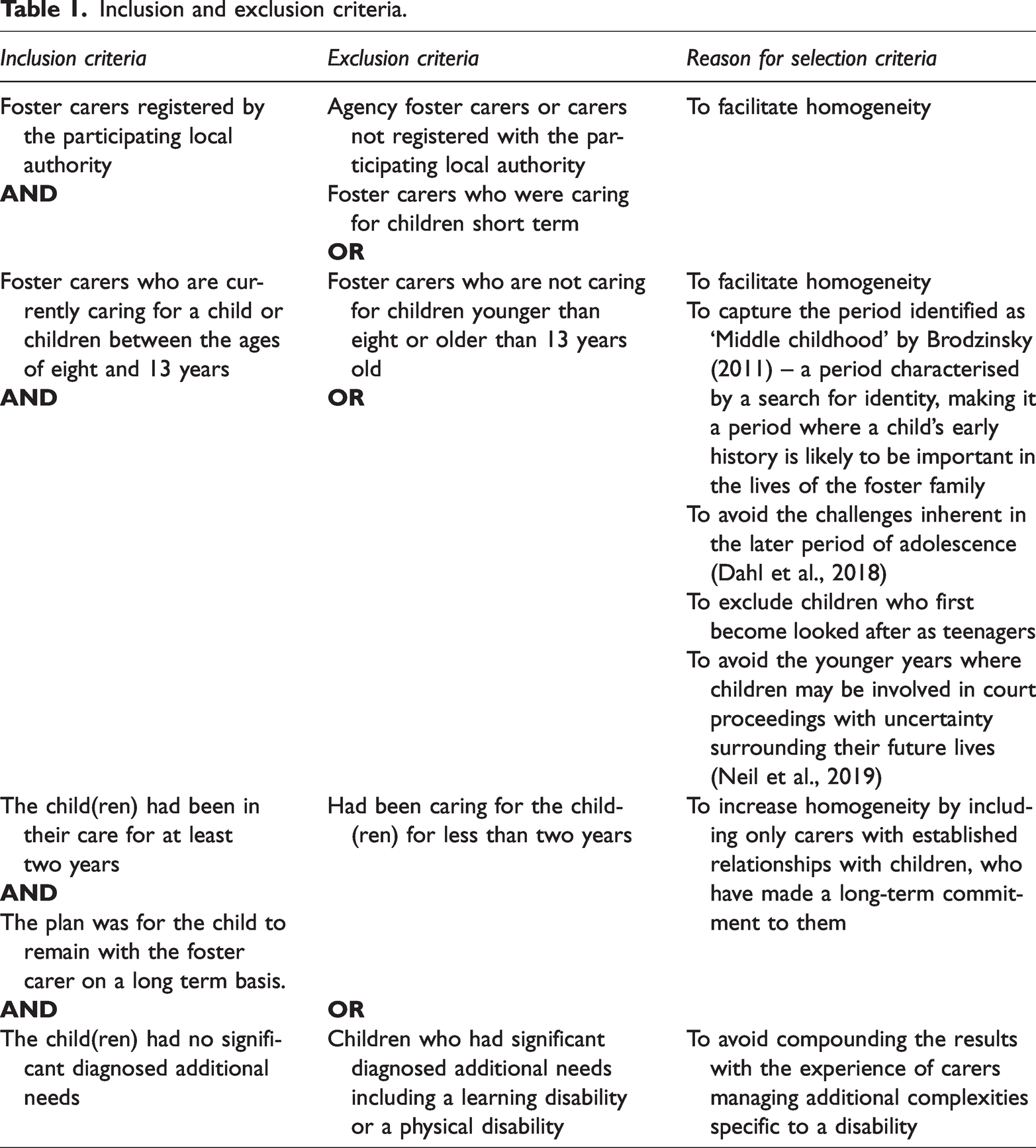
Participants were recruited via adverts disseminated by social workers and presentations at local authority fostering groups. Interested carers, who met the inclusion criteria, were provided with detailed study information and invited to ask further questions through email or a telephone conversation with the researcher.
Participants
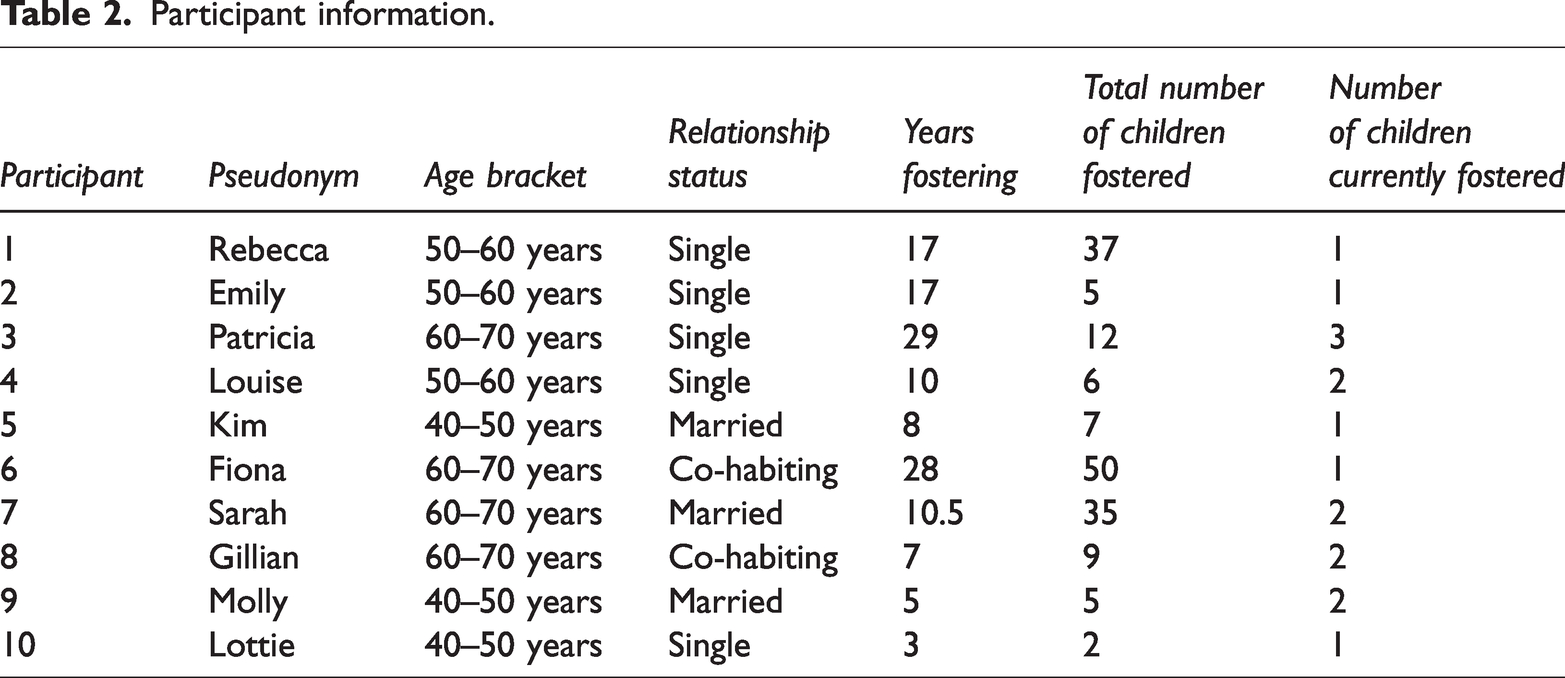
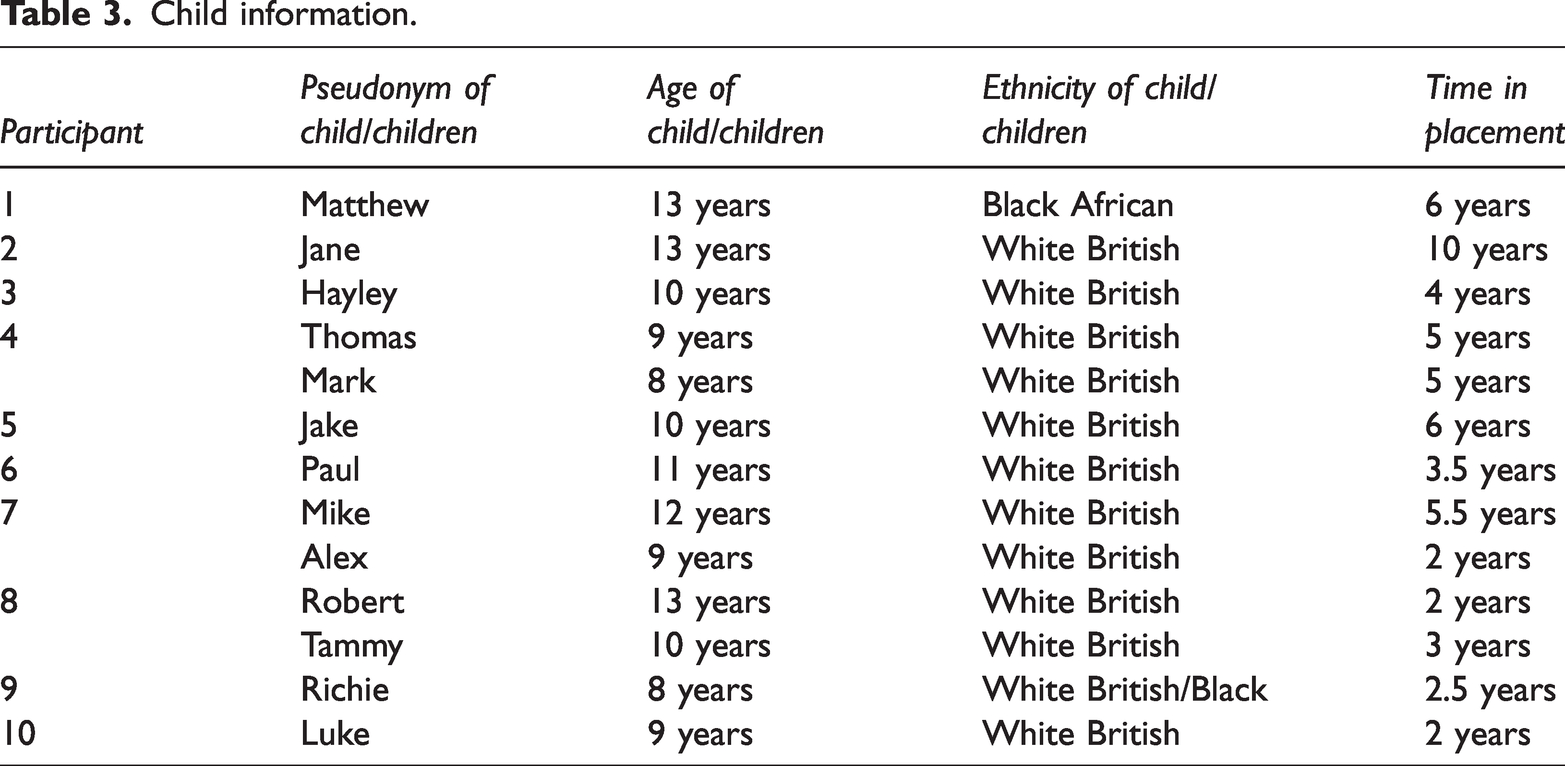
Ten participants were recruited. All participants were heterosexual White British females. Five participants were married/cohabiting, and five were single carers. All participants and children were ascribed pseudonyms to protect their identity. Where the terms ‘child’ or ‘children’ are used throughout the article, we are referring to foster child(ren). Table 2 and Table 3 provide information on the participants and children.
Participant information.
Child information.
Interviews
An interview guide was developed drawing on existing literature, with a focus on promoting the exploration of participants’ lived experiences and meaning making (Smith et al., 2009). Example questions included: Can you tell me about your experience of hearing [child]’s story? What is it like to be caring for [child] and holding their story for them?
Semi-structured interviews were used to allow participants to direct the process of the interview within the parameters of the topics to be covered.
Participants could choose to be interviewed at home or at social services offices; all participants chose to be interviewed at home. The duration of interviews ranged from 45–90 minutes with the average interview time being 60 minutes. Interviews were audio-recorded and transcribed by the researcher.
Data Analysis
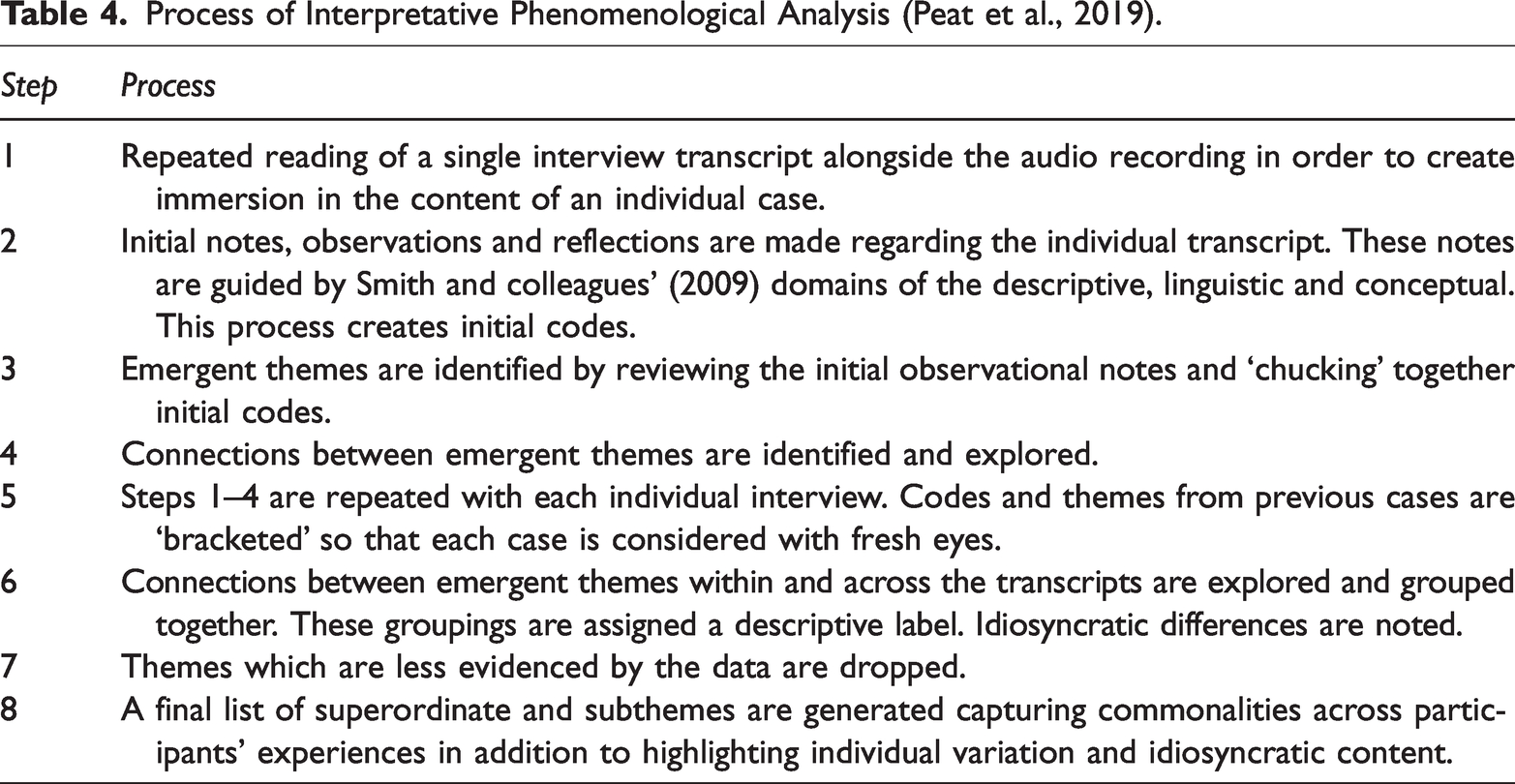
IPA research requires an immersion in the interview data to generate initial codes, which are later grouped to form superordinate themes. Engagement with the hermeneutic circle is important to promote a continuous moving between transcripts and analysis, rather than a linear process. Peat and colleagues (2019) outline the steps shown in Table 4 for IPA analysis.
Process of Interpretative Phenomenological Analysis (Peat et al., 2019).
Quality Assurance And Reflexivity
The stages of IPA analysis outlined in Table 4 were followed by the researcher. One complete and three partial transcripts were double-coded by an additional member of the research team. Discussions were held regarding the coded transcripts, and emerging themes were identified and explored enabling the co-construction of themes (Yardley, 2008).
An audit trail was completed to demonstrate the progress from data to themes. Direct quotes were used to illustrate themes, to promote transparency and to retain connection with the original data (Yardley, 2016). The research team reviewed the quotes alongside identified themes to ensure reliability.
A reflective journal was kept enhancing reflexivity and ensuring quality standards (Spencer et al., 2003). Additionally, a bracketing interview was completed prior to interviewing (Fischer, 2009). This enabled the researcher to explore personal biases which may have impacted the interview or analysis process. LeVasseur (2003) highlights the futility of attempting to ‘bracket’ experiences and preconceptions but acknowledges the importance of increased researcher reflexivity as an important part of the hermeneutic circle.
Findings
Three superordinate themes were identified, which captured different aspects of the carer’s experience of relating to and holding their child’s story: (1) Processing the story; (2) Holding different stories; and (3) The personal and professional. These themes contained 11 subthemes.
Superordinate Theme One: Processing The Story
This superordinate theme captures the different experiences of foster carers as they make sense of and process their child’s story. It captures the experience of carers engaging with the emotional pain and trauma of their child’s individual stories. It contains four subthemes: Making sense of the story; The emotional experience; Holding the story for the child; and Finding new stories.
Making Sense Of The Story
All 10 carers described piecing together information to make sense of their child’s story. Stories were fragmented, confusing and contradictory, frequently with significant unknowns. Different people, including birth families, professionals and previous carers, held different parts of the story from differing perspectives. Carers grappled with their need to make sense of the story against the impossibility of the task, as expressed by Lottie: ‘It’s like doing a puzzle, a constant puzzle that changes all the time.’
Rebecca described trying to make sense of her child’s story within the context of gaps and contradictory stories from his siblings. Ultimately, she must hold the uncertainties and confusions: ‘they tried to work out his family from what he was saying, and his journey, with the roadmap and a car … But I don’t think we could actually make any sense of it.’
Carers sought to piece together the story from their child’s words and behaviours. Here Lottie describes a process of thinking about her child’s behaviours in order to put together the pieces of his story: … this happened today …. what do you think? And then [daughter] will say, ‘Oh, do you suppose that’s happened?’, or ‘Do you suppose it was like this?’ and we’ll have a talk and try, and she’ll help me try and patch together the pieces of what he’s said.
As Lottie uses behaviours to understand the story, she highlights a dualistic process described by most carers, as they try to understand behaviours through the story and try to make sense of the story through the behaviours, holding the ambiguities and uncertainties that arise. This often left carers looking after a child from a place of not knowing and uncertainty: ‘I find that hard, because I don’t know where that is coming from, I don’t know – is that something from his past?’ (Lottie).
In this way, all 10 carers described a process of piecing fragmented stories together to make sense of their child’s world.
The Emotional Experience
Alongside piecing together the story, many carers described an emotional journey of processing their child’s experiences. Louise describes her shock on learning about her children’s sexual abuse: It was just a really awful thing to hear … I would just be going around the supermarket and suddenly something would come into my head and I’ll be really, really tearful …. I felt like I was a rape victim going into these places … Picturing it, images of it, that anger inside …
The parallel she makes with a rape victim, experience of intrusive thoughts while shopping, flashbacks and spontaneous crying highlight her intense experience of her children’s trauma.
The intensity of the journeys varied. However, themes of shock, anger, sadness and hope permeated them all, suggesting carers connected with the stories at a deeply personal level and appeared to move through a cycle of grief as they processed the stories. From Louise’s initial shock at hearing her children’s experiences, she moves through a process of anger: ‘I did feel cross as well … angry, angry with a mum who didn’t feed her children. I did feel that resentment.’ Then sadness: ‘I was definitely stuck in that, I suppose almost a depression of it, you know, of two little boys who I loved to have been harmed like that.’ And, finally, acceptance and hope for the future: I just feel differently now, I just feel that, you know, not that they’re lucky to have been abused, but they’re lucky to be out of it now, and to have the good life that they’ve got now and to be, you know, with a foster carer who loves them like I love them.
Some carers described a less emotionally intense journey, maintaining more emotional distance from the story: ‘it is really sad, but we can’t get locked in that, and that’s what I hold to, I can try and understand her story [and that], for me, helps me understand why she does certain things.’ Here, Patricia acknowledges the sadness of the story but emphasises the importance of ‘not getting stuck’ in it, in order to move forward with her child.
However, for others, like Lottie, the experience of her child’s story was intensely distressing: ‘It’s heart-breaking a lot of the time, and, and hard, like, not just breaking your heart, it’s hard, like, trying to not get angry and not get sad.’
Holding The Story For The Child
Alongside grappling to make sense of and process the stories for themselves, carers described facilitating a similar journey for their child, piecing together information to help their child make sense of the past: I did find out his birth weight and all of that, which we’ve put on like a little ornament thing that he has in his bedroom … so he knows where he was born, how much he weighed, what time he was born. (Kim)
All 10 carers recognised that their child’s behaviours were manifestations of their emotional worlds, rooted in their early story and thus something that they needed to contain and make sense of with the child: ‘He’s not going to tell you because, actually, he can’t comprehend why he’s doing this. And at that point, he’s at the top of that mountain, so he has no clue why he’s doing it.’ Here Fiona recognises that Paul cannot make sense of his emotions sufficiently to understand or manage his behaviours. It is her job to do the thinking for him and to help him to make sense of his experiences.
The sense of powerlessness in the face of the story’s pain was described by most carers. Patricia describes the desire to make it better, against the inadequacy of words or actions, leading to her simply being present with the story for Hayley: … what do you say to her? … you’d have to hold her, you know, because what could you say to her, and you had to be, because we were still early in learning about her, I had to be so careful what I said as in, because we can’t tell her it will be okay.
Finding New Stories
As carers sought to make sense of and process their child’s story, they described changes in their understanding of both their child and their child’s family. Louise describes her understanding of the birth parent’s journey increasing, and with it an increased compassion, empathy and a change in relationships: ‘I just feel that, you know, the people that have done this and do these things are very hurt themselves, aren’t they? You know, and they need understanding, as well.’
Changes in understanding their child also brought shifts in relationships, as carers came to understand the experiences behind their child’s behaviours and recognise the resilience and strength shown. Small positives were seen as significant achievements creating a sense of progress and hope: … she’ll skip along in front of us, which she never used to do, she used to be the timid little girl that walked next to us and held onto our hands so her knuckles were white, and she skips along now. (Sarah) I just get on with my life now, and I do see them as them, they are just Thomas and Mark now, and they are, they’re so much more than their, you know, negative story that they come with. (Louise)
New stories emerge, stories which may still hold pain, challenges and uncertainties, but that also contain love, resilience and hope: … like I say, where he is turning into the little boy that he could have been, because my eldest always said, you know, Thomas would have been the highflyer in class … he’d be out on the sports field excelling. And he’d be in class excelling, he’d be the highflyer, but it can still be that, you know, that person who really achieves and he’s doing it. (Louise)
Superordinate Theme Two: Holding Different Stories
When a child joins a foster family, their story enters the foster carer’s world, and the foster carer’s story becomes part of their world. This superordinate theme captures the different experiences carers have of holding the relationships that arise when these two worlds, and two sets of stories, connect. Four subthemes emerged: Intertwining stories; Expanding stories; Holding stories in balance; and Keeping stories apart.
Intertwining Stories
Both children and carers brought their past stories into the fostering relationship. Children brought past trauma and loss manifesting through emotional and behavioural presentations, while carers brought their own histories and relationships.
For some carers, the child’s story became part of their own story as losses and separations were shared. This was particularly evident where carers had cared for their child through a separation or loss. Emily described her shared experience of Jane’s pain, as Jane returned to her care following a disrupted adoption: ‘She ended up being in the bath, breaking down, her whole body just flopping and sobbing and crying … we just sort of brought her out and wrapped her in a towel and we all cried together in the bathroom.’ This shows the rawness of Jane’s sadness, which Emily holds and which becomes intertwined with Emily’s own experience of ‘losing’ Jane to her adoptive carers, the adoption breakdown and return to her care. The two stories become shared.
Many carers described caring for children amidst losses and stress in their own lives. Emily described the loss of her father and the end of her relationship, Patricia, the loss of her mother. At times these personal experiences of loss became intertwined with the losses in their children’s story. Sarah described the death of her son coinciding with the separation of Alex from her brother: I wanted to be the one to be with them … whether that was a part of the guilt of my son, I don’t know … I did feel that I needed to be there more for her [Alex] after he’d [brother] gone which was quite draining as well, because it was still raw with [son] … both Mike and Alex helped us get through it … they knew [son], so that was a loss for them too.
The loss of her son interweaves with the losses for the children and is channelled into a need to be present for them. The tasks of fostering become both an additional burden and an emotional anchor amidst the personal tragedy. Through their relationship with Sarah’s son, Alex and Mike also experience his loss. Both stories intertwine resulting in a shared story.
Expanding Stories
Many carers described a network of relationships connected to their world by the child, with the stories of birth relatives touching carers’ lives. Sarah described this web of relationships as challenging but enriching: birth family relationships were like ‘a big box of balls that they fill up’ – an integral part of her child’s world, which she tried to embrace.
Gillian described a weaving together of stories as she talked about the creation of Tammy’s family tree, including photos of both birth and foster families: … we got a stencil tree with frames on it, it’s really lovely, actually, that’s all up her wall, and then she’s put the photos she wanted to in there, and she’s actually got one of me, [partner] and the dog on there as well, so we’re all included … I said to her, ‘You don’t have to put us up there, sweetheart, but that’s up to you, you do your own thing’. And she’s put us all on, and her little brother as well, who she doesn’t see, because he’s up in Scotland.
Holding Stories In Balance
Carers like Lottie, Patricia and Gillian explicitly recognised their children were holding two coexisting stories: ‘He’s got two, two lives, which I find is difficult. Two lives, and every now and again, this life integrates back into – he’s got to go and see his mum and his sister’ (Lottie). The stories were held in balance, both valid, with each becoming a lens through which the other could be viewed. These carers recognised the divided loyalties and conflicts created for the child by the differences in the stories: ‘they see my family, see my grandchildren all having normal lives, I suppose it’s very hard for them to say theirs wasn’t’ (Gillian). Here Gillian recognises Robert’s experience of viewing his story through the lens of hers, highlighting the loss inherent in such comparisons.
Louise described using differences in her daughter’s story, and the story of her foster children’s birth mother, to understand and hold compassion for the actions of their birth mother: … both her [the daughter’s] little boys, both had chicken pox, in succession, she just didn’t have any sleep for weeks, but she had me there that’s like, well, you go shopping, I’ll take them … [birth mum] needed much more than that, you know, but for someone to have not had that there, you know, you can see why these things break.
Keeping Stories Apart
Some carers struggled with the ongoing presence of relationships connected to their world through the child. With the often chaotic lives of birth families repeatedly entering the child and carer’s world through contact visits, some carers experienced these connections to be destabilising and intrusive at times: ‘when I watch Hayley, and I see how traumatised she is … every time contact comes up, every time after contact, the behaviour escalates, and you watch her be in trauma, traumatised over and over’ (Patricia). Molly described an almost literal intrusion when Richie’s contact moved to virtual during Covid-19, resulting in Richie’s birth mum ‘entering’ her home: ‘she wanted to see everything, his bedroom and it’d be like, no, so yeah, I was having to keep telling him “No” because I wasn’t happy for the phone to be run around all over the house.’ At these times carers described seeking to limit and restrict the influence of birth families, keeping the stories apart to protect the child and their world. By maintaining this separation, carers sought to protect the world children had entered from the world they had come from.
Superordinate Theme Three: The Personal And The Professional
Most carers recognised the complex balance between their professional role as a foster carer and their personal relationship with their child. This superordinate theme captures these different experiences. Three subthemes emerged: Not just a job; Caught between the personal and the professional; and Working with or fighting against.
Not Just A Job
Despite acknowledging the expectation of professionalism, most carers described a role that went beyond the professional to include their whole life: We can be professional, and we are professional, but actually, we’re having to be professional in our homes and with our complete home life and our own children, and so we need to give people some leeway then, a bit of space for it all, because it’s your whole life.
Here, Emily illustrates the difficulty for carers of separating the professional and the personal and negotiating one’s identity within the context of both.
All 10 carers described their love and commitment towards ‘their child’, comparing their care for them to that of their biological children and grandchildren. Professionals were seen as more distant and transient, with frequent changes in social workers resulting in the carers being the people who knew the children best and were holding the story: ‘At the end of the day, we’re the people that have got these children 24/7 and know them inside out’ (Fiona).
Additionally, while professionals could walk away, carers experienced themselves picking up the pieces of decisions, such as the emotional fall-out of difficult contacts and, for a small number of carers, life-changing and deeply personal decisions. Emily allowing Jane to return to her care and offering to adopt her were personal decisions driven by love, responsibility and guilt, with significant implications for her life and future. While the social workers involved could ‘walk away’, Emily had no choice but to remain present: We did offer to adopt her, and most of that was probably from all those feelings that I’d had about letting her down, letting her go and all those things, I couldn’t, I don’t think I could bear to, not to have made that offer.
Caught Between The Personal And The Professional
In addition to the relationship between the personal and professional within the fostering role, relationships with professionals resulted in significant conflicts for some carers. Carers presented as being caught in impossible relationship dualities, as highlighted in Figure 1 below.
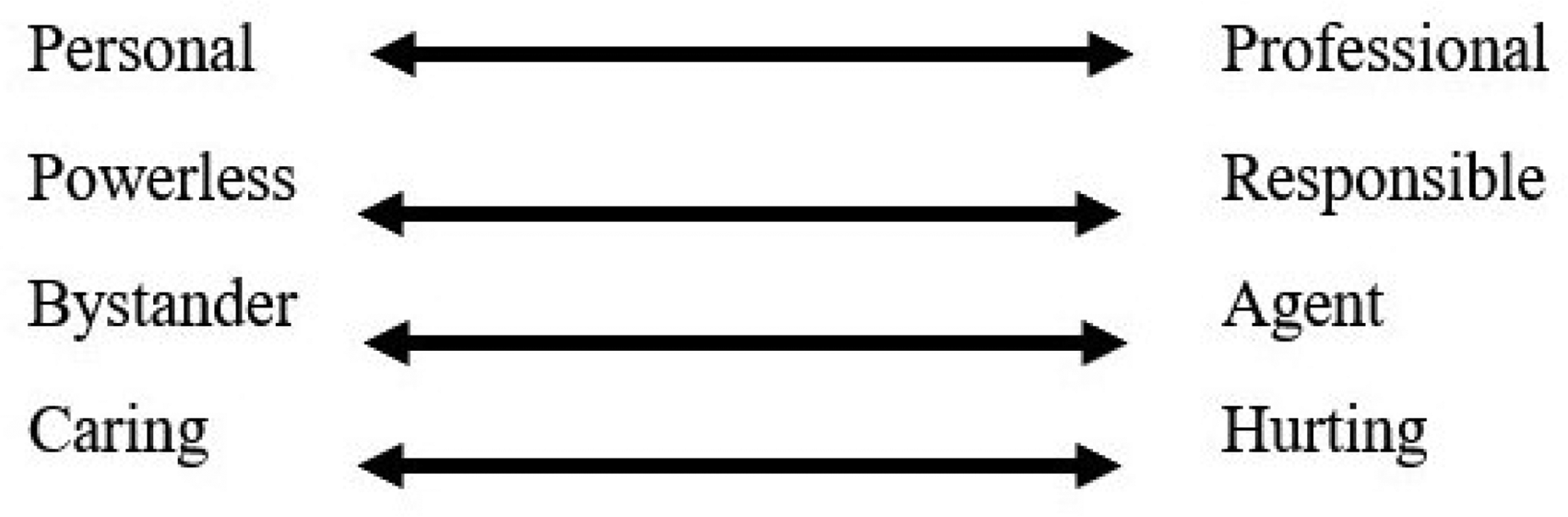
Impossible dualities.
They were stuck between their personal role as carer for the child and their professional responsibilities as agents for the local authority; between caring for the child and feeling that they were hurting them: ‘Because you’ve got a child that … and you’ve got to reject them’ (Kim). They were stuck between being an active and central participant in the story and being a powerless bystander. Sarah described being a powerless bystander in the decision to separate Alex and her brother but then being required to be an active participant in the plan: Because you’re moving, you’re packing someone’s bits, that’s sitting there, [looking] daggers at you, and you’re thinking, I really don’t want to be doing this, but I’ve got to do it because everyone’s saying that’s what’s best for him.
Kim and Emily both described feeling they had caused their child’s pain by sending them to the adoptive family: ‘We’d also, as such, rejected him, because we’d put him out to adoption, we had caused that twelve weeks of, of, that’ (Kim). The process of grappling with those dynamics is described by Emily: ‘I just was left feeling that I’d done, I was pretty useless actually, done the wrong thing, and, actually, I don’t know how I could have done it differently … it was a nightmare to be in.’
Working With Or Fighting Against
Conflict with professionals permeated interviews with Louise, Kim, Emily and Sue. Rather than supportive relationships, the use of words such as ‘fight’, ‘thrown into’ and ‘bashing’ were frequent, suggesting the experience of a battle. Emily described her experience of being: … thrown into a meeting with the two persons that ran the children in care team … [I] got a bashing, an ear bashing really about, basically pull your socks up you need to decide whether you still want to be a foster carer, ra-ra-ra, all this stuff, and it absolutely floored me.
Rather than feeling emotionally supported by professionals, these carers described confrontational ‘them and us’ relationships, leading to experiences of isolation and helplessness alongside feeling disrespected, ignored and unheard: [I felt] Big time let down by them all [professionals]. But, you know, where are you left when you are in a place like that, and you’ve got those people around you and the very people that you thought that are there to support you, aren’t there?
A different relationship with professionals was held by Gillian, Sarah, Emily and Patricia. Disagreements with professionals were acknowledged, but phrases such as ‘teams around my children’ (Sarah) suggested more collaborative relationships. These carers described more positive relationships with social workers and reported feeling listened to and having decisions explained: ‘I was lucky, the people that came to do the sibling assessment actually explained to me … being able to have that information helped me’ (Sarah). These carers described an acceptance of the restrictions and limitations of the processes involved and presented as more comfortable with their position in the system. Feeling heard, valued and part of the system, rather than battling against it, seemed to result in an increased sense of shared responsibility, support and more open communications.
Discussion
Study Summary
The analysis of interviews identified the powerful emotional experiences of foster carers as they hold their children’s early stories. All participants described a process of piecing together their children’s early experiences to make sense of the story, yet the degree of misinformation, gaps and confusion in the information provided made this task difficult if not impossible. Carers were left holding the ambiguity and uncertainties in the story, for both themselves and their children. Alongside this, all participants described a personal emotional engagement with the stories. The intensity of the engagement varied; however, emotions of shock, anger and sadness suggested that participants progressed through a cycle of grief relating to their children’s stories.
The participants’ experiences of holding these stories within the wider context of the children’s birth families, their own lives and families and the professional networks surrounding them were also highlighted by the analysis. How carers managed the network of relationships varied; however, the degree to which the caring role expanded beyond the boundaries of a job was evident throughout the interviews.
The Fostering Task
A central theme highlighted by the analysis was the enormity of the emotional task of foster care, set against the context of the professional role. Participants grappled with the challenge of balancing the personal and professional dynamics of care and emphasised that the role was not just a job, describing emotions of love and commitment towards ‘their child’. This aligns with research outlining the challenges carers face navigating their role as ‘professional parents’ (Hollett et al., 2022; Schofield et al., 2013).
Whether foster care can be a purely professional task has been debated by Brown and colleagues (2019). Brown concludes that due to dynamics of power, trust and dependency, care must always involve a level of nurture, love and attachment that goes beyond a professional role. The need for emotional availability and containment is heightened for children in care, due to previous experiences of trauma. They require carers who are emotionally attuned to their experiences (Hughes, 2004), who can think for them and help them make sense of their stories (Baylin, 2015; Jacobsen et al., 2018; Kenrick, 2000; Lausten and Frederiksen, 2016). The present study highlights the degree to which the participants were offering this, connecting with their children’s stories of trauma and loss in personal and emotionally open ways, in addition to being emotionally engaged with the ongoing story unfolding within their care. By bringing children into their worlds, carers were also balancing this with personal losses and stress in their lives, resulting in them holding three levels of emotions: their own, their child’s and the impact of their child’s experiences on themselves (Figure 2).
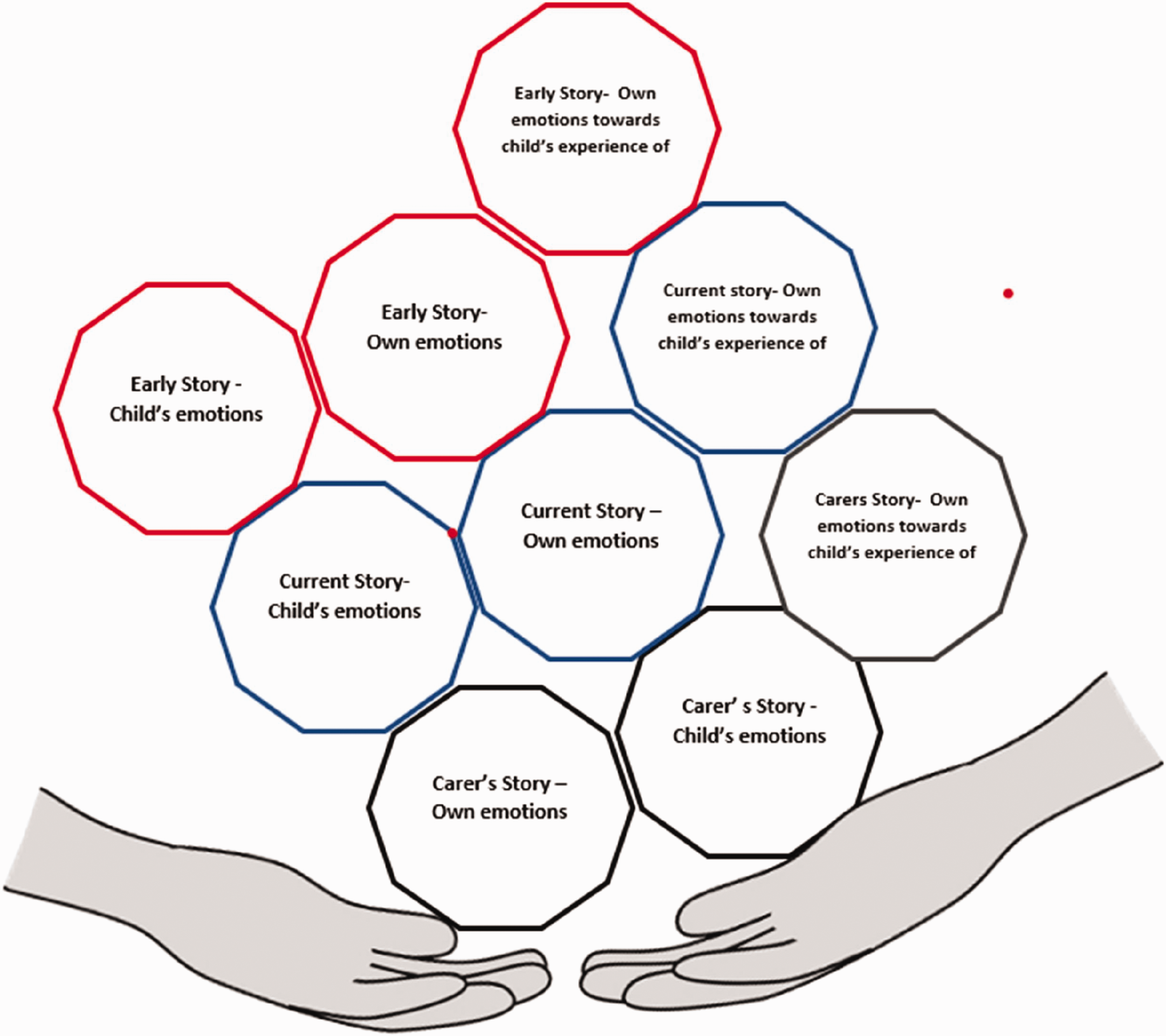
Emotional load held by carers.
The analysis suggests that the fostering role is considerably wider than the relationship between the child and the carer, including birth parents/families in addition to the carer’s own family network, and that participants were holding two sets of relational stories: their own and their child’s. Research has emphasised the importance of carers embracing an open position towards children’s families (Diaz-Tartalo et al., 2018), assisting children to process early relational trauma (Boyle, 2017), develop integrated identities (Winter and Cohen, 2005) and resolve divided loyalties between birth and foster families (Fuentes et al., 2019). Research has also highlighted the importance of the wider fostering network in offering children alternative relationships to expand early relational blueprints (Schofield and Beek, 2009). Foster care needs to provide a bridge between the past and the present/future, therefore, offering children new experiences and relationships while allowing them to use these new understandings in the processing of old relationships.
The participants in this study were holding relationships across that bridge. However, the analysis highlights the inherent challenges involved and the experience of intrusion and threat which resulted in some carers seeking to protect their world from the child’s early world. This aligns with research identifying relationships with birth family as significant stressors for carers (Van Holen et al., 2015), contributing to decisions around ending placements (Taylor and McQuillan, 2014).
The implications of the above are considerable for the task of fostering, and the lack of acknowledgement for the personal emotional enormity of the task can lead to significant consequences for both carers and children (Goemans et al., 2020). Participants described emotional experiences suggestive of grief (Kubler-Ross, 1969). Additionally, four carers described periods of time when they experienced helplessness and powerlessness alongside feelings of responsibility and guilt – characteristics identified as risk factors for secondary trauma (Elmir et al., 2017).
The carers interviewed had reached positions of emotional stability. However, research into secondary trauma would indicate that many foster carers are not able to do this, with high levels of secondary trauma/compassion fatigue identified (Bridger et al., 2020; Hannah and Woolgar, 2018), leading to increased risk of placement breakdowns (Wright, 2009) and retention difficulties (Hannah and Woolgar, 2018).
The Role Of The Professional – Containing The Container
Bion’s concept of containment (1962) can be understood as being provided by all participants of this study to the children in their care. The significant emotional demands of this task, however, would suggest that it is essential that the emotional experiences of the carers – the immediate containers – are themselves contained by the professional network. Relationships between carers and professionals varied in this study, but for over half the carers, relationships with professionals were more characterised by conflict than containment and support. Half of carers described feeling unsupported and criticised by professionals. They felt disrespected and unheard, leading to feelings of isolation and powerlessness. This finding would concur with research suggesting carers frequently do not feel valued as ‘professionals’ within the system (Jennings and Evans, 2020). Thus, neither the personal nor the professional aspects of the role are fully acknowledged by the wider organisation. Research has found poor retention in carers to be linked with feeling disrespected and unheard by professionals (Randle et al., 2017).
Research has indicated that positive relationships between carers and professionals increase foster carers’ reflexivity and capacity to hold and think about the experiences of their children (Onions, 2018; Luyten et al., 2017; Midgley et al., 2019), in addition to being a protective factor against secondary trauma (Cole et al., 2022).
Although beyond the scope of this research, the implication of the question of containment can be expanded beyond social workers to include dynamics within the wider organisation. Research into compassion fatigue in frontline professionals would suggest there is a lack of containment permeating the social care system (Ireland and Huxley, 2018; McElvaney and Tatlow-Golden, 2016; Mendez-Férnández et al., 2022). Figure 3 shows the importance of trauma – transmitted through every layer of the social care system – being contained by the structures above. Simpson (2016) suggests that if professionals are not offered the emotional containment needed by the management system, then they will not be able to offer the containment needed to those they support. If the management system is not provided with the containment needed by the organisation, then they will not be able to offer the containment needed to professionals and so on throughout the system (Gibson, 2008; Tyler, 2012). The cost of this absence is likely to be most severely experienced by children.
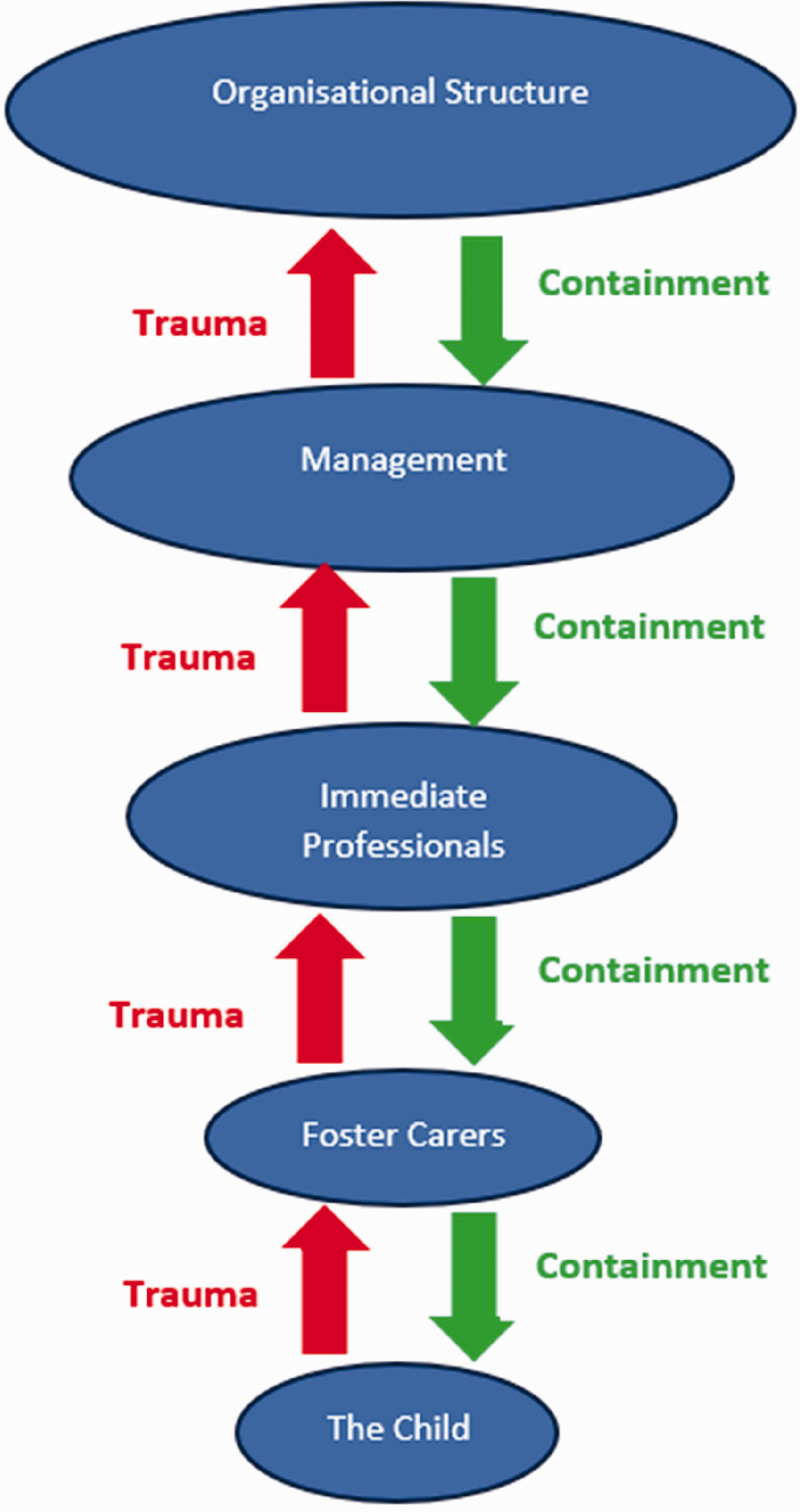
Hierarchy of containment.
Implications For Practice
If foster carers are to continue to hold children’s stories of trauma, loss and disrupted attachments then it is essential that they are provided with the emotional support that enables them to feel validated, listened to and contained. It is important that both the professional and the personal elements of the fostering role are acknowledged, recognising the significant impact that children can have upon their carers’ worlds, alongside the profound impact that carers can have on children. It is important that carers are offered a supportive space to think about their children’s stories and the impact that those stories have upon them, thus promoting higher levels of reflexivity, connection and compassion.
The current practice of emphasising the professionalism of the role risks minimising the emotional and deeply personal impact of caring for traumatised children, leaving carers struggling with strong feelings of grief, loss, anger and helplessness, without appropriate validation or support. The parallel devaluation of their role as professionals risks creating hierarchical environments in which carers feel voiceless and powerless within the organisation, leading to experiences of isolation.
If social work professionals are to be able to provide the support and emotional containment carers need, then they will need to be offered emotional support and containment within the system. The powerful emotions uncovered by this research would suggest the need for high levels of emotional containment to permeate every stage of the organisational hierarchy. The provision of supervisory and management structures adhering to the principles of trauma-informed practice (Department of Health and Social Care, 2022) and the inclusion of reflective practice discussions would enable higher levels of emotional containment throughout social care organisations (Bell et al., 2003; Treisman, 2021).
Implications For Future Research
Future research would benefit from exploring the factors that support carers to successfully navigate the emotional load inherent in the fostering task, creating environments of emotional openness, connection and containment for children. It would be beneficial to explore relational dynamics between children and carers, and between carers and social workers, to identify factors correlated with higher levels of emotional engagement from carers, emotional wellbeing in children and placement stability. Exploring the impact of foster carers’ own early experiences on their capacity to relate to and hold the stories of the children in their care would be a valuable area of future research.
This study only heard the voices of female White British heterosexual carers from one local authority. Future research would benefit from including other voices: carers from different local authorities, different genders, ethnicities and sexualities. Further to this, including the voices of children in care, birth families and social work professionals would offer additional perspectives, enhancing the understanding of the fostering experience.
Participants in this study had moved through difficult experiences to offer stable foster placements. Research to explore the experience of carers who had ended a placement and/or resigned their fostering role would be helpful in understanding the factors involved when endings are less positive.
Limitations Of The Research
IPA research aims to explore the experiences of a small homogenous group of people, making wider generalisations difficult. Participants in this study were all White British, heterosexual, female carers aged between 40–70 years old, from one local authority. Consequently, the experiences described here may be specific to these participants, and care must be given to any generalisations beyond this. The local authority involved had invested substantially in providing therapeutic parenting support to its carers. Most participants had received some training in this area and, consequently, may have held a different level of awareness regarding the importance of therapeutic parenting than other carers.
The participants in this study were all self-selected and, as such, are likely to have represented a group of carers who had an interest in the research and who were in a position of current stability. All participants expressed high levels of commitment to the child(ren) in their care. Carers who were experiencing higher levels of placement difficulties and instabilities may not have presented themselves for inclusion. This could have resulted in the study focusing only on carers who held particular experiences or perspectives.
Conclusion
There is a growing awareness of the therapeutic potential of foster care for children who have experienced early trauma and loss. This study has highlighted the enormity of the emotional task entailed, in addition to the complexity of the relationships involved. Participants engaged with their children’s stories at deeply personal levels, working to make sense of the stories and process the emotional content both for themselves and for their children. Additionally, they facilitated relationships for children with both birth families and their own families, forming a bridge between the past and the present/future. The study highlighted the challenge entailed in managing the personal task of care within the wider professional context of the fostering system. This study has highlighted that if foster carers are to be able to continue to hold the trauma stories of their children, the professional systems around them must recognise both the personal and professional aspects of their role and offer trauma-informed environments capable of holding powerful emotions.
Footnotes
Declaration of conflicting interests
The author(s) declared no potential conflicts of interest with respect to the research, authorship, and/or publication of this article.
Funding
The author(s) received no financial support for the research, authorship, and/or publication of this article.