




Abstract
The needs of foster carers are complex as children in their care often present with complex emotional and behavioural difficulties. Previous studies have examined foster carers’ perceptions of the unmet needs of the children in their care but there is a lack of knowledge regarding carers’ own goals when seeking professional help. The present study seeks to fill this gap by examining the goals that carers who are looking after children with emotional and/or behavioural difficulties set at the start of an intervention, the Reflective Fostering Programme, designed to support them. Twenty-six foster carers were asked to complete a Goal-Based Outcome Measure (GBOM) before starting the programme. Qualitative content analysis revealed five main categories of goals. Three were child focused (child’s relationships, challenging behaviours and emotions) and two were foster carer focused (personal goals and goals related to participating in the programme). By understanding the types of goals meaningful to foster carers, interventions can be developed to better target their specific needs and allow outcome measures to be more closely aligned to their goals. Results are discussed in terms of implications for the development and evaluation of interventions to support foster carers and the children they look after.
Introduction
Children in foster care are a particularly vulnerable group by virtue of their frequent histories of trauma and neglect. Compared to children in the general population, they have higher rates of medical, developmental and mental health needs, and compromised attachment behaviours (Milburn, Lynch and Jackson, 2008; Pilowsky, 1995). As a result, they often present behaviour that can challenge and place great strain on those looking after them (Farmer, 2005).
Evidence suggests that children in foster care show improved outcomes when placed with a carer with whom they are able to build a secure relationship (Joseph, et al., 2014) and that instability and disruption exacerbate their emotional and behavioural difficulties (Rubin, et al., 2007). Concerns about the vulnerability of such children and the demands placed on their carers have stimulated the development of a number of interventions designed to improve outcomes for the children through offering support to their carers (Dickson, et al., 2009; Fisher, 2015). However, despite important clinical initiatives, there remains a lack of understanding of what foster carers are seeking from support services. Studies evaluating the impact of therapeutic interventions tend to rely on pre-existing measures of emotional and behavioural well-being and it remains unclear whether these are the areas where foster carers are most in need of help.
In mental health, there has been a move in research and practice towards assessing the impact of interventions by examining the goals set by individuals themselves rather than relying on pre-defined measures that specify the outcomes that are considered to be important (Wolpert, Cheng and Deighton, 2015). This change of perspective makes it possible to see whether service responses are addressing the more unique and personal goals for which clients are seeking help. While there is a plethora of research investigating the experiences and needs of foster carers, relatively little is known about the kind of goals they have, especially when seeking professional help related to a child’s emotional and behavioural difficulties. A fuller appreciation of these will clarify the form of help carers are seeking and so improve understanding of how to best support them. Such knowledge will also inform how best to evaluate support programmes and interventions.
Research investigating the needs of foster carers suggests that they have substantial unmet needs (e.g. Murray, Tarren-Sweeney and France, 2011). Qualitative studies of these reveal a range of difficulties, such as managing children’s behaviour and understanding of their inner world (Bunday, et al., 2015; Cooley and Petren, 2011), a lack of social or personal support (Blythe, Wilkes and Halcomb, 2014) and poor working relationships with social care services (Brown and Calder, 2000; Macgregor, et al., 2006; Maclay, Bunce and Purves, 2006). In addition, many studies report carers’ need for additional and specialised training (see Hebert and Kulkin, 2018) and highlight a different set of needs related to their own well-being and coping with the stress attributable to their task of caring for troubled children (McKeough, et al., 2017; Morgan and Baron, 2011; Murray, Tarren-Sweeney and France, 2011).
Absent from this literature are studies that investigate the goals of foster carers when they seek professional help in relation to the child in their care. This is a serious deficiency as these goals tend to be future focused and provide the opportunity for carers to think and talk about their personal hopes and aims. The mere action of setting goals encourages them to see where they are heading rather than dwell on where they have been. Moreover, the positive phrasing of the question ‘What are your goals?’, rather than ‘What are your problems or needs?’, shifts the focus of attention to what individuals want to achieve rather than expounding their current difficulties.
Duncan Law and Jenna Jacob have developed the Goal-Based Outcome Measure tool (GBOM; Law and Jacob, 2015) with the aim to evaluate progress towards goals in relation to an intervention. While primarily used as a clinical tool, GBOMs have shown great promise as they are a powerful support to shared decision-making and the provision of more personalised care. In health services, they are used to gain insight into the more personalised needs of patients and carers and contribute to practice development. This is reflected in the growing number of studies that employ these methods. For instance, the qualitative exploration of goals has been used in studies in physical and neurological rehabilitation settings (Hurn, Kneebone and Cropley, 2006; Lawler, et al., 1999; Stolee, et al., 1999; Williams, Steven and Sullivan, 2011) and in child and adolescent mental health services (Bradley, et al., 2013; Hanley, et al., 2017; Jacob, et al., 2016; Rupani, et al., 2014). To take one example, the study by Jacob and colleagues (2016) of the goals set by birth parents and their four- to 11-year-old children attending child mental health services found that parents and children have different goals which affect the focus on the difficulties where they want to see improvements. Parents’ goals tend to concentrate on creating strategies to help manage their child’s behaviour as well as on changes they want to make to themselves. Children’s goals tend to be much wider, reflecting their age and maturity as well as the variety of their needs and individual circumstances; they are likely to include contextual family, school and social issues as well as behavioural and emotional ones. Thus, the GBOMs can capture areas scanted by other standardised outcome measures, such as desires to feel more confident, to be able to cope with emotional and behavioural difficulties and to talk more openly about thoughts and feelings. However, the degree to which the aims charted by Law and Jacob apply to foster carers is unclear as their study only included biological or adoptive parents.
The aim of the present study, therefore, is to apply these methods to foster care and explore carers’ personalised goals when seeking support in relation to their role and relationship with the children they look after. It is hoped that a better understanding of these goals will provide further insight into carers’ needs and inform the development and evaluation of interventions that enable carers to provide high quality care. Additionally, goal setting has the potential to empower carers by making their voice central in discussions about treatment plans.
Methods
Design
This study involves secondary analysis of data collected as part of the Reflective Fostering Programme (RFP) pilot evaluation (see Midgley, et al., 2019 and Redfern, et al., 2018, for more details). For this exploratory study, a qualitative approach was used in order to identify inductively the types of goals set by foster carers at the start of the group discussions.
Setting
The RFP is a new group-based programme developed at the Anna Freud National Centre for Children and Families in London. It was created in response to a call from the National Society for the Prevention of Cruelty to Children (NSPCC) to develop a programme to support foster carers looking after children with emotional and/or behavioural difficulties. It is designed to encourage reflective parenting (for more details about the programme see Redfern, et al., 2018). During the first stage of pilot evaluation, the programme comprised 10 three-hour meetings offered to groups of six to 10 foster carers caring for children aged four to 11. The intervention involves no direct work with the children they look after.
Recruitment
Information about the study and the RFP was distributed to two local authorities. Supervising and/or child social workers in the local authorities were invited to identify foster carers who might benefit from attending the programme and who might be interested in joining the study. Respondents then received information about the programme and its research before deciding whether to participate. Although the RFP is intended for all foster carers, it is especially relevant to those who feel they are struggling to care for their child. In order to take part in the study, foster carers were requested to have been in placement with a child aged four to 11 years for at least four weeks at the point of recruitment, to have expressed a need for additional support and to be sufficiently fluent in English to engage with the programme. There were no specific inclusion/exclusion criteria regarding the child’s level of difficulty (see Midgley, et al., 2019 for more detail).
Participants
Twenty-eight foster carers took part in the RFP study. In total, 26 of them (3 males, 23 females) completed information about the goals they set for themselves prior to engaging with the programme. These form the sample for the study.
Most of the participating carers (73%) were married or in a domestic relationship, and their mean age was 52 years. The length of time they had been fostering varied from 18 months to 16 years, the number of current foster children from one to three and the total number of children they had cared for before the current one ranged from 0 to 20. Of those who responded (n = 25), 40% stated that they had experienced a placement breakdown some time in the past (see Table 1).
Foster carers and children in foster care: socio-demographics.
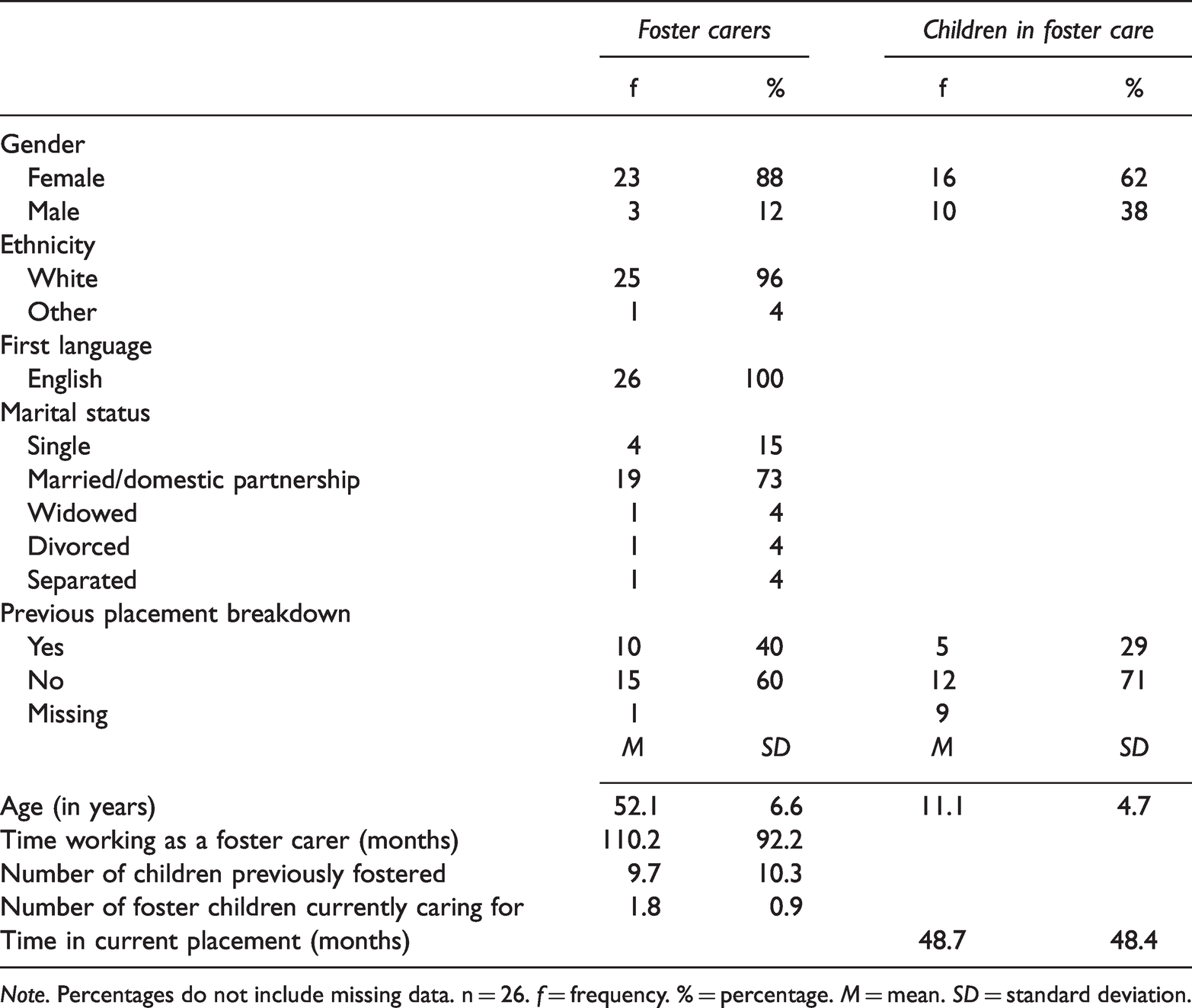
Note. Percentages do not include missing data. n = 26. f = frequency. % = percentage. M = mean. SD = standard deviation.
With regard to the 26 children in their care, participants reported that their mean age was 11 years and that 62% were females. Of those who responded (n = 17), 29% reported that their child had previously experienced a placement breakdown and that, on average, he or she had been in the current placement for almost four years (see Table 1 for details).
Measures
The GBOM (Law and Jacob, 2015) is designed to measure the progress towards a goal in relation to an intervention. When administering it at the start of an intervention, participants are asked to identify up to three goals they wish to achieve and, at subsequent reviews, to report how far they feel they have moved towards them as a result of their participation. Progress towards individual goals is rated on a scale from 0 (no progress) to 10 (goal fully reached). The outcome is the amount of movement along the scale from the start to the end of the intervention. This measure is typically used to evaluate progress towards personal goals in clinical work with children and their families (Law and Jacob, 2015). However, the present study pays particular attention to the nature of the goals themselves; this is less common but has been done in a few studies with other populations, such as parents bringing their child to a Child and Adolescent Mental Health Service (CAMHS) (Bradley, et al., 2013; Hanley, et al., 2017; Jacob, et al., 2017; Rupani, et al., 2014).
Data collection
Foster carers were invited to complete the goal-setting form during the last 10 minutes of the first RFP session, as part of the feasibility study of the RFP (Midgley, et al., 2019). All measures were collected via an online database that gathers information using web enabled devices (POD, Patient Owned Database). Each participant was assigned a unique password to access and complete the questionnaires. Data collected via POD were automatically uploaded and securely held on the POD online database. While most of the participants completed the goal-setting form using the POD, some had to fill in a paper version due to technical problems with the tablet provided. Foster carers who were not able to attend the first session or could not complete the goals form during the first session (n = 5) were invited to do so by the end of the second one.
The instructions on the goal-setting form stated: ‘In coming to this service, what are some of the problems you want some help with, or goals you want to get to?’. RFP facilitators were available to support foster carers in the choice of their goals but gave minimal guidance.
Ethics
The study was approved by the NSPCC Ethics Committee (reference R-17-88) and the research and development committees in both local authorities. All participants were informed about the content and scope of the study and gave written informed consent before starting the RFP. Confidentiality and anonymity were ensured throughout.
Data analysis
A qualitative, content analysis approach (Elo and Kyngas, 2008) was used to analyse the data. The first aim was to identify each goal and the second to categorise them. The purpose of content analysis is to organise and elicit meaning from the information collected and to draw realistic conclusions (Bengtsson, 2016). Given the nature of the data (a collection of relatively short statements about specific goals), the aim was to analyse a broad surface structure (a manifest analysis) rather than to probe a deeper one (a latent analysis).
Step 1: Goal identification
The first step involved examining how many goals were included in each recorded goal statement. If a statement contained more than one goal and these goals were most appropriately coded into different categories (as identified by the coding framework which we will go on to describe), then the cluster of responses were split into separate statements. An example of this is: [Help him understanding his feelings and help him form attachments].
This goal was split into two units:
Unit 1: [Help him understanding his feelings]
Unit 2: [Help him form attachments]
Eleven goal statements were split in total. All were split into two or more units following agreement among the coders that splitting was necessary.
Step 2: Goal classification
Goal statements were initially categorised using a pre-existing analytical framework which has been established to analyse the goals of parents seeking help for children referred to mental health services (Jacob, et al., 2016). This process involved the research team reading the statements several times. Where possible, the main coder (ER) then coded the goals using the overarching categories and sub-categories in Jacob’s framework. The classifications were then iteratively modified in response to the data in order to develop a set of categories meaningful to the foster carers. Thus, the wording in the title of some sub-categories was amended and in some cases rearranged. All the themes under which no goal statements were forthcoming were deleted and new categories were created for those that were specific to the study, i.e. the ones related to the foster carer participation in the RFP. All categories included in the final framework were precise, exclusive and exhaustive (Jacob, et al., 2016) and were named using content-characteristic words (Elo and Kyngas, 2008). Finally, the emerging classifications were organised by clustering similar ones into broader and overarching categories (Elo and Kyngas, 2008). Procedures to reduce potential biases and the researchers’ interpretive role are discussed below. This process led to the definition of a final framework where goal statements were organised into five main categories depending on the focus of the goal.
Step 3: Inter-rater reliability
Three of the authors were involved in the data analysis (ER, SJB, NM). ER was the primary coder and coded all goal statements collected. She was naive to prior knowledge, experience or exposure to clinical psychology, limiting the likelihood that her personal views or expectations would bias the analysis. To test the reliability of the coding using the new framework, SJB independently coded 50% of the goals, selected at random. Cohen's κ showed a high level of agreement between the two researchers’ coding of the foster carers’ goals, κ = .954 (95% CI, .891 to 1), p < .0005. In the few cases where the authors disagreed, a third author (NM) became involved and the statement was allocated to an unanimously agreed category.
Step 4: Quantitative analysis of goals
A frequency analysis of occurrences for each category and of each category level was undertaken.
Results
A total of 96 goal statements set by 26 foster carers were analysed (Figure 1).
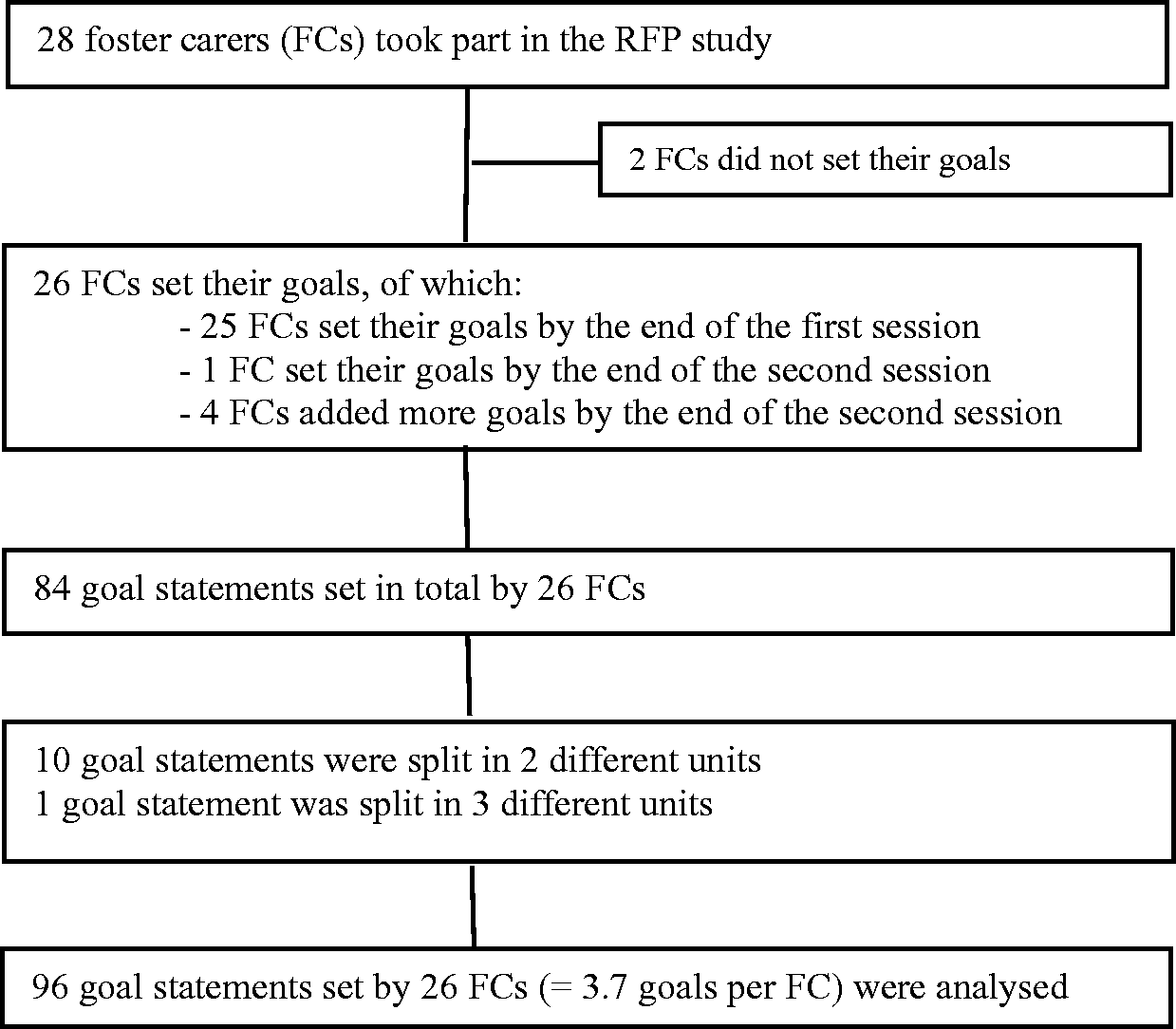
Dataset diagram.
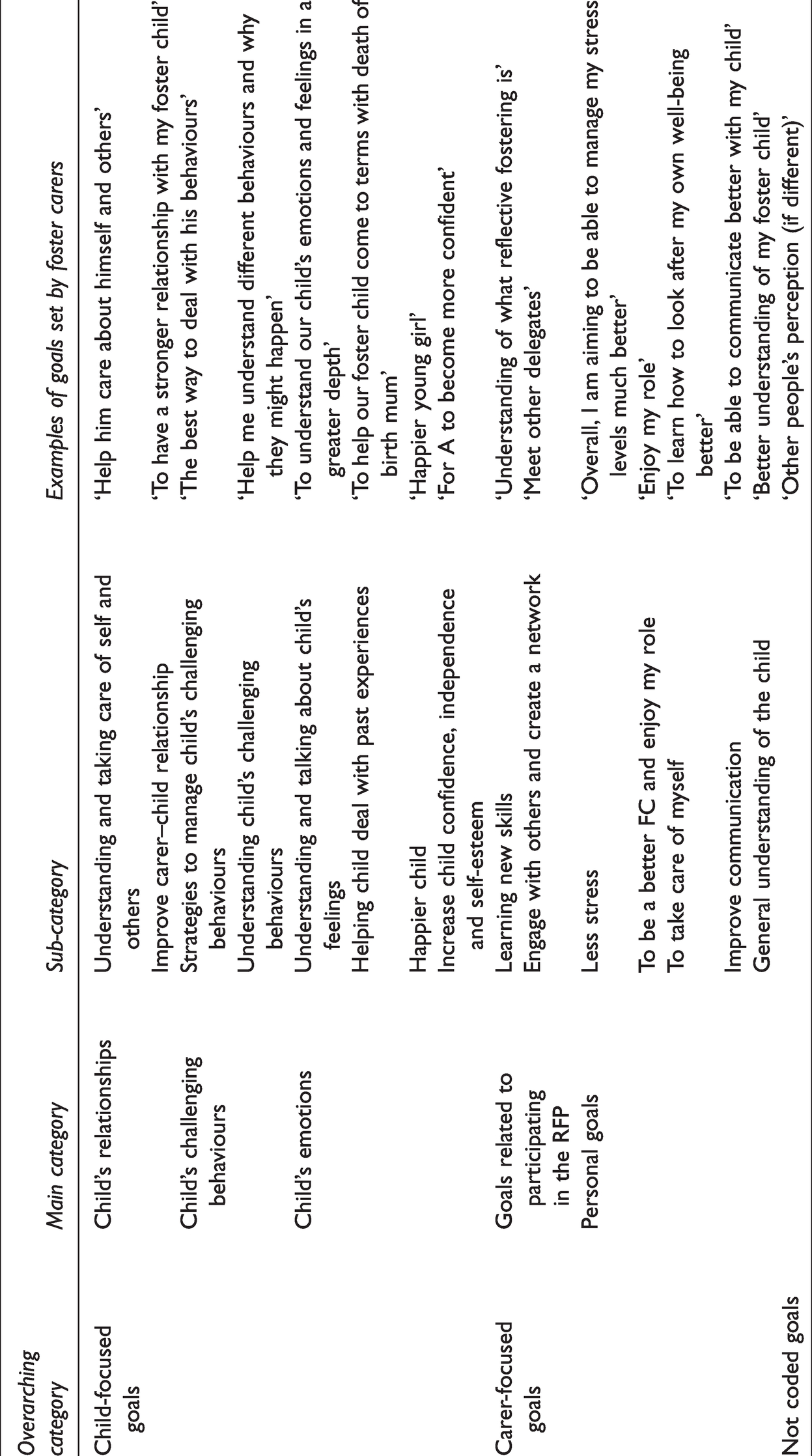
The average number of goals set by each participant was 3.7. Overall, foster carers did not set goals aimed at facing a specific difficulty (e.g. sleeping issues or an inappropriate behaviour) in a particular setting (e.g. at home rather than at school) but described ones with a broader focus. The goal statements were organised into two overarching categories focused either on the child or the carer, with each one further disaggregated into main and subsidiary categories. Ninety-six percent of the analysed goals could be categorised within this framework, with 4% of statements having to be excluded because of unclear wording (see Table 2).
Goals framework with example of goals set by foster carers.
Child-focused goals
The overarching category of the ‘Child-focused goals’ included three main categories: ‘Child’s emotions’, ‘Child’s challenging behaviours’ and ‘Child’s relationships’. These, in turn, had a total of eight sub-categories.
‘Child’s emotions’ referred to goal statements related to gaining a better understanding of the child’s emotions, feelings and past experiences. It was the main category with the highest number of goal statements (27%) and included comments related to the child being able to talk about and understand their own feelings, and goals related to improving the child’s positive emotions such as happiness, confidence and self-esteem. For example, one foster carer reported wanting ‘to understand [their] child’s emotions and feelings in a greater depth’ and another was aiming at helping the ‘foster child come to terms with death of birth mum’. Within this main category, the sub-category ‘Understanding and talking about child feelings’ had the highest percentage (17%), followed by ‘Helping child deal with past experiences’ at 5%.
‘Child’s challenging behaviours’ (26%) referred to goal statements that related to the child’s behaviours and included two sub-categories, one expressing the foster carer’s desire to understand their child’s challenging behaviours and the other a wish to learn new strategies to manage them. One foster carer’s goal was to find ‘the best way to deal with his [foster child’s] behaviours’ and another’s to ‘understand different behaviours and why they might happen’. These two sub-categories presented a similar number of goal statements, with ‘Strategies to manage child’s challenging behaviours’ reporting 15% and ‘Understanding child’s challenging behaviours’ 11%.
‘Child’s relationships’ included goal statements focused on the child’s social skills. Goals here tended to concentrate on the relationship between the child and the foster carer and the child’s ability to understand and take care of themselves and others. For instance, one foster carer reported that their goal was ‘to have a stronger relationship with [their] foster child’; another said they wanted to ‘help him care about himself and others’. Compared to the other main categories, ‘Child’s relationships’ presented the lowest number of goal statements (5%).
Carer-focused goals
The overarching category of the ‘Carer-focused goals’ included two main categories, ‘Personal goals’ and ‘Goals related to participating in the RFP’, which presented the same number of goal statements and were themselves organised in seven sub-categories.
‘Personal goals’ (21%) included those related to the carers’ own well-being and role. For example, one was ‘to manage [their] stress levels much better’; another ‘to learn how to look after their own well-being better’. This main category included goals where foster carers additionally expressed their wish to improve their communication with their foster child and their ‘understanding’ of him or her, with no specific mention of the aspect they were interested in.
Goal statements set by foster carers that were included in the main category, ‘Goals related to participating in the RFP’ (21%), were proffered by those wishing to acquire knowledge and skills and engage with others in the group. These carers stated that they wanted to gain a better ‘understanding of what reflective fostering is’ and/or to ‘meet other delegates’.
Graph 1 shows the percentage of coded goal statements placed in each overarching and main category. It can be seen that most of the goals set by foster carers were focused on their foster child (58%) and that more than 50% of the goals fall within either ‘Child's emotions’ (27%) or ‘Child’s challenging behaviours’ (26%), both included in the ‘Child-focused goals’ overarching category.
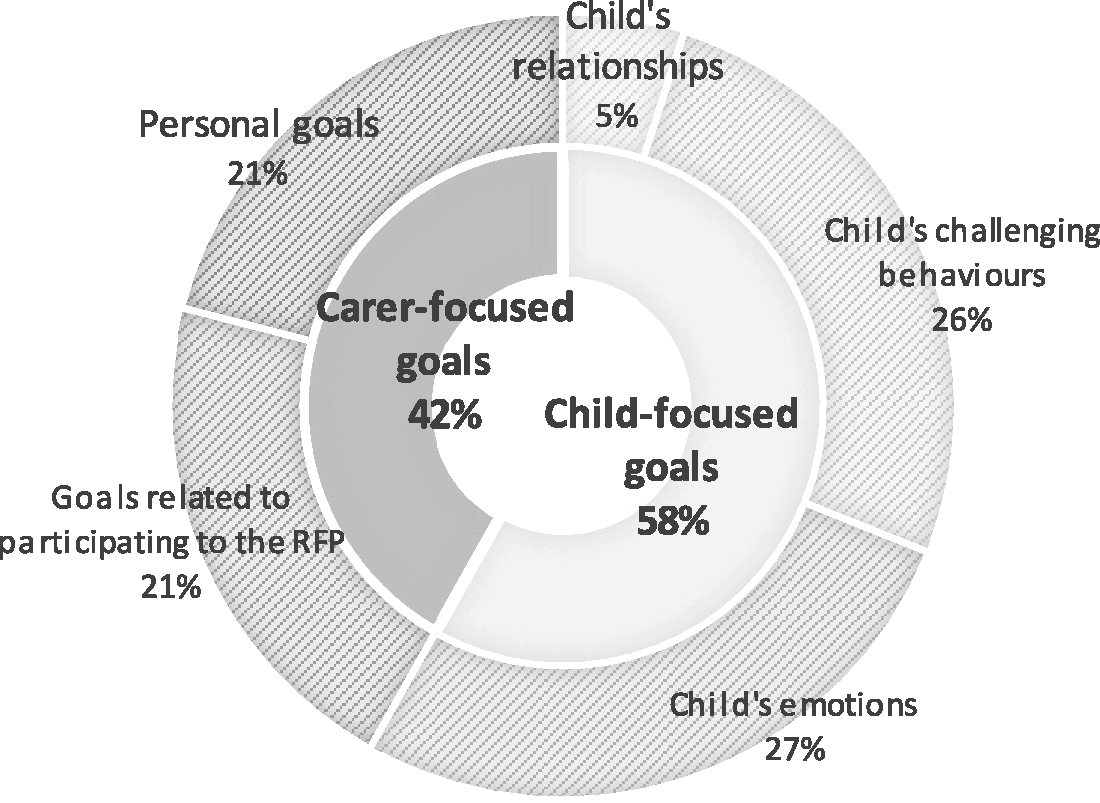
Percentage of coded goal statements placed in each main category and overarching category.
Graph 2 shows the percentage of coded goal statements placed in each sub-category, clustered by overarching categories and sorted in descending order. The sub-category with the highest percentage of goal statements set by foster carers was ‘Understanding and talking about child’s feelings’ (17%) that fell within the ‘Child-focused goals’ overarching category.
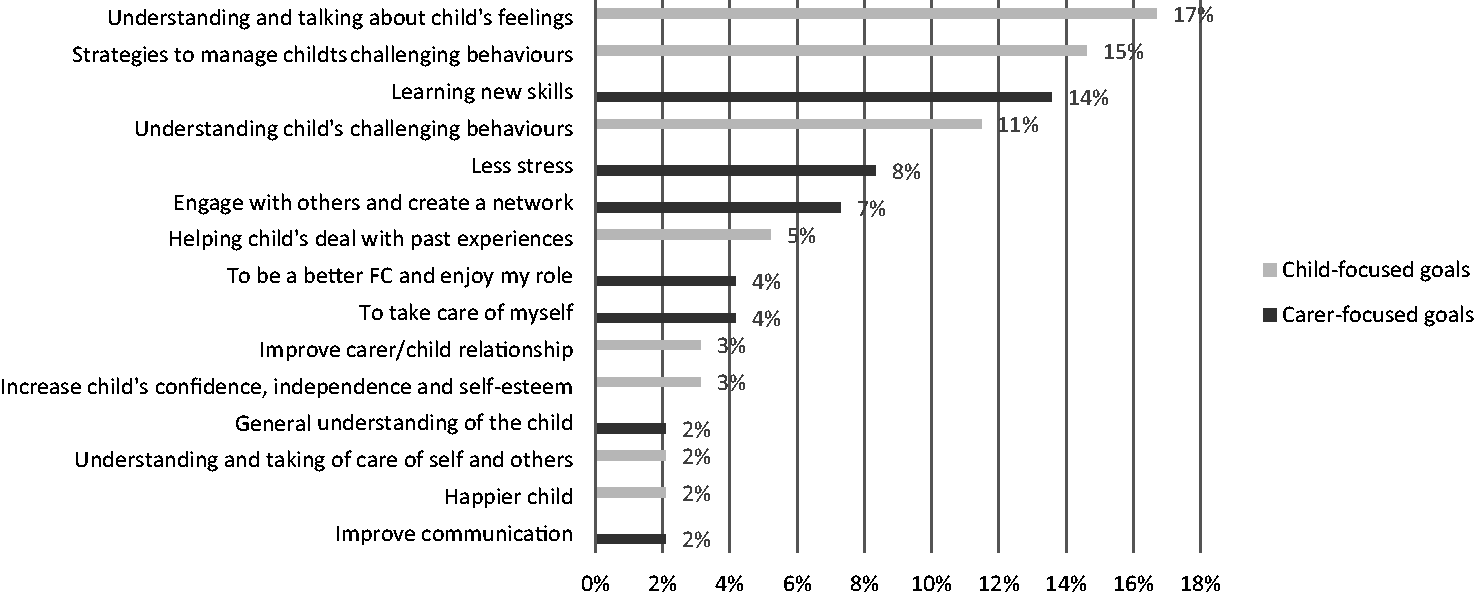
Percentage of coded goal statements placed in each sub-category, coloured by overarching category and sorted in descending order.
Discussion
This research represents the first analysis of the content of goals set by foster carers in relation to an intervention designed to support them in caring for children with emotional and/or behavioural difficulties. In particular, it develops a taxonomy of foster carers’ goals and links them to their wider needs. Overall, the analysis produced a framework comprising 15 sub-categories of goals organised into five main categories. Three of the main categories were child focused (child’s relationships, child’s challenging behaviours and child’s emotions) and two were foster carer focused (personal goals and goals related to participating in the RFP).
With regards to the goals focused on their foster child, most carers expressed an interest in gaining a better understanding of their child’s emotions, feelings and behaviours. They also wished to learn strategies to manage challenging situations. These findings are consistent with literature describing the training needs of foster carers (Hebert and Kulkin, 2018) and the needs of the children with regard to emotional, behavioural and mental health issues (Milburn, Lynch and Jackson, 2008). In addition, when these findings are compared to the goals formulated by birth parents of children in the same age range involved in a mental health service (Jacob, et al., 2016), similarities emerge in the extent that both foster carers’ and birth parents’ goals predominantly focus on strategies to help manage the child’s behaviour. However, foster carers appear to be additionally interested in understanding the behaviour and the internal aspects of their child’s difficulties, including his or her feelings and emotions. This finding may reflect the different challenges faced by foster carers in comparison to birth parents, and the fact that they often have quite limited information about the early history of those who come into their care. Foster carers often have to try and make sense of the emotional world of the children (Bunday, et al., 2015) as early maltreatment, trauma and multiple placements can make them distrustful of adults and create difficulties in expressing feelings.
Within this overarching theme, it is interesting that very few foster carers mentioned the goal of further developing their relationship with their child (only 3%). This may be due to the fact that they are aware of the temporary and professional nature of their role. However, this aspect should be further investigated as it is widely established that attachment difficulties have significant implications for the development of a positive carer–child relationship (Bunday, et al., 2015) and that healthy relationships are associated with improved child outcomes (Joseph, et al., 2014). Hence, it is important for foster carers to understand that the quality of the relationship they build with their child can affect his or her socio-psychological development and the stability of the placement.
Consistent with Jacob and colleagues’ (2016) study of birth parents is the finding that foster carers have goals that relate not only to the child in their care but also to themselves. In particular, they hoped to learn new skills and apply these to their day-to-day task. They also reported that they wanted to learn how to manage their stress levels, a wish commonly expressed by foster carers facing difficulties (McKeough, et al., 2017; Murray, et al., 2011), but added aspects of self-confidence and general well-being in terms of taking care of themselves, enjoying their role and improving their communication with their child. This is in line with literature linking challenging child behaviour to low levels of caregiver well-being and self-efficacy (for example, Morgan and Baron, 2011). However, in these studies the measures used to assess levels of stress, self-efficacy and well-being are based on standardised questionnaires that pre-determine the outcomes of interest, whereas in the present study the concerns and areas of life they want to change are voiced by the foster carers themselves.
With regard to the goal of learning new skills, the participating foster carers expressed a particular interest in learning skills covered by the programme they were about to attend (the RFP), such as reflective caregiving and mentalizing. Although the goals were set at the start of the programme, carers attending might have already had some information about the focus of the group and so tailored their goals accordingly. Nonetheless, this may indicate that concepts like reflective functioning and mentalizing resonate with foster carers due to the challenges they face (Farmer, 2005).
The foster carers also expressed the desire to discuss their experiences with others and create a lasting support network. This fits with some of the more general needs that foster carers have expressed in other studies. For example, having the opportunity to share feelings and experiences with more experienced carers or with those experiencing similar difficulties has been identified as a way of helping them reduce social isolation and feel more supported (Blythe, Wilkes and Halcomb, 2014). This suggests that group interventions may be particularly suitable for foster carers, given that they provide an opportunity to develop supportive networks (Midgley, et al., 2019).
Limitations of the study
There are several limitations to consider when interpreting the results of this study. First, the sample size was relatively small and included participants with a broad range of fostering experience. Also, the carers were invited to set goals specifically in relation to the RFP and could have been influenced by previous knowledge of the programme. Hence, different goals might be stated among foster carers accessing different types of support. Future studies should investigate the goals of foster carers in different contexts and settings. Second, many of the goals formulated by carers were general or somewhat vague such as ‘less stress’, ‘happier young girl’. This might reflect the fact that in this study the goals were set individually by foster carers rather than as a collaborative process or with contributions from an experienced professional. Also, unclear wording in some statements required interpretation for the categorisation and the experience of the coders might have affected the analysis. Future use of the GBOM aimed at developing a taxonomy of goals may benefit from supporting participants in setting goals that are specific and measurable, for example, by asking ‘How would you know if this goal has been achieved?’. Third, foster carers’ needs are complex and the present study may be limited in its ability to operationalise foster carer goals without including multiple levels or measurement or a more in-depth measure. Studies integrating different measures of foster carer needs and goals would add weight to the literature, as would research using in-depth interviews with foster carers.
Conclusion
This study has examined GBOM identified by foster carers attending a support programme for the first time. It has focused on the nature of the goals they set and offers a taxonomy with which to analyse them. This enables a better understanding of the personalised goals that foster carers have when seeking help which could inform service development and more targeted evaluations. Overall, the results suggest that foster carers were eager to gain a better understanding of their children’s emotions and behaviours and to learn how to manage them. In addition, they reported personal goals, such as learning new skills and developing better strategies to manage their own stress levels, as well as meeting other carers to share experiences and create a supporting network. These findings support the existing literature on the needs of foster carers but show that support services should not only focus on behavioural outcomes but also the impact of interventions on both the child and the foster carer. Moreover, the use of the GBOM in a novel setting has confirmed that goal setting may produce knowledge not captured by other standardised measures. The findings also offer an overall picture of foster carers’ goals and add to the literature by providing further insights into the needs and concerns they find meaningful. This knowledge has the potential to inform the development and evaluation of future programmes designed to enhance fostering skills, as a focus on issues that are important to carers empowers them to become key members of childcare teams.
Footnotes
Declaration of conflicting interests
The author(s) declared no potential conflicts of interest with respect to the research, authorship, and/or publication of this article.
Funding
The author(s) disclosed receipt of the following financial support for the research, authorship, and/or publication of this article: The RFP pilot evaluation study was funded by the National Society for the Prevention of Cruelty to Children (NSPCC). The authors received no additional financial support for the research, authorship and/or publication of this sub-study.