




Abstract
Trauma-informed care (TIC) psychoeducational group-based interventions for foster carers and adoptive parents are growing, but evidence about their effects have not been integrated. A narrative review was undertaken of studies that evaluated the effects of these interventions. It found that they appear to increase carers’ capacity to provide children with TIC and reduce child trauma-related difficulties. Three core components – psychoeducation, reflective engagement and skills building – were identified as helping to explain how the interventions work. However, the evidence is weak due to the mixed findings, diverse research designs, varied measures and methodological deficiencies, so results should be interpreted with caution. This highlights the urgent need for more rigorous research. Implications for practice, policy and research are discussed.
Introduction
Trauma-informed care (TIC) as an approach in child welfare and protection practice is consistently gaining acceptance among practitioners. It has been stimulated by advances in neurobiological research (Riem, et al., 2015) and Adverse Childhood Experiences (ACE) studies (Felitti, et al., 1998) and has led to more targeted and effective mediation for children who have experienced trauma. Many children who enter foster care have suffered multiple and prolonged experiences of abuse (Greeson, et al., 2011; Tarren-Sweeney, 2008) and face difficulties in neurobiological, psychological, emotional, social and cognitive development as well as poor mental and psychological outcomes (Pynoos, Fairbank and James-Brown, 2011). Several trauma-informed interventions and treatments have emerged in response to these challenges (Black, et al., 2012; Fraser, et al., 2013). This review focuses on non-clinical TIC interventions that can be carried out by practitioners and carers working outside formal clinical settings, and so are relevant to groups like social workers, foster carers and adoptive parents. The interventions have three main components, referred to as the pillars of TIC, first identified by van der Kolk (2005) and later by Bath (2008). These are employed in phases and comprise: (1) developing the child’s sense of safety; (2) promoting trusting carer–child relationships; and (3) teaching child self-regulatory strategies and coping skills.
The review specifically addresses the effects of programmes that incorporate TIC elements into psychoeducational group-based interventions. Psychoeducational groups are characterised by a pre-defined duration and closed membership; they are run by trained facilitators (Walsh, 1992) and focus on participants’ education, support and coping skill. While they contain a therapeutic element, they are not considered formal therapy (Sands and Solomon, 2004). They are also associated with promoting learning and engagement in a reflective process by connecting with others with shared experiences (Yalom and Leszcz, 2005). The facilitators need to be skilled in containing and exploring strong emotions to maximise the impact of the group work process, and this requires training and expertise (Brandler and Roman, 2015).
Current psychoeducational interventions in foster care
Twenty-three published reviews on foster care interventions were identified during the search for studies informing this exercise.
They were: Benesh and Cui (2017); Craven and Lee (2006); Dorsey, et al. (2008); Everson-Hock, et al. (2012); Festinger and Baker (2013); Hambrick, et al. (2016); Harris-Waller, Granger and Hussain (2018); Kaasbøll, et al. (2019); Kerr and Cossar (2014); Kinsey and Schlosser (2013); Leve, et al. (2012); Macdonald and Turner (2008); Nash and Flynn (2009); Roberts, et al. (2016); Rork and McNeil (2011); Schoemaker, et al. (2019); Solomon, Niec and Schoonover (2017); Stock, Spielhofer and Gieve (2016); Turner and Macdonald (2011); Turner, Macdonald and Dennis (2007); Uretsky and Hoffman (2017); van Andel, et al. (2014); and Wu, et al. (2020). Although these studies echo those in a recent meta-analysis of foster carer and adoption interventions – namely greater parental sensitivity, appropriate discipline, caregiving knowledge and positive attitude and, for children, reduced behavioural difficulties (Schoemaker, et al., 2019) – no review has specifically examined TIC group-based interventions.
Group-based interventions generally have weak empirical support (Chamberlain and Lewis, 2010; Dorsey, et al., 2008; Everson-Hock, et al., 2012; Kinsey and Schlosser, 2013; Pecora, 2010; Semanchin, 2010), often due to their methodological limitations (Festinger and Baker, 2013; Kerr and Cosser, 2014; Rork and McNeil, 2011; Uretsky and Hoffman, 2017). However, a few scientifically robust studies do show reductions in child behavioural difficulties (Uretsky and Hoffman, 2017) and highlight the significance of intensive support from professionals, the use of small groups, providing ongoing supervision and delivering missed sessions in the family home. An example is Keeping Foster and Kin Parents Supported and Trained (KEEP) (Price, et al., 2015; Roberts, Glynn and Waterman, 2016). Given these mixed results, the need for more evidenced-based training interventions is clear (Solomon, Niec and Schoonover, 2017).
Trauma-informed care and foster carer psychoeducational interventions
Psychoeducational group-based interventions for carers are underpinned by several established theoretical perspectives (Benesh and Cui, 2017); these include social learning theory (Bandura, 1977), behavioural management (Brestan and Eyberg, 1998) and attachment theory (Bowlby, 1998). The emergence of these interventions for both foster and adoptive parents can be seen as a shift from a psychosocial social work approach that is cognitive, behavioural and attachment based to a wider holistic biopsychosocial one (Larkin, et al., 2014) in that they draw from the neurobiology, trauma research and reflective (mentalizing) theory within a systems framework. Neurobiological research explains why cognitive approaches are less likely to be effective when the stress arousal system is dysregulated (Raio, et al., 2013; Roozendaal, McEwen and Chattarji, 2009) and how trauma is a cause of this (Racusin, et al., 2005; Steele and Kuban, 2013). This means that children are unable to benefit from or access cognitive processes in order to mediate against fear-based emotional and behavioural responses (Raio, et al., 2013); they are usually required to be attentive, reflective and self-aware to engage in such strategies (Racusin, et al., 2005). TIC interventions aimed at children view behavioural change as most effective in the context of ‘felt’ safety, security and sensitivity emanating from a secure attachment relationship (Purvis, et al., 2013). The assumption is that relationally regulating the child’s stress response system through positive carer–child reciprocal interaction is likely to support emotional and behavioural regulation. The target of intervention thus becomes regulation and relationship building. The traditional consequence-based approaches to behaviour may undermine this emerging relationship and the child’s ‘felt’ safety is diminished (Brendtro and Du Toit, 2005; Elliott, 2013).
The reflective capacity of the caregiver has also been identified as an area that might be improved through intervention (Adkins, Luyten and Fonagy, 2018). In a longitudinal study (Kaniuk, Steele and Hodges, 2004), lower scores on the reflective capacity of adoptive mothers of children, when compared with foster carers, were linked to children’s emotional and behavioural difficulties. Rejecting and destructive behaviours associated with attachment- and trauma-related difficulties tended to be taken personally, suggesting that the development of carers’ trusting relationships with children might be increased by expanding their reflective capacity. In the UK, a programme to help adoptive parents meet the complex needs of traumatised children was fashioned by Stock, Spielhofer and Gieve (2016) some five years ago and subsequently a TIC programme, AdOpt, was developed. This is underpinned by a biopsychosocial theoretical base and draws from attachment theory, child development and neuroscience, trauma research and social learning theory (Harold, et al., 2017). Similarly, in the USA the need to provide foster carers with TIC training has been highlighted (Beyerlein and Bloch, 2014; Conradi, et al., 2011).
Study objectives
This review seeks to address a gap in knowledge by examining the reported effects of TIC group-based psychoeducational interventions for foster carers and adoptive parents. While previous reviews have focused on interventions informed by social learning and attachment and/or cognitive-behavioural approaches, this study seeks to integrate the emerging evidence from interventions that are underpinned by a broader biopsychosocial model of TIC.
Its aims were to:
describe the characteristics of studies that have evaluated the effects of TIC psychoeducational group-based interventions for foster carers; identify the core components that shed light on the process of how these interventions work; synthesise the emerging evidence about the effects of these interventions on caregivers’ achievements and child outcomes.
Methods
Search strategy
An electronic search was conducted for reports of evaluations of TIC foster carer and adoptive parent programmes published up to 1 July 2020. Databases Scopus, Ebsco, PubMed and Proquest were used. The search terms were as follows (* indicates truncation): (foster carer* OR kinship carer* OR foster parent* OR adoptive parent* OR relative carer* OR resource parent*) AND (training OR education OR interv* OR group OR workshop) AND (trauma-informed OR trauma-informed care). An additional search of the grey literature was conducted via Google to find trauma, child welfare, fostering- and adoption-related websites as these have been shown to be significant (Hopewell, et al., 2007).
Study inclusion
Original studies were included if they: (1) were empirical outcome evaluations of TIC psychoeducational groupwork-based interventions published up to 1 July 2020; and (2) involved stranger and kinship foster carers and adoptive parents. The programmes are underpinned by a biopsychosocial theoretical framework of TIC (Bath and Seita, 2018; Hodgdon, et al., 2013; Purvis, et al., 2013) based on an integration of neurobiology, trauma, attachment and resilience research. Their core features are: (1) understanding the effect of trauma on children; (2) understanding the impact on the carer of caring for traumatised children; and (3) developing skills that address these effects through remedial relationships. Materials have been developed to support each programme and procedures are based on experiential learning that includes group exercises, video clips and discussion. Programmes are facilitated by trained mental health specialists and involve psychologists and social workers in a groupwork-based format conducted in community settings. The duration of programmes varies from weekly sessions over several weeks or a sequence of full days, but they need to adhere to planned delivery.
Data extraction, management and analysis
The database searches returned 3497 records. Additional searches identified eight more. References were imported to Endnote web, after which duplicates (n = 136) were removed. The remaining records were then screened by title (n = 3369) and then by abstract (n = 75) by two researchers (ML and EBW); no conflicting decisions arose. Full-text screening was carried out by the three authors on the 19 records that remained, to classify each as included or excluded. Each record was assessed against the eligibility criteria in the PICOT framework – P (Participants), I (Intervention) type, C (Comparators), O (Outcome) and T (Type of study design) (Khan, et al., 2001). Four records were excluded, three because they did not include an evaluation and one because the participants were ineligible. Sixteen relevant records were thus identified, 15 of which reported the effects of TIC programmes for foster carers and/or adoptive parents.
Data extraction was carried out on general information that included design, duration and follow-up, programme content and implementation, outcome measures and results. This information was tabulated. Data synthesis was conducted through a narrative synthesis because of the heterogeneity of design, intervention and outcome measures among the studies scrutinised. A summary of the data of all reviewed studies is presented in Figure 1.
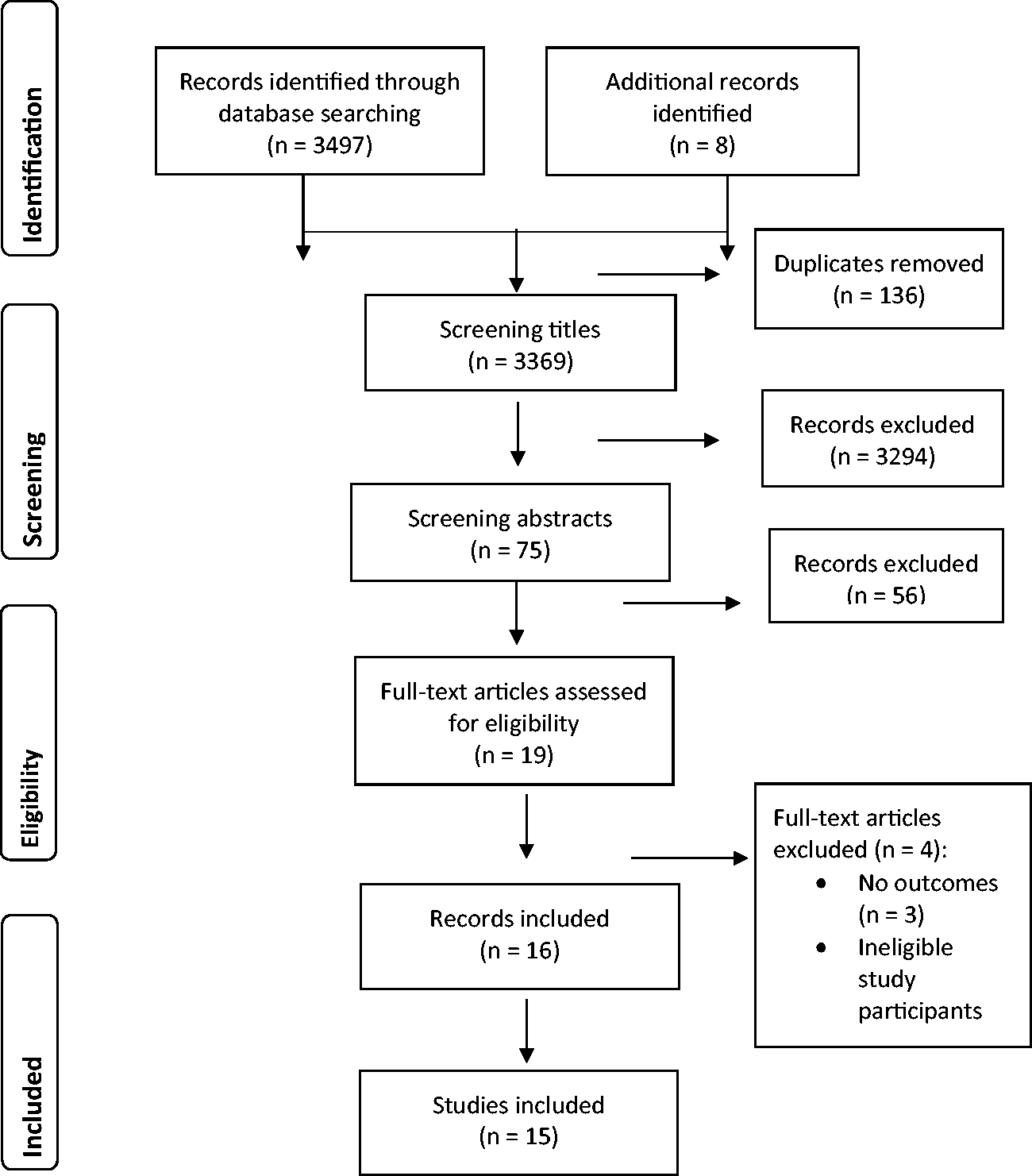
Narrative review flow diagram.
Results
Study characteristics of intervention studies
Table 1 presents information about the 15 studies on the 11 interventions that reached the criteria for inclusion in this review. Seven interventions were newly developed programmes specially designed for foster carers and/or adoptive parents (BIPM, Helping Children to Form Good Attachments, CAKE, RPC, Fostering Connections, AdOpt and TBRI), three were newer versions of existing programmes to reflect a TIC approach (Incredible Years-Trauma version (IY-T), CARE and Nurturing Attachments) and one represented an integration of RPC and CARE programmes (RPC+).
Summary of included studies.
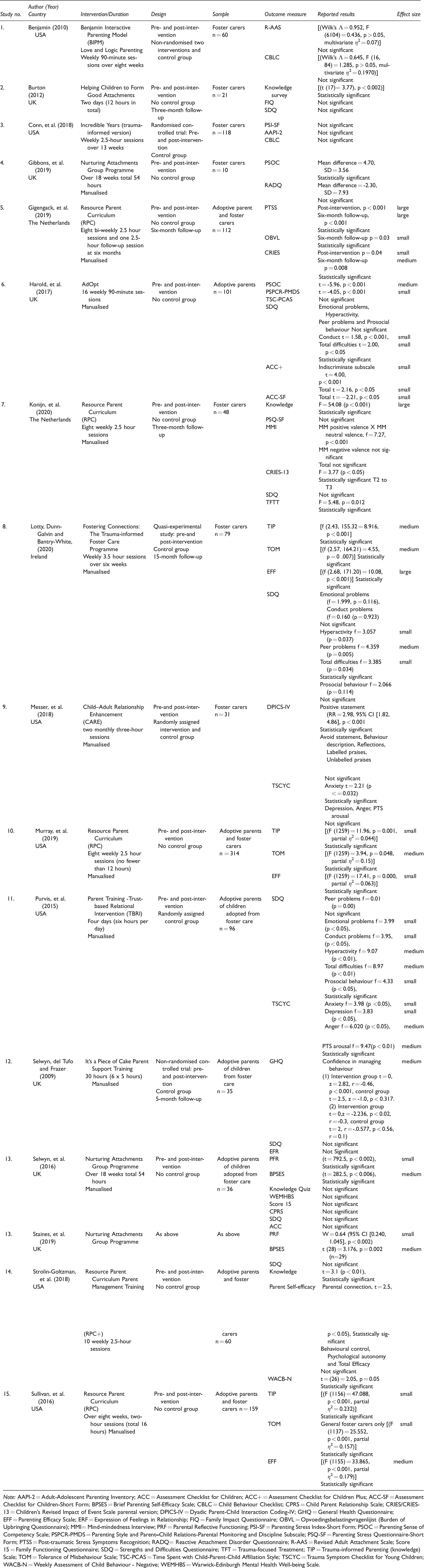
Note: AAPI-2 = Adult-Adolescent Parenting Inventory; ACC = Assessment Checklist for Children; ACC+ = Assessment Checklist for Children Plus; ACC-SF = Assessment Checklist for Children-Short Form; BPSES = Brief Parenting Self-Efficacy Scale; CBLC = Child Behaviour Checklist; CPRS = Child Parent Relationship Scale; CRIES/CRIES-13 = Children’s Revised Impact of Event Scale parental version; DPICS-IV = Dyadic Parent-Child Interaction Coding-IV; GHQ = General Health Questionnaire; EFF = Parenting Efficacy Scale; ERF = Expression of Feelings in Relationship; FIQ = Family Impact Questionnaire; OBVL = Opvoedingsbelastingvragenlijist (Burden of Upbringing Questionnaire); MMI= Mind-mindedness Interview; PRF = Parental Reflective Functioning; PSI-SF = Parenting Stress Index-Short Form; PSOC = Parenting Sense of Competency Scale; PSPCR-PMDS = Parenting Style and Parent
The interventions ranged in duration from six to 42 hours over multiple days or weekly sessions using a group format based on experiential learning mentioned above. Three of the studies used a randomised pre/post-test design with a control group; however, full randomisation was only achieved in one study, a quasi-experimental design was used in another and two other studies used a non-randomised pretest/post-test design with a control group (Benjamin, 2010; Selwyn, del Tufo and Frazer, 2009). The majority of studies (n = 10) used a pretest/post-test design.
The variety of study sizes, eligibility criteria and measures employed is illustrated by the following examples. Sample sizes ranged from 10 to 314. All participants were volunteers and were foster carers or adoptive parents who had a child placed with them, except for one study (Burton, 2012) which included newly approved foster carers waiting for a child. In the Benjamin Interactive Parenting Model, children were required to be aged between six and 15 years and to have posed an ‘attachment challenge’ as assessed by the reactive attachment child checklist (Buenning, 2007) prior to the intervention. Participants’ foster children had to be aged between three and 12 years in the CARE programme and between two and seven years in IY-T interventions. Children of participants had to have been adopted between the ages of five and 12 years in the TBRI and between three and eight years in AdOpt. TBRI and It’s a Piece of Cake Parent Support Training required the participants’ adopted children to be residing with them for more than a year. All studies used self-report measures and outcomes were measured at two time points, pre- and post-intervention. Burton (2012) and Konijn and colleagues (2020) also reported at 12 weeks’ follow-up, Gigengack, et al. (2019) at six months’ follow-up and Lotty and colleagues (2020) at 16 weeks and 15 months. Selwyn, del Tufo and Frazer (2009) collected data at five-month follow-up and Konijn and colleagues (2020) at six months but did not report results owing to high attrition rates.
Thirty-five outcome measures were identified, 26 of them relating to carers and nine to children. The same instrument was used for trauma-informed knowledge, tolerance of misbehaviour and caregiving efficacy in three studies to assess intervention effects on carers, and for assessing parenting efficacy in two others. Study-specific measures were used in three. Child outcomes included observed emotional and behavioural difficulties and trauma symptoms as reported by the carers using validated measures. Seven studies used the Strengths and Difficulties Questionnaire (SDQ) to assess child outcomes.
Understanding how trauma-informed care programmes may work
All curricula shared a biopsychosocial theoretical underpinning, integrating neurobiology of stress, attachment and resilience. Three core components were found to be common across the interventions reviewed. First, the intervention components emphasised the growth of the carers’ knowledge and understanding of the impact of trauma on children’s development and its influence on carers’ capacity to care for children with trauma-related difficulties. Second was the reflective engagement in a groupwork experiential process that helped carers to develop awareness and become more reflective to provide children with TIC. Third, these interventions shared a strong skills-based component that sought to develop carer skills to provide TIC as a response to child difficulties and self-care skills as a response to the impact of looking after traumatised children.
Effects of interventions on caregiver outcomes
Of the 14 studies that scrutinised carer outcomes, all but two (Benjamin, 2010; Conn, et al., 2018) reported one or more statistically significant improvements in one or more carer-related outcomes pre/post-intervention. Seven reported support for increased trauma-informed knowledge and three showed increased knowledge pre- and post-intervention: (1) Murray, et al. (2019) [(F (1259) = 11.96, p = 0.001)]; (2) Strolin-Goltzman, McCrae and Emery (2018) [t = 3.1, p < 0.01]; and (3) Sullivan, Murray and Ake (2016) [(F (1156) = 47.088, p < 0.001, partial η2 = 0.232)]. Burton (2012), Gigengack, et al. (2019) and Konijn, et al. (2020) all reported that this increased knowledge was sustained at the three-month follow-up [(t (17) = 3.77), p < 0.002)], [p < 0.001], [F = 54.08, p < 0.001] and Lotty, Dunn-Galvin and Bantry-White (2020) reported sustained knowledge increase at 15 months [F (2.43, 155.32 = 8.916, p < 0.001]. However, Selwyn and colleagues (2016) reported negative results, as they found that one in five carers made the same errors pre- and post-intervention in the knowledge quiz.
Parental efficacy was assessed in seven studies and six indicated positive results: (1) Gibbons, Bacon and Lloyd (2019) [Mean difference = 4.70, SD = 3.56)]; (2) Harold, et al. (2017) [t = −5.96, p < 0.001]; (3) Murray, et al. (2019) [(F (1259) = 17.41, p = 0.000)]; (4) Selwyn, et al. (2016) [(t = 282.5, p < 0.006)]; and (5) Sullivan, et al. (2016) [(F (1155) = 33.865, p < 0.001, partial η2 = 0.179)] at post-intervention; (6) Lotty, Dunn-Galvin and Bantry-White (2020) further reported sustained caregiver efficacy at 15 months [(F (2.68, 171.20) = 10.08, p < 0.001)]. However, (7) Strolin-Goltzman, McCrae and Emery (2018) did not find positive results for the total efficacy score but reported statistical significance on the parental connection subscale [(t = 2.5, p < 0.05)].
Three studies assessed carers’ tolerance of child misbehaviour. Murray and colleagues (2019) found a significant improvement post-intervention on willingness to tolerate difficult behaviour [(F (1259) = 3.94, p = 0.048]. Sullivan, et al. (2016) also identified a significant improvement but only for general foster carers post-intervention (F (1137) = 25.552, p < 0.001); the kinship carers did not show a significant change (F (1, 18) = 0.173, p = 0.683). Lotty and colleagues (2020) also found a significant improvement post-intervention which was sustained at the 15-month follow-up [(F (2.57, 164.21) = 4.55, p = 0.007)].
Parental stress was assessed in three studies (Conn, et al., 2018; Gigengack, et al., 2019; Konijn, et al., 2020) with only one reporting positive results: (Mean = 62.20, SD = 10.333, p = 0.03) which was reported at six months follow-up (Gigengack, et al., 2019).
Parental reflective functioning scores (PRFS) were found to have increased in Selwyn and colleagues (2016) [(t = 792.5, p < 0.002)] but of the three subscales of the PRFS, only the subscale for carers’ interest and curiosity in mental states reached statistical significance [(t = 636.5, p < 0.002)]. No improvement was found for scores on the other two subscales (pre-mentalizing modes in carers and certainty about mental states). Konijn, et al. (2020) assessed mind-mindedness, reporting no significant change for carers’ total score. However, they reported a significant change in valence as carers’ positive valence increased and neutral valence decreased over the study period [f = 7.27, p < 0.001]. Parental reflective functioning was not assessed in the other studies.
A non-randomised pre/post-test study with a control group (Selwyn, del Tufo and Frazer, 2009) found significant increases in carers’ confidence in managing difficult child behaviour compared to the control group post-intervention. Participants were asked to identify the two most concerning child behaviours and their confidence in managing them. Intervention group confidence levels were greater post-intervention in behaviour (1) [(t = 0, z=−2.82, p < 0.001, r = −0.46)] compared to the control group [(t = 2.5, z = −1.0, p < 0.317, r = -0.22)] and greater in behaviour (2) in the intervention group [(t = 0, z = −2.236, p < 0.02, r=−0.3)] compared to the control group [(t = 2, z = −0.577, p < 0.56, r = 0.1)]. The authors reported this as a medium effect size. Harold and colleagues (2017) also found positive indication for parenting practices post-intervention (p < 0.001). They reported better parental reasoning (p < 0.05) and improvements in inconsistent discipline (p < 0.001). But again, and in contrast, Conn and colleagues (2018) did not find statistical significance for improved parenting practices as measured by the Adult-Adolescent Parenting Inventory (AAPI-2).
Of the three studies that assessed parent–child relationships, two reported negative results (Benjamin, 2010; Selwyn, et al., 2016). Messer and colleagues (2018) reported a statistical significant result for subscale of the Dyadic Parent-Child Interaction Coding-IV which assesses quality of child–parent interactions named positive statements (give positive parenting statements about their child) [(RR = 2.98, 95% CI [1.82, 4.86], p < 0.001].
One study assessed family functioning and caregiver well-being and reported negative results (Selwyn, et al., 2016). Harold and colleagues (2017) also reported negative results for ‘Time spent with the child’. But despite these disappointments, high levels of programme satisfaction were reported in all studies that evaluated this construct (Burton, 2012; Gigengack, et al., 2019; Selwyn, del Tufo and Frazer, 2009; Selwyn, et al., 2016; Sullivan, Murray and Ake, 2016). Participants reported satisfaction with programme content, the group experience, teaching methods and facilitation.
Effects of interventions on child outcomes
Thirteen studies assessed child outcomes and again the results were mixed. Seven reported one or more statistically significant improvements in one or more child-related outcomes pre/post-intervention. Improvements in child outcomes immediately post-intervention were indicated in four studies (Harold, et al., 2017; Messer, et al., 2018; Purvis, et al., 2015; Strolin-Goltzman, et al., 2018). One study reported positive results at three-month follow-up (Konijn, et al., 2020), one at six months follow-up (Gigengack, et al., 2019) and one study at 15-month follow-up (Lotty, Dunn-Galvin and Bantry-White, 2020).
Four studies reported that caregivers’ children demonstrated significant decreases in total emotional and behavioural difficulties. Three of these studies indicated positive results at post-intervention time point: (1) Harold, et al. (2017) [t = 2.00, p < 0.05], with statistical significance being reached for subscale conduct problems only [t = 1.58, p < 0.001]; (2) Purvis, et al. (2015) [(F = 8.97, p < 0.01, ES = 0.09)], statistical significance was found in subscales emotional problems [(F = 3.99, p < 0.05, ES = 0.04)], conduct problems [(F = 3.95, p < 0.05, ES = 0.04)], hyperactivity scale [(F = 9.07, p < 0.01, ES = 0.09)] and prosocial behaviour [(F = 4.33, p < 0.05, ES = 0.05)]; (3) Strolin-Goltzman, et al. (2018) [t = (26) = 2.05, p = 0.05]. The fourth study by Lotty and colleagues (2020) indicated positive results at 15-month follow-up only [(F (3, 177) = 3.385, p = 0.034)]; statistical significance was reported in subscales of Hyperactivity (p < 0.05) and Peer problems (p < 0.001) only.
Negative results were reported by six studies for child emotional and behaviour difficulties (Benjamin, et al., 2010; Burton, 2012; Conn, et al., 2018; Konijn, et al., 2020; Selwyn, del Tufo and Frazer, 2009; Selwyn, et al., 2016). In Selwyn and colleagues (2016) the children’s emotional and behavioural difficulties increased, as reported by the carers, over the study period. Scores reported at pre-intervention were: 14 children (29%) in normal range, eight children (16%) in slightly raised, seven children (15%) in high and 19 children (40%) in very high range on the SDQ for emotional and behavioural difficulties. For the children with high or very high SDQ scores these increased at post-intervention (55% to 65%). The authors suggested that as the children’s behaviour was unlikely to have deteriorated, the parents evaluated their child’s behaviour differently post-intervention. The high scores on the SDQ were not unexpected owing to the high level of needs of the children and their age, nearly a quarter being four years or older when they entered care.
Five studies reported that caregivers’ children demonstrated significant decreases in child trauma symptoms post-intervention: (1) Harold, et al. (2017) [t = 2.16, p < 0.05], statistical significance found for subscale indiscriminate only [t = 4.00, p < 0.001] and on short form [t = -2.21, p < 0.05]; (2) Messer, et al. (2018) reported positive results for anxiety only [t = 2.21 (p < = 0.032)]; (3) Purvis, et al. (2015) reported positive results for anxiety [(F = 3.98, p < 0.05, ES = 0.04)], depression [(F = 3.83, p < 0.05, ES = 0.04)], anger [(F = 6.02, p < 0.05, ES = 0.06)] and post-traumatic stress (PTS) arousal [(F = 9.47, p < 0.01, ES = 0.09)]; (4) Gigengack, et al. (2019) at post-intervention (p = 0.04) and three-month follow-up (p = 0.008); (5) Konijn, et al. (2020) at from post-test to three-month follow-up only [F = 3.77 (p < 0.05). One study found a negative result for this construct post-intervention (Selwyn, et al., 2016) and at seven-month follow-up (Staines, Golding and Selwyn, 2019). And, finally, Konijn, et al. (2020) reported a significant increase among the children receiving trauma-focused treatment at three-month follow-up. Negative results were indicated for attachment difficulties (Gibbons, et al., 2019) and expression of feelings (Selwyn, del Tufo and Frazer, 2009).
Discussion
The purpose of this review was to examine the effects of TIC psychoeducational group-based interventions for foster carers and adoptive parents. Fifteen studies met the inclusion criteria, all published between 2009 and 2020, reflecting a growing area of practice. Five interventions had an age requirement in respect to the children being cared for (BIPM, CARE, TBRI and AdOpt), all targeting children under age 12. These interventions may have targeted younger children because a cumulative history of pre-care exposure to trauma is more likely to have entrenched emotional and behavioural difficulties (Barth, et al., 2007) and may require more intensive trauma-specific treatment. TBRI also placed a requirement that children had to be residing with the family for more than one year. This prerequisite perhaps highlights that enduring relationships are essential to support trauma recovery and future well-being (Wojciak, Thompson and Cooley, 2017). Targeting adoptive parents and long-term foster carers who have an invested commitment to developing an enduring relationship that spans beyond childhood may, therefore, support engagement in TIC interventions.
The majority of studies reported improvement in carers (proximal) outcomes, including increased trauma-informed knowledge, reflective functioning (curiosity subscale only), tolerance of child misbehaviour, parenting efficacy and confidence in managing difficult child behaviour. Of the 13 studies that reported on child outcomes, seven identified a reduction in child emotional and behavioural difficulties and trauma symptoms (distal outcomes) at study endpoint. However, results were mixed, which may be due to the diversity of study designs and measures used and the difficulties of making direct comparison.
The review highlighted three core components that shed light on the process of how these groupwork programmes seek to develop the capacity of caregivers to provide TIC. These lie in the three areas of psychoeducation, reflective engagement and skills building. TIC is characterised by responsive and sensitive caregiving, underpinned by knowledge and understanding of the impact of trauma on children and its effect on caregivers looking after them. Caring for children with trauma histories goes beyond the skillset of ordinary parenting (Murray, Tarren-Sweeney and France, 2011) and requires specific support and training if they are to succeed. TIC is an approach that supports foster carers’ and adoptive parents’ responsive and sensitive caregiving responses and the development of the carer–child relationship, the strength of which is associated with placement stability (Joseph, et al., 2014). Thus TIC may provide carers with a way to develop these relationships that can test the most experienced of parents.
A reduction of emotional and behavioural difficulties and trauma symptoms in children was reported in seven studies. This suggests that children’s trauma-related behaviours improved through carers providing them with TIC. TIC emphasises the amelioration of child trauma-related difficulties through the carer–child relationship. It provides the child with positive relational experiences that support the development of his or her regulatory capacity, thus reducing coercive cycles of carer–child interaction associated with exacerbating challenging behaviour (Granic and Patterson, 2006; Lunkenheimer, et al., 2016). This, in turn, is also likely to promote the development of more positive carer–child relationships (Joseph, et al., 2014). However, the current review included three studies that assessed these relationships and found only one that showed positive results (Messer, et al., 2018). Consistent with other research, achieving improved outcomes in children in foster care requires considerable patience and commitment on the part of foster carers (Dozier, et al., 2006) and involves slow progress (Tarren-Sweeney, 2017).
Implications for practice, policy, and research
The findings of this review suggest that TIC psychoeducational interventions support foster carers and adoptive parents in providing TIC for children who have trauma-related difficulties. This is important given the crucial role caregivers play within the child welfare system and the likelihood that supporting them to provide children with TIC will contribute to placement stability. In the face of continuous disruption, children are less likely to have the opportunity to form the restorative relationships that are necessary to support their well-being and mental health (Shonkoff, et al., 2012; Tarren-Sweeney, 2014). Policies that fund, encourage foster carers’ and adoptive parents’ attendance and provide follow-up support and training, as well as practitioner parallel training to ensure consistency and organisational policies that reflect TIC principles, are likely to promote implementation.
A number of recent studies have emerged supporting the implementation of TIC as a promising child welfare systems approach in the USA (Bartlett, et al., 2018; Kerns, et al., 2016; Lang, et al., 2016). Two discuss the implementation of Trauma Systems Therapy (TST) (Brown, Hansen and Saxe, 2018) and suggest TIC as a promising approach. However, the challenges remain in operationalising practitioner TIC skills (Donisch, Bray and Gewirtz, 2016; Sweeney, et al., 2016) and significant gaps remain in the integration of TIC in child welfare systems (Tullberg, et al., 2017; Whitt-Woosley, Eslinger and Sprang, 2018). The implementation of TIC also requires building the capacity of other key stakeholders (Lotty, 2020). Research is emerging, for example, in occupational therapy (Crabill and Hanson, 2018) and in schools (Stratford, et al., 2020).
Differences in outcomes for TIC interventions between foster carers and adoptive parents were not reported in the studies reviewed. Adoption has higher rates of placement stability than long-term foster care (Selwyn and Quinton, 2004; Sinclair and Wilson, 2003; Wilson, et al., 2004). A recent meta-analysis on parenting interventions in foster care and adoption (Schoemaker, et al., 2019), which include individual, group and dyadic intervention, reported significantly greater improvements in sensitive parenting for foster carers compared to adoptive parents. This may reflect the possibility that adoptive parents’ level of parental sensitivity was already at a higher level than foster carers’ and that adoption offers children a greater sense of security and stability. Thus, future research should report the intervention effects of programmes on foster carers and adoptive parents.
The difference in kinship foster carers’ support needs was also highlighted in one study (Sullivan, Murray and Ake, 2016). This is consistent with other research that has identified the different needs of kinship and general foster carers and the likelihood of differing placement outcomes (Christenson and McMurtry, 2007; Font, 2015; Koh and Testa, 2011; Tarren‐Sweeney and Hazell, 2006). Thus, future research should examine how best to support foster carers who have differing needs owing to the type of fostering they provide.
Future avenues of research may include examining how to use more flexible formats such as incorporating technology into TIC programmes. An online delivery of TBRI line has reported promising results (Razuri, et al., 2016). The delivery of RPC+ with a smartphone app may be a valuable addition to psychoeducational programmes for foster carers and adoptive parents as suggested by preliminary data (Sullivan, et al., 2019).
Limitations
The review was narrow in scope, limited by focusing only on TIC interventions for foster carers and adoptive parents, using strict inclusion criteria to inform their development. Thus, the interventions which did not specifically state that they were underpinned by a biopsychosocial theoretical framework may have been missed.
Conclusions
The evidence to support TIC psychoeducational interventions for foster carers and adoptive parents is limited. This review provides some support to suggest these interventions may increase caregivers’ capacity to provide children with TIC and reduce child trauma-related difficulties. However, the evidence is weak due to the mixed findings, diverse designs and measures, and methodological weaknesses and thus should be interpreted with caution. This highlights the urgent need for more rigorous research.
Footnotes
Funding
The author(s) disclosed receipt of the following financial support for the research, authorship, and/or publication of this article: Funding for this research was provided by Tusla, Child and Family Agency, Ireland and the Excellence Scholarship Award, University College Cork.