




Abstract
Previous studies have revealed that despite adversity in early childhood, after adoption intercountry adoptees show a substantial catch-up in physical, socio-emotional and cognitive development and do relatively well in life. However, these favourable situations do not necessarily match positive views of their earlier experiences when recalled as adults. This study explores this relationship: namely adult adoptees’ appraisal of relinquishment and adoption, and their satisfaction with life. It analyses questionnaire replies from 1155 adult intercountry adoptees in the Netherlands, originating from 32 countries and now aged between 18 and 55. Their mean age at the time of the research was 29 and they had arrived in the Netherlands at an average age of 1.34 years. It was found that the respondents were mostly satisfied with their lives, even more so than the wider Dutch population. Moreover, the more positive their feelings about relinquishment and adoption the higher the levels of life satisfaction. Most adoptees felt positive about being adopted although a minority (about 10%) often had negative feelings about adoption. The majority indicated that they had become more satisfied with their adoption status as they grew older; however, those who were older at the time of the study were less happy with this and also less satisfied with their lives in general. This probably reflects improvements in adoption practice since the 1990s, in particular the provision of good quality pre- and post-adoption support services. These findings highlight the value of therapeutic work with adoptees that includes a focus on their feelings about both relinquishment and adoption, with the expectation that this will improve their well-being and life satisfaction.
Keywords
Introduction
All intercountry adoptees start their lives with at least one, but often more, negative experiences known to be detrimental to healthy child development. Separation, neglect, trauma and loss of birth family and culture have all been cited in the research literature. But once adopted, they usually show a substantial catch-up in physical, socio-emotional and cognitive development and do relatively well in life. However, this improvement does not necessarily coincide with positive views of relinquishment and adoption as expressed in adulthood.
Adult adoptees may differ in their general views of adoption practice as well as in the appraisal of their personal experiences. Some are critical of intercountry adoption and question whether placing children in countries with a different ethnic and cultural context is in their best interests. Some are also angry about the possibilities of fraud in the process. Others acknowledge these risks but stress the overriding benefits for a child of growing up in a loving and permanent family, wherever it happens to be.
In the Netherlands, the two largest intercountry adoptee organisations express contrasting views: United Adoptees International (UAI) is critical whereas the Foundation Intercountry Adoptees (SIG) is positive, provided that the conditions in the Hague Convention on Protection of Children and Co-operation in Respect of Intercountry Adoption (HCCH, 1993) are met. Both organisations have a voice in the public debate and policy around intercountry adoption. Stories portraying adopted children as problematic or practices as fraudulent are common in the Dutch media. However, the opinions of individuals and organisations most visible in the media may not reflect the views of the majority of adoptees.
This study seeks to give a voice to a large, heterogeneous sample of Dutch adult intercountry adoptees in order to record their personal narratives and see whether appraisals of their relinquishment and adoption are related to their overall life satisfaction. It also explores whether these views have changed in the course of time.
Development of adoptees
In a series of meta-analyses, intercountry adopted children in the Netherlands show an impressive catch-up in physical growth, attachment security, cognitive development, school achievement and behaviour problems (Bimmel, et al., 2003; Juffer and van IJzendoorn, 2005; van IJzendoorn and Juffer, 2006; van IJzendoorn, Juffer and Klein Poelhuis, 2005). At the same time, there are some who clearly lag behind the general population, probably because of their early life experiences and the consequences of these (Juffer, et al., 2011; Nelson, et al., 2011; van IJzendoorn, et al., 2011). In childhood, they tend to show more attachment difficulties (van den Dries, et al., 2009) and higher rates of referrals to mental health services (Juffer and van IJzendoorn, 2005) when compared with non-adopted peers. But in adulthood things improve and they are more on a par with the Dutch population regarding their social contacts, relationship with friends and socio-economic success (Schoenmaker, et al., 2015; Tieman, et al., 2006). Nevertheless, the research findings are not entirely positive; for example, Tieman, van der Ende and Verhulst (2005) and van der Vegt and colleagues (2009) have shown that this was less the case for mental health issues.
Besides experiencing pre-adoption adversity, adoptees may also have to cope with the loss of their birth family and with searching for origins and identity (for adopted children, see Juffer and Tieman, 2009; Smith and Brodzinsky, 1994; for adopted adults, see Tieman, van der Ende and Verhulst, 2008). Although the self-esteem of adoptees is comparable with that of the general population (Juffer and van IJzendoorn, 2007), identity issues have been described by several researchers (Caballero, et al., 2012; Hübinette and Andersson, 2012; Lind, 2012; Rushton, et al., 2012). Several studies report a significant association between racial, cultural and ethnic socialisation and strong ethnic identity with higher self-esteem and well-being (Basow, et al., 2008; Mohanty, 2013) although others are less conclusive (Boivin and Hassan, 2015; Castle, Knight and Watters, 2011). For example, Tieman and colleagues (2008) showed that young adult adoptees searching for roots had more psychiatric problems. In an attempt to disaggregate the relevant factors, Storsbergen and colleagues (2010) found that appraisal of adoption rather than search status appeared to be a significant predictor of mental health difficulties and life satisfaction.
This study seeks to explore this relation further by focusing on the association between adoptees’ appraisal of relinquishment, their appraisal of adoption and their satisfaction with life.
Appraisal of relinquishment and adoption
Smith and Brodzinsky developed a stress and coping model of adoption adjustment (Brodzinsky, 1990) which emphasises that adoption is not only about family building but also about feelings of loss and stigma that make it potentially stressful (Brodzinsky, Smith and Brodzinsky, 1998). How adoptees appraise and cope with these losses varies from person to person and arguably influences each individual’s adjustment. In this context, appraisal refers to a person’s attitudes and feelings towards the gains, losses, separations and transitions they have experienced, and has been highlighted by Storsbergen and colleagues (2010) as especially important as adoptees with negative appraisals showed more mental health problems and less life satisfaction.
The term ‘adoption’ incorporates both relinquishment and a change of family, although these are very different processes. Relinquishment in this article refers to all the ways in which the adoptee loses his or her original parent(s) and becomes disconnected from their birth family. Intercountry adoption is not just a matter of finding a new family but also about growing up in another country and culture. Hence, appraisals of these two experiences may be very different. For example, adoptees can be negative about their relinquishment but positive about their adoption. In teasing out the effects of children’s life histories it is helpful to distinguish these two appraisals (Brown, 2000). While satisfaction with life is known to reflect positive appraisals of relinquishment and adoption (Pavot and Diener, 1993), the relation between satisfaction with life and appraisals of relinquishment and adoption is less clear.
Satisfaction with life
A plethora of psychological studies have assessed people’s well-being with measurements ranging from whole life evaluations to moment-dependent feelings like happiness. Pavot and Diener (1993), for instance, define life satisfaction as an enduring, stable, conscious, cognitive judgement of life in which the criteria for judgement are selected by the individual concerned. It is related to the physical, psychological and mental health of people of all ages, in both general and clinical populations (Pavot and Diener, 2008) and is highly correlated with self-esteem.
In this study, the concept of satisfaction with life was employed as it seeks an overall judgement of how respondents evaluate their situation. It incorporates the Diener Satisfaction with Life Scale (SWLS) (Pavot and Diener, 1993) and the Cantril Self-Anchoring Ladder of Life Satisfaction (Cantril, 1965), both of which are designed to measure overall life evaluation. The adapted Cantril Ladder is widely used in national and international policy evaluations, for example by Statistics Netherlands (Statline, 2017) and the Organisation for Economic Co-operation and Development (OECD), where the Netherlands regularly achieves high world ranking (OECD, 2017).
Studies using these measures show that satisfaction with life is also closely related to personality characteristics (Stubbe, et al., 2005). Although successful adaptations to circumstances have a stabilising effect on life satisfaction, events or domains like unemployment, marital tensions, traumatic experiences and physical or psychiatric illnesses can be influential, provided that the individual judges them to be important (Pavot and Diener, 2008). This suggests that for intercountry adoptees, relinquishment and adoption are experiences that are very likely to affect their life satisfaction.
Although few studies have focused specifically on intercountry adult adoptees, several have examined their well-being, as measured in various ways. Most of those scrutinised have been found to be satisfied with life (e.g. Goodman and Kim, 2000; Rushton, 2014) and a meta-analysis of 88 studies (including 24 on adult adoptees) showed levels of self-esteem similar to the general population (Juffer and van IJzendoorn, 2007). Relations between appraisal of adoption and well-being have been found in studies of people adopted from specific countries such as Korea (Basow, et al., 2008) and Greece (Storsbergen, et al., 2010).
The present study
This study builds on the research discussed by examining the appraisal of relinquishment and adoption in a diverse sample of adult intercountry adoptees, and investigates whether these feelings are related to their satisfaction with life. In line with Juffer and van IJzendoorn’s (2007) meta-analyses on self-esteem, it was hypothesised that most adult intercountry adoptees in the Netherlands are as satisfied with their lives as those in the wider Dutch population. It was also suggested that adopted people’s life satisfaction could be predicted by their feelings about adoption and relinquishment, even when demographic variables, such as age, gender, marital status, education and employment, and adoption variables, such as age of adoption and region of origin, were taken into account. As details of the adults’ pre-adoption experiences were unavailable, the study followed the common practice of using age at adoption as an indicator of early childhood adversity (e.g. Juffer and van IJzendoorn, 2005; Juffer, et al., 2011) but other possibly significant factors like ethnic identity questions and searching for roots could not be investigated.
During pilot work, the topics in the questionnaire were discussed with the two main adult adoptee organisations mentioned earlier; both explained that adults’ feelings about adoption often changed during the course of their lives, often towards greater peace and acceptance (Penny, Borders and Portnoy, 2007). But in some cases the change was negative, for instance due to realisation of the importance of ethnicity or anger about fraudulent practices (Brown and Roby, 2016; Fuentes, Boéchat and Northcott, 2012). Questions on changes in the respondents’ appraisals over time were, therefore, included.
Changes to adoption practice in the Netherlands between 1970 and 2000 also had to be considered, especially improvements in the new legislation governing intercountry adoptions (WOBKA, 2015) and international charters such as the Hague Convention (HCCH, 1993). New research evidence has also emerged on the problems faced by adoptive families (Hoksbergen, 1991; Verhulst, 2000) and the link between adoption and healthy child development (Juffer, et al., 2011; van IJzendoorn and Juffer, 2006), all of which have led to improved pre- and post-adoption services. Indeed, since the 1990s, support for prospective adoptive parents is obligatory in the Netherlands and post-adoption services are organised through the government-supported Foundation Adoption Services (ter Meulen, 2018). These may have resulted in more positive appraisals among the more recently adopted respondents. But while some changes in appraisals were expected, their direction (more positive or more negative) was not clear.
Methods
Participants
The respondents were adopted between 1963 and 2004 (born before 1999). This period covers the rise of intercountry adoptions to the Netherlands from the 1970s, reaching a peak of 1600 per year during the first half of the 1980s, followed by a decline after 1986 to around 700 a year until 1998 (Hoksbergen, 2011). The largest number of children came from Asian countries, initially South Korea and, after 1994, China (mostly girls). In total, 1155 adult intercountry adoptees (18–55 years old) completed the questionnaire. As Table 1 shows, respondents were on average 29 years old and most (73%) were female. The majority had a middle or higher level of education, 73% were in a steady romantic relationship at the time of the study and 24% had become a parent. Only 8% were unemployed.
Characteristics of the respondents.
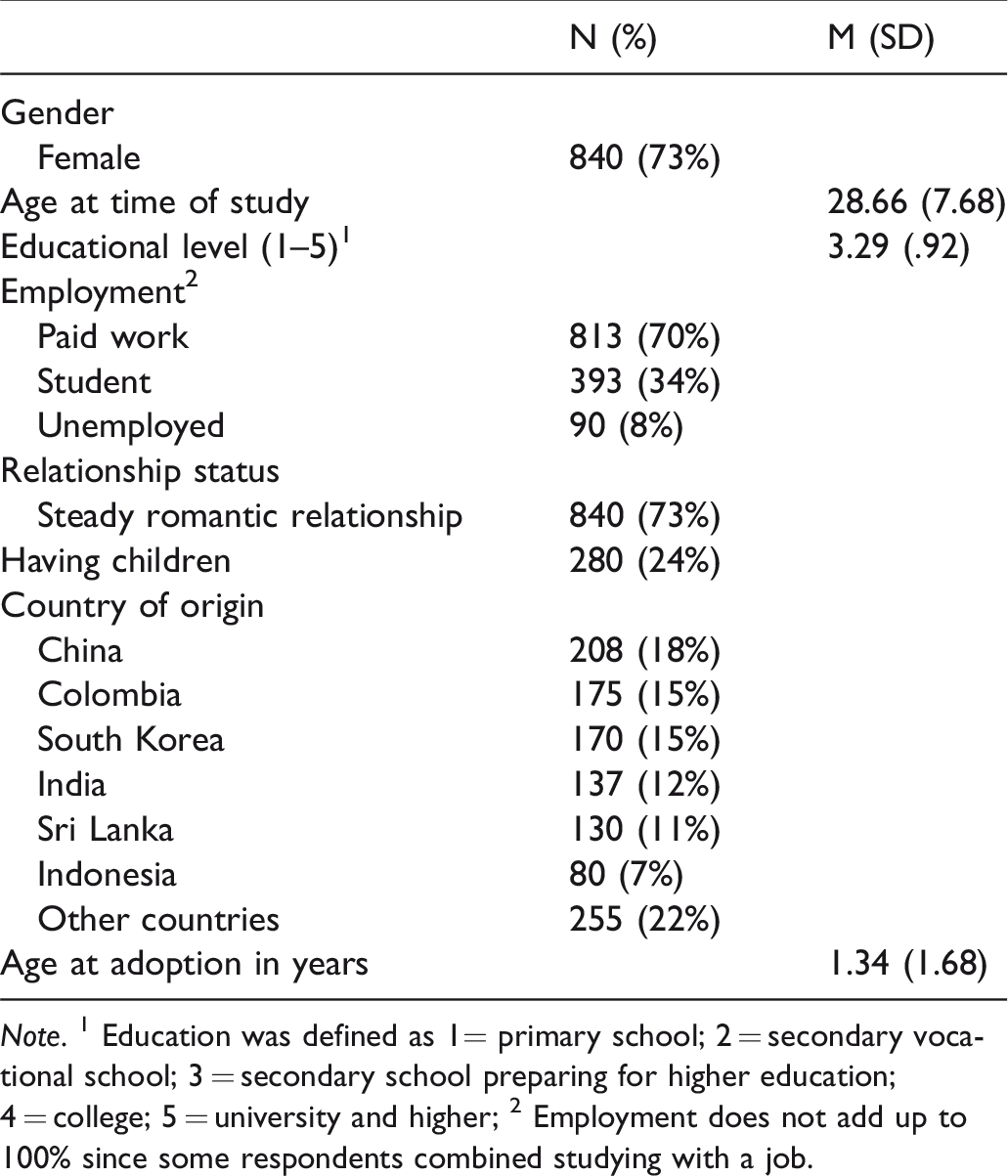
Note. 1 Education was defined as 1= primary school; 2 = secondary vocational school; 3 = secondary school preparing for higher education; 4 = college; 5 = university and higher; 2 Employment does not add up to 100% since some respondents combined studying with a job.
Respondents came from 32 different countries, with most originating from China, Colombia, South Korea, Sri Lanka, India and Indonesia. Their ages at adoption varied from 0 to 10 years but most were young when they arrived in the Netherlands: 38% entered the country before their first birthday (some even a few weeks after birth) and 31% between the ages of one and two. It was only under special circumstances that children were six years or older when adopted (WOBKA, 2015).
Procedure
The findings discussed here emerged from a larger enquiry that looked at the experiences, feelings and life satisfaction of both adoptees and parents, but the focus of this article is on the views of the adoptees. The study was approved by the Ethics Review Board of the Department of Education and Child Studies at Leiden University.
All the adoptee respondents filled out a questionnaire comprising open and closed questions that took an average of 23 minutes to complete. Data were collected in the spring of 2016. Adoptees were approached in three ways: via the three largest accredited bodies that mediate for adoption (adoption agencies) in the Netherlands – Wereldkinderen, Foundation Child and Future and Foundation Meiling – which contacted all the parents for whom they had mediated 18 years or more ago and asked them to forward the invitation to their now-adult adopted children. This produced 616 responses. To reach adoptees whose parents had moved and who had limited or no contact with their parents, individuals were approached directly through the two main adoptee organisations mentioned earlier (UAI and SIG). Finally, the study was publicised on adoption websites and social media. These two direct routes produced another 539 responses, making 1155 participants in total.
Demographics
In addition to the background demographic information given above, details were requested about age at adoption and country of origin. Respondents had originally come from China (n = 208), other Asian countries (n = 623), South America (n = 249) and other countries including Europe, the Middle East and Africa (n = 75).
Appraisal of relinquishment and adoption
The appraisals of relinquishment and adoption were measured using the Emotional Reactions on Relinquishment Scale (ERRS) and the Emotional Reactions on Adoption Scale (ERAS) (Brown, 2000) as in the operationalisation of the Emotional Reaction Scales (ERS) (Smith and Brodzinsky, 1994 [translated into Dutch by Tieman, van der Ende and Verhulst, 2008]). In both Emotional Reaction Scales, participants are presented with six positive and six negative emotions (happy, different, sad, wanted, loved, bad, special, rejected, good, confused, angry, comfortable) and are asked to rate (on a four-point scale from ‘never’ to ‘very often’) the extent to which they experience these emotions regarding their relinquishment (ERRS) and being adopted (ERAS). The mean positive and negative emotions were scored separately. The internal reliability of the ERS was adequate (.69 for positive affect; .74 for negative affect) (Smith and Brodzinsky, 1994).
To compute scores for analyses, a principal component analysis (PCA) was undertaken which revealed the three components that explained 71% of the variance. With the exception of ‘different’ and ‘special’, all items loaded highly on one component but lower on the other two. The first component comprised negative feelings on both relinquishment and adoption (factor loadings .50–.83), the second included positive feelings on adoption only (factor loadings .69–.93) and the third included positive feelings on relinquishment only (factor loadings .54–.87). Because of their inconsistent loadings, the items ‘different’ and ‘special’ were excluded from further analyses. The mean scores of the three factors as indicated by the PCA were then calculated. Higher scores on these variables indicated either more positive or more negative feelings. The reliability of the three components was very good (all α’s >.89).
Change in appraisal of adoption over time
Respondents were also asked whether their feelings on adoption had changed since they turned 18. They could indicate a potential change for seven emotions ‒ angry, sad, satisfied, confused, comfortable, happy and loved ‒ and identify whether this emotion had increased (+1), decreased (−1) or stayed the same (0). For the analyses, we calculated changes that occurred in positive and negative emotions separately.
Satisfaction with life
Both the Diener Satisfaction with Life Scale (SWLS) (Pavot and Diener, 1993) and the Cantril Self-Anchoring Ladder of Life Satisfaction (Cantril, 1965) offer well-established measures of life evaluation and were deemed to be relevant to this study.
Satisfaction with Life Scale
The SWLS was used because it is a reliable measure of overall well-being as a cognitive-judgemental process (Cronbach’s alpha: .87; Diener, et al., 1985). It contains five statements concerning quality of life and has been translated into Dutch by Arrindell, Meeuwesen and Huyse (1991): ‘In most ways my life is close to my ideal’, ‘The conditions of my life are excellent’, I am satisfied with my life’, ‘So far I have gotten the important things I want in life’ and ‘If I could live my life over, I would change almost nothing’. Respondents can indicate their satisfaction with life using a seven-point scale, ranging from one (strongly disagree) to seven (strongly agree). According to Pavot and Diener (1993), satisfaction with life is a conscious, cognitive judgement of one’s life in which the criteria for judgement are selected by the individual concerned. The stability of this judgement was shown by the medium high correlation (0.51) that Fujita and Diener (2005) found between the average life satisfaction in the first five years and the five-year average for the last five years in a large 17-year study.
Adapted Cantril Ladder
The Cantril Self-Anchoring Ladder of Life Satisfaction (Cantril, 1965) – whether in the original form to assess global, lifelong life satisfaction or in the adapted form to measure life satisfaction in the present time (Levin and Currie, 2014) – is widely used in national and international policy evaluations (OECD, 2017). In a study of adolescents, Levin and Currie (2014) reported good reliability and validity of the adapted version.
Respondents were asked to rate their present life on a scale (‘ladder’) from one to ten (lowest to highest evaluation). This was the first question in the questionnaire after the demographic data so the responses were not influenced by questions on relinquishment and adoption. The adapted Cantril Ladder has also been used for assessment in the general Dutch population (Statline, 2017), so enabling the researchers to see whether the average score of the adoptees differed from the wider population.
Satisfaction construct
Because the Cantril and the five items of the Diener SWLS were correlated (r’s ranging between .38 and .72), a single satisfaction construct was used for further analyses. A PCA revealed that this factor explained 65% of the variance with all six items loading highly on this construct (factor loadings ranging between .62 and .88). Factor scores were used in analyses with higher scores indicating a higher level of satisfaction with life. Reliability of this construct was good (α = 0.88).
Statistical analyses
Out of the original 1155 respondents, 1114 completed the entire questionnaire. Importantly, the 41 who dropped out were not different from the remaining 1114 in terms of current age, educational level, employment, having children, age at adoption or region of birth. The only differences were that the participating sample included more females (73%) than the drop-out group (60%), χ2 = 3.89, p = .048 and more individuals without a steady romantic relationship (27% compared to 0%); (χ2 = 17.37, p < .001). Because missing data did not appear to be largely systematic, pairwise deletion was used for analyses. Thus, the N per analysis may differ based on the valid N for the specific variables that are used.
The main outcome variable in the study was satisfaction with life. The analysis began with a scrutiny of the adoptees’ life satisfaction as measured by the Cantril Ladder and using data from Statistics Netherlands, the average score of adoptees was compared with that of the wider Dutch population. Next, the relative contribution of appraisals of relinquishment and adoption in explaining life satisfaction was assessed by conducting hierarchical multiple regression analysis. The satisfaction construct was used as dependent variable and the stepwise process added predictors. Steps 1 and 2 comprised demographic and adoption variables: gender, current age, educational level, employment, relationship status, having children and age at adoption. To control for country of origin, dummy variables of birth regions were introduced in Step 2. Adding these variables in a separate step made it possible to identify a potential effect of birth region. Because the largest group of adoptees came from China (18%), this category was used as a reference. In Step 3, variables of interest to the study were added and these included positive appraisal of adoption, positive appraisal of relinquishment and negative appraisals of both. It was hypothesised that this last step would add significantly to the explained variance of the model, so identifying the unique predictive value of the appraisal variables.
Finally, the analysis explored the possibility of appraisals of adoption and life satisfaction changing over the course of life.
Results
Life satisfaction and appraisal
When the life satisfaction scores of the adoptees, as measured on the Cantril Ladder, were compared with the wider Dutch population, the adoptees scored higher, 7.95 versus 7.6, t (1154) = 7.44, p < .001). Another immediate finding was that gender effects were absent in both groups: (7.6) for both Dutch men and women and 8.03 (SD = 1.56) for the adopted men and 7.92 for the adopted women (SD = 1.61).
The adoptees’ appraisals of relinquishment and adoption were then analysed. With ranges between one and four, positive appraisal was quite high: scores exceeded 2.6 for relinquishment and 3.2 for adoption. The results in Table 2 show that positive appraisal on adoption was significantly higher than that on relinquishment, t (1120) = 24, p < .001, and the mean scores for negative appraisal were substantially lower, with scores below 1.6. These scores were significantly lower than those on positive appraisal on adoption, t (1120) = 44.03, p < .001, and positive appraisal on relinquishment, t (1120) = 29.44, p < .001. Being older at the time of the study significantly correlated with a less positive appraisal of adoption (−.24) and with a more negative appraisal of relinquishment and adoption (.16).
Correlations between predictor and outcome variables.
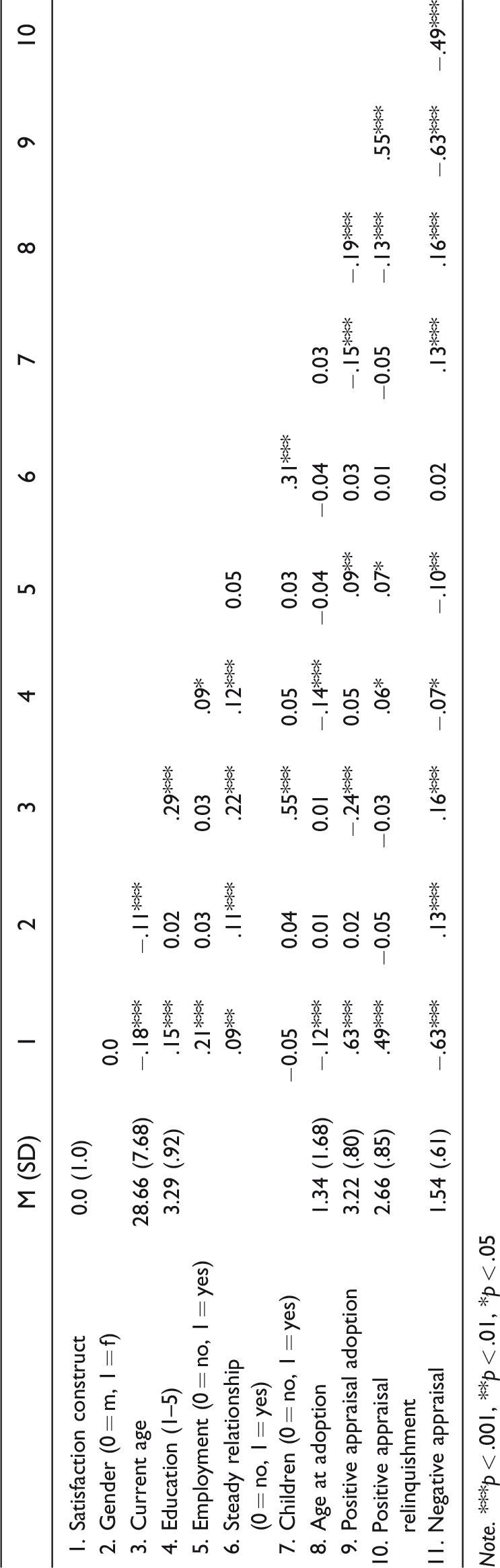
Note. ***p < .001, **p < .01, *p < .05
Figure 1 demonstrates the appraisal variables in a dichotomous way, revealing that most adoptees experienced consistently positive emotions about relinquishment and adoption. When asked about ‘never or sometimes feeling negative’ about adoption, only 20% said ‘yes’ but the figure for relinquishment was higher at 43%. However, as Figure 1 shows, the proportion having persistently negative feelings about these issues is very low (9%).
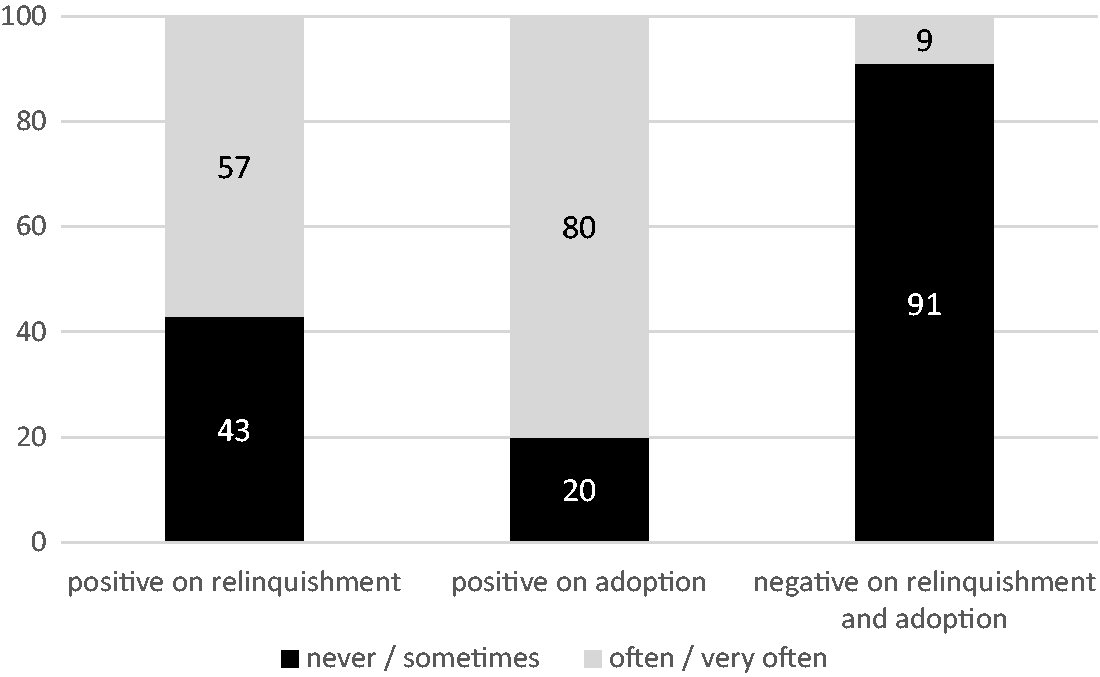
Percentage of adoptees who experience positive and negative emotions either never/sometimes or often/very often.
Predicting life satisfaction
Correlations between demographic and adoption variables and appraisal and life satisfaction are laid out in Table 2. As can be seen, the different appraisal variables were highly related and the overall appraisal scores were strongly associated with life satisfaction. But as correlations do not indicate multicollinearity, multiple regression analyses were continued to test whether appraisal of relinquishment and adoption was independently predictive of life satisfaction.
Results of the regression analysis are displayed in Table 3. The final model explained 53% of the variance regarding the satisfaction construct, F (13,1100) = 96.47, p < .001, and the third step that included variables for appraisal of relinquishment and adoption provided the largest contribution to this effect. This step added 40% of the variance, which is a significant increase compared to the previous model. As the variables in the third step were the strongest predictors for life satisfaction, it could be concluded that positive emotions regarding relinquishment and adoption were related to higher life satisfaction scores and negative emotions were related to lower ones.
Regression coefficients of the hierarchical regression analysis on the satisfaction construct.
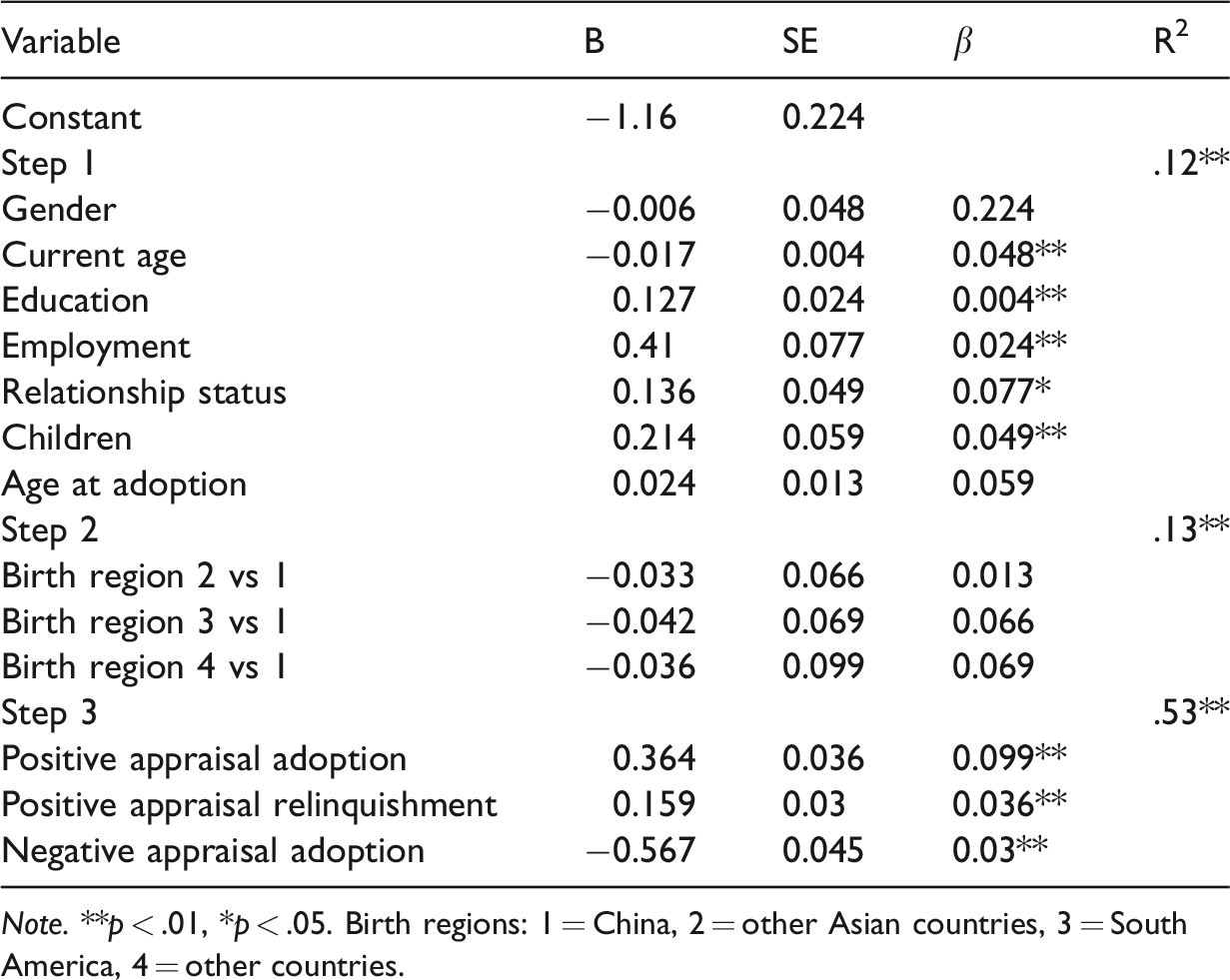
Note. **p < .01, *p < .05. Birth regions: 1 = China, 2 = other Asian countries, 3 = South America, 4 = other countries.
In addition to this, several demographic variables were found to be significant predictors (see Table 3): life satisfaction was higher when respondents were younger at the time of the study, had a higher level of education, were employed, in a steady relationship and had children. However, gender, age of adoption and birth region were not significant.
Changes over the life course
To examine whether satisfaction with life and appraisals of relinquishment and adoption changed over the life course, the relationship between age at the time of the study and life satisfaction was examined. The regression analyses indicated that age was negatively related to life satisfaction – even when controlling for other variables (see Table 3). Thus, the older participants were less satisfied with their lives than those who were younger. To investigate whether this converged with a decline in positive feelings towards adoption over the life course, changes in the appraisal of adoption over time were explored. In total, 1121 of the respondents indicated whether or not their feelings about being adopted had changed since their 18th birthday and almost half (n = 512, 46%) replied ‘yes’, with the majority describing a more positive appraisal of adoption: 62% indicated that positive feelings had become stronger and 70% reported that negative feelings had weakened. These changes in positive and negative feelings were highly related (r = −.75, p < .001): respondents who reported more positive appraisals also reported less negative ones over time.
Discussion
This study concluded that despite the far-reaching life experiences of relinquishment, institutionalisation, transfer to a foreign country and entry to a new family, the adult intercountry adoptees who took part in this research were on average satisfied with their lives, even more so than the wider Dutch population. Moreover, their appraisals of relinquishment and adoption appeared to be strongly related to their life satisfaction. This was confirmed by the multivariate analysis that controlled for demographics, age at adoption and region of origin, and established more robustly that more positive and fewer negative feelings about relinquishment and adoption predicted higher levels of satisfaction with life.
Satisfaction with life
The finding that the adult intercountry adoptees reported high levels of satisfaction with life is in line with outcomes from a meta-analysis concerning the related concept of self-esteem, which found no differences between adopted and non-adopted individuals (Juffer and van IJzendoorn, 2007). Although research into adult adoptees is scant, the high satisfaction scores in the current sample add to the results of other studies, e.g. Rushton, Feast and Simmonds (2013) and Storsbergen and colleagues (2010), although these looked at adoptees from a single country of origin (Hong Kong and Greece) where pre-adoption deprivations were probably less severe.
When the responses of male and female adoptees were compared, no differences were found. Both groups were equally satisfied with their lives at levels similar to the general Dutch population (Statline, 2017). This contradicts previous research which has highlighted the increased vulnerability of females (e.g. Storsbergen, et al., 2010).
Other similarities with non-adoptees include the relationships between higher life satisfaction and higher levels of education, being employed and being in a steady romantic relationship (Arrindell, Heesink and Feij, 1999; Arrindell, Meeuwesen and Huyse, 1991; Diener, et al., 2000; Statline, 2017), with satisfaction especially high for those with children.
Nevertheless, high satisfaction with life does not necessarily imply that life for intercountry adoptees is easy, as several studies have shown that as adults they have more mental health problems than their non-adopted peers (Lindblad, Hjern and Vinnerljung, 2003; Melero and Sanchez-Sandoval, 2017; Tieman, van der Ende and Verhulst, 2005). To explain the higher levels of mental health issues, some studies have highlighted the long-term effects of deprivation prior to adoption (Bellis, et al., 2017; Felitti, et al., 1998; van der Vegt, et al., 2009) while others have stressed post-adoption experiences, such as the challenges of living in a multi-ethnic adoptive family (Basow, et al., 2008; Lee and Quintana, 2005; Mohanty, 2013) and the anxieties associated with searching for roots (Storsbergen, et al., 2010; Tieman, van der Ende and Verhulst, 2008). But despite all these cautions, the adoptees’ cognitive appraisals of their lives show that they are mostly able to build a satisfying life. As one participant wrote: ‘To be adopted is a fact, but what you make out of your life is a choice.’
Juffer and van IJzendoorn (2007) and Rushton and colleagues (2013) have discussed the protective factors in adoptive families that can reduce risks of harm and result in catch-up and resilience in the children. In adulthood, this may result in positive social development, as shown in the study by Tieman and colleagues (2006) who found that the social functioning of adult intercountry adoptees in terms of building relationships and professional attainment was comparable to that of their non-adopted peers, despite a slightly higher percentage of (mainly internalising) psychological problems. A longitudinal study of Romanian adoptees experiencing severe deprivation in early childhood also shows that despite deprivation-related Attention Deficit (Hyperactivity) Disorder (AD(H)D) and disinhibited social engagement, these problems were not within the clinical range by adulthood and the individuals concerned were capable of leading fulfilling social lives (Kennedy, et al., 2016; 2017). Specialised adoption preparation and professional help during childhood and adolescence, such as that provided by the Dutch Foundation Adoption Services (Stichting Adoptie Voorzieningen, 2018), have been shown to be significant in achieving this (Brodzinsky, 2013; Eriksson, et al., 2015; Juffer, et al., 2005; Paulsen and Merighi, 2009; Selwyn, 2017; ter Meulen, 2018), and may also support adoptees' positive development in adulthood.
Rushton and colleagues (2013) have suggested that healthy pathways of social and emotional development can be established in the context of ordinary adoptive family life provided that previous orphanage care was not unduly damaging. Moreover, the risks associated with early deprivations can be reduced by the usually socially advantaged adoptive homes. Interestingly, age at adoption was not a significant predictor of satisfaction with life in this research. However, in many studies, it has been found to influence development and well-being because a later age at adoption often reflects longer stays in unfavourable circumstances, enduring early life stresses and a lack of stable attachment figures (e.g. Melero and Sanchez-Sandoval, 2017). The low significance of age at adoption in this study suggests that this pre-adoption factor is not the strongest predictor of satisfaction with life. Furthermore, it suggests that adopted children from various backgrounds may develop enough resilience to grow up to be satisfied with their life as adults.
Appraisal of relinquishment and adoption
This study has shown that appraisals of relinquishment and adoption may differ because they are different life events. Relinquishment involves the loss of one’s birth family while intercountry adoption also includes loss of a country and culture. As adoption is primarily concerned with gaining a new family, most studies concentrate on the views of adoptees and appraisals of adoption. But the findings of this research show that the appraisals of relinquishment and of adoption together better predict life satisfaction.
The findings that the majority of respondents frequently experienced positive emotions about both relinquishment (57%) and adoption (80%) and that an even larger group (91%) reported never or only sometimes experiencing negative emotions suggest that most adoptees are able to place their relinquishment in acceptable contexts, and even when they are unhappy about this, they can still be positive about their adoption. This is illustrated by the response: ‘In my opinion to be adopted is the best bandage on the major wound that the fact of being relinquished has blown into my life.’
Changes in the life course
The findings on changes in perceptions of adoption, where half of the respondents said they had changed their views during the course of their lives ‒ mostly in that positive feelings had become stronger and negative ones weaker ‒ echo Penny and colleagues’ (2007) finding that appraisal of relinquishment and adoption is experienced in phases: from unawareness, through acute awareness with anger, resentment and grief, to a sense of peace and acceptance. But equally significant are the facts that older respondents received fewer services early in their lives, theoretical knowledge about child development was less sophisticated and the Netherlands was less multicultural, causing interracial adoptees more likely to be perceived as different.
Finally, the results of this research suggest that more comprehensive regulations and better pre- and post-adoption support services for families have improved the experiences of more recent generations of adopted children, possibly contributing to the positive appraisals of relinquishment and adoption and high satisfaction with life found in this study.
Limitations
Although the study involved more than 1100 respondents, this represents only a small portion (about 5%) of all adult adoptees in the Netherlands. Consequently, there are questions about the representativeness of the sample. Bias has been reduced in several ways but the risk of attracting a disproportionate number of those with specific views, younger people and females must be acknowledged, as must the difficulty of assessing the effects of adoption experiences by retrospective recall. In addition, the adopted people in this study may not be representative of the children adopted nowadays as contemporary intercountry adoptions mainly involve older children (in the Netherlands up to six years) and those with special needs, both of which pose different challenges to support services.
Practical implications and conclusions
In terms of satisfaction with life, intercountry adoption to the Netherlands seems to work out well for most of those involved. They score high on this measure and the majority view adoption positively with only a small minority highly critical. It is, therefore, important for effective intercountry adoption that the processes of relinquishment and adoption are well managed and regulated because these influence later feelings about adoption and life satisfaction. The findings also suggest that training and services take into account the relationship between adoptees’ appraisals of relinquishment and adoption and their satisfaction with life, and that therapeutic work includes a focus on all of these, with the expectation that this will improve future well-being and fulfilment.
Footnotes
Acknowledgements
Grants were received from the Oranje Fonds, the Central Authority on Adoption at the Ministry of Justice and Safety, and the Chair on Adoption Studies, Leiden University. We thank adoption agencies Wereldkinderen, Foundation Child and Future and Meiling Foundation, and the adoptee organisations Stichting Interlandelijk Geadopteerden and United Adoptees International for their collaboration.