




Abstract
Creative industries and talent have traditionally clustered in a handful of global cities. Yet, recent developments, including digital technologies and the COVID-19 pandemic are reshaping these spatial dynamics. Drawing on 30 interviews, this paper considers the mobilities of visual artists in South Africa and whether they need to locate in the established centres to realise their ambitions. It explores how these entrepreneurs choose a ‘home base’ for their operations and how they mobilise three forms of mobility: (1) temporary mobility, which entails physically attending exhibitions and residencies, (2) mediated mobility, which involves working with intermediaries to create a presence in key markets remotely and (3) virtual mobility, which harnesses the internet and social media to promote and sell products in local, national and global markets. The paper argues that although surviving in the marketplace is difficult, being permanently located in big cities, like Cape Town or Johannesburg, is not essential. It contributes to existing conceptualisations of mobilities by considering how they are practised and negotiated by individuals, with different circumstances, who operate within specific and challenging contexts. The paper demonstrates that there is no single approach for visual artists who instead flexibly adjust three key dimensions of mobility (time, space and modes of interaction) to overcome barriers and accommodate their needs and preferences. It also advances our understanding of creative labour, including the locational choices of creative workers and the strategies they use to overcome the challenges associated with global competition and the do-it-yourself (D.I.Y.) model.
Introduction
Whether in the Global North or South creative industries, such as art, music, film and fashion, have traditionally clustered in a handful of global cities and aspiring creative talent has typically migrated from peripheries and regional centres (Brydges and Hracs, 2019a; Florida, 2002). But recent developments are reshaping these spatial dynamics. Large cities are becoming more expensive and competitive, and new technologies, ways of working and mobilities are allowing more individuals to live and work from anywhere. In other contexts, however, individuals face barriers from a lack of economic resources, family commitments and lockdowns during COVID-19, which constrain or shape mobilities, resulting in diverse outcomes.
These constraints connect to a long-standing and fundamental question in economic geography about the extent to which creatives need, can or even want to locate in the established centres to realise their ambitions (Brydges and Hracs, 2019a; Hautala and Nordström, 2019). Yet, recent studies, critiques and global events, including pandemics, wars and economic crises, encourage a more nuanced investigation that considers the role of context and specificity. There is a need to go beyond studies of ‘one-off’ (one-time, permanent) moves to consider a broader range of mobilities and immobilities in poorly understood industries and regions, including Asia and Africa (Chen et al., 2022; Hautala and Nordström, 2019; Marcu, 2019).
While COVID-19 hampered the global circulation of people, the nature and intensity of the impact was felt unevenly across regions due to local and national policies including lockdowns (Joffe, 2021; Snowball and Gouws, 2023; Wyss et al., 2023). In particular, there is a need for greater attention to be paid to the relationship between urban areas and peripheries (Chen et al., 2022; Mathisen et al., 2024; Pugh and Dubois, 2021), the influence of digital technologies on work (Repenning, 2022) and how intersectionality shapes the preferences, experiences and spatial strategies of creative entrepreneurs (Brydges and Hracs, 2019b; Marcu, 2019).
To address these gaps, this paper provides a case study of the mobilities and immobilities of visual artists in South Africa. Drawing on 30 interviews conducted before and after the COVID-19 pandemic, it contextualises the country’s diverse regions and explores the locational choices of these creative entrepreneurs. Building on the ‘new mobilities paradigm’ (Sheller and Urry, 2006), which encompasses the physical and virtual movement of humans, ideas, knowledge and objects across space and at different scales, the paper also demonstrates how artists practice three forms of mobility: (1) temporary mobility, which entails physically attending exhibitions and residencies, (2) mediated mobility, which involves working with intermediaries to create a presence in key markets remotely and (3) virtual mobility, which harnesses the internet and social media to promote and sell products in local, national and global markets (Brydges and Hracs, 2019a). The paper argues that although surviving in the marketplace is difficult, being permanently located in big cities, like Cape Town or Johannesburg, is not essential, let alone universally possible or desirable.
The paper contributes to existing theory and debates in several ways. It nuances our understanding of the locational choices of creative workers and mobile ‘talent’ by moving beyond traditional considerations of ‘one-off’ moves and the ‘jobs vs. amenities’ debate (Florida, 2002; Storper and Scott, 2009). It also demonstrates how mobilities are practised and negotiated ‘on the ground’, and against the backdrop of the COVID-19 pandemic, by individuals operating within specific and understudied contexts in the Global South, such as South Africa (Marcu, 2019; Mbaye and Pratt, 2020). This analysis also contributes to the nascent field of immobilities (Roos Breines et al., 2019) by highlighting how barriers stem from a range of factors, such as lockdowns during COVID-19 and poor infrastructural connectivity, but also how immobilities can be choices made by individuals based on preferences and values such as the desire to live in remote areas or to prioritise caring responsibilities over physical movements (Brydges and Hracs, 2019a). The paper acknowledges this complexity by demonstrating that there is no single approach to mobilities for visual artists and by providing a novel model to visualise how individuals can flexibly adjust three key dimensions of mobility (time, space and modes of interaction) to overcome barriers and accommodate their needs and preferences.
By revealing the multi-directional flows of creative talent, the paper also contributes to existing research that looks at creative practise outside core areas including suburbs, small towns and rural or remote areas (Gough et al., 2024; Hautala and Nordström, 2019; Leick et al., 2023; Mathisen et al., 2024). Finally, the paper advances our understanding of digital technologies, creative labour, and the spatial, temporal and commercial strategies independent producers are using to overcome the challenges associated with intensifying global competition and independent production (Bain and McLean, 2013; Brydges and Hracs, 2019a; Repenning, 2022). Indeed, like many creatives, most visual artists operate under the do-it-yourself (D.I.Y.) model, which offers unprecedented autonomy and creative control while making them individually responsible for a growing range of creative and non-creative tasks (Brydges and Hracs, 2019b; Hracs, 2015). While producing artwork is enjoyable, many artists struggle to effectively brand, promote, sell and distribute their work and complete other tasks such as accounting, grant writing, networking and consumer relations with limited time, resources, skills and training. Moreover, despite the affordances of digital technologies, using social media platforms and online tools requires additional skills, time and aesthetic labour, which causes additional challenges for artists (Brydges and Hracs, 2019b). Therefore, the twin processes of de-specialisation and multi-skilling, associated with the D.I.Y. model, produce precarious working conditions and what McRobbie (2002) calls the ‘corrosion of creativity.’
Locational choices and mobilities in the digital age
Creatives are said to be mobile and skilled drivers of contemporary economies and understanding their locational choices is an important research agenda within economic geography (Brydges and Hracs, 2019a; Florida, 2002). While Storper and Scott (2009) argue that talent follows jobs, others assert the attractiveness of amenities, including tolerance (Florida, 2002), consumption opportunities (Glaeser et al., 2001) and entertainment activities (Clark et al., 2002). However, this binary fails to reflect the evolving nature of creative work, where most freelancers and entrepreneurs do not migrate for specific firm-based jobs but rather markets that offer opportunities for paid work and collaboration (Hracs and Stolarick, 2014).
We should also question the assumptions underpinning these theories, including whether creatives are, in fact, free to live and work anywhere and the extent to which they value certain amenities or can access them in the first place (Hautala and Nordström, 2019). The tendency to generalise the preferences of creative workers fails to provide sufficient nuance by acknowledging the intersectionality of research subjects and the extent to which the locational preferences of talent are differentiated by factors including age, class, occupation, gender, ethnicity and other identity markers (Brydges and Hracs, 2019b; Hautala and Nordström, 2019). Indeed, levels of mobility may change at key life-cycle events, including entering the labour market or family formation (Marcu, 2019). Thus, the importance of place-based amenities such as culture, climate, low crime levels, good schools, and tolerance may depend on local context, and individual tastes and subjectivities (Hracs and Stolarick, 2014).
The assumed supremacy of urban regions is also problematic (Pugh and Dubois, 2021). Large cities are said to be attractive because of their hard and soft infrastructure, diverse markets, innovation, pools of workers/collaborators, amenities, networks, local buzz and industry-specific scenes and reputations (Florida, 2002; Hracs, 2015) Yet, recent research has also highlighted appealing features of smaller cities, suburbs, and rural or remote areas including affordable space, supportive communities and natural environments (Chen et al., 2022; Gough et al., 2024; Hautala and Nordström, 2019; Leick et al., 2023; Mathisen et al., 2024). Therefore, not all creative workers can or want to live and work in cities. Moreover, permanent co-location in large urban centres or specific neighbourhoods is not necessary if access to key resources, people, networks, markets and activities can be gained through forms of mobility underpinned by technology or temporary visits (Brydges and Hracs, 2019a; Hautala and Nordström, 2019). This reinforces the ongoing need to study the locational choices and patterns of mobility and immobility of creative talent operating in a range of contexts, including countries within the understudied Global South.
Because the mobility of labour constitutes a direct transfer of embodied knowledge in space and may induce localised learning processes and innovation, the movement and pooling of labour, especially skilled workers and entrepreneurs, is regarded as a key driver of regional development (Grabher et al., 2018). Existing literature suggests that physically locating within specific clusters allows individuals and firms to access local ‘buzz’ or spontaneous, fluid and tacit forms of information (Bathelt et al., 2004). Many accounts associate frequent face-to-face interactions with the benefits of ‘being there’, including cultivating trust and networks (Grabher et al., 2018; Haisch and Menzel, 2023).
Yet, scholars have also argued that permanent co-presence is not essential as local buzz can be accessed from distant or multiple locations (Bathelt and Turi, 2011). For example, Grabher et al. (2018) highlight a shift from ‘being there’ to ‘being aware’. While some firms established costly satellite offices, global knowledge pipelines were also created by leveraging the physical mobility of individuals who participated in temporary clusters such as trade fairs and conferences (Haisch and Menzel, 2023; Maskell et al., 2006). More recently, the rapid development and proliferation of digital communication technologies, including video conferencing, blogs and social media allow firms and individuals to produce and access ‘virtual buzz’ (Rutten, 2017; Wood et al., 2020).
With more forms of mobility available, however, effective strategies require identifying and analysing trade-offs and understanding what tasks are best suited to different channels and modes of interaction (Brydges and Hracs, 2019a; Repenning, 2022; Wood et al., 2020). Thus, there is an ongoing need for research on how firms, but also workers and entrepreneurs, optimise and practise the right mix of mobilities, proximities and virtuality to achieve their specific objectives, which are shaped by a range of professional, personal and contextual factors. In so doing, attention should be paid to how these specific practises help to mediate constraints and forms of immobility (Cresswell et al., 2016; Marcu, 2019; Wyss et al., 2023).
Methodology and research design
This research draws on interviews with visual artists in South Africa using the following media: painting, drawing (ink, illustration), printmaking, ceramics, sculpture, mosaics, weaving and beading. Professional artists (earning most of their income from producing and selling artworks) were invited to participate. Semi-structured interview schedules were used to inquire about artists’ physical and virtual mobility, as well as immobilities (challenges and barriers), concerning their careers locally, nationally and internationally.
A total of 30 interviews with 27 unique participants were completed. Twenty-two interviews were conducted in the first round (November 2018 to February 2019). A second round of data collection (October 2022 to March 2023) was required to discuss the impact of the COVID-19 pandemic on the mobility of visual artists. Of the eight interviews in the second round, three were follow-up conversations with participants from round one, and five were additional interviews. Participants were recruited via the social network of one of the authors based in Cape Town. In addition to known contacts, snowball sampling was used to expand the diversity of the sample in terms of race, gender identity, sexual preference, age, career stage and location. The interviews were completed by a team of UK-based and South African researchers, either face-to-face or online. All interviews were recorded and transcribed. A few interviews were translated from local languages, specifically Afrikaans and isiXhosa. The data was analysed using thematic analysis, linking research themes to a theoretical framework (see Lawless and Chen, 2019). The authors co-coded the transcripts using keywords developed in line with the research themes of location choice and temporary, virtual and mediated mobility.
South Africa’s visual arts sector
South Africa has a vibrant contemporary visual art scene. In 2020, the visual art and craft sector contributed 15% of the creative economy’s Gross Value Added of ZAR 161 billion – approximately 3% of the country’s economy (South African Cultural Observatory [SACO], 2022). An estimated 5500 practising visual artists were active in 2010 (Human Sciences Research Council [HSRC], 2010). Most of these artists were city-based, educated (over 70% had a degree or diploma), and relatively young (median age 38). Artists mostly worked from home, were self-employed and needed to supplement their art income to make ends meet.
In post-apartheid South Africa, there has been a gradual shift from ‘Eurocentric’ notions of ‘high art’ to a more inclusive ‘canon’ of visual arts (Marschall, 2001). As a result, there is greater recognition of ‘folk’ artmaking in Black communities (beadwork, weaving, quilting, sculpture, and ceramics) as contemporary African art. While the visual arts sector remains dominated by Whites, the representation and participation of Black African artists and artists of colour has increased significantly (HSRC, 2010; Marschall, 2001; Snowball et al., 2017). According to Snowball et al. (2017), the visual art and craft sector is the most racially transformed sector in the creative economy in terms of firm ownership and employment.
Johannesburg and Cape Town are the main centres for visual arts (Lynch, 2020) and the creative industries (Booyens, 2012; Gregory, 2016). Compared to other countries in the Southern African region, South Africa’s visual art sector is the most formalised and sophisticated in terms of institutions, public and private support, education and training, public and private art museums and art associations or foundations (HSRC, 2010; International Labour Organization [ILO], 2003). Most institutions and opportunities are city-based, predominantly in the main centres.
The visual art sector is largely commercial and receives limited public funding (ILO, 2003; Marschall, 2001). Large corporations, typically in the financial services sector, sponsor art fairs and contemporary art prizes. Commercial galleries present artists at international art fairs and biennales. There is also a proliferation of smaller, well-established independent galleries and art dealers of repute in all major cities and a few small towns. Galleries have an important role: artists primarily sell their work through galleries, directly from their studios or via online platforms (HSRC, 2010). Most art is sold on the local market, and the country has a small art-buying public compared to markets in the Global North (HSRC, 2010). While commercial galleries sell internationally, international trade in South African art is driven by foreign tourists (Baur, 2018).
In response to the COVID-19 pandemic, a prolonged and stringent national lockdown was implemented in South Africa, accompanied by curfews and a ban on the sale of non-essential items (Rogerson and Rogerson, 2020; Snowball and Gouws, 2023). Visual arts, performing arts, galleries and museums were the most vulnerable creative sectors during this time (Snowball and Gouws, 2023). In accordance with this, art exhibitions and fairs were either cancelled, postponed, or ‘moved online’ as reported by respondents in this study. This not only resulted in the immobility of artists but also a loss of income in a country where there were limited, if any, relief or furlough funds available for artists and creatives in general (Joffe, 2021). Tourism also declined sharply because of the COVID-19 pandemic (Rogerson and Rogerson, 2020). International and domestic tourists are important customers for some artists, as discussed in this paper, especially those living in small towns or exhibiting their art in urban galleries.
Mobilities and their dimensions: Space, time and modes of interaction
‘Here’: Establishing a ‘home base’
The locational choice of visual artists is highly individualised, albeit impacted by life stage as discussed below (Hautala and Nordström, 2019; Hracs and Stolarick, 2014; Marcu, 2019). Literature on creative work highlights the precarious, freelance and self-employed nature of artist livelihoods, balancing portfolio and project-based work and intense work periods with periods of unemployment or unpaid work and finding new strategies to source work (Bain and McLean, 2013; Serafini and Banks, 2020). The nature of artists’ work allows for greater choice in terms of where they live and work (Brydges and Hracs, 2019a) and permanent location in the creative urban centres is not essential for the success of visual artists.
Three-quarters of the research participants were based either in the greater Cape Town area or in small towns throughout the Western Cape province (see Figure 1; N = 6 were located outside the province, including in Pretoria and Rosendal, Free State), and their median age was 44 (at the time of interviewing). While a substantial number of artists were based in Cape Town, we interviewed several artists based in small ‘art’ towns like Riebeeck Kasteel, Napier, De Rust and Rosendal (Donaldson, 2018; Ingle, 2010; Kimbu et al., 2022). As demonstrated by this research, artists increasingly choose to live and work in small towns where they sell their art to domestic and foreign visitors alike, either directly or via local galleries. While the ‘buzz’ in city-based creative clusters is a big draw for artists, it can also be achieved in art towns as explained by a young Cape Town-based artist: It depends on what you want for yourself. I know a lot of artists who work in small towns, and they create a big hype around them. I think wherever you are, you have to create this excitement and culture and appreciation and vibe around you. In smaller towns, you have to work harder to get that engagement. (I11 R1)
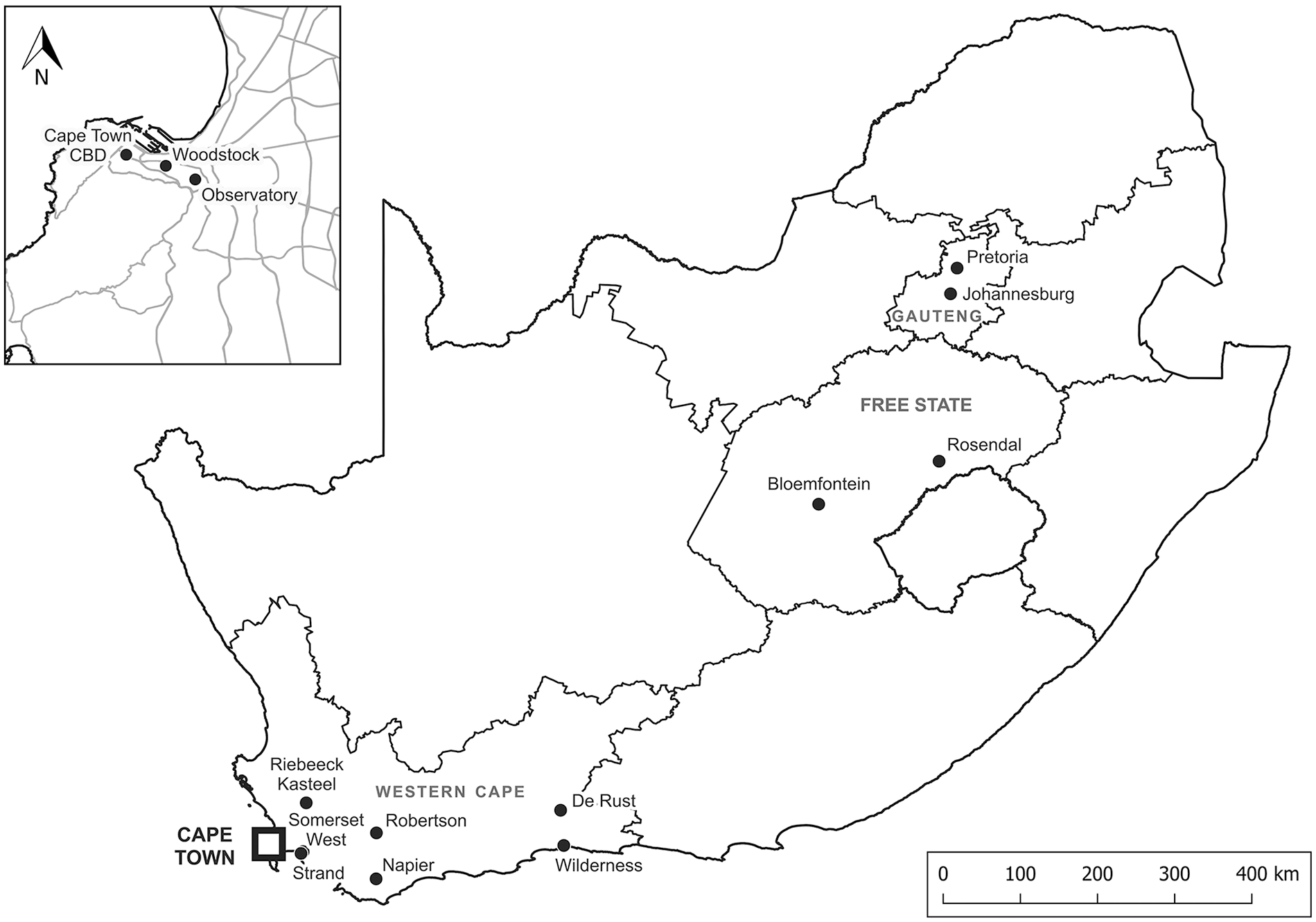
Locations of participants.
Most of our interviewees received arts-based education and/or training from city-based institutions. Artists often move out of cities after a career in another, frequently related creative, field and/or upon retirement to pursue art on a more full-time basis. These individuals often have a second home, or savings to buy a property with a home-based studio, in a small town or coastal village (Chen et al., 2022). Lifestyle motivations, intertwined with a need to be closer to nature, prompt artists to ‘get out of the city’ and move to the countryside (I24 R2; I25 R2). A printmaker who draws inspiration from nature, explained why she relocated from Johannesburg: The coastal village where we ended up seemed a much better place to be and I just couldn’t face the noise of Joburg anymore . . . This location influences my work. You can literally walk out of our door and there’s openness. You can see the mountains. It’s 500 meters and we’re on the beach. You can drive somewhere and you are in the mountains. Being able to immerse oneself more in the surrounds was really important to me. (I25 R2)
While her mobility was restricted, she said that the COVID-19 pandemic restrictions did not greatly impact her work since the natural environment that inspires her art is on her ‘doorstep’.
Another landscape artist living in a small art town said they decided to move from Pretoria as a young family because they were captivated by the beautiful surroundings and because living in the countryside was more affordable (Leick et al., 2023; Mathisen et al., 2024). This enabled him to pursue becoming a full-time artist after working in another creative sector. But he also gave other reasons: We also didn’t want to bring up our children in the city. We moved for space and safety, and the freedom and things that come with living in the countryside. The house that we could get was nice and big [with space for a home-based studio]. (I10 R2)
Over the years, they have seen the town develop as a creative and tourist town with more galleries, shops, restaurants, and accommodation establishments popping up. Several respondents said they have seen more artists and creatives move to small towns because of COVID-19. In particular, some mentioned the desire to escape the larger cities where infection rates were higher and restrictions on daily life were more severe and enforced stricter.
Class and inequalities also impact the locational choices of creatives. Artists who live and work in small towns have the resources to do so linked to their life and career stage and their overall socio-economic status. Conversely, the locational choices of underprivileged artists we interviewed had less to do with lifestyle and inspiration, and more with accessing opportunities in cities. A few had initially moved from rural areas to be city-based, to access education and training opportunities. For these artists, cities are regarded as places of opportunity: where one goes to make a success; where there is more money, connections, and (international) tourists buying African-inspired art, as emphasised in several interviews. One painter observed: It is easier if you come into the city and establish yourself first and you feel like you’re at the point where you know where to go and who the influential people in the city [in terms of arts] are; then you can go back to the small town and work from there. (I19 R1)
However, residential and commercial/studio space affordability is a big challenge for artists from disadvantaged backgrounds, living in townships or other low-income areas on the urban fringe. These artists see both a competitive and comparative advantage to being ‘in town’. A few artists have accessed co-working spaces in the Cape Town city centre via creative intermediaries (i.e. not-for-profit arts and crafts organisations, see Comunian and England, 2022). However, several respondents in Cape Town expressed the aspiration to upgrade to better workspaces by being able to afford (renting or owning) a studio of their own in adjacent creative neighbourhoods like Observatory (Obs) or Woodstock, where it is less expensive than in the more central creative clusters. A young mosaic artist, who was in the process of looking for a shared space for their small cooperative said: ‘Our first option was to get a space here in town, but unfortunately, we could not get one. Obs will be fine for us because there are a lot of art studios in Obs’.
While neighbourhoods like Woodstock and Obs have experienced creative redevelopment in recent decades, with industrial buildings converted into multi-use creative spaces (Booyens, 2012; Gregory, 2016), one respondent who works in Woodstock remarked that there is a lot of competition for art studios. Because of cashflow constraints and general precarity, it is difficult for artists to provide upfront deposits and monthly payments to secure studio spaces. This challenge is particularly acute for artists from low-income areas where their living conditions might not be conducive to working from home.
‘There’: Temporary mobility
Temporary mobility was an essential component of artists’ strategies to maximise opportunities and access markets without relocating permanently. Temporary mobility is enabled by artists living a relatively short distance from the main urban centres. In South African terms, this means within a few hours’ drive. Artists travel to big cities (mainly Johannesburg and Cape Town) regularly to stay connected with production hubs and markets. Keeping in contact with main hubs through short visits seems to be common practise to maintain the necessary connections, networks, work commissions, attend specific art events and not to be cut off from opportunities or new people/ideas emerging more frequently in urban settings (Mathisen et al., 2024).
Residencies (in South Africa or internationally) offer a more structured and long-distance form of mobility. Art Residencies – as highlighted by Bevilacqua (2020) – are an umbrella term used to identify a range of places, models and practices that facilitate exchange, mobility and networking usually at the international level. However, beyond their thematic, geographical, financial or institutional diversity, art residencies have emerged to create an interconnected global art world. Residencies are used strategically but are competitive and can vary across different mediums. As one respondent explained: I’ve applied for a lot of residencies, but across the broader arts spectrum . . . It is very difficult to get selected to go to a residency . . . I’ve managed to get invited to residencies for printmaking [a medium which includes techniques such as etching, lino or woodcut prints, silkscreens and lithographs]. I haven’t managed to get a residency yet in my [main] medium . . . I’m going next year again to Paris for a printmaking session and then I will meet up at a studio [elsewhere in] France. I will do 2 residencies in the one trip. (I13)
While temporary mobility is valued and considered critical to career progression, it is also very costly, especially given South Africa’s weak currency and its geographical distance from Europe or North America. Moreover, due to the lack of public arts funding in South Africa, fully-funded residencies are rare and extremely competitive. So, despite invitations and opportunities, residencies typically require big financial commitments which are beyond the reach of most individual artists. As one respondent noted: I would love to travel more. After you send the work away, there is little money left. You need the shows that I’ve had overseas; I can’t go because I can’t afford it. I can just afford to get my work there . . . What is so amazing about the Spier Arts Trust and Nando’s is that with the 154 Art Show, it cost me nothing. They took me across; paid for the hotel; made sure I had food; all of that. (I7)
Intermediaries and brokers (Comunian and England, 2022) play a key role in facilitating some of these long-distance forms of mobility or exposure, as discussed next in connection with ‘mediated mobilities’. However, such comprehensive funding is very limited in South Africa due to the lack of public arts funding (ILO, 2003; Marschall, 2001).
‘There’: Mediated mobility
Despite the benefits of temporary mobility, not all artists can or want to continually travel within regional, national and international ‘art worlds’ (Hautala and Nordström, 2019; Roos Breines et al., 2019). While government-imposed lockdowns severely constrained physical mobility during COVID-19, artists in South Africa have long struggled with other forms of immobility caused by the expense of air travel, access to appropriate workspaces, material and equipment costs, poor road and rail infrastructure, poor connectivity, especially to remote parts of the country, as well as household commitments including child and senior care (Berman, 2009; ILO, 2003; Xaba et al., 2021).
Moreover, the need to physically be at the right location at the right time exacerbates the challenges associated with the D.I.Y. model of independent production and the need to complete a growing range of creative and non-creative tasks (Brydges and Hracs, 2019a; Hracs, 2015; Marcu, 2019). To mitigate the ‘corrosion of creativity’ caused by the twin processes of de-specialisation and multi-skilling (McRobbie, 2002), many artists in our sample are ‘getting help’. As one respondent explained: ‘It’s okay to ask someone to write something on your behalf or to hire a photographer instead of taking your own photos. It’s okay to delegate things (I11 R2)’.
Although help can come from other creatives, family members and friends, much like independent musicians, fashion designers and designer-makers, artists tend to get help from cultural intermediaries who may function as brokers, gatekeepers, co-producers, co-promoters, managers and curators (Brydges and Hracs, 2019a; Comunian and England, 2022; Comunian et al., 2022; Hracs, 2015). This section nuances our understanding of specialised divisions of labour and collaborations within creative scenes by moving beyond typical questions about ‘what’ tasks are being performed by ‘whom’ to consider ‘where’ these activities are distributed.
Our findings suggest that artists are mobilising mediated mobility, which entails not only outsourcing specific tasks to intermediaries but creating a multi-locational presence by working with actors such as social media influencers, curators and gallerists within key networks, markets and spaces. By enabling artists to be simultaneously ‘absent and present’, mediated mobility challenges linear assumptions of temporality and traditional understandings that actors can only do one thing at a time (Cresswell et al., 2016; Sheller and Urry, 2006). Although artists may practise mediated mobility in individualised ways, the findings suggest common motivations related to penetrating distant networks and markets, including the U.S. and Europe, enhancing status and legitimacy and promoting and selling from a distance.
During the interviews, the overwhelming focus of discussions revolved around ‘signing’ and working with art galleries. Becoming part of their ‘stable’ of artists was said to bring a range of benefits. For example, galleries broker, curate, plan, finance, promote and run events and exhibitions, allowing artists to focus on creating art (Haisch and Menzel, 2023). As one respondent put it: ‘We just produce the work. They take care of everything else (I2 R1)’. Galleries also develop client relations for commissions and handle all matters related to selling and shipping artworks. This alleviates the non-creative burden for artists and allows them to sell and promote at a distance. Depending on the gallery, their reach can be local, regional, national or international. As another respondent explained: ‘You don’t have to be there [physically]. You just have to have a team of people you can trust business-wise who can show your work on your behalf (I19 R1)’.
Based on their reputations and positions within ‘art worlds’, galleries also offer opportunities to enhance the status and legitimacy of artists and their work (Haisch and Menzel, 2023). While some galleries are online-only, there is still value associated with displaying and viewing art in physical spaces. As one respondent asserted: Art is relative. The reason why people buy from galleries is their reputation . . . That is also why you need to keep exhibiting at galleries . . . in a physical space. You have to be able to stand between the paintings to get a feeling about the work. Nothing can replace that . . . but I do feel that the power that galleries have had has lessened since COVID and I don’t think that it will ever recover . . . You don’t need galleries for contact with buyers anymore, but you do need them for space and for their reputation. If there are galleries that have existed for a long time and they have confidence in you, to show your work, then the person who buys feels better about it. They feel it is legit. (I10 R2)
Working with galleries provides multiple spatial channels to promote and sell, as well as opportunities to develop and display multiple identities to engage different consumer groups or markets. As one respondent explained: I do exhibitions at the Breytenbach Centre [based in the small town of Wellington] which are specifically focused on my own Afrikaans identity . . . But I also place work in galleries like 99 Loop Street, which is more hipster Cape Town, and Everard Read, which is incredibly English. I feel I navigate between different audiences. (I15 R1)
Yet, practising mediated mobility and working with galleries can create other challenges. One respondent discussed the downside of signing with a gallery and joining their ‘stable’: ‘They can have up to 50 artists that work for them . . . So they take 50% of everything that everybody makes, so they get the same amount of money that I do for my work, but they have zero risk (I7 R1)’. Others talked about inequalities related to power and agency. As one respondent argued: Some artists do not want to deal with the public or handle money . . . These artists prefer that galleries negotiate everything on their behalf . . . The danger is that they become dependent on galleries doing everything for them and they don’t have their own clients because these relationships are brokered by the galleries. Because they have given the power and agency to galleries, they become completely dependent. (I14 R2)
Some artists also described the inability of galleries to deliver stable flows of income and the importance of developing their own sales and marketing strategies. Therefore, mediated mobility is not a panacea; negative elements must be identified and negotiated. Still, it does reduce the need for artists to locate in an established centre and helps them overcome the challenges associated with the D.I.Y. model. Moreover, for individuals who may be excluded from markets or undervalued because of their age, gender, race, language or cultural identity, experience or location, getting ‘help’ can generate legitimacy and trust without having to cultivate it on their own, which saves time and removes barriers (Brydges and Hracs, 2019a; Hracs, 2015).
‘Everywhere’: Virtual mobility
Even before the pandemic, which has accelerated and intensified the so-called ‘digital turn’ (Ash et al., 2018), Grabher et al. (2018) argued that the simple juxtaposition of physical and virtual interaction is no longer adequate. Others have raised questions about how digitally mediated practices are embedded into work’s spatialities (Repenning, 2022; Wood et al., 2020).
For artists in South Africa, physical spaces, including studios and galleries, remain vital to producing and promoting their work, but online platforms have become crucial channels of interaction and commerce. Websites provide the space to display, explain and sell art pieces to consumers from across South Africa and abroad. Blogs and social media platforms, such as Instagram, X (formerly Twitter) and TikTok, allow artists to engage with consumers, creative collaborators and intermediaries on increasingly personal levels in local and global markets (Cheng et al., 2023; Mathisen et al., 2024; Scolere, 2019; Xaba et al., 2021).
As one respondent explained: ‘I use Instagram . . . I definitely look for galleries. I look for similar artists. I see what is happening in other countries . . . It’s looking at who I can link up with and whose work can inform my work and vice versa. I definitely use it as a scouting exercise (I6 R1)’. They went on to explain that an artist in Oregon (U.S.) found their work online and recommended that their local gallery host them: ‘I am now in communication with that gallery and hoping to have an exhibition in the States . . . interacting through social media . . . at a personal level . . . is very powerful (I6 R1)’.
In this way, artists are harnessing digital technologies to practise virtual mobility. Building on conceptualisations of virtual co-presence, virtual mobility repositions actors in space and allows artists to act in real-time in different places, which may be local, regional and/or global (Bathelt and Turi, 2011; Cheng et al., 2023; Repenning, 2022). As one respondent explained: I [recently] exhibited with two very famous and established artists [from South Africa] . . . The one guy is internationally acclaimed. He didn’t post or do anything on his social media. The other woman . . . she posted and did paid ads on Facebook and Instagram – a very aggressive effort, and she sold all her work . . . The other guy didn’t sell a damn thing. (I6 R1)
Importantly, while some artists use virtual mobility to engage with galleries, others use it to bypass galleries and gatekeepers in the market and to successfully promote and sell directly to consumers: My friend is a potter . . . He started his Instagram account posting little videos about his pots [and his studio] and he’s got 120,000 views . . . He can’t believe it because he’s more of a recluse than I am. [Now] he’s selling on Instagram and . . . people travelling to South Africa are visiting his flat/studio. [But] what I have noticed is he is constant. He always posts . . . and makes sure the videos have the right hashtags. (I7 R1)
Interactions can be local or global. For example, one respondent told us ‘I sell internationally, to Europe or Netherlands, to England, and then a bit to Australia and New Zealand but it’s mostly in South Africa’ (I10 R1) – and engagement in virtual channels can lead to physical visits and interaction. Another respondent explained: ‘Increasingly, people want to come to the studio and see the production of the art . . . I’ve got people coming today . . . because they want to come pick up the work, they want to see where it is produced. They want to see the process, or at least, the studio’ (I6 R1).
Although some consumers choose to physically pick up their art to enhance the value of the ‘experience’, we were told that the rise of affordable and effective international shipping services, especially through the pandemic, has unlocked global markets: ‘There aren’t boundaries. If somebody in New York likes your work and you’ve posted a pretty good picture . . . there’s no reason why you can’t pack it up and send it off’ (I25 R1).
While virtual mobility allows some artists to develop their careers without leaving large centres, like Cape Town, it enables others to move to and operate successfully from remote locations: ‘Because I’m far away from the market, and far away from the things that happen, for me [social media] is an indispensable tool to send work all over the place from here in Rosendal’ (I10 R1). Similarly, accessing small peer networks to share ideas and works in progress via social media platforms helped to sustain artists in remote locations (Hautala and Nordström, 2019; Leick et al., 2023; Mathisen et al., 2024; Repenning, 2022).
During the COVID-19 pandemic, these networks of mentorship and emotional support, and the ability to market and sell became even more crucial: ‘During actual lockdown . . . I definitely saw that people were wanting to buy paintings, obviously because they weren’t spending money on holidays and eating out, and all that, and spending a lot of time in their homes’ (I16 R2).
Yet, building brands, selling products and cultivating relationships in virtual spaces requires intense and constant performances of aesthetic labour which may limit the time and resources these entrepreneurs can allocate to developing new creative content and undermine their businesses (Brydges and Hracs, 2019a; Scolere, 2019). Indeed, some artists in the sample struggled to set up and maintain a range of overlapping online channels. Others lamented the time and energy required to leverage virtual mobility (Scolere, 2019).
Issues related to aesthetic labour and the ‘corrosion of creativity’ (McRobbie, 2002) have been documented across a range of creative industries and locations. In the South African context, however, local factors, including unreliable (and intermittent) electricity supply and internet connectivity, also constrain the practise and benefits of virtual mobility. This reminds us that digital technologies can produce, reinforce and exacerbate divides, disparities and uneven geographies and that immobilities can extend beyond physical movements (Ash et al., 2018; Roos Breines et al., 2019; Wyss et al., 2023).
As a result, virtual mobility is a complement, rather than a substitute, for face-to-face interactions and forms of temporary and mediated mobility. Indeed, artists are experimenting with multiple approaches and developing strategies to optimise each tool’s relative strengths and weaknesses, channel and practice. One respondent summarised: ‘I’ve got three different channels to disseminate the work: the first is using social media platforms (virtual mobility) . . . The second is approaching specific galleries (mediated mobility) . . . Thirdly, I go to and hire a gallery to have a solo exhibition [in person] (temporary mobility)’ (I6 R1).
Towards an expanded range of mobility strategies
Ultimately, this evidence demonstrates how proximities are becoming more virtual, temporary and network-based. It is also clear that visual artists are constantly negotiating their mobility options and no single strategy can accommodate the idiosyncratic needs, preferences and motivations of these entrepreneurs and the barriers and challenges they face. Based on the findings and to more accurately acknowledge and articulate the range of mobility strategies practised by visual artists we have developed a model (see Figure 2) which visualises and integrates three key dimensions: time (short, medium and long term), space (local, national, global) and mode of interaction (physical, mediated, virtual).
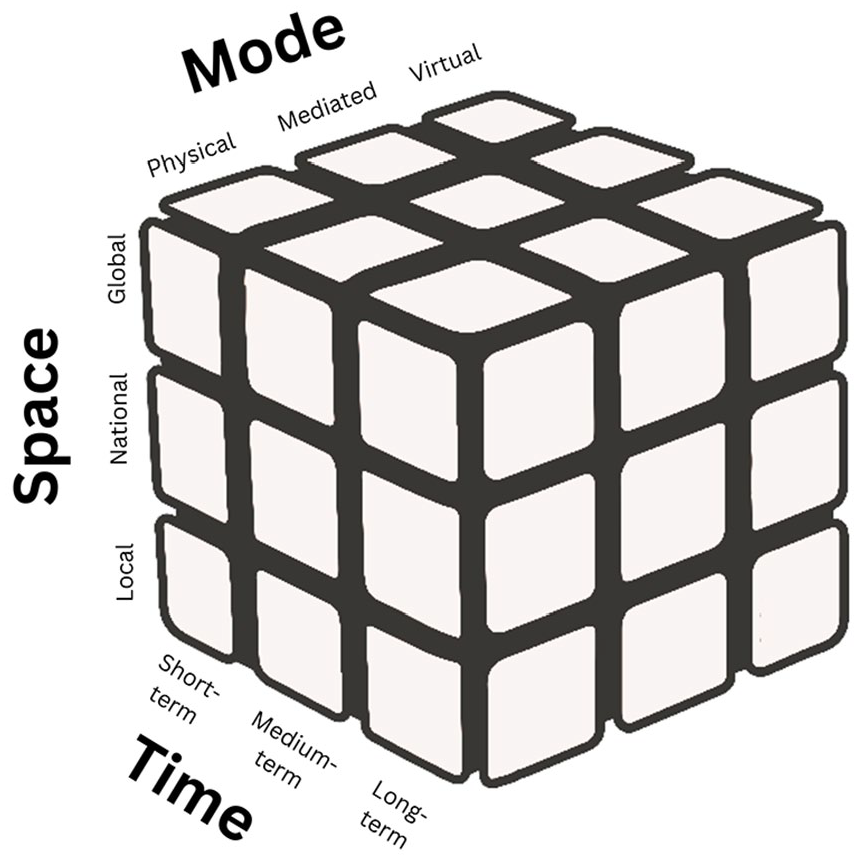
The dimensions of mobilities.
These dimensions are ranges rather than fixed categories that can be practised and experienced differently by individuals in relation to their own values, circumstances and motivations (Brydges and Hracs, 2019b). For example, a ‘short-term’ move may be a month for some and a few years for others. Moreover, ‘local’ may mean a small village or a global city. Importantly, while some strategies are familiar within the art world (Hautala and Nordström, 2019), such as international physical moves for residencies (medium-term, global, physical), others are new or seem contradictory, such as interacting with and selling to local consumers through social media during COVID-19 (short-term, local, virtual). Thus, the framework provides enough structure to help understand the strategies and enough flexibility to accommodate the evolving real-world practises of individual artists.
Conclusion
This paper considered the extent to which South African artists need, can, or even want to be located in large established centres to realise their ambitions. Building on the ‘new mobilities paradigm’ (Cresswell et al., 2016; Sheller and Urry, 2006), the emerging field of immobilities (Roos Breines et al., 2019) and recent work about the spatial strategies of creative entrepreneurs (Brydges and Hracs, 2019a), the paper explored how artists practise and combine three forms of mobility: (1) temporary mobility, which entails physically attending exhibitions and residencies, (2) mediated mobility, which involves working with intermediaries to create a presence in key markets remotely and (3) virtual mobility, which harnesses digital platforms to promote and sell products in local, national and global markets. Ultimately, it demonstrated that locational choices and mobility practises are influenced by a range of factors and that being permanently located in big cities is not always essential, possible or desirable for visual artists.
Beyond reinforcing studies on the spatial dynamics and working practices of other creatives, including fashion designers and musicians (Brydges and Hracs, 2019a; Hracs and Stolarick, 2014), the findings nuanced our limited understanding of visual artists and how they value and strategically adopt a range of mobility practises to build and support their careers (Hautala and Nordström, 2019; Mathisen et al., 2024). For example, by focusing on the role of arts residencies or production spaces, the paper explored the connections between local (markets and audiences) and global art worlds. Moreover, the focus on South African artists extends existing understandings of mobilities and immobilities beyond the Global North by identifying and reflecting on specific barriers and challenges artists face in particular contexts within the Global South.
By conducting interviews before and after COVID-19 and acknowledging the importance of locational context and intersectionality, the paper also provided a new perspective on mobilities. Rather than identifying binaries between local and global, short or long-term mobilities and migration versus retention, it considered how these binaries are experienced by visual artists not as one-off options but rather as opportunities that can be used to suit the varied and evolving, characteristics, circumstances and preferences of individuals operating in different socio-economic contexts and life stages (Brydges and Hracs, 2019b). Indeed, the paper asserted that no single strategy can satisfy the diverse and dynamic needs and preferences of visual artists who constantly negotiate a range of mobility options. To acknowledge and visualise this complex reality, the paper also presented the model in Figure 2, which integrates three key dimensions of mobilities: time, space and mode of interaction.
While the paper aims to move the debate forward beyond binaries and enable a more grounded understanding of the mobility strategies of creative workers, it also calls for more research to expand our understanding of how specific strategies relate to local conditions or temporary challenges, like COVID-19, as well as the characteristics and evolving circumstances of individual workers at particular moments in time. For example, in the context of South Africa, and other understudied contexts, it would be valuable to consider in greater depth how differences based on race, gender, age, religion or class, as well as life cycle, family dynamics and career stage might influence the practice, experience and effectiveness of these mobility strategies.
Footnotes

Declaration of conflicting interests
The author(s) declared no potential conflicts of interest with respect to the research, authorship, and/or publication of this article.
Funding
The author(s) disclosed receipt of the following financial support for the research, authorship, and/or publication of this article: The authors would like to acknowledge the AHRC (Arts and Humanities Research Council) funded international research network ‘Understanding and Supporting Creative Economies in Africa’ (AH/P005950/1).