



Abstract
This article examines the significance of hydroelectric mini-grids owned and operated by Catholic sisterhoods in rural Tanzania, situating them within a broader context of energy transition and environmental justice. The Tanzanian state is betting that mini-grids can effectively supplement the national grid’s limited reach; since 2010 it has invested considerable effort in developing a regulatory framework that streamlines licensing procedures and specifies feed-in tariffs. Today, the field is wide open and a range of ownership models – community, private, state-owned – are unfolding on the ground with variable results regarding their financial sustainability, environmental impact, and developmental outcomes. Though often overlooked in this discourse, missions, churches, abbeys, and convents have a history of operating run-of-the-river power stations and other off-grid systems that stretches back into the colonial era. Such infrastructures anchor material and spiritual economies of rain, care, and cash that straddle both community and commercially oriented modes of provisioning. Their continued presence suggests that in some ways this new paradigm of decentralized energy provision builds upon long-standing historical logics of patronage and political authority in marginal areas.
Introduction
In 2016, a programme officer for the Conrad Hilton Fund for Sisters published a short report on water projects in Tanzania. Having toured a borehole operation in Mbeya, water storage tanks in Imiliwaha, and a hydropower plant in Mbingu, she reflected:
It would be hard to imagine what these far-flung communities would be like without the sisters. The mission stations are like an oasis rising out of the hard clay dirt; their convents and projects are the only permanent structures for miles around. All of the locations I visited received funding in the past, whether it was for a health center, school, orphanage, farm or outreach project. I was heartened to see that the sisters were trustworthy stewards of their grants. But all of the congregations are struggling with how they can continue to support the people being served and their own members without steady, profitable sources of income or permanent infrastructure to provide for basic needs. The congregations know they need to become more self-sustaining, but they are also driven by the fact that their growth can improve the local economy and impact the health and welfare of thousands of people. (Bly, 2016)
Her reflections on these ‘self-sustaining’ oases, unable to survive on grants alone, capture the tension between what might be called the guest and host positions that characterize Catholic sisterhoods in rural Tanzania. Oases are structurally analogous to both guests – strange appearances within a landscape – and hosts, places of respite and nourishment in that landscape. The energy infrastructures that power sisters’ orphanages and hospitals, but also farms and enterprises, are part of this oasis logic. They both serve surrounding communities and stand apart from them. They straddle both charitable and accumulative modes that are in some ways foundational to monastic institutions and in other ways inflected by very contemporary neoliberal dynamics. And for these reasons, their successes and limitations present an illuminating case study of Africa’s rural energy transition in the 21st century.
For many practitioners, ‘modern energy for all’ – that is, access to electricity in rural areas – is an obvious good (Jacome et al., 2019), even as evidence that it improves development outcomes is inconclusive (Matinga and Annergarn, 2013). A consensus has emerged around the win-win idea that clean energy mini-grids can and should displace diesel generators, which are expensive and environmentally degrading. Wind, solar, hydro, and biogas have become affordable enough to supplement, at scale, centralized grids that are extending slowly or piecemeal, and thus potentially attractive investments for private energy companies or entrepreneurs. A kind of experimental dynamism undergirds these ambitions, making them emblematic of late-capitalist pragmatism (Cross, 2019; Whitington, 2019) and its foreshortened temporalities (Guyer, 2007).
Still, contemporary imaginaries and technologies of energy transition in rural Africa may not only look forward but backward, rooted not just in the creative disruptions of the market but in longer histories of disciplined corporate bodies and local logics of patronage (cf. Chalfin, 2017; Schwartz, 2021). Anthropologists, after all, have probed the colonial legacies shaping the transition away from fossil fuels, from the extractivism that underlies breathless fantasies of green abundance (Howe and Boyer, 2016), to the use of prison labour in manufacturing solar panels (Lennon, 2017), to the outsourcing of pollution and waste to world-system peripheries (Hecht, 2018). In Tanzania, small hydropower echoes the past. Missions, churches, abbeys, and convents have a history of operating run-of-the-river mini-grids that stretches back into the colonial era. These rural oases have long networked material and spiritual economies of rain, care, and cash. And this has made them unexpectedly well‐positioned to engage donors and discourses that see small hydropower as a catalyst of development.
This article explores this historical conjuncture across two sites: a Franciscan sisterhood that operates the aforementioned hydropower plant in Mbingu (850 kW) and a Benedictine sisterhood that operates two stations (1 MW and 4 MW) in the country’s Southern Highlands, near Songea. In describing these economies, I seek to build on scholarship that has explored the entwinement of humanitarian assistance, market forces, and Catholic social teachings (Muehlebach, 2012; Scherz, 2017), highlighting its relevance for contemporary trends in electrification and energy justice. I also draw on a Weberian economic sociology interested in the elective affinities between religious ethics and commercial activity (Jonveaux, 2014; Silber, 1993; Weber, 2001 [1930], 1978).
Post-carbon development and energy justice
As one policy document has it, ‘a large and growing community [is] banking on mini-grids to transform energy access in Africa: government officials and regulators; entrepreneurs and private investors; and multilateral, bilateral, and philanthropic funders’ (Odarno et al., 2017: 28). The idea is that mini-grids are the right-sized technologies to kickstart a virtuous cycle of economic development. Generally between 1 and 10 MW of generation and serving a cluster of users, mini-grids sit somewhere between the centralized state grid and the stand-alone, household-level solar system, with enough load capacity not just for consumption activities like television and phones, but for commercial and even light industrial activities, perhaps most emblematically milling. Moreover, while isolated diesel-powered mini-grids have a long history in Africa, renewable mini-grids have a key role to play. They are less expensive to maintain, have longer lifespans than fossil-fuel generation, and, since the 2000s, have resonated with the energy policy priorities of institutions like the United Nations (UN) Framework Convention on Climate Change (Klunne and Michael, 2010).
Tanzania in particular has become a regional magnet for what might be called ‘post-carbon development’ projects (Degani et al., 2020). This includes everything from private, small power producers (SPPs) supplying electricity to the national grid, to stand-alone household solar companies, to mini-grid owner/operators. The Tanzanian government has created a comprehensive regulatory system for these projects with several incentives, including tax-free imports, streamlined licence and registration policies, and various subsidies (Pedersen, 2016). This in turn is part of a broader movement towards energy sector privatization and commercialization in the country (Degani, 2022). Many of these transnational companies are self-styled social enterprises in the Silicon Valley mould, mixing humanitarian concern, a sanguine attitude to the market, and a certain geeky fascination with technology.
And yet their prospects as agents of energy justice are poor. For-profit start-ups selling stand-alone household solar systems extract and monetize customer data and often aggressively repossess hardware when households cannot pay, all while providing a weak power supply of unreliable quality in return (Neumark, 2022). Commercially oriented mini-grids don’t fare much better. They offer tariffs oriented to cost recovery that disproportionately burden poorer users (Mottram, 2022) and spur grievance and resentment when compared to national utility rates (Pueyo et al., 2022). Moreover, because they need to ensure a reliable demand, they tend to target and service relatively denser, networked areas, rather than more remote locales that might stand to benefit more (Guillou and Girard, 2023). The paradox of mini-grids, and of post-carbon development projects more generally, is that they are often presented as ‘bearers of a socially progressive transformative vision’, and yet ‘far from ironing out inequalities, they can (re)produce them’ (Guillou and Girard, 2023: 167).
Missions and mini-grids
As Joseph Ngowi and his colleagues (2019: 98) note, ‘the recent focus on mini-grids … as a solution for unelectrified areas is in fact a “re-focus” as historically small hydropower plants have existed in southern Africa since the late 19th century’, ones often associated with Christian mission stations and monastic orders. In Tanzania, the earliest hydropower plant was established in 1932 at the Mamba mission in the Katavi region (Odarno et al., 2017: 28). In the 1960s and 1970s, missions and monastic orders such as the Benedictines and Franciscans built up a number of systems, at least 16 of which were still operative in the 21st century (Klunne and Michael, 2010: 145). 1 However, while the academic and grey literature occasionally notes the historical link between missions and off-grid energy, there has been little investigation of its specific social and economic dynamics, or what role they may play in the present.
In general, mini-grids linked the internal components of the mission stations themselves, particularly hospitals, but also schools, dispensaries, and chapels. To take one typical example, a German evangelical mission in Mbesa, a village near Songea, ran for decades on a diesel mini-grid that powered a clinic, a vocational training centre, expatriate housing, and an electrical water pump, producing electricity for about five hours a day. This setup ran from the early 1960s until 2004 when a ‘pensioned German engineer’ designed a hybrid diesel/solar expansion and personally raised money for its installation (Freischald, 2018: 29). Other missions sought to install hydropower systems where possible, in part to avoid the expense and maintenance demands associated with diesel, and in part because it is a more robust and forgiving renewable technology than solar. To be sure, hydropower systems have their own technical difficulties, such as debris caught in reservoirs or canals, or damage wrought by floods. In the early 1960s, Swiss missionaries constructed a 120 kW hydro scheme to power the Bulongwa Lutheran hospital near Njombe, but a large part of the machinery was swept away by the river at its very first trial run (Ngowi et al., 2019: 99). The missionaries switched to diesel generation until 1994, when the original hydropower plant was refurbished. Today, Benedictine brothers and sisters at Ndanda, Hanga, Peramiho, Chipole, Sakari Chini, Uwemba, and Ilimiwaha all own and operate small hydropower systems, as do the St. Gemma sisters in Dodoma and the Franciscan sisters discussed later.
Here we can thus note how water’s spiritual and ethical overtones are rooted in its Bataillean excess. It can flood disastrously, intimating divine power and punishment. But it can also be a source of radical abundance, a fount of blessing that runneth over (Schwenkel, 2013), or that flows spontaneously, like sympathy, to those nearby (Pandian, 2009). Indeed, those missions, monasteries, and convents with hydropower systems often found that they were generating excess current and thus expanded mini-grids to surrounding villages. For instance, Benedictine brothers at Uwemba established a 100 kW hydro scheme and soon began providing electricity to surrounding villages at highly subsidized rates, as did their sister order at Imiliwaha, as did the Bulongwa Lutheran hospital already mentioned.
The profusion of hydro infrastructures should not only be contextualized by the affordances of water-rich ecologies, but also as part of the peculiar co-evolution of Christian institutions and regional economies of patronage. As Maia Green (2003: 3) observes, the mostly German missionaries arriving in the late 19th century ‘sought, perhaps unwittingly, to recreate the social forms of a pre-industrial Europe, a peasant society of which the Church was patron’. In that patronage, missions came to function as an ameliorative counterpart to the colonial state, even as they were ultimately an extension of it.
This dialectic of control and care is perhaps nowhere better seen than in the Maji Maji Rebellion of 1905–7, a watershed event that still looms large in the historical memory of much of the country, especially its Southern Highlands (Monson, 1998). From its scattered network of boma forts, the brutal German colonial state instituted a poll tax, forced villages to grow cotton, and extracted corvée labour. When a drought exacerbated this violence, charismatic insurgents developed a war medicine – maji means water – that would make them impervious to German bullets, and sparked waves of armed rebellion, including the attack and destruction of Benedictine missions at Peramiho and Kisongera. The uprising was brutally suppressed, often through deliberate acts of environmental warfare, such as the burning of fields to induce famine. In the wake of this chaos, populations dispersed, often fleeing to mission stations for shelter and protection. Echoing the Conrad Hilton Fund report, one Benedictine observed a century earlier that the missionary station near Songea ‘was, after the rebellion, like an oasis in the wastelands’ (quoted in Monson, 1998: 119). Indeed, contemporary European and American missionaries still use the language of communities spontaneously ‘gathering’ around monasteries and missions, though that gathering is often tellingly misrecognized as unfolding on terra nullius, rather than within a longer history of care and coercion that involved their predecessors in the 19th century. As one volunteer to a Benedictine monastery put it: And one thing that I’ve found, visiting monasteries in Tanzania, was – so 50 years ago a monastery was founded. And it was just a monastery in the middle of the bush. And quickly they needed employees, so a few people moved around quickly. There’s industry, and schools, and stores, and work, and now there’s water, electricity. So quickly around the monastery a community gathers. (quoted in Christie-Searles, 2018: 228)
Such dynamics of local patronage continued into the late colonial period and through the first decades of independence (1960s–80s). While missionary orders – mostly German and later Swiss – formally transferred power to an expanding and increasingly Africanized clergy, the latter remained largely dependent on European charities and organizations to continue their mission-style outreach. These essentially ‘ex-mission’ churches and monasteries such as the Benedictines comprised what Michael Jennings (2015) called a ‘franchise state’: voluntary service organizations that were partly funded by the socialist government, but mainly had to rely on their own donor networks for support, leading to pervasive structural weakness and fragmentation of the health and education sectors. The Mbesa mission hospital, for instance, relied on second-hand medical equipment donated from Germany, while its five hours of electricity could make night-time caesareans and other emergency procedures a harrowing ideal (Frieschlad, 2018: 25; cf. Livingston, 2012). At the same time, relative to local populations, such institutions were wealthy and powerful socio-spiritual presences – rising up as both strange guests and sheltering hosts in rural landscapes. Alongside baptisms, communions, and other spiritual services, they provided opportunities for education and employment for those populations forcibly drawn into the cash-wage nexus. They also instantiated socialities of honour and grace, codified in formulaic greetings and gestures of submission to priests, monks, and nuns (Green, 2003: 47). Electrification – both as an input for mission activities and as a direct good extended through mini-grids – has played an under-appreciated role in this patronage economy, both practically and symbolically. Besides government buildings (see Weiss, 1998), missions and monasteries were often originally the only electrified structures in rural areas, adding to their mystique.
Between commercial sustainability and punctuated charity
Today, such histories remain negligible for the class of development experts for whom cost recovery remains essential, and for whom more aggressive forms of rural electrification are critical in realizing the Sustainable Development Goal of modern energy for all. Mission- or monastic-run hydropower is often seen as literally ‘parochial in nature’ (Adebayo et al., 2013: 379), upholding a quasi-feudal or perhaps early colonial enclave form. The emerging consensus, as discussed earlier, is to expand commercial mini-grids by standardizing and streamlining the regulatory environment and offering other incentives to facilitate investor returns. Against this aspiration, the existing stock of hydro schemes run by mission or Church organizations can only be a precursor to market discipline. Nevertheless, Catholic religious orders are being drawn into the push for rural electrification, their logics of patronage and charity both reflecting and challenging this basically neoliberal orientation (Muehlebach, 2012).
Consider for example a report by the United Nations Industrial Development Organization (UNIDO) on the 850 kW hydropower scheme owned and operated by the Franciscan Sisters of Charity. It was originally commissioned in 2008, with funding and donations for its US $5 million cost secured in part by the Swiss Baldegg sisters, the original founders of the order. Prior to this, a diesel generator provided three hours of light during night hours for the Franciscan sisters. As promising as the new system was, it almost immediately suffered a series of technical problems and often failed to run. In 2016, the sisterhood successfully applied for funding for a new generator from UNIDO, which was sponsoring a series of small hydropower demonstration projects around the country to promote their technical and economic feasibility. The scheme now provides 24/7 power to the convent’s various activities and departments (with a brief interruption in 2020 when the concrete pressure channel was damaged and subsequently replaced by a steel pipe). By UNIDO’s own assessment, however, the wisdom of that grant seems questionable. Its evaluation report (UNIDO, 2018: 18) notes that ‘a nominal tariff is collected from the users within the Charity though it appears that the collected fund is not sufficient to cover the operation and maintenance of the scheme. Therefore, the sustainability of this scheme is relatively weak.’
In 2023, I visited the Franciscan sisters, rattling up the winding slopes of Udzungwa National Park in their old Land Cruiser to a fall on the Ifumbo river. There, the powerhouse and its complex of weirs, channels, turbines, and generators is watched over in three-day shifts by a male fundi (technician) and a security guard. Then, following the sisterhood’s distinctively metal utility poles back down the mountain (state-owned utility poles are generally wooden), I toured their Laverna Convent and its various departments (vitengo), including their welding garage, mill, aquaculture pond, and small bottling factory producing ‘Laverna Springs’ drinking water, all benefiting from cheap hydropower. Prima facie, the hydro scheme was an excellent ‘demonstration project’, exemplifying the idea that decentralized rural electrification can catapult local economies beyond what a few solar-powered lights and phones could do.
At the same time, incomes from these departments were not treated as profit, strictly speaking, but used to cross-subsidize their flagship services to the community: an expansive medical centre providing maternal health and more specialist services, a ‘children’s village’ caring for 50 children and newborns in difficult home situations, and a secondary school for girls. In a more abstract sense, incomes were also used for ritual expenditure, namely the provision of basic needs for the sisters and for their ability to pray – ‘the administration of salvation goods’ as Max Weber put it (in Jonveaux, 2014: 77) – which some might see as a community service as well. Incomes from these ventures all flowed upwards to the Mother Superior and her cabinet for collective management. This redistributive dynamic held true for hydropower as well. Payment of electric bills from the more mission-oriented departments were spoken of as michango (contributions), reflecting the ways they often fell short of what those departments consumed. Sister Selena, who headed up the small ‘power department’ (kitengo cha umeme) was often following up on debts that they had little capability or incentive to enforce, regularly ‘forgiving’ and offering ‘grace periods’ to client departments. Indeed, as for nearly all departments in the convent, the daily activities of the electricity staff included cultivating a few acres of maize and potatoes on the convent grounds. This covered their budgetary shortfalls, allowing them to pay technicians’ and security guards’ salaries, purchase petrol, and maintain the Land Cruiser and motorbikes that ferried them up the nearly impassable mountain road to the hydro station.
Here we can thus see the sisters balancing two cross-cutting logics. One is essentially devoted to the internal expansion of the convent’s operations through various commercial ventures. In some ways this resonates with the common neoliberal ideal of avoiding handouts. Indeed, in nearly every order I visited, sisters have emphasized that they are a ‘self-reliant’ congregation (shirika la kujitegemea), a term central to Tanzania’s socialist ideology but which today can connote a certain kind of neoliberal hustling. On the other hand, as I’ve suggested, the sisters welcome and indeed solicit outside patronage from donors, and are themselves agents of charity in the form of schooling and care. Commercial ventures supplement these incoming and outgoing gifts, but are not themselves the point of the sisters’ monastic life. If the UNIDO evaluation is suspicious that the Ifumbo hydro scheme is not particularly ‘sustainable’, it is because it is ultimately subordinate to the long-term reproduction of the convent as a whole, which, in turn, is geared to a spiritual economy of salvation and service goods. From the convent’s point of view, making the hydropower immediately cost-reflective on principle – that is, making the convent’s departments pay in full – would threaten the sustainability of that economy.
This spiritual orientation also implies a different economy of time and action. Writing of the Catholic organization ‘Mercy House’ in Uganda, China Scherz (2017: 184) has asked that we attend to the persistence of ‘older forms of charity’ that make for ‘awkward matches [with] foundations seeking to promote the sort of sustainable, participatory development that is constitutive of the neoliberal initiative.’ While supplementing their charitable work with various income-generating activities such as a bakery and piggery, the sisters there, Scherz notes, mostly ‘took the help that came their way’, relying less on an ethos of audited transparency than on the mysterious shifts of ‘divine providence’ (Scherz, 2017: 177). In Mbingu we might see a refraction of this same dynamic, with the Franciscan sisters placing the hydro scheme in a web of charitable cross-subsidies linking commerce, service, and donations. With each other, with their benefactors, and with their surrounding communities, the sisters gave what they could and took what they could get, often reciting the idea that whatever the challenges or bottlenecks, God will provide. Like the missionaries at Bulongwa and Mbesa, they endured the trials of technical breakdown and the grace of replacement as it came. There is something here of what Jane Guyer (2007: 416) identified as the experience of time that is ‘punctuated rather than enduring’, subject to feast or famine. And yet, if any particular department was waxing or waning, the aggregate impression was that the convent as a whole, with its peaceful, manicured grounds, light-filled chapel, and sprawling network of activities, was clearly well-provisioned.
The interplay of material wealth and the spiritual purposes to which it is put is an old and perhaps perennial issue for the Church. Working with lay Catholics in Ulanga in the 1990s (not too far from Mbingu), Green (2003: 51) noted that the clergy defended their own self-enrichment ‘with reference to the organization of the Catholic Church in Europe and the example set by the Swiss missionary orders with their large farms and substantial properties.’ Max Weber himself (1978, 2001 [1930]) offered a series of scattered and suggestive reflections on the economic dynamism of Western monastic orders such as the Benedictines – ones that others have sought to refine (Silber, 1993). Since the Middle Ages, many monastic orders have grown wealthy without metastasizing into full-blown capitalists. This in turn, I’d suggest, helps explain some of the appeal and conundrums involved in religious orders trying their hand at small hydropower in 21st-century rural Tanzania. I develop these ideas in the following section through a discussion of another sisterhood, the Benedictine Sisters of St. Agnes, living and working in the Southern Highlands.
A tale of two power plants
An offshoot of the original German missions, the Benedictine Sisters of St. Agnes are devoted to charity, education, and health provisioning services, and guided by the Benedictine ethic of ora et labora, prayer and work. Now 500-strong, they were originally founded in 1938 by a Swiss bishop in the Songea, near the Southern Highlands, when three African women became possessed by the Holy Spirit and swore to promote the voice of God (Benedictine Sisters of St. Agnes, n.d.).
They are also an order that is powered by hydroelectricity. In 2005, the Swiss businessman and philanthropist Robert Fuchs donated funds to construct a 400 kW hydroelectric station to power their convent in Chipole, which includes a dispensary, bakery, and tailor, allowing these operations to buy power at cost and increase their profit margins. After Fuchs died a few years later, two sisters attended his funeral in Switzerland where, as they recounted to me, they were approached by the relative of another Swiss businessman and banker, Albert Koch, asking if they would meet with him. At a nearby cafe, Koch explained that he wanted to contribute to the congregation, but not by donating a one-off school or hospital building like other benefactors – he wanted something that, as the sisters paraphrased, would endure ‘kizazi baada ya kizazi’, generation after generation. Over the ensuing months he and the sisters discussed a juice-making operation, a solar-powered mini-grid, and a hydropower scheme. Having experience with the Lupilo station near Chipole, they chose the latter. They scouted a useful site about three hours north of their convent, at a place where the Ruvuma river calmly pools before flowing downhill, a place that locals named Tulila – roughly: Serenity. Construction of a 4 MW run-of-the-river hydroelectric station began in 2009 and was completed in 2016 (see Figure 1). The Tulila powerhouse. Source: Photo by the author.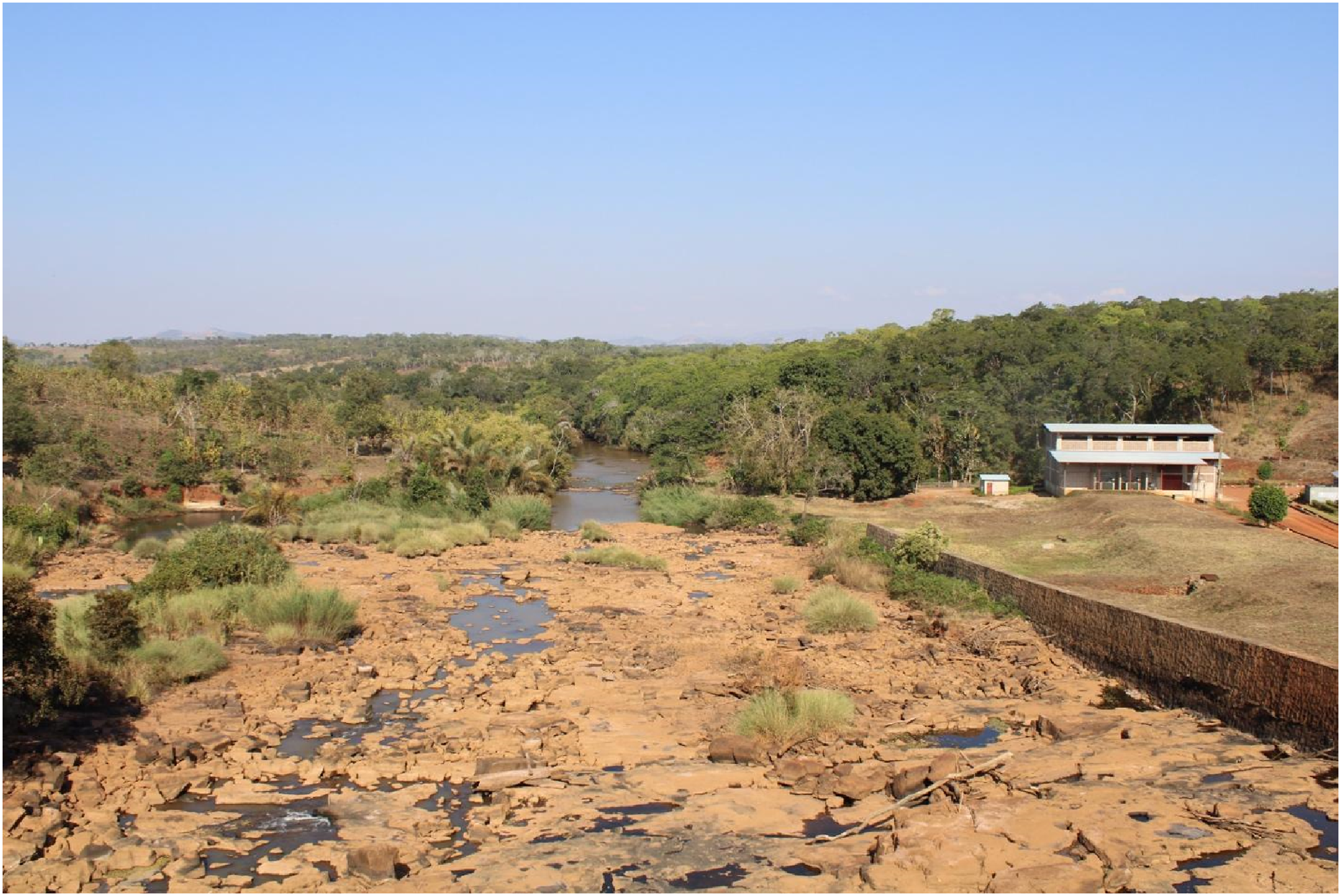
As the sisters told me about the strangely twinned history of these two hydropower stations after dinner one night, I laughed and mused out loud: ‘Wafhadili wawili, waswiss wawili, miradi miwili’ – two benefactors, two Swiss, two hydroelectric projects. ‘No’, they said, correcting my Kiswahili, ‘Mfadhili mmoja na mwekezaji mmoja’ – one benefactor and one investor. They explained that while they originally thought Koch would be giving a gift to the sisterhood, they came to understand months later, after the process had already been set in motion, that his financing was in fact a loan that would have to be paid back. Not only that, the loan would not cover the entirety of the cost of construction and they would have to get additional bank financing. This sent the sisters off on a long and discouraging chase. Local Tanzanian banks roundly rejected their requests for financing, in large part, it seems, because no one thought women could take on a project of that magnitude, and eventually forced them to go a Swiss bank who agreed to a loan, though at higher interest rates.
By the sisters’ estimates, the loans will be paid off sometime in 2026 – but how? In the spirit of financial sustainability, the new hydropower station was not to be like their stand-alone system at Lupilo/Chipole, but was to be a money-making venture in its own right, part of a wave of changing approaches to energy generation in Tanzania. In the 2000s, the government had not only sought to streamline the regulatory environment for mini-grids, but had codified a framework for independent power producers (IPPs) to sell electricity back to the national grid. While a number of large-scale, mostly thermal generation IPPs turned out to be Trojan horses for spectacular capital accumulation by business-political elites (Degani, 2017), small power producers of less than 10 MW, particularly hydropower or biomass, have arguably helped to diversify the national grid’s electricity generation portfolio. Today, the Tulila power station sells electricity to the national power utility Tanesco through a 15-year standardized power purchase agreement (SPPA). Tanesco allocates that supply to the regional Songea grid, and secondarily out across the country through the national grid. However, some of the plant’s generation is allocated to power its small outpost of 12 sisters – a number of whom are now trained electrical engineers.
In her discussion of Western monasticism, Ilana Friedrich Silber (1993) follows up on Weber’s impression that religious orders such as the Benedictines exhibited a kind of proto-capitalist dynamism. Yet where Weber points to the relevance of an ascetic ‘work ethic’ that would come to be shared by Protestant entrepreneurs, Silber (1993: 111) puts more stock in the fact that such orders were essentially disciplined corporate bodies: [The monastery was] a highly regulated, ‘total’ institution, relying on the cardinal principle of obedience to the abbot, and able to call upon its members’ full compliance and cooperation. This allowed for a constant availability of manpower at minimal cost (since monks did not have to be payed any wages, and had only to be provided with a minimal level of food and clothing – although the definition of ‘minimal’ did fluctuate). It also entailed the possibility to impose upon this manpower as efficient and ‘rational’ a division of labor (and a management of time) as was deemed necessary.
All these observations were strikingly confirmed during my own time at various sisterhoods. Sisters often described themselves as ‘soldiers’ who could be sent anywhere, to do anything, by the Mother Superior. Sister Valeria relayed in detail the ways she was suddenly and without warning sent to a Dar es Salaam technical college back in 2012, spending three lonely years in the capital city away from her community. A few months later, another sister I befriended sent me a somewhat forlorn WhatsApp greeting, mentioning that she too had been sent to study electrical engineering in the northern city of Arusha. Get thee away from a nunnery. Sisters likewise had little say over being posted to Tulila, the small outpost of 12 women, a few tidy buildings, and a modest chapel near the hydro scheme, one that contrasted with the sprawling hustle and bustle of the Chipole compound outside of Songea and its stunning, vaulted church. Moreover, whereas both the grey literature (e.g. UNIDO, 2018) and my own ethnographic encounters with sub-1 MW hydropower mini-grids suggest they enjoy only intermittent maintenance and management, the large, commercial, and technically sophisticated 4 MW Tulila plant demands constant observation. The 12 sisters rotate continuous eight-hour shifts at the powerhouse, two by two, where they are responsible for the hourly recording of voltages, water levels, and load balancing – a detailed timetable that bears elective affinities with the sisters’ structured Hours, in which prayers, chores, and meals unfold in an orderly and repeating sequence (see Figures 2 and 3). Hydropower monitoring and spreadsheet for hourly data entry. Source: Photo by the author. Sister Valeria with the Tulila generators. Source: Photo by the author.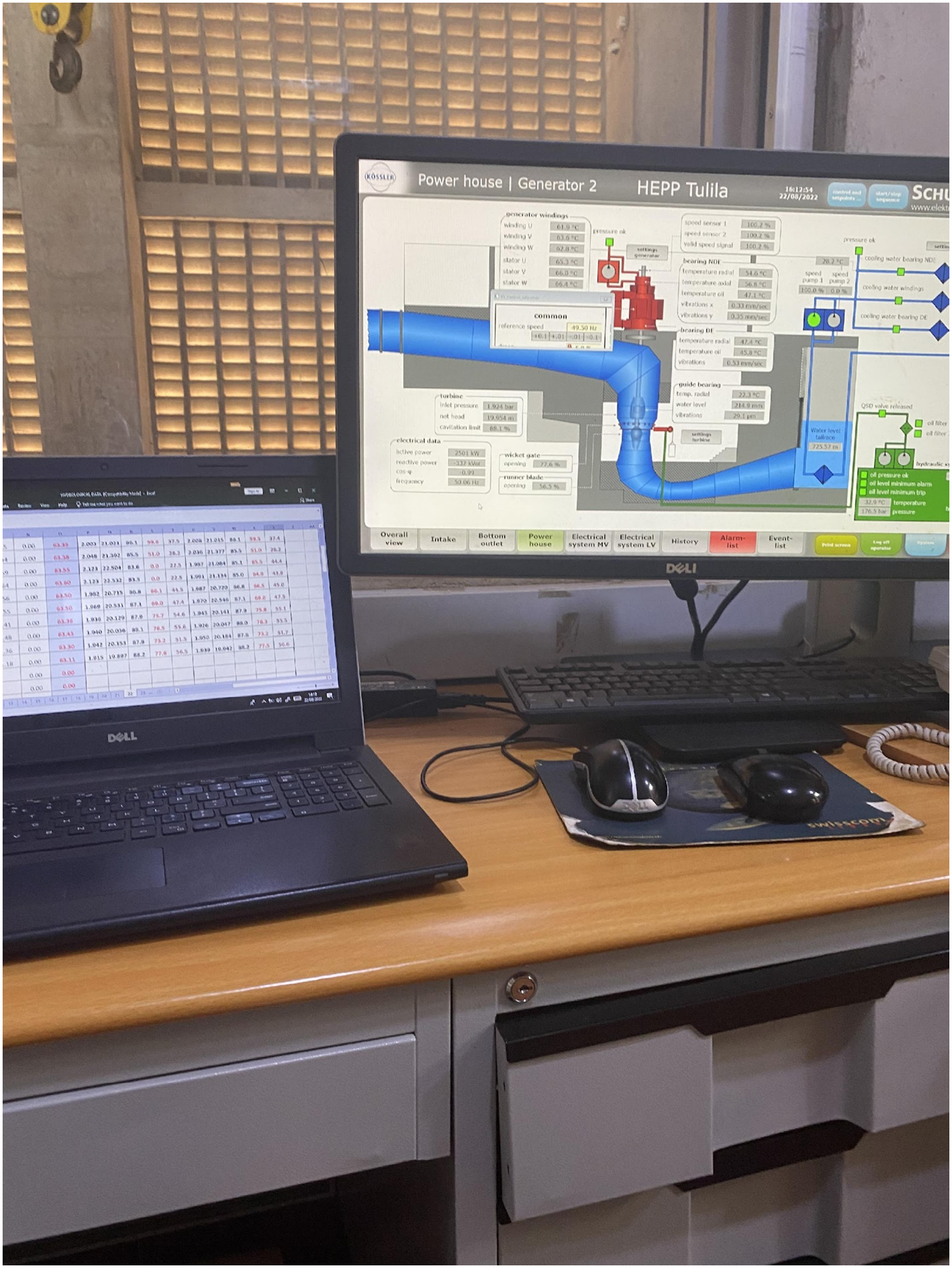
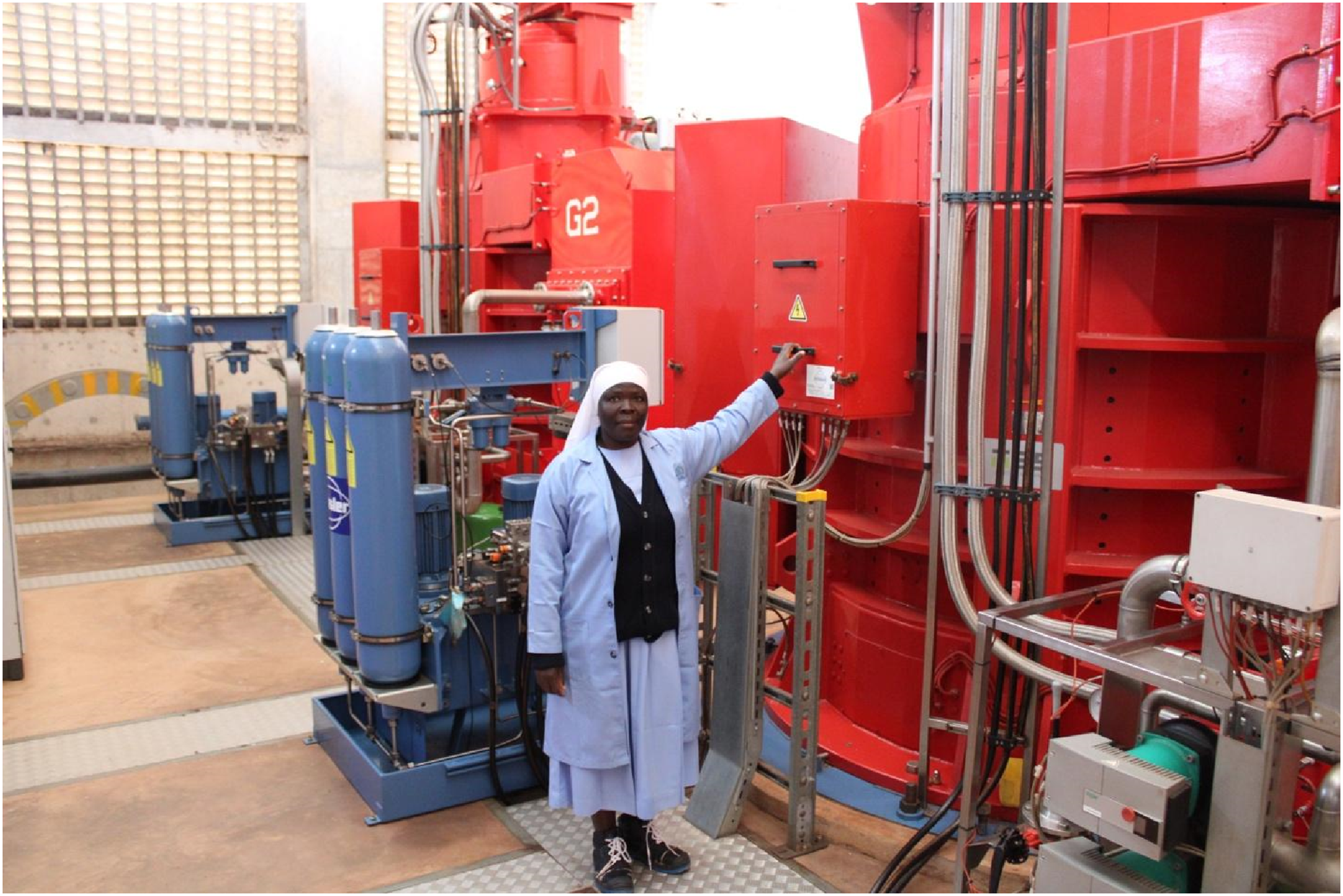
During my time with the sisters, they were visited by a prestigious delegation, a msafara (caravan) of about 12 cars and 30–40 people, mostly associated with the Bank of Tanzania and various government offices. They had come to see the Tulila station and were given a tour by Sister Valeria, decked out in habit, orange reflective vest, and work boots. Chatting in the shadow of the powerhouse, one delegate told me they had come to learn about the problems the sisters had faced. The sisters had been rejected by local banks, but they proved themselves ‘serious’ and ‘determined’. ‘A $10 million loan isn’t really that much’, he reflected, ‘and if it’s 3 to 5 percent interest, why not have the money stay in the country?’ The Tanzanian banking industry, in other words, was catching up to a kind of reasoning with a long historical pedigree, and that may well have informed the calculations of the Swiss lenders: it was in part the sisters’ piety and organizational discipline that qualified them for the investment. There is indeed something of Weber’s account (2001 [1930]) of capitalism as emerging from the carapace of faith here, albeit centred less on the entrepreneurial individual than on the corporate firm capable of long-term, centralized planning, and mixed with a dose of postcolonial economic nationalism to boot (cf. Geertz, 1963). Indeed, it is precisely because monasteries operate as transgenerational corporate bodies that they can, in effect, function as ‘patient capital’ (see Pueyo et al., 2022: 62), committing to large-scale projects with long time horizons, a dynamic particularly well-captured in the Benedictine ideal of stabilitas loci, staying in place.
The operation of the Tulila project thus benefits from the collective discipline and rationalization of the sisters’ religious order, and in this sense harkens back to the oldest dynamics of monastic economics. But its financing bears witness to a more conventional neoliberal logic where the tension between wealth and spirit is not held in equipoise but in effect (aspirationally) resolved in the idea of ‘doing well by doing good’ (Cross, 2019: 47). Where Fuchs was the charitable benefactor of a 400 kW hydro scheme, Koch was the rationalized investor of a 4 MW scheme, linking the sisters to commercial banking institutions and their sporting interest rates. The project was also linked to other forms of highly audited development financing, most notably the UN Framework Convention on Climate Change’s Clean Development Mechanism, a carbon credit trading scheme. In exchange for supplementary financing to cover the ‘equity gap’, Tanzania’s Rural Electrification Agency (REA) received an advance on the 23,989 tons of CO2 the plant is estimated to save per year (Tanzania Renewable Energy Program, 2015). Ironically, carbon offsets are largely shell games, perhaps closer to indulgences (Dalsgaard, 2022) than to a ‘doing well by doing good’-style fusion of worldly success and inner ethical coherence promised by the social enterprise crowd.
‘Why did the Benedictines agree to the loan?’ a Franciscan sister wondered aloud one night as we were discussing the issue. Sure, she continued, her own order might take out a small loan for a tractor, but they would do it during the harvest or the planting season when they could rent it out to villagers. In other words, there was no redundancy to the massive 4 MW Tulila project – if something went wrong with Tanesco, the machinery, or the weather, they would be on the hook for difficult interest payments. The Franciscans’ own, much smaller hydropower project, notably, remained with the logic of charitable grants and donations from the Baldegg sisters and from UNIDO.
For their part, the Benedictine leadership struck me, at least in conversation, as somewhat cagey about the complicated financing entailed in the Tulila project, and the long-term debt servicing it ultimately demanded. So, did they really not know what they were getting into? It is hard to say. In any event, what remains true is that, in effect, they had been drawn into a contemporary moral logic of ‘trade not aid’, one that repudiates direct forms of material support and instead prioritizes ‘self-sustaining’ commercial ventures. What the sisters might well have initially assumed to be a gift – a hydroelectric plant – was merely a loan for one.
The guest arrives and the host is healed
Despite these ambivalences, the Tulila project is in many respects a success story – well run, and ultimately on track to be profitable in ways that align with the kind of long-standing practices of monastic self-enrichment discussed earlier. However, here we can return to the tension between wealth and spirit, that is, between the material donations and commercial profits that religious orders acquire, and the Christian purposes to which those surpluses should in the main be allocated. As Silber points out (1993: 117), unlike Protestantism, in which wealth and spirit were always-already fused in the elect, the more mediated process of interconversion between the material and spiritual in Catholicism meant that any incipient ‘monastic capitalism’ was never able to develop an alternative ideology of justifying wealth for its own sake. Hence the chronic instability of monastic orders that were seen to grow too wealthy for their own good and thus subject to denunciations of corruption and calls for levelling back down to genuine apostolic poverty.
The sisters’ presence in Tulila had something of this tension, situated as it was in a region thick with histories of resettlement and shifting patronage that stretch back to the Maji Maji Rebellion. The sisters would be required to justify their elaborate hydro scheme and compound, and indeed what was just generally their new, wealthy presence in the landscape, through a series of gift exchanges and payments to local communities.
In 2011, the sisters and REA held a mandatory consultation process with local government officials and villagers (Tanzania Renewable Energy Program, 2015). The latter raised concerns that the Tulila dam’s construction would necessitate the displacement of existing settlements and farmland, as well the partial flooding of the landscape to create a reservoir. New transmission lines could interfere with cropland and create new fire hazards, while the reservoir itself would disrupt downstream water flow and subsistence fishing. On the other hand, many villagers reportedly seemed to welcome the possibility of expanded electrification and the many goods it could bring: flour mills, agro‐processing centres, carpentry and metal workshops, and more effective dispensaries and health clinics. It is not clear, however, if villagers were properly informed about the way electricity would be extended – that is, not immediately, through the private mini-grid that would power the Benedictine sisters’ own compound, but through the REA’s eventual extension of the state grid prompted by the sisters’ presence. In effect, what was being proposed was a kind of gift relation, with the REA promising (but not exactly contractually obligated) to extend power to these areas in exchange for the villagers’ own open-handed endorsement of and hospitality towards the sisters.
After conducting the requisite consultations and environmental impact assessments, people settled immediately around the river prepared to take their leave. Village elders propitiated local water spirits (mizimu), bidding them to find new environments in which to dwell, and began the process of constructing new houses and clearing new fields. Since the completion of construction in 2016, the sisters have maintained a classically ambiguous presence in the landscape, capable of playing both guest and host. They have been successful in liaising with the REA to electrify four of the surrounding villages, and have helped to channel donations to build local schools and churches. In classic missionary style, they employ local people as drivers and security. On Sundays, they either walk or take motorcycle taxis out to surrounding villagers to deliver Mass, hold their own Sunday services open to the community, and know many local people and maintain sociable relations with them.
On the other hand, as my research collaborator Opta Kasogela has learned in interviews, a series of complaints and resentments have surfaced among the villagers. The sisters themselves have become landowners of extensive farmland acreage surrounding the power station, whereas at least some villagers felt the compensation they ultimately received was not adequate to the value of the land they lost – enough in some cases to buy a reduced number of hectares, but not enough to pay labourers to clear it for cultivation. Others who found work during the construction process reported they were told to accept reduced wages because they were engaging in a form of self-help by contributing to the area’s electrification – and yet, notably, at least two of the surrounding villages remain unelectrified.
One of the most striking expressions of the sisters’ ambiguous presence in the region is the bridge that rides the top of the reservoir wall that now spans the Ruvuma river (Figure 4). Before the sisters arrived, one explained to me, villagers used to ford the river at the shallow stretch just below that was filled with sharp, jutting rocks, sometimes losing their footing and sustaining mortal injury.
2
That perilous passage has been replaced by a sturdy structure with bracing views. But in some ways that crossing cuts even as it connects; travel across it is permitted only by foot or motorcycle taxi, and the bridge is closed at night and manned by an armed guard; in an emergency, for instance, passengers need written permission from the village chairman to cross. Even then, the distance from the checkpoint to the compound where the key is stored is a good 5–10-minute walk in either direction, forcing any sick or injured person, who may urgently need care, to wait in limbo. The bridge-topped dam, spanning the Ruvuma. Source: Photo by the author.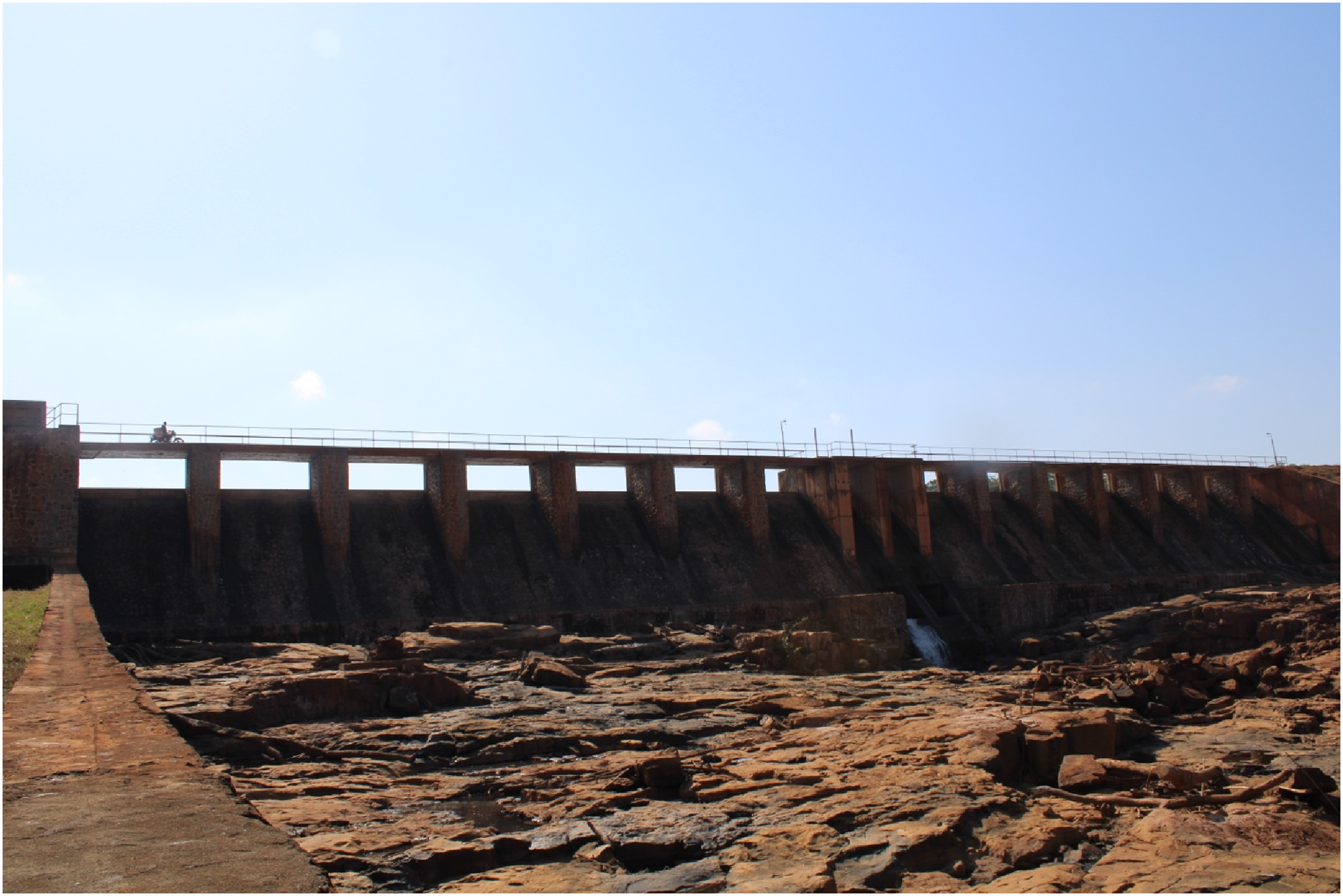
The overall result has been a complex tissue of intimacies and resentments, ones that have occasionally become inflamed. On the day of the msafara, after touring the power station, the honoured government delegates were served a lavishly cooked meal of fish, chicken, and pilau. Afterwards, as they sat back with toothpicks and bottled sodas, a younger sister shakily read a carefully prepared statement. She began by thanking the esteemed visitors (mostly elder men) for coming, citing the Kiswahili proverb ‘mgeni aje mwenyeji apone’ – ‘the guest arrives and the host is healed’, or more colloquially, ‘the guest is/brings a gift’. After touting the many environmental and economic benefits of the Tulila station, she respectfully asked for assistance in extending power lines to the as-yet-unserved village communities, and to improve the roads and bridges leading out from the power station. These acts of infrastructural investment might improve relations with farmers upstream on the Ruvuma who were diverting water for their fields, and temper the acts of vandalism the sisters had suffered: crops had been stolen, fish stock for an aquaculture project in the reservoir had been promptly depleted, and transmission lines and utility poles had been burnt.
Historically, missions or monastic orders in rural Tanzania often used electrification as a medium of patronage – either by running power for hospitals and schools, or sometimes by directly extending it to villagers at subsidized rates. Here, though, the sisters’ electricity specifically remains confined to their own small outpost. This awkward fact, along with indignities such as that of the bridge’s slender crossing, is only partially alleviated by their spiritual services and their limited sponsorship of village development initiatives. The sisters’ appeal to their own government allies to help change the balance of this equation was a canny recognition that their churchly business success has, whether they like it or not, only increased villagers’ claims on them to act as patrons.
Conclusion
The sisters’ hydroelectric infrastructures have characteristics that both align with and depart from pro-market, neoliberal approaches to rural electrification. The Benedictines, in particular, have proven themselves adept at the kind of post-carbon development projects that have been ascendant over the past 15 years, contending with international finance and carbon trading schemes in ways that are as creatively open-ended and experimental as any Stanford MBA at a solar energy start-up. Indeed, their success as small power producers that sell to the national grid has spawned a good deal of interest from other orders, including from the Franciscan sisters. Ironically, that success may well stem in part from the kind of corporate discipline and commitment to long time horizons – a kind of equivalent to ‘patient capital’ – that entrepreneurial solar start-ups in the Weberian style lack. But following on from the intriguing lines of inquiry laid out by scholars such as Scherz (2017) and Andrea Muehlebach (2012), I have also tried to show another, cross-cutting moral configuration, exemplified by smaller hydro-powered mini-grids precariously connecting Church to laity, either directly or through electrified social services offered at subsidized rates, and with less concern for cost recovery. With neoliberalism, it exhibits a preference for private solutions and humanitarianism to ameliorate social problems. Against neoliberalism, it looks not to highly audited sustainable forms of community development, but to the more punctuated turns of charity, with its gifts and thanks, hosts and guests, care and coercion. More broadly, taking inspiration from the wealth of anthropological scholarship concerned with the colonialities of transition, I have tried to show how the trends and trajectories of energy policy after fossil fuels and beyond big grids, in which we are constantly grasping for new, innovative solutions, often end up rooted in deeper histories and existing material and spiritual repertoires.
Footnotes
Acknowledgements
I wish to thank Mark Goodale and Zeynep Oguz for organizing the Contested Transitions workshop at the University of Lausanne where I presented an early draft of this article, Gisa Weszkalnys for her keen comments and critiques, and the participants at large for their generative discussion and their own inspiring work. This article has also been greatly improved by the opportunity to present it at the LSE Department of Anthropology Friday Seminar, the Cosmopolitan Karoo forum at the University of Stellenbosch, the Infrastructural Geographies Group seminar at the University of Cambridge, and the European Council for African Studies. Special thanks in particular to Sian Lazar, Jerome Whitington, Andrea Pia, Steven Robins, Mathew Wingfield, Brenda Chalfin, Kelly Askew, Maan Barua, Mohammed Yunus Rafiq, and the two anonymous reviewers for their generous engagement. I wish to thank Opta Kasogela and Jacquiline Tesha for their indispensable role in conducting the research, the Tanzania Committee on Science and Technology for their sponsorship, and Dr. Matthew Senga of the University of Dar es Salaam for his support and collaboration. Finally, my deep gratitude to the sisters who welcomed me with the utmost grace and hospitality, and from whom I have learned so much.
Declaration of conflicting interests
The author(s) declared no potential conflicts of interest with respect to the research, authorship, and/or publication of this article.
Funding
The author received no financial support for the research, authorship, and/or publication of this article.
Ethical statement
Consent for Publication
Consent was obtained for the pseudonymized individuals whose details and/or photos are featured in this article.

Data availability statement
The data collected for this research project is not available due to ethical considerations.