




Abstract
Introduction:
Employment plays a vital role in the recovery of individuals with serious mental illness, yet its specific contributions to well-being remain underexplored. This study examines how individuals perceive employment in their recovery, identifying key factors that support workplace inclusion and personal growth.
Method:
An explanatory, multiple-case study design was used. Semistructured interviews were conducted with five participants with serious mental illness, and data were analyzed thematically to identify recurring themes related to employment and recovery.
Result:
Employment fostered self-awareness, advocacy, and self-actualization. Participants reported that understanding their condition enabled them to advocate for workplace accommodations, while both awareness and advocacy supported self-actualization. Peer support was critical for sustaining employment and fostering a sense of belonging. These elements interacted to create an inclusive work environment that facilitated ongoing recovery.
Conclusion:
Employment is a dynamic and integral component of recovery. Workplace policies promoting self-awareness, advocacy, and peer support enhance job retention and well-being. Occupational therapists can play a key role in supporting individuals by facilitating workplace accommodations, strengthening self-advocacy skills, and fostering peer support networks, ensuring that employment contributes meaningfully to recovery.
Introduction
Employment is a key determinant of quality of life, social inclusion, and recovery for individuals with serious mental illness (SMI; Gruhl et al., 2012). In this study, SMI refers to conditions such as schizophrenia, bipolar disorder, and other psychotic disorders, which pose unique challenges in securing and maintaining employment. Individuals with SMI experience disproportionately high unemployment rates compared to those without mental illness (Petrakis et al., 2019), largely due to inconsistent employer support, limited access to meaningful job opportunities, and inadequate employment services (Gruhl et al., 2012).
In addition, the fluctuating and episodic nature of serious mental illnesses can heighten stress in response to unexpected work conditions and further complicates sustained employment, as individuals may struggle with consistency and reliability in areas such as punctuality, regular attendance, concentration, and meeting productivity expectations (Besse et al., 2017; Petrakis et al., 2019). Without appropriate accommodations—such as flexible scheduling or task modification—and support systems that may include both workplace supports (e.g., supervisors, job coaches, employee assistance programs) and broader social resources (e.g., peer networks, community mental health services), these challenges can lead to unstable employment patterns and cycles of unemployment (Bjørlykhaug et al., 2022), ultimately affecting recovery outcomes. In this context, recovery refers to the process by which individuals with serious mental illness are able to live meaningful and satisfying lives, with or without ongoing symptoms—emphasizing personal growth, autonomy, hope, and participation in the community (Anthony, 1993).
While research has explored employment barriers and support strategies, the connection between employment and recovery remains underexamined from the perspective of individuals with SMI. One notable exception is a qualitative study by Dunn, Wewiorski, and Rogers (2008), in which participants described the personal meaning of work and its role in promoting recovery—highlighting benefits such as enhanced self-esteem, financial independence, coping with symptoms, and the value of working in helper roles. However, limited studies have taken up this perspective. This study seeks to build on and extend this work by further exploring how individuals perceive employment’s role in their recovery, offering insights into occupational therapy practice.
Literature review: Employment aspirations and opportunities
Employment is a key determinant of mental health, with research indicating that securing work can enhance the well-being of individuals with SMI (Drake et al., 2020). Conversely, unemployment can worsen mental health conditions, leading to increased distress and social isolation. However, individuals with SMI often encounter a significant gap between their employment aspirations and the opportunities available to them. Research has underscored the importance of employment in the recovery process while highlighting persistent barriers that hinder access to supportive and sustainable work opportunities (Gruhl et al., 2012; Petrakis et al., 2019; Pogue, 2023; Sundar & Ochoka, 2004).
One major challenge is workplace stigma, which discourages individuals with SMI from disclosing their conditions and seeking necessary accommodations. Such stigma may manifest through discriminatory hiring practices, negative stereotypes about reliability or competence, subtle forms of exclusion by colleagues, or punitive responses to requests for flexibility or time off for treatment, all of which contribute to an environment where disclosure feels unsafe. Pogue (2023) identifies gaps in corporate culture, underscoring the importance of fostering inclusive environments where employees feel safe expressing their employment-related needs. Workplace stigma and a lack of understanding from employers and colleagues can be a major barrier for individuals with SMI to secure and sustain inclusive, accommodating work environments (Brouwers et al., 2020; Follmer and Jones, 2018; Petrakis et al., 2019). Stigma and discrimination in the workplace can lead to work avoidance, increased stress, reluctance to disclose mental health conditions, and reduced job tenure (Hampson et al., 2020). Addressing these issues requires shifts in workplace policies and attitudes to support individuals in sustaining meaningful employment.
Furthermore, employment challenges are compounded by a lack of education and job training, employment gaps, and poor physical health (Gao et al., 2020). Makdisi et al. (2013) and Michalak et al. (2012) explore lived experiences and recovery narratives, emphasizing the importance of holistic, person-centred approaches in mental health care. These studies advocate for robust support systems and tailored services for managing bipolar disorder and psychosis while also identifying significant barriers such as stigma, inadequate mental health services, and financial constraints.
Beyond financial stability, employment plays a crucial role in fostering social participation and identity formation. Millner et al. (2019) and Mizock et al. (2014) highlight the importance of social roles and community involvement in the recovery process. Similarly, Salzer (2021) finds that active community participation, including employment, is associated with positive health outcomes for individuals with SMI. These roles provide a sense of purpose and belonging, which are essential for overall well-being. However, more research is needed to understand how employment intersects with social participation and the fulfillment of social roles, and how these factors contribute to long-term recovery. A deeper exploration of employment’s impact on mental health and well-being can inform policies and interventions that enhance workplace inclusivity and improve recovery outcomes for individuals with SMI.
Current study
This study examines the intricate relationship between employment, recovery, and the lived experiences of individuals with SMI. Focusing on the perspectives of individuals with SMI, the research explores how employment influences their recovery and how supportive environments can help achieve their employment goals. The study addresses the question: How do individuals with SMI view the role of employment in their recovery?
Methods
This study used an explanatory, multiple-case study design (Yin, 2014). In Yin’s framework, explanatory case studies are employed when the goal is to examine causal relationships and understand how or why particular phenomena occur. A multiple-case study design allows for comparison across cases, thereby enhancing the robustness and analytic generalizability of findings. This method is well suited to exploring the essence of a phenomenon through the subjective accounts of those who have experienced it (Priya, 2021). A qualitative case study is particularly appropriate for addressing the research question as it allows for an in-depth exploration of individual experiences, contexts, and perspectives. By focusing on multiple cases, the approach captures variations and patterns across participants, offering a richer and more nuanced understanding of how employment influences recovery. In addition, this method enables the researchers to investigate complex, real-life processes, such as recovery and reintegration into the workforce, which is shaped by personal, social, and systemic factors. The qualitative design prioritizes the voices and lived experiences. With these subjective narratives, the study can identify common themes, concerns, and strategies that contribute to addressing individual needs. The study received ethics approval from the University Research Ethics Board.
This study is a follow-up to a broader participatory action research project focused on mental health and employment. We used a purposive sampling of five cases to represent individuals with various mental health conditions, employment statuses, and perceptions of employment in their recovery journey. Recruitment took place through community mental health agencies, including a clubhouse, an employment support program, and a mental health promotion initiative. Recruitment materials, including study advertisements, were shared within these programs, and individuals who were interested contacted the research team directly. Five participants (three women and two men), aged between 51 and 61 years, all residing in a Canadian city, took part in the study. Four participants identified as White and one as a member of a visible minority group. All participants self-identified as living with serious mental illness, agreed to participate and provided written informed consent. Following Yin’s (2014) recommendation, the strength of a multiple case study design improves by including participants who contribute to theoretical replication, resulting in different but consistent outcomes findings.
Data were collected through individual, multiple semistructured interviews with the five participants. Each interview lasted approximately 60 minutes. To support participant preparation and encourage thoughtful reflection, they were provided a set of guiding questions in advance. The guide was grounded in the study’s research questions and designed to explore participants’ experiences and perspectives related to recovery and employment. It included two main sections: (1) participants’ understanding of recovery, with prompts to explore personal definitions, key influences, and changes over time; and (2) employment experiences, covering work history, the meaning of employment, perceived barriers, and available supports. The interview guide was reviewed by the research team to ensure clarity and alignment with the study’s objectives. Each case was assigned a pseudonym, and the interviews were recorded and transcribed verbatim. To understand the experiences of each case, the interviews were divided into three sections: what recovery means to the participant, the participant’s employment experience, and how work experience has contributed to their recovery journey. Each section included prepared questions along with follow-up questions to explore participants’ insights and responses further.
To develop a comprehensive understanding, an in-depth portrait of cases was created through both within-case and cross-case theme analyses (Creswell and Poth, 2024). In the within-case thematic analysis, each case was examined individually to identify unique themes within its specific context and description, providing detailed insights into participants’ lived experiences. This analysis was guided by Strauss’ (1987) qualitative data framework, employing a constant comparative method that involved systematic coding, identifying core categories, and theoretical sorting to refine emerging themes. Following this, a cross-case analysis was conducted to compare themes across cases. This process found key similarities and differences, uncovered broader patterns and a deeper understanding of shared and divergent experiences. This dual-level analysis ensured a nuanced and holistic interpretation of the data. To enhance credibility, member checking was performed by sharing preliminary findings with the participants to validate key themes, clarify ambiguities, and ensure that interpretations accurately reflected their perspectives. A member-checking focus group was held, during which participants discussed the themes in relation to their own recovery stories. While no major changes to the findings were required, participants emphasized the importance and impact of peer support, which we integrated more prominently into the analysis and the theme figure.
Results
The cases
Dylan’s first job as a teenager boosted his confidence and ignited new interests. However, as his mental health deteriorated, he found it difficult to sustain employment. For the past 30 years, he has served as a group facilitator and educator, utilizing public speaking to raise awareness and confront mental health stigma.
Nadine’s journey began with substance use recovery, followed by a 21-year mental health wellness journey. As a teenager, she held part-time jobs but faced challenges due to her illness. After earning a social work diploma, she found the profession restrictive and transitioned to peer support worker in a healthcare setting, where she continues to work today.
Ellyn reported 25 years of experience as a full-time project coordinator, desktop specialist, and safety officer. After two hospitalizations, she transitioned to become a wellness program facilitator and now holds various peer support roles, primarily in mental health settings, where she provides support both in group contexts and one-on-one. She changed careers because the stress of being a safety officer resulted in depression and hospitalization. Ellyn expressed that her current job gives her meaning, and she enjoys giving back to others. Since starting in her new role, she has not experienced a hospitalization or relapse since 2013.
Samantha spent considerable time working in supportive environments like a bakery and a flower shop. During this time, she experienced a mental health episode that temporarily affected her ability to work. Advocating for herself, she sought adjustments to her medication and increased time with a therapist. She remains proactive in her recovery, valuing an open and supportive workplace environment.
James faced challenges in postsecondary education and dealt with feelings of anger, frustration, and ignorance regarding himself and the mental health system, which delayed his seeking help. He found full-time jobs overwhelming due to the pressure and stress, and his mental illness has made it difficult for him to feel supported while maintaining a full-time job. Despite these obstacles, James has gained valuable work experience through temporary and part-time positions, as well as volunteer opportunities.
Findings
Figure 1 illustrates how the five cases perceive the role of employment in their recovery journey. The model highlights three interconnected themes: awareness, advocacy, and self-actualization, all underpinned by peer support. (1) Gain Awareness: Awareness emerged as a foundational theme, with participants emphasizing the importance of understanding one’s mental health conditions, recognizing triggers, and identifying workplace accommodation needs. (2) Enabling Advocacy: Building on awareness, participants progressed to advocacy, both for themselves and their peers. Advocacy involved seeking workplace accommodations, promoting systemic change, and challenging stigma to foster inclusion. This was key to achieving a personal sense of empowerment and driving broader societal change. (3) Self-Actualization: Through awareness and advocacy, participants found their full potential by finding meaning and purpose in helping others despite facing challenges. (4) Peer Support: Peer support serves as the foundation that mediates and sustains the recovery process. By offering, mutual understanding, shared experiences, and encouragement, peer support creates a safe and empowering environment that fosters growth, professional satisfaction, and resilience. Together, these themes illustrate how the participants perceive the role of employment as a dynamic and integral component in their recovery journey.
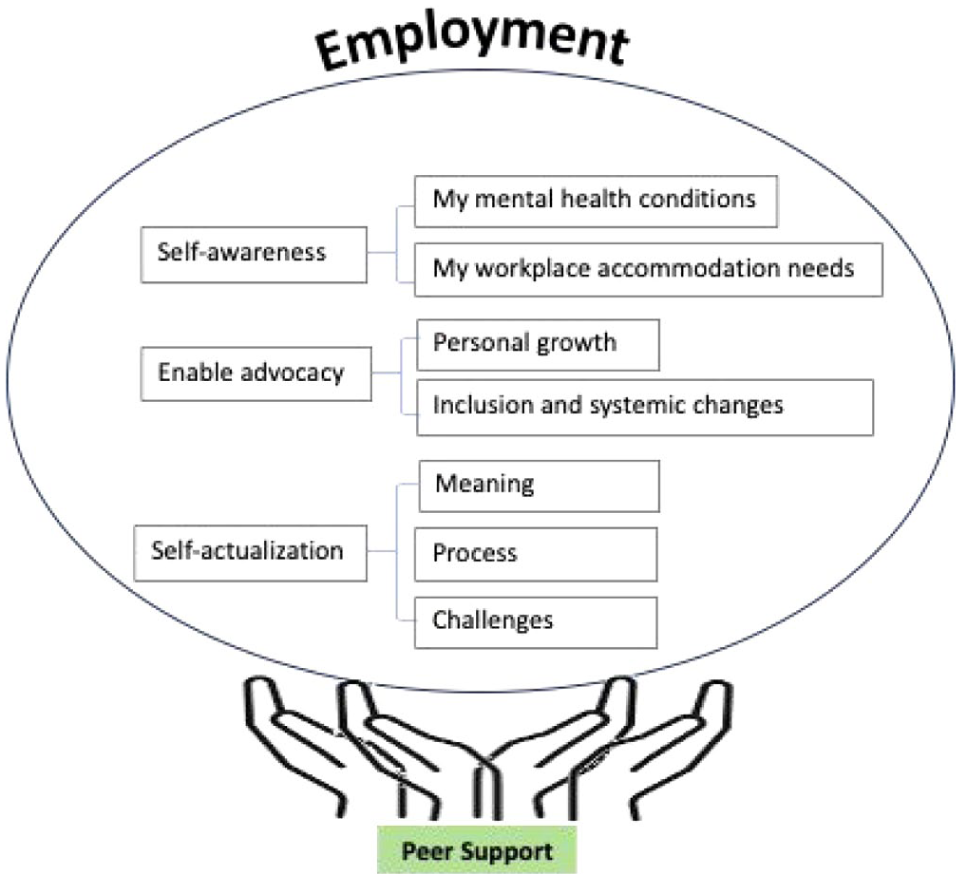
Perceived role of employment in the recovery journey.
Theme 1. Employment as a means to gain awareness
Awareness emerged as a central theme across all five cases. Participants emphasize that employment deepens their understanding of mental health conditions. Through work, they gained insight into their needs and the necessary accommodations to support their success in the workplace.
(1) Ongoing awareness of my mental health conditions. Participants expressed the critical role of self-awareness in effectively managing their well-being during the recovery process in the employment context. They explained the significance and importance of comprehending their conditions and the impact on their daily functioning. Nadine mentioned that managing her mental health will be a lifelong journey: “Eventually, I was willing to address mental health. . .I ended my substance use . . . but . . . mental health doesn’t have an endpoint. I am going to live with my mental illness for the rest of my life.”
This recognition of mental health as an ongoing journey underscored the importance of continuous self-awareness and adaptation. Employment helped participants gain this awareness, allowing them to identify triggers and understand their functional impacts. All emphasized the significance of discerning which aspects of their experiences could be shared without exacerbating symptoms, thereby emphasizing the indispensable role of self-awareness: “I’ve come to learn what part of my journey I can share that will not activate any symptoms and what part of my journey I cannot safely share.” (Nadine)
(2) Awareness of my accommodation needs. Participants also expressed their awareness of particular accommodation needs they require in the workplace. As James shared: “I think if I could build the job around me and my strengths, that is better than me trying to fit myself into some kind of corporate mold.” This sentiment was echoed by others who appreciated the flexibility and support provided by their employers. Ellyn highlighted this support:
I can make my schedule, which allows me to go to my appointments and schedule in swimming. My employer does supervision meetings every two weeks where we can debrief about the work and challenges and celebrate the successes. We also have team meetings every Tuesday, and if people cannot make it in person, it is offered online so that we all can attend.
Participants shared that such awareness of accommodation needs served as a crucial first step in their recovery journey. This newfound awareness fostered empowerment and enhanced a sense of control and belonging. They all particularly emphasized that understanding specific accommodation needs created a more supportive and effective work environment. This, in turn, facilitated ongoing recovery and integration into the workforce.
Theme 2. Employment enables advocacy
Advocacy emerged as a critical next step following awareness across all cases. Employment empowers them to advocate for themselves and others. Advocacy fosters personal growth and drives systemic change as individuals work to reduce stigma and promote inclusion. Through employment, participants learned to voice for the self and champion the needs of others. This experience contributed significantly to their recovery and workplace integration.
(1) Advocacy for myself and peers in the workplace. Participants voiced and advocated their accommodation requirements, sought supportive resources, and ensured their mental health needs were met. This self-advocacy empowered them to take control of their employment, and also resulted in more tailored support and a better quality of work. As noted by Ellyn, “Becoming an advocate along the way for my needs and wants, helps direct me. They are my map to help me navigate. I then can become resilient and better equipped to handle whatever comes my way.”
Besides self-advocacy, participants advocate for their peers. Peers played a pivotal role in fostering inclusion and acknowledgment within the workforce. Participants articulated a desire to overcome societal barriers and establish equal opportunities for those facing mental health challenges. They particularly emphasize the importance of being valued members of society and contributing meaningfully. Dylan further shared, “We’re trying to help people with disadvantages like mental illness as there’s so many barriers to life and in particular employment.”
(2) Advocacy as a process of personal growth. All expressed that advocacy was not merely about seeking support; it also facilitated personal growth. They reflected the transformative power of self-advocacy, not only as a tool for personal navigation but also as a catalyst for personal growth and resilience. Through advocacy, they cultivate a sense of agency and empowerment in the recovery process. For instance, Nadine shared her personal growth: “I have to explain to doctors why I won’t take certain substances into my body. Doctors say it won’t cause my body to do anything and I may be wrong that it could make my body crave again but I’m not doing it based on any science. [It’s my] own choice. Doctors need to respect that.”
(3) Inclusion and systemic changes as the result of advocacy. Their advocacy efforts extended beyond personal and peer support and hope to achieve a broader systemic change. Their reflections, as Ellyn noted: “Stigma in the workforce was the biggest challenge.” Beyond just acknowledging the obstacles, all participants hinted at a collective resolve to challenge the status quo. They want to advocate for systemic change. They hope to transform systems to be more responsive to the needs of individuals with mental health challenges and promote greater inclusion.
We are doing so much more than self-advocating. I think we are advocating for a much bigger change and I truly believe that we can accomplish it . . . We need to start with the employers that are willing to work with us . . . It’s a ripple effect that’s beautiful. (Nadine)
These narratives offer a nuanced understanding of advocacy’s transformative potential to become a force for systemic change in the workplace. Through collective advocacy endeavors, our participants navigate toward recovery through inclusivity, recognition, and genuine societal integration.
Theme 3. Employment as a path to self-actualization
The participants shared that having a job offers opportunities for self-actualization and enables them to realize their full potential. All described self-actualization as a way to feel a sense of purpose and contribute to communities:
(1) Meaning of self-actualization. Some described self-actualization as realizing one’s capacity and becoming the best version of oneself. This involves understanding the true self, embracing strengths, and addressing weaknesses. They felt most self-actualized when “contributing” to the world around them. During the interviews, all shared experiencing a process of self-actualization, where they came to recognize—either independently or with support—that they were valued and cared for by others. As highlighted by Ellyn: “I felt like I was contributing, in that, I was made indispensable.” They shared a common insight that self-actualization is an ongoing journey of self-discovery, fulfillment, and self-improvement.
(2) Process of self-actualization. All participants expressed that discovering meaning and purpose has positively contributed to their recovery. Finding meaning and purpose by giving back to others in similar situations enabled them to uncover different aspects of themselves and experience a sense of pride in themselves and their work. Dylan shared: “Being able to help others, you know it just means a lot to me. Having those people and they depend on me and I’m there every day to help them.” Ellyn shared a similar experience:
When I do [work] that focuses on my strengths and talents, I live a better and fulfilling life. I have not been hospitalized since 2013 and have not had any relapses. I am proud of what I do and I am ok with being vulnerable when sharing my recovery journey.
(3) Challenges to feel inclusive. While self-actualization has enhanced individuals’ sense of self, achieving self-actualization was not an easy task. Some participants shared difficulties in dealing with feelings of losing control, which created obstacles to effectively managing their conditions. For example, Nadine shared the challenge she faced when deciding to discontinue substance use: “In the beginning of my wellness journey, I honestly didn’t know if I would survive because I just could not imagine my life living without [substances] because it was just so difficult. It’s so painful. . .I don’t know how I’m gonna survive the next day.” James also shared his experience:
It wasn’t until age 40 I started to wake up . . . when a person isn’t able to control their moods and they have emotional dysregulation then you don’t realize what’s going on it kind of really distrusts the brain . . . you give up, like you have a high degree of stress. . . it’s kind of up and down, you can’t keep your energy level stable.
Along with feeling a loss of control, challenges related to inclusivity in society and managing symptoms affected participants’ ability to find their own potential: “You know, we want to be part of society. You know, and want to be able to support ourselves in other ways and even contribute and feel like a valued member of society.” (Dylan)
Theme 4. Peer Support as a key to sustaining meaningful employment
Guidance and support from peers—defined by the participants as individuals who share similar experiences of mental illnesses and work-related challenges—are beneficial and often essential for achieving meaningful employment and self-actualization. As highlighted by James: “I started hanging out with people who are highly involved with mental health, they were patients themselves . . . I think those people more than anything else, they helped me, not the professionals per se.”
Peer support is a significant element intertwined with the experience of meaningful employment. Peer support becomes a catalyst for individuals embarking on their recovery journey as Dylan said: “That’s one of the biggest advantages to recovery, peer support.” When the participants received peer support, it created a more meaningful network of peers that positively influenced their employment, overall recovery, and wellness journey. Nadine noted a time when a peer gave her hope during her recovery journey: “I had an admission where I met a peer. . .she had a different perspective on life and living with mental illness and she just gave me a lot of hope for the future.”
We found supportive peers can inspire individuals to develop self-awareness and become advocates for themselves and others, fostering a proactive approach to life and work. Ellyn shared: “I like learning about each other and finding out what our strengths and talents are and how to utilize that.” Employment can provide platforms where individuals’ voices are heard and valued, reinforcing their sense of purpose and contribution to society. For some participants, this was realized in their current roles, where peer support played a crucial role in sustaining this platform. Others expressed hope to move toward such opportunities in their careers, viewing employment as a pathway to achieving these outcomes. Ellyn shared the importance of working in a peer support role: “It means the world to me, I have a huge passion to help others with advocating for their needs and wants. . .” Thus, employment, supported by peer interactions, is crucial in motivating individuals.
Peer support was also accompanied by feelings of validation and empathy, which created a safe space for participants to willingly share their stories with others who were also navigating similar challenges. James shared that peer support gave him a sense of belonging: “[the support group] means that I have access to peers, people like myself who have similar experiences, and I can relate to them.” For many individuals, the confidence, resilience, and interpersonal skills gained through peer support translated into improved job performance and satisfaction: “I know that I feel better about my work . . . just because we were talking about it made me feel better about it.” (Dylan)
Moreover, the sense of belonging and validation from peer support networks mitigated the stress and isolation often associated with workplace challenges. Some participants expressed gratitude toward peers and mentors for providing guidance in navigating workplace challenges such as disclosure: “The support of others helps to bring you on the road to recovery.” (Samantha) Nadine shared how she wished she had known about peer support when she first entered the workforce: “I think it’s such a crucial thing. I wish it existed when I first entered the workforce.”
The presence of peer support within the participants’ recovery journey not only fostered a supportive environment but also encouraged mutual growth and self-discovery, ultimately leading to a sense of self-actualization. As highlighted by James: “You are here to help yourself and learn to grow as a human being and to help other people.” This holistic development through peer support made individuals more adaptable, motivated, and committed to their employment, fostering both personal and professional growth: “It takes time, and it takes the right people around you, which I have.” (Samantha)
In summary, peer and group support emerged as a powerful source of inspiration for our participants, motivating them to engage more actively with their communities. Much of this support was accessed informally through a peer support network developed as part of our earlier participatory action research project, which provided a space for connection, mutual encouragement, and shared learning among individuals with lived experience. Some participants also drew on previous experiences with peer support workers within mental health services. These peer relationships played a key role in fostering a sense of solidarity and empowerment, prompting participants to assist others facing similar challenges—whether through employment, informal peer networks, or mentorship programs—and reinforcing a shared sense of purpose.
Discussion
This study found that employment plays a meaningful role in gaining awareness, enabling advocacy, and paving the way to self-actualization, with peer support being key to sustaining meaningful employment. Participants showcased a profound understanding of their mental health conditions, emphasizing the importance of ongoing self-awareness and recognizing that managing mental health is a lifelong journey. This awareness extended to their accommodation needs in the workplace, where they advocated for customized environments that leverage their strengths. Advocacy was crucial, empowering participants to seek necessary support and resources, fostering job satisfaction and personal growth, and driving broader systemic changes while challenging stigma. Awareness and advocacy enabled the work journey toward self-actualization, where participants realized their potential and contributed meaningfully to society. Despite challenges like managing feelings of losing control and societal exclusion, peer support played a vital role in overcoming these obstacles. Peer networks provided mutual understanding, validation, and a safe space for sharing experiences, enhancing self-awareness and resilience. Overall, these findings illustrate that individuals with SMI perceive employment as a dynamic and integral component of their recovery journey, where awareness, advocacy, self-actualization, and peer support intertwine to create a supportive and inclusive work environment conducive to ongoing recovery.
Our findings align with those of Dunn et al. (2008), who similarly identified the personal meaning of work and its role in promoting recovery among individuals with serious mental illness. While both studies highlight the positive psychological and functional benefits of employment, our more recent qualitative case study builds on this by emphasizing the pivotal role of peer support in sustaining meaningful employment. Additionally, our findings uniquely underscore how employment fosters self-awareness, empowerment, and advocacy—contributing to a process of self-actualization. These novel insights extend the understanding of employment’s role in recovery and have important implications for peer-informed occupational therapy interventions.
Employment as a catalyst for awareness, advocacy, and inclusion in society
As identified throughout our study, a job is not simply a source of income but an integral part of personal growth throughout their recovery or wellness journey. It contributes to developing awareness regarding their condition, allows them to speak out and advocate for their needs, and gives them a sense of inclusion within society (Drake and Wallach, 2020). This aligns with a statement from Sundar and Ochocka (2004) that a job provides income and opportunities for recognition, personal satisfaction, socialization, structure and routine, and a sense of purpose and meaning. Awareness of their condition, triggers, and coping strategies is essential for both obtaining and maintaining employment (Fukuura and Shigematsu, 2021). While deeper awareness can support individuals in identifying jobs that align with their needs and succeeding in those roles, the results also highlight that success is not always contingent on prior awareness. For some participants, the process of employment itself fostered increased self-awareness and understanding of their condition, which then contributed to job retention and satisfaction. This highlights a dynamic relationship between employment and self-awareness, where one can reinforce the other over time. In learning to advocate for their needs, individuals have a higher chance of maintaining employment as they can better address concerns that previously hindered their employment, such as the need for accommodation or support (Sundar and Ochocka, 2004). Employment is considered a socially valued role linked to providing a sense of competence and confidence among individuals as it allows for inclusion and relatability among members of society (Drake and Wallach, 2020; Millner et al., 2019). Furthermore, employment reinforces the notion that these individuals have something to offer or contribute to society, thus acting as a stepping stone to community participation and engagement (Millner et al., 2019).
Employment is a channel for personal transformation
Our study found that employment plays a transformative role in shaping self-esteem, identity, and personal growth. Participants reflected on how their work experiences reshaped their self-perceptions, reinforcing confidence, competence, and a sense of belonging. Employment provided a platform to express resilience, fostering self-realization and empowerment. This aligns with Millner et al.’s (2019) findings on the impact of socially valued roles in promoting self-determination and community engagement. Participants described how employment increased their self-awareness, helping them understand their condition and develop effective coping strategies. Navigating workplace challenges strengthened their resilience and deepened their evolving sense of identity. The need to self-advocate further contributed to their transformation, empowering them to create more supportive work environments.
Beyond personal growth, employment also served as a tool for challenging mental illness stigma (Drake and Wallach, 2020). By making meaningful workplace contributions, participants countered stereotypes and fostered inclusion for themselves and others. While these experiences were unique to the study participants, they illustrate the broader potential of employment as a catalyst for personal transformation when individuals receive appropriate support.
Meaning of support: A novel and nuanced perspective
Peer support extends beyond its definition—it embodies human connection, empathy, and solidarity, forming the foundation of relationships and communities (Cano Prieto et al., 2023; Davidson et al., 2006; Moran et al., 2012). This study presents a novel perspective by positioning peer support as the central, intersecting factor that shapes employment, recovery, and self-actualization. Unlike traditional support models, peer support fosters inclusion and belonging through shared experiences and mutual understanding, creating a space where individuals navigate employment challenges together.
Research highlights the value of employment-focused peer support groups in providing job leads, celebrating achievements, and addressing workplace challenges (Sundar and Ochocka, 2004). However, this study reveals a more nuanced role—peer support is not just about job stability but also about identity formation, resilience, and self-advocacy, as reflected in participants’ recovery narratives. Whether giving or receiving support, participants described reciprocal processes of encouragement and learning that enhanced self-awareness, confidence, and empowerment. By openly sharing struggles and successes, they cultivate personal growth and a sense of agency, reinforcing the transformative power of peer support in employment and beyond.
Implications for occupational therapy practice
Occupational therapy plays a critical role in supporting individuals with serious mental illness in achieving and maintaining meaningful employment. The findings of this study highlight several key clinical implications: (1) Supporting advocacy skills: Given the role of self-advocacy in securing workplace accommodations, occupational therapists can help individuals develop the confidence and skills needed to communicate their needs effectively and navigate workplace challenges. (2) Promoting peer support resources: Integrating employment-focused peer support groups and mentorship programs into vocational rehabilitation services can provide individuals with shared experiences, guidance, and emotional support. (3) Creating inclusive work environments: Collaborating with employers to promote mental health awareness, reduce stigma, and implement inclusive workplace practices can foster supportive and sustainable employment opportunities. In addition, it is important to recognize employment as part of a broader whole-of-life perspective, in which other contexts such as home supports, self-care, leisure, and rest also influence, and are influenced by, employment experiences. By incorporating these strategies, occupational therapists can improve employment outcomes, reinforcing work as a pathway to recovery, empowerment, and social inclusion.
Future study
This study provides a qualitative view on how people with serious mental illness perceive the role of employment in their recovery, especially highlighting the empowering impact of peer support. Our findings complement existing evidence on the efficacy of supported employment models, such as those reviewed in the Cochrane meta-analysis by Suijkerbuijk et al. (2017), which found supported and augmented supported employment to be among the most effective interventions for obtaining and maintaining employment in this population. Future research could build on our findings by examining how peer support can be integrated into or compared with professionally delivered supported employment services. Specifically, studies could explore the distinct and potentially complementary roles of peer supporters and employment specialists, investigating how their combined efforts might enhance long-term employment outcomes and recovery experiences. Longitudinal designs may be particularly valuable for capturing both the sustainability and personal impact of these integrated approaches. In addition, future research could explore in greater depth the role of employers and co-workers in shaping supportive and inclusive work environments for individuals with serious mental illness. Understanding how workplace relationships, managerial practices, and organizational culture contribute to or hinder recovery would provide valuable insight. Such studies could complement the present findings by highlighting the reciprocal dynamics between peer support and broader workplace supports.
Limitations
This study has limitations. Some cases were engaged in peer mentorship roles, which provided significant meaning in their recovery and may have influenced their perspectives on employment. This could introduce potential bias, as their experiences with peer support may not fully represent those in different employment contexts. To enhance applicability, we provided detailed participant profiles and contextual descriptions of their experiences. However, a limitation of this study is that we did not collect detailed information about participants’ specific mentee or mentor experiences, which could have offered additional insights into how these roles shaped their perspectives. Another limitation concerns the consistency of data collection. While the four researchers followed an interview guide, differences in interviewing skills, comfort levels, and experience may have influenced the depth and nature of participants’ responses. To mitigate this, we conducted peer reviews, audits, and inter-coder agreement sessions with a senior researcher to enhance rigour and reliability.
Conclusion
This study offers exploratory insights into how employment may contribute to the recovery and well-being of individuals with serious mental illness. Participants described how employment appeared to foster self-awareness, encourage self-advocacy, and support personal growth, particularly when intersecting with peer support that offered mutual understanding and resilience. These findings suggest that employment can serve as more than a source of financial stability—potentially promoting social inclusion and challenging stigma. The study highlights promising directions for future research and practice, particularly in exploring employment as a possible catalyst for personal transformation and community engagement.
Key findings
Employment fosters self-awareness, self-advocacy, and personal growth, which play an essential role in recovery.
Peer support in the workplace provides emotional support, shared experiences, and resilience in navigating recovery journeys.
What the study has added
This study enhances occupational therapy theory and practice by highlighting lived experiences of employment as a catalyst for personal transformation and self-advocacy for individuals with serious mental illness in the recovery process.
Footnotes
Research ethics
This study received ethics approval from the Research Ethics Board 1 at the University of Alberta (Study ID: Pro00137714).
Consent statement
Written informed consent was obtained from all participants.
Patient and public involvement
Patients and the public were involved in the planning, progression, and reporting of this research.
Declaration of conflicting interests
The author(s) declared no potential conflicts of interest with respect to the research, authorship, and/or publication of this article.
Funding
The author(s) disclosed receipt of the following financial support for the research, authorship, and/or publication of this article: This study was supported by an internal grant from the Faculty of Rehabilitation Medicine, University of Alberta.
Contributorship
AB, CK, BS, and AW conducted literature review, developed the protocol, obtained ethical approval, collected and analyzed data, and drafted the manuscript. RA and SPC supervised the study. All authors reviewed, edited, and approved the final manuscript.
