




Abstract
Introduction:
Positive mental health (PMH) is essential for a healthy and fulfilling life. Lack of it may lead to increased negative thoughts and the use of unhealthy coping mechanisms. This study aimed to explore university students’ perceptions of PMH from an occupational perspective.
Method:
Six online focus groups with participants recruited through purposive sampling were conducted among university students in southern India. A semi-structured interview guide facilitated the data collection. Thematic analysis was done for the transcribed data.
Results:
Two themes emerged from the data: “No health without mental health” and “action plan for mental health.” The findings reflected participants’ understanding of mental health and its relation to socio-emotional wellbeing, positive state of mind, and productivity. They described the use of various personal strategies including certain occupations for mental health promotion.
Conclusion:
The findings suggest that students were mindful of the significance of the presence or absence of PMH. They valued the role of daily habits and routines in maintaining PMH. Future intervention programs for PMH can be developed by integrating an occupational perspective.
Introduction
Mental health is regarded as a fundamental aspect of a person’s healthy living, present through every stage of life. Mental health is a person’s state of mind which determines their self-awareness, coping against stress, productivity, and involvement in the community. It is described as more than just “the absence of mental illness” (World Health Organization, 2018). Positive mental health (PMP) and mental illness are often conceptualized as two ends of the mental health continuum, along which people move throughout their lives (Westerhof and Keyes, 2010).
Individuals having PMH have the ability to enjoy life and maintain a positive self-attitude. PMH is characterized by autonomy, self-perception, personal growth, resilience, perception of reality, and environmental mastery (Hu et al., 2020; Sheldon, 2012). Educating youth and promoting PMH leads to a better quality of life, encourages learning and skill development, enhances social relationships, reduces engagement in hazardous health behaviors, and improves physical health in adulthood (Kern et al., 2015).
From an occupational standpoint, PMH results from engaging in meaningful occupations which boosts one’s self-confidence and self-esteem. It gives the individual an opportunity for skill building and a sense of accomplishment through successful task performance (Wilcock, 2006). Participation in occupation is based on interest, cultural values, norms, and socioeconomic environment (Hall et al., 2015).
Studies have highlighted the importance of PMH as a precursor to effective coping mechanisms and resilience to face stressors (Fusar-Poli et al., 2020; Hall et al 2015; Renwick et al., 2022). Vaillant (2012) pointed out the various contextual differences that may influence one’s understandings of mental health. What may be acceptable to an individual or in a particular culture may not be acceptable to others, with respect to concepts regarding mental health, hence the need to be culturally inclusive. With an increased focus on wellness rather than illness-based approaches in healthcare (Kobau et al, 2011), it becomes important to focus on PMH instead of symptom or diagnosis-based interventions.
Young adults are particularly vulnerable to mental health-related challenges due to their developmental stage and life transitions into adulthood from adolescence (Arnett, 2000). Often young adulthood is the time at which onset of most mental disorders occur (Kessler, 2007). Hence, it is a crucial age group from a mental health point of view. Their world views are likely to be different from that of adults or healthcare professionals. Despite this, only a few studies have attempted to explore the views of this group of individuals. The youths’ understanding of mental health was fairly captured by Mehrotra et al. (2012), where the emphasis was on using effective coping strategies, managing tasks, and emotional regulation relevant to the sociocultural context. However, there was a lack of in-depth exploration of youths’ understandings about PMH. Another study by Hall et al. (2016) involving young mental health service users described factors such as self-identity, connectedness, and spirituality known to influence PMH.
Following the COVID-19 pandemic, due to issues related to physical distancing, lifestyle changes, and social restrictions, a renewed focus was seen on the importance of mental health and mental illness (Kumar and Nayar, 2021). However, the understanding of PMH from the youth perspective is limited. To address this gap, our study aimed to explore perceptions about PMH among university students from an occupational perspective.
Method
Study design
We employed a qualitative descriptive study design as the purpose was to understand the views and opinions of university students about PMH. Qualitative descriptive study designs are based on a naturalistic inquiry and aim to study something in its natural state to the extent that is possible (Lambert and Lambert, 2012). Data collection was done through focus group discussions as they enable generation of a wide variety of opinions and views from the participants, often catalyzed by each other. These are discussions done in groups with the purpose of collecting specific information. In this, a group of participants selected purposively are brought together at a neutral venue and engaged in a discussion facilitated by a moderator. It is a frequently used technique in qualitative research, especially when the topic of discussion is common and not personal or intimate (Kitzinger, 1995).
Sampling and recruitment procedure
After Institutional Ethics Committee approval was obtained for the study (IEC: 443/2021), healthy student volunteers were recruited using purposive sampling and snowballing techniques. Posters advertising recruitment for the study were put up in common areas of the university such as library entrance, dining halls, and were also circulated through social media. English-speaking students between 18 and 25 years of age of either gender were included in the study. Individuals who self-reported being diagnosed with any physical or mental illness or being on prescription medications were not included as their experiences about mental health could be different. Similarly, students who had already studied mental health-related courses as their majors, such as students from clinical psychology or final-year occupational therapy students, were excluded.
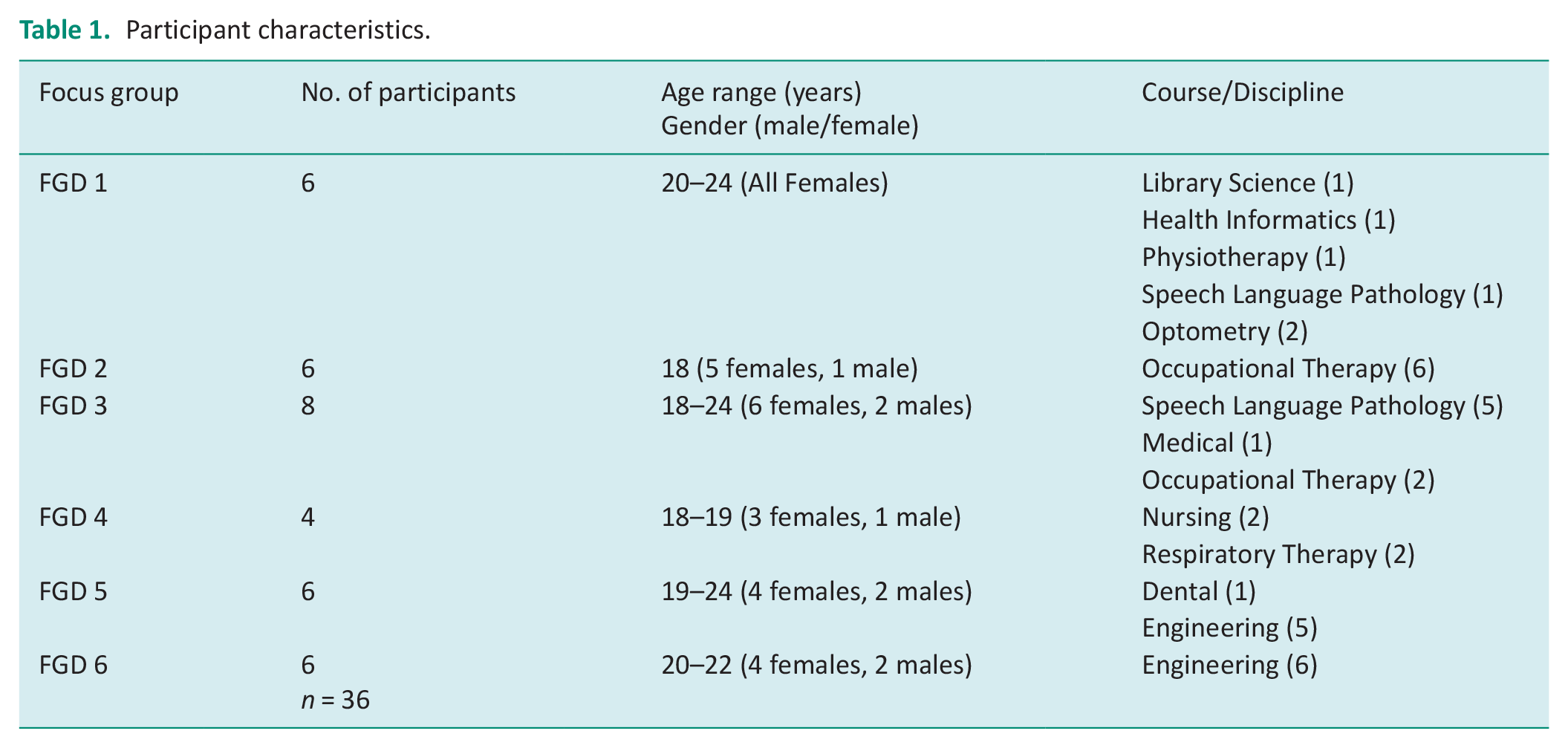
Telephonic consent was obtained from the students who volunteered to participate in the study after screening them as per the selection criteria. The selected participants received a written consent form via email to fill out and return. Details of the total participants are described in Table 1. A total of six focus group discussions were conducted to collect data.
Participant characteristics.
We reviewed literature related to PMH with a special focus on university students. In addition, literature about the role of occupations in mental health was also studied. The authors further discussed the findings from the literature search and identified areas of interest based on our research question. A conceptual framework (Figure 1) was then developed incorporating all of these ideas. This framework included aspects related to mental health, its facilitators and barriers, role of occupations in mental health, and strategies used for mental health. The framework was then used to develop a semi-structured interview guide for the interviews. The interview guide included open-ended questions like “What do you understand by mental health?”; “What components do you think make up mental health?”; “What would you say is the relevance of mental health in your daily life?”; and “What strategies do you use for your mental health?”
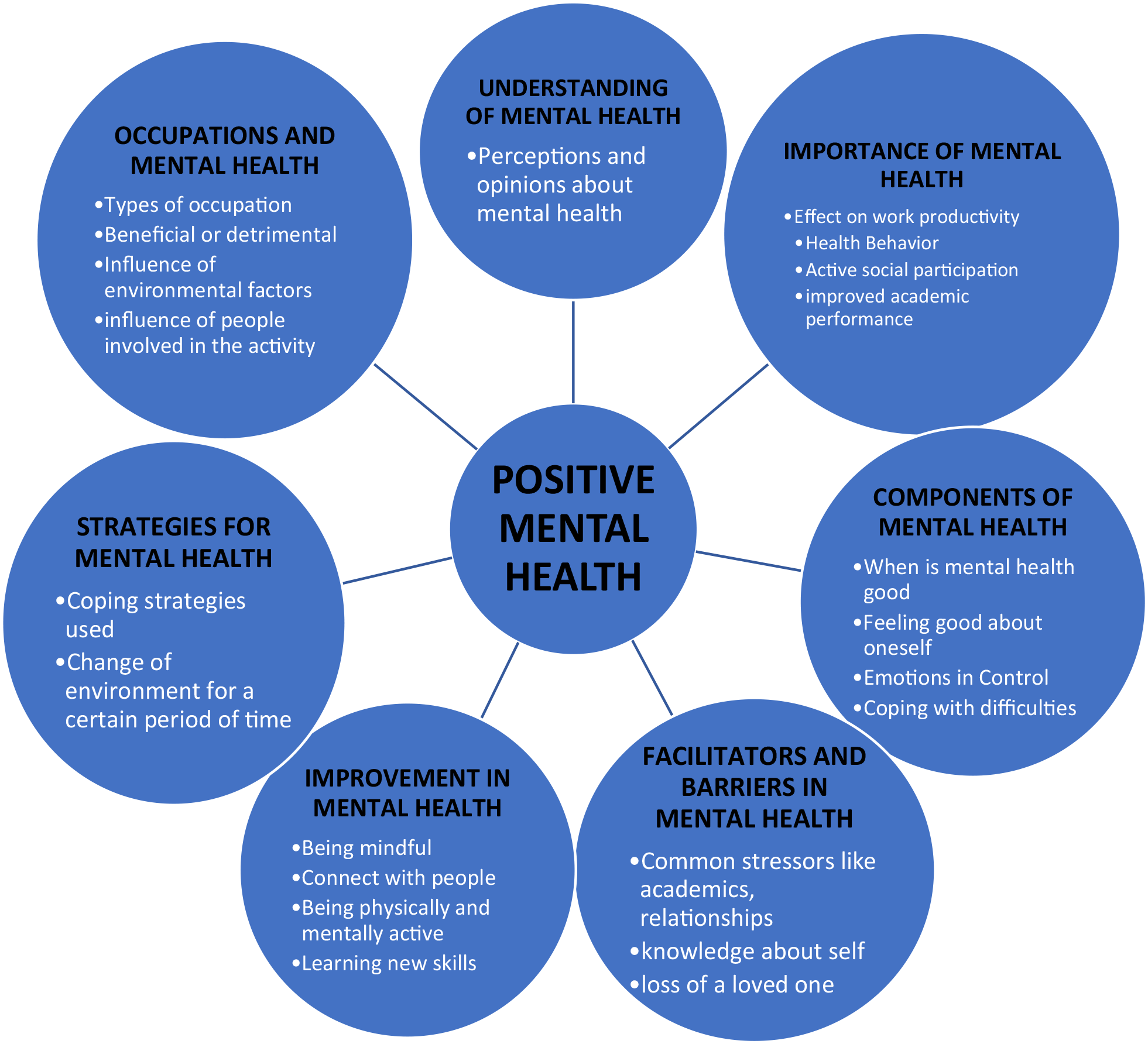
Conceptual framework for the interview guide.
A total of 36 participants were included across six focus groups. The focus group discussions were scheduled based on the participants’ availability and convenience. They were conducted online via Microsoft Teams with each discussion lasting for an average of 60 to 70 minutes. The participants did not receive any sort of compensation for their participation. The first author was the moderator for all the focus group discussions and started the conversation with an introduction and explaining the purpose of the study. Consent for audio-recording of the interview was obtained before beginning the discussion. The moderator assured the participants that the interview was a safe space for expressing their opinions and encouraged them to discuss amongst them. The moderator asked follow-up questions in addition to the semi-structured interview guide to ensure that the participants had adequate opportunity to put forth their views and opinions. All the interviews were conducted in English and after each interview, the first author transcribed them verbatim.
Data analysis
We used thematic analysis as outlined by Braun and Clarke (2006). Both the authors independently read the transcripts to familiarize themselves with the data. Line by line reading was then done, and meaningful sections of data were coded with words and phrases that reflected the intrinsic meaning. Similar codes were then grouped to form categories and further similar categories were merged to form themes.
Researcher debriefing was done through regular discussions between the two authors. Both the researchers did the coding separately initially and periodically discussed with each other to resolve any differences in the coding. Based on the discussions, they agreed upon the final codes. In addition, field notes maintained during the interviews were referred to for the reflections. Audit trail was maintained for the entire study period.
Findings
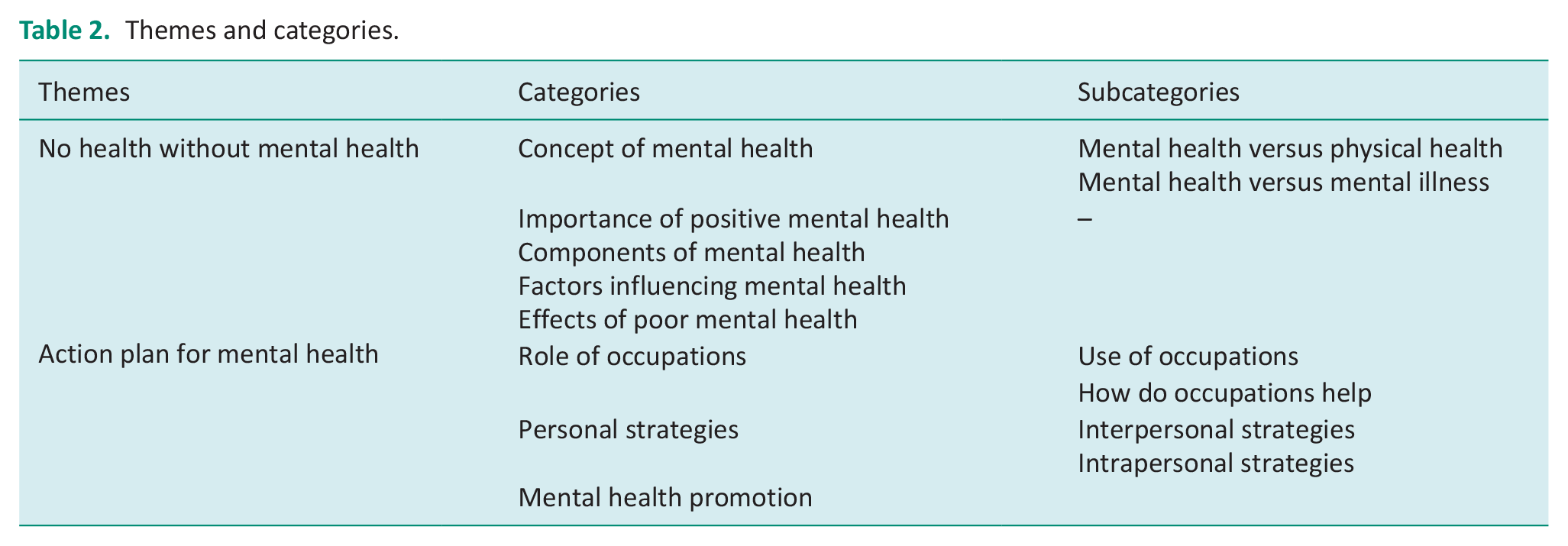
Two broad themes emerged from the analysis of the data about students’ perspectives on PMH, that is, “No health without mental health” and “Action plan for mental health.” Table 2 describes the themes with the underlying categories and sub-categories.
Themes and categories.
Theme 1: No health without mental health
This theme describes the students’ broad understanding of the concept of mental health, its components, importance of PMH, and factors influencing mental health. It highlights their perceptions about the relation between mental and physical health as well as that between mental health and mental illness. It also includes their understanding of poor mental health and its effects on an individual.
Concept of mental health
The participants in our study believed mental health to be reflected as a productive and well-functioning individual with a positive state of mind, adequate emotional and social wellbeing. They reported it to include a balanced mindset, peace of mind, and the absence of negative thoughts. They also acknowledged mental health was a very individual and subjective aspect related to one’s personal growth, which varied from person to person. They believed no one could always be in a state of perfect mental health, but we all were working toward it. As mentioned by one of the participants,
According to me there is no one who is perfectly fine in mental health condition, but yes everyone is working to perfection. . . [FGD-2]
According to them, a major part of mental health was about healthy expression of emotions.
. . .I’d say if the person is expressing the emotions properly like if in a situation where people are sad that person is also sad, where people are happy that person is also happy. . . they have good mental stability, more like their emotions are not what you can call, they are not out of place, they know how to behave in social situations or even in personal life situations, they are able to decide for problems and solve them, they will not have too much trouble. . .I think that way you can say the person has a good mental health. . . [FGD-2]
Mental health was also thought to be related to one’s efficiency and satisfactory engagement in any work. They described being productive for the major part of the day as one of the criteria for mental health.
. . .Maybe a state where I’m feeling happy and enthusiastic to do my daily work or somewhere if I am put into a situation where I can give my 100% and then I can maintain the social or general social relationships. . . or cooking food, everything like all the daily activities. . . if I am able to give my 100% to all of that, maybe at least if not 100%maybe at least 80% to all of that and if I am feeling happy maybe that. . . I would define it as state of wellbeing. . . [FGD-3]
Mental Health versus Physical Health: Most of the participants drew comparisons between mental and physical health. They reported that physical and mental health were interrelated, and one could affect the other. Certain behaviors, such as inadequate eating or overeating, decreased physical activity, and decreased sleep due to feeling low, could have an impact on one’s physical health. For a person’s overall wellbeing, mental health was thought of as important as physical health, if not more.
In my opinion, mental health is much more. . . greater and important than physical health, not like that physical health is not important but if mental health is deteriorated or it is very low, there is an indirect or direct effect on the physical health. . . [FGD – 1] I mean it affects us physically and, like mentally if you are not healthy enough, it does affect us physically because we cannot concentrate on anything or, we feel like we put on weight, or you know like we sleep through the day, we feel tired all the time or lazy all the time, so I think it does affect our daily life. . . [FGD – 5]
Mental Health versus Mental Illness (Mental OR Health). The participants were able to distinguish between the terms mental health and mental illness. They believed low amount of mental health could lead to mental illness. They recognized symptoms such as intense mood swings, suicidal thoughts, and difficulty initiating and maintaining social interaction as possible signs of mental illness.
Stress can take place in the person’s mind or sometimes, yea the person can also turn short-tempered if he or she is not in a very good mental state, yea the emotions can come out at the wrong time, and short temperedness is what I think would happen. . . [FGD-4]
They highlighted the impact of mental illness on mental health, emphasizing the recurring nature of the symptoms, and suggested that treatment for such situations has to be beyond mere prescription of medications. The participants cautioned against mistaking the slightest amount of sadness in an individual as a sign of mental illness.
So, people should be made to understand when a mental health is actually relevant, that is you know how to understand their symptomatology and then approach a doctor, rather than considering every small negative entity in their life and relating it to poor mental health. (FGD – 3)
Importance of PMH
The participants emphasized the benefits of PMH as enabling healthy and positive relationships with others. With better mental health, one was thought to be able to experience more positive emotions, maintain a positive outlook, and strive to accomplish goals. They believed it led to sustained healthy daily habits and thus influencing physical health as well. Having resources of mental health allowed an individual to be happy and productive despite physical exhaustion at times. As one of the participants mentioned:
See because one thing is there, if they are doing well mentally, they will have the excitement or energy to do more things, they will have the energy to do that, or they will have the will. . . Since I am mentally happy, or since I have the sense of wellbeing, I feel that I am happy even when I am physically drained, I will continue or I might tend to go out for more of those events or more of those parties. . . [FGD-6]
Components of mental health
The participants were very eloquent about the various attributes in an individual they associated with PMH. Some of the most common ones were about managing emotions, being able to experience and express a range of emotions in a well-regulated manner. The ability to manage stress and cope with difficult situations in a calm and composed manner, with healthy strategies, was also emphasized. People with better mental health were thought of as being able to be optimistic, have faith in self, and being able to see the silver lining in most situations. Many of the participants highlighted the characteristics of being self-aware, accepting oneself as they were, being able to take care of oneself, and self-love as essential components of mental health. In addition, the absence of certain behaviors, such as people pleasing, self-harm, and overthinking, were also reported to be important. The quotes below highlight the same:
Self-love for me is like accepting who you are, cherishing yourself, like even if you are not like perfect, and you cherish yourself, happy with who you are, something like that. . . [FGD – 1]
Factors influencing mental health
Participants in our study identified various factors that could serve as facilitators or barriers to their mental health. They emphasized the role of good nutrition, optimal amounts of sleep, regular physical activity, and adequate social support as key to promoting mental health.
I think having routines in your life can help with your mental health a lot, and obviously exercise, sleep and even food. . .food has a lot of therapeutic use with it, so yeah food too. . . [FGD-2]
On the other hand, they acknowledged that traumatic events in childhood, domestic violence, past life experiences, family disputes, and an environment where the person was surrounded by demotivating or disapproving people could prove detrimental to their mental health.
. . .fearing what will people think about you, just like not having that safe space to go ahead and talk about what you feel, even if you don’t want to go talk to a therapist, even like, you know, talking to your family can be, traumatic also in some sense. [FGD – 1]
In addition, participants also highlighted the role of social media content and internet use on one’s mental health as described in the quote below:
Right now, in this generation everybody has access to devices, so I think the type of content that you take in through the internet also has an impact on your mental health. . . if you are engaging in violent content or maybe something that violates your mental peace. . . that kind, like what content you take can also be a facilitator or a barrier, because obviously internet has both, it depends on you how you use it, and we spend a lot of time on our devices so I think that also has a major impact on how your mental health is. . . [FGD-4]
Effects of poor mental health
The participants described several ways in which poor mental health could affect an individual. They reported unhealthy thinking patterns could lead to increased negative emotions in a person along with low self-esteem. It could also hinder the individual’s ability to follow a routine, with lack of interest and concentration leading to decreased productivity in work and overall daily living activities. In addition, participants reported it could often result in procrastination and increasing pile of work making the individual feel overwhelmed and further incapable of doing things. Moreover, poor mental health could also lead to the person isolating themselves and experiencing loneliness. Frequent emotional outbursts could distance individuals with poor mental health from their close family and friends. The quote below highlights some of these ideas:
. . .most of the time as they’re not feeling mentally well, they might not able to do their activities, socialization, everything, they might be labelled as a lazy person, they might just be sitting without doing anything productive most of the time. . . [FGD-3]
Theme 2: Action plan for mental health
This second theme describes the various strategies used by students to address their mental health including the use of occupations. It also includes their views on the need for mental health promotion.
Role of occupations
Participants described a range of occupations that they engaged in and which they believed aided their mental health. Some of these were engaged in on a regular basis while some others were when they felt upset or low and needed some boosting of their mental health.
Use of occupations: The occupations that the participants found beneficial in terms of mental health included creative (arts, music, playing musical instruments), physical activities (exercising, swimming, jogging, cycling, dancing), and outdoor leisure activities (going to the beach or picnic, spending time in nature, and going for a walk). Many of them reported having a cup of coffee, their favorite food or at times even a change of food to feel better. Being able to do their regular routines also were reported as beneficial for their mental health. For some, spending time with family and friends or pets worked, whereas for some others solitary time and meditation seemed helpful.
For me working out helps, it helps me stay positive really. now it’s been a few days I didn’t work out. . . I feel so lethargic. . . [FGD-4] Even like having your favorite cup of coffee or tea can also help you feel good about yourself and feel happy. . . [FGD-2]
Participants acknowledged that not all occupations were helpful in terms of maintaining PMH but helped them avoid negative emotions. Some of these harmful occupations included alcohol or tobacco consumption, binge-watching movies or shows, and binge-eating. As highlighted by a student:
. . .Another thing that I do is binge-watching. I know some people might disagree and say that it is really unhealthy because while binging we don’t really know how much we are eating and yeah that’s that. . . [FGD – 5]
How do occupations help? Participants reported that engaging in occupations often distracted individuals from their negative emotions, gave them an escape from overthinking and thereby promoted mental health. Often it gave them an opportunity to clear their heads and sort their thoughts resulting in feeling better. Physical activities naturally promoted positive emotions by virtue of the release of feel-good hormones. Even sticking to the mundane and performing daily chores were reported as giving a sense of accomplishment and feeling productive.
It’s actually, uh, what do you say, like 50-50, like, doing something would keep me occupied so I won’t keep thinking about the problem that has happened, and then the other part where I feel good about myself, lifts my mood so I feel accomplished. [FGD – 5]
In addition, participants explained that spending time with others often helped gain others’ perspectives about their problems and made them feel connected or that they were not alone, in turn, making them feel better.
Personal strategies
In addition to the various occupations mentioned above, participants also described certain strategies that they believed helped develop/maintain mental health.
Interpersonal strategies: These included sharing their problems with others, venting out, asking for help when needed, and discussing their emotions with loved ones.
Intrapersonal strategies: Many of the participants identified strategies like being aware of oneself, working on self-improvement, changing their mindset, learning better time management, problem solving, and organizational skills to feel less stressed and improve productivity. Improving their lifestyle with adequate rest and work periods was also highlighted as a strategy.
. . . I think one of the very important things is acknowledging that you have a problem, I think that’s one of the very important steps towards improving your mental health, improving your peace of mind or even, you know, starting that process of self-care. . . [FGD – 1]
Mental health promotion
Students expressed the need for educating laypeople about the concepts related to mental health and its importance. They believed this would help diminish the stigma related to seeking professional help. They highlighted the need for students to reach out and ask for help in maintaining mental health, especially when they feel disillusioned or see no hope for themselves. As one of the participants suggested:
. . .And, if someone’s affected to a point that they are, you know, they don’t feel any hope for recovery or anything, they can reach out for therapy and visit a psychiatrist. . . [FGD – 5]
Overall, the participants’ views reflected their understanding of mental health and different aspects of it. The participants described the role of occupations and various strategies in maintaining PMH and suggested ways for mental health promotion.
Discussion
This study aimed to explore Indian university students’ perceptions of PMH from an occupational perspective. Our findings suggest that the student participants in our study were aware of the concepts related to PMH and could identify several characteristics reflective of mental health. They identified personal attributes such as the ability to cope with adversity, healthy emotional expression, recognizing self-worth, among others which are in line with the literature on PMH (Fusar-Poli et al., 2020; Scaffa et al., 2009: 330–333). Similar findings have been reported by Renwick et al (2022) in their systematic review about conceptualizations about PMH in young population from low- and middle-income countries.
Participants in our study were able to view mental health as a positive and essential construct which was an encouraging finding. The fact that they were aware that striving for mental health is an ongoing process where one keeps building resources meant they were accepting of occasional limitations in mental health. This is similar to the dual model of mental health proposed by Keyes et al. (2010), which suggests a person could be in different levels of mental health. However, one should strive to flourish rather than be in the floundering phase.
Participants describing the role of factors such as physical activity, nutrition, sleep, social connections, and social media browsing in influencing mental health suggests they were well aware of these aspects. Literature has often reported the connections between these factors and mental health (Campbell et al 2022; Simon et al, 2022). Participants were also cognizant of the role of childhood experiences, unsupportive families, peer pressure, and supportive social relations. Similar factors were identified by Ganga et al. (2014) in an Indian study as determinants of PMH.
In our study, what was unmistakable throughout was the relation between occupational engagement and mental health. It was interesting to note that ability to perform daily chores or productivity-related tasks were considered to be facilitating mental health. Similarly, inability to perform these were often seen as indicators of poor mental health. This is encouraging for occupational therapists who have always recognized the role of everyday activities in promoting health (Wilcock, 2006). Brown (2021) has highlighted the use of daily activities as a means to facilitate occupational resilience while facing environmental challenges, especially during the COVID-19 pandemic. Participation in valued activities and life roles has also been substantially emphasized in the ICF framework, giving it further recognition as an outcome for health (Hemmingsson and Jonsson, 2005).
It was encouraging to note that the student participants in this study were aware of and engaged in a range of occupations that promoted their mental health. Similar to the findings of this study, engaging in meaningful occupations, such as spending time with loved ones, building creative hobbies, and playing indoor and outdoor games, has been known to have a beneficial effect on mental health (Hall et al., 2016). Literature has hailed the multiple benefits associated with occupational engagement, especially in the context of wellbeing (Hammell, 2004; Roberts and Bannigan, 2018). The participants identified activities like taking a walk in nature, going to the beach, or having a picnic to be calming and peaceful. Participating in outdoor activities has been linked with overall improvement in health due to the soothing environments (Twohig-Bennett and Jones, 2018). Consistent with our study findings, negative occupations such as substance use, and binging on food or excessive social media and internet use have been identified as coping mechanisms (Mason et al., 2021).
It was heartening to note that participants in our study seemed to be comfortable talking about mental health. Mental health has often been a taboo topic in Indian context with much stigma surrounding it (Gaiha, 2020). However, the educated younger generation having access to lot of information on the internet may have contributed to their overall better awareness on this topic (Pretorius et al., 2019). The findings also highlight the need to create more awareness among youth to encourage help-seeking behavior, which has been underscored in previous literature about campaigns being done to minimize the stigma around it (Gaiha et al., 2021; Wasil et al., 2022).
Considering the prevalence of mental health-related issues among the younger population (UNICEF, 2021), there seems to be a pressing need to promote PMH among them. This is essential in keeping with the trend of moving from illness model to wellness model. Engaging in harmful occupations, such as substance use, excessive social media, and phone use, are reported to have substantially increased among youth, especially since the pandemic times (Árbol et al., 2022; Fernandes et al., 2020; Singh et al., 2021). This makes it imperative to develop intervention programs to create awareness among the youth about the ill effects of these behaviors as coping mechanisms. As highlighted by the participants in our study, the role of the environment is also crucial and future programs should consider addressing the same as part of a multi-pronged approach.
Occupational therapists with their focus on routines and occupations are well placed to take a leading role in the direction of mental health promotion. As occupational therapists, our aim can be to promote PMH by encouraging the youth to pursue healthy occupations as a means of coping and achieving occupational balance (Hocking, 2013). With a client-centered approach and population-based focus, occupational therapy can incorporate the use of activities to enhance an individual’s participation in what they need to, want to, or are expected to do (American Occupational Therapy Association, 2017). This could be incorporated into future programs for mental health interventions among youngsters.
Strengths
The focus groups in the study included a mixed group of students based on gender, and socio-cultural backgrounds, which provided the opportunity for diverse opinions. It is probably one of the first studies in India that explores students’ perspectives on PMH from an occupational perspective.
Limitations
Since the study was done in one university, transferability of the findings needs to be considered with caution. The inexperience of the moderator with respect to qualitative methods may have compromised the richness of data that could be collected during the interviews.
Future recommendations
Future research can be conducted to determine mental health among students.
Conclusion
This study helped gain Indian university students’ perspectives of PMH from an occupational lens. The students were aware of mental health-related concepts including the effects of poor mental health. The role of different occupations in maintaining and promoting mental health was highlighted.
Key Findings
University students are aware of concepts related to positive mental health and factors influencing it.
Occupations can play an important role in maintaining mental health among university students.
What the study has added
This study has helped understand the views of Indian university students regarding positive mental health, and occupational strategies used by them to maintain or promote mental health.
Footnotes
Acknowledgements
We thank the participants in our study for sharing their views with us.
Research ethics
Kasturba Hospital Institutional Ethics Committee approval was obtained for the study (IEC: 443/2021). The study was also registered in Clinical Trials Registry of India (CTRI/2021/09/036748).
Consent
All the participants provided written informed consent.
Patient and public involvement data
During the development, progress, and reporting of the submitted research, Public Involvement in the research was included in the conduct of the research.
Declaration of conflicting interests
The authors declared no potential conflicts of interest with respect to the research, authorship, and/or publication of this article.
Funding
The authors declared no financial support for the research, authorship, and/or publication of this article.
Contributorship
HD and VA researched literature, conceptualized the study, and developed the protocol. HD was involved in gaining ethical approval and participant recruitment. HD and VA were involved in data analysis and writing the first draft of the manuscript. Both the authors reviewed and edited the manuscript and approved the final version of the manuscript.
