



Abstract
Mathematics plays a fundamental role in ecological research, yet its uses remain strikingly separate from advances in the environmental social sciences and humanities. In this paper, I work to address this impasse and outline the motivation and scope for an ‘ecological mathematics’, an approach to doing mathematics in environmental research which foregrounds relationship, embodiment and human difference. I begin by tracing the historical emergence of mathematics in ecology, noting how life processes have been conceptualised in a way which forces them to fit the ideals of mathematical models transplanted from the physical sciences. I then investigate the cultural factors shaping the evolution of mathematical thought, eliciting a malleability in how mathematical knowledge relates to the more-than-human world. This provides a place from which to rethink the role of abstraction in ecological thought, and develop mathematical methods grounded in ecological concepts. Drawing on ethnographic and perceptual accounts of space and time, I work with topological concepts from both mathematics and the social sciences to suggest a new correspondence between these subjects, elaborating a way of employing mathematical techniques which enliven, rather than deaden, the ecologies under study. The paper concludes with important philosophical clarifications to the approach of an ecological mathematics.
Keywords
Introduction
‘Although gold dust is precious, when it gets in your eyes, it obscures your vision.’ (Hsi Tang, quoted in Kornfield 2008)
This paper is about doing mathematics differently, primarily in the context of environmental research. Mathematics is often viewed as the prized tool in ecological science for understanding the complex relationships between organisms and their environment (May and McLean 2007), with increasingly sophisticated quantitative techniques being developed for analysing ecological dynamics (Cushman and Huettmann 2010). But the relationship between mathematics and ecology is in need of revision, for (as will be discussed below) there remains much of the more-than-human world which lies separated by an impasse around which quantitative methods have only been able to swim in circles (Abram 1997; Atleo 2007; Kimmerer 2020). Moreover, such uses of mathematics have remained strikingly separate from relevant bodies of knowledge in the environmental social sciences and humanities.
All models necessitate degrees of reduction and abstraction; although much critique has, with good reason, been levelled in this direction (e.g. Merchant 1980), it is not entirely herein that the issue need lie. For such symptoms of coming up against a paradigmatic ceiling in ecological science also call more deeply into question how mathematics is used in environmental research; namely, the underpinning concepts and logics guiding the interplay of these two realms. At present, there is an implicit hierarchy of disciplines which results in mathematics always as the prefix: we have fields such as mathematical ecology, mathematical biology, mathematical physics, to name a few. This hegemony posits ecology as the inert substrate to be inoculated with the clarifying principles of mathematics. Indeed, that mathematics is something to be ‘applied’ is itself worthy of inquiry, implying as it does a transcendence over rather than emergence within ecological phenomena, and an ab initio separation of mathematical knowledge from the world it is presumed to model.
In this paper, I seek to address this impasse by motivating and outlining a new correspondence between mathematics, ecology, and the environmental social sciences and humanities – an ‘ecological mathematics’ – in service to illustrating the value and possibility of thinking and doing mathematics differently in relation with the living world.
Overview
The first part of this paper is concerned with the present state of the relationship between mathematics and the living world, aiming to elucidate a malleability to how mathematics may be used in environmental research. We begin by briefly tracing the historical evolution of mathematics and its role in ecology, with a view towards understanding how and why the connection between these two subjects has developed in its particular manner.
To dig more deeply into the inquiry, we then turn our attention to look at mathematics itself from a standpoint informed by ecological scholarship from the social sciences and humanities. In particular, I touch on how academic 1 mathematics, typically seen as a system of timeless truths divorced from the complexities of human life, has nonetheless developed inextricably from the cultural and historical contexts in which mathematicians from a select few nations have lived and worked. I concurrently draw on the burgeoning field of ethnomathematics, which moves beyond established singular notions of mathematics by demonstrating the great variety of mathematical ideas found in human societies throughout geographies and histories, illustrating how the emergence of mathematics in ecology is shaped by underlying modes of how humans relate to and conceive of the encompassing world. This then offers a place from which to positively approach the role of abstraction as an important mathematical technique for studying ecological questions, thereby suggesting a closer connection between conceptual material in mathematics and other disciplines than is commonly understood.
Thus motivated, the second part of this paper presents a case study to think through what could be involved in an ecological mathematics, with the aim of foregrounding embodied experience and human–nature relationships (in the manner discussed, for example, in Abram 1997) in connection with the analytical calculus and precision of mathematics. Here I begin to develop two contributions of ecological mathematics: (1) drawing on conceptualisations of environmental processes from the social sciences and humanities as a fruitful ground for addressing limitations in existing mathematical approaches to ecology; (2) working with the subject of topology as a rich field of mathematics which offers a novel and tractable place from which to investigate non-linear spatial and temporal environmental phenomena. I then conclude by addressing important philosophical clarifications regarding the approach of an ecological mathematics.
This work challenges the widespread assumption that, in comparison with the well-known suitability of quantitative methods in the physical sciences, there exists an inherent incommensurability between mathematics and ecology (see May and McLean 2007, 2); rather, I suggest that working with appropriately chosen conceptual matter in both subjects may allow a closer relationship between them than implied by their historical separateness. In particular, I move beyond the idea that mathematics and abstraction are inherently antithetical to working with relational and embodied aspects of ecology, exploring instead how the way in which one conceptualises ecological phenomena is a precedent for whether the entailing mathematics either deadens or enlivens the ecologies under study.
The following work marks the beginning of an inquiry, not its completion, and the fundamental aim of this paper is to demonstrate the value and relevance in developing an ecological mathematics. It seeks to augment and enrich, not supplant, current mathematical methods in environmental research. The material below is more suggestive than definitive, opening a conversation in this journal article while these ideas are concurrently being developed for a book-length manuscript.
Mathematical histories in ecology
‘To search for the best concept is no idle conceit, because the experiments that a scientist may devise and therefore the facts [they] may discover, as well as the explanations that [they] offer for them, depend on how [they] conceive nature.’ (Andrewartha and Birch 1984, quoted in Berryman 2002)
Mathematics is often thought of as the study of fundamental structures, patterns and relationships inhering to physical reality. Embedded within this idea is the notion of an essence, which can be traced back to pre-Socratic Greece and is different to, for example, classical Mayan or Indian mathematical thought (Ifrah 2000). From this view, objects in the world are categorised in terms of an ‘ideal’ immaterial entity whose essential properties dictate substance, form and patterns of change. Aristotle posited the definition of an entity in terms of this essence: a definition is a list of properties necessary and sufficient to characterise an object, from which flows all of its ‘natural behaviour’. According to Lakoff and Núñez (2000, 107–109), Euclid then brought this idea of essential characteristics to mathematics, and there has since been a tremendous effort in the history of academic mathematics to distinguish a minimal number of foundational axioms from which all of its subject matter can be derived.
Much of mathematics in recent centuries has developed in close reciprocity with advances in physics. Moreover, until the early twentieth century, figures who played a leading role in one discipline often did so in the other: David Hilbert, Emmy Noether, Carl Friedrich Gauss and the like have a mythological status in the minds of both mathematicians and physicists. Hence, many seminal areas of mathematics provide powerful and bespoke tools to model the experimental and theoretical findings of the physical sciences: for example, Riemannian geometry in general relativity, Hilbert spaces in quantum mechanics, Lie groups in physical symmetries, and Newtonian mechanics in studies of motion (Reid 1986). Motivated thus by the ability of mathematics to elegantly crystallise material phenomena at scales from the subatomic to the cosmic, ‘an overwhelmingly large part of ecology tries to adhere to the tenets of conventional science’ (Berkes 2017, xiv; see also MacArthur and Wilson 1967, v).
However, in contrast to the historical interchange between mathematics and physics, whereby questions in one subject have guided the evolution of methods in the other, the relationship between mathematics and ecology has hitherto been mostly one-way. 2
In the early 1900s, mathematicians such as Vito Volterra, Vladimir Kostitzin and Alfred Lotka began to apply methods developed from their work on differential equations in the physical sciences to questions of population dynamics in ecology (Scudo and Ziegler 2013, 2–4). Half a century later, ecologists such as Evelyn Hutchinson, Robert MacArthur and Robert May – the latter two trained as mathematician and physicist respectively – further developed the mathematical foundations of theoretical ecology by reframing ‘old questions in more explicitly analytic ways … rephrasing them in the idiom of theoretical physics’ (May and McLean 2007, 2).
Mathematical thought has since abounded in ecology, giving rise to methods for quantifying scale-dependence (Wiens 1989; Levin 1992), niche structure (Holt 2009) and biodiversity (Gaston 2000; Pavoine and Bonsall 2011). Nonetheless, much well-known mathematical research in ecology still retains the basic form of the early population models as the centrepiece of mathematical theory in the subject; concomitantly the topic of population dynamics remains a foundational organising concept guiding the use of mathematics in ecology (Kot 2001). As a result, this has become a kind of bottleneck through which ecological concepts are moulded to meet mathematical analysis. For example, in the work of Marten Scheffer and Egbert van Nes (2006) on niche self-organisation, ideas such as external niches and competitive coexistence are expressed only through modifying terms in the familiar Lotka-Volterra population equations. However, the viability of the population concept for ecology has also been the subject of much debate (Harwood 2009); does its centrality to and historical longevity in ecological science arise primarily from an inherent suitability in representing ecological processes, or from being a concept which is amenable to mathematical formulation?
In any case, a significant entailment of this knowledge hierarchy (namely, mathematics above ecology) is the following inversion: instead of developing new methods to quantify that which is considered ecologically important, only that which is already amenable to established methods of quantification becomes seen as worthy of study. Simply put, the ecology is often made to fit the mathematical model rather than vice versa. One prevalent example of this in modern conservation science is the ‘animal economicus’ (Unnithan Kumar et al. 2022; Benson 2014) – the assumption that animals move in response to their environment according to a rational-choice, cost–benefit behaviour (for analogous behavioural notions underlying theories of how populations cooperate, see Nowak 2006). This neoclassical economic lens is a mode of quantification which pervades ecological science to the extent that it has become seen by many as how animals actually behave, as can be observed in those works which lay the foundations for studying animal movement in modern conservation science (e.g. Adriaensen et al. 2003). Indeed, one of the most popular approaches to modelling such movement patterns in conservation science combines cost–benefit logics with the physical theory of electrical circuits (McRae et al. 2008), in which animal movement is modelled as an electrical current flowing through a giant circuit (the latter being a representation of the surrounding landscape; see Figure 1), and ‘mortality can be represented by resistors connected to ground, with their conductances reflecting probabilities of mortality’ (2716).
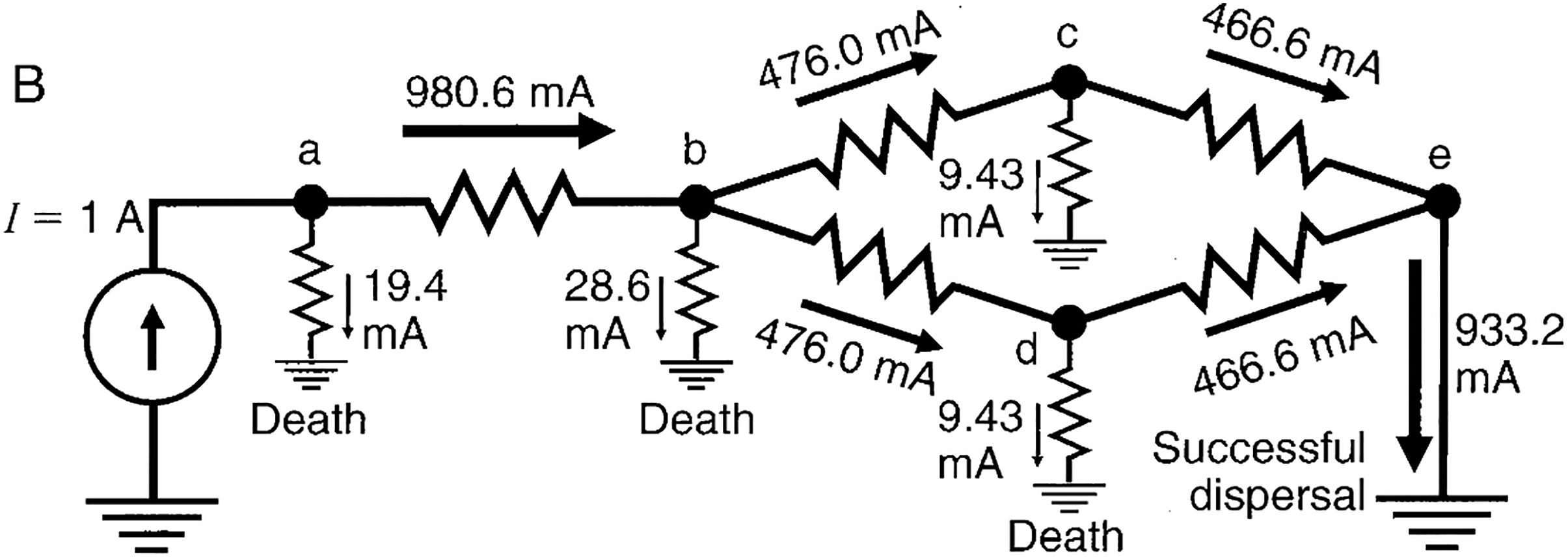
A diagram from McRae et al. (2008) illustrating how their software, Circuitscape, models animal movement through a landscape as electrical current flowing through a giant circuit. Circuit nodes (labelled from ‘a’ to ‘e’) represent regions of the landscape, and ‘[c]urrents show the expected number of net movements along each branch, as well as the expected number of deaths at each node.’ (2716). Reproduced with permission of copyright holder.
Now, from personal experience, if I behave extractively and obtain something which harms another, then my gain is ephemeral, because this action leaves an imprint on my mind (even if I'm not conscious of it) which sows seeds of fear and separation that other people will treat me the way I treated this person, and ultimately this causes me more overall harm than benefit. This is not to say that the cost-benefit, animal economicus framework is somehow ‘wrong' or ‘bad'. Rather, what is surprising is the lack of acknowledgement for how this one very particular worldview has come to dominate contemporary discourse in ecological science; and in this case, laying claim to what counts as ‘cost' or ‘benefit’ (Raworth 2017).
As the above examples intimate and the following sections evidence, viewing environmental processes only through the lens championed by the physical sciences would be to don red-tinted glasses and conclude that the world is red. One cannot see what is excluded from a given lens without trying another; yet internal to the scientific literature there appear to be strikingly few tools for examining the broader concepts guiding the use of mathematical models in ecological science, and seeing precisely those phenomena which are elided by the methodological boundaries presently deemed appropriate for quantitative analyses in ecology. For this matter, we turn to advances in the environmental humanities and social sciences, in order to investigate whether the edifice of academic mathematics is really as immutable as is usually presumed, and to explore how the relationship between mathematics and ecology may be done differently to the above.
Ethnomathematics
‘Western mathematical ideas have changed through time; so, too, have our philosophies and histories of mathematics. Not the least of these changes has been the definition and redefinition of the boundaries of mathematics. It is important to once again revise our philosophy and history in recognition of the fact that mathematical ideas are cultural expressions and that our Western ideas are intimately linked with Western culture.’ (Ascher 1991, 196)
Several of the social sciences and humanities have critically examined their historically sedimented ideas constraining the study of nature and the human place within it, and in recent decades have begun to grow in their empirical and conceptual scope (Ingold 2000a; Lorimer 2015). This has involved investigation into and a move beyond presumed dichotomies such as those between nature and society, subject and object, knowing and believing, mind and body (Abram 1997; Castree 2005; Cronon 1996; de la Cadena and Blaser 2018; Strathern 2004; Zambucka 1978). These contemporary movements within such disciplines not just resonate with, but draw directly from, knowledges long practised by a diversity of human societies (Cusicanqui 2012; Kovach 2021; Todd 2016; Watts 2013), and their emergence in the academy has significantly widened and enriched the aperture of environmental research (Berkes 2017; Kater 2022).
Central to this academic shift is the anthropological insight that there is no singular or privileged human relationship with nature (MacCormack and Strathern 1980). In this vein, research in ethnomathematics has investigated the diversity of mathematical ideas found, for example, in: the geometric-astronomical models of the Polynesian wayfinders; the spatiotemporal concepts of the Diné in Diné Bikéyah (in southwestern United States); the topological abstractions in the artwork of the Malekula in Vanuatu; and the dynamism inhering to numbers with the Hagen of Papua New Guinea (Ascher 1991; Strathern 2021).
Academic mathematics, however, has thus far kept itself hermetically sealed from research in ethnomathematics, 3 perhaps because of tightly held notions of intellectual purity and a concomitant belief in a universal form of mathematics (d’Ambrosio 1985).
Yet although mathematics is typically presented and taught as a system of timeless truths, external to and transcending human society (Lakoff and Núñez 2000, xi–xvii), insights from ethnomathematics provide a way to see how mathematical ideas do not float immaterially above the human lives of mathematicians. This is not to say that mathematics is entirely ‘socially constructed’ in binary opposition to being ‘a truth of nature’ (cf. Lakoff and Núñez 2000, 362–363), but simply that the routes along which such ideas evolve are inseparable from the emphases and priorities of the encompassing society in which they are developed (Ernest 2021). For example, the complex encoding of histories, songs and edicts in the knot-theoretic quipus of the Tawantinsuyu (Inca) reflect their value of bureaucracy and orderly processing of multiple data types, as did the navigation practices of the Polynesians inform the ‘star compass’ of their geometric models (Ascher 1991, 187, 140–149). Just so, biopolitics and the desire to govern and classify human populations led directly to the prevalence of statistics, and concerns with efficient material distribution in the twentieth century guided the rise of optimisation and linear programming (Anderson 1992; Desrosières 1998; Spufford 2010; see also Fisher 1956). Even the notion that counting with an arithmetic base of ten is ‘natural’, because of having ten fingers and toes, falters over the example of the Yuki (from present-day California), who count with a base of eight for precisely the same reason, the only difference being counting the spaces between fingers, rather than the fingers themselves (Ascher 1991, 9). 4
As with much of anthropology, the above accounts are not just about ‘other cultures over there’; as Marilyn Strathern writes, the nice thing about culture is that everyone has it (Strathern 2012). Such insights of ethnomathematics highlight, among many other things, that there is no universal path along which mathematics develops. Just as certain mathematical ideas in their academic formulation need not have analogues in other instances of mathematics, so too will I be blind to the fullness of mathematical expression across histories and cultures if I limit myself to selecting only those instances with which I can draw direct correspondence to the image of academic mathematics. Indeed, imagining the possibility of a linear scale grading these multiple forms of mathematics from ‘simple’ to ‘complex’ quickly meets the issue that such a metric would be skewed by an inherent bias, for academic mathematical theories are themselves driven by a cultural value placed on abstraction and theoretical generalisation.
Thus far, the works of ethnomathematics have, with good reason, been primarily concerned with restructuring mathematical pedagogy, seeking to reveal and thus move beyond the barriers which inhibit engagement with mathematics for the many peoples whose values and understandings of the world do not fit the particular mould of academic mathematics, laden as it is with implicit ways of conceiving and ordering reality (de Freitas and Sinclar 2014; Luecke and Sanders 2023; Powell and Frankenstein 1997; Verran 2018). However, the space created by the subject of ethnomathematics for revising the role of mathematics in environmental research remains unexplored. In this paper, I have invoked the mathematical work of societies from several histories and geographies for the purpose of demonstrating that different ways of relating to the world manifest different ways of doing mathematics in relation with it. Thus attuned, we focus our inquiry to rethink a fundamental principle of mathematics which is seemingly so at odds with ecological thought: abstraction.
Abstraction
‘Counting is not a first act. It must always be secondary to our act of parcelling some part of the world into countables. The world of itself is not countable. We must make it so.’ (Sophia speaking with Matthew, in Ernest 2021)
Logics of abstraction
The capacity and inclination for abstraction, the literal root of which is to ‘pull away’, ostensibly both lends academic mathematics its unparalleled ability to universally approximate regular patterns in physical phenomena, and also detaches its methodologies from being able to fit the unique contours of any one ecological system. However, to investigate how mathematics may speak more fully to the mysteries and richness of living reality, we need not take issue wholly with abstraction itself, but rather – as we will do in this section – examine ‘the kinds of abstractions around which certain habits of thinking cohere’, and the ‘work that abstraction is understood to do’ (McCormack 2012, 727–728). It is worth also noting that abstraction is not exclusive to any one society and is to be found and valued in human cultures throughout the world. For example, describing an instance of abstraction in the story Raven Travelling, told by Skaai of the Qquuna Qiighawaai, Edward Doolittle of the Indigenous Mathematicians relates
5
: ‘Now when the Raven had flown a while longer, the sky in one direction brightened. It enabled him to see, they say. And then he flew right up against it. He pushed his mind through and pulled his body after’.

Raven stealing the moon by Haida and Tlingit artist Robert Davidson. From the online collection of the Museum of Anthropology, University of British Columbia. Reproduced with permission of copyright holder.
In contrast, however, logics of abstraction hold a prized position in academic mathematics and ecological science, in a manner such that they are explicitly favoured and accepted over ‘base’ modes of knowledge involving perceptual and embodied experience, which are often seen as derivative or secondary to the ‘universal truths’ of mathematical generalisations (Abram 1997). As a result, rather than foregrounding multiplicity and difference, the infinite variety of living forms are conversely seen as the material manifestations of transcendent laws encoded by mathematics (Ingold 2006), with their ‘irregularities’ explained away as ‘noise’ or ‘random variation’ – perhaps more a reflection of unacknowledged epistemological limitations than a sincere comment on ecological diversity (Figure 3).
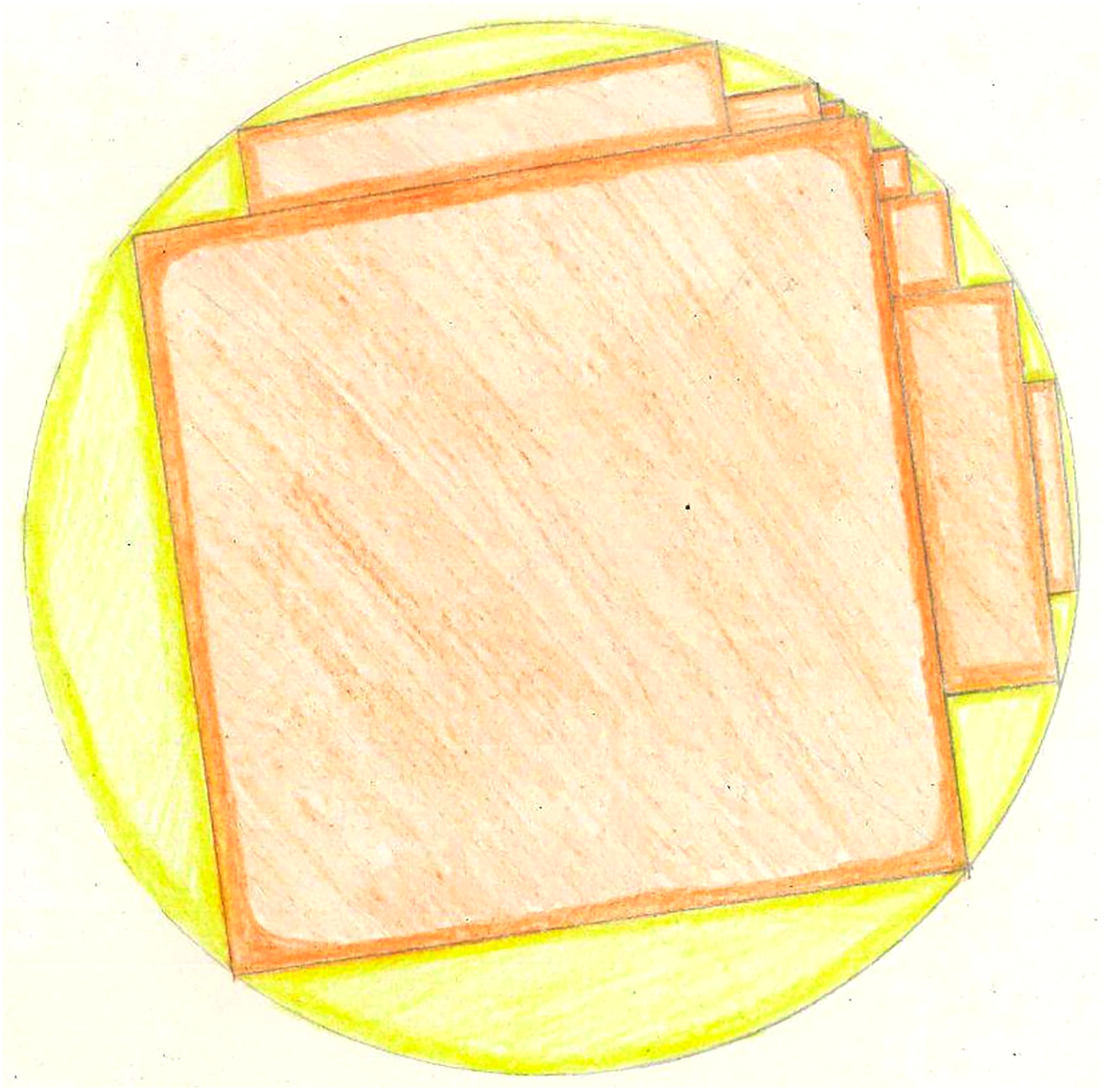
Insisting on the transcendence of mathematics over and external to the living world is like taking the approximating rectangles as greater truth than the circle. Namely, explaining away the uncertainties which do not fit a model's lineaments as ‘random variation’ misses the wholeness of ecological reality. Drawing by author, 1st December 2022.
Such perspectives have certain entailments which are important to note, because the worldview which informs and guides the direction of ‘pulling away’ (i.e. abstracting) will follow the resulting concepts like tracks follow the wheel of a cart – not visible from all angles, but nonetheless leaving an imprint. For example, when brought to an ecological context, Descartes’ philosophical abstractions – which have been foundational in the evolution of academic mathematics and science – inevitably carry a residue of his doctrine that European civilisation must become ‘the masters and possessors of nature’ (Patel and Moore 2017, 62–63). Recall, from earlier in this paper, we mentioned that although the ‘animal economicus’ mode of mechanistic quantification in ecological science is demonstrably an expression of certain human economic-political thought, it has nonetheless become synonymous with how animals are often seen to actually behave in scientific studies of animal movement (Benson 2016). We may now suspect that the unquestioned yet widespread assumption in ecological science of a mechanistic relationship between animal and landscape (e.g., McRae et al. 2008) bears some resemblance to the Cartesian thesis that humans alone (but, crucially, excluding women and non-white peoples, among others) are privileged with higher faculties of intelligence, whereas those not in the human category are simply automata who function in relation to their environment as machines without agency or creativity (Patel and Moore 2017, 62–63). Furthermore, we may wonder what is missed by a scientific lens founded in the opinions of Francis Bacon, who proclaimed that ‘science should as it were torture nature's secrets out of her’, and that the ‘empire of man’ should penetrate and dominate the ‘womb of nature’ (63).
What may be the imprint left by these logics of abstraction on one's engagement with the animate earth? By withdrawing into reliance on established scientific-political discourse as the primary means of knowing the world, sensory connection with the living landscape is rendered insignificant, and this serves to separate oneself from the faces of ecological reality which are not so easily captured by the usual techniques of scientific analysis (Abram 1997, 3–29; Macfarlane 2008, 203). But just as I forget the magic of the full moon rising until bearing it witness with my own eyes under a clear night sky in Port Meadow; and just as I cannot know how good honey and tahini taste together until they commingle on my palate; so too do many realms of the more-than-human world remain hidden to me until I bring my sensory perception and bodily intelligence to the foreground of my attention, until I step back from discursive thought and open to other ways of knowing my experience (cf. Thích Nhất Hạnh 2008 [1975], 33–76).
Mathematics and the embodied mind
It is one thing to become cognizant of the worldviews underlying principles of abstraction in how mathematics is used in ecology, and the implied hegemony of abstraction over lived experience therein. We may also ask whether academic mathematics itself is really the epitome of abstraction as it is so often seen. The seminal work Where mathematics comes from: how the embodied mind brings mathematics into being, by George Lakoff and Rafael Núñez (2000), helped bring into being the subject of ‘mathematical idea analysis’, employing decades of research from the cognitive sciences (in particular, the analytical device of ‘conceptual metaphor’) to precisely trace how abstract mathematical concepts are made sense of and grounded in everyday embodied human experience.
Remarkable for several reasons tangential to the trajectory of this paper, I wish to briefly touch here on how their results illuminate an inversion in how academic mathematics is commonly thought to relate to the material world. The authors demonstrate with lucid precision how, for example, arithmetic laws apply perfectly to counting physical objects because our concept of these laws arises from our lived experience counting objects (77–103); similarly, the mathematical concept of infinity works well with indefinitely iterated processes because how we conceptualise infinity arises from our lived experience of indefinitely iterated processes (155–180). Mathematical idea analysis investigates why mathematical results are true by studying the ideas and meaning implicit in mathematical structure and reasoning, foregrounding how embodied cognition enables the highly sophisticated interaction of conceptual material which underpins formal mathematical proof and logic.
As discussed earlier, the epistemological hierarchy which places mathematics on a pedestal results in only those phenomena in ecology which are amenable to existing methods of quantification being seen as important, rather than developing new ways to measure that which is deemed ecologically most important. The work of Lakoff and Núñez (2000) implies a converse heuristic for working with mathematics in environmental research, which moves from transcendence to immanence: 7 rather than asking ‘which mathematical ideas apply to this ecological phenomenon?’, one may ask ‘this ecological phenomenon provides the conceptual ground for which mathematical ideas?’
Gilles Deleuze spoke of philosophy as concept creation; perhaps, then, one fruitful way to think of mathematics is as ‘conceptual calculus’. For if mathematics is no more than quantitative formulae and axiomatic reasoning, then indeed it may be profoundly limited for studying the ecological world (Thom 2018, 5–6). But if mathematics is about the generative calculus of ideas and concepts – which is how many renowned mathematicians speak of their subject (Hersh 2013; see also Sfard 1995, 30) – then its abstractions can speak to conceptualisations of the living world which may elude immediate quantification. This is not to forego the tremendous value of numerical measurement, but simply to recognise that how one conceptualises phenomena is a precedent for how one quantifies them (Sfard 2008, xvi). Hence, working at the conceptual level underlying quantification may reveal closer connections between material in mathematics and other ecological disciplines than is otherwise apparent. It is this approach that motivates the following case study.
Case study: Spacetime and topology
‘Notions of space and time are so crucial to the framework we use to perceive, structure, and interpret experience that it is extraordinarily difficult to even conceive of others.’ (Ascher 1991, 128)
Modelling spacetime
In all major works of quantitative ecological science, the spatial and temporal dimensions of reality are split into three-dimensional Euclidean 8 space (or a two-dimensional cartographic image) and a separately evolving linear time. However, it usually goes unacknowledged within such literature that this is not an absolute truth of the living world but simply one model of reality. That this is the case can be immediately seen by noting that space and time, conceived of as such, cannot be empirically observed in isolation from each other: on the one hand, nowhere can I see a static triplet of perpendicular Cartesian axes extending infinitely into space, nor is any perceivable spatial form entirely without dynamism; and on the other, the clock ticking on the wall, that harbinger of looming commitments, could not inform me of ‘the time’ if it did not change its spatial form by shifting its hands or electronic digits.
This Newtonian conception of the world is part of a broader ideological legacy which, if I am not conscious of it, continues to inform my everyday perception of the world. Much of this lies in how the reciprocal interchange between one's inner and outer world creates a self-reflexive view of experience. For example, diary schedules and ticking clocks become internalised to inform how I perceive the events of my day to unfold, and in turn these sequential events in linear time guide how I may structure my day. As a result, the present moment appears to be found only as an infinitesimal punctuation in time, a single elusive point speeding on a line and forever at the cusp of being relegated to the fixtures of the historical past. Yet if I direct my attention away from clock on the wall, and instead to my immediate sensory experience of the world – the feeling of breath in my body, the poplar boughs swaying in the wind, that silence from which a pigeon's hoot sounds and ceases – and rest it there for some moments, then the grip of linear time loosens and I enter a different world, more fluid than any concept of linearity or non-linearity and where each building, cloud and human creature speak of their own distinct temporality (cf. Katagiri 2007, 136–139).
It is instructive to see how this spatiotemporal partitioning stands in contrast to the indistinction between space and time commonly perceived by humans (for an excellent account, see Abram 1997, 181–223). For example, the Diné of Diné Bikéyah and Hopi of Hopitutskwa (in southwestern United States) do not have separate words for space and time in their languages (Abram 1997). Moreover, the human experience of time in these contexts is often cyclical (and thus non-linear, in contrast to above) at many scales: the Nunatsiarmiut of Nunavut have the term uvatiarru, which can be translated both as ‘long ago’ and ‘in the future’ (Abram 1997). Cyclical spacetime for the Lakota is also described by Lame Deer and Erdoes (1994), and this account by anthropologist Åke Hultkrantz in Abram (1997): ‘The Lakota define the year as a circle around the border of the world. The circle is a symbol of both the earth (with its encircling horizons) and time. The changes of sunup and sundown around the horizon during the course of the year delineate the contours of time, time as a part of space’.
Such questions have recently been studied in disciplines such as anthropology and geography (Abram 2011; Ingold 1993; Kirksey and Helmreich 2010; Philo and Wilbert 2004), but modelling different spatiotemporal frameworks in ecological science appears challenging (Cushman 2010). It is certainly the case that ‘non-linear’ scientific models have grown enormously popular in recent decades, with topics including chaos theory, dynamical systems and machine learning algorithms being increasingly regarded as more capable than previous ‘linear’ models for working with complex patterns in ecological data (Cushing et al. 2003; Cushman and Huettmann 2010; Humphries et al. 2018). Yet the world defies notions of linearity at many scales, and unchanged in the evolution of popular non-linear models in ecological science is the basic underlying assumption of absolute and separable Euclidean space and linear time. 9
Topology
Fortunately, however – motivated by a growing awareness in the physical sciences of the constraints to observation and analysis posed by this singular model of space and time – many significant developments in academic mathematics itself have, during the last two centuries, been devoted to establishing ways of working with spatiotemporal relationships in all their complexity and unorthodoxy (Nakahara 2003). No field of mathematics explores this more deeply than topology, which provides concepts and techniques for studying the relationships of non-linear spatial and temporal structures, seeking fundamental patterns immanent to the entities themselves rather than imposing a transcendent order of Newtonian space and time (James 1999). Intersections, twists, folds and holes are investigated, deformation and stretching are commonplace, scale and dimension become malleable, and space and time may be seen as inseparable facets of a greater whole (Figure 4; Hatcher 2002; Lipschutz 1965). The subject of topology is unique in academic mathematics for how it blends written formulae with the primacy of visual intuition and artistic depiction to provide a precise and rich calculus for studying non-linear phenomena (Francis 1987).
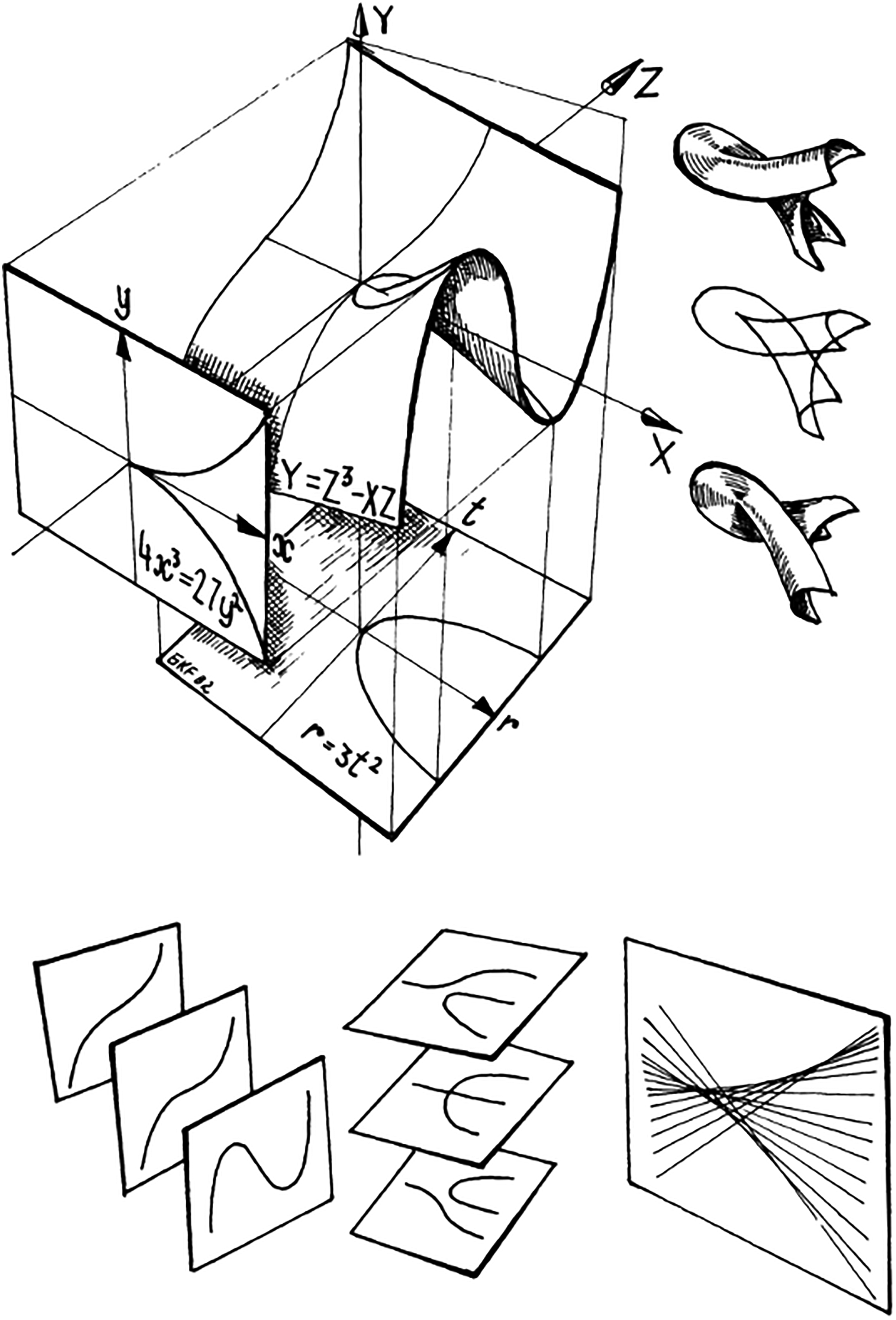
The ‘Cayley Cusp’ (from Francis 1987). The smaller figures surrounding the main diagram (top left) display cross-sections of the curved surface. A topologist seeks to convey the essential information (both qualitative and quantitative) of a shape or process beyond the usual human capacity for visualisation with a suggestive interplay of various lines, loops, colours, and shading techniques. Reproduced with permission of copyright holder.
Topology is far from widespread in environmental research; nonetheless, several academic disciplines have recognised its value for studying the varied spatiotemporal relationships which abound in the ecological world (Prager and Reiners 2009). I will thus begin this discussion on topology by noting existing efforts in the environmental literature, briefly examining where I believe them to be limited and subsequently suggesting how topological ideas may come into play differently within an ecological mathematics.
Parallel threads
First, in the existing life sciences literature, topology in the vast majority of cases has become synonymous with ‘networks’ (Figure 5), characterising connections between nodes and linkages, and eliciting relationships not otherwise obvious to the Euclidean lens (e.g. Petchey et al. 2010; Strogatz 2001). However, network topology represents only a fraction of the analytical and theoretical developments of topology in mathematics. Mathematicians interested in employing topological techniques beyond networks have recently created the field of ‘topological data analysis’ to study spatial patterns in multidimensional numerical data (Ghrist 2014), the application of which to biological questions in phylogenetics and molecular structure has gained some attention (Rabadán and Blumberg 2019). However, the stringent conditions on the form and density of data sets required for the methods of topological data analysis to be effective have hitherto kept it largely absent from an ecological context.
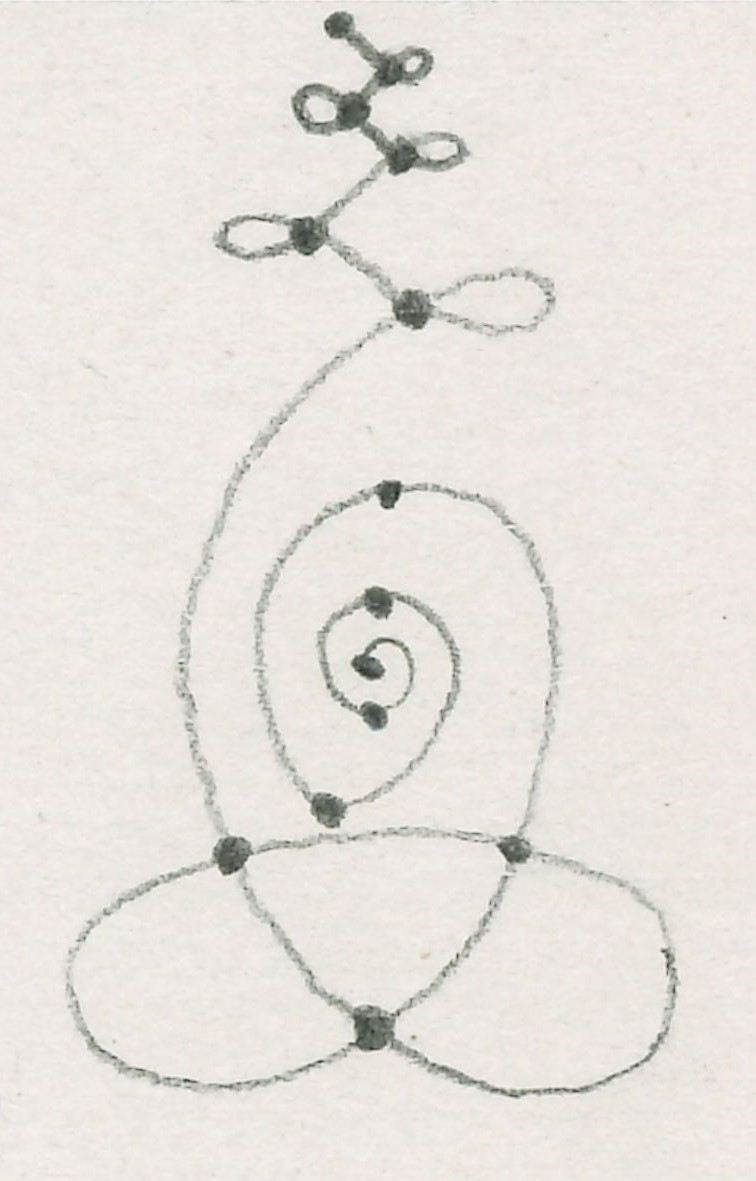
An example of a network, described by nodes (dots) and linkages (lines between dots). Drawing by author, 20th December 2023.
Second, coming from ‘pure’ mathematics with a very different approach, the famous topologist René Thom published a substantial theoretical work (2018 [1972]) applying topological methods to questions of form and function in ecology, which was influential for biologists such as Conrad Waddington and philosophers including Gilles Deleuze and Félix Guattari (Escobar 2020, 374). Thom aims to ‘present qualitative results in a rigorous way, thanks to recent progress in topology’, without the ‘intolerant view of a dogmatically quantitative science’ (Thom 2018, 5–6). Fifty years on, though, material from this work does not appear in contemporary ecological science, perhaps due to his account being exceedingly difficult to grasp without formal mathematical training in topology (xxvi), and because Thom's approach ostensibly sees only those ecological phenomena which fit the precise lineaments of his particular set of abstract mathematical structures.
Third, there do exist a handful of examples in the sciences which develop topological ideas more directly in connection with ecological concepts. Notably, the doctoral thesis of ecologist George Sugihara (1983), who developed topological ideas emerging in niche theory and community ecology (see also Unnithan Kumar et al. 2021); and the recent use of ‘circular statistics’ in plant phenology, seeking to describe biological patterns not obvious from the viewpoint of linear time (Morellato et al. 2010).
Fourth, and quite unbeknownst to mathematicians and scientists, topological thinking is growing increasingly influential in the environmental humanities and social sciences. In their review paper Towards a post-mathematical topology, Lauren Martin and Anna Secor (2014) survey the vast range of topological ideas drawn from mathematics into the field of geography, examples of which are motivated by the ‘limited ability of conventional geometric concepts’ (421) to study certain spatial phenomena, and the understanding that ‘Euclidean space [is] one possible topology among others’ (430). Yet the title of their paper and the conclusions therein imply an inherent incompatibility between the way in which spatial relations concepts manifest in mathematics and in the social sciences. In a review of topological ideas in ecological science, Prager and Reiners (2009) arrive at an analogous impasse, whereby the use of topology in ecology is split between ‘an intuitive way of seeing nature that is literary and graphical’ on the one hand, and ‘mathematically defined approaches’ on the other (168).
Braiding together
I wish to overcome this apparent dichotomy. To do so, I will suggest how working on the underlying conceptual level (which precedes quantification, cf. Section 4) enables a deeper and reciprocally informed correspondence between mathematics and ecology. The conceptual domain of choice will be topology, motivated by its suitability for working with complex spatiotemporal relationships, and the presence of diverse but hitherto unwoven threads of topological thought in ecological research, as discussed above. I draw primarily on the social sciences because of my familiarity with such literature, and the abundance of nuanced topological concepts therein. These ideas are in their early stages, and a thorough exposition will be the subject of a forthcoming article; the motivation here is not to showcase a complete investigation, but rather to give a sense of what is possible.
In Wildlife in the Anthropocene: Conservation after Nature, Jamie Lorimer (2015) employs a topological approach to ‘provide an explicit analysis of the spatial dimensions of wildlife and its conservation’, which ‘helps identify the territorial trap into which the orthodox biogeographies of conservation have fallen’ (162). The primary topological concepts used here are the three kinds of topological space (‘regional’, ‘fluid’ and ‘fire’) expounded by Annemarie Mol and John Law in their influential papers on topology in the social sciences (Mol and Law 1994; Law and Mol 2001), which take a step beyond the simplicity of networks and foreground more advanced topological concepts in a manner remarkably consonant with the theoretical development of structures in mathematical topology. 10
Briefly, a regional topology consists of ‘[n]eat divisions, no overlap. Here or there, each place is located on one side of the boundary’, which Lorimer uses to describe the spatial approach of binary biogeography (Lorimer 2015, 164). In a fluid topology, Mol and Law articulate a ‘shape constancy, which does not depend on any particular defining feature or relationship, but rather on the existence of many instances, which overlap with one another partially’, employed by Lorimer to describe the dynamics of novel urban ecosystems (168). Finally, Lorimer describes the vulnerability of disconnected ecosystems to ‘abrupt and discontinuous’ change (170), drawing on the fire topology. A careful reading of the encompassing text in the works of both Lorimer, and Mol and Law, reveals these three topological concepts in the social sciences to fit closely with many of the ideas, and the subtleties therein, of the mathematical formulation of topological concepts such as ‘equivalence classes’, ‘open sets’ and ‘closed sets’, ‘connectedness’, ‘continuity’ and ‘homeomorphism’ (see Lipschutz 1965).
Further examples of such confluences abound in contiguous literature. I will list a few here, but to gauge the resonance, a more involved reading is necessary. Of particular note is Massey (2005), whose treatise on space studies ‘closure’, ‘boundedness’ and ‘isomorphism’, among many other spatiotemporal concepts, in a manner which evokes the mathematical conceptualisations of such terms. ‘Translation between images’, ‘cancelling difference’ and ‘overlaps’ in de la Cadena and Blaser (2018) connects with fundamental mathematical properties of ‘functions on topological spaces’ (Lipschutz 1965, 97–110). The cyclical and spherical perceptions of space and time conveyed by Abram (1997, 181–223) speak to properties and constructions of circles and spheres in mathematical topology, such as ‘homotopy’ and ‘quotient space’ (Lipschutz 1965, 185–186; Hatcher 2002, 1–17).
These correspondences suggest that the mathematical development of topological concepts – including those currently absent in environmental research, such as ‘limit point’, ‘orientability’ and ‘quotient space’ (Hatcher 2002) – may offer a valuable degree of precision and analytical traction for their use in the humanities and social sciences, and a calculus for revealing ways in which plural instances of topological spaces are in fact related across social and ecological contexts. 11 Conversely, the lucid investigations into experiential and conceptual relationships in the latter disciplines provide a hitherto unstudied foundation for building (qualitative and quantitative) mathematical models of ecologies which move beyond the Newtonian model and worldview of reality.
Conclusion
‘It is a question, practically of relationship. We must get back into relation, vivid and nourishing relation to the cosmos and the universe. For the truth is, we are perishing for lack of fulfilment of our greater needs, we are cut off from the great sources of our inward nourishment and renewal, sources which flow eternally in the universe. Vitally the human race is dying. It is like a great uprooted tree, with its roots in the air. We must plant ourselves again in the universe.’ (D. H. Lawrence) 12
This paper takes the perspective that it is question of relationship which lies at the heart of the environmental challenges in the present day – how we relate to ourselves, to fellow humans, and to all beings of the more-than-human earth which we all call home (Brach 2004; Kimmerer 2020; Rose 2011). It is thus with the question of relationship that this paper begins and ends.
To summarise
To summarise, we started by briefly tracing the development of mathematical modelling in ecology, noting how it has drawn overwhelmingly from ideas in the physical sciences and thereby quantified the living world through a lens which conceptually reduces ecological processes to particle dynamics governed by mechanistic rules of motion. This invited a look into the edifice of academic mathematics itself, inquiring whether a different relationship of mathematics with the living world is possible. We thus investigated how claims of a universal and transcendent mathematics appear naïve when drawing on research in ethnomathematics, which illustrates how the evolution of mathematical ideas is not separable from the cultural contexts in which human mathematicians have lived and worked. This helped observe how abstraction – ostensibly so fundamental to mathematical practice – need not be antithetical to embodiment, but rather that the underlying logics directing its use can work to either stifle or enliven the ecologies under study. Concurrently employing research from the cognitive science of mathematics to argue that the way in which ecological phenomena are conceptualised sets a precedent for how they are quantified, this discussion suggested that working on the conceptual level enables a correspondence between mathematics and the humanities and social sciences which may help attune mathematical models to the relational and experiential dimensions of the ecological world.
This provided the requisite viewpoint for a case study to begin exploring how an ecological mathematics might offer a suitable approach to questions previously intractable in ecological science. Evoking accounts of human perceptual experience to highlight how the Newtonian framework of separable Euclidean space and linear time is not an absolute truth but simply one model of reality, we noted how ecological science lacks the conceptual scope to study environmental dynamics beyond this singular lens of spatiotemporal processes. Turning then to the mathematical field of topology, which has evolved over the last two centuries to study analogous questions in the physical sciences, we found its conceptual material to be prevalent and influential in the social sciences, but with a supposed incommensurability between the topological concepts in mathematics and in the social sciences. Invoking our discussion preceding the case study, which suggested working on the conceptual level to move beyond the apparent dichotomy of quantitative and qualitative expressions of topology, we drew correspondences between examples of the use of topological ideas in the social sciences and their use in mathematics. From here, we touched on how such connections could provide a fruitful place from which to develop the utility of topology in the social sciences and humanities, and in turn enliven and bring felt experience into the conceptual material for mathematical models, so that they may be tools for not just studying, but for living and thinking with, the more-than-human world.
To clarify
Before ending this paper, there are a few important points to clarify. In developing an ecological mathematics, I am not talking about creating a ‘subjective’ or ‘embodied mathematics’; accounts such as Lakoff and Núñez (2000), Hersh (2013) and de Freitas and Sinclar (2014), when complemented by reflecting on one's own experience of doing mathematics, provide strong evidence that mathematics has, and has always had, subjective and embodied aspects. For in attempting to counter pretences of objective and disembodied thought in academic mathematics, striving for a ‘subjective’ or ‘embodied mathematics’ would again reproduce those same dichotomies (e.g. subject/object) by inhabiting their opposites without realising how each exists only in relation to the other (cf. Strathern 2015, 131). Consonantly, I am not proposing a quantification of lived experience – for that would be to replicate the stifling hierarchy discussed throughout this paper, which requires ecological phenomena to conform to the ideals of mathematical abstraction, rather than the converse. Instead, I am suggesting an investigation into how quantification and mathematical abstraction already emerge through embodied relationship with the world – how the ecological and mathematical manifest in each other – and in doing so offer ways to address questions which have hitherto proved difficult in environmental research, such as giving appropriate attention to multiple forms of ecological knowledge within mathematical models in ecological science (Atleo 2007; Berkes 2017).
Despite widespread environmental concerns amongst those in the present world of academic mathematics, the role of mathematics in ecology remains tightly constrained by the strikingly few kinds of ‘application’ through which mathematical research is funded, thereby eliding vast swathes of so-called pure mathematics from environmental discourse and eliciting significant concerns of irrelevance from many in its field. It need not be so, as I have hoped to demonstrate in this paper; the ideas presented here are not motivated by a rejection of existing mathematical models and their tremendous value in environmental research, but rather by a conviction that a more far-reaching, symbiotic and inclusive relationship between mathematics and ecological thought is possible.
At the same time, this is emphatically not a project of ontological assimilation, of accruing ever more ecological knowledge in pilgrimage to the holy grail of a ‘perfect model’. By drawing upon multiple ways of being human in the world, I intend neither to homogenously present Indigenous peoples as an axiomatic source of wisdom, nor to handle such knowledge extractively and without due care. Rather, by working with Indigenous scholars such as Robin Wall Kimmerer (2020), E. Richard Atleo (2007), Zoe Todd (2016), Margaret Kovach (2021), Vanessa Watts (2013) and Robert Davidson (Duffek and Houle 2004) – and attentive accounts from those such as David Abram (1997), Fikret Berkes (2017) and Ilona Kater (2022) – I wish to engage appropriately with the timeless value of sharing and keeping alive the different perspectives and relationships that are possible in this world (Griffin-Pierce 1995, xix); especially so, if it supports mutually attentive dialogue to better care for and become more conscious of the web of ecological relations in which we are all embedded.
To conclude
To conclude, it is in addressing the relationship of mathematics and more-than-human world that the central motivation for an ecological mathematics lies, guided by the knowledge that a more caring and reciprocal interplay is possible than that engendered by the conceptually impoverished and value-free framing of ecosystems through the lens of the physical sciences. It matters what concepts we use to think concepts, to paraphrase Marilyn Strathern (de la Cadena and Blaser 2018, 6). This is not a mere intellectual exercise: without an understanding of precisely how narratives and concepts are a precedent for the ways in which ecological phenomena are modelled in environmental research, developing increasingly sophisticated mathematical techniques in the direction of existing research agendas is like climbing ever higher up a ladder without questioning whether it was placed against an appropriate wall at the outset. Hence, an ecological mathematics invites the researcher to move from being ‘the one who knows’ (de la Cadena and Blaser 2018, 13) to ‘the one who listens’, not least because the work done by a mathematical model is always bounded by the conceptual lens through which it engages and is sensitised to the world studied through its immersion within it. I think that mathematics at its heart is not a reduction of the mystery, but a correspondence with it – and in this way it can be dynamic and alive, open and receptive, sending a question into the living world and listening for the response.
Footnotes
Acknowledgements
The author bows to David Abram and Sam Cushman, for guidance and inspiration. To Tim Hodgetts, Jonny Turnbull, Jamie Lorimer, Annie Obernoster, Gonzalo Gonzalez de Diego, and Marilyn Strathern, for encouragement and insightful conversations. To Philip Maini, Yadvinder Malhi, and the editor and reviewers who worked with this manuscript, for continued support. To Hugo Shakeshaft and Allegra Wint, for cosmic friendship and help along the way. To Sue Matthew, for generosity, inspiration and laughter. To his beloved friends, for making this work possible. To his family, particularly Maya Unnithan, his anthropologist mother, Sanjiv Kumar, his mathematician father, Arjun Unnithan Kumar, his scientist brother, and to his ancestors for their love and wisdom. To the Bodleian's Education Library in the University of Oxford, for a nurturing and peaceful environment. To Port Meadow, his companion through day and night, to whom he owes so much. And to the more-than-human world, which we all call home.
Declaration of interest statement
The author declared no potential conflicts of interest with respect to the research, authorship and/or publication of this article.
Funding
The author received no financial support for the research and authorship of this article. The open access publication fee was covered by the Jisc agreement with the University of Oxford.
