




Abstract
This article concerns the re-edition of two Coptic inscriptions inscribed on mural paintings from the monastery of Saint Jeremiah at Saqqara. They may be dated to the time span of two centuries, corresponding from the sixth to the eighth century CE. Both inscriptions have been kept in the magazine of the Coptic Museum of Cairo. The first one, number 10882 (Saqq. IV, 319), records a prayer to God imploring him to watch over hermits with a request for commemoration. The second one, number 8449 (Saqq. IV, 313), refers to a name-list of monks, brothers of the service or ministry. These texts inscribed on the murals are studied to provide further aspects on the organization of monastic communities in the area and region of Lower Egypt. Considered as samples of monastic epigraphy in the form of mural inscription, they connect the use of this monastic custom to the principles of monasticism. Thus, by exploring the evidence in terms of the language inscribed with the mural art as part of the architectural features present in the settlements, the history and artistic heritage – associated with the monks concerned or the people involved – become a multitask challenge for the field of Coptic Archaeology.

Introduction
The current article republishes two Coptic inscriptions written on mural paintings and kept today in the storeroom of the Coptic Museum, Cairo (inv. nos 10882 and 8449). Mural paintings were not only renowned in pharaonic Egypt, but even later, in Egypt of late antiquity following the techniques and mannerism of Graeco-Roman traditions. 1 These mural paintings were used in adorning not only secular buildings or private residences, but also religious establishments such as churches and monasteries. 2 The custom was that the mural paintings were to be executed in a threefold manner developing into representing three styles – with plain decorations, inscriptions or including decoration with inscriptions. 3 In monasteries, they are set in the interior parts of the hermitages, especially on the walls of the vestibules, the passageways to the oratory, and the oratory itself – that is the private or communal room for prayer. When in the room, they are placed according to the wish of the scribe. The preferred position appears to be the eye-level parts of the wall for the inscription, and then, if needed, the rest of the surface was used as well. Referring to the inscriptions of important monks, the surface or niche above the passageway was also selected. 4
The two texts studied here were first published by Herbert Thompson, 5 when they were still part of a wall in situ on the premises of the monastery of Saint Jeremiah in Saqqara. The current condition of the two inscriptions has been changed and certain letters or words recorded by Thompson are no longer visible. On the other hand, Thompson, when studying them on the wall, for some reason did not translate some parts or may have missed others. Most probably, in the rush of recording his observations and readings during the excavation, it seems that letters or words were interpreted superficially, or that part of the text was not properly cleaned. However, by stating these observations there is no intention of diminishing Thompson’s work at all, but just to add to it and clarify certain points aiding our perception of the coenobitic function or practices at the monastic settlement.
There are no dates in the two inscriptions and only the archaeological context allows us to determine when they were written: the church of the monastery of Apa Jeremiah was founded in the sixth century, and inscriptions from the same monastery kept in the Louvre dated to the eighth century. The monastery appears to have declined towards the end of the eighth century. 6 This means the execution of the inscriptions must have been between the sixth and the eighth centuries CE. However, Quibell suggested the active period of the community was between the end of the fifth and the middle of the ninth centuries. 7
The mural paintings studied here were placed inside wooden frames for protection in modern times, and this may have taken place right after the fragments were removed from their archaeological context.
Text no. 1
Inventory number: Cairo, Coptic Museum inv. no. 10882.
Size: H. 49 x W. 59 cm. 8
Provenance: Saqqara.
Date: 6th–8th century CE?
Bibliography: Thompson 1912: 99–100, no. 319 (= Saqq. IV, 319).
Our first fragment is an undecorated mural painting with a Coptic inscription, inventory number 10882. It was badly preserved but was cleaned and treated as part of a restoration program of two unrelated fragments in the Coptic Museum, in 1995. 9
Both the Register Book of the Coptic Museum and the article written on the restoration state erroneously reported that the provenance of this mural painting is Kellia. 10 However, the text was recorded and read by Herbert Thompson – according to his notes – on the actual wall in the monastery of Jeremiah in Saqqara before its removal. 11
The register book of the Coptic Museum provides no information about how and when the mural painting was acquired and only Kellia as provenance was recorded. Materials from the excavations in Kellia, Bawit and Saqqara were possibly transferred to the Museum within the same years (between 1906 and 1910) which might have caused confusion about the origin of the paintings. However, Thompson describes the exact location of the inscription in his archaeological report of Saqqara: it was part of wall 1724 in the monastery of St. Jeremiah. 12
The text is incomplete in its upper and right sides and unfortunately it has not been possible to determine the number of the missing lines at the beginning. However, we may assume with some certainty that it is only complete in its left and lower parts, as the inscription is flanked by the thick painted frame drawn on both sides. Both this and no. 8449 (see below, text 2) were decorated with a painted frame; a custom known also from Kellia. 13
The script is clear and written in black ink in eleven lines, although the Register Book of the Coptic Museum records fourteen lines. While there are only eleven lines remaining, as indicated by the image which the colleague who restored the piece in 1995, Mona Fouad Ali, shared with me, we may assume that the object has deteriorated since its registration. The script is without any ligature. However, in line 8 the end of the letter ϣ of ϣⲱⲡⲉ has overlapped with the next line between the letters ï and ⲥ of the proper name of Pisente (see fig. 1). A superlinear stroke is found over ⲛ in the preposition ⲙⲛ and of genitive ⲛ, once on ⲙ in the formula of asking to remember ⲁⲣï ⲡⲁⲙ︦ⲉⲉⲩⲉ ‘remember me’, and trema with Iota ⲣï ‘cell’, ⲡⲉï ‘this’, ⲡïⲥⲛⲧⲉ ‘Pisente’, ⲁⲣï ‘do’. The inscription appears to be written with only one hand, and the scribe is named in the text as Abraham, the painter.
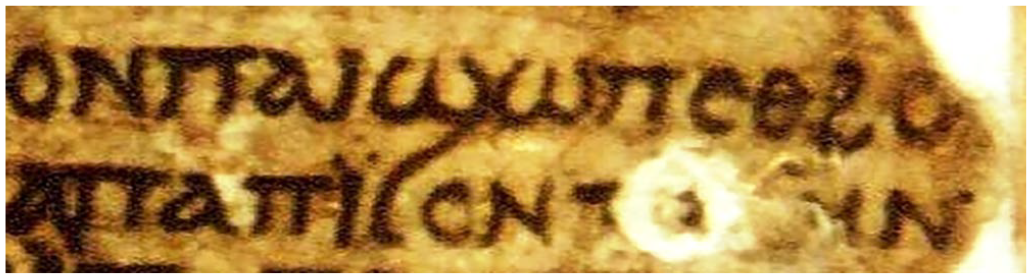
Lines 8 and 9 (photo: M. F. Ali).
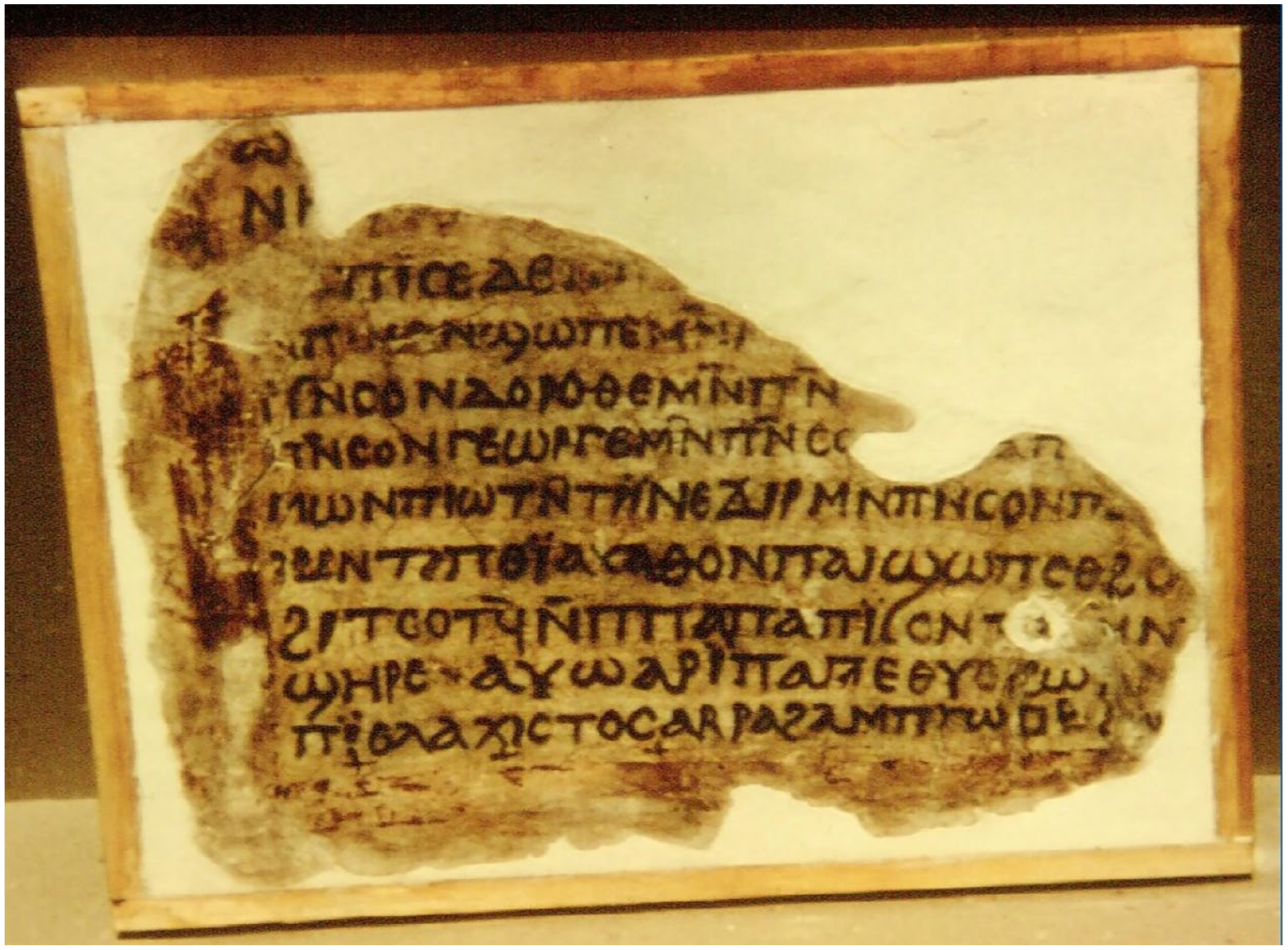
Inscription on a mural painting, no. 10882 in the Coptic Museum (photo: M. F. Ali).
The text is an invocation including a name-list with the following ecclesiastical titles: ⲥⲟⲛ ‘brother’, ϣⲏⲣⲉ ‘son’, ⲡⲁⲡⲁ ‘papa’ (= priest) and ⲉⲗⲁⲭⲓⲥⲧⲟⲥ ‘most-humble’. 14 In addition, the rare titles: ⲡⲓⲱⲧ ⲛ︦ ⲧⲣï ⲛⲉϫⲓⲣ ‘the father of the salt provisions’, and ⲍⲱⲅⲣⲁⲫ ‘painter’.
The text ends with a request of commemorating the humblest Abraham, the ‘painter’, 15 who could be an inhabitant of the location; namely a monk who also worked as a painter. 16 Another painter’s name, John, appears at Saqqara (see below).
The text is written mainly in Sahidic Coptic, but with some Bohairic features: ⲓⲱⲧ ‘father’, ⲙ︦ⲉⲉⲩⲉⲓ ‘remember’, ϩⲱ ‘also’.
Herbert Thompson read this inscription from the plaster wall south of a niche in cell 1724 in the monastery of Saint Jeremiah, at Saqqara, at the time of excavations between 1906 and 1910. The painting inside the nearby niche depicts the Virgin (Mary) with the Saint Enoch and Jeremias and the two Archangels. 17 The text was published by Herbert Thompson in the publication of James Edward Quibell in 1912. 18
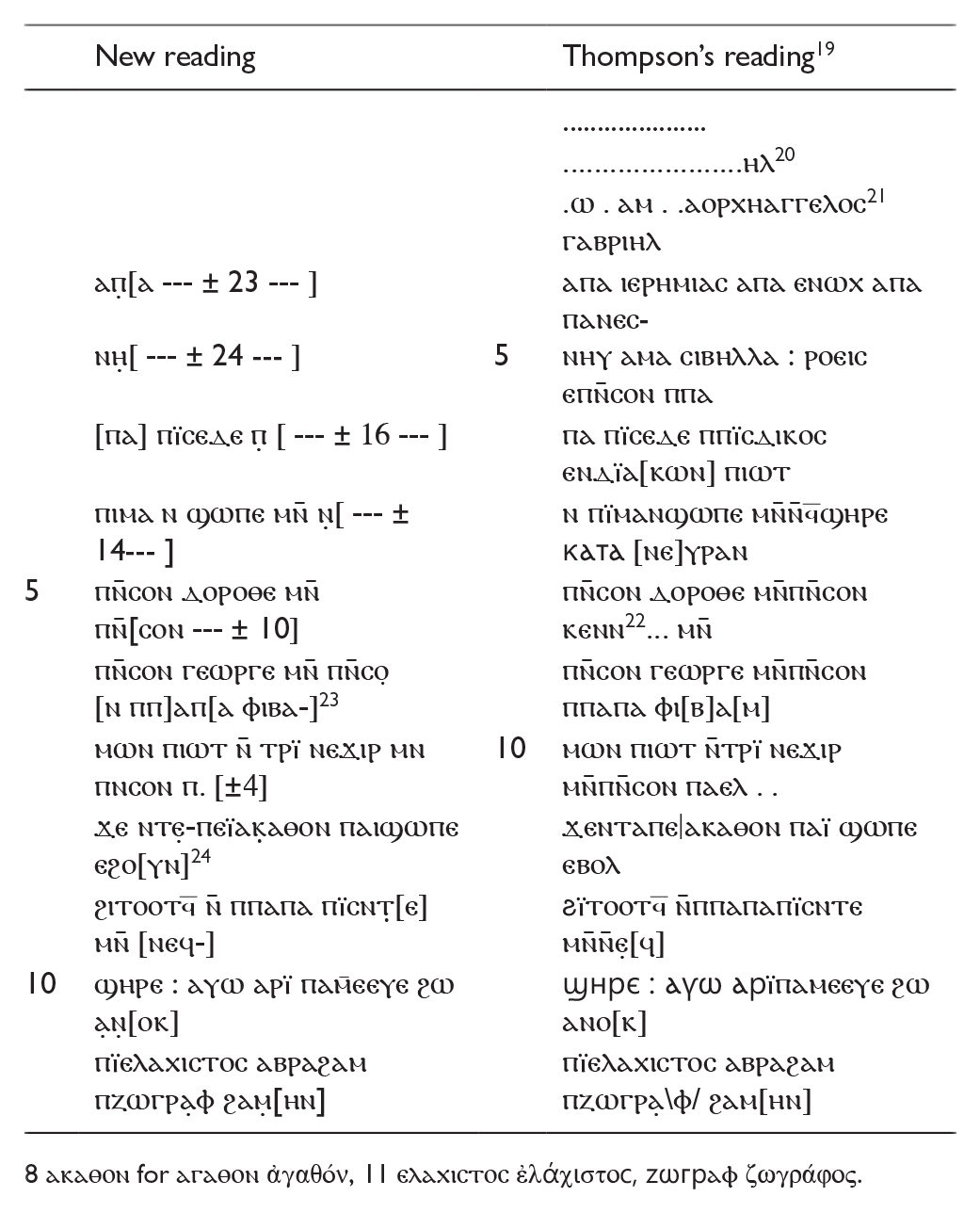
Translation
Translation of Thompson 25
‘…. .[Micha]el(?) … archangel Gabriel, Apa Jeremias, Apa Enoch, Apa Panesneu, Ama Sibylla: watch over our brother 26 the papa Pisente, the faithful deacon (and) father of the dwellinghouse together with his (spiritual) sons, by their names, Brother Dorotheos and Brother Kenn…and Brother George and Brother the papa Phoebammon the father of the salt provisions and brother Pael…because this good thing has happened by means of the papa Pisente and his sons. And remember me also, the humble Abraham, the painter. Amen.’
Translation of the author
‘Ap[a --- ± 23 --- ] [ --- ± 24 ---] Ap[a] Pisede the [--- ± 16 --- ] the dwelling-place (=monastery) and [ --- ± 14 --- ] our brother Dorothe and our [brother ± 10 --- ] our brother George and our brother Pap[a Phoiba]mon the father of the pickle storeroom and our brother P[±4] because this good (aγαθόν) thing has happened by means of Papa Pisente and [his] son. And remember me also [I] the most-humble (ἐλάχιστος) Abraham, the painter (ζωγράφος) Am[en].’
Commentary
Comparing the text that Thompson read with the one restored, it is apparent that the following part is missing now from the beginning: …. .ⲏⲗ….ⲁⲣⲭⲏⲁⲅⲅⲉⲗⲟⲥ ⲅⲁⲃⲣⲓⲏⲗ ⲁⲡⲁ ⲓⲉⲣⲏⲙⲓⲁⲥ ⲁⲡⲁ ⲉⲛⲱⲭ ⲁⲡⲁ ⲡⲁⲛⲉⲥⲛⲏⲩ ⲁⲙⲁ ⲥⲓⲃⲏⲗⲗⲁ: ⲣⲟⲉⲓⲥ ⲉⲡⲛⲥⲟⲛ ⲡⲡⲁ.
Thompson thought ⲁⲡⲁ ⲓⲉⲣⲏⲙⲓⲁⲥ ⲁⲡⲁ ⲉⲛⲱⲭ ⲁⲙⲁ ⲥⲓⲃⲏⲗⲗⲁ ‘Apa Jeremias, Apa Enoch, and Ama Sibylla’ were references to the Saqqara triad of saints: Jeremiah is the monk who founded the monastery, Enoch is the Old Testament prophet, and Sibylla is the Sibyl of Alexandria. 27 There are numerous inscriptions in the Monastery of St. Jeremiah at Saqqara; most of them are commemorative with the following formula. After the Trinity, Virgin Mary, sometimes the archangels, Apa Jeremiah, Apa Enoch, and Ama Sibylla are invoked. The same occurs in funerary texts: as in the inscription on marble no. KSB I 790. 28 The above-mentioned triad was also invoked on a few tombstones kept in Shotb magazine at Assyut that were uncovered in the excavations at Manqbad on 15 February 2010; nos 26, 78, 80, 81, 84, 86, 87 and 106. Similarly, the representations of both Jeremiah and Enoch appear at Dayr Apa Apollo at Bawit. 29 Enoch is depicted on a few mural paintings of the monastery, Karel Innemée thought that he might be either one of the founding fathers or one of the earliest leaders of the monastery in Bawit. 30
The translation of ⲡⲛ︦ ‘our’, which is repeated six times in the text, is generally omitted by Thompson (translated only once in line 5). The expression ⲣⲟⲉⲓⲥ ⲉ ‘watch/guard over NN’ is known usually from literal and legal texts. 31 However it also appears in a graffito on a limestone block from cell no. 1723: ⲡ̣ⲭ̣︦ⲥ ⲁⲡⲁ ïⲉⲣⲏⲙïⲁⲥ ⲁⲡⲁ ⲉⲛⲱⲭ ⲁⲙⲁ ⲥⲓⲃⲏⲗⲗⲁ ⲣⲟⲉⲓⲥ ⲉⲡⲓⲉⲗⲁⲭⲓⲥⲧⲟⲥ ⲡⲁⲥⲟⲛ ⲙⲏⲛⲁ ‘O Christ, Apa Jeremias, Apa Enoch, Ama Sibylla, watch over the humble brother Mena’. 32
Similarly, at the monastic site of Kom el-Nana, at Tell el-Amarna (400–750 CE), several walls have Coptic graffiti 33 painted on plaster representing prayers to God or requests that God ‘watch over’ certain individuals, using the same Coptic formula. 34
Notes on the new reading
L. 1–2: only two letters are left in line 1, ⲁⲡ̣; it is the title of ‘Papa’ 35 according to Thompson. In line 2 only two characters left, ⲛⲏ̣, part of the name of ⲁⲡⲁ ⲡⲁⲛⲉⲥⲛⲏⲩ read previously by Thompson. 36
L. 3: ⲡïⲥⲉⲇⲉ: Thompson interpreted the name as a variant of Pisente. 37 It occurs once again in the current text in line 9 as ⲡïⲥⲛⲧⲉ. However, we cannot exclude the possibility that ⲡïⲥⲉⲇⲉ is a hitherto unknown variant of ⲡⲓⲥⲁⲧⲉ (cf. TM Nam 5042), e.g., O. Medin.Habu.Copt. 47, 256, 291, 370, 372. Both ⲡïⲥⲉⲇⲉ and ⲡïⲥⲛⲧⲉ are attested only in this text. 38
L. 4: Thompson thought ⲙⲁ ⲛ ϣⲱⲡⲉ did not refer to the whole monastery, but probably to ‘the double row of monks’ cells of which this is one’. 39 The title of the Father of a certain location (room) in the monastery, is attested eight times in the texts of Saint Jeremiah at Saqqara, two of them are in this text: ⲡⲓⲱⲧ ⲛ̄ ⲙⲁ ⲛ̄ ϣⲱⲡⲉ ‘the father of dwelling-place’ and ⲡⲓⲱⲧ ⲛ ⲧⲣⲓ ⲛⲉϫⲓⲣ ‘the father of salt provisions’. In addition to ⲡⲓⲱⲧ ⲛ̄ ⲡⲙⲁⲛⲣⲁϩⲧ ‘the father of the laundry’ (Saqq. IV, 227, 241), ⲡⲓⲱⲧ ⲙ ⲡⲉⲑⲣⲟⲛⲟⲥ ‘the father of the throne’ (Saqq. IV, 343 line 5) is also attested. Thompson noted about this latter: ‘Probably he was in charge of the pulpit in the courtyard’. 40 In a different sense, in a fragment of the life of Manasseh, Saint Mark the Evangelist is called ⲡⲓⲱⲧ ⲙ ⲡⲉⲑⲣⲟⲛⲟⲥ. 41 Other titles are also known from inscriptions in Saqqara: ⲡⲓⲱⲧ ⲙ ⲡⲙⲁ ⲛⲉⲧϣⲱⲛⲉ ‘the father of infirmary/hospital’ (Saqq. IV, 207 lines 11–12), ⲡⲓⲱⲧ ⲙⲡⲙⲁ ⲛ̄ ⲟⲩⲱⲙ ‘the father of the refectory’ (Saqq. IV, 192 line 6; 193 lines 4–5; 328 lines 2–3), ⲡⲓⲱⲧ ⲛ̄ ⲧⲇⲓⲁⲕⲟⲛⲓⲁ ‘the father of the service’ (Saqq. IV, 169 line 3; 207, line 5). 42
L. 5: The full form of ⲇⲟⲣⲟⲑⲉ Dorthe is ⲇⲟⲣⲟⲑⲉⲟⲥ Dortheos, the variant of the Greek Δωρόθεος/ⲇⲱⲣⲟⲑⲉⲟⲥ, appears in a text found in Athripis. 43 It also occurs in the full form in the texts of the Monasteries of the Wadi Natrun. 44 This variant is mentioned in our text only, however, ⲇⲱⲣⲟⲑⲉ is well known. 45
L. 7: Thompson translated ⲣï ⲛⲉϫⲓⲣ as ‘salt provisions’, however, ⲣï means ‘cell, room’ and ϫⲓⲣ means ‘brine’ which occurs in text P. Lond. Copt. 1 1111 line 14 from el-Ashmunein: ⲙⲁ ⲛ̄ ϫⲓⲣ ‘mill/grinder-place’. ϫⲓⲣ also means ‘fish sauce’: ⲗⲁⲕⲟⲛ ⲥⲛⲁⲩ ⲛ ϫⲓⲣ ‘two laka 46 of fish sauce’ (P. Mich. inv. 3980f V line 3–4 from Bawit). ϫⲓⲣ was a popular fish sauce of antiquity. 47 Crum translated ϫⲓⲣ ‘brine, small, salted fish’, and ⲧⲣⲓ (ⲛ) ⲛⲉϫⲓⲣ ‘pickle storeroom’. 48
L. 8: ⲡⲉïⲁⲕ̣ⲁⲑⲟⲛ: The epsilon in ⲡⲉïⲁⲕ̣ⲁⲑⲟⲛ is erroneously written as a theta (a common scribal mistake).
ⲉⲛⲧⲁⲡⲉⲓⲁⲅⲁⲑⲟⲛ: The epsilon of ⲡⲉⲓ resembles a theta, clearly erroneous for an epsilon. It also appears in ⲉϩⲟ[ⲩⲛ]. The formula ϫⲉ ⲉⲛⲧⲁⲡⲉⲓⲁⲅⲁⲑⲟⲛ ϣⲱⲡⲉ ⲉⲃⲟⲗ ϩⲓⲧⲟⲟⲧⲟⲩ ‘for this good thing has taken place through them’ occurs also in text Saqq. IV, 353, on plaster. Thompson refers to it as if it pointed to the rebuilding of the row of monk’s cells, however, this claim may be uncertain. 49
L. 9: The title ⲡⲁⲡⲁ (Papa), ⲡⲡⲁⲡⲁ, ‘priest’, is equivalent of the Greek πάπας. 50 It often accompanies personal names, e.g., ⲡⲡⲁⲡⲁ ⲁⲛⲟⲩⲡ ⲡⲕⲟⲩⲧⲏⲩⲥ ‘Papa Anoup, the shoemaker’ (KSB I 479), 51 ⲡⲁⲓⲱⲧ ⲡⲁⲡⲁ ⲥⲉⲣⲛⲉ ⲡⲣⲙ ⲧⲉⲙϫⲓⲣ ‘my father Papa Serene, the man of Temjir!’ (KSB I 793). 52 It occurs in thirteen texts in the monastery of Saint Jeremiah. 53
L. 10: ⲁⲣï ⲡⲁⲙ̄ⲉⲉⲩⲉ: This formula is common in funerary and other contexts, for example in Kellia: ⲁⲣⲓ ⲡⲙⲏⲩⲉ / ⲁⲣⲓ ⲡⲙⲉⲩⲉⲓ ⲛⲇⲉ  ‘remember the Lord’, dated to 707 CE.
54
ⲁⲣⲓ ⲡⲁⲙⲉⲩⲉ ‘remember me’ is also attested in an inscription on a wall in the new church of Dayr el-Shuhada,
55
and the monastery of Jeremiah at Bawit: ⲁⲣⲓ ⲡⲁⲙⲉⲟⲩⲉ ⲁⲛⲟⲕ ⲡⲓⲉⲗⲁⲭⲓⲥⲧⲟⲥ ⲇⲁⲟⲩⲓⲇ ⲯⲱⲅⲣⲁⲫⲟⲥ ⲙⲡⲙⲁ ⲛ̄ ⲁⲡⲁ ⲓⲉⲣⲙⲓⲁⲥ ‘Remember me, I the humble David, the painter of the monastery of Apa Jeremiah’.
56
The formula appears usually on tombstones, with ⲁⲣⲓ ⲡⲙⲉⲉⲩⲉ ⲛ ‘Remember NN’ (e.g. KSB I 425 and KSB I 421 from Assiut, Cairo, Coptic Museum, inv. 198).
57
Just to mention a few examples, it is known from a stela now in the Coptic Museum (JE 45449), from Middle-Egypt: ⲁⲣⲓ ⲡⲙⲉⲉⲩⲉ: ⲛⲡⲁⲓⲱⲧ ⲡⲁⲡⲁ ⲡⲁⲛⲧⲟⲗⲉⲱⲛ ‘remember my father pappa Pantoleon’ (lines 9–10), and ⲁⲣⲓ ⲡⲙⲉⲉⲩⲉ ⲛⲡⲁⲥⲟⲛ ⲗⲉⲟⲛⲧⲓⲟⲥ ‘remember my brother Leontios, his son’ (lines 12–13).
58
A tombstone for a deceased woman called Mary from Saqqara: ⲁⲣⲓ [ⲡⲙⲉⲉⲩⲉ ⲙ] ⲙⲁⲣⲓⲁ ‘remember Mary’.
59
‘remember the Lord’, dated to 707 CE.
54
ⲁⲣⲓ ⲡⲁⲙⲉⲩⲉ ‘remember me’ is also attested in an inscription on a wall in the new church of Dayr el-Shuhada,
55
and the monastery of Jeremiah at Bawit: ⲁⲣⲓ ⲡⲁⲙⲉⲟⲩⲉ ⲁⲛⲟⲕ ⲡⲓⲉⲗⲁⲭⲓⲥⲧⲟⲥ ⲇⲁⲟⲩⲓⲇ ⲯⲱⲅⲣⲁⲫⲟⲥ ⲙⲡⲙⲁ ⲛ̄ ⲁⲡⲁ ⲓⲉⲣⲙⲓⲁⲥ ‘Remember me, I the humble David, the painter of the monastery of Apa Jeremiah’.
56
The formula appears usually on tombstones, with ⲁⲣⲓ ⲡⲙⲉⲉⲩⲉ ⲛ ‘Remember NN’ (e.g. KSB I 425 and KSB I 421 from Assiut, Cairo, Coptic Museum, inv. 198).
57
Just to mention a few examples, it is known from a stela now in the Coptic Museum (JE 45449), from Middle-Egypt: ⲁⲣⲓ ⲡⲙⲉⲉⲩⲉ: ⲛⲡⲁⲓⲱⲧ ⲡⲁⲡⲁ ⲡⲁⲛⲧⲟⲗⲉⲱⲛ ‘remember my father pappa Pantoleon’ (lines 9–10), and ⲁⲣⲓ ⲡⲙⲉⲉⲩⲉ ⲛⲡⲁⲥⲟⲛ ⲗⲉⲟⲛⲧⲓⲟⲥ ‘remember my brother Leontios, his son’ (lines 12–13).
58
A tombstone for a deceased woman called Mary from Saqqara: ⲁⲣⲓ [ⲡⲙⲉⲉⲩⲉ ⲙ] ⲙⲁⲣⲓⲁ ‘remember Mary’.
59
L. 11: According to the inscription, the most-humble Abraham took a title of ⲍⲱⲅⲣⲁⲫ, ζωγράφος ‘painter’ 60 who painted the plaster. 61 This Greek profession could be written in different forms in Coptic: ⲍⲱⲕⲣⲁⲫⲟⲥ, 62 ⲍⲟⲅⲣⲁⲫⲟⲥ, ⲍⲟⲅⲕⲣⲁⲫⲟⲥ, ⲍⲟⲕⲅⲣⲁⲫⲟⲥ, 63 ⲥⲱⲕⲣⲁⲫⲟⲥ. 64 Abraham was not the only painter whose name is known from the same monastery. A certain John, presbyter and painter is mentioned in an inscription written in black ink on the plastered wall of room 798 (Saqq. III, 92): ⲡⲣ ⲍⲱⲅⲣⲁⲫⲟⲥ ïⲱϩⲁⲛⲏⲥ ⲕⲟⲩⲓ ⲡⲣⲟⲥⲕ/ ‘the presbyter (the) painter: John (the) less, makes adoration’. 65 (see fig. 3).
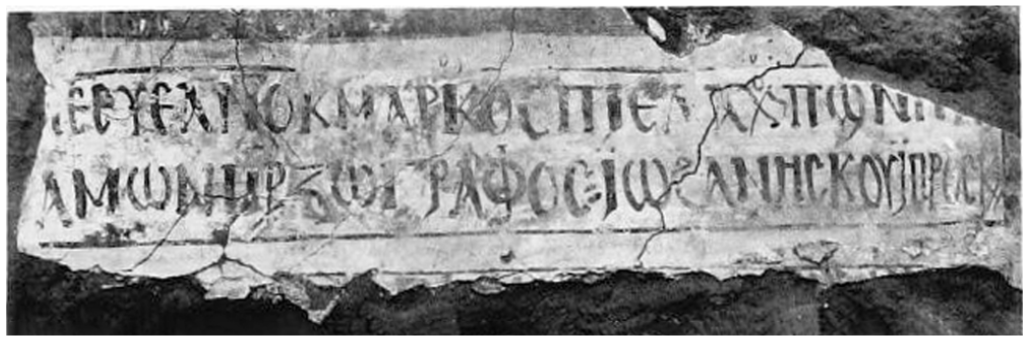
Saqq. IV, 313, mural painting with Coptic inscriptions, inv. no. 8449 (photo: © Coptic Museum).
Text No. 2
This text is a list of names of the monks and deacons from the Monastery of Jeremiah, with decorative borders. 66 It has been kept in the magazine of the Coptic Museum, inv. no. 8449. The persons recorded in the ten lines of text are different from those of text 1. It is registered in the first publication under the text no. 313 as ‘inscriptions in black ink over painted pattern on a piece of wall-plaster – (now in Cairo Museum) – probably from room 1714’. 67
The text is complete in the upper, lower, and left sides, and the last two lines on the right side, with only one or two letters missing in the first eight lines at the right side. The inscription is written in a thick painted frame, surrounded by an ornament motif with circles and rhombuses with zigzag lines in black ink, while the space outside is filled with small red dots. The text itself is written over a rhombus motif painted in red and surrounded by four triangles in black (See fig. 4).
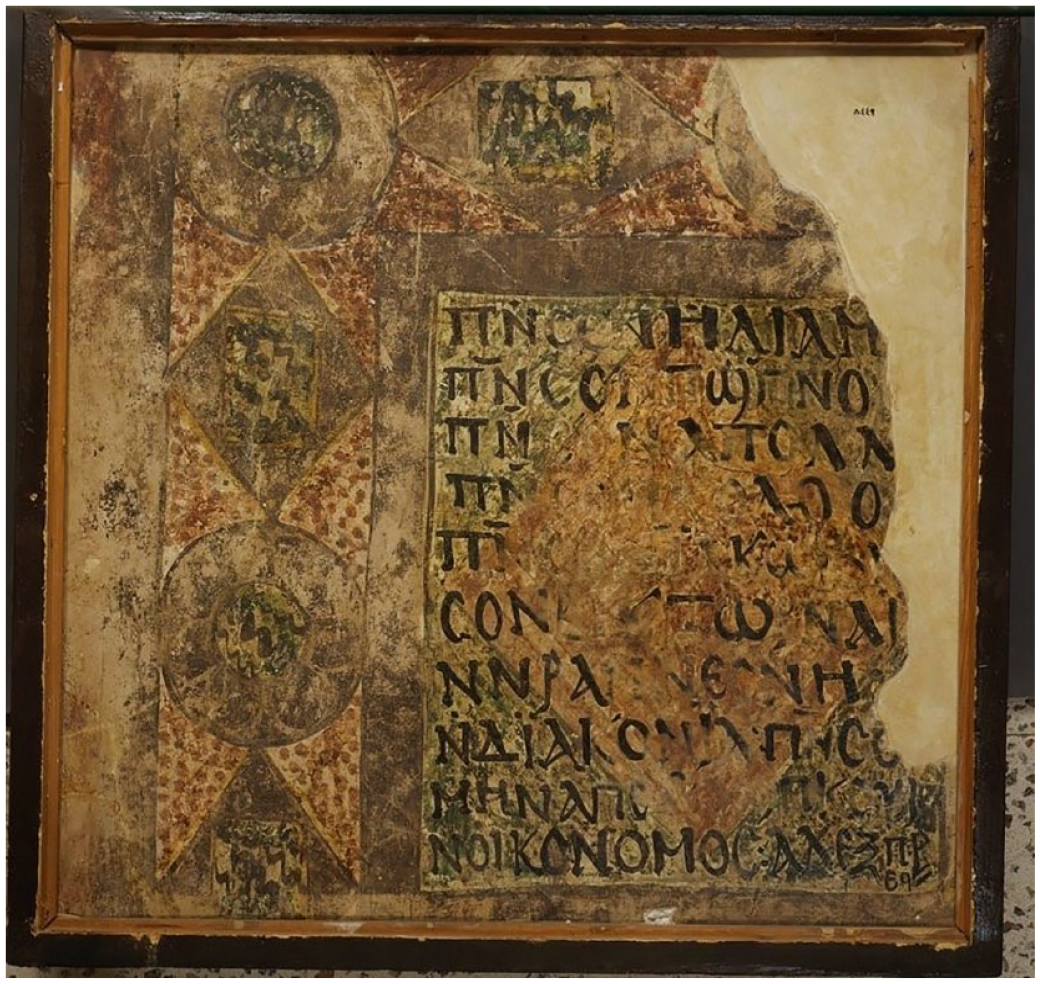
Saqq. IV, 313, Mural painting with Coptic inscriptions, inv. no. 8449, Coptic Museum (photo: https://www.akg-images.com/archive/-2UMDHU4C5KVE.html accessed 20 July 2022).
Inventory number: Cairo, Coptic Museum inv. no. 8449.
Size: H. 59.5 x W. 59 cm.
Provenance: Saqqara.
Date: 6th–7th century CE? 68
Bibliography: Thompson 1912: 97, no. 313 (= Saqq. IV, 313).
Translation
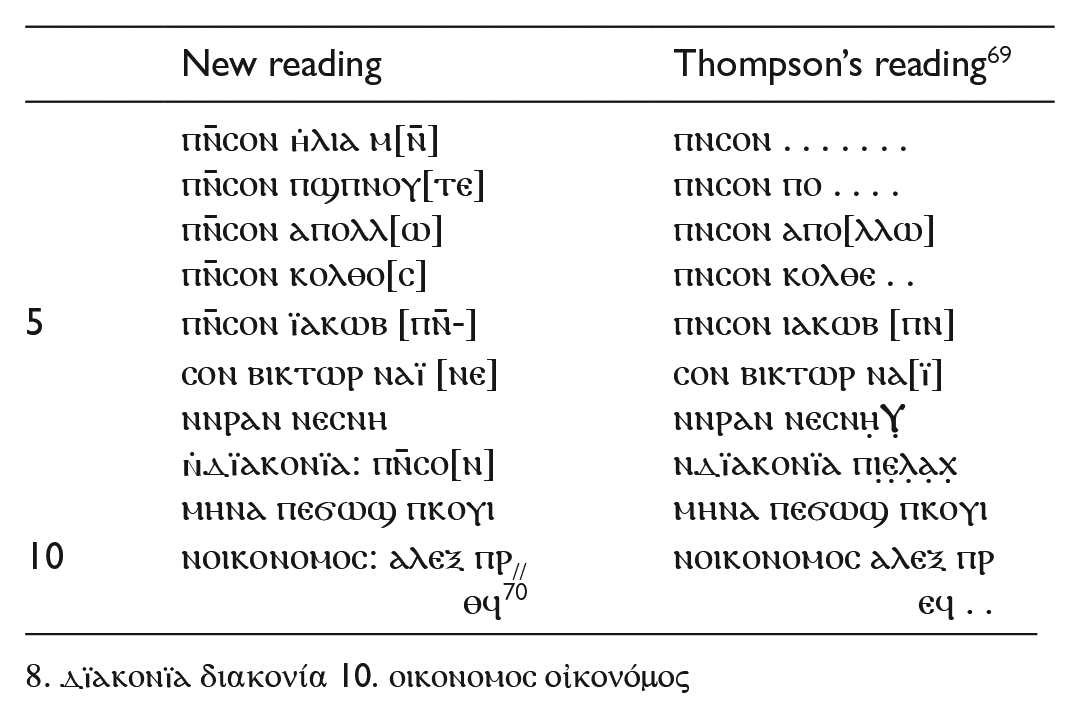
‘Our brother Elias and our brother Pshmpno[te], our brother Apoll[o], our brother Kolloutho[s], our brother Jakob, our brother Victor, these [are] the names of the brothers of the service/ministry: our brother Mena, the Kushite/Nubian, the young/little steward oikonomos. Alex[ander], the presbyter? Amen’.
Commentary
L. 1: Thompson did not read the name, what remains is Ḣⲗⲓⲁⲙ so, it could read Ḣⲗⲓⲁ ⲙ[ⲛ̄]. Elias is attested in the form Ḣⲗⲓⲁ. 71
L. 2: Thompson read only the first two letters and doubted the second letter, but ⲡϣⲡⲛⲟⲩ[ⲧⲉ] is clear on the painting. This form of the name is not known from other sources, but it is evidently a variant of ⲡϣⲙⲡⲛⲟⲩⲧⲉ which comes from the Egyptian PA-Sr-n-pA-nTr ‘the son of God’ (cf. TM Nam 991).
L. 3: Thompson read ⲁⲡⲟ[ⲗⲗⲱ], however, the two lambdas are still visible.
L. 4: Thompson read ⲕⲟⲗⲑⲉ, but ⲕⲟⲗⲑⲟ[ⲥ] is clear on the painting. This demonstrates that the writing was more legible after the expert cleaning. If the writing is coated in dirt, it is simple to mix up ⲟ with ⲉ.
L. 6: Thompson read ⲛⲁ[ï], but the letter ï is preserved. Only the following ⲛⲉ is missing.
L. 7: ⲛⲉⲥⲛⲏ̣Ⲩ̣: only the beginning of the letter ⲩ is visible.
L. 8: Thompson read ⲡⲓ̣ⲉ̣ⲗ̣ⲁ̣ⲭ̣ ‘humble’, however, it is ⲡⲛ̄ⲥⲟ[ⲛ] ‘our son’. ⲇïⲁⲕⲟⲛïⲁ occurs in a few other texts e.g. Saqq. IV, 207 line 5, 314 line 5, ⲧⲓⲁⲕⲟⲩⲛⲓⲁ in Saqq. IV, 169 line 3. L. 9: Thompson thought ⲡⲉϭⲱϣ might be either a proper name ‘Pegosh’ or a title ‘the Nubian’; thus, he translated ⲙⲏⲛⲁ ⲡⲉϭⲱϣ as ‘Mena (son of) Pegosh’ or ‘Mena the Nubian’. 72 However, Crum translated ⲉϭⲱϣ as ‘an Ethiopian, a Nubian’, but it has a feminine form ⲉϭⲱϣⲉ therefore should be ‘an Ethiopian, Nubian woman’. 73 In graffito no. Saqq. IV, 326: ϩⲁⲣⲱⲛ ⲡϭⲱϣ ‘Aaron the Nubian’. Thus, we may very well assume that there were two Nubian monks, Aaron, and Mena, in the monastery. However, ⲡⲉϭⲱϣ is the Coptic variant of the ancient Egyptian PA-Ỉkš, ‘the Nubian/Kushite’, and was common (cf. TM Nam 797). 74 Both options are plausible.
L. 10: Thompson did not transcribe the colon (‘:’) after ⲛⲟⲓⲕⲟⲛⲟⲙⲟⲥ. He thought what follows ⲁⲗⲉⲝ, the abbreviated name ⲁⲗⲉⲝⲁⲛⲇⲣⲟⲥ (Ἀλέξανδρος) who is probably the scribe, is ⲡⲣϥⲱϣ ‘lector’. The same name occurs on a limestone block in the monastery: ⲡⲉⲛⲥⲟⲛ ⲁⲗⲉⲝ ⲡⲉⲣϥⲧⲓⲁⲕⲟⲛ ‘our brother Alex(ander) the attendant’. 75 However, it is more likely that ⲡⲣ// is not an abbreviated form of ⲡⲣϥⲱϣ but is rather the more common title ⲡⲣⲉⲥⲃⲩⲧⲉⲣⲟⲥ, which is also attested in Saqqara (Saqq. III, 92). This abbreviation is very well-known, cf. e.g., P. KRU 68 (P. Revillout Copt. 2): + ⲁⲛⲟⲕ ϣⲉⲛⲟⲩⲧⲉ ⲡⲉⲓⲉⲗⲁⲥⲭ/ ⲛ ⲡⲣ// ⲛⲧⲕⲕⲗⲏⲥⲓⲁ ⲉⲧⲟⲩⲁⲃ ⲛϫⲏⲙⲏ or P. KRU 74 (SB Kopt. II 954): + ⲁⲛⲟⲕ ϩⲏⲗⲓⲁⲥ ⲡϣⲏⲣⲉ ⲙ ⲙⲱⲩⲥ̣ⲏⲥ ⲡⲡⲣ/ ⲡⲉⲓⲉⲗⲁⲭ/ ⲛ ⲁⲛⲁⲅⲛⲱⲧ/ ⲛⲁⲅⲓ[ⲁ ⲙⲁⲣⲓⲁ].
Conclusion
The study of the inscriptions dealt with in this article may contribute to refining our understanding concerning the monastic experience in Saqqara. The division of labour amongst the monks with their designation of duties, showing in the titles mentioned, testify to a highly organized monastic community in which clerical officials bore their titles defining and distinguishing them with probable associated status. For example, the designation of ‘the father of the salt provisions/pickle storeroom’, does not connect only to the diet of the monks but also to the classification system for storing their provisions, offering a remarkable insight into the monastic group’s dynamics.
The mention of the priest in charge of the settlement that refers to his sons, if they are not only spiritual, may reveal a custom of sharing ministerial duties among family members or dependents. In the excavation records there is a reference to small constructions that were added in relation to a phrase that appeared twice in the Saqqara inscriptions – ‘for this good thing has taken place through them’ – Thompson’s claim should be considered as he believed that it indicated some reforms referring to the reconstruction of a row of monks’ cells that took place in the settlement.
Regarding the title of ‘the painter’, it seems that it used to be reserved for individuals allowed to sign with their name. These could have been either monks or inhabitants of the location of the monastery settlements. The signing of the name in a full phrase of the inscription hints at a special honour for bearing the duty of the scribe and painter. Although the scribes/painters mention their humility in the format of a signature, it is with pride and honour for accomplishing a sacred task that they sign while fulfilling their duty. This autographing of history fascinates and challenges further research in relevant inscriptions as it may shed light on the social status that this title bears in association with the labour performed.
The previous publication of Thompson and the provenance of the two Coptic inscriptions were hitherto not identified in the Museum’s acquisition catalogue. The fragments were treated in the Museum’s conservation laboratory which helped the author of this article to offer new translations and interpretations of the two inscriptions.
Footnotes
Acknowledgements
I cannot thank enough Professor Mona Fouad Ali, the former head of Conversation Department of Faculty of Archaeology, Cairo University for assisting me substantially in delivering my request to the Ministry of Tourism and Antiquities and for providing me with a high-resolution photograph of the first inscription of the current study. I am profoundly thankful to Professor Mohsen Saleh, the Vice Dean of the Faculty of Archaeology, Cairo University. My deepest gratitude to Safaa Helmy and Hader Belal at the Coptic Museum and Abeer Yehya el-Gohary, inspector at the Archaeological Documentation Department at the Pyramids of Giza for their sincere assistance. My heartfelt appreciation to Georgina Kouti – MA in Classics, University College London – for her initial proofreading of this article and relevant discussions.
This contribution was prepared for publication through the author’s participation in the Mentoring for Egyptian and Sudanese Authors (MESA) scheme of the Egypt Exploration Society thanks to generous funding from their Patrons, with Dr. Adrienn Almásy-Martin acting as a mentor to the author.
Funding
The author did not receive funding for this project.
1
3
There is a wall painting with an inscription in the British Museum (EA73139) with the representation of three children who are miraculously spared by the flames in a furnace: https://www.britishmuseum.org/collection/object/Y_EA73139 (accessed 04.01.2022). From Wadi Sarga:  : 35–37.
8
Erroneously 32 x 44 cm in the register book of the Coptic Museum.
9
10
For more details about the site, excavations and paintings of Kellia see Boud’hors, et al. 2009: 57; Guillaumont 1991: 1397; Rassart-Debergh 2016: 217–221; Andreu-Lanoë, et al. 1981: 177; Partyka 1991: 1408; : 1400–1406.
14
15
Cf. also the walls of the old church of the monastery of St. Antony at the Red Sea where Theodore the painter worked in 1232/1233 CE: Gabra 2002: 76; : 208.
16
Monks working as painters are known elsewhere, see for example Mercurius, a monk in the Monastery of St. Shenute, who also inscribed his name in the Monastery of St. Pshoi in 1301 CE: Gabra 2002: 84–85, 101; or David from the monastery of Apa Jeremias situated a little south of Antinoe at Bawit: : v.
20
21
ⲁⲟⲣⲭⲏⲁⲅⲅⲉⲗⲟⲥ: it is for ⲁⲣⲭⲏⲁⲅⲅⲉⲗⲟⲥ.
22
It is the sole example of this unfinished proper name: Hasitzka 2007: 49. Thompson states that it could be ⲕⲉⲛⲛⲁⲇⲏ from Greek Γενναδιος: : 100. The Greek form of the name occurs in P. Oxy. 9.1214 (TM 35473), while the Coptic form ⲅⲉⲛⲛⲁⲇⲓⲟⲥ is attested in line 61 in the testament of Daniel (P. KRU 71 = P. Lond. Copt. 400 descr.).
32
: 99. See also text no. 314 in Thompson 1912: 97.
33
For Greek and Coptic graffiti and dipinti at Kellia see Vliet 2017: 193, 197; Partyka 1991: 1408; Andreu-Lanoë, et al. 1981: 178; : 5.
35
The text claims that Phoibamon and Enoch received the title of ⲁⲡⲁ, while the living fathers who were residing in the monastery at the time the book was written received the title of ⲡⲁⲡⲁ.
36
Apa Panesneu was addressed in seven other texts of the monastery of Saint Jeremiah: Saqq. IV, 190, 202, 204, 206, 208, 209 and 211.
37
Thompson 1912: 100; : 257.
43
Boud’hors, et al. 2021: 137.
46
ⲗⲁⲕⲟⲛ, Greek λάκον: Förster 2002: 460–462. It is a liquid measure, but its size is problematic: cf. : 138, no. 499.
57
Delattre, et al. 2014: 204.
61
62
65
Quibell 1909: 55. Thompson translated ⲡⲣⲟⲥⲕ/ ‘makes adoration’, however, it means ‘salute, worship’ in the letters, for example, text no. 189, 202 and 223 in .
68
For the date, see the first inscription.
70
ⲑϥ stands for the numerical cryptogram ϥⲑ (99) designating ‘amen’ (O. Frangé 71).
75
Quibell 1909: 28; : 320.