




Abstract
The rock tomb GE 89 was discovered during the GPR survey of the area in the extreme eastern edge of the Eastern Necropolis at Giza, northwest from the rock tomb of Kakherptah (GE 7721). GE 89 is an L-shaped tomb, with a layout similar to G 7721; it consists of two rooms separated by pillars. Four rock-cut statues were revealed on the southern wall of room A; the contours of false doors, and one preserved offering slab on the second false door were attested in room B on the western wall. The tomb owner and his wife are depicted sitting at the offering table on the offering slab. The ceramic sherds that filled the offering room of the tomb testify to its reuse in the fourth century BC. The initial construction of the tomb dates to the 5th Dynasty; however, no burials have been excavated from that period.

Keywords
Introduction
The rock tomb GE 89 (fig. 1) was detected during the course of the excavations of the Russian archaeological mission on the eastern edge of the East Giza Plateau, during a geo-radar survey in 2019. The tomb is located northwest of the tomb of Kakherptah (Kȝ-ḫr-ptḥ – tomb G 7721). 1 During the November 2020 and 2021 seasons, the entrance to the tomb, which was partially blocked by large stone blocks, was cleared (fig. 2). The tomb had never been mentioned before.
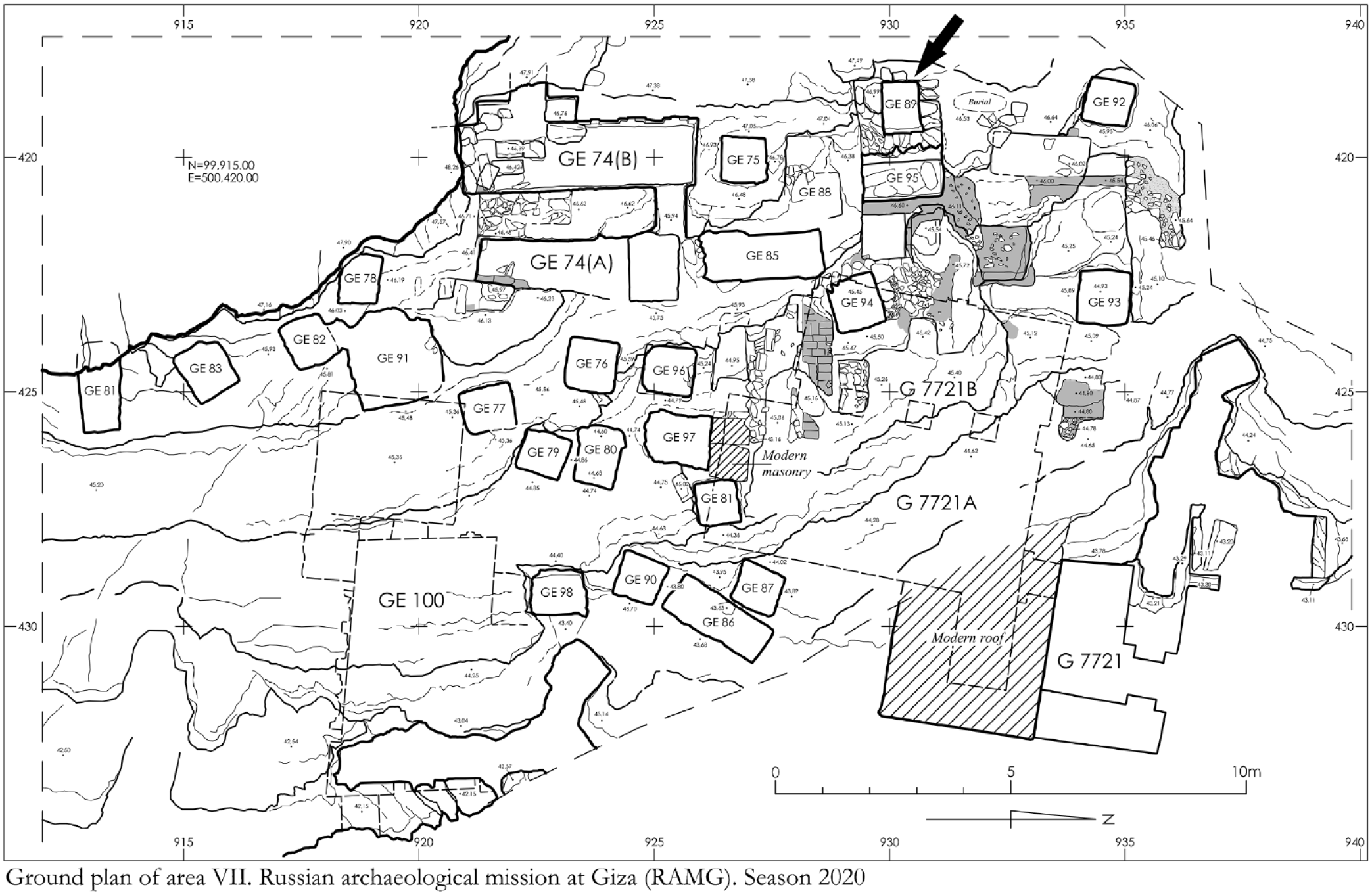
Ground plan of area VII of the Russian archaeological mission at Giza (drawing: S. Vetokhov).
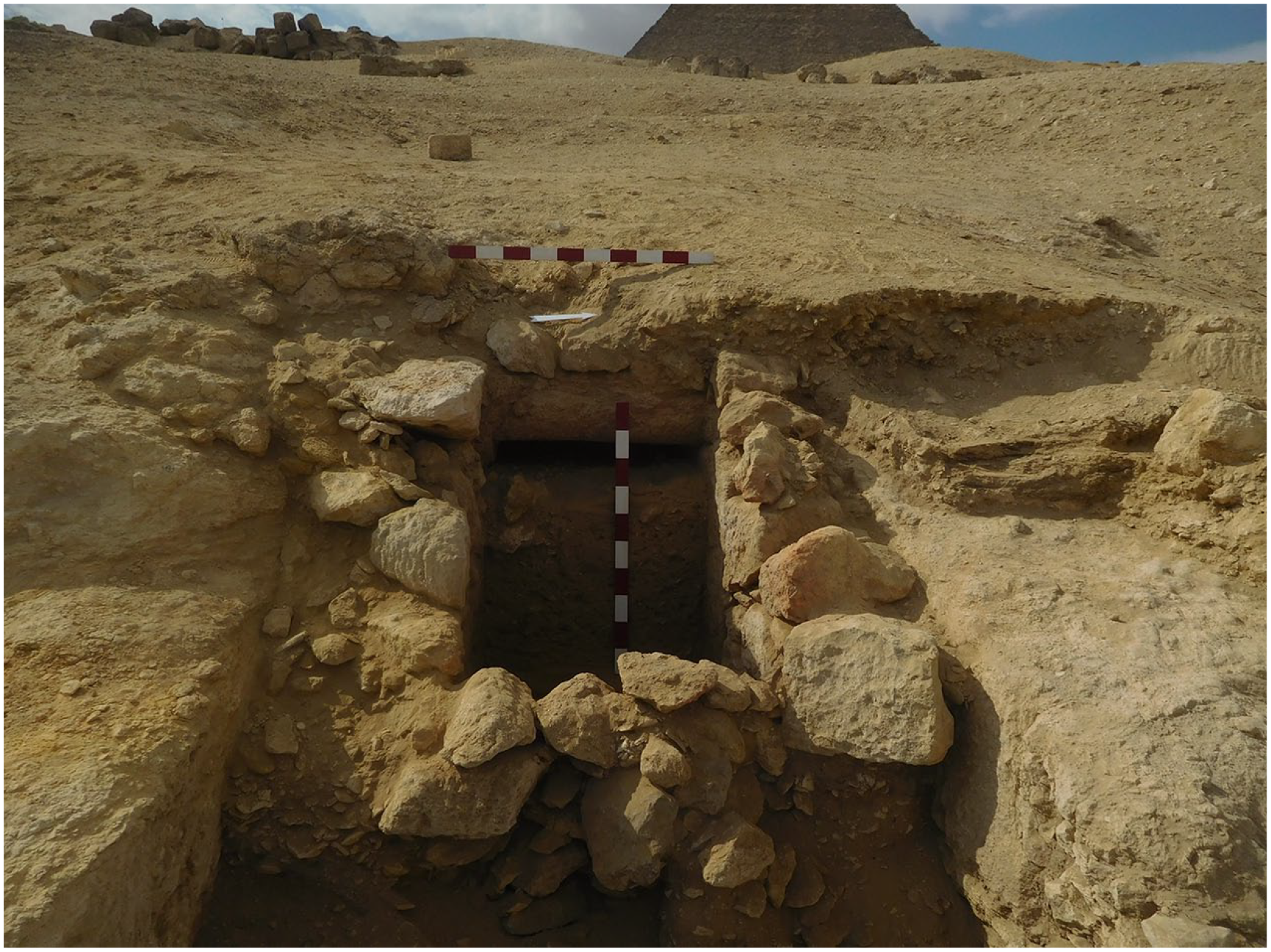
Excavating tomb GE 89 (photo: E. Kormysheva).
The offering room of tomb GE 89 was almost completely filled with fragments of pottery, parts of mummies, human skulls and bones, fragments of faience, and beads. Before starting the excavation, longitudinal and transverse stratigraphic sections of rooms were carried out (fig. 3a–c).
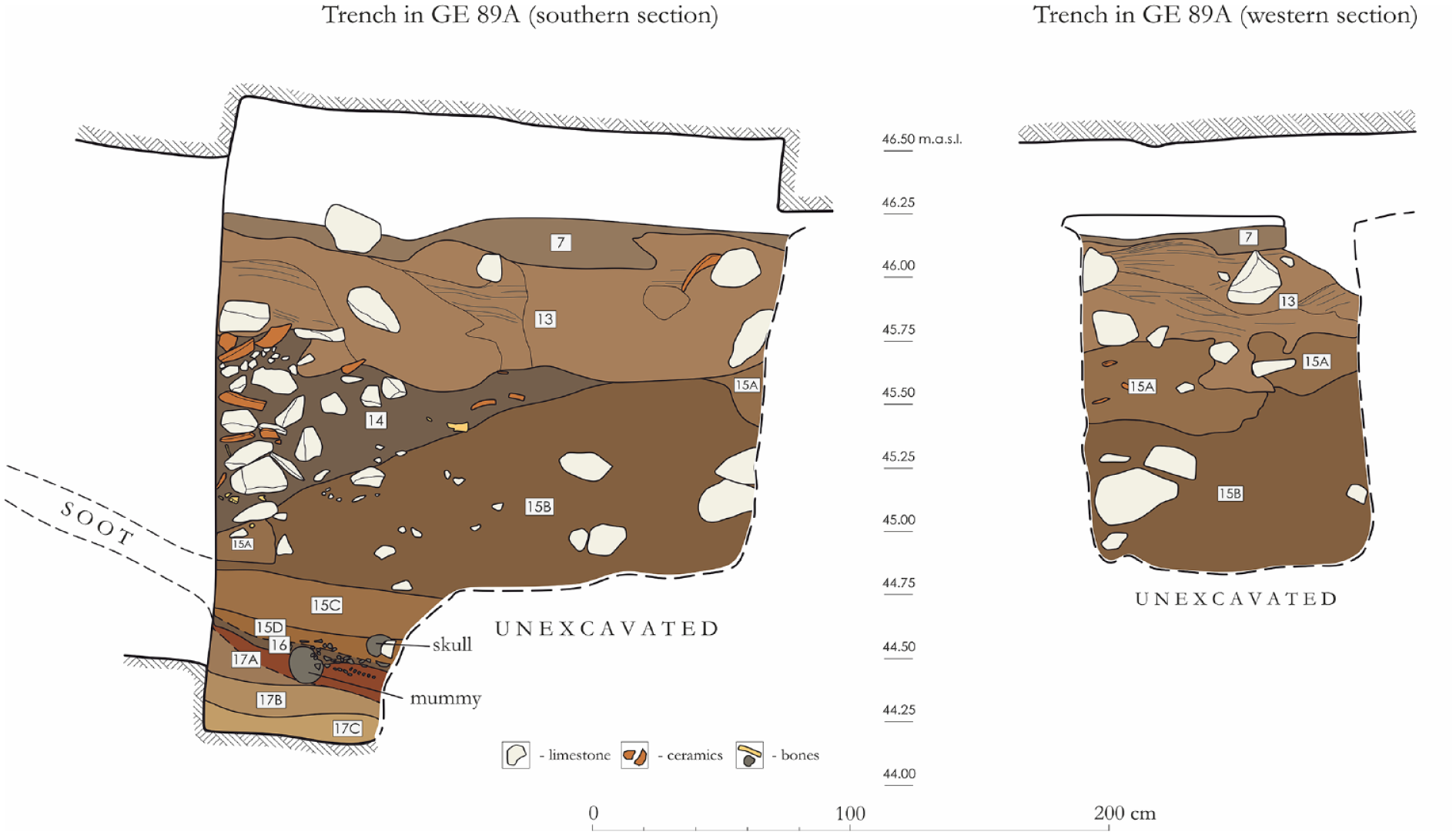
Stratigraphical cuts (drawings: M. Lebedev).
The excavated entrance to the tomb in its current form is 1.72 m in height and 0.77 m in width. The upper part of the entrance was destroyed, most likely due to the lost drum and architrave. Level marks on the northern part of the entrance are 45.75–46.44 m above sea level.
GE 89 is an L-shaped structure, consisting of two rooms (A and B). The western wall of room A is formed by three free-standing pillars (figs 4 and 5), each 2.19 m high and 0.51 m wide. The extreme southern part of this wall is formed by mother rock, where a pillar forms an angle between the southern and western walls. All of the construction is covered by a solid architrave along the entire perimeter.
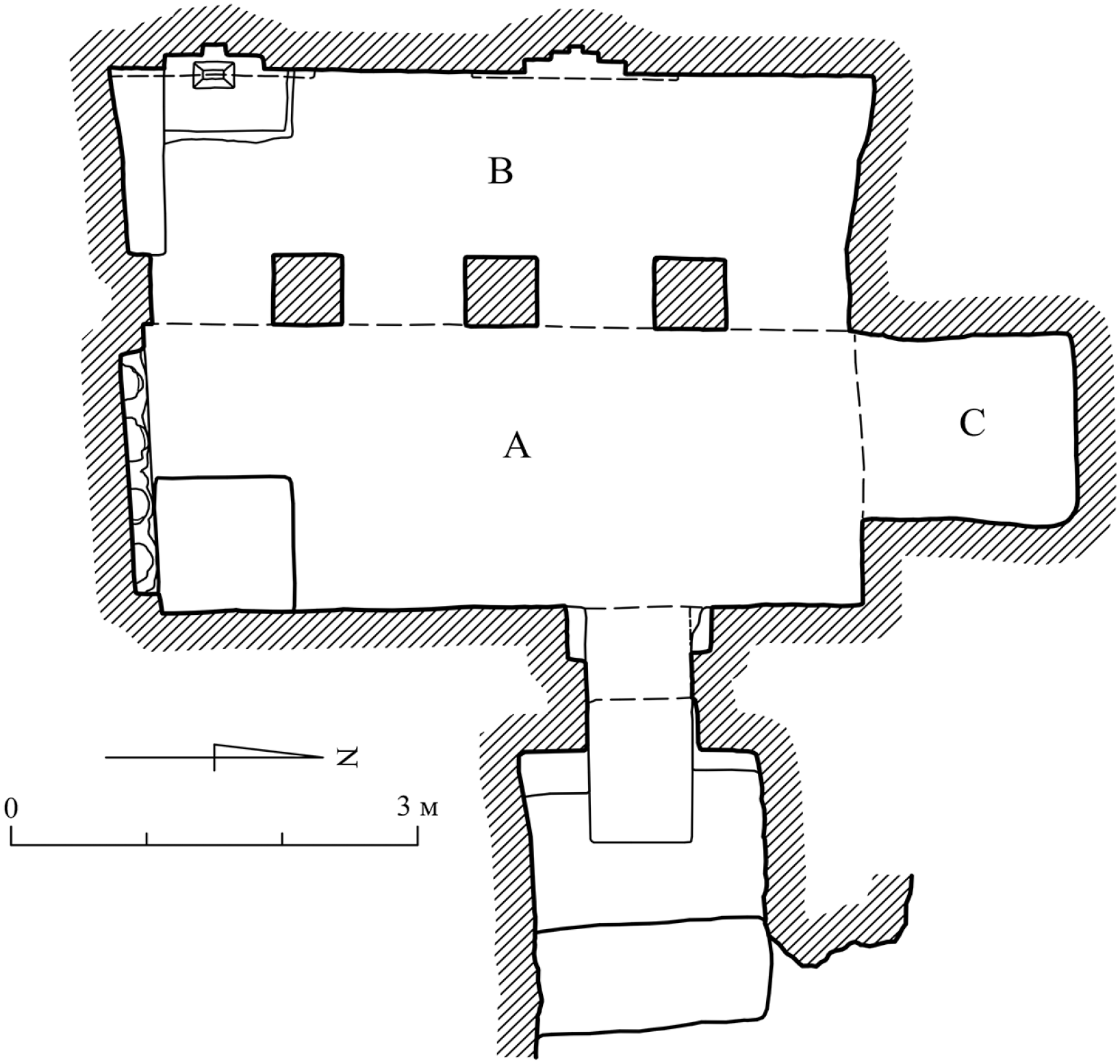
Ground plan of tomb GE 89 (drawing: S. Vetokhov).
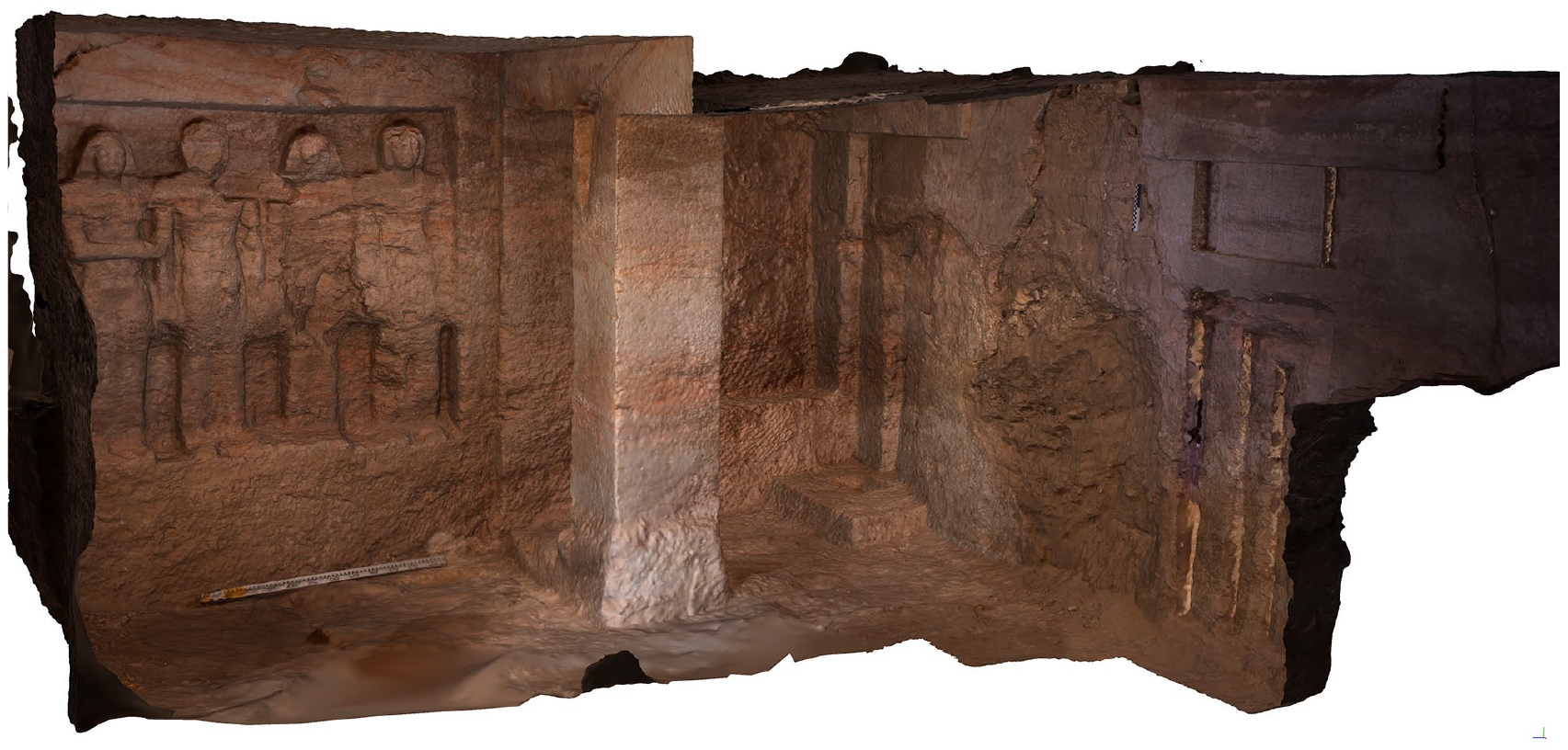
Orthophoto of tomb GE 89 (orthophoto: A. Vorobiev).
A rock-cut construction forms the west part of room A, as well as passages to both rooms. The northern wall of room A, in all likelihood, was destroyed; at present there is a niche (C) in its place (fig. 4); only the side parts and upper contour of the original wall indicate the former configuration of the northern wall.
On the southern wall of room A (2.17 m along the east–west axis), four rock-cut statues (fig. 6) were found. All figures were on a podium 67–69 cm higher than the floor of offering room A. The niche where the statues were carved is 1.87 m long, 1.67 m tall, and 0.29 m deep.
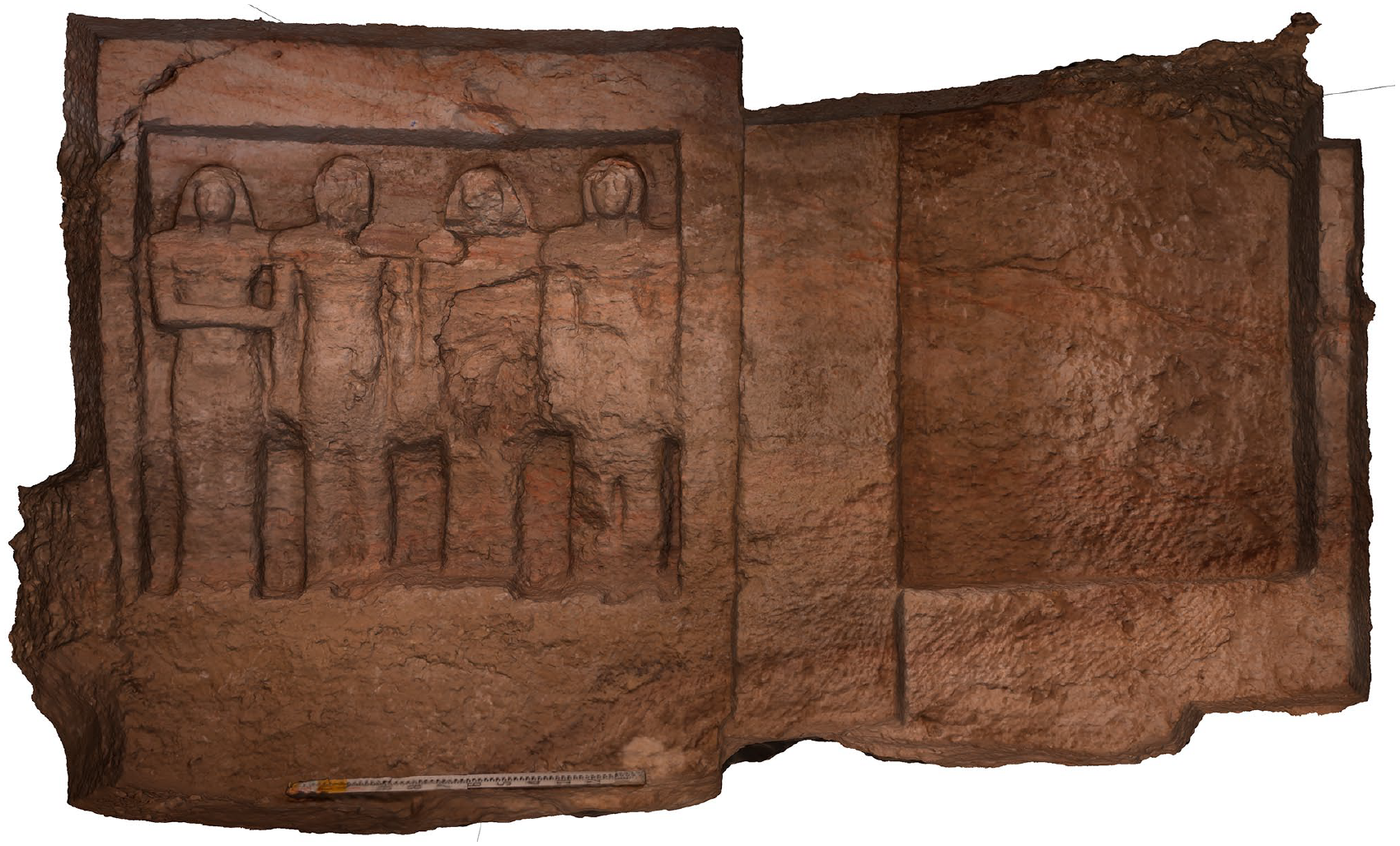
Four rock-cut statues on the south wall of tomb GE 89 (orthophoto: A. Vorobiev).
Rock-cut Statues
From east to west (the viewer’s left to right) are the following figures, standing on the same podium in the same niche:
Statue 1 (female)
Height: 154 cm
Head height from wig to neck: 22 cm
Face: L 15 cm; W 14 cm
Length of wig: 29 cm
Width at shoulder: 40 cm
Width at waist: 29 cm
Torso height: 45 cm
Arm length: 33 cm to the elbow; 27 cm from the elbow
Palm length: 15 cm
Leg length: 78 cm
Dress length: not determined
Niche depth: 29 cm.
Statue 2 (male)
Height: 162 cm
Head height from wig to neck: 24 cm
Face: L 18 cm; W 15 cm
Length of wig: 21 cm (top)
Width at shoulder: 47 cm
Width at chest: 30 cm
Torso height: 44 cm
Arm length: 75 cm
Leg length: 78 cm
Skirt length: c. 35 cm
Distance between the end of the skirt and the legs: c. 56 cm.
There are two more figures to the west of the pair described above, a female with her right hand down and a male with both hands down. Other than this, their posture is difficult to determine due to insufficient preservation.
Statue 3 (female)
Height: 148 cm
Head height from wig to neck: 27 cm
Face: L 20 cm; W 15 cm
Length of wig: 28 cm
Width at shoulder: 44 cm; the left shoulder goes over the right shoulder of her husband
Width at waist: 30 cm
The height of the torso cannot be determined due to a break
Arm length: 72 cm
Legs: damaged; preserved part is 57 cm
Dress length: not determined
Distance between the legs and the end of the skirt: c. 25 cm.
Statue 4 (male)
Height: 159 cm
Head height from wig to neck: 27 cm
Face: L 19 cm; W 15 cm
Length of wig: 22 cm
Width at shoulder: 49 cm
Width at waist: 30 cm
Torso height: 32 cm
Arm length: 74 cm
Leg length: 59 cm
Description of the rock statues
Statue 1: A female figure, whose right arm is bent at the elbow, touching a man’s arm with her palm. The female figure is shorter than the male; she is characterized by a graduated wig, has emphasized female forms, and has preserved facial features. She probably wore a long dress, traces of which are currently not attested.
Statue 2: The next figure (numbered from the viewer’s left to right), a male, represents the tomb owner, the husband of the woman on the viewer’s right. The man is taller than the female figure, which was typical for pair statues.
Statues 3 and 4: The next pair also represents a woman and a man; however, due to the damage, it is impossible to accurately determine the position of the woman’s hands. Most likely, her right hand is lowered, and with her left hand she hugs the man. The female figure is again shorter than the male one.
The figures of the whole composition are distinguished by their placement (women on the viewer’s left), and by the size of the figures: the female figures are shorter than the male ones. Regarding the hands’ positions, for the pair on the viewer’s left, the woman’s palm is on the man’s arm. The right hand of the woman is down, but the position of the left hand cannot be determined due to destruction in the area of the woman’s hand. Presumably it might also be down, to be on the man’s shoulder or above his waist (the latter is less likely).
Neither of the pairs are labelled, but given that the figures hug each other or hold hands, it may be classified as a group statue,representing different members of the family, 2 such as husband and wife. However, due to their faces having been badly preserved, the attribution of the composition to a group statue or pseudo-group statue 3 cannot be decided unambiguously.
Coming to the analysis of the composition, it is useful to consider in detail the elements of composition alongside the classifications proposed for free-standing statues, because the principles developed for the study of free-standing statues are also valid for rock-cut statues.
4
To start with, it is logical to take into consideration the typology proposed by Simpson, regarding the standing statues’ figures. Simpson distinguishes two types: normative placement and non-normative placement:
5
I. Normative placement in pair statues is typified by the pair statue of Menkaure. This arrangement of figures is fixed in the composition of the ‘Mycerinus Dyad’, where the female figure is located on the viewer’s right, with the male figure on the left. In the composition, the palm of the woman’s right hand is visible just above the waist of Menkaure.
6
This posture and arrangement of figures is a figurative manifestation of the love of a wife for her husband, which is equally characteristic of royal statues and statues from private tombs.
7
II. Non-normative placement in standing pair statues is typified by a statue where the woman is on the viewer’s left with the man on the right.
8
The disposition of the male and female figures in GE 89 belongs to type II.
The following analogues can be identified among Old Kingdom free-standing statues: woman with her husband, and woman with her children:
The pair statue from tomb G 2009, dating to the middle of the 5th Dynasty, presents a figure of the tomb owner, Msi, with his wife, Szzḫ, the priestess of Hathor in all her places,who stands with her husband to the viewer’s left and hugs him by the shoulder. Her arm is behind him and is visible just above the waist. 9
Two pair statues, which are now in Hildesheim: one belongs to Npḥ-kȝw and his wife Wȝḥjt dated to the 6th Dynasty or even the 8th Dynasty. 10 The wife’s hand, in the position of embracing her husband, is seen on his back. The second pair statue is damaged; only the male figure’s torso is preserved; it dates to the 6th Dynasty. 11
The same arrangement of the figures, including the position of the hands and the height ratio (the woman is slightly shorter), is attested in the statuary of Nfr-ḥtp’s tomb at Saqqara, from the 5th Dynasty. 12 The lady’s name is 7nttj, but there is no evidence whether she was the mother or the wife of the tomb owner.
The composition of Kȝ.j-pw-ptḥ (Kȝpwptḥ) and his wife ʾIpp: late 5th Dynasty, Giza, Western Necropolis G 4461. The woman is on the viewer’s right, is shorter than the man, and has her right hand just visible above the waist; her left hand touches her husband’s hand. 13
A pair statue of a man and woman, whose names are now illegible, found in the Western Cemetery at Giza, tomb D 201 (Steindorff cemetery). According to Porter and Moss, the tomb owner is Snnw, Inspector of the Great House, Secretary of the Toilet-house; his wife and relatives were also buried there. The statue, now in the University Museum Leipzig, dates to the 5th or 6th Dynasty. 14 This tomb is described in Digital Giza as belonging to Ankhemtjenenet Ineb son of Senenu, who was buried in G 2032. 15
A wooden statue from the Salt collection, whose origin remains unknown, probably had the same position of the man and woman as GE 89: the woman’s right arm is lost, and she hugs the man around his back with her left arm. According to the stylistic features, the statue must be no later than the reign of Unas. 16 Due to the loss of the right hand of the female figure, it is not possible to determine the exact position of the hand, but possibly her palm touches the man’s hand. In terms of height, the female figure is much shorter than the male one, which is the only example among all known compositions.
The location of the female figure on the viewer’s left with her right hand touching the arm of her husband, attested in free-standing paired statues, is also observed in ‘mother and son’ compositions. The following examples serve to illustrate this point:
The family statuary composition from D 23, Giza, belonging to a woman named Ppj with an adult and a child, both bearing the name Rʿ špss. One of them is inscribed as sȝ.s Rʿ špss; the other, with the same name, has a title wʿb nswt, dated to the end of the 5th Dynasty or beginning of the 6th Dynasty. 17 The female figure is on the viewer’s left with her palm touching the husband’s hand. Here the woman’s figure is taller than the figure of the eldest son, whom she hugs by the shoulder. She stands to the left of the male figures, and her right hand, with which she touches the man’s hand, is arranged the same way as in GE 89. Her figure is the central one and it is taller than the others. Rössler-Köhler suggested that this composition is a ‘pseudo-group’ (depicting the same people twice in the same composition). 18 Eaton-Krauss, by contrast, excluded this group from the pseudo-group type. In her opinion, the men are the husband and son of Ppj, which is confirmed by their gestures. 19 These arguments seem logical.
The same arrangement of figures is attested in another family statuary – a woman to the viewer’s left stands with a man, and a child is to her left. She is almost the same height as the male figure, whose arm her right hand is touching. The man is represented with a walking left leg, and the woman’s left leg is slightly advanced forward. Origin unknown, dated to the 5th Dynasty. 20
The position of the woman (on the viewer’s left) with her right hand touching her husband’s arm is attested in the statuary composition found in the serdab of mastaba D 12 at Giza, dated to the 6th Dynasty. The composition represents the tomb owner
This arrangement of the figures and the position of the woman’s hand, bent at the elbow and touching the man’s arm with her palm, is also observed among seated statuary, 22 which once again testifies to the uniform principles for rendering images in different types of sculptural compositions. Among rock-cut statues, a similar composition is found in the tomb of Nikaiankh I 23 in Tehna, dating to the early 5th Dynasty. 24 The position of a woman touching her husband with her hand bent at the elbow is similar, but the female figure is on the viewer’s right. 25
Concerning the semantics of the composition including four statues on the southern wall of tomb GE 89, it should be noted that we have here two paired groups in non-identical positions, but arranged on the same podium in a row one after another at an equal distance. In this regard, the question arises: who do these figures personify? Due to the lack of inscriptions, this problem can be considered in two ways: these could be the statues of a family (kinship of one or two generations), whose members were buried in GE 89, or this is a so-called pseudo-group, whose members are each depicted twice in the same composition in the form of a statue, personifying their ka, on the same podium. 26 With regard to this composition, both solutions are acceptable due to the lack of definite data regarding the burials (for more details, see below), and in the absence of exact data on the hands’ positions on statues 3 and 4 – whether they are hugging each other or simply represent two standing figures. In the latter case, one could assume the figures represent the ka (pseudo-group).
Rock-cut statues are also recorded elsewhere in the Russian concession – for example, in the tomb of Perseneb (Pr(i)-snb), where they are located on the southern wall of the antechamber, which adjoins the burial (the bottom of the shaft of which was broken probably due to natural reasons). This room has a passage to another room through pillars. In that room, traces of destroyed statues were found along the western and northern walls. 27 The number of statues exceeds the number of burials found in the tomb. Accordingly, another explanation can be assumed, that the ‘additional’ statues were semantically equivalent to a cenotaph – i.e. supposed but not actually buried here.
Six rock-cut statues are preserved on the southern wall of the tomb of Kakherptah (Kȝ-ḫr-ptḥ – G 7721, see n. 1): three figures are pictured holding hands, and the rest are shown with their hands down. It is impossible to determine the nature of their relationship with the tomb owner due to the lack of inscriptions. The tomb of Kȝ-ḫr-ptḥ is located within the Russian concession, but has not yet been fully excavated, which also makes it impossible to compare the burials and the statues.
Rooms A and B of tomb GE 89 have been partly excavated during this season. The size of room A is: length 5.38 m; width 1.72 m; height 2.60 m. The dimensions of room B are: length 5.70 m; width 1.41 m; height 2.33 m. There is a niche carved on the southern wall of this room, and a podium preserved in front of it along the whole length. The length of this space is 1.72 m, width 1.41 m, height 0.50 m.
The contours of false doors were detected on the western wall of room B. The contours of the shaft’s mouth were found in front of FD 2 on the floor of the tomb. The false door FD 1 (the southern one) remained unfinished (fig. 7); only its outline exists. Its estimated size is: height 2.24 m, architrave size 0.33 m by 1.41 m. The size of the outer panels is 0.32 by 1.90 m. The lower architrave is 75 by 7 cm. The inner panel of the false door is 0.29 by 1.35 cm. The internal closed niche is 1.22 by 1.55 m, and 0.95 m. thick.
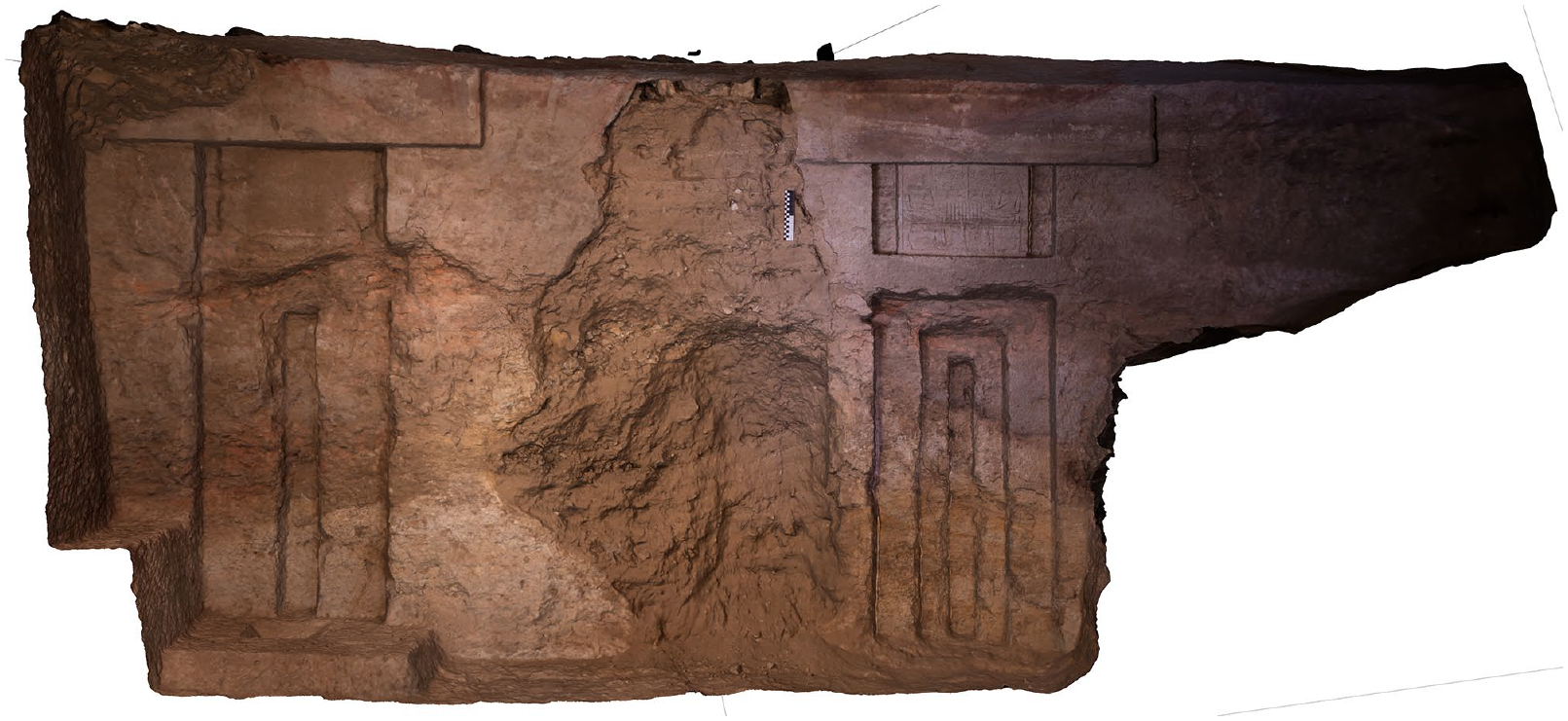
False doors on the western wall of room B (orthophoto: A. Vorobiev).
The podium was cut in front of this false door, its size: length 89 cm; width 54 cm; height 16.5 cm. A small libation basin measuring 30.5 cm by 20 cm, and 5 cm deep, was cut inside this podium. The same basin was attested in front of the false door of Herenka (Ḥrnkȝ) in the tomb of Khafraankh (Ḥʿj.f-rʿ ʿnḥ – GE 7948). 28
Offering Slab
The second false door (FD 2), of the same type and overall dimensions, was carved at a distance of 70 cm to the north of the first false door. The false door has only relief contours and a well-preserved offering slab. The size of the offering slab is 38 by 74.5 cm, and 6.5 cm thick (fig. 8). A man (on the viewer’s left) and a woman (on the viewer’s right) sitting opposite each other in front of an offering table are represented on the offering slab of this door. The right hand of each person is pressed to their chest, and the left one lies on the knees.
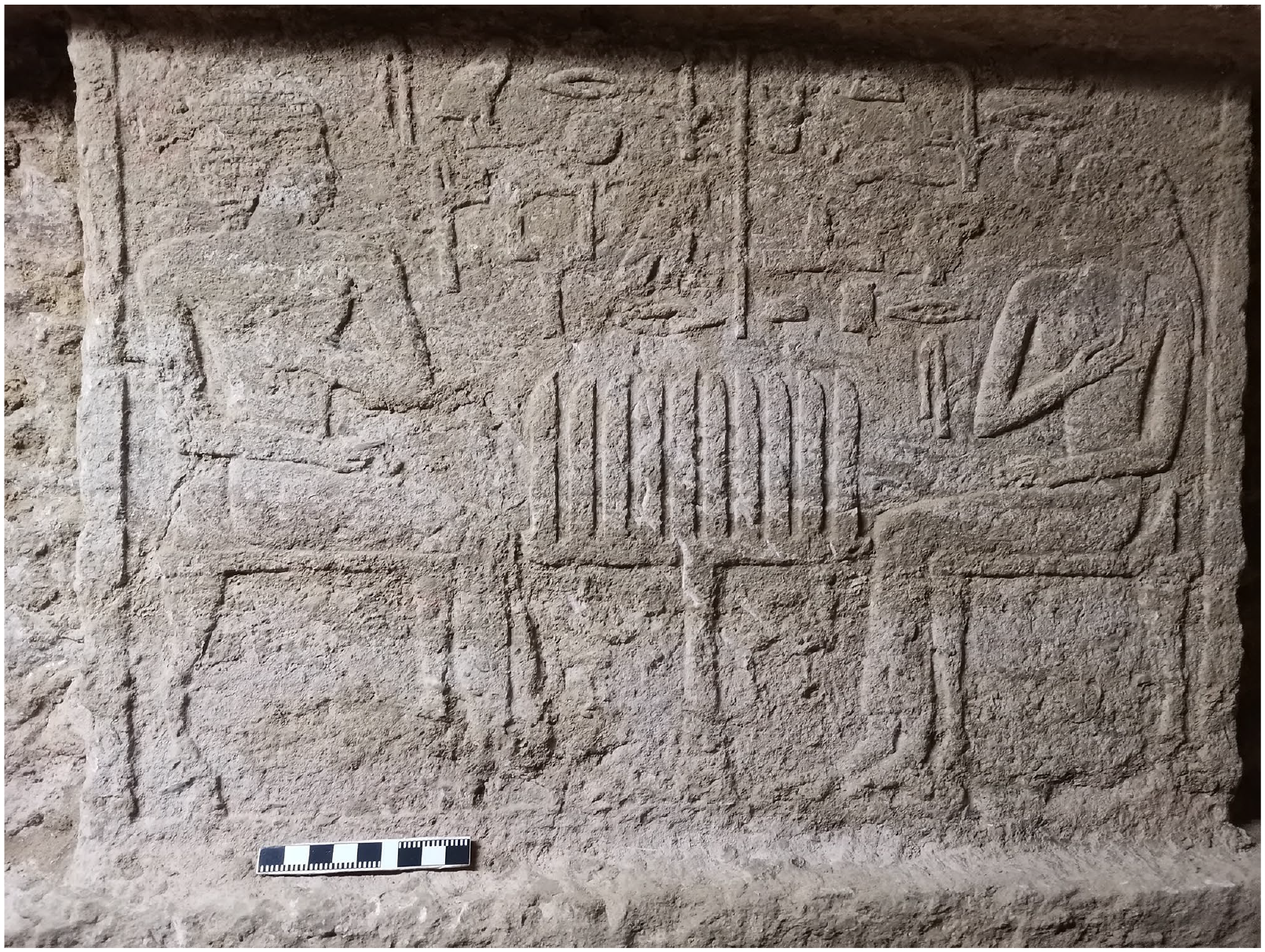
Offering slab over the second false door of the south wall of tomb GE 89 (photo: A. Volovich).
This slab over the false door presents a source of information when trying to determine the iconographic criteria for dating. This problem has been studied in a number of works; 29 the authors’conclusions will be taken into account in this article only in cases where the relevant scenes – tomb owner with his wife seated at an offering table – are considered.
This composition, as a small scene above the false door, was attested at Giza in the tombs of Nỉ-ḥtp-ḫnmw, Šsm-nfr I, Šsȝt-ḥtp, and Nswt-nfr. 30 In these cases, one may see the similarity of the location and the form of the chair with a cushion behind the back. In the case of the tomb of Nswt-nfr, one may speak about the similarity of the shape and positions of the loaves on the table. The pose and arrangement of the hands of the figures of GE 89 (hands pressed to the chest) differ from these examples, which belong to the first half of the 5th Dynasty. 31 The tabletop, which is located and fixed directly on the leg of the offering table, may be seen in all representations of Old Kingdom tombs. 32 The сhair seat, shown on the offering slab, ends with a lotus bud, which is clearly visible on the woman’s seat. The woman is wearing a long dress; the man is wearing a skirt. There is also a well-preserved cushion on the seat. The legs of the seat end in hooves, which are placed on a trapezoidal elevation.
The selection of many elements of iconography as a dating feature is perhaps the only thing recognized by Seidlmayer as having merit in the work of Сherpion. Criticizing Cherpion’s method, Seidlmayer notes a large number of inconsistencies in the dating of cartouches and basiliphoric names. 33 Furthermore, according to Swinton, this leg style was common until the late 5th Dynasty and not seen after Pepi I. 34
On the chair pictured in GE 89, small cushions that are pointed at the top are visible. According to Cherpion, such examples existed in the 4th Dynasty but were also attested in the 5th Dynasty.According to Swinton, the pointed cushion with the bull’s legs ending in hooves is dated to IV.2–4 – V.9. 35
The loaves, which are arranged around a central axis with their straight edges facing inwards on the slab from GE 89, may be compared with those from the tomb of Nswt-nfr;such an element has a broad dating of III.2 – VI.2EL. 36
The level of the table surface below the level of the man’s knee is attested in the late 4th Dynasty; this depiction tapers off in the 6th Dynasty; the pedestal as a single shaft is dated to IV.2 – VI.E–M. 37 The surface of the table, which rests on a separate pedestal, is dated to IV.2 – V.8–9. 38
The offering slab in GE 89 presents the half loaves in Swinton’s orientation 1: the half loaves are arranged around a central axis with their straight edges facing inward; this is dated to III.2 – VI.2E–L. 39
The following text is readable on the slab: 40
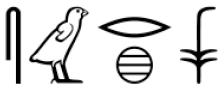
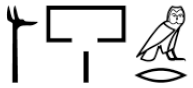
rḫ nswt ỉmy-rȝ pr Wsr
Royal acquaintance, overseer of the house/estate, the steward (majordomo), Weser.
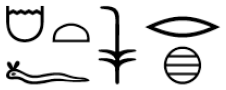
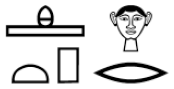

ḥmt.f rḫ(.t) nswt Ḥtp-ḥr.s
His wife, a royal acquaintance, Hetepheres.
The name Weser with the semantic meaning ‘strong’ was known both as a standalone name and as an element in complex compound names. It is attested in the Old Kingdom tombs at Giza and Saqqara in this palaeographic version of the inscription and arrangement of signs.
41
Such a style is recorded on the intrusive stela of Weser G 2353Y at Giza, and in four cases it is written in the same way:  . According to iconographic and epigraphic criteria, the stela dates to the end of the 6th Dynasty or even later.
42
In the other case, on the false door of Weser at Saqqara, this name is inscribed in various versions:
. According to iconographic and epigraphic criteria, the stela dates to the end of the 6th Dynasty or even later.
42
In the other case, on the false door of Weser at Saqqara, this name is inscribed in various versions:  ,
, 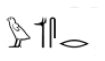 , or
, or  .
43
The instability of the spelling of this name within the same monument does not allow for its use as a criterion for dating.
.
43
The instability of the spelling of this name within the same monument does not allow for its use as a criterion for dating.
The name Hetepheres is found at various sites. 44 It is recorded in the Mersankh mastaba in Giza 45 in the same type of inscription, with the inversion of the s. The same name was given to one of the women from the procession in the tomb of Kahersetef (Kȝḥrstf), dated to the 5th Dynasty, 46 one of the daughters of Meritites (4th Dynasty). 47 In the same spelling, the name Hetepheres is found in the inscription on a fragment from the tomb of Kaitep (Kȝ-(ỉ)-tp). 48
As for the position of ỉmy-rȝ pr, these individuals were closely associated with funeral services for the deceased king. Their tombs in residential necropoleis are attested only up to the 6th Dynasty. 49
The ḫȝ-list of offerings, which is placed here beneath the offering table, may be tentatively attributed to IV.1–2 – VI.2L–3. 50 Due to the poor preservation of the signs, it is difficult to restore the hieroglyphs; one may assume hieroglyphs of a beer vessel and bread in the righthand part, under which there are ‘hundred’ signs, such as in the tomb of, for example, Seshathotep (Giza), which Kanawati dates to the time of Sahure, 51 or in Tehna (Nikauankh I, Nikauankh II). 52
The pointed cushion shape behind Weser and Hetepheres 53 on a hoof-legged chair, where the tomb owner and his wife sit, is attested in tombs from the 4th to the 6th Dynasties. The form of Weser’s and Hetepheres’ pillows corresponds to Swinton’s criterion 88. 54
Interpretation
The similarity of the layout of GE 89 and the tomb of Kakherptah, as well as its location, allow us to tentatively date the construction of tomb GE 89 to no earlier than the 5th Dynasty. One of the proposed dating options for this tomb is the reign of Djedkara-Unis; 55 a more or less similar date has been proposed for the Nesemnau tomb LG 64, which Thuault proposed a date of the end of the 5th Dynasty – and more precisely, the reign of Nyuserre. 56
Tomb GE 89, constructed in the Old Kingdom, was reused in the Late Period, as was evidenced by ceramic material from the filling of the rooms studied by S. E. Malykh with reference to the special literature. She concluded that late ceramic samples dominate in the stratified filling of room A. They are mainly represented by fragments of large thick-walled, oblong, wide-mouthed jugs with two handles and a rounded bottom, which have analogies in the Saqqara ceramic samples and are dated by researchers to the end of the sixth to the fifth centuries BC. 57 A small jug with a schematic decoration of the Bes face (fig. 9) was also found here. Vessels similar in shape and design are dated to the end of the fifth or the first quarter of the fourth centuries BC. 58
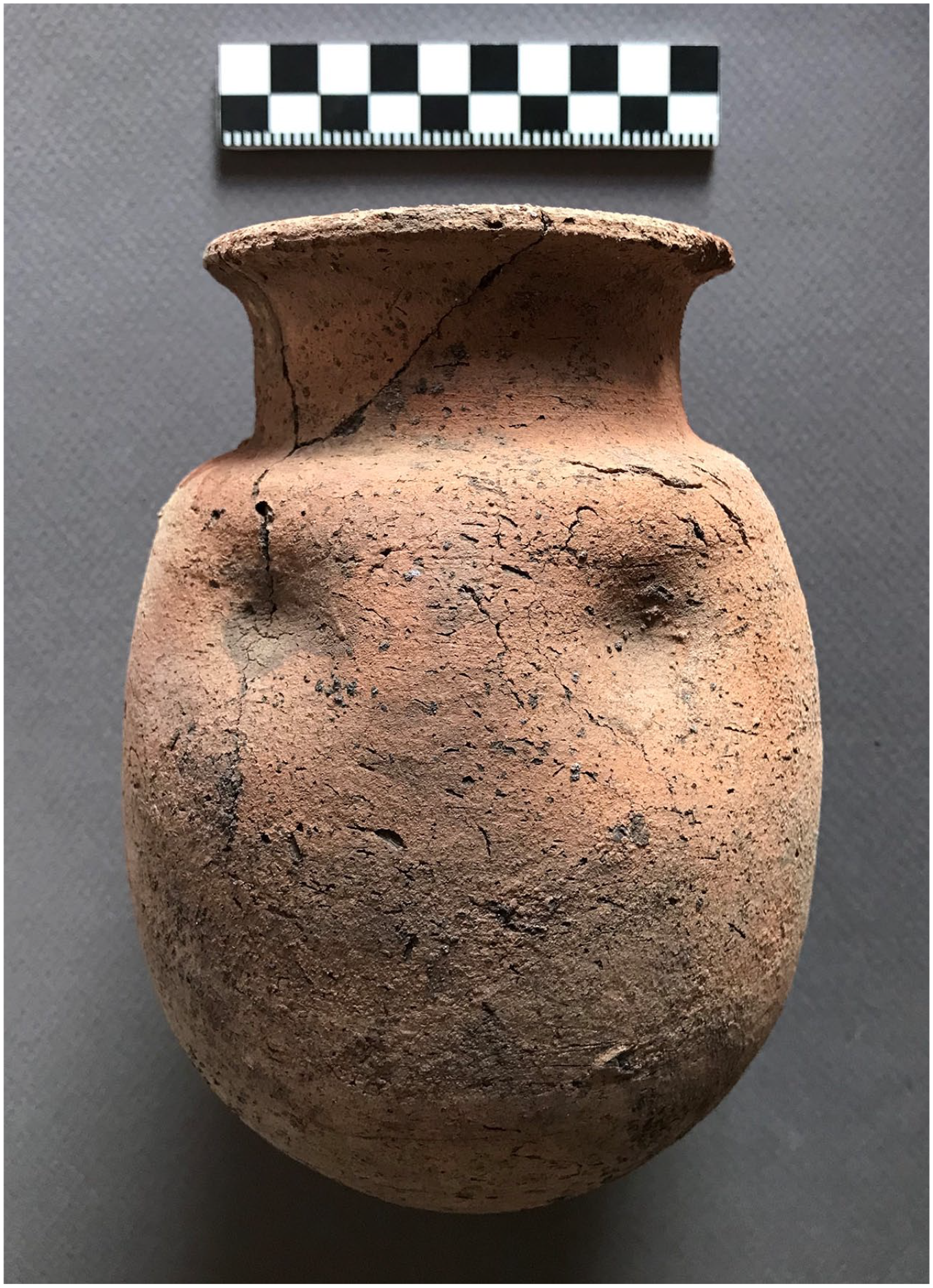
Jug with a schematic decoration of the Bes face (photo: S. Malykh).
In addition, imported ceramics were found in room A – fragments of a black-glazed hydrisk (fig. 10) and of a torpedo-type Phoenician amphora. According to the composition of the clay, the hydrisk was an import from Attica of the fifth to fourth centuries BC, and the torpedo amphora’s clay is characteristic of the eastern Mediterranean; this variety is typical mainly in the second half of the fifth to the early fourth century BC. These samples are associated with secondary reuse of tomb GE 89, and, therefore, indicate the time of such burials at the end of the fifth or beginning of the fourth century BC.
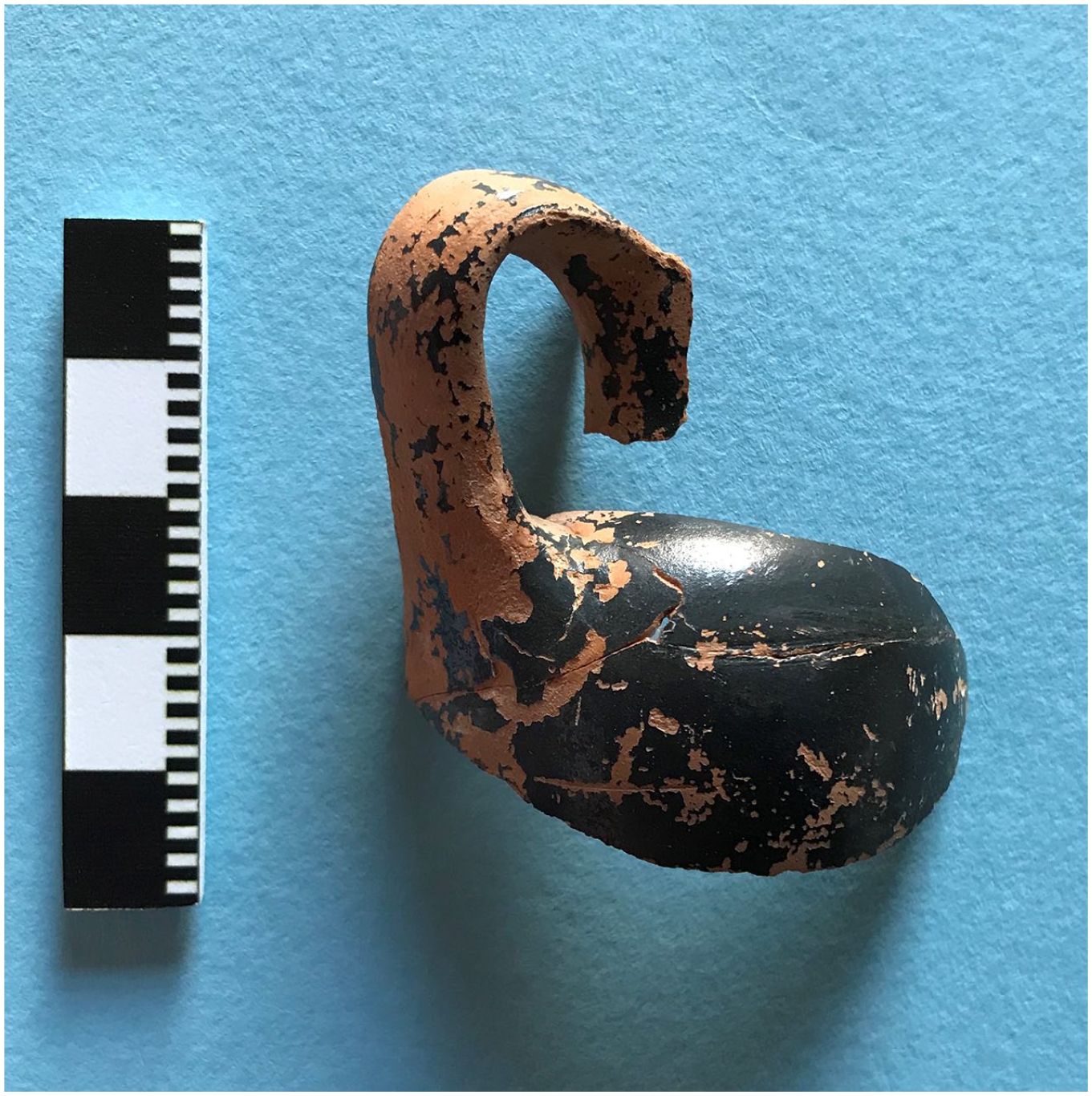
The fragment of a black-glazed hydrisk (photo: S. Malykh).
Conclusion
The material revealed during the excavation shows that no inhumations in tomb GE 89 that can be attributed to the time of its construction in the Old Kingdom were found during the 2020 and 2021 seasons. One detected shaft was unfinished. The space intended for the burial chamber was cut very roughly, most likely due to the too-hard rock layer. The chapel was also not finished, as is evidenced by the incomplete relief of the false doors.
The names of two personages on the offering slab of the second false door (FD 2) allow us to conclude that the tomb was created for Weser and Hetepheres.
The analysis of iconographic features does not provide reliable grounds for attribution to a particular dynasty. Nevertheless, the location of the tomb, in relation to the tomb of Kakherptah, the similarity of the layout, and the presence of rock statues characteristic of the 5th Dynasty, suggest that the tomb probably did not have a large chronological gap from the tomb of Kakherptah – so it may conditionally be dated to the first half of the 5th Dynasty.
The composition of the rock statues on the south wall of room A cannot be accurately classified; however, in all likelihood, a male and female couple embodied the ka of those for whom this tomb was created. The stylistic features of this composition make it possible to attribute it to the non-normative type of pair statues. In general, the composition of four figures located on the same wall and on the same podium – two of which can be attributed to a wife–husband couple, while the identification of the other two figures remains in question – have no analogues among the rock-cut statues: this is the only known example thus far.
Footnotes
Funding
The author did not receive funding for this project.
1.
Published by Kendall 1981: 104–114; Digital Giza, Eastern Cemetery G 7122 < > (accessed 12.10.2022).
3.
On pseudo-group statues see: Eaton-Krauss 1995; .
6.
Fay 1998: 164–166, fig. 11; : 146–147, fig. 2.9.
9.
Smith 1949: 69, pl. 24 b; PM III: 67, G 2009, Cairo N 38670; Simpson 2002: 109; Digital Giza <> (accessed 12.10.2022).
10.
Martin-Pardey 1978: 4.58–4.64, Hildesheim N 2972; Junker 1950: 38–39, fig. 13; : 109.
11.
Martin-Pardey 1978: 4.119–4.125, Hildesheim N 3186; Junker 1951: table 15g head; Simpson 2002: 109; Digital Giza <http://giza.fas.harvard.edu/ancientpeople/388/full/> (accessed 12.10.2022), standing pair statueNpḥ-kȝw and Wȝḥjt (: 39 reading the name of the tomb owner Pḥ-n-kȝw).
12.
Borchardt 1911: 70–71, pl. 20 (89); Shoukry 1951: 74–75, fig. 18; : 109.
13.
16.
Harvey 1995: 116, B10, pl. 74d– f; Ziegler 1997: cat. 45, Louvre N 2293; : 108.
17.
Martin-Pardey 1977: 1.39–1.46, Hildesheim N 17; Digital Giza <> accessed 11.10.2024), D 23, RPM_17_025.
20.
Borchardt 1911: 94–95, pl. 28 (N 125); Simpson 2002: 109, .
21.
Martin-Pardey 1977: 1.30–1.38, Hildesheim N 16. I adhere to the reading of the names given in this publication. For another reading, see: Digital Giza <>, RPM_16.
23.
Thompson 2014: рls 15b, 25a; : 132, fig. 14, Tomb 13, east wall: unidentified couple (Nikaiankh I and his wife?).
25.
The same position of the woman’s hand is attested in the tomb G 5280, butthe woman is on the viewer’s right. According to the surviving inscription, Pḥ-n-ptḥ and his mother ʾImn-ḏfȝ.s are depicted here. The heads of both figures have been lost; however, according to the preserved torso, it seems that the male figure is slightly taller than the female one. While the composition is well preserved, there are no traces of a woman’s hand either on the shoulder or on the torso. Dating: the middle of the 5th Dynasty, probably Nyuserre (Jaroš-Deckert and Rogge 1993: ÄS 7502; Digital Giza <http://giza.fas.harvard.edu/ancientpeople/388/full>), KHM_ÄS_7502; : 266).
27.
Kormysheva, et al. 2018: pls VI, XIII, XIV.
28.
Kormysheva, et al. 2010: pls 2, 21, 29.
29.
30.
Abdel-Moneim Abu Bakr 1953: 11, fig. 10; Harpur 1987: 79; Kanawati 2001: pl. 42; : pl. 16–18.
31.
Harpur 1987: 74, 79; Kanawati 2001: 54–55; : 16–18, 37.
32.
Сherpion 1989: 51, criterion 24, fig. 37b; Baud 1998: 65 (for critical comments regarding this criterion, see : 3).
33.
Seidlmayer 1997: 37–38, also 21–22, 26; on the same point, see also : 32–34, 37–39.
35.
Cherpion 1989: 29, fig. 5, criterion 4; : 93, fig. 70, criterion 88. Following the system established by Harpur (1987), Swinton used Roman numerals to refer to the dynasty and Arabic numerals for the king (numbered within each dynasty, and letters E meaning early in reign; M, middle years of reign; and L, later years of reign) (Swinton 2014: 13).
39.
40.
The names and titles of the owners of the tomb are rendered here in the order they should be in, without regard to their location in situ: the name of the deceased comes last and the two titles are written vertically, one above the other.
53.
Cherpion 1989: 29, fig. 5, criterion 4, pls 38, 39, 46; Baud 1998: 59 (critical comments on this criterion); : 92, criterion 86, fig. 68. Swinton notes that both the pointed pillow and other forms of pillows, if not thrown over the back of the bench, belong to Dynasty IV.2 – VI 2L–3.
54.
: 93, criterion 88, fig. 70 with the reference to Lashien 2013, who dates the tomb to the period between Neferefra and Niuserra. The pillow of such a type is represented in the tombs cited by Swinton 2014: pls 49, 50a, 52, 53, 60a, 61a, 63a, 68b, 69a, 74b, 75b.