




Abstract
Although women represent a small proportion of the incarcerated population globally, their rate of incarceration in the United States has increased dramatically over the past four decades, outpacing that of men. As carceral trends return to pre-COVID-19 pandemic levels, jail populations continue to rise, with most incarcerated women being mothers of young children. Yet, research on motherhood behind bars has largely focused on prisons rather than jails. This study explores the mothering experiences of women incarcerated in two U.S. Midwestern jails, including both pretrial detainees and sentenced individuals. Using qualitative data from in-depth interviews with jailed mothers, the analysis examines their parenting experiences before and during incarceration. Findings reveal that many women had limited contact with their children prior to incarceration, reflecting intersecting social and structural barriers that shape mothering within the criminal legal system. The study concludes with policy implications for promoting non-custodial alternatives, supporting incarcerated mothers, and strengthening family relationships.
Plain Language Summary
Introduction: Although women represent a small proportion of the incarcerated population globally, their rate of incarceration in the United States has increased dramatically over the past four decades, outpacing that of men. Most women incarcerated in the United States are are mothers who are detained or incarcerated in jails. Most research on parental incarceration, however, is focused on mothers in prison. Aim: This study explores the mothering experiences of women in two U.S. Midwestern jails, including both pretrial detainees and sentenced individuals. Method: The data for the study include transcripts of in-depth interviews with jailed mothers and include information on their parenting experiences before and during incarceration. Results: Findings reveal that many women had limited contact with their children prior to incarceration. The study concludes with policy implications for promoting non-custodial alternatives, supporting incarcerated mothers, and strengthening family relationships.
Introduction
Globally, the incarcerated population of women has grown over the past two decades, outpacing the rate of men (Fair & Walmsley, 2024a; Penal Reform International, 2025). Much of the global population of women behind bars is due to the over-use of pre-trial detention or remand custody—meaning that many incarcerated women have not been convicted of a criminal offense. Nearly a third of incarcerated women worldwide are in the United States, with most of these incarcerations happening in jails (Penal Reform International, 2025; Prison Policy Initiative, 2025). Though most women behind bars are mothers to young children, the majority of research has focused on the experiences of mothers in prison. Despite the prevalence of remand or pre-trial detention worldwide, we know very little about mothers’ experiences under these circumstances. Even in the United States, with its burgeoning jail populations, most research focuses on men and women in prison.
Research that focuses on incarceration and motherhood discusses the prevalence of having minor children among incarcerated women (Cunningham Stringer, 2020; Easterling et al., 2018; Koons-Witt et al., 2021; Sapkota et al., 2022), but we know very little about the parental relationships of women being pre-trial detained or serving short sentences of detention. This study examines the mothering experiences of women in two U.S. jails. Using in-depth interviews, the study provides insight into mothers’ perceptions of their relationships with their children before and during their jail incarceration, the impact of their imprisonment and involvement in the criminal legal system on their children’s lives, and their plans for returning home to their communities and families after their release from jail.
Literature Review
International Guidelines on Custody and Detention
Although international standards for incarcerated persons have existed since the 1950s (United Nations Standard Rules for the Treatment of Prisoners, renamed in 2015 as the “Nelson Mandela Rules”), it was not until 2010 that guidelines were established specifically for women (UNGA, 2016). The United Nations Rules for the Treatment of Women Prisoners and Non-custodial Measures for Women Offenders, also known as the Bangkok Rules, were adopted by the United Nations General Assembly in 2010 and are the first international guidelines to address the specific needs of women in the criminal justice system and the needs of their children. In total, there are 70 “Bangkok Rules” that cover a wide array of circumstances to meet the specific needs of women, provide humane, gender-sensitive treatment, and reduce the imprisonment of women (Cots Fernandez & Nougier, 2021; Penal Reform International, 2021). Though supported universally by the United Nations, many countries fail to implement these standards, resulting in ongoing abuse, overcrowding, and neglect of women’s physical and mental health needs (Van Hout et al., 2021). Given that most incarcerated women have experienced trauma, these failures worsen their mental health and reflect systemic disregard for international protections (Cobbina-Dungy, 2022; Pringer & Wagner, 2020). Ultimately, global incarceration practices are premised on and reinforce gender inequalities (Barberet, 2014).
In 2025, the UN Model Strategies on Reducing Reoffending, also known as the “Kyoto Model Strategies,” were adopted by consensus at the 34th Session of the Commission on Crime Prevention and Criminal Justice. Consistent with the “Nelson Mandela Rules” and “the Bangkok Rules,” the “Kyoto Model Strategies” also promote the effective use of non-custodial measures (UNODC, 2025). Many of the approaches outlined are gender-sensitive and call for considering the unique situations of women who are pregnant, those who are mothers to dependent children, and individuals who are primary care providers. Despite the collective stance in international guidelines supporting non-custodial measures, the use of incarceration—including that of women—continues to grow worldwide, as does the growth of pre-trial or remand detention.
Women’s Carceral Trends
Globally, the prison population is estimated between 10.99 and 11.5 million, rebounding after a temporary decline during the COVID-19 pandemic (Fair & Walmsley, 2024b; Minton & Zeng, 2021; Penal Reform International, 2025). Despite the brief drop, longstanding disparities persist post-pandemic, including the overrepresentation of people of color and the disproportionate rate of growth of women in carceral systems (Kang-Brown et al., 2021). Though women make up less than 7% (6.8%) of the global prison population, the global number of incarcerated women has surged between the years 2000 and 2024, with women’s imprisonment growth at 57% since 2000, outpacing that of men (22%) (Fair & Walmsley, 2024a).
The World Female Imprisonment List, published by the International Centre for Prison Studies, indicates that more than 733,000 women are detained (pre-trial, remand) or incarcerated (post-conviction) globally (Fair & Walmsley, 2024b). The Prison Policy Initiative reports that approximately 200,000 women are incarcerated in the United States, the majority of whom are in local jails (Kajstura & Sawyer, 2024; Prison Policy Initiative, 2025). Although the United States prison population is declining, women’s incarceration in the country remains at nearly historic high levels (Widra & Kajstura, 2025). Women are typically incarcerated for nonviolent offenses, and most have histories of victimization and mental health issues (Cobbina-Dungy, 2022; Verona et al., 2016). Carceral institutions, despite lacking proper mental health resources, increasingly house such individuals. Racial disparities remain stark: in 2020, 48% of jail inmates were white, 25% Black, and 15% Hispanic—disproportionate to national demographics (Minton & Zeng, 2021; U.S. Census Bureau, 2021). These patterns reflect structural inequalities and gendered, racialized punishment systems (Garcia-Hallett, 2019), disproportionately affecting young adults—particularly mothers—many of whom are incarcerated in rural jails where rates are highest (Kang-Brown et al., 2021; Minton & Zeng, 2021).
Incarcerated Mothers and Their Children
Most incarcerated women worldwide are mothers (Barberet, 2014; Cobbina-Dungy, 2022; Garcia-Hallet, 2022). Research consistently indicates that separation from their children is among incarcerated mothers’ greatest concerns; women’s separation from their children causes stress, anxiety, and guilt. The disruption and harm posed by parental incarceration is well documented in research published from the 1970s onward; children of incarcerated parents have higher incidences of problems at school, sleep disruptions, depression, and anxiety (Davis & Shlafer, 2017; Tadros et al., 2021). Many children of incarcerated parents have lives that are characterized by multiple instabilities and chaos across their lifetimes; consistent with their parents’ childhood experiences, children’s trauma may be a byproduct of living with family members and guardians with substance use issues and facing housing instabilities. Parental incarceration amplifies these existing vulnerabilities and adds to them fear for their parents’ safety and new living arrangements with care providers, many of whom they have had little contact.
Worldwide, most scholarship examining women’s incarceration and the impact on families does not distinguish between prison or jail (Turney & Conner, 2019). When we look closely, however, the overwhelming majority centers on women in prisons (see e.g., Garcia-Hallet, 2022; Gurusami, 2019; Maedzenge & Beichner-Thomas, 2024; Masekoameng et al., 2023; Morgan & Leeson, 2023; Ondeng et al., 2020; Parry, 2021; Sasaki et al., 2022; Williams et al., 2020). We know very little about the experiences of women and their children when the detention takes place in a jail or remand prison. In the United States, where women’s rising incarceration is well documented (Fair & Walmsley, 2024a), growth is more pronounced when we examine jail populations and trends over time (Heimer et al., 2023). Despite the unparalleled growth of women in U.S. jails, we know very little about the situation of mothers in jail. Though some recent research highlights the unique consequences that jail produces for mothers and their families (see e.g., Broidy & Siegrist, 2023; Leverentz, 2018; Rodda & Beichner, 2017; Siegrist & Broidy, 2025; Turney & Conner, 2019), the overall lack of published scholarship on mothers in U.S. jails is a gap that the current study seeks to fill.
Current Study
This study employs a pathways framework to examine the intersections of identity and the factors that lead women, particularly mothers, into the criminal legal system. Women’s pathways into justice are shaped by gender-specific patterns of trauma and disadvantage that are very different from those of men (Daly, 1992). Experiences like childhood adversity, intimate partner violence, victimization, mental health struggles, and substance use often combine with structural inequities that cause many women to have repeated interactions with the system (Bloom et al., 2003; Salisbury & Van Voorhis, 2009). Feminist scholars argue that traditional criminological theories do not fully explain these paths, highlighting instead a pathways approach that situates women’s offending within contexts of survival, coercion, and structural inequality (Daly, 1992; Richie, 2012). Recognizing these gender-specific pathways is essential for guiding the current study as we explore the mothering experiences of women in jail, focusing on their relationships before incarceration, mother-child dynamics during incarceration, and expected parenting roles after release. By emphasizing the experiences of imprisoned mothers, a group that is less studied, this analysis seeks to deepen our understanding of the unique challenges they encounter. The study is guided by the following research questions:
What was the nature of the mother-child relationship prior to incarceration?
How do incarcerated mothers perceive their current relationships with their children while detained?
How do mothers perceive the impact of incarceration on their children, and how do they intend to resume mothering roles following release?
Methods
Sample and Procedures
Data for this study are drawn from a larger project examining the needs of jailed women in two Midwestern U.S. counties. The original study combined qualitative interviews with institutional data to assess the experiences of 32 women in jail. The present analysis, however, focuses on a subset of jailed women who identified as mothers (n = 21), whose ages ranged from 22 to 60 years, with missing data for some (see Table 1). Thirteen were incarcerated in one county jail and eight in another. The sample included both pretrial detainees and sentenced women. All had been previously detained or incarcerated. The number of children among the jailed mothers ranged from one to seven, with the majority being mothers to minor children below the age of 18. Three participants did not mention the ages of their children, but among those who did, 29 of 43 children (approximately 67%) were under 18 years old. Periods of incarceration at the time of interview ranged from 1 to 510 days, with some durations unreported. Table 1 summarizes the available demographic characteristics of the participants.
Demographic Characteristics of the Participants (n = 21).
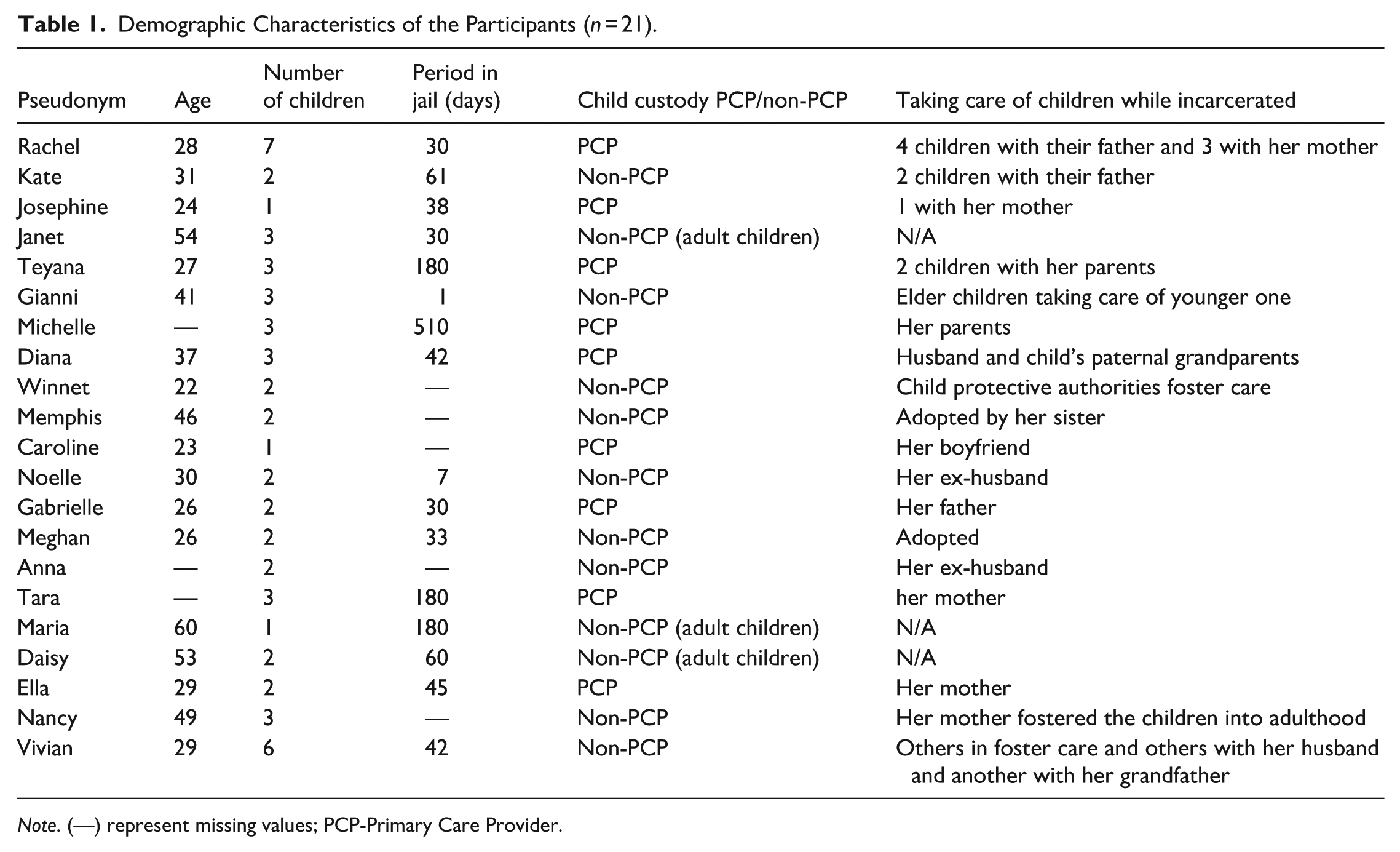
Note. (—) represent missing values; PCP-Primary Care Provider.
Recruitment was conducted through flyers distributed in women’s housing units and an orientation session held by the second author at each detention center, explaining the nature of the study. Women voluntarily signed up for confidential, face-to-face interviews, which were conducted in private rooms to ensure confidentiality. Informed consent was obtained prior to participation. Interviews lasted approximately 2 hr, were audio-recorded with the participant’s permission, and were subsequently transcribed with all identifying information removed. The interview guide addressed a range of topics, including childhood experiences, incarceration, and parenting. For the current study, only transcripts and segments pertaining to mothering and children were analyzed. The final dataset consisted of 21 deidentified transcripts prepared in Microsoft Word and imported into MAXQDA 2022 for analysis. The original project received Institutional Review Board approval.
Analysis Strategy
Data were analyzed using Braun and Clarke’s (2006, 2019) Reflexive Thematic Analysis (TA). A hybrid coding approach was employed, where deductive codes were generated from existing literature on incarceration and mothering, and inductive codes were developed during the analytic process to capture emergent insights. The six phases of TA guided the process: (1) familiarization with the data, (2) generation of codes, (3) construction of initial themes, (4) review of themes, (5) refinement and naming of themes, and (6) writing the analysis.
Coding began with a line-by-line examination of individual responses, followed by the grouping of related codes into broader categories. Themes were developed through iterative review of code sets, with attention to patterns across participants and differences related to age, race, and socioeconomic background. Thematic development emphasized both women’s descriptions of their lived experiences and their subjective interpretations of mothering before and during incarceration, as well as anticipated challenges following release.
Findings
The Mind Map in Figure 1 outlines the connections between main themes, subthemes, and exemplifications that were followed during the coding process. Four main themes were generated from the data: mother-child relationship, perceptions on the relationship with children during incarceration, impact of incarceration, and plans after leaving jail.
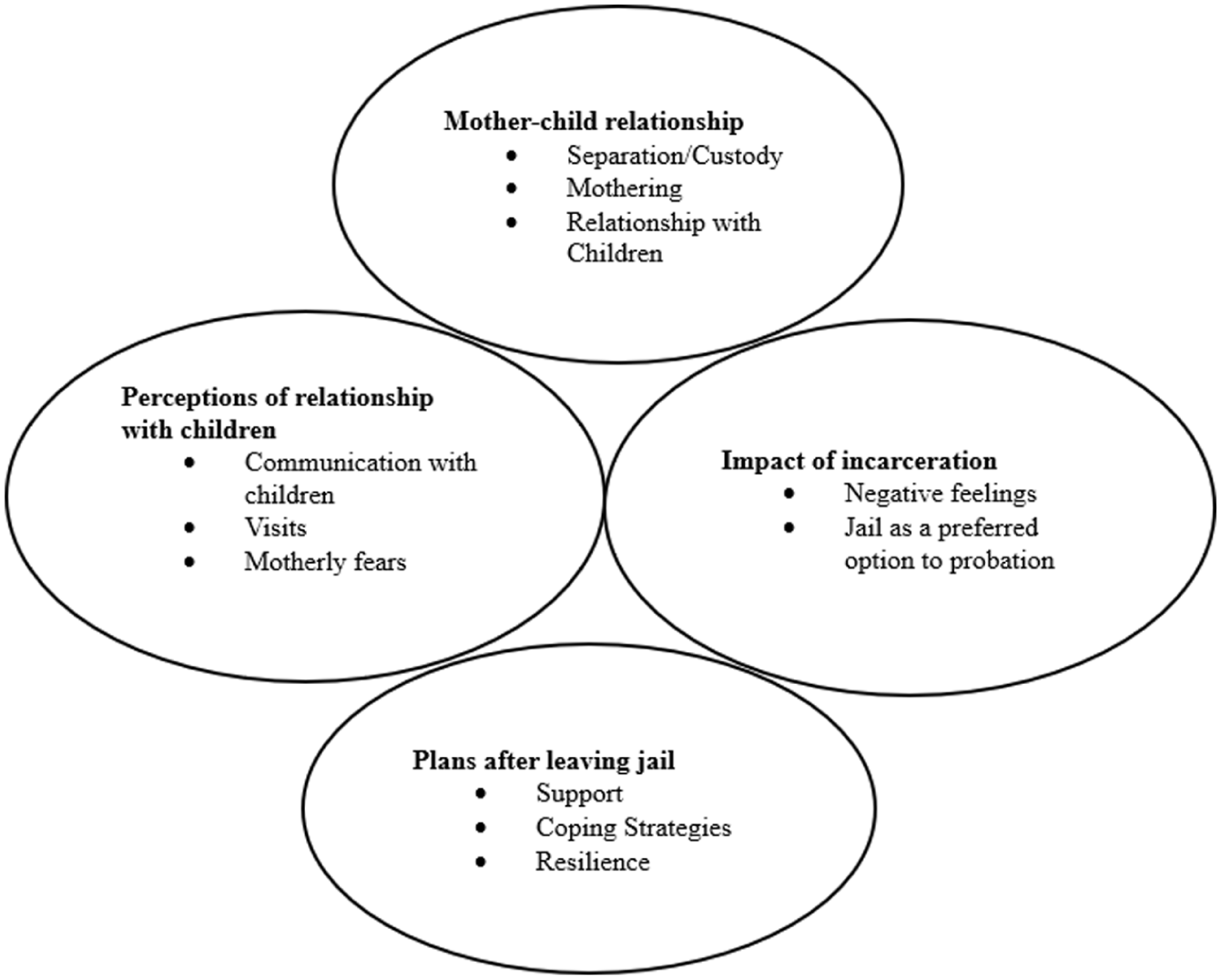
Mind map.
Theme 1: Mother-Child Relationship
Consistent with the qualitative research centered on incarcerated mothers (Fowler et al., 2022; Kennedy et al., 2020; Maedzenge & Beichner-Thomas, 2024), many of the interviewees talked at length about their relationships with their children. Within the theme of mother-child relationships, three prominent trends emerged in the narratives: separation or custody, mothering, and relationships with children.
Notably, 12 of the 21 mothers were not in the daily lives of their children, leading up to their time in jail. This trend, though seemingly a departure from research centered on mothers who were primary care providers to children prior to their arrests, is consistent with research on jailed mothers in the United States who had no previous incarcerations (Broidy & Siegrist, 2023; Siegrist & Broidy, 2025). None of the mothers in Broidy & Siegrist’s study (n = 23), however, had primary custody of their children. Nancy, who had long lost her children and had substance issues, said, “I lost custody of my kids . . . I’ve been coming in and out of jail for the last 20 years, and I’m 49. I have three kids, well, they’re all grown now, but my mom became their foster parent.” Broken marriage, as in the case of Noelle, led to her losing custody of children to her ex-husband, as she shared, “so I ruined my marriage and my kids are gone now, as of last year.” Following intervention from child protection services and being in substance use treatment, Meghan had her child adopted, and she was not in contact with her. She said, “I gave my child up for adoption, and I was 18.”
Mother-child separation was hard, and even harder when the children were further separated across various care providers while the mother was in jail, such that a mother could not have contact with all children or have them present at once during a visitation. Vivian, a mother of six children, lost custody when authorities stepped in; ultimately, her children were scattered across foster care, her former intimate partner, and her step-grandfather. At the time of the interview, she was only in communication with one child-her son, who was living with her step-grandfather. As for those who went through the authorities to foster care, she had no idea where they had gone since she could not communicate with them. Similarly, those with her former partner were out of reach because she did not have a cordial relationship with him. In Vivian’s case, the separation of children was a challenge, and the higher the number of children, the harder it was for them to be taken under a single care provider when their mother was in jail. Vivian said, “I’ve already lost my kids.”
There were some mothers who were struggling to have access to their children due to their estrangement from their intimate partners. It was evident in these mothers’ narratives that their partners were taking advantage of their carceral situation to take custody of children and make the mothers suffer by denying them access to their children. Anna was one of the mothers who were not able to access their children due to estranged intimate partners, as she described:
I don’t get to see my kids, and that’s because of my situation with my husband. You know we’re actually in the process of getting a divorce, so he’s not gonna bring them up here to see me because that’s his way of getting revenge.
Apart from primary care provision issues, most of the mothers reported that their children were being taken care of by people within their social networks while they were in jail. Most of the children were reportedly taken care of by incarcerated women’s parents (about eight cases), followed by the children’s fathers or women’s ex-husbands or boyfriends (about seven cases). Other relatives, such as siblings, were also reported to be taking care of children while their mothers were in jail (about four cases). Foster care and adoption were the least (three cases). Although they were separated from their children, the women’s identities as mothers revolved around their relationship with their children, and they believed that they were good parents, as expressed by Caroline, who said, “I like to think that I’m a good mother. I try my hardest, everything I do is for my son, so. I say I’m a good parent.” Some women reportedly had strong social support, with some of their children being taken care of by estranged partners, siblings, or parents. Despite the overwhelming appreciation of their children’s care providers, women often believed that a mother’s absence was substantial. As Anna quipped, “. . . but a mother can do more.” Based on Anna’s assertion, the nurturing care of a biological mother could not be adequately replaced or overlooked in caring for their children while they were jailed. However, some mothers, especially those with toddlers, feared that their children would experience hardship in acclimating to new people and environments.
Some of the jailed mothers shared special bonds with their children, and they were particularly worried about missing out on developmental milestones, such as their child’s first birthday, first day of school, or a seasonal event like Christmas, when families usually gather together. Diana sums it up:
My sixteen-year-old wanted to smoke weed. She came to me and told me. She wanted to have sex. She came to me and told me. But [my kids] won’t talk to anybody else. They come to me. That’s scary. And now I’m here, I can’t even talk to ‘em. I haven’t talked to my kids in a month and a half.
As the previous passages indicate, the mother-child relationship was complex due to overlaps among the foregoing subthemes. As demonstrated, a mother’s perception of her maternal role and experiences depended on the separation and custodial circumstances surrounding her children, which further shaped her perception of her relationship with them.
Theme 2: Perceptions on Relationship With Children During Incarceration
The jailed mothers shared perceptions of their relationships with their children while they were incarcerated. Under this theme, three main trends were highlighted: communication and contact with children, visitation experiences, and motherly fears. Most mothers had options to communicate with their children through phone or during visits while they were in jail. Nonetheless, a number of them did not think visits yielded the best experience, especially for their children. In that regard, some mothers would not let their children come to visit them in jail. Phone was a better option, yet they were deterred by the expenses associated with using that mode of communication. In those communications, young children and mothers missed each other. The children would often ask when their parents would return to them. Although jail time is not extremely long compared to prison time, it was the uncertainty that was unbearable for some mothers and their children, as expressed by Teyanna, “One daughter will be like, ‘when are you coming home? You coming home today, tomorrow, the day after that? Hopefully sometime soon.’ [answering back] Oh, I have to wait another 100 days or something. If I could be home, I would.” Meanwhile, communication with the outside world was a challenge for those without social and financial support, as it shut them off from communicating with the outside world, including their children. Noelle said, “. . . I haven’t been able to talk to anybody.”
Another reason that visitations were viewed less favorably by some jailed mothers was the sadness they felt when the visits ended, and they had to say goodbye. For some mothers, separating from their children after seeing each other for a short time was gut-wrenching. For some mothers of multiple children, like Rachel, there was disdain for the visitation restrictions limiting them to only two children per visit. In her words:
I have a lot of children and I’m only allowed to see two children at a time. And with me having two sets of twins, so it was kinda- I’m like ‘I wanna see this set and I wanna see this set’ and you know? And I could only see like two children within that time period, so if someone wants to come up and bring my other children up, I can’t see them or- you know, visit with them. That was kind of a concern for me.
Some mothers raised concerns over a lack of contact with children during visits. They expressed concern about how it may be traumatic for young children, especially getting to see their mothers through a glass. Tara expressed, “[My son] don’t understand, like why he couldn’t touch me or why he couldn’t hug me and . . . He didn’t talk to me, you know.” Meanwhile, in some cases, the mothers did not even want to communicate with their children while in jail, either because of shame or trying to protect their children from the trauma caused by visiting jail. Daisy said, “I don’t know if [my daughter] knows if I’m in jail; I prefer she doesn’t know.”
Motherly fears gripped some women as they highlighted that their children were already involved in risky behavior that could result in criminal justice involvement. The mothers reported recurrent social problems that they experienced whilst they were growing up, such as rape, broken families leading to moving back and forth in different homes, and drug and substance abuse. Based on their observations, the mothers predicted their children’s possibility of future justice involvement. Since the mothers were largely absent from their children’s lives, incarceration made it worse by inhibiting their ability to engage with their children for parental guidance. These trends are illustrated in both Diana’s and Vivian’s reflections:
You know, both my kids are suicidal, my girls are. So it’s like I see exactly- they’re following me. And it’s horrible. Attitudes are the same; it’s really not good. It’s not good. [Diana] Everything that I have put my kids through has been a lesson. I never wanted to be my mother, but I became her. [Vivian]
The mothers’ perceptions of their relationship with children during incarceration were shaped by the nature of contact between them, their visitation experiences, and fears of what their children were going through while they were in jail. These dynamics influenced how jailed mothers assessed the impact of incarceration on their mothering experiences.
Theme 3: Impact of Incarceration
Incarceration impacted the jailed mothers in various ways, and this theme had two main trends that are consistent with prior research: negative feelings (Breuer et al., 2021; Masekoameng et al., 2023; Muziki et al., 2022; Walsh et al., 2023) and jail as a preferred option over probation (Parry, 2021; Sutherby, 2023; Wodahl et al., 2022). Being jailed made some mothers feel hopeless, shameful, guilty, and self-blaming. These feelings were notably in relation to their role as mothers, where some claimed to have lost their ability to control their children by being involved in the criminal justice system. Meanwhile, others were angry knowing that being involved with the criminal justice system would certainly make their motherwork (Collins, 1994) harder, especially on providing for their children, getting employment, or even getting housing without having to rely on abusive partners. Most of the non-verbal expressions from the mothers were in the form of crying, sniffling, sobbing, and taking deep sighs. These were interpreted as negative feelings where the mothers either tried to fight back their shame or felt stupid for being incarcerated, thereby separating from their children. In some instances, the mothers were feeling helpless since most identified themselves as victims from earlier on in their lives, and they experienced gendered violence through intimate partner violence, yet they ended up incarcerated with no hope of getting out of the vicious cycle of systemic victimization. Ella said, “It was partly my fault because I would fight him.” Before taking a long pause filled with sniffling and crying, Janet admitted to having hurt her children by being jailed, saying, “It’s not that I haven’t hurt them, I have. I have some things that I did, and I know that [sniffles] I know that I did that.”
Being jailed seemed to provide some relief as some jailed mothers thought they were at peace from state surveillance while on probation, detached from their children and violent households. For some mothers, jail time provided them with space to reflect and introspect, so they would come out stronger and more resilient, as Memphis said, “now I have somewhere to stay and get my thoughts together, I’m eating.” Most importantly, some mothers turned themselves in to jail so they could get it over with or to curtail bad habits that harmed their health like Meghan who said, “I’m sure a lot of people don’t say that they’re relieved to be in jail, but I’m relieved cause I’m not sick anymore and I am not getting high and not running [from the police].” Some of the mothers were not able to afford bail, so they had no option to avoid jail. As Daisy said, “It was a $1000 bail. I’m a poor soul. I can’t afford that.” Meanwhile, some jailed mothers believed being in jail was the only viable option to free themselves from the criminal justice system, which constantly surveilled, limited, and disrupted their role as mothers. Regarding this, Kate shared:
I chose to just spend the rest of my days in here rather than be on probation and have to report and all that for two more years because I got in trouble two years ago. I don’t even use . . . . It leads you back to saying screw it. I said I’ll just do my time and get it over with.
Incarceration resulted in mothers developing negative feelings such as self-blaming, guilt, and shame. On the other hand, being jailed created a space for temporary relief from other life challenges and self-introspection as the mothers made plans for life after jail.
Theme 4: Plans After Leaving Jail
Jailed mothers often make plans for leaving jail, as consistently reported in the literature (Beichner & Rabe-Hemp, 2014; Gobena et al, 2022; Kennedy et al., 2020; Masekoameng et al., 2023). Under this theme, the trends primarily highlighted were leveraging support from family and social networks, various coping strategies, and resilience. Most participants were optimistic that they would eventually be reunited with their children. In some cases where it was seemingly impossible for mothers to recover their children, optimism was a way of coping. While they were incarcerated, some jailed mothers were preoccupied with fighting to recover their children from authorities, from partners, and from relatives. Being in the position of detention, the mothers were disadvantaged and disempowered from successfully fighting for custody of their children, as expressed by Josephine:
Most of the [jailed inmates] can not have custody of their kids and trying to work with [Child Protective Services]. I feel like there should be a class for [Child Protective Services] so these girls can still get their kids, whether they’re in here or not.
At the time of the interviews, only one of the jailed mothers, Gianni, was in transit to prison, but she was also hopeful she would eventually be reunited with her children after serving her time. In fact, she had been on the run from police for 5 years, as she argued she was buying time to raise her children into adulthood before she could hand herself over:
I gotta go probably do like two years- I’m not sad about it, you know. I’m happy I’m getting it over with, and I’m gonna come out and have my life back and not have to worry about all that [running away from the police]. [Gianni]
Jailed mothers leveraged support from their social networks for their needs, such as childcare, payment of their communication bills, and any form of encouragement that would result in them feeling strong and hopeful. One participant reported that her support was in jail, where she referred to some of her fellow inmates as sisters with whom she felt comfortable, making her time more bearable. Since most of the jailed mothers were going through difficult times and cases in jail, they individually devised their own ways to cope with their situations. Michelle said, “. . .you’re either reading, watching TV, sleeping, coloring, or playing cards.” Some of these coping strategies would help pass the time, forget about abuse, and refresh their minds in anticipation of a better future with their children. Some turned to religion for mental clarity on their experiences, like Maria said, “And that’s where I think getting into the Bible and everything helps because it can help you.”
The support and coping strategies that the jailed mothers utilized enabled them to develop some resilience despite their situations. The jailed mothers were eager to make changes in their lives, particularly for the sake of their children. Their children remained central in their need to do better as mothers, as Gabrielle shared, “I can imagine when her [daughter] teens come what she is gonna say and, so she makes me wanna be better for them [her daughter’s children].”
Although some jailed mothers were evidently resilient, it remained hard to establish how they would navigate the employment industry with their checkered record of being involved in the criminal justice system. The employment hurdles, along with other reentry barriers, may potentially undermine their resilience and make it difficult for them to be the parents they aspire to be for their children. Most likely, this could lead them back onto the path to recidivism. An intersectional statement that sums up the hardships experienced by the mothers in jail is as follows:
I don’t have custody of my children. I’m fighting for that right now. I might lose my rights, I might not. But I’m accepting this, you know, as a mom, as a woman, as a victim, as a survivor. [Winnet]
Discussion
The current study explored and analyzed the mothering experiences of women who were detained or incarcerated in two Midwestern county jails to understand (1) the nature of the mother-child relationship before incarceration, (2) the participants’ perceptions of their relationships with their children, (3) the respondents’ perceptions of the impact of incarceration on their children, and (4) how the jailed mothers intended to resume mothering following their release from jail.
Consistent with a prior study looking at mothers in two Southwestern jails in the United States (Broidy & Siegrist, 2023), the majority of mothers in the current study were interviewed at a time when they were not primary care providers for their children prior to incarceration. This is an important finding, given that most published research on incarcerated women indicates that women are the primary caregivers to children before their incarceration (Glaze & Maruschak, 2008; Heimer et al., 2023; Maedzenge & Beichner-Thomas, 2024; Maruschak et al., 2021; Walsh et al., 2023; Sawyer & Bertram, 2022). Although we attempted to discern whether there were life circumstances that distinguished primary care providers from non-primary care providers, no such patterns could be identified. We explored women’s prior arrests and detentions, their substance use issues and access to treatment, their trauma/abuse histories, and their mental health histories, but there were no clear distinctions between mothers who were actively providing care to their children prior to jail and those who were not. Consistent with what is known of incarcerated women worldwide, some mothers in our study had prior involvement in the criminal legal system, many had substance use issues, and many experienced intimate partner and other forms of violence. Some mothers had child protection services interventions. None of these lived experiences were more likely for one group of mothers versus the other. All of the jailed mothers experienced adverse effects of involvement in the criminal legal system, calling into question the role that jail detention plays on women’s abilities to mother.
The jail oppresses women by denying them total access to their children, while it empowers patriarchal dominance over them by creating an opportunity for estranged partners to cut children off from their mothers in jail (O’Reilly, 2014). This is evident in cases where estranged husbands denied visits and communication between mothers and their children as a form of punishment (Maedzenge & Beichner-Thomas, 2024). Some women were fighting for custody of their children from inside jail, a circumstance that disadvantaged them in court as they appeared in jail clothing while their estranged, non-incarcerated partners appeared free and unrestrained. Again, this shows how women endure invisible layers of punishments from the state and from their partners, which often results in children as collateral victims of the justice system (Tomkin, 2009). Being incarcerated disempowered women from engaging in their mothering duties, thereby losing control over their children. Women developed negative feelings as a result, and they suffered stigma, shame, and anger for being jailed (Griffin et al., 2025; Masekoameng et al., 2023; Morash et al., 2020; Morgan & Leeson, 2023; Snyder, 2009; Thongyou et al., 2023). In some cases, this resulted in some women choosing not to disclose their whereabouts to their children out of guilt or shame (Snyder, 2009; Sutherby, 2023). The impact that incarceration has on women is that it makes them lose their identity as good mothers, and it makes them feel like they have deliberately reneged on their motherly expectations.
Having a large number of children further complicated mothers’ abilities to maintain relationships with their children while they were in jail (Rose & Lebel, 2022). First, because the jail system would not allow a large number of visitors per inmate. Jails typically lack policies or programs that encourage visits (Swavola et al., 2016). Second, if child or protective authorities intervene, the children risk being scattered across different foster homes. For the foregoing reasons, incarcerating a mother effectively disintegrates the family and women’s chances of recovering their children after leaving jail (Heimer et al., 2023; Tadros & Presley, 2022). Based on Vivian’s case, there is a possibility of reuniting with and maintaining contact with children when they are in the care of family members, rather than with strangers in foster care. This highlights the importance of social support in keeping the mothers aware of their children’s whereabouts (Sasaki et al., 2022). This is consistent with Rose and Lebel’s (2022) study showing that incarcerated mothers preferred their children to stay with relatives rather than in foster care. Nonetheless, based on the findings of this study, the nurturing care of biological mothers remained important, regardless of the extent to which people within their social support networks intervened or assisted. There is growing literature, however, showing the efficacy of social support among justice-involved populations (Baker, 2021; Garcia, 2016; Harp et al., 2012; Kennedy et al., 2020; Parry, 2024; Sasaki et al., 2022; Snyder, 2009; Tadros & Presley, 2022), but we find that the role of social support needs to be revisited in the context of mothering, as Anna said, “. . .but a mother can do more.”
Incarcerated mothers missed their children in a way that shows how disruptive a jail system can be to the mother-child relationship. The women missed some developmental milestones of their children, such as birthdays, starting school, and other family holidays. Considering that most individuals housed in jails were not convicted of any wrongdoing (Swavola et al., 2016; Thongyou et al., 2023), this deprivation raises human rights concerns for both mothers and their children. The United Nations Convention on the Rights of the Child (CRC) stands as one of the most universally ratified international human rights instruments (United Nations, 1989). While the U.S. signed the Convention in 1995, it has not yet proceeded to ratification, distinguishing it as the sole UN member state to have done so. Article 9 of the CRC stipulates that children who are separated from their parents retain the right to maintain regular contact with them. For some of the mothers, jail visits were considered harmful to children, because each time they parted after a visit, it reignited the trauma of separation, a finding consistent with published research (Benning & Lahm, 2014). Also, the jailed mothers highlighted that their children would not understand why they could not touch or hug their mother or speak to them through a visitor’s glass. As such, some mothers alternatively opted to communicate via telephone, although this was an expensive form of communication. For those without social support, it was challenging to get credit into their accounts to communicate with their children on the outside.
Separating mothers from their children had mental health implications for both (Tasca et al., 2012), yet as Sutherby (2023) argues, incarceration is not rehabilitation. Jails actually created space for the risk of intergenerational justice involvement. The current study shows that mothers were able to predict risky pathways for their children because they had lived a similar life before. Worsened by separating mothers from their children through jail, children were strained (Garcia-Hallett & Noel, 2025; Tasca et al., 2012) and lacked parental guidance, thereby engaging in risky behavior.
One of the key findings from our study was that the jailed mothers perceived jail as a preferable option to probation. This is a consistent finding across some studies (Parry, 2021; Sutherby, 2023; Walsh et al., 2023). The women, particularly those convicted, were reportedly under surveillance, and they felt that probation conditions were unattainable for mothers as they interfered with providing for their children and even with free movement. As such, being in jail was a relief from surveillance, from the unappreciative motherwork, and even from abusive relationships (Garcia-Hallett, 2022). This is not to assume that jail was a conducive environment for jailed mothers, but that this brought about complexities within the jailed mothers’ lives, where life on the outside was equally untenable through oppressive systems of violence as it was inside. This reflects the intersectional challenges that mothers face to survive while raising their children.
Jailed mothers, however, remained optimistic and resilient based on their identities as mothers (Griffin et al., 2025; Masekoameng et al., 2023; Thongyou et al., 2023). They were hopeful that they would be reunited with their children, and that worked as a worthy cause for their endurance while in jail. Part of the reason why some women were in jail is that they turned themselves in so that they could do their time and return to their mothering duties uninterrupted. The women relied on religion and other coping strategies, such as reading or even releasing expectations (Griffin et al., 2025; Parry, 2024; Thongyou et al., 2023; Walsh et al., 2023). Their mothering identity encouraged them to survive in jail. The motherhood identity was central to the women’s perception of their relationships with their children (Walsh et al., 2023). It reflected resilience and influenced their coping strategies as they wanted to become better individuals for the sake of their children. On the other hand, women’s identities as mothers made them feel bad about being in jail, and they did not want their children to know their whereabouts or to be visited by them. We observe the mothering identity among women in carceral spaces and how it shapes their experiences while they are serving their time. Regardless of how women were institutionalized in carceral settings, their identity as mothers was not severed by the boundaries created by criminal justice institutions (Gallegos & Emerine, 2023; Masekoameng et al., 2023). Based on these findings, women did not perceive justice involvement as something that could erase their motherhood.
Limitations and Recommendations for Future Studies
The current study utilized data from two jails within one state in the United States, raising questions about the applicability of our findings to different contexts. Such a lack of generalizability, however, is a common limitation of qualitative studies, such as this one. Further, we present the mothering experiences of jailed mothers at a time when they already had a history of incarceration, and we could not account for any impact that might have had on their parenthood. Future studies may benefit from exploring how jailed women lose custody of their children prior to incarceration. Since the jailed mothers raised social support as crucial in their mothering needs, future studies could expand on whether there are different outcomes for children raised by foster care, relatives of incarcerated mothers, or those incarcerated along with their biological mothers. We understand that some of these study gaps have started being addressed through certain studies in the global South (see Masekoameng et al., 2023; Parry, 2021, 2024) and that there is room to learn more from other contexts, such as the United States, given the high numbers of women who are incarcerated.
Policy Implications
Jails in the U.S. house individuals for short periods, usually less than a year. Yet, most women are highly recycled within the system to such an extent that some of them lose custody of their children. Jails do not prepare women to arrange for childcare while they are locked up because their arrests can be sudden and without certainty of when they may be released.
Failure to afford bail is a socio-economic issue that may not require being in jail, especially for mothers of young children. Perhaps for mothers who are caught up at the intersection of low socio-economic status and criminal legal system involvement, ending cash bail could enable them to continue their mothering role. Policy reforms, such as ending cash bail, have the potential to reduce jail populations—including those connected to pre-trial detentions, though research examining impact is still needed (Sims, 2025). Most women are in jail for non-violent and less serious crimes because of their inability to afford bail, whereas affluent people can pay for pre-trial release, even for serious offences. Since most incarcerated women commit minor crimes, the policy may contribute to reducing gender disparities within the criminal legal system.
Furthermore, since most jails lack family-friendly visitation policies, it is crucial to enhance the visitation experience for both the mother and the child. Allowing mothers to be visited by all their children at once, as well as allowing them to touch and engage in conversation, could help maintain strong family bonds. Such a visitation experience may help maintain the bond between a mother and her children while she serves her sentence.
Conclusion
The current study shows that jails disrupt mothers from their parental roles and strain the relationships between mothers and their children. First, the detention of women in local jails deprives them of their ability to take care of their own children, and jails represent a systemic control of women that disempowers mothers from their parental role. The women in the study expressed concerns about visits and communication with their children, indicating that jails lacked family-friendly policies during visits. Jailed mothers missed opportunities to provide care for their children, and they predicted intergenerational trends that often led to justice involvement. Meanwhile, the identity of being mothers persisted in the carceral environment, and it helped women to remain resilient as they made future plans to reconnect with their children after release from jail. This study presents the need for alternatives to the incarceration of mothers before their conviction and the observation of the rights of children in accessing their justice-involved mothers. In line with the United Nations global guidelines promoting the effective use of non-custodial measures (i.e., the “Nelson Mandela Rules,” “the Bangkok Rules,” and the “Kyoto Model Strategies”) and the decades of empirical evidence on the harms of parental incarceration, we must prioritize community-based alternatives to incarceration—even for short-term or pre-trial detentions.
Footnotes

Ethical Considerations
This study received ethical approval from the Illinois State University Institutional Review Board (IRB 2013-0130) on April 4, 2017.
Consent to Participate
All participants provided written informed consent prior to participating.
Funding
The authors received no financial support for the research, authorship, and/or publication of this article.
Declaration of Conflicting Interests
The authors declared no potential conflicts of interest with respect to the research, authorship, and/or publication of this article.
Data Availability Statement
The qualitative data for this study cannot be shared publicly, as they contain information that could be used to identify the interviewees. The written consent provided by the research subjects did not provide permissions to create a public data archive.