




Abstract
This study explores environmental factors associated with homicide in New Zealand, focusing on body disposal. Analysing 383 incidents through the lenses of Temperature Aggression and Routine Activity theories, we examined temporal, spatial, and associated influences. Temporal patterns, including higher homicide rates in the evening and on weekends, generally supported Routine Activity theory, highlighting situational and social factors in the occurrence of homicide. Spatial patterns revealed perpetrators typically dispose of bodies within close proximity to the crime scene, with distances rarely exceeding 50 km, suggesting law enforcement can improve investigative efficiency by concentrating search efforts nearby. There were greater odds of body disposal in rural regions, and reduced odds in residential homes. Our findings underscore the importance of strategic and informed investigative procedures. By adopting more targeted approaches, law enforcement may have greater success in the intervention of homicide through increasing the efficiency of investigations, ultimately enhancing public safety.
Plain Language Summary
This study looked at what affects where and when homicides happen in New Zealand, and what people who commit these crimes do afterwards. We were especially interested in what happens to victims bodies, whether they are left where the crime occurred or moved somewhere else, and what that might tell us about how to improve police investigations. We examined 383 homicide cases from across New Zealand. We found that most homicides happen in the evening or on weekends, when people were more likely to be socialising. This suggests that daily routines and social settings can play a role in when violence occurs. We also found that in most cases, offenders leave or move bodies close to where the crime happened, usually within 50 kilometres. In rural areas, it was more common for offenders to move the body, while in homes it was less likely. These findings are important because they can help police use their time and resources more effectively. Knowing that offenders usually stay close to the crime scene can guide search efforts and make investigations faster. Overall, this research helps turn data into practical tools for keeping people safe and improving how serious crimes are investigated in New Zealand.
Introduction
As a deeply harmful and pervasive social phenomenon, homicide transcends any temporal and spatial boundaries, occurring across various times of day in a variety of settings (Bryant & Bricknell, 2017; Sea & Beauregard, 2018). Spatial and temporal factors play an influential role in shaping both the occurrence and nature of these incidents (Kposowa & Breault, 1998; Nsoesie et al., 2020). Specific times and locations not only increase the likelihood of a lethal encounter but also influence the manner in which it is carried out, with perpetrators adapting their behaviour to suit the environmental context (Andresen, 2024). Extensive research has attempted to find environmental factors that are related to homicide rates, with population density being one key indicator (Mohammadi et al., 2022); urban areas experience significantly higher rates of violent crime compared to rural regions due to overcrowding, social disorganisation, and the dissipation of community cohesion (Newman, 1997). Material deprivation and socioeconomic deprivation further exacerbates these conditions, creating environments where tensions can escalate into violence rapidly (Kitchen & Schneider, 2002; Mohammadi et al., 2022). High-intensity commercial establishments and public gatherings also serve as hotspots for interpersonal conflicts, increasing the opportunity for homicide (Browning et al., 2010). Research also suggests temporal conditions may influence homicide rates. Violent crimes are often found to peak during night-time hours, when reduced visibility and fewer witnesses may lower the perceived risk of apprehension (Pereira et al., 2016). Seasonal variations, particularly warmer temperature, have also been linked to an increase in violent crime (McDowall et al, 2012). These findings demonstrate the complex interplay of environmental and situational factors that contribute to the occurrence of homicide.
The callousness of homicide incidents can be further compounded by attempts to dispose of a victim’s body through various methods of transportation, concealment, and destruction. Both the time of day to commit murder and the locations selected for body disposal carry inherent risks. For example, committing murder in a public location risks witnesses while committing it in the privacy of one’s own home more easily connects the perpetrator to the crime. These disposal techniques often emerge from the visceral fear of being apprehended, with a perpetrator’s initial malicious intent transforming into a state of distress and panic (Kamaluddin et al., 2021). Given homicides often occur in locations connected to both the offender and the victim (Martineau & Beauregard, 2016; Van Patten & Delhauer, 2007), the perpetrator may feel compelled to move or conceal the body as their desire to distance themselves from the victim grows. It remains unclear whether these environmental considerations are conscious, subconscious, or entirely irrelevant during the offending process, and in what ways they shape rational decision-making processes and responses to environmental cues (Chai & Reale, 2024).
Environmental factors such as timeframe and location, together with behaviours carried out during the commission of a homicide, can impact the investigative process in substantive ways. Body decomposition occurs quickly; within hours, the human body begins to digest itself and within weeks can become unrecognisable (Alfsdotter & Petaros, 2021). Thus, the method and proficiency of disposal can greatly impede an investigation. Burying may prevent the introduction of larvae, briefly extending decomposition time; a great benefit to pathologists attempting to determine cause of death, yet interrupting the ‘typical’ decomposition timeline (Simmons et al., 2010). Notably this rate of decomposition is also affected by other factors, including burial depth, soil type, and seasonal temperatures (Hayman & Oxenham, 2016, p. 93; Zhou & Byard, 2011). Similarly, disposing of a body in water alters decomposition from that found in other settings (Caruso, 2016).
Given these complexities, the environment in which a body is disposed creates additional challenges for investigators. Little research to date has examined the temporal, spatial, and environmental factors associated with body disposal in New Zealand homicides. While spatial analysis methods such as geographic profiling have been developed to anticipate offender behaviour and prioritise search areas based on patterns of movement between crime and disposal sites (Canter & Youngs, 2017; Rossmo, 2014), integrating such perspectives alongside criminological theories may enhance understanding of both offender decision-making and practical search strategies. The purpose of this study was therefore to identify common environmental factors related to body movement and concealment in these incidents. While the decision-making processes behind such actions are unclear, two theories traditionally used to explain the temporal and spatial dynamics of homicide may offer some insight into these behaviours: Temperature Aggression theory and Routine Activity theory.
Understanding Homicide Behaviour and Timing
Several criminological and sociological theories have been developed to account for the temporal and spatial variation observed in criminal offending. Temperature Aggression theory suggests a link between temperature and aggressive behaviour (Cruz et al., 2023), with literature indicating higher temperatures may lead to increased irritability and aggression, potentially due to discomfort, frustration, or physiological reactions to heat (Anderson et al., 2000; Tiihonen et al., 2017). This theory receives substantial criticism as it is unable to adequately explain higher crime rates in cold countries, and vice versa (Coccia, 2017; Prudkov & Rodina, 2019). A meta-analysis by Hsiang et al. (2013), however, found greater agreement across studies between temperature and conflict than previously recognised; they concluded that for each increase of 1 SD towards warmer temperatures or more extreme rainfall, interpersonal violence increased by 4%, while intergroup conflict increased by 14%.
Alternatively, Routine Activity theory focuses on the role of everyday activities in influencing crime rates (de Melo et al., 2018). At its core, this theory argues that the convergence of a motivated offender, a suitable target, and the absence of a capable guardian increases the likelihood of crime occurring. Seasonal variations in routine activities markedly affect this convergence, thereby influencing crime rates. For example, during warmer seasons, increased outdoor activities may lead to more frequent interactions between potential perpetrators and suitable targets, while these opportunities decrease over cooler months. In the context of body disposal, the presence of witnesses may play a crucial role. The act of transporting or concealing a body is inherently risky and becomes significantly more challenging in the presence of witnesses, who create an additional obstacle, reducing the likelihood of successful body disposal (Felson & Clarke, 1998).
As noted by Pereira et al. (2016), Temperature Aggression theory and Routine Activity theory should not necessarily be considered as mutually exclusive, but considered with regard to the location in question; in tropical climates, seasonal shifts are more subtle and so Routine Activity theory may play a more significant role compared to sites further from the equator. By the same token, both theories can apply simultaneously, with other factors such as income inequality or crime type being more instrumental to the behaviour (Coccia, 2017; Hipp et al., 2004; Kuznar & Day, 2021). In New Zealand, warmer temperatures may increase social interaction and potential conflict, consistent with Temperature Aggression theory, while offenders’ knowledge of their surroundings, perceived levels of guardianship, and disposal timing are guided by Routine Activity theory. Integrating each perspective allows for the interaction of both environmental and social factors that shape homicide behaviour and subsequent body disposal to be accounted for.
Temporal Trends in Homicide Incidents
The use of body disposal methods and their potential impact on the timing of a homicide has not yet been empirically examined. Therefore, consideration of general temporal patterns of homicide may offer valuable insights. Both Temperature Aggression theory and Routine Activity theory converge on the idea that warmer temperatures increase socialisation and lead to more contact with others, naturally increasing the opportunities for, and likelihood of, violence to occur. However, empirical support for seasonal trends regarding violent crime has been mixed (McDowall et al., 2012). McDowall and colleagues argue this is due to seasonal variation involving both environmental and social components, in turn creating diverse patterns between locations. While seasonality has been found to impact homicide rates in small-sample research (Anderson & Anderson, 1984), country-wide sampling finds less support for this (Nakaji et al., 2004). Countries with temperate or cold climates have higher rates of violent crime in warmer months (McDowall et al, 2012; Sisti et al., 2012), however scholars argue that tropical countries see seasonal peaks for social reasons; for example, December sees increased festivities, celebrations, and vacation days than other months (Nieto-Betancurt, et al., 2023). For these reasons, research does not typically find convincing seasonal and monthly trends regarding homicide patterns.
Notable patterns are, however, often observed when homicide is considered on a weekly or daily timeframe. In support of Routine Activity theory, research findings show homicide is more likely to occur on weekends and in the evenings (Pereira et al., 2016). Several studies have demonstrated that homicide risk is lowest in the morning, specifically between 6am and 12pm (Holt et al., 2022; McKinley et al., 2016; Sisti et al., 2012). Homicide trends typically peak in the evening, thought to be due to the increased number of interactions, increased likelihood of alcohol or substance use, and the increased irritability and tiredness of both perpetrators and victims (Baird et al., 2019; McKinley et al., 2016). In Holt et al.’s (2022) examination of temporal homicide risk alongside population wakefulness, the risk of homicide victimisation was most elevated between 10pm and 5am compared to the 24-hour average. Notably, victims with alcohol intoxication were significantly more likely to die at night. Studies which have assessed homicide risk in regard to days of the week find weekends as the mostly likely time to become a victim (Nieto-Betancurt et al., 2023). Conversely, Tuesday holds the lowest risk. Overall, these results contrast Temperature Aggression theory, with the highest rates occurring in the cooler times of the day, indicating social factors may have a stronger impact on homicide trends than environmental factors.
Temporal examination of homicide specifically in relation to body disposal has rarely been conducted. Factors such as seasonality, day of the week, and time of day, may influence a perpetrator’s behaviour and choices. These temporal elements may impact when and how body disposal occurs based on practical concerns such as visibility, likelihood of discovery, or environmental conditions. For example, perpetrators may prefer nighttime or weekends when fewer people are around to witness the disposal. Sea and Beauregard (2018) examined the time interval between homicide and body disposal taking place. When an accomplice was involved, body disposal was typically initiated within hours. With no accomplice, most incidents were still initiated shortly after, however a number took place over some days; in two cases this was more than seven days later. Understanding these temporal patterns in relation to body disposal could be highly informative to investigative strategies. Knowledge of the temporal constraints perpetrators consider when disposing of bodies can help law enforcement optimise search efforts (e.g., narrow down surveillance footage search timeframe) and, potentially, even anticipate offender behaviour.
Spatial Trends in Homicides Involving Body Disposal
Routine Activity theory posits that perpetrators will have knowledge of the area of their crime and the disposal location (Felson, 1986). Spatial analyses have been conducted by a small number of authors regarding body disposal following homicide, with the aim of finding common patterns between distances, locations, types of homicide, and the relationships of those involved. Van Patten and Delhauer (2007) examined the distances travelled by sexual homicide offenders when there was evidence of body transportation. They found perpetrators typically moved the victim between a half-mile and five miles, with only nine of the 59 cases where the body was transported involving trips of more than 15 miles. Similarly, in their analysis of Canadian sexual murderers, Martineau and Beauregard (2016) reported that offenders travelled an average of 6.6 km from the offence site to the body disposal location when measured along the common route. Häkkänen et al. (2007) also assessed the distances travelled between the crime scene and disposal site. They found 33.3% travelled less than 5 kilometres (km), half (50.0%) less than 15km, and 83.3% of cases travelled less than 50km. They noted that the offender-victim relationship approached significance with regard to the distance travelled (p = .07), suggesting killings between acquaintances involved shorter distances travelled compared to other relationships (relatives, intimate partners, or strangers). This contrasted Sea and Beauregard (2018) who descriptively identified stranger offender-victim pairings as staying closer to the home compared to continuous acquaintances (those who had met three or more times).
Although many studies record the act of concealing a body, few provide detailed information about the disposal site itself, limiting our understanding of the contexts and locations victims are commonly disposed within. Rahim et al. (2014) found soil burials occur in nearly 44% of homicides in Peninsular Malaysia. Through interviews with male murderers, Kamaluddin et al. (2021) identified other means of concealment often included water submersion, burning, and low-effort coverage (e.g., foliage). Sea and Beauregard’s (2018) investigation into Korean homicides identified several spatial and temporal characteristics associated with body disposal. They found the most common dumping sites were by a slide[sic in original]/on-the-road or path (30.5%), on a mountain (28.5%), and beside a river or sea (21.4%). This somewhat supported previous findings by Rossmo (2014), that the most frequent disposal sites were forest or wooded areas (21%), a river, lake, or marsh (20%), residence (17%), and street or sidewalk (16%). Häkkänen et al. (2007) found, out of 46 rural homicide cases, 31 victims were killed elsewhere and transported to the disposal site by car. Of these victims, 73.2% were found in the woods and 26.8% in water. This further supported Rossmo (2014) and Sea and Beauregard’s (2018) findings that bodies are frequently located in agricultural or wooded areas. Understanding these contexts, as well as how victims are transported to these locations, would greatly assist search efforts.
Relatedly, distinguishing between urban and rural homicides appears important when accounting for body disposal, with body disposal more likely in rural locations (Ploeg et al., 2024). While researchers have considered the locations victims were disposed in, the setting in which the killing took place is not regularly considered. Routine Activity theory may again be informative in this regard. A perpetrator may be more likely to dispose of a body in a location they have knowledge of, selecting the location based on their familiarity with the area as a result of their typical routines. Alternatively, repeat or premeditated offenders may seek out potential disposal sites, making location scouting one of their routines (Lundrigan & Canter, 2001). It may also be that opportunistic offences occur when perpetrators coincidentally come across a suitable location and a victim during their routine activities. Finally, the disposal site may be based on the knowledge of an absence of guardians or law enforcement in the area, avoiding locations where they anticipate they may encounter individuals who would intervene or raise suspicion. Better understanding as to whether body disposal sites are selected based on their routines and familiarity with the location can help investigators narrow down potential search areas. By identifying patterns in perpetrators’ daily activities or knowledge of the areas, law enforcement can also prioritise specific locations for investigation, improving the chances of discovering the body and gathering crucial evidence.
Current Study
The above literature review indicates that temporal trends in homicide are inconsistent and may be the result of social events more so than temperature trends. Spatial research into body disposal is more consistent, with the means (e.g., use of a car) and locations (e.g., wooded areas) demonstrating similar patterns across studies. Few researchers have examined temporal patterns in relation to body disposal, however.
Categorising homicide incidents into those where body disposal has and has not taken place may provide unique information in regard to environmental influences for these crimes. Studying temporal patterns in such contexts may provide insights into the behavioural patterns and preferences of perpetrators specifically related to body movement and concealment. From a forensic perspective, the impact of temporal patterns such as seasonality may provide useful information regarding body decomposition when estimating time of death, aiding investigators in the process of solving these crimes. Similarly, the application of temporal patterns alongside geographical profiling may provide better understanding of regional variations, thereby informing more targeted search strategies during homicide investigations. The information gleaned can enhance predictive policing models and help optimise resource allocation. As noted, the previous homicide literature has explored a number of temporal variables in relation to homicide itself; this study will extend that and assess whether body disposal factors affect these characteristics.
The current study was exploratory; it intended to expand upon the existing literature relating to the temporal and spatial factors associated with homicide to account for body disposal more fully. This study was directed by two primary research questions: How are temporal, spatial, and relational factors associated with the occurrence of homicide? And, what is the influence of temporal and spatial variation on the likelihood of body disposal techniques being utilised?
Method
Ethics approval was provided by the University of Canterbury Human Research Ethics Committee (HREC 2021/39) prior to data collection.
Sample
Data were collected for this research using New Zealand Ministry of Justice sentencing reports and media articles. These sentencing reports are publicly accessible through Judicial Decisions Online. Media articles were sourced from major New Zealand news outlets through Google to find information not provided through sentencing reports; this typically improved the dataset in regard to sentencing and victim information. This approach has been taken by other researchers to supplement official material (e.g., Clarkson et al., 2020).
Homicides appearing in sentencing records were eligible for inclusion if sentencing took place between 2014 and 2023. Appeals during this timeframe for earlier incidents were also included if the Court upheld modern sentencing processes. Cases were included within the dataset if the offender/s were convicted and sentenced to one of three homicide types recognised in New Zealand: murder, manslaughter, or infanticide. At the time of coding, no cases of infanticide were identified within the specified timeframe. Cases where the defendant was found not guilty by reason of insanity were included, as the presiding judge in each instance determined that the accused did commit the crime. When a case involved two or more offenders and two or more victims it was excluded, as these require analyses not suitable for the current study. A terrorist attack which occurred in 2019 and resulted in the death of 51 individuals was excluded to prevent this incident disproportionately affecting the sample. Other exclusions were cases of involuntary manslaughter, prison homicide, and where the conviction arose out of dangerous driving causing death. Each of these excluded cases are representative of different types of homicide to that being studied (Fox et al., 2018; Mitchell & Mackay, 2011).
For this study, 383 homicide cases were identified and coded, including both male and female offenders across homicide types. This approach was taken to maintain sufficient statistical power given the relatively small number of body disposal incidents if cases were disaggregated by subtype. While some homicides (e.g., sexual homicides) are known to display distinct disposal patterns (Beauregard & Martineau, 2014; Ploeg et al., 2024), these were not separated in the present analysis, which focused on broader environmental associations of body disposal across New Zealand cases to provide a foundation for future research to examine specific subtypes in greater detail.
Variables
A 150-variable codebook was developed by the authors to allow for the consistent recording of homicide cases from information contained in sentencing reports and media articles. Responses were dichotomously or categorically coded regarding each case, alongside brief descriptions to allow for the contextual considerations.
Each body disposal factor was dichotomised (0 = body left, 1 = body moved; 0 = body uncovered, 1 = body concealed). Disposal was considered to have occurred when there was evidence of the behavioural act, being movement or concealment, rather than inferred from offender intent. Including the two body disposal factors, 14 environmental variables were selected from the codebook for inclusion in this study. Temporal variables included seasonality, month of the year, day of the week, time of the offence, and time of body discovery. Spatial variables included distance between crime site and disposal site, and means of transportation. The offender-victim relationship and its association with some of these factors was also examined. Environmental factors included the disposal setting, rural/urban environment, public/private environment, indoor/outdoor setting. As environmental factors were of interest for this study and not offender/victim demographics, for this reason they were not examined.
As this research was based on New Zealand homicide data, seasons are consistent with Southern Hemisphere months, starting on the 1st of that month (i.e., summer = December to February; autumn/fall = March to May; winter = June to August; spring = September – November).
To ensure reliability of the dataset, 30 cases were rated by an independent research assistant. Reliability of the coding between raters was assessed, resulting in an average kappa of .935, indicating excellent agreement between the raters (McHugh, 2012).
Planned Data Analysis
Descriptive analyses of location and time variables were carried out, followed by a series of regressions to assess the relationships between these. Adjusted p values were calculated using the Benjamini-Hochberg procedure set at 10% to reduce the false error rate. All analyses were carried out using SPSS v28.
Results
A phi coefficient was calculated to assess the association between the dependent variables: body movement and body concealment. The analysis revealed a phi coefficient of .66 (p < .001), indicating a strong association between the two variables. As the likelihood of body movement increased, there was a corresponding increase in the likelihood of a body being concealed. Of the 381 cases where body disposal status was known, 319 (83.7%) involved no movement or concealment of the body. In contrast, 31 cases (8.1%) involved body movement without concealment, two cases (0.5%) involved concealment without movement, and 29 cases (7.6%) involved both movement and concealment.
Temporal Patterns in Homicides and Body Disposal
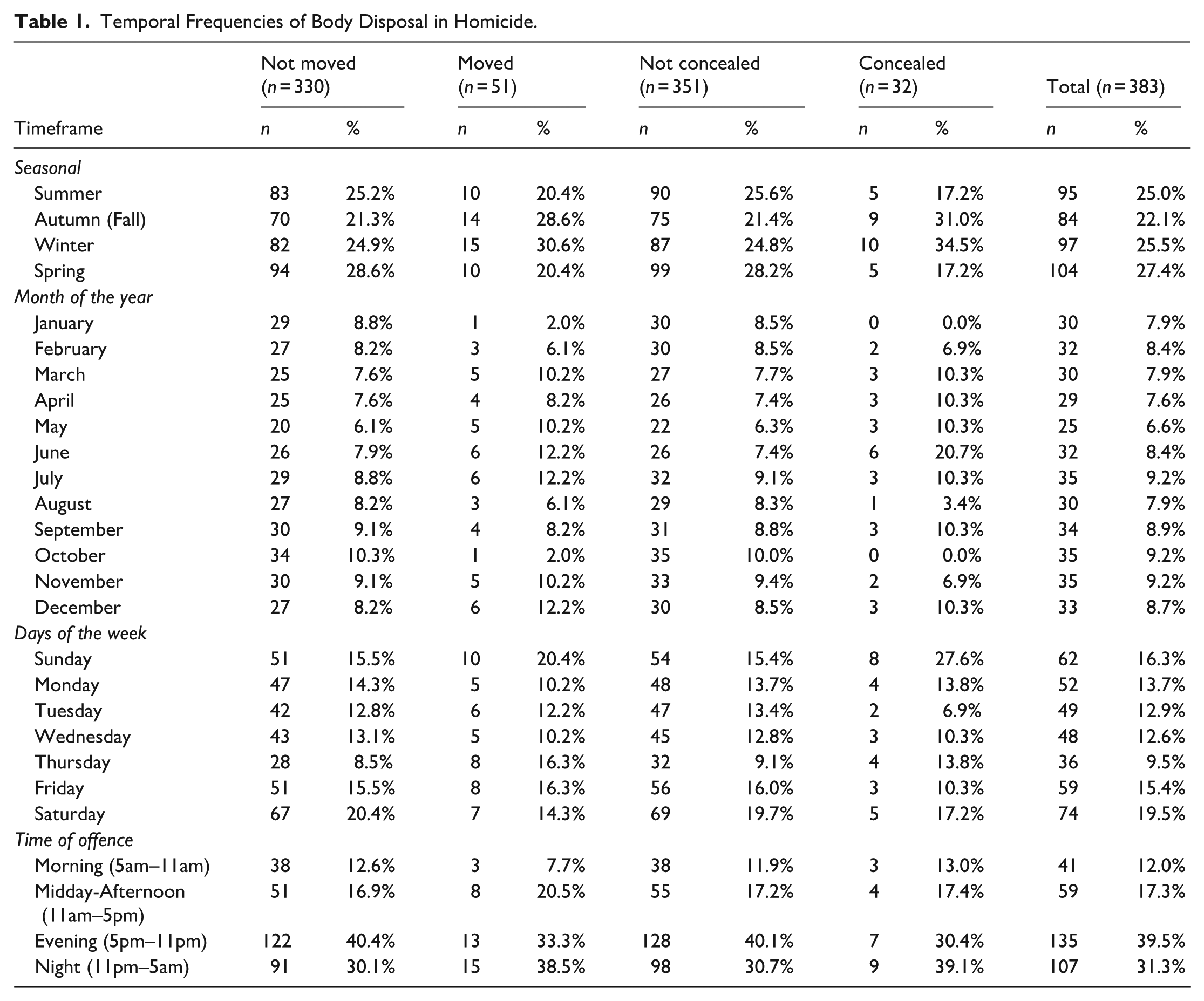
The frequency of homicide cases and the occurrence of each body disposal factor in each temporal domain are presented in Table 1.
Temporal Frequencies of Body Disposal in Homicide.
Seasonal and Monthly Analysis
As presented in Table 1, spring (27.4%, n = 104) saw the highest number of homicides overall, followed by winter (25.5%, n = 97), summer (25.0%, n = 95), and autumn (fall; 22.1%, n = 84). The mean frequency over each month of the sample was 31.67 (SD = 3.03) homicides. The most common months were July, October, and November, with each seeing 35 homicides (9.1%) take place, while May was the quietest month, with only 25 (6.5%). However non-parametric chi-square analysis showed no significant difference between seasons indicating a relatively uniform distribution across the year, χ2 (3, N = 380) = 2.17, p = .538.
When assessing these frequencies comparative to body disposal methods, winter (30.6%, n = 15) was the most common month for body movement to occur whereas if a body was left, spring was most common (28.6%, n = 94). Similar findings were observed in regard to body concealment, with winter seeing victim concealment most frequently (34.5%, n = 10) and spring seeing the body left unconcealed most often (28.2%, n = 99).
A chi-square test for independence indicated a relatively uniform distribution of homicides across the months of the year, χ2 (11, N = 380) = 3.18, p = .988. June, July, and December all saw the highest number of victims (12.2%, n = 6) being moved during the commission of an offence, while only 2% (n = 1) were moved in both January and October. June saw a greater number of victims being concealed (20.7%, n = 6) to other months, while January and October saw none take place.
Multinomial regression was carried out to assess the relationship between offender-victim relationships and season of the year in which homicides occurred. Using stranger relationships and spring as reference categories, the overall model was significant, χ2 (15, N = 363) = 28.36, p = .019, suggesting a general association between the offender-victim relationship and season. Analysis revealed that the odds of a homicide committed by a partner in autumn were significantly higher compared to a homicide committed by a stranger in spring (OR = 2.77, 95% CI 1.01, 7.63, p = .049). No other significant associations between offender-victim relationships and season were identified.
Days of the Week
Homicides within the sample occurred most frequently on the weekend (Table 1), with Saturday (19.5%, n = 74) and Sunday (16.3%, n = 62) being the most frequent. Thursday (9.5%. n = 36) saw the lowest number of homicides. A chi-square test for independence indicated a significant uneven distribution across the week, χ2 (6, N = 380) = 16.17, p = .013; Monday through Thursday saw fewer than expected homicides, with an increase from Friday to Sunday.
Incidents involving bodies being moved and concealed were most frequent on Sundays (20.4%, n = 10 and 27.6%, n = 8, respectively). Most victims not moved or concealed were killed on a Saturday (20.4%, n = 67 and 19.7%, n = 69, respectively).
Time of the Day
As seen in Table 1, most homicides occurred in the evening, between the hours of 5pm and 11pm (39.5%, n = 135). Only 12.0% (n = 41) took place in the morning between 5am and 11am. A chi-square test for independence indicated an uneven distribution of homicides across the 24-hour day, χ2 (3, N = 342) = 65.44, p < .001; evenings and nights saw significantly greater numbers of homicide compared to the morning and mid-day/afternoon.
Homicides which involved moving the body occurred most often between 11pm and 5am (38.5%, n = 15); when the body was left, it typically occurred between 5pm and 11pm (40.4%, n = 122). Concealed victims were also most often killed between 11pm and 5am (39.1%, n = 9), and those unconcealed most frequently between 5pm and 11pm (40.1%, n = 128).
Time Until Body Discovery
Time until body discovery was calculated for cases in which body disposal techniques were employed (n = 50). Including the day of discovery, the mean time until discovery was 48.62 days (SD = 154.19), while the median was 3 days. Time until discovery ranged from one day to 949 days. When six extreme outliers 1 were removed, the mean time until discovery was 7 days (Mdn = 2 days, SD = 8.87), ranging between one and 33 days.
Temporal Relationships with Body Disposal Using Logistic Regression
Bivariate logistic regressions were run to assess the relationships between temporal variables and body disposal (Table A1). The time of day, day of the week, and season of the year an offence occurred were not significantly associated with body movement or concealment. Regression analysis was not performed on months of the year as a number of months saw body movement or concealment rarely taking place, giving this test little statistical power.
Spatial Patterns
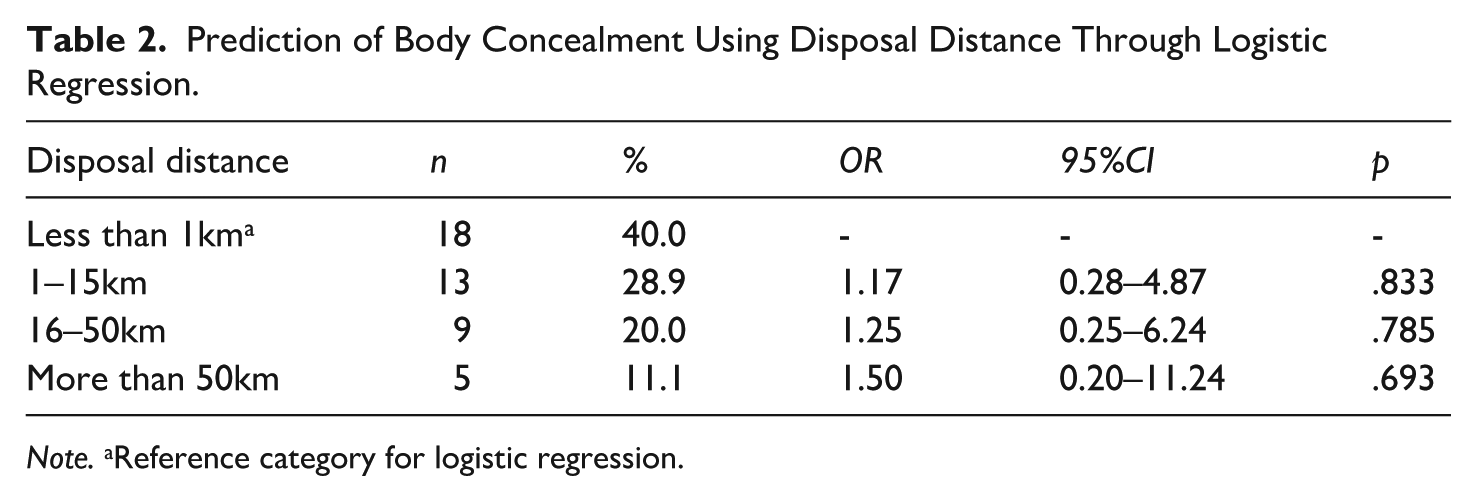
Where addresses/coordinates were known, road distances were estimated between the crime site and the body disposal location for each homicide involving body movement (n = 45). There was an observable trend of decreasing case numbers as distance increased (Table 2). The median estimated distance moved was 3.30 kilometres (km; SD = 57.71). The minimum distance was tens of meters where victims were dragged from inside the house to outside; the furthest distance travelled was over 370km. When one extreme outlier was removed, the median estimated distance moved was 3.26km (SD = 23.49), and the maximum distance reduced to just under 100km.
Prediction of Body Concealment Using Disposal Distance Through Logistic Regression.
Note. aReference category for logistic regression.
A binary logistic regression was conducted to assess the relationship between distance to body disposal location and body concealment (Table 2). No significant relationship was observed between disposal distance and likelihood of body concealment, χ2 (3, N = 45) = 0.19, p = .979, indicating that increased distances do not necessarily suggest more intensive concealment strategies.
To assess Häkkänen et al.’s (2007) near significant findings, an ordinal regression was conducted using the offender-victim relationship as a predictor and body disposal distance as the dependant variable. This was not significant, χ2 (5, N = 44) = 3.93, p = .560.
Environmental Associations
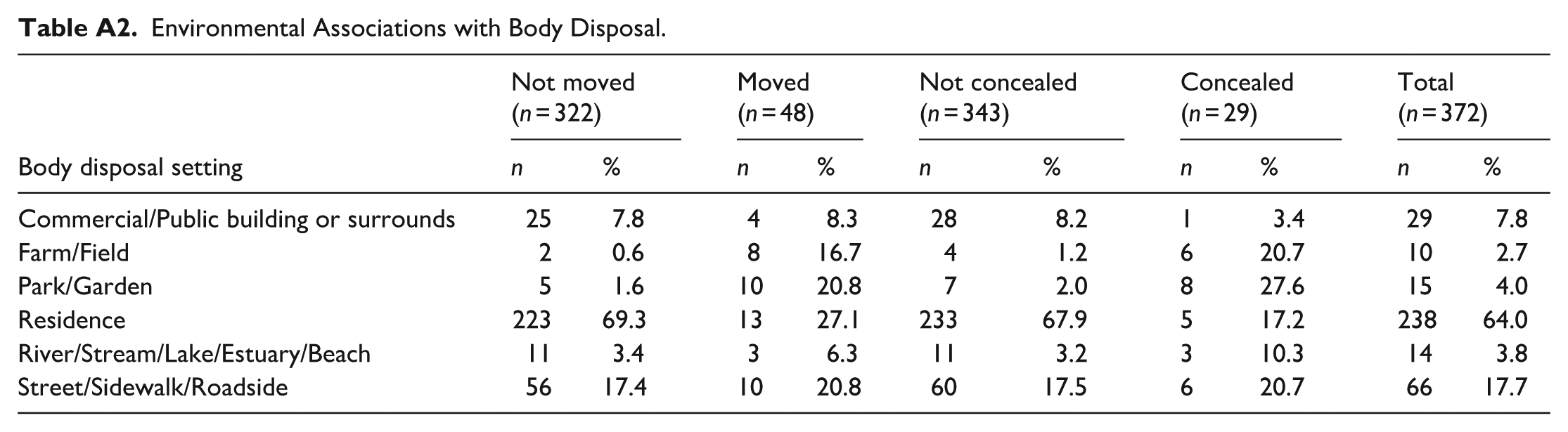
The associations between body disposal and the setting in which victims were found was descriptively examined (Table A2). Victims were most frequently located in a residential home (64.0%, n = 238), particularly when the body was not moved (69.3%, n = 223), indicating most homicides occurred in private homes (however not necessarily the homes of those involved). Bodies found on a farm or field were rare (2.7%, n = 10), however were more common amongst those who were moved (16.7%, n = 8) or concealed (20.7%, n = 6). Victims were least often placed in a river, stream, lake, estuary, or on the beach (6.3%, n = 3).
Moved victims were still most frequently found in residential areas (27.1%, n = 13), followed by a park or garden (20.8%, n = 10) or on a public street, sidewalk, or roadside (20.8%, n = 10) equally. Concealed victims were most frequently located in a park or garden (27.6%, n = 8), or equally in a farm or field (20.7%, n = 6) or on a public street, sidewalk, or roadside (20.7%, n = 6). Victims were least often concealed in a commercial or public building or its surrounds (3.4%, n = 1).
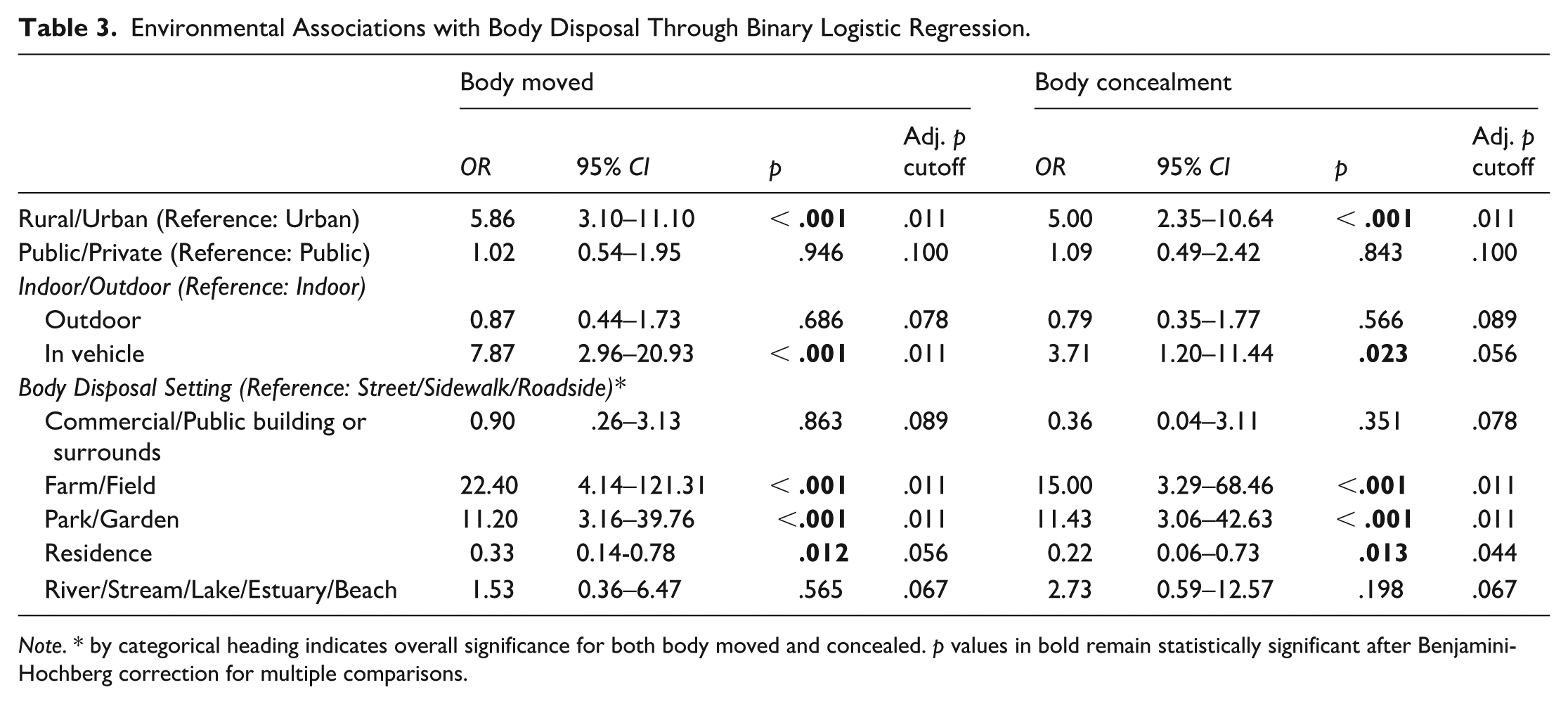
Binary logistic regression was performed on four environmental variables to assess their associations with body disposal (Table 3). Three of these (Rural/Urban, Private/Public, and Indoor/Outdoor) related to the location of the homicide itself, rather than the final disposal site. A number of significant effects were found in regard to the body being moved: rural locations increased the odds of a body being moved by nearly six times, and victims killed in a vehicle had nearly eight times the odds of being moved.
Environmental Associations with Body Disposal Through Binary Logistic Regression.
Note. * by categorical heading indicates overall significance for both body moved and concealed. p values in bold remain statistically significant after Benjamini-Hochberg correction for multiple comparisons.
Regarding the body disposal setting (i.e., where the victim’s body was located), victims found in a farm or field increased the odds of body movement by more than 22 times. Similarly, victims found in a park or garden increased these odds 11 times. Conversely, a body located in a residential home had significantly reduced odds of being moved (OR = 0.33, 95% CI 0.14, 0.78).
On body concealment, victims killed on a rural property had five times the odds of being concealed compared to a homicide which took place in an urban environment. Victims being located on a farm or field increased the odds of concealment by 15 times, while the odds increased more than 11 times if they were located in a park or garden. Again, a body disposed on a residential property reduced odds of concealment (OR = 0.22, 95% CI 0.06, 0.73). Victims killed in a vehicle had nearly four times the odds of being concealed compared to those killed indoors. Notably, a killing which took place either in a public or private location had no noticeable influence over the utilisation of body disposal techniques.
Transportation of Body
Of the 60 victims moved, 43.3% (n = 26) were dragged or carried while the other 56.7% (n = 34) were transported by vehicle. Only two incidents (11.1%) involving travel less than 1km involved the use of a vehicle, with the remainder being dragged or carried; of those over 1km, all involved a vehicle.
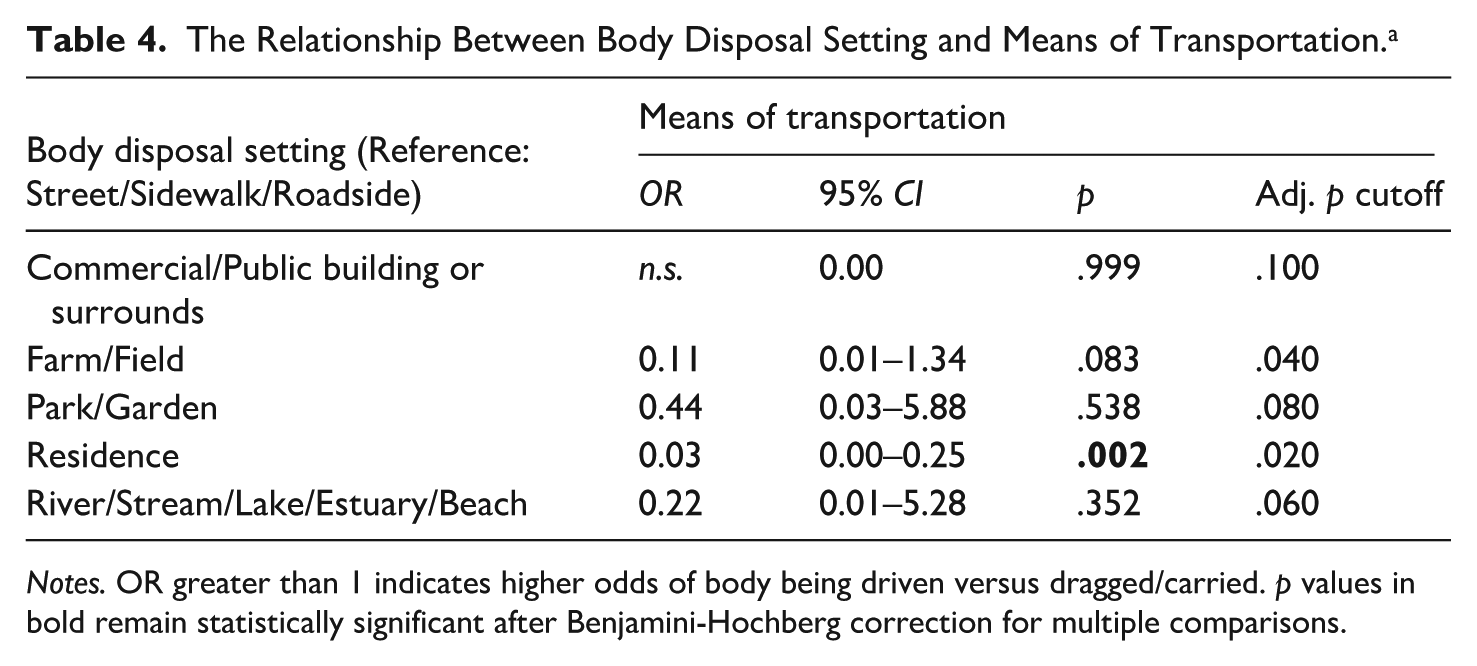
Through binary logistic regression, the relationship between body disposal setting and transportation used was assessed (Table 4). This was significant, χ2(5, N = 57) = 26.30, p < .001. A strong relationship was observed between incidents where a body was located in a residential home compared to on the street, sidewalk, or roadside, with the odds of being driven 33 times lower than being dragged. Victims disposed of in or around a commercial or public building were only done so by vehicle so odds could not be calculated.
The Relationship Between Body Disposal Setting and Means of Transportation.a
Notes. OR greater than 1 indicates higher odds of body being driven versus dragged/carried. p values in bold remain statistically significant after Benjamini-Hochberg correction for multiple comparisons.
Victim Aid
Victims at times receive aid from perpetrators or witnesses. This may be informative as to why body disposal methods were not utilised in some cases. Nearly one-quarter (23.2%, n = 89) of victims were taken, or died on the way, to hospital. Only one case involved a victim being moved to a disposal site before being taken to hospital; no victims were concealed and taken to hospital. To assess if the offender-victim relationship had a relationship with the provision of help to a victim following an offence, binary logistic regression was performed (Table 5). This was significant, χ2(5, N = 364) = 16.19, p = .006, with the regression correctly predicting the likelihood of a victim receiving help 76.6% of the time. Aid was significantly less likely to be provided to the victim when the perpetrator was an ex-partner (OR = 0.20, 95% CI = 0.04, 0.95) or a friend (OR = 0.18, 95% CI = 0.04, 0.83). No individual offender-victim relationship reached significance after accounting for the adjusted p-value cutoff.
Relationship Between Offender-Victim Relationship and Likelihood of Receiving Hospital Aid. a
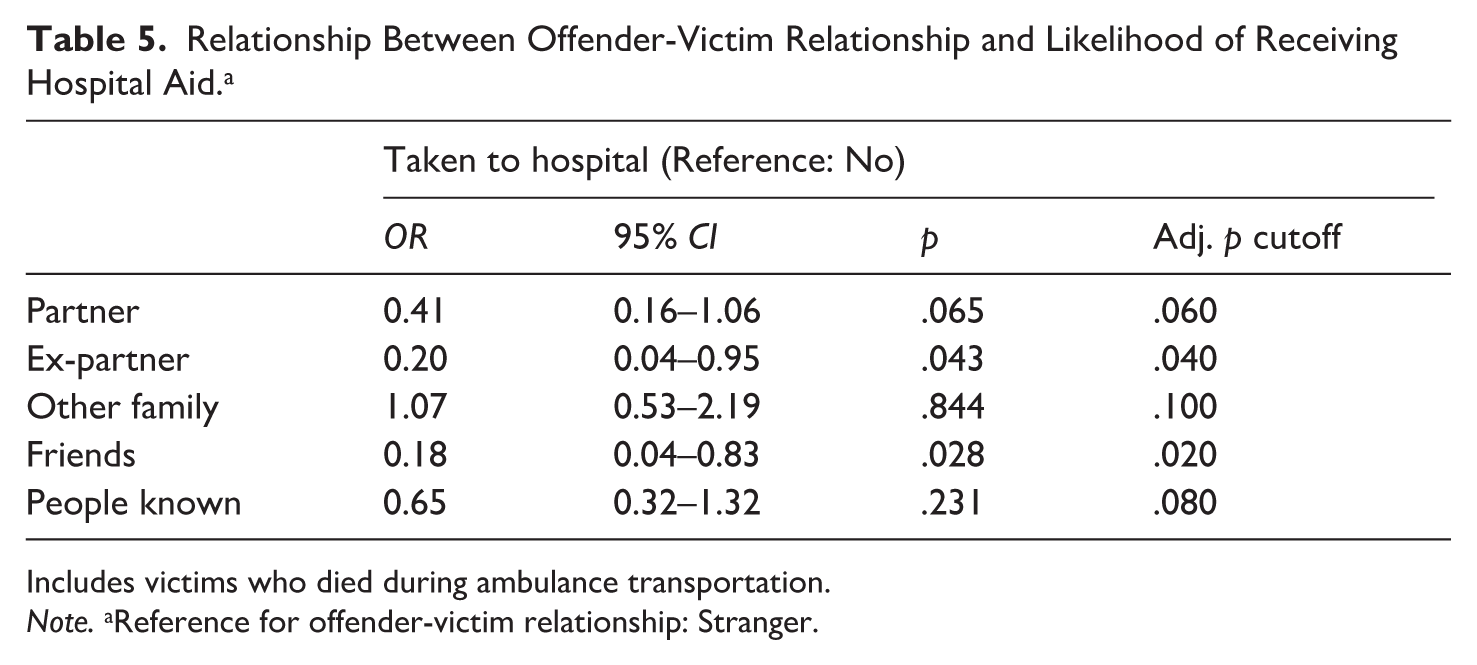
Includes victims who died during ambulance transportation.
Note. aReference for offender-victim relationship: Stranger.
Discussion
The present study examined the temporal and spatial relationships of homicide, particularly where body disposal was involved. Analyses indicated that weekdays (excluding Friday) often saw fewer homicides than weekends, whilst killings during the evening and night were significantly more common than in the morning and mid-day/afternoon. In support of Routine Activity theory, homicides were highest over the weekend, with Saturday seeing more than double those observed on a Thursday. This finding replicates those found by Nieto-Betancurt et al. (2023) and Pereira et al. (2016), suggesting that as people become more active on weekends there are increased opportunities for social interactions to turn harmful. Notably, our results did not find any significant associations between temporal timing and body disposal techniques.
In line with McDowall et al. (2012), no significant trends were found in regard to homicide frequencies by season or month, with a relatively uniform occurrence throughout the year. Our results indicated more homicides occurred over spring than in other months, and while this may be the result of warmer temperatures, it was not significantly higher than other months. Body movement and concealment were also seemingly unrelated to time of year. In contrast, the offender-victim relationship was significantly related to the season, however only a marginally significant increase in the odds of a homicide occurring by a partner in autumn compared to the reference categories was identified. While speculative, this may reflect seasonal changes in routine activities and domestic contexts, as shorter daylight hours and cooler weather increase time spent indoors and opportunities for conflict. Additional stressors may also play a role; seasonal work is common practice in New Zealand (Bedford & Bedford, 2023), and associated employment changes could exacerbate tensions. Recognising these temporal dynamics may help contextualise homicide incidents and guide future work examining how routine activities and seasonal stressors influence offence timing.
Consistent with U.S. and European studies (Holt et al., 2022; McKinley et al., 2016; Sisti et al., 2012), homicides in New Zealand peaked in evenings and weekends, supporting Routine Activity theory. The high number of homicides occurring around the weekend may be indicative of increased crime opportunities due to changing activity patterns (i.e., more socialising and contact on weekends; Pereira et al., 2016). In accordance with this theory, it was expected more homicides would occur when people are not working, and this was evident in our findings, with between 5pm and 11pm being the most common period. While this further indicates social factors may be more significant drivers of offending than temperature alone, it is notable that spring sees longer daylight hours and warmer evenings. Distilling these findings in line with population wakefulness (as in Holt et al., 2022) and activity trends may allow for more discrete separation between Routine Activity theory and Temperature Aggression theory.
Spatial patterns occurred as expected; as the distance from crime site to disposal site increased, a decline in frequency of cases occurred. With nearly 84% of cases in the current study not involving body disposal, this aligns with Martineau and Beauregard (2016) who found 70% of sexual murder cases involved no body movement. The even lower incidence in the present study may be explained by the inclusion of all homicide types, whereas Martineau and Beauregard examined only sexual murders; sexual homicides in New Zealand have a higher rate of body disposal than other homicide types (Ploeg et al., 2024). Our results reflected Häkkänen et al.’s (2007) Finnish study, where 83.3% of victims were found less than 50km from the crime site, and Van Patten and Delhauer’s (2007) findings in Los Angeles where most disposals were within five miles. Interestingly, victims in our sample were most frequently (40.0%) moved distances of less than 1km and there was no indication that lengthier journeys resulted in greater attempts at body concealment. While Sea and Beauregard’s (2018) findings indicated organised offenders were more likely to dispose bodies at greater distances, our nonsignificant findings suggest that does not necessarily translate to hiding or concealing victims. Our findings regarding the means of transport utilised to move their victims are logical, with a vehicle generally being a prerequisite for long-distance travel. However, in cases where victims were moved up to 1km, nearly 90% did not involve the use of a car which was somewhat surprising. As with Häkkänen et al. (2007), no significant association was identified between the body disposal distance and the offender-victim relationship.
It was interesting to note the odds of a body being moved and/or concealed were significantly greater when the crime site was a rural location. Rural areas may increase the odds of body disposal as it combines a motivated offender, a suitable target, and, importantly, a lack of capable guardians. Rural settings likely have fewer potential witnesses and less surveillance, reducing the perceived risk of being caught. Low guardianship, combined with available disposal sites, creates an opportunity structure that encourages offenders to move or conceal the body to delay discovery and avoid detection. Similarly, the odds of movement and/or concealment were significantly greater when the killing occurred in a vehicle. This might be indicative of the greater ease in which incidents with vehicles are able to move from the crime site (and public eye). While some variation was seen between this study’s findings regarding disposal sites (largely a result of the classifications utilised), there was general agreement with Rossmo (2014), and Sea and Beauregard (2018) that around half of these sites were agricultural, wooded, or river areas. Findings differed from Häkkänen et al. (2007) who focused solely on rural homicide. It was evident in our sample that certain disposal sites were heavily linked to body movement and concealment. Farms, fields, parks, and gardens had significantly greater odds of a victim having been moved there compared to a street or sidewalk, however, residences had significantly reduced odds. This indicates that when found in a general urban home, a body is unlikely to have been moved. Somewhat surprisingly, body concealment had even lower odds of occurring at a residence than moving a body; those who moved the body from inside to outside a home, therefore, were particularly unlikely to make attempts to conceal the victim. This may reflect urgency alongside limited concealment opportunities, or a symbolic attempt by the perpetrator to distance themselves from the victim. When the residence belonged to either victim or perpetrator, concealment may have been perceived as purposeless given the location was already identifiable, consistent with research emphasising the role of situational constraints in disposal decisions (Sea & Beauregard, 2018).
While appearing counterintuitive to a study on body disposal, examining whether victims received aid post-offence elucidated information which may inform why body disposal did or did not occur. This study found nearly a quarter of victims received help following the offence, be it by the perpetrator, eyewitnesses to the crime, or another who found the victim. This appeared to be related to the relationship the victim had with the perpetrator: there was some indication that victims of ex-partners and friends were significantly less likely than strangers to be taken to hospital (however this result was no longer significant after adjusting p values to account for Type I error rate). One explanation may be the location in which the killing took place, with partner killings more likely to occur at a residential address, perhaps due to more frequent proximity or the higher potential for malicious intent by ex-partners (Levin & Wiest, 2018).
Implications
This study’s findings have a number of theoretical and practical implications for the field of homicide investigation, particularly regarding the dynamics of body disposal. Routine Activity theory was supported as a viable explanation for peak homicide rates during specific times (e.g., weekends and evenings). By contrast, Temperature Aggression theory, which asserts heat significantly influences aggressive behaviour, does not account for the increased proportion of incidents during weekends or cooler hours, suggesting social factors and opportunity likely play more critical roles in influencing homicide rates than environmental factors like temperature. This aligns with Coccia (2017), who critiqued the direct correlation between temperature and aggressive behaviour.
Our results emphasise the importance of situational factors in crime occurrences, underscoring a need for enhanced management and community policing during peak times to effectively reduce opportunities for these incidents to take place. Specifically, law enforcement could increase patrols and monitoring during evenings, nights, and weekends, particularly in areas with high social activity or alcohol-related gatherings. Enhancing visibility and guardianship through improved lighting, surveillance, and public presence may further reduce opportunities for offending and post-offence behaviours. A shift in focus towards social dynamics suggests interventions should concentrate on social structures and interactions in the community which increase the risk of homicide taking place. For example, Felson and Boba (2010) suggest strategic changes in routine activities, such as increased lighting and police presence during high-risk times, can significantly deter criminal activities.
Our findings regarding the spatial patterns of body disposal, particularly the prevalence of nearby disposal sites, may also aid in refining investigative strategies. By focusing search efforts within closer proximity to crime scenes, the efficiency of investigations may be significantly improved. As noted by Canter and Larkin (1993), geographic profiling can be an effective tool in narrowing down suspect locations based on the spatial behaviour patterns of offenders. As our results indicate, it is rare for perpetrators to dispose of a body further than 50 km from the original crime scene, with the frequency of cases increasing as disposal distance approached 0 km. Particular attention to rural or secluded areas such as farms, wooded areas, parks, and riverbanks, where guardianship is minimal may be of value. Similarly, searches in urban homes might prioritise forensic evidence and witness accounts rather than extensive concealment searches, as concealment is less likely in these settings.
Limitations and Future Research
We are unaware of any biases towards the examined environmental variables with regard to the publication of sentencing reports (the primary source of data in the current study), and so reasonably assume our sample is a fair representation of homicide occurrence in the community. However, it is important to acknowledge that the current sample does not contain all New Zealand homicides that occurred between 2014 and 2023, leaving room for potential error in this regard, being primarily comprised of those solved or adjudicated. Notably, this research could not account for cases which remain unsolved and these may have some association with the body disposal methods utilised. However, literature indicates body disposal typically delays discovery, not prevents it, thus this was not a significant concern (Beauregard & Martineau, 2014). As this research drew on a New Zealand sample, the findings may not fully generalise to countries with different cultural, legal, or social contexts. Results should therefore be interpreted with caution, as local norms elsewhere could produce different patterns. Moreover, some potentially relevant variables could not be examined, meaning unmeasured factors likely also shape the observed associations. These findings are not intended as an exhaustive account of all influences on body disposal but nonetheless provide meaningful insights into its dynamics and a robust foundation for future research to refine.
As noted by both Nieto-Betancurt et al. (2023) and Holt et al. (2022), alcohol and substance use are also heavily linked to homicide and likely impact temporal findings, particularly regarding weekend and evening increases. Future research might endeavour to examine this relationship to better our understanding of temporal factors, particularly in relation to Routine Activity theory; the effects of substance use on body disposal techniques would be equally valuable.
Further research assessing the interactions between demographics and temporal/spatial factors may also be of interest. Determining, for example, whether female victims are taken to more remote environments or disposed of in different manners than males might be highly informative for the investigative process. Häkkänen et al. (2007) found perpetrators disposed of female victims at shorter distances, and as identified by the authors’ previous research, female victims have a significantly higher likelihood of being moved (Ploeg et al., 2024); this may transfer to the type of environments and settings in which these incidents took place.
Further exploration around why differences occurred in regard to those victims who received aid would also be of value; understanding whether perpetrator-victim dynamics, including the initial homicidal motivation, were responsible for this assistance, or whether eyewitness intervention better explains it, is key. Extrapolating the factors influencing the provision of aid to the decision (and ability) to carry out body disposal techniques would be particularly valuable.
Conclusion
The temporal and spatial nature of body disposal has rarely been examined alongside environmental factors. The findings from the current study therefore contribute to our knowledge regarding the interplay between the environment, behaviours, and patterns that can be observed in homicide cases. Temporal analysis revealed subtleties in the timing of homicides, with significant variation being evident across different days of the week and times of the day, with weekends and evening hours being prime periods for such events. These patterns suggest an influence of both routine activities and the association of social interactions on homicide. This highlights a need to move beyond biological explanations like Temperature Aggression theory to include social variables to ensure our understanding of complex factors are properly understood.
Our spatial analysis revealed long-distance disposal sites are rare, with 40% of perpetrators opting to transport the body no more than 1km. The environments in which a homicide took place were significant; those which took place in a rural location or occurred inside a vehicle had greater odds of body movement and/or concealment. The role of bystander or perpetrator intervention to provide aid to victims had significant associations with the offender-victim relationship; this differential response indicates a need to explore the underlying mechanisms behind such behaviours in regard to each relationship type.
Overall, these findings provide valuable insight into the temporal and spatial dimensions of homicide incidents, while emphasising the multifaceted nature of these events. Future research should endeavour to explore each of these dynamics further to to build a more comprehensive understanding of the factors influencing body movement and concealment. While this study helps address areas of disagreement within the existing literature, its primary contribution lies in offering law enforcement strategic insights that may support more targeted searches during homicide investigations. The integration of Routine Activity Theory and geographic profiling into this line of inquiry may further refine search strategies, ultimately assisting investigative practice.
Footnotes
Appendix
Environmental Associations with Body Disposal.
| Body disposal setting | Not moved |
Moved |
Not concealed |
Concealed |
Total |
|||||
|---|---|---|---|---|---|---|---|---|---|---|
| n | % | n | % | n | % | n | % | n | % | |
| Commercial/Public building or surrounds | 25 | 7.8 | 4 | 8.3 | 28 | 8.2 | 1 | 3.4 | 29 | 7.8 |
| Farm/Field | 2 | 0.6 | 8 | 16.7 | 4 | 1.2 | 6 | 20.7 | 10 | 2.7 |
| Park/Garden | 5 | 1.6 | 10 | 20.8 | 7 | 2.0 | 8 | 27.6 | 15 | 4.0 |
| Residence | 223 | 69.3 | 13 | 27.1 | 233 | 67.9 | 5 | 17.2 | 238 | 64.0 |
| River/Stream/Lake/Estuary/Beach | 11 | 3.4 | 3 | 6.3 | 11 | 3.2 | 3 | 10.3 | 14 | 3.8 |
| Street/Sidewalk/Roadside | 56 | 17.4 | 10 | 20.8 | 60 | 17.5 | 6 | 20.7 | 66 | 17.7 |
Acknowledgements
Not applicable.

Ethical Considerations
Ethics approval granted by the University of Canterbury Research Ethics Committee.
Consent to Participate
Not required (public data).
Consent for Publication
Consent provided from each author. No identifiable information for cases.
Funding
The authors received no financial support for the research, authorship, and/or publication of this article.
Declaration of Conflicting Interests
The authors declared no potential conflicts of interest with respect to the research, authorship, and/or publication of this article.
Data Availability Statement
Ethics approval did not include data publication.