




Abstract
This systematic review examines the perspectives of victim-survivors, family members, and professionals (VFP’s) on the reintegration of men convicted of sexual offenses into the community. A search of 8 databases identified 8,621 potential sources. After screening, 36 studies were included in the review. Papers were included if they used qualitative methods about VFP’s views, attitudes, opinions, and/or perceptions on the reintegration of adult males who have sexually offended, from prison or secure care. The papers were then critically appraised and thematically synthesized. The findings highlighted four key themes: supervision, discrimination, livelihood, and interventions. These themes revealed the complex and multifaceted nature of reintegration, where varying perspectives highlighted a balance between public safety concerns, the potential for rehabilitation, and the profound social and emotional implications for those directly involved with the offenders. The implications for future research, and policy and practice, including support for families, professional training, and advocating for policy reform, are discussed.
Background
The reintegration of men convicted of a sexual offense (MCoSO) into society is complex and controversial and brings forth a wide range of perspectives. Society is constantly confronted with a complex moral dilemma: how to balance public safety with the principles of rehabilitation and reintegration of MCoSO (La Fond, 2005). This convoluted topic can be examined from three distinct and personal viewpoints, each offering unique perceptions and considerations of MCoSO: victim-survivor, family, and professional (VFP) perspectives. The aim of this systematic review is to fully explore the VFP views on the reintegration of MCoSO from prison or secure care into the community.
A growing body of research has examined various facets of the reintegration process for MCoSO, often focusing on recidivism rates, supervision mechanisms, and treatment efficacy (Andrews & Bonta, 2014; J. S. Levenson & Cotter, 2005). Quantitative studies consistently indicate that sex offender-specific policies, such as public registries and residence restrictions, have limited effectiveness in reducing recidivism and may, in fact, exacerbate reintegration challenges through mechanisms of stigmatization and social exclusion (Tewksbury & Levenson, 2009; Vásquez et al., 2008).
Much of this literature remains siloed, centering either on offender rehabilitation or public protection, without adequately integrating the perspectives of those most directly affected by reintegration. Qualitative research has explored professionals’ attitudes toward risk management, supervision, and therapeutic engagement (Day et al., 2014; Gakhal & Brown, 2011), revealing tensions between public protection mandates and rehabilitative aims. However, less attention has been given to how victim-survivors, family members, and frontline professionals experience and understand this process. Each of these groups brings unique concerns, ethical considerations, and lived experiences that influence how reintegration policies are developed, implemented, and perceived (K. F. McCartan et al., 2015).
Victim-survivor perspectives, in particular, remain critically underexplored, with only a limited number of empirical studies addressing their views on offender treatment, risk, and community return (Joyce-Wojtas & Keenan, 2016; Richards et al., 2021). Similarly, familial experiences have often been marginalized or viewed primarily through the lens of offender management, rather than being treated as legitimate subjects of concern in their own right (Brown, 2017; Evans et al., 2023). Professionals, though studied more extensively, span a wide array of roles, from therapists to probation officers to police, each with distinct mandates and attitudes, making it difficult to generalize their views without further synthesis.
Research suggests that when reintegration efforts exclude these stakeholder voices, they risk reinforcing stigma, heightening recidivism risks, and ultimately undermining community safety (J. S. Levenson & Cotter, 2005; Maruna & LeBel, 2002). In contrast, inclusive, multi-perspective approaches, particularly those rooted in restorative justice, trauma-informed practice, and community-based models such as Circles of Support and Accountability (CoSA), have demonstrated promise in fostering more positive reintegration outcomes (Daly, 2007).
Despite these insights, no prior synthesis has systematically examined how these three key groups, victim-survivors, family members, and professionals, understand and experience the reintegration of MCoSO. This review addresses that critical gap, offering an integrative synthesis that brings together these often-disconnected perspectives to inform more holistic, inclusive, and ethically sound reintegration policy and practice.
However, victim-survivors also have deeply personal experiences of the offense that shape their views on offender reintegration. The process of reintegration may evoke complex emotions, including fear, anger, and a strong desire for justice (Lacey & Pickard, 2015). Their perspectives on offender reintegration often revolve around healing, safety, and the need for meaningful restitution (Joyce-Wojtas & Keenan, 2016). The perspectives of victim-survivors represent a crucial side of the reintegration discussion, embodying both the demands of justice and the potential for restorative processes (Das et al., 2022). Their voices and insights highlight the imperative of creating a system that respects their experiences while working to reduce the risk of reoffending (Wemmers et al., 2023). The complexities of reintegration from a victim-survivor’s standpoint highlights the broader societal need to strike a balance between retribution, rehabilitation, and the imperative of offering victim-survivors a path toward healing.
Familial perspectives encompass a wide range of experiences. Some may vehemently advocate for the rehabilitation and reintegration of their loved ones, highlighting the importance of second chances and the potential for change. Others may battle with anger, disappointment, and a sense of betrayal, harboring concerns about the safety of the community (Brown, 2017). The dynamics within families are further complicated by questions about disclosure, secrecy, and the welfare of children who may be directly impacted by the offender’s actions (J. Levenson & Tewksbury, 2009).
Professionals working with MCoSO are often tasked with developing and implementing reintegration programs, assessing risk, and providing therapy to offenders. Their views toward MCoSO are shaped by their understanding of the rehabilitative process and the challenges associated with it (Grady & Strom-Gottfried, 2011). These views and their expertise are rooted in research, therapeutic approaches, and a commitment to best practices, with the overarching goal of fostering a safer and more rehabilitative society (Hancock, 2019). Nevertheless, numerous professionals will interact with individuals convicted of sexual offenses in settings beyond their offending environments, where they may be less inclined to address the consequences of the crimes they have perpetrated.
The Present Work
This systematic review aims to synthesize the perspectives of VFP’s regarding the reintegration of MCoSO into the community. While these viewpoints have been studied individually, there is a significant gap in understanding how they intersect and influence each other. By integrating these perspectives, the review seeks to provide a more comprehensive understanding of the challenges and opportunities in reintegrating MCoSO, highlighting the balance between public safety concerns and the goals of rehabilitation.
The review is also crucial for informing policy and practice, as societal attitudes toward sexual offenses and offenders continue to evolve. By examining the diverse views of key stakeholders and those with direct experience of MCoSO’s, this work will contribute to the development of evidence-based strategies that address the complexities of reintegration. This comprehensive approach is essential for creating policies that are both just and rehabilitative, ensuring that the perspectives of all involved are considered in the process of reintegrating MCoSO into society.
Methods
The protocol for this systematic review was registered with PROSPERO (CRD42023453446), with zero amendments being made since its registration. The review is reported in line with Preferred Reporting Items for Systematic Reviews and Meta-Analyses (PRISMA) 2020 reporting guidelines (Shamseer et al., 2015).
Search Strategy
Searches of all databases were conducted in line with the Population/Exposure/Outcomes (PEO) framework for conducting literature searches for the purpose of qualitative synthesis, as this was best suited to the method choice of this review. The PEO framework is specifically designed to guide qualitative evidence syntheses by focusing on the population under study, the exposure or experience of interest, and the outcomes in terms of attitudes or perceptions. This approach is particularly suitable for this review, which aims to understand the nuanced views of victim-survivors, family members, and professionals regarding the reintegration of MCoSO (Mattisson, 2023). Population included victim-survivors, family members of MCoSO, and professionals, Exposure included the reintegration of men convicted of a sexual offense, and Outcome included views, opinions, perceptions, and attitudes. The search strategy can be found in Supplemental File 1. All searches were conducted in August 2023 and re-run in March 2025, with no new papers being found. To ensure all relevant papers were captured, gold standard papers (those which matched the research questions) were searched for and found to ensure the sensitivity of the search.
A total of eight electronic databases were searched; MEDLINE, PsychINFO, Web of Science, Criminal justice abstracts, ProQuest, PubMed, Psychology and Behavioral Sciences Collection, and CINAHL. Two gray literature databases were also searched; Google Scholar and MEDNAR with the first 10 pages (100 hits) being downloaded, given that they would provide the most relevant outputs (Haddaway et al., 2015). All results were then uploaded to Rayyan, a web-based systematic review tool that facilitates collaborative screening of titles and abstracts. Rayyan allows researchers to blind screen records independently, tag inclusion/exclusion reasons, and resolve conflicts efficiently, thereby enhancing the transparency and reproducibility of the study selection process.
Inclusion and Exclusion Criteria
Papers were included if they collectively used qualitative research methods to ascertain VFP’s views, attitudes, opinions, and/or perceptions on the reintegration of adult males who have sexually offended, from prison or secure care. Papers were included if other people’s views were present, such as sexual offenders themselves, if the data from VFP could be extracted. Similarly, papers were included that did not specifically focus on reintegration, if data on reintegration were presented and could be extracted. Only articles published in English were included due to resource constraints for translation and because the review team could only reliably appraise and extract data from English-language sources. Additionally, the papers could be from any country and any year. Only qualitative studies were included as the primary aim of this review was to explore the nuanced and subjective views of victim-survivors, family members, and professionals.
Study Selection and Data Management
Once the duplicates were removed, one reviewer (ET) sifted all the titles and abstracts against the inclusion and exclusion criteria. A second reviewer (NW) then independently reviewed a randomly selected 20% of the papers. The reviewers had a 98.9% agreement rate (a substantial rate when converted into Kappa statistic) and no discrepancies required a third review.
Those that were identified as potentially relevant then went through the full paper screening process. All papers were retrieved and saved on Microsoft Teams for review. One reviewer (ET) sifted all full papers, and a second and third reviewer (SP, LG) independently double-screened 30%. There was a 73.3% agreement rate between reviewers (moderate agreement rate when converted into Kappa statistic). To address this, all discrepancies were discussed in detail among the reviewers to reach consensus on inclusion. While the papers were not formally re-screened in full, any papers flagged during the discussion were revisited against the inclusion criteria to ensure accuracy. The aim of this process was not to recalculate the agreement rate but to improve consistency in judgment and ensure that all included papers met the predefined criteria. This collaborative review and clarification process enhanced the rigor and reliability of the final study selection.
Data Extraction
A Microsoft Excel spreadsheet was developed for the data extraction which captured: authors, publication year, country of study, aim of the research, study design, methods, setting/location of research, sample size, provider viewpoint (VFP), sex offense type, participant demographics, sample positive results, sample negative results, recommendations, and conclusions.
Assessment of Quality
The CASP tool for appraisal of qualitative studies (Singh, 2013) was used for the quality assessment of the included papers. The CASP tool is endorsed by Cochrane and the World Health Organization for use in qualitative evidence synthesis and is considered a relatively good measure of the transparency of research practice and reporting standards (Long et al., 2020). One reviewer (ET) undertook the quality assessment of all included papers, with a second reviewer (LG) checking 20% of the papers. There was a 100% agreement rate between reviewers (perfect agreement rate when converted into Kappa statistic). No papers were excluded at this stage.
Synthesis
To synthesize the extracted data, thematic synthesis was utilized, and the data were line-by-line coded using NVivo 12 software. Thematic synthesis was chosen as it allows a comprehensive understanding of qualitative evidence that can be grouped into common themes, patterns, and variations (Thomas & Harden, 2008). The flexibility of thematic synthesis ensures that no valuable insights are overlooked with respect to each of the included papers. Additionally, thematic synthesis’ structured approach of data coding, categorization, and theme development ensures consistency and transparency in the review process, as well as enhancing the credibility of the review’s findings and conclusions (Nowell et al., 2017). ET completed initial drafts of the synthesis, which were then reviewed by the wider study team where the themes and sub-themes were agreed upon, enhancing the trustworthiness and rigor of the synthesis (Maher et al., 2018).
Results
The initial searches yielded 8,621 records. After de-duplication (n = 3,159 total removed) and title and abstract sifting (n = 5,230 removed), 232 full papers were assessed. In total, 36 papers met the inclusion criteria and were included in the review (Figure 1). The articles were published between 2006 and 2023.
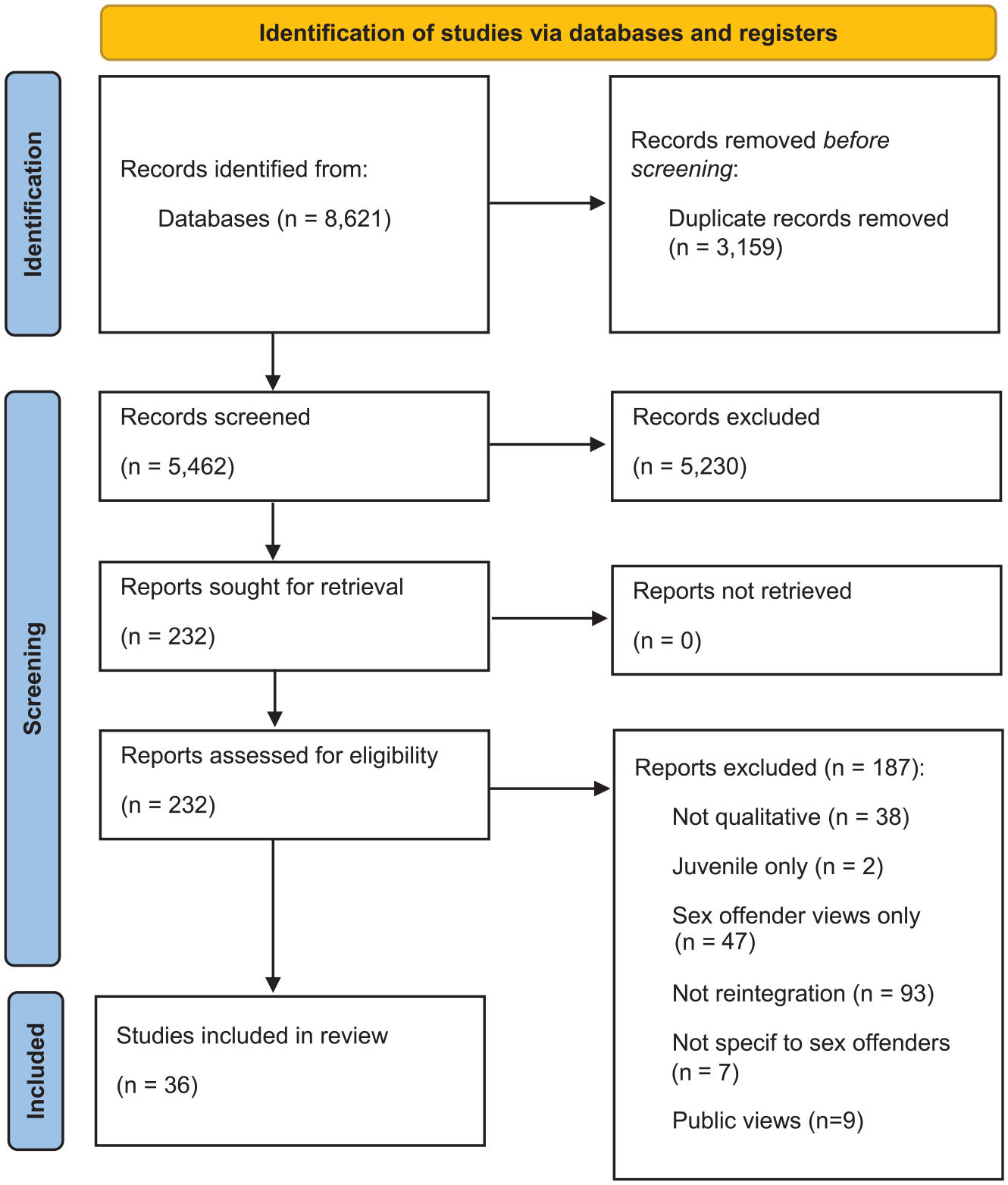
PRISMA.
Study Characteristics
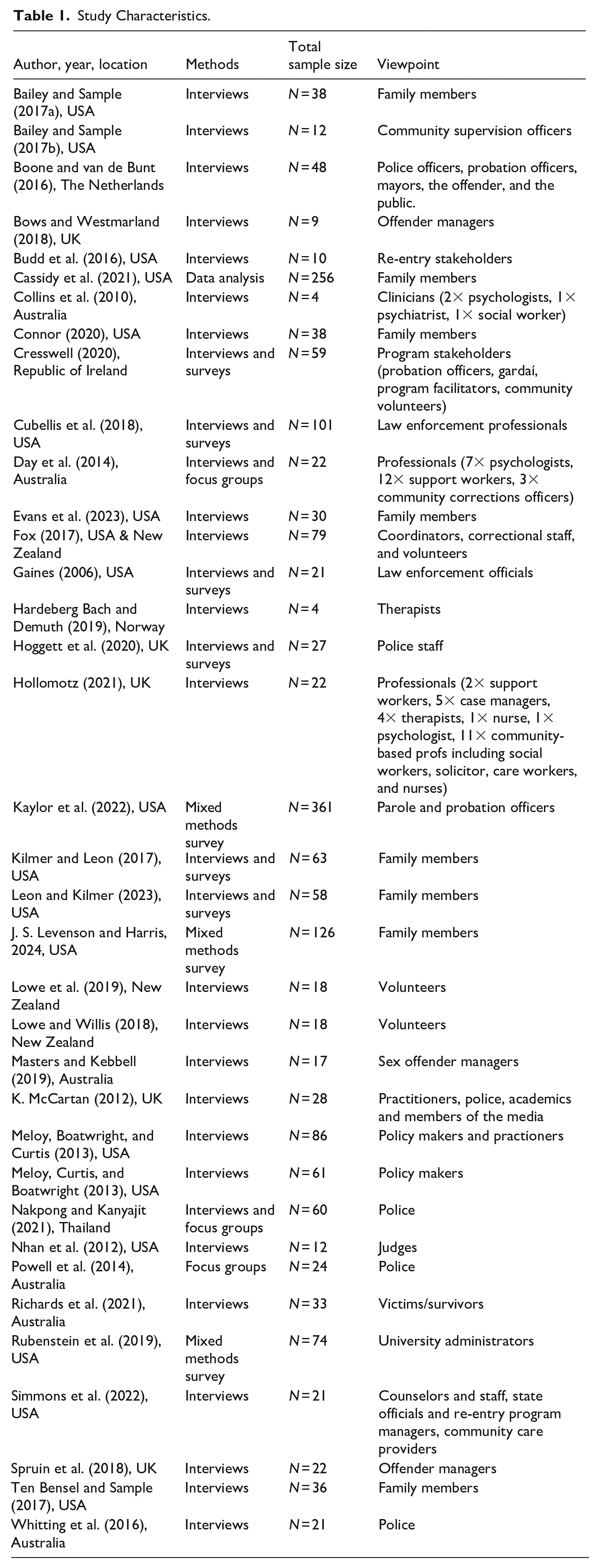
The characteristics from the 36 qualitative papers (Bailey et al., 2017a, 2017b; Boone & van de Bunt, 2016; Bows & Westmarland, 2018; Budd et al., 2016; Cassidy et al., 2021; Collins et al., 2010; Connor, 2020; Cresswell, 2020; Cubellis et al., 2018; Day et al., 2014; Evans et al., 2023; Fox, 2017; Gaines, 2006; Hardeberg Bach & Demuth, 2019; Hoggett et al., 2020; Hollomotz, 2021; Kaylor et al., 2022; Kilmer & Leon, 2017; Leon & Kilmer, 2023; J. S. Levenson & Harris, 2024; Lowe et al., 2019; Lowe & Willis, 2018; Masters & Kebbell, 2019; K. McCartan, 2012; Meloy, Boatwright, & Curtis, 2013; Meloy, Curtis, & Boatwright, 2013; Nakpong & Kanyajit, 2021; Nhan et al., 2012; Powell et al., 2014; Richards et al., 2021; Rubenstein et al., 2019; Simmons et al., 2022; Spruin et al., 2018; Ten Bensel & Sample, 2017; Whitting et al., 2016) are presented in Table 1. Eight papers examined the views of family members, two papers looked at the views of victims-survivors, and 26 papers explored professionals’ views (including clinicians/healthcare staff, community supervision officers, correctional staff, judges, mayors, offender managers, police, policymakers, practitioners, probation officers, program facilitators, re-entry stakeholders, volunteers for Circles of Support and Accountability (CoSA), and university administrators). Of the 1,820 unique participants, 1,142 were professionals, 644 were family members, and 34 were victim-survivors. Thirty-four papers focused on mixed sexual offenses, and two specifically on child sexual abuse. Nineteen papers reported on research from the United States of America (USA), five from the United Kingdom, six from Australia, two from New Zealand, and one each from Ireland, Norway, Thailand, and the Netherlands.
Study Characteristics.
Thematic Results
Four main themes were discovered in regard to views on the reintegration of MCoSO; supervision (including the registry, restrictions, parole and probation conditions, policies, and monitoring), discrimination (including labeling, stigma, vigilantism, myth acceptance, and stereotyping), livelihood (including housing, employment, finances, education, and social life problems), and interventions (including interventions, rehabilitation, support groups, and therapy).
Theme 01: Supervision
Three areas looked at the sex offender registry, restrictions, parole and probation conditions, policies concerning this area, and monitoring, with a total of 26 papers.
Navigating the legal system added further stress, with many expressing confusion and fear about inadvertently breaching complex or changing rules. One parent shared, “If it weren’t for me, my son would have no idea about new laws. . .if he doesn’t know and does something that he’s [not] supposed to do it’s on him” [Parent, USA] (Cassidy et al., 2021).There was also a profound sense of betrayal and disillusionment with the justice system. As a partner reflected, “I was once far more understanding of social justice issues until I was forced to live under the cloud of the registry with my husband” [Partner, USA] (J. S. Levenson & Harris, 2024). The emotional burden often led to breakdowns in family relationships, even among those who initially tried to remain supportive. “I felt horrible when I decided to leave him because I couldn’t live with the life-long punishments he was going to receive when I did nothing wrong” [Partner, USA] (Bailey & Sample, 2017a).
Some family members also coped by downplaying the offense, highlighting the perceived mismatch between the act and the lifelong consequences. “My son has done something wrong. . .but now he’s in the offender registry for the rest of his life, and he can never recover” [Parent, USA] (Bailey & Sample, 2017a).These family members collectively illustrated the complex emotional, social, and legal challenges experienced by family members of MCoSO. They highlighted the need for a more compassionate approach toward both the offender and family member to address the issues surrounding MCoSO management and community safety.
Concerns were raised about over-inclusion of low-risk individuals, inaccuracies, and the strain on already limited resources: “There’s a lot of people on that register who don’t need to be. . .a lot of resources and time [are] wasted” [Practitioner, Australia] (Day et al., 2014). The limited ability to monitor offenders meaningfully was also noted: “We can knock on the door but if they tell us to go away, end of story” [Police Officer, Australia] (Powell et al., 2014).
Skepticism persisted about registries’ deterrent effect and the false sense of safety they may give the public. “It doesn’t give a true picture of who the sex offender is and it gives the community a false impression of safety” [Practitioner, Australia] (Day et al., 2014). Public misunderstanding of registry functions was a recurring concern: “The general community think. . .being on a register makes you monitored 24/7. . .and that’s not the case” [Police Officer, Australia] (Masters & Kebbell, 2019).
Professionals stressed the need for better support for those on the register, especially around mental health and rehabilitation, noting that policing often takes precedence over care: “There’s no support framework. . .they see being on the register as something they need to police, not help” [Police Officer, Australia] (Masters & Kebbell, 2019).The harmful impact of stigma was also emphasized. Public registers were seen as isolating and counterproductive: “You ostracize people. . .when you publish people’s names. . .If the public was more aware. . .they wouldn’t want one” [Police Officer, Australia] (Powell et al., 2014).
Debates also addressed legislative inconsistencies and the need for risk-based inclusion criteria. “a young adult who’s 20 had sex with a 14-year-old can go on the register. . .we need to be targeting the 40-year-old man because the sad thing is if you’re motivated by having sex with prepubescent children that will never change” [Police Officer, Australia] (Masters & Kebbell, 2019). Some participants also argued that sex offender laws are often reactive, shaped by public outcry after high-profile cases (Meloy et al., 2013). Overall, professionals highlighted the intricate challenges in sex offender management, emphasizing the necessity for enhanced stakeholder collaboration, the delicate balance between community safety and offender rehabilitation, and the limitations of current monitoring systems.
Victim-survivors also valued the preventive role of such programs, particularly when they involved professionals aware of an individual’s risks and needs: “If they’ve got people who know exactly what their triggers are. . . you can sort of keep them on the straight and narrow” [Australia] (Richards et al., 2021). Their views combined support for rehabilitation with a desire for protective vigilance. However, the broader impacts of registry restrictions and criminal justice responses were also noted, particularly when victim and offender were in the same family. One participant described the unintended consequences of legal action: “Victim now wishes they never came forward” [USA] (Kilmer & Leon, 2017), highlighting the emotional, financial, and familial toll, especially when the system’s response conflicted with victims’ wishes. In summary, victim-survivors supported programs like CoSA for their role in both supporting offenders and ensuring community safety through monitoring. They valued this dual approach, recognizing that oversight could deter reoffending.
Theme 02: Discrimination
Fifteen papers looked at labeling, stigma, vigilantism, myth acceptance, and stereotyping MCoSO. The papers highlighted issues of stigma, public perception, community responses, media influence, legal frameworks, rehabilitation, and individual perspectives of MCoSO.
Exclusion from communal and familial events was common due to registry-related restrictions, which affected not only the registrant but also their entire family. As one participant described, “We chose as a family not to attend. . .funerals, weddings, vacations” [Partner, USA] (Kilmer & Leon, 2017), underscoring the ripple effect of restrictions. Many families also lived in fear of harassment or violence from members of the public. “There are enough crazy people out there. . .who want to be vigilantes. . .I do worry about that” [Mother, USA] (Evans et al., 2023), one mother shared, pointing to a climate of hypervigilance and insecurity that hindered reintegration efforts.
The emotional burden was often severe, with reports of anxiety, hopelessness, and concerns over suicide. One parent said, “My heart is broken. . .I worry he will kill himself in his motel room” [Parent, USA] (J. S. Levenson & Harris, 2024), illustrating the toll on both the registrant’s and their family’s mental health. Overall, family members grappled with their own identities in the face of societal judgment and the collective label imposed on them due to their association with a registrant. They felt marginalized and unfairly treated despite not having committed any crime themselves, significantly impeding the reintegration of MCoSO into society.
Several professionals advocated for public education to challenge myths and dehumanizing stereotypes. A therapist emphasized the importance of shifting public perception: “There isn’t anything different about talking to these people. . .they’re just as much human” [Therapist, Denmark] (Hardeberg Bach & Demuth, 2019).However, some practitioners—particularly in supervision and law enforcement—expressed distrust, viewing MCoSO as manipulative and deceptive, which in turn affected how they engaged with them: “It’s kinda, always gotta stay on your guard then. . .there’s so much deception” [Community Supervision Officer, USA] (Bailey & Sample, 2017a). Such beliefs risk reinforcing isolation and undermining access to support.
There was also skepticism about the effectiveness of rehabilitation, with some professionals subscribing to the view that offenders are unlikely to change: “Once a sex offender, always a sex offender” [Police Officer, Australia] (Masters & Kebbell, 2019). This fatalistic stance coexisted uneasily with the efforts of those working directly in rehabilitation and therapy, who emphasized empathy and humanization. One therapist explained, “You have to manage to like these people. . .sometimes you have to search far and wide for their positive qualities but you will find them” [Therapist, Denmark] (Hardeberg Bach & Demuth, 2019). In summary, professionals acknowledged that MCoSO faced significant stigma, making reintegration challenging. While some advocated for public education to counteract misconceptions, others were skeptical about rehabilitation, seeing MCoSO as manipulative. Despite this, some therapists emphasized empathy and the potential for rehabilitation, urging a more nuanced view of these individuals.
Theme 03: Livelihood
Two areas looked at VFP’s perceptions of housing, employment, finances, education, and social life problems that men face with this conviction, with a total of 16 papers. The papers highlighted several challenges faced by individuals and families affected by sex offender registration policies, including housing instability, financial strain, employment barriers, family disruption, and social stigma. These challenges were perceived to be exacerbated by legal restrictions, discriminatory practices, and the pervasive impact of sex offender policies on various aspects of daily life.
These challenges were compounded by financial strain. Employment barriers, due to stigma, background checks, and loss of licenses, led to low wages, precarious work, and limited prospects. “Currently he’s only able to get work through a temp agency for $8.15 an hour. . .He looked into going back to college, but that also requires him to notify the college that he’s a registered sex offender” [Partner, USA] (Kilmer & Leon, 2017). Even when housing was secured, it came at a premium: “The apartment charged him $100 more a month due to his being on the registry” [Partner, USA] (Leon & Kilmer, 2023).Lastly, legal and social constraints created significant disruptions in family dynamics, leading to the separation of partners and parents from their children. The children of registrants often endured harassment or ostracism because of their parent’s status, which detrimentally impacted their social interactions and emotional health. Additionally, family members themselves encountered social isolation and challenges in establishing relationships due to the stigma attached to the registrant’s status and the accompanying restrictions they faced. These cumulative effects profoundly affected the well-being and cohesion of families connected to registrants.
The risk of homelessness or transience was frequently cited, with concerns that instability could increase the likelihood of noncompliance or reoffending. A caseworker noted, “If they don’t have a place to go. . .they’re gonna go underground. . .but if there were places. . .to have a fair chance at starting their lives back over again” [Caseworker, USA] (Simmons et al., 2022). Professionals called for more sustainable housing pathways to prevent cycles of instability.
Employment was another critical concern. Stigma, legal barriers, and employer reluctance left many MCoSO unable to secure meaningful work. “Who wants to hire a sex offender?” [Stakeholder, USA] (Budd et al., 2016) captured the widespread bias faced by this population. Some practitioners expressed frustration at overly risk-averse systems: “They are being so risk averse that they are making it impossible to get a life” [Practitioner, Australia] (Day et al., 2014).These barriers extended to education, where inconsistent institutional responses further hindered reintegration. “I do not believe we are consistently treating students with criminal history in the same manner” [University Administrator, USA] (Rubenstein et al., 2019), noted one participant, highlighting systemic inconsistencies. Community hostility and social isolation were also noted as compounding factors. Professionals emphasized that without stable housing, employment, and social support, the likelihood of successful reintegration diminishes. As one probation officer [USA] put it, “There’s lack of ties within the community. . .which can make them feel quite isolated once they are released” (Fox, 2017).
Theme 04: Interventions
Two areas looked at interventions, rehabilitation, support groups, and therapy that were offered to MCoSO, with a total of eight papers. This theme revolved around MCoSO rehabilitation and treatment, along with related issues such as community reintegration, and the effectiveness of various approaches.
There was agreement that effective treatment must be long-term, intensive, and individualized, tailored to risk level and personal needs. As one clinician explained, “Treatment never finishes. . .How do you make that part of how you are, who you are and what you do?” [Clinician, UK] (Hollomotz, 2021). This approach aligns with models of ongoing risk management and identity transformation. Some professionals cautioned against the notion of a “cure,” particularly in cases involving fixed sexual preferences. A judge stated, “All the therapy in the world is not going to make someone be attracted to the same sex” [USA] (Nhan et al., 2012), framing treatment as a tool for behavioral control rather than elimination of desire. Legal and policy considerations also shaped treatment delivery, with debates around mandatory participation and balancing public safety with autonomy. Emphasis was placed on fostering internal motivation through supportive, rather than punitive, environments. “It is all about creating an environment where they don’t feel policed. . .I’ve built something up here that I don’t want to lose” [Community Service Manager, UK] (Hollomotz, 2021).
In summary, while views on treatment effectiveness varied, especially concerning high-risk individuals, professionals largely agreed on the need for sustained, person-centered approaches that emphasize motivation, risk management, and long-term engagement.
Support for CoSA was frequently conditional. Victim-survivors emphasized that programs should only benefit those who demonstrated remorse and a genuine willingness to change: “If they’re remorseful and sorry. . .yeah, why not?” [Australia] (Richards et al., 2021). Accountability was seen as a key prerequisite for second chances. Many recognized CoSA’s value in providing structure and support for individuals re-entering society, particularly those without family or community ties. However, distinctions were made based on the nature of the offense. While some believed CoSA could be effective for those who committed offenses against adults, others viewed child-related offenses as less amenable to rehabilitation: “For rapists of adults. . .it’s important. [But] with pedophiles. . .rehabilitation is almost impossible” [Australia] (Richards et al., 2021).
Participants also wrestled with the perceived trade-off between supporting offenders and addressing victims’ needs. One commented, “Maybe the victims need more support. . .and these people [offenders] should just rot in jail. But. . .I’d like to believe everyone also could have a second chance” [Australia] (Richards et al., 2021), capturing the tension between retributive and rehabilitative impulses. In summary, attitudes toward CoSA reflected a nuanced balance of hope, skepticism, and moral conflict. While some participants were open to rehabilitation under specific conditions, others questioned whether all offenders, particularly those who harmed children, should be eligible for such support.
Discussion
The aim of this systematic review was to comprehensively explore the VFP views on the reintegration of MCoSO from prison or secure care into the community. While the term “professionals” is used collectively, we recognize this group includes individuals from highly diverse occupational roles (e.g., police officers, therapists, offender managers). Although these roles were grouped thematically for the purposes of analysis, we identified meaningful variation within this category. For example, therapists and clinicians typically emphasized rehabilitation potential, empathy, and the importance of sustained therapeutic engagement. In contrast, law enforcement officers and community supervision staff more often focused on risk, deception, and public protection, at times expressing skepticism about rehabilitation. A similar pattern of variation was observed among family members. Although this group was discussed collectively, distinctions emerged between parents and partners. Parents often described navigating complex legal requirements, concern for their child’s mental health and future, and a sense of protective advocacy. Partners, by contrast, frequently reported emotional strain, disillusionment with the justice system, and dilemmas around whether to remain in the relationship.
Additionally, findings from victim-survivors should be interpreted with caution given the limited number of studies (n = 2) and participants. While these perspectives are valuable, they are not representative of all victim-survivors and further research is needed to strengthen the evidence base. It may also be worthwhile for future studies to explore whether victim-survivors’ views on reintegration vary depending on their relationship to the perpetrator, whether they were harmed by a family member, partner/ex-partner, acquaintance, or stranger, as such relational dynamics are likely to influence their perspectives on justice, safety, and rehabilitation.
The varying perspectives reflected a balance between concerns for public safety, the potential for rehabilitation, and the social and emotional implications for those directly involved. Four main themes were discussed; supervision, discrimination, livelihood, and interventions, with each providing a comprehensive exploration of the views on reintegration of MCoSO into the community. These themes revealed significant insights of VFP into the challenges and opportunities faced during reintegration, emphasizing the necessity for a collaborative approach to addressing the diverse needs and concerns of all stakeholders involved.
Family members of MCoSO often criticized sex offender registry laws, viewing them as overly punitive and ineffective. The criticisms of sex offender registry laws by family members align with broader literature on the impact of these policies (Brown, 2017; Russell et al., 2021). Research has shown that sex offender registries can lead to significant social and psychological consequences for offenders and their families, including stigmatization, social isolation, and difficulties in reintegration (J. S. Levenson & Cotter, 2005). These negative outcomes often extend to family members, exacerbating their emotional and social challenges (Tewksbury & Levenson, 2009). Studies have also highlighted the limited effectiveness of sex offender registries in reducing recidivism. Meta-analyses indicate that registries do not significantly impact reoffending rates and may, in some cases, increase the likelihood of recidivism due to the social and economic hardships they impose on offenders (Vásquez et al., 2008).
Quantitative evaluations of registration and community notification laws (RCNLs) have similarly raised concerns about their efficacy. Research consistently shows that RCNLs, especially when applied broadly and without individualized risk assessment, have little to no effect on reducing sexual recidivism. In some cases, they may increase reoffending due to social exclusion and instability (Maas, 2011; McGuire et al., 2021; Zgoba & Mitchell, 2023). Prescott and Rockoff (2011), using a national dataset, found that registration had no impact on recidivism, and that notification laws may increase crime by undermining rehabilitation. Similarly, J. S. Levenson and D’Amora (2007) emphasized that while these policies may offer a sense of security, they do not reduce sexual violence and often impair reintegration efforts. These findings challenge the assumption that RCNLs are an effective blanket policy and highlight the need for risk-based approaches and public education about their limitations. This evidence supports the views of family members who criticized these laws as ineffective and counterproductive.
Professionals, including law enforcement personnel and policymakers, offered mixed views on the effectiveness of sex offender registries. There was skepticism about the deterrent effect of registration, with concerns that it may deter victims from reporting crimes and offenders from seeking help. Professionals questioned the fairness and effectiveness of these registries, noting issues with inclusion criteria, stigma, and a lack of flexibility, which is consistent with the wider literature (Vess et al., 2013). Public education on the purpose and limitations of sex offender registries was deemed crucial for combating misconceptions and fostering realistic expectations. Support services and rehabilitation programs for registrants were described as essential but often under-resourced, impacting their mental health and reintegration. Research highlights that effective management of sex offenders requires a balanced approach that includes tailored rehabilitation programs addressing individual needs and providing support for mental health and substance abuse issues (Andrews & Bonta, 2014; Harris et al., 2018; Tewksbury et al., 2011).
In summary, the theme of supervision encompassed a wide range of perspectives, highlighting the need for rigorous monitoring to ensure community safety while also recognizing the importance of rehabilitation and support for MCoSO. Balancing these aspects is crucial for effective reintegration and reducing recidivism, requiring a nuanced and collaborative approach that considers the diverse needs and concerns of all stakeholders involved.
Family members of MCoSO faced extensive social and emotional challenges due to their association with someone convicted of a sexual crime. The stigma of being related to a registrant affected relationships with extended family, friends, and the wider community, leading to social ostracization and difficulties in maintaining normal social interactions. This social isolation negatively impacted the reintegration of MCoSO, as the wider literature shows, family support is crucial for successful rehabilitation (Fortune et al., 2015). Fear of vigilantism and retribution further exacerbated the stress experienced by families. The emotional toll of societal stigma and isolation also led to severe mental health concerns among family members, including fears of harm and suicide. Research consistently shows that the stigma of sex offender registration extends beyond the individual to their families, leading to social ostracization and emotional distress (Brown, 2017; Farkas & Stichman, 2002). Supportive interventions for families can mitigate these adverse effects and aid in the reintegration process (Tewksbury & Levenson, 2009). Addressing the broader social and emotional needs of families is essential for creating a supportive environment conducive to rehabilitation.
Professionals, including law enforcement officers and therapists, also acknowledge the significant stigma faced by MCoSO and the challenges this posed for reintegration. Law enforcement officers in this review highlighted the societal rejection of MCoSO, reflecting widespread negative connotations. Professionals’ perceptions of MCoSO also hindered reintegration. The belief that MCoSO were manipulative created barriers to accessing necessary support and resources. This perception perpetuates a cycle of mistrust and isolation, as noted by community supervision officers. Such views contributed to the difficulties MCoSO face in re-entering society successfully (Elias & Haj-Yahia, 2017; Harrison et al., 2020). The concerns about manipulation and the need for professional involvement show the importance of specialized training and expertise in the rehabilitation process. Effective rehabilitation requires a multidisciplinary approach that combines psychological, social, and legal interventions to address the complex needs of MCoSO (Laws & Ward, 2011).
Despite these negative perceptions, some professionals emphasize the importance of empathy toward MCoSO. Viewing offenders as human beings with complex backgrounds and struggles rather than as irredeemable monsters was seen crucial for effective rehabilitation. The emphasis on empathy and recognizing the humanity of sex offenders is supported by literature advocating for a balanced approach to rehabilitation (J. Levenson, 2014; Ward & Durrant, 2013). Effective rehabilitation requires understanding offenders’ backgrounds and providing tailored support to address their specific needs (Andrews & Bonta, 2014). Empathy and support from professionals therefore can significantly enhance rehabilitation outcomes and reduce reoffending risks (Millar, 2022).
In summary, discrimination against MCoSO is multifaceted and affects not only the offenders but also their families and the professionals involved in their rehabilitation. Professionals highlighted the importance of public education and empathy in addressing these challenges, advocating for a balanced approach that supports both community safety and offender rehabilitation. Addressing these discriminatory attitudes through comprehensive education and supportive interventions is crucial for the successful reintegration of MCoSO into society.
Professionals in the field, including offender managers, caseworkers, and stakeholders, emphasize the urgent need for comprehensive solutions to address housing, employment, and educational barriers faced by MCoSO. Caseworkers advocated for designated housing to provide stability and reduce the likelihood of reoffending, highlighting the critical role of stable housing in successful reintegration, which aligns with the wider literature (Kirk et al., 2018; Roman & Travis, 2006). Employment barriers were viewed as similarly daunting by professionals, as the stigma and legal constraints linked to their status made it difficult for MCoSO to find jobs. Research shows the reluctance of employers to hire individuals with a criminal record, especially MCoSO, limit economic opportunities and stability (Pager, 2003; Uggen, 2000). Practitioners also criticize the overly risk-averse approach that hampers offenders’ ability to establish functional lives, emphasizing the need for realistic employment opportunities (Visher et al., 2008). Educational barriers also hindered reintegration efforts. The inconsistent treatment of students with a criminal history, as noted by university administrators, further limited the ability of offenders to rebuild their lives through education. Access to education and vocational training is essential for improving the prospects of offenders and supporting their reintegration (Davis, 2013).
In summary, the livelihood of MCoSO was found to be profoundly affected by familial challenges and professional obstacles. Stable housing, employment, and education are critical components for successful reintegration, yet each was hindered by stigma and legal restrictions. Comprehensive solutions, including supportive interventions and balanced policies were seen as essential to addressing these barriers and fostering a more inclusive and supportive environment for MCoSO. Recognizing the humanity of offenders and providing tailored support are crucial for their rehabilitation and reintegration into society.
Balancing support and accountability are crucial in offender reintegration, with families and restorative justice programs playing key roles. Studies have shown that victim-survivors report meaningful benefits, such as empowerment, validation, and closure, through restorative justice conferencing, a facilitated meeting between the person harmed and the person responsible, often involving supporters from both sides, though the approach is not universally appropriate. (Marsh & Wager, 2015). Collaborative efforts create supportive environments that also maintain accountability, essential for effective reintegration and community safety. Practices like family group conferencing involve structured dialogs among offenders, victims, and families to discuss the offense and agree on restitution and rehabilitation (Maxwell & Morris, 2006). Such practices empower victims by allowing them to express feelings and receive apologies, often proving more satisfying than traditional punitive measures (Koss et al., 2003). Victim participation in restorative processes varies based on factors like offense severity and victim-offender relationships. Yet scholars caution that while restorative justice holds promise, it may not always align with victim needs or be feasible in all cases, particularly for serious crimes like sexual violence (Daly, 2007). However, restorative justice, focusing on harm repair and relationship restoration, is promising for addressing sexual offenses by promoting rehabilitation and reintegration, supported by victim-survivors seeking meaningful restitution (Joyce-Wojtas & Keenan, 2016).
Professionals working in offender rehabilitation had varied opinions on the effectiveness of treatment for MCoSO. Therapists were optimistic about the potential for positive change through treatment, while other practitioners and judges remained skeptical, particularly regarding high-risk offenders. Treatment effectiveness was also seen as contingent upon the offender’s genuine motivation to change, emphasizing the necessity of intrinsic motivation for successful rehabilitation. Motivational approaches in probation practice have been shown to foster engagement and long-term behavioral change, reinforcing the role of internal readiness in successful reintegration (Taxman et al., 2015). A consensus among professionals, including clinicians, was that long-term, intensive treatment programs tailored to the individual’s risk level and specific needs were essential. This approach resonates with the concept of continuous care in rehabilitation, showing the pertinence of sustained support and intervention (Deci & Ryan, 2000; Maruna, 2007).
Quantitative evidence strongly supports the effectiveness of treatment for sexual offending, especially when aligned with the Risk-Need-Responsivity (RNR) model. Meta-analyses have found that cognitive-behavioral treatments consistent with RNR principles significantly reduce sexual recidivism. For example, Hanson et al. (2009) found that treated sexual offenders had a sexual recidivism rate of 10.9%, compared to 19.2% in untreated groups. Similarly, Lösel and Schmucker (2005) concluded that well-implemented treatment programs reduce recidivism by approximately 37%. These findings counter popular beliefs that “nothing works” for MCoSO (Mancini & Budd, 2016) and highlight the need for broader education among community members, professionals, and judicial actors about evidence-based rehabilitation outcomes. Improving awareness of these empirical findings among judges, probation officers, and the public is essential to reduce stigma, increase support for treatment-based approaches, and foster a more just and informed reintegration framework.
Legal and policy issues related to MCoSO treatment also emerged from the professionals’ perspectives. Debates about mandatory treatment requirements and the balance between public safety and individual rights were critical considerations. Clinicians discussed the importance of creating an environment that supports rehabilitation without making offenders feel constantly policed. Policymakers highlighted the challenges of implementing comprehensive treatment programs within the constraints of budgets, reflecting broader systemic issues in the correctional system. The emphasis on public safety and appropriate punishment highlights the tension between punitive approaches and rehabilitative efforts in the CJS (Przybylski, 2014). Legal and policy issues around mandatory treatment and the balance between public safety and individual rights are critical areas of debate. The Good Life Model’s emphasis on helping offenders build fulfilling lives aligns with the need to create supportive environments that facilitate rehabilitation (Ward & Gannon, 2006).
In summary, effective rehabilitation should involve balancing support and accountability, emphasizing tailored interventions that address the specific risks and needs of offenders. Structured support systems like CoSA, and sustained professional involvement are essential components of a comprehensive strategy to reduce recidivism and promote successful reintegration. Recognizing the complexity of these interventions and encouraging collaboration among stakeholders are essential for achieving public safety and offender rehabilitation.
Study Limitations
This systematic review has several limitations. First, the reliance on qualitative studies may limit the generalizability of the findings, as qualitative research often focused on specific contexts and small sample sizes. Additionally, the inclusion of studies from various countries with different legal systems and cultural attitudes toward sexual offending may have introduced variability in the findings. Two other limitations of the current study were the lack of detailed demographic information about participants in many of the reviewed papers and the small number of papers looking at victim-survivors. This gap makes it difficult to generalize findings across diverse populations and provide more specific recommendations that are tailored to specific populations. Lastly, while much of the literature focused on general attitudes toward MCoSO, there was a scarcity of research specifically examining the reintegration process and the effectiveness of interventions aimed at changing public attitudes. However, despite these limitations, the value of this systematic review should not be underestimated it provides a comprehensive synthesis of existing research, highlighting important gaps in the literature, and setting the stage for future studies to explore more nuanced aspects of VFP attitudes toward MCoSO and their reintegration.
Implications for Practice
This review highlights the need for tailored, evidence-based approaches when working with MCoSO, as one-size-fits-all strategies fail to reflect the distinct roles and experiences of professionals (e.g., therapists, police, probation). This aligns with research emphasizing hybrid supervision that integrates cognitive-behavioral techniques, strengths-based elements, and risk-responsive engagement to reduce recidivism (Bosker et al., 2020). Practitioners need training that addresses the complex needs of this population and the emotional demands of the work. For example, as previous literature shows, therapeutic staff may benefit from reflective supervision and trauma-informed, strengths-based training, while community supervision and law enforcement require risk assessment training that integrates both actuarial tools and psychosocial insight (Davies & Jones, 2024; J. S. Levenson & Willis, 2019). The review also emphasizes involving families in reintegration, recognizing them as key support systems who face stigma and systemic barriers. Sensitive engagement, including psychoeducation and access to support groups, can help address courtesy stigma, emotional strain, and practical issues like housing and finances (Sample et al., 2018). Finally, coordinated, multi-agency reintegration planning is essential. Integrated care pathways that link mental health, probation, housing, and employment services can reduce fragmentation and better support the holistic needs of MCoSO (Day et al., 2015).
Implications for Policy
This review highlights urgent policy needs which are also reflected in previous literature. First, punitive post-release conditions, especially sex offender registries and residence restrictions, were widely reported to hinder reintegration, increase stigma, and sometimes raise risk by destabilizing housing. Policymakers should review these measures to ensure they are evidence-based, proportionate, and do not undermine public safety (J. S. Levenson, 2018; Tuschick et al., 2024). Second, a public health and rehabilitation-focused approach should complement criminal justice responses. Programs like CoSA, valued by victim-survivors and professionals for promoting accountability and safety, should be expanded with sustainable funding and integrated into national reintegration strategies (K. McCartan et al., 2020). Finally, stigma-reduction efforts, such as public education, are essential to shift societal attitudes from punitive to rehabilitative, especially in areas like housing, employment, and social inclusion, which are critical to reintegration (Tuschick et al., 2024).
Implications for Research
This review revealed important gaps in the literature that should be addressed in future research. Most notably, there is a lack of studies exploring the perspectives of victim-survivors and family members, which echos previous findings (Richards et al., 2023). Future qualitative research should actively seek out and amplify these voices to provide a more balanced understanding of reintegration challenges and opportunities. Longitudinal and intersectional research would also be valuable. Understanding how perspectives and reintegration outcomes change over time, and how factors such as gender, class, and ethnicity intersect with reintegration experiences, could provide more nuanced and actionable insights. For example, Ropes Berry et al. (2020) highlighted how overlapping identities can compound disadvantage and shape reintegration trajectories in distinct ways, reinforcing the importance of intersectional, longitudinal approaches in future research. It is important to note that given the variation in professional roles (e.g., police officers, therapists, probation officers), our ability to provide tailored recommendations was limited. Future research would benefit from subgroup analyses or separate syntheses to develop role-specific guidance. Finally, evaluations of specific reintegration programs (e.g., CoSA, supported housing, family inclusion models) are needed to build an evidence base for effective practice and policy interventions (see e.g., Azoulay et al., 2019).
Conclusion
This systematic review has highlighted the nuanced perspectives of VFP regarding the reintegration of MCoSO into the community. The insights from victim-survivors and family members highlight the growing recognition of the need to involve those with direct experience in shaping policies and practices. Victim-survivors often balance a desire for justice with a nuanced understanding of rehabilitation, demonstrating support for initiatives that provide accountability while fostering a path toward healing and safety. Meanwhile, family members of MCoSO grapple with the social and emotional complexities that accompany reintegration, advocating for policies that are compassionate and supportive of both offenders and their families.
Professionals, who bring a more systemic understanding to the issue, acknowledge the challenges and potential of reintegration, often advocating for evidence-based practices that consider the individual needs and risks of offenders. However, their perspectives also reflect the limitations and stigma embedded in current practices, suggesting a need for policy reform that aligns with the realities faced by those directly affected.
Overall, this review suggests that by incorporating the experiences and insights of victim-survivors, non-offending family members, and professionals, we can develop more effective and compassionate approaches to reintegration that promote both public safety and the rehabilitation of offenders. This shift in focus is crucial for creating policies that are not only just but also deeply informed by the realities of those who live with the consequences of sexual offenses.
Supplemental Material
sj-docx-1-ijo-10.1177_0306624X251372929 – Supplemental material for A Systematic Review of Victim-Survivor, Familial, and Professional Views on the Reintegration of Men Convicted of a Sexual Offense into the Community
Supplemental material, sj-docx-1-ijo-10.1177_0306624X251372929 for A Systematic Review of Victim-Survivor, Familial, and Professional Views on the Reintegration of Men Convicted of a Sexual Offense into the Community by Emma Tuschick, Shiri Portnoy, Nikki Carthy, Laura Gair, Simon Hackett and Nadia Wager in International Journal of Offender Therapy and Comparative Criminology
Footnotes

Funding
The authors received no financial support for the research, authorship, and/or publication of this article.
Declaration of Conflicting Interests
The author(s) declared no potential conflicts of interest with respect to the research, authorship, and/or publication of this article.
Data Availability Statement
Please contact the author for the data.
Supplemental Material
Supplemental material for this article is available online.
References
Supplementary Material
Please find the following supplemental material available below.
For Open Access articles published under a Creative Commons License, all supplemental material carries the same license as the article it is associated with.
For non-Open Access articles published, all supplemental material carries a non-exclusive license, and permission requests for re-use of supplemental material or any part of supplemental material shall be sent directly to the copyright owner as specified in the copyright notice associated with the article.
