




Abstract
Transgender individuals with previous convictions for sexual offenses are an under-researched yet growing population in the UK. This study adopted a qualitative approach to exploring the lived experiences of three such individuals who were currently living in the community under the management of Probation Services. Interpretative Phenomenological Analysis was used to analyze the data derived from semi-structured interviews with the participants. Two superordinate themes were identified: “The process of coming out” and “How the world treats me/sees me.” The superordinate and subordinate themes are presented and discussed in relation to working with this group of individuals. The findings highlight the psychological impact of identity invalidation and stigma, and the value of responsive, gender-affirming support. This has practical implications for Probation Services, suggesting that inclusive and flexible approaches are key to promoting engagement, well-being, and rehabilitation in this marginalized group.
Introduction
There have been significant developments in relevant legislation for transgender individuals with convictions for sexual offenses in the UK over the last few decades. Emerging literature highlights that Criminal Legal Systems (CLS) across various international contexts—including the UK, Australia, and the US—often operate within institutional frameworks shaped by binary gender norms and broader structural inequalities. Transgender individuals, particularly those with intersecting marginalized identities, such as ethnicity, lower socioeconomic status, and/or disability, may be especially vulnerable to systemic disadvantages in these settings (Smart et al., 2022; Wesp et al., 2019). Reported experiences include misplacement in gender-incongruent facilities, misgendering by staff, and limited access to tailored support during re-entry into the community (Chesnut & Peirce, 2024; Suhomlinova & O’Shea, 2021). Placement in facilities that do not align with an individual’s gender identity, inappropriate pronoun use, and gender-incongruent bodily searches create conditions that are not only experienced as discriminatory but also unsafe and distressing (Suhomlinova & O’Shea, 2021; Suhomlinova et al., 2023) (NB: while the term “gender identity” is used here for consistency with legal, policy, and academic sources, some scholars advocate alternative terminology, such as “transgender experience” or simply “gender,” to better reflect the multiplicity and contextual nature of gendered lives; Jackson & Bussey, 2024).
These outcomes have been discussed in the context of broader institutional logics—such as the prioritization of risk management and administrative efficiency—which may inadvertently reinforce the marginalization of transgender individuals by failing to accommodate their specific needs (Suhomlinova et al., 2023). Even where gender-affirming policies have been introduced, inconsistent implementation and limited staff training may reduce their effectiveness or accessibility (du Plessis et al., 2025). Some literature has further noted that this may be subject to policy gatekeeping—that is, that the application of gender-affirming provisions depends on individual staff discretion rather than consistent institutional practice (Suhomlinova & O’Shea, 2021; Wesp et al., 2019).
Existing research demonstrates that transgender individuals from racial or ethnic minority groups face heightened exposure to discrimination, criminalization, and mental health difficulties. These patterns align with the Gender Minority Stress and Resilience Model, which suggests that cumulative stressors, including victimization, rejection, and identity non-affirmation, can lead to significant psychological distress (Hughto et al., 2022). Despite this, many probation and community supervision services appear to remain under-resourced and under-prepared to support individuals with these intersectional experiences (Chesnut & Peirce, 2024; Suhomlinova et al., 2023). In the UK specifically, while some probation staff may have received training, many services remain under-equipped to provide consistent gender-affirming care, which presents a barrier to responsivity and inclusive practice.
Transphobia and Staff Attitudes in Correctional Settings
Institutionalized transphobia within carceral systems presents a significant barrier to the safety and well-being of transgender individuals. Multiple studies have documented discriminatory behaviors by correctional staff, including misgendering and/or dehumanizing language, and the denial of gender-affirming care. For instance, misgendering by staff, such as misusing pronouns or referring to transgender women as “things” or “trannies,” has been reported to cause significant psychological harm, exacerbating feelings of isolation, distress, and identity invalidation (du Plessis et al., 2025). Such incidents are not isolated but are suggestive of a broader “cis-genderist prison culture,” in which correctional staff may equate gender identity with sex assigned at birth (Hochdorn et al., 2024) and thereby render transgender people invisible within policy frameworks. Suhomlinova and O’Shea (2021) further argue that some prison staff perpetuate harmful stereotypes about transgender women, including assumptions that they are inherently deceptive or hypersexual, which in turn fosters a climate of suspicion and bias. Lack of staff training and institutional accountability further compound these issues. Research suggests that prison staff have varying levels of understanding when it comes to gender diversity, and where training is provided, it is not always consistently implemented or monitored (Fuller et al., 2024).
Discrimination and Victimization
There is a widely held recognition that individuals who defy traditional gender norms not only experience high levels of victimization while imprisoned (Brooke et al., 2022), but many also experience discrimination and prejudice in the community. In the US National Transgender Discrimination Survey, 57% of transgender adults reported experiencing family rejection, which was associated with an increased risk of substance use and incarceration compared to those who received family support (Grant et al., 2011). The survey also found that 19% of respondents experienced homelessness due to family rejection and were denied housing because of their gender identity. The combined effects of these factors can lead to economic insecurity (Hasan et al., 2017), high levels of psychological distress (Testa et al., 2015), and, in turn, increased interactions with the CLS. Reduced opportunities and the impact of discrimination can result in some transgender individuals engaging in criminal activity, such as survival sex and prostitution, as well as shoplifting and robbery (Nadal et al., 2014; Reisner et al., 2014; Simopoulos & Khin Khin, 2014).
Although much of the research originates from the US, where transgender individuals continue to face barriers to equal rights and legal protection (Faithful, 2009), research in the UK indicates similar experiences of transphobic discrimination despite legal protection (i.e., the Equality Act, 2010). Transphobia has been described as “a fear, dislike or hatred of people who are transgender or challenge conventional gender categories” (McIlroy, 2009, p. 1). In relation to healthcare, transgender people can experience negative attitudes, even in gender identity clinics, and a lack of knowledge (HM Treasury, 2015). There is no shortage of literature demonstrating the higher rates of discrimination experienced by transgender individuals and reduced opportunities to access social capital. As noted by Knight and Wilson (2016), the social inequality and marginalization of the transgender community are significant factors in the pathway toward offending. It is therefore not surprising that research indicates that transgender people are overrepresented in the CLS (Poole et al., 2002). Nevertheless, the academic literature does not yet reflect the changing legal and cultural understanding of this population, and scientific enquiry into the criminogenic factors and circumstances in which transgender individuals engage in offending behavior remains limited (Peterson & Panfil, 2014).
Gender-Related Discrimination and Mental Health
According to research in the UK, between 38% and 55% of transgender individuals have previously been diagnosed with a mental health problem (McNeil et al., 2012), compared to 17% in the general population (McManus et al., 2016). There is evidence to suggest that psychological distress and poor mental health outcomes stem from gender-related discrimination (Bockting et al., 2013; Timmins et al., 2017). The relationship between psychological distress and offending has been widely recognized in cis-female individuals in the CLS (DeCou et al., 2015; Motz et al., 2020; Winham et al., 2015). At present, it is unclear whether this association extends to transgender individuals with prior convictions, with limited studies exploring offending behavior within this population.
More specifically, transgender individuals in prison face significant barriers to accessing gender-affirming healthcare, particularly during crises, such as the COVID-19 pandemic, which further exacerbate mental health problems through reduced social support, solitary confinement, and disrupted care pathways (Suhomlinova et al., 2023). There is also emerging evidence that transgender and non-binary people in prison experience added stress due to their intersecting marginalized identities, and that prison regimes often limit their ability to use adaptive coping strategies, such as engaging with community or support networks (Suhomlinova et al., 2023).
Recent studies further indicate that the mental health of transgender and non-binary individuals in prison is adversely affected by a combination of incarceration stressors and gender minority stress. Barriers to diagnosis and treatment of gender dysphoria, along with long waiting times for mental health services, compound these challenges (Suhomlinova & O’Shea, 2021). Incarcerated transgender individuals frequently report low satisfaction with the quality of mental health care they receive, with some describing discriminatory or dismissive treatment by providers, including a lack of understanding of transgender-specific issues (Chesnut & Peirce, 2024). These conditions may amplify existing distress, depression, and anxiety within this population, and highlight systemic shortcomings in meeting their mental health needs. Furthermore, although the current study focuses on transgender women, it is important to acknowledge that transgender men and non-binary individuals also face significant barriers in the CLS, yet remain vastly under-researched (Suhomlinova & O’Shea, 2021; Wesp et al., 2019).
Transgender Individuals and Sexual Offending
Although small in number, the transgender population within the CLS appears to be increasing. This may reflect shifting societal attitudes toward gender diversity that enables individuals to express and disclose their transgender identity more openly (Schilt & Lagos, 2017). As of March 31, 2024, there were 295 transgender individuals in custody in England and Wales, comprising approximately 0.34% of the total prison population of 87,869 (Ministry of Justice [MoJ], 2024). Of these, 227 (77%) identified as transgender women, 49 (17%) as transgender men, and 11 (4%) as non-binary, with a small number identifying differently or not disclosing their gender identity. In terms of legal gender, 245 (83%) were legally male, and 50 (17%) legally female. Just 10 individuals held a Gender Recognition Certificate (GRC) and were excluded from the main transgender totals. Notably, the transgender prison population increased by 10% from 2023 to 2024, compared to a 4% increase in the overall prison population over the same period, suggesting a disproportionate rise (MoJ, 2024).
International comparisons remain difficult due to inconsistent data collection practices. However, in the US, a national survey estimated that nearly 5,000 transgender people are currently incarcerated in state prisons, with previous findings indicating that approximately 16% of transgender adults were incarcerated at some point, compared to 3% of the general adult population (Herring & Widra, 2022). In Australia, one estimate suggests that approximately 400 transgender individuals were incarcerated in 2018, less than 1% of the national prison population (Bali, 2020). A separate Queensland-specific study recorded 68 incarcerated transgender individuals between 2014 and 2020 (Brömdal et al., 2023).
A 2018 Freedom of Information (FOI) request revealed that 63 of the 139 transgender individuals in custody in England and Wales at the time were serving sentences for one or more sexual offenses, approximately 45% of the transgender prison population (MoJ, 2018). However, these data are now over 6 years old, and no recent breakdown of transgender prisoners by offense type has been published in subsequent HMPPS Equalities Reports. It is important to interpret these figures cautiously; this proportion does not indicate that transgender individuals are more likely to commit sexual offenses, and may reflect systemic factors, such as sentence length, transition pathways, and increased likelihood of being managed as transgender when serving longer sentences. At present, there are no equivalent published statistics for transgender prisoners in other jurisdictions, making international comparisons difficult.
Little is known about transgender individuals who have received convictions for sexual offenses (Marlow et al., 2015), and whether there are any differences between cis-male individuals with criminal convictions and transgender individuals who are transitioning from male to female. Empirical research and theoretical models that guide assessment and intervention for this sub-group of individuals is limited, likely due to the difficulty in accessing this niche group. In fact, Marlow et al. (2015) explored the experiences of female staff who were working with this population in a UK male prison. The findings demonstrate that staff adopted an open-minded approach, and that they became educated about transgender issues through their experiences of working with transgender individuals in prison and/or Probation Services. The study highlighted the need to raise awareness and understanding of the psychological issues faced by transgender individuals in the CLS to ensure that they are appropriately supported. Staff were unsure about the ways in which a transgender identity may impact on the individual’s needs. In fact, a study by Neyenhaus et al. (2025) explored the lived experiences of transgender individuals who had committed a sexual offense, highlighting how the dual stigma of being both transgender and a registered sexual offender can severely impact identity, well-being, and access to support (Neyenhaus et al., 2025). Additionally, Sahota (2020) has suggested that gender identity may act as a dynamic risk factor for offending in some cases, though this requires further empirical investigation.
There are currently no known assessments and interventions within the forensic field that are specific to transgender individuals with prior convictions for a sexual offense. There is clearly a need for further examination and understanding into this under-researched sub-group of individuals. Many of the intervention programs and support for individuals with a prior conviction for a sexual offense (both in prison and in the community) in the UK are based upon Andrews and Bonta’s (2010) Risk-Need-Responsivity (RNR) principles (Polaschek, 2012). It is important to acknowledge and clarify common misconceptions about risk in this population. While transgender individuals may be disproportionately visible within certain parts of the CLS, the available evidence does not indicate that they are more likely to commit sexual offenses than cis-gender individuals, particularly when contexts, such as sex work, are considered separately (Chesnut & Peirce, 2024). The responsivity principle states that the style of treatment program should consider an incarcerated person’s individual and interpersonal circumstances in order to increase treatment effectiveness. Considering the unique stressors faced by transgender individuals with criminal convictions, it could be argued that adherence to the responsivity principle for this sub-group of individuals is of particular importance.
The Current Study
Transgender individuals with a prior conviction for a sexual offense in the UK are monitored and supported by Probation Services on their release from prison or when serving community sentences. As outlined above, there is evidence to suggest that transgender individuals experience general challenges and stressors without criminal convictions, and that this has a significant impact on their mental health and well-being. As a result, more research is needed to assist probation staff (and those in the CLS more generally) in supporting these individuals in the community (i.e., to be responsive to their specific needs, and thereby reduce the likelihood of re-offending).
The aim of the present study was therefore to explore the lived experiences of transgender women (i.e., individuals legally registered as male, but identifying as female) who received a conviction for a sexual offense(s) and are under the care and management of the Probation Service in the UK. The research is exploratory in nature and provides insights into some of the obstacles faced by these individuals during their re-integration back into the community or when serving a community sentence. More specifically, the study focuses on participants’ experiences of gender transition—an area probation staff may be unfamiliar with—and their day-to-day lives under supervision in the community, with a view to highlighting how Probation Services and wider systems might be able to better support transgender women with convictions for sexual offense(s) in a way that is sensitive, inclusive, and responsive to their lived realities.
Method
Researcher Positionality
The lead author has worked with a range of populations in forensic settings, including transgender individuals, during training and practice as a forensic psychologist. While opportunities for longer-term therapeutic engagement with this population have been limited, her wider experience across psychiatric hospitals, prisons, and Probation Services—primarily with adult cis-gender men—has informed her understanding of marginalization and psychological distress in justice-involved populations. Her interest in this research stems from a personal commitment to gender equality, shaped in part by her identity as a South Asian (cis) female of Chinese descent raised in the UK. Drawing on cross-cultural experiences, she has reflected on gender norms and expectations, and how these may impact access to resources and opportunities. She is also mindful of her interest in raising awareness of social inequities within the CLS and recognizes the potential for interpretive bias when exploring themes of discrimination and victimization. Reflexive practices, including the use of supervision and critical discussion, were engaged in throughout the research in order to support this process.
Design
The qualitative data analysis approach of Interpretative Phenomenological Analysis (IPA; Smith et al., 2009) was used in light of its compatibility with the ontological and epistemological underpinnings of the research’s aims and questions. IPA is concerned with how individuals make sense of major life events, and the meaning they attach to them (Howitt, 2013). Participants tend not to be viewed as providers of text or conversation, but are regarded as being experts of their lived experiences. IPA aims to capture participants’ personal narratives of their realities that are likely to be influenced by both social and cultural structures (Smith et al., 2009). IPA’s idiographic nature enables the researcher to conduct a detailed examination of each case where there is a focus on the particular and an exploration of the participant’s personal perspectives (Pietkiewicz & Smith, 2012). Essentially, the process involves the participant’s attempts at making sense of their world and the researcher’s attempts at making sense of the participant’s sense-making, known as the “double hermeneutic” (Smith et al., 2009). The approach aims to capture the unique nuances of participants’ lived experiences, as narrated through the researcher’s lens (Callary et al., 2015; Smith et al., 2009).
Participants
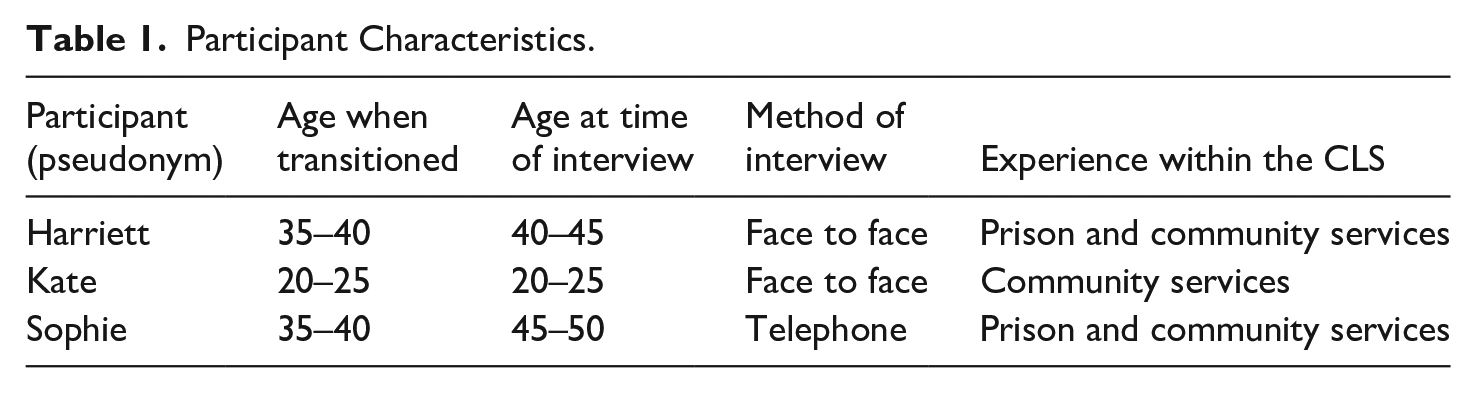
Due to the practical challenges of accessing a niche and highly marginalized population, a small sample size was anticipated. Additionally, IPA is designed to gain in-depth insight into how individuals make sense of their lived experiences, and thereby prioritizes depth over breadth (Smith et al., 2009). The aim is not to generate generalizable findings, but to explore the detailed, subjective experiences of a relatively homogenous group at a case-level. A total of three participants under the supervision of the Probation Service agreed to be interviewed. All participants identified as female and were aged between 20 and 50 years. The characteristics of the sample were shaped by limited access to a small and hard-to-reach population. At the time of recruitment, there were nine transgender individuals working with probation officers in the community.
While the study initially aimed to include only those who had transitioned from a custodial setting back into the community, one participant had not served a prison sentence and was instead completing a community order. The decision was made to include this participant, as they still met the criteria of being a transgender woman with a conviction for a sexual offense under the care of the Probation Service. All participants had received at least one conviction for a sexual offense. Despite this minor variation, the sample was sufficiently homogenous for the purpose of IPA, allowing for an in-depth exploration of participants’ meaning-making around their gender identity, their experiences with Probation Services, and the process of re-integrating back into the community (Table 1).
Participant Characteristics.
Data Collection
The data were generated through semi-structured interviews, and for the purpose of a doctoral research project (Tan, 2021). This allowed for a flexible approach, in which questioning could be modified in response to participants’ responses and the importance they placed on particular experiences (Smith et al., 2009). Interviews lasted between 1.5 and 3 hours. They were audio-recorded using an encrypted Dictaphone, with audio recordings transferred to an encrypted memory stick (before leaving the premises in the case of the in-person interviews). Two interviews took place in person, while the third interview was conducted via telephone due to COVID-19 restrictions. All interviews were conducted in 2020.
Interview Schedule
The development of the interview schedule was informed by relevant literature, discussions with research colleagues, Multi-Agency Public Protection Arrangements (MAPPA) staff, and guidance on conducting IPA with transgender communities (Chan & Farmer, 2017). It used exploratory, open-ended questions to allow participants to discuss what was most important to them. Interviews began by asking participants about when they first identified as transgender, followed by questions about their thoughts and feelings during that period in their lives. Subsequent questions explored their experiences in the community, including the first few weeks post-release (for two participants), their interactions with Probation Services, recent challenges linked to gender identity, and what had helped or hindered their adjustment and well-being.
The interview schedule was designed to explore participants’ transition journeys and their lived experiences of navigating life in the community with a prior conviction. While all participants had been convicted of sexual offenses, the interview did not focus or include questions about their offenses. This approach was informed by ethical considerations, recruitment sensitivity, and guidance from MAPPA professionals. They also expressed that probation staff would benefit from gaining an in-depth understanding of the backgrounds and lived experiences of transgender individuals under supervision, particularly in relation to gender identity, community support needs, and the challenges they may face, in order for services to better support them. Although offense-related narratives were not directly sought, participants were free to raise them if they wished, and some did reflect on the impact of their convictions on their lives in the community.
Data Analysis
Broadly speaking, the analytic process involves moving from single cases to examining the similarities and differences across the cases within a sample (Smith et al., 2009). IPA’s idiographic focus, and its commitment to a rigorous, finely-textured analysis, resulted in themes that captured both the participants’ shared experiences and their distinctive voices (Smith & Eatough, 2006). The analysis was centered on balancing two elements: (i) the participant’s ability to give voice to an experience, and (ii) their making sense of that experience (Larkin & Thompson, 2012). During the initial stages of analysis, the researcher attended to each of the transcripts individually. The first stage involved reading and re-reading the text, where initial thoughts and observations were noted. These were specified into descriptive comments (content and use of language), linguistic comments (repetition, metaphors, non-verbal accounts), and conceptual comments (questioning the participants’ sense-making). Following this, the researcher identified and labeled initial themes while working through the text line-by-line. This required the researcher to move from the descriptive to a higher level of interpretation for each case (Smith et al., 2009). The three transcripts were systematically analyzed in this manner. The next stage involved looking for connections and conceptual similarities between the thematic labels, and tentatively compiling themes for each of the transcripts. Each transcript was examined individually, and a table of initial higher-level themes was produced, supported by example verbatim extracts. Having produced three separate tables of initial themes (one for each of the participants), attempts were made to integrate these into an inclusive list of superordinate themes that reflected the lived experiences across the group of participants. The overall thematic map provides an overview of the participants’ experiences, and their “story” of the essence of being transgender. Themes are presented in a chronological order in order to illustrate how participants narrated their transition from childhood into adulthood.
Ethical Considerations
The study was granted full ethical approval by the University of Birmingham Ethics Committee. The researchers adhered to the British Psychological Society’s Code of Human Research Ethics (British Psychological Society [BPS], 2021) throughout the study. In addition, the study was reviewed by the National Research Council (NRC) of His Majesties Prison and Probation Service (HMPPS). Pseudonyms were used to protect the identities of the participants.
Results
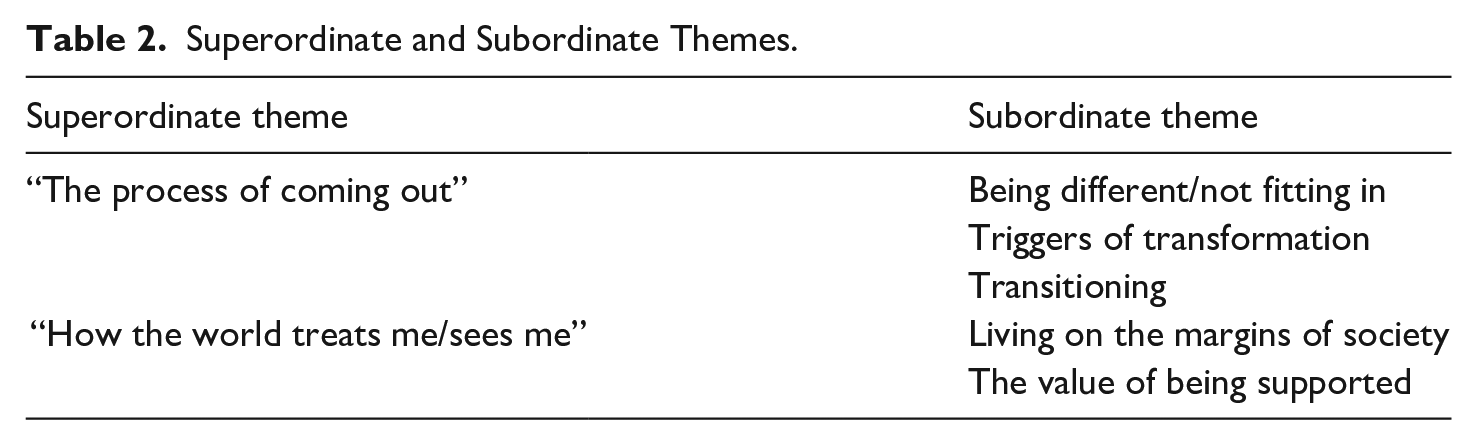
The analysis identified two superordinate themes: (i) “The process of coming out” and (ii) “How the world treats me/sees me.” Within each superordinate theme lay several subordinate themes. Convergence and divergence across the participants’ narratives are considered throughout the presentations of the findings (Table 2).
Superordinate and Subordinate Themes.
The Process of Coming Out
The first superordinate theme reflects the participants’ experiences of progressing through a series of stages where they explore, define and share their gender identity. The theme consists of three subordinate themes: (i) “Being different/not fitting in”; (ii)“Triggers of transformation”; and (iii) “Transitioning”. This theme reveals the continuous process of understanding, accepting and valuing one’s gender identity.
Being Different/Not Fitting in
Across the participants’ accounts, there was recognition that their gender was not aligned with their sex and gender assigned at birth. The participants’ narratives tended to focus on their experiences in their formative years which appear to be characterized by feelings of confusion, being disconnected, and being different from others.
During the initial stages of coming out, Harriet and Kate spoke of being intuitively aware that they were different to how others perceived them: I’ve always had feelings of identifying as more feminine and stuff from when I was really young but I didn’t have like the words or conceptualization of what it was to be transgender. . .I didn’t really feel in the right place. (Kate)
Harriett and Kate describe having an early affiliation with a feminine gender, however, they lacked awareness of gender variance as children. They were therefore unable to understand and/or label feelings of gender non-conformity. Both participants discussed experiences of gender incongruence in their formative years. This appeared to generate feelings of being different from others, which was internalized by participants in distinct ways. Harriett described feeling that something was inherently wrong with her. She felt ostracized and experienced discomfort with her transgender identity.
Kate also expressed feeling alienated and disconnected from others. At school, Kate described having more of a rapport with girls and felt better able to relate to them. She expressed having difficulties in navigating male social spaces. Kate had no conceptual awareness of being transgender and therefore struggled to verbalize her experiences: “I was experiencing very much confusion at the time, and I wanted to express myself as being feminine, but not being able to have like the words at the time to talk to my parents and explain” (Kate). There is a sense of emotional and social isolation within Kate’s excerpt. She appears to have admitted to herself that she identifies as female, however, she lacked the language to be able to share her thoughts, emotions, and experiences with her parents. Sophie spoke about identifying with a minority group that was often hidden from society “Being a male, it was horrible. . .I was forced to be male from a young age and that’s not who I was.. . .”
Sophie appeared to struggle between what was deemed socially acceptable and her sense of self. She felt pressured to conform to male expectations when she did not identify as male. This juxtaposed her experience of being female, where she placed great emphasis on feeling positive. Overall, this subtheme highlights the various ways in which participants did not feel seen, heard or understood.
Triggers of Transformation
This subordinate theme captures the antecedents in the participants’ adult lives, which prompted them to begin acknowledging the gender non-conforming feelings they were experiencing. Within the early stages of reclaiming their gender identity, participants maintained a psychological distance from others while engaging in self-reflection. Participants discussed navigating uncertainties and unknown spaces of their internal world within the context of social stigma.
Across participants’ accounts, there were discussions about ruptures within romantic relationships and how this led them to confront issues which related to their gender identity. Some participants spoke about feeling emotionally distant from their partners: It would have been about seven years ago that I identified as transgender. But it was more in secret. . .I was still married with my wife. . .but we were at that terrible part where we weren’t getting on really well. . .It was at that time I started exploring it [gender identity] and started transgender just part-time. (Harriett)
There is a sense of trepidation as she progresses cautiously through unfamiliar territory. She spoke about keeping her transgender identity a “secret” from her wife when she initially started to explore her gender. This suggests that shame may have acted as a barrier toward her transformation and led to her feeling fearful about how her wife would respond.
Sophie also began dressing as a woman on some occasions (before coming out), but unlike Harriett, she felt able to share this with her wife who was accepting. For Sophie, being seen as a woman brought positive emotions and a way to feel good during a turbulent period in her life.
She [wife] liked it when I did dress up. . .we had some fun. Obviously, after I got divorced my head went to pieces a bit it and I spent even more time dressing, going out and having fun and games. It took the pretty serious car crash when I was about 37. . .when I started making like a mental list and realized I’m not just a cross-dresser, I’m not a transvestite, I’m transgender. (Sophie)
Sophie considers the significance of experiencing an existential threat where she almost lost her life. This seemed to have acted as a trigger for her to reflect on her gender identity. There is a moment of clarity where she realizes that being female was a core part of her identity and that it was not transitory: My Land Rover went nose over tail. I damn near got killed. . .I just had a long think and talk with myself. . .I was thinking well, I’m not male. . .There was so much for me being female. . .I identify as female. For all these years, it’s been wrong. (Sophie)
Harriett also pursued a process of inquiry, although it was based on fact-finding and involved acquiring information from the internet. Harriett addressed her uncertainty about her gender identity by seeking information from others in an anonymous manner (i.e., on the internet). Harriett seemed to have felt like she was able to relate to the information and saw this as evidence that confirmed her transgender identity.
Transitioning
This subordinate theme outlines the ways in which participants started taking action to bring their gender role and appearance into alignment with their gender identity. It is focused on how participants outwardly expressed their gender identity and highlighted the importance of identity indicators.
Across the participants’ accounts, the process of transitioning began with the disclosure of their female identity when they came out as transgender. For Sophie, changing her legal name and declaring her female identity appears to have had a significant psychological impact: I got my name changed and that’s basically like when I was right this is who I am. Free at last. . .to be who I am. I don’t have to lie. . .to conform to what ideals were expected of a male. . .That just wasn’t me. Now I am living fully female. . . For years, I’ve lived with a millstone on me. (Sophie)
There appears to be a definitive moment where she made a conscious decision to embrace her gender identity and live authentically as female. There is also a sense of being proud of stepping into her gender identity. The social recognition of her female identity seems to have enabled her to emancipate herself from the societal expectations of maleness and separate herself from her sex and gender assigned at birth.
Participants spoke about the initial responses from friends and family when they came out as transgender. Harriett was pleased to have received a positive reaction: Everyone took me in a positive, which is pretty good. I know not everyone gets that, but. . .I was much happier after that. . .The main part was just a relief really that I told someone and they accepted it and was really good because I was expecting people not to accept it and just walk away. (Harriett)
Kate and Sophie on the other hand received mixed responses. Kate stated that her father was not supportive, and Sophie spoke about losing friendships and feeling abandoned.
For some participants, transitioning was defined by the medical model. Kate discussed seeking medical intervention soon after she came out and declared her female identity: It was relatively quick after coming out that I began transitioning. Because having recently seen the consultants and stuff, I found out that it looks like I’ve never had puberty properly or anything and it’s probably a genetic thing. (Kate)
She appears to adopt the viewpoint that she was inherently female and had little control over her biology. Therefore, seeking treatment based on the medical model seemed to be the most appropriate course of action.
As Kate had already felt that she was innately female, there is a sense that transitioning was seen as aligning her body to her sense of self. Sophie also spoke about seeking medical advice and liaising with her doctor: I went to see my GP. . .at least now I know because I had a diagnosis of gender dysphoria. . .Well, there is something wrong with me. . .Get it treated and get it fixed. (Sophie)
In the excerpt above, it would seem that having a name or label for her distress validated her experiences of being different and not fitting in over the course of her lifetime up until that point. For Sophie, a diagnosis brought clarity and understanding and also provided an option for treatment. Sophie and Harriett also discussed their commitment to expressing their femininity within their day-to-day life and highlighted the continuous process of learning: I’ve got to learn everything that a woman has learnt in 38 years. . . Yeah, it was throwing me at the deep end. . . So, I had to learn for myself. . .working out how to be female. (Sophie) I think since prison and now, I’ve gone forward. My makeup has got a lot better. . .but it’s the little things like that that makes it easier so society sees me as female. Then they just look and go. They don’t even take a second glance and just carry on walking to the next person they look at. That helps everything basically. (Harriett)
Harriett’s excerpt above indicates that she furthered her learning and continued to develop on the expression of her gender identity after being released from prison. Harriett implies that a (male) custodial environment may have impaired and stunted her process of transitioning (see the following section). Harriett also introduces the concept of “passing” and discussed the significance of other people recognizing (and accepting) that she is female. She felt it was important to pay attention to the smaller details in her appearance because “passing” or “blending” seemed to boost her confidence.
How the World Treats/Sees Me
The second superordinate theme reveals that participants continue to feel that they are different from others (in the CLS and mainstream society) while navigating adult life as transgender women. The theme provides an insight into the participants’ experiences as gender minorities, focusing mainly on their interactions within the CLS, including time spent in custody as well as community services. Their experiences are captured in two subordinate themes: (i) “Living on the margins of society” and (ii) “The value of being supported.”
Living on the Margins of Society
Participants discussed experiences of stigma, discrimination and transphobia. They describe how these experiences were related to being transgender in systems which rely on a binary definition of gender. The participants’ narratives indicate that this dichotomous view of gender often leads to them being placed on the peripheries of society and/or communities within the CLS. They consider the impact of these experiences on their mental health although also noted a positive shift in social attitudes toward transgender people in more recent times.
Harriett spoke about the treatment of transgender individuals in a custodial environment and reported being housed separately from the general prison population: I was kept separate to a lot of the people. You know like in an enhanced block. When it was only like 20 transgender people. . .a smaller bit so it was easier for them [staff] to manage transgender people. . .(Harriett)
Harriett expresses that the system is tailored toward a male prison population and transgender people have different needs which should be met. She implies that she had minimal exposure to people who are prejudiced toward transgender individuals. However, the excerpt below demonstrates that she did have some experience of discrimination in hostels after her release: There was just one or two [people at the hostel], that would ignore me, which was fine. I don’t hold a grudge against them. I understand why they don’t like transgender people. . .Some people don’t like it when someone’s different. (Harriett)
Harriett is somewhat tolerant of people who are discriminatory, her narrative tone is one of acceptance and there is a sense that she feels discrimination is unavoidable for people who are considered part of a minority group.
Alongside these experiences of discrimination with residents, Harriett also spoke about the positive treatment she received from staff at the hostel: I was the only transgender female that was there [at the hostel]. But they actually accepted me and they didn’t mind, which was quite a surprise for myself. Because I was expecting them not to like me. . . . (Harriett)
Harriett valued their hospitality which is likely to have eased her worries of being different from other people at the hostel. When Kate discussed her experiences with probation officers, she spoke about their attitudes toward her as a transgender woman: Probation’s attitudes (towards me) has not been very kind. They’ve just put me on the outskirts of everything. . .because they are only just barely getting some sort of order in themselves and how you deal with a transgender person and they’d much rather pushed me off to the side until my order with them is finished so they can just not have to deal with me anymore. (Kate)
Kate also refers to being treated like an “object of curiosity”, which communicates her perception of being seen as strange or unusual by probation officers. There is a sense that she felt defined by the “transgender” label rather than being seen as an individual. She believed that this acted as a barrier toward establishing a supportive relationship with her probation officer. Kate went on to state: I’d say mainly the lack of understanding (was difficult to deal with), like they (Probation Services) wouldn’t put me with a group of women for the unpaid work. I don’t know why. They wouldn’t treat me as either male or female. . .just something in between. (Kate)
According to Kate’s narrative, some parts of the Probation Services do not appear to be adequately prepared to deal with transgender individuals. Kate’s narrative tone conveys her confusion—she identifies as female yet she is not placed with women for community service. This implies that Kate does not feel recognized or accepted as female by the Probation Service, which may reinforce the perception that the world does not understand her. She describes not being treated as male or female, “just something in between”; this may also evoke feelings of not belonging earlier in life. Kate provides a scenario which appears to indicate that some probation practitioners lacked understanding around issues related to gender diversity: “The first probation officer made comments on how I was dressing or whatever. Not how she saw as the right way. Like not feminine enough for (her). . .which I wasn’t very happy with.” (Kate). There is a sense that Kate did not feel accepted or seen as female by her probation officer. Kate discussed further incidents where she experienced gender-based discrimination in the court system, including the distress of hearing her former male name—commonly referred to as a dead name—which she experienced as invalidating and deeply upsetting.
These re-occurring incidents where Kate’s female identity was not affirmed were potentially invalidating and could elicit experiences in her early life where Kate received implicit messages that she is not female (from family/society). Kate described how these experiences of prejudices throughout the CLS had impacted her mental health and caused negative emotional consequences: Some of the things that happened (with Probation Services) ended up making me really depressed. . .I blocked it out because it made me sad. . .I’ve come back like almost suicidal because of some of the stuff they’ve ended up saying and doing. (Kate)
Although the participants spoke about the challenges of living with discrimination, Harriett noted a significant shift in societal attitudes toward transgender people: Society itself has moved on quite a bit. When I went into prison, they were quite quiet about transgender people and it was a like taboo sort of subject. . .since coming out of prison, it’s been a much more open thing. (Harriett)
Sophie also referred to a shift in societal attitudes during her search for employment: Being transgender hasn’t been too much of a problem for jobs. . .They don’t see, dude in a dress. You know, those sort of mindsets are like 15 – 20 years old now. . .The bigger problem has been being an ex-con. (Sophie)
In addition, Kate states that identifying as transgender did not present a problem for her employers, in fact she provides an example of positive discrimination based on her gender-identity in the quote below: Well employment wasn’t really a problem. I just applied for some bigger companies and they’ve got their little like quotas and stuff to fill with check boxes. . .Oh, you’re not white so you can join. Oh you’re gay, you can join. Oh you’re transgender. Yep that ticks a box. (Kate)
The Value of Being Supported
The importance of social support in alleviating emotional distress and promoting resilience to stress was highlighted by participants in this subordinate theme. Kate explains that the relationship with her peers on an online forum played a central role when coping with adversity: I’ve got a lot of friends online that I can talk with. Like other transgender people that I know. I get a lot more support from them than anyone else. . .If I get stressed, I can just vent to some of my friends online. We’re all in similar situations so they get the more obscure little victories and stuff. (Kate)
Kate valued being able to confide in other transgender people as they not only appear to understand the challenges, but are also able to recognize the triumphs. It seems that connecting with the transgender community provided a way for Kate to cultivate emotional resonance (i.e., I feel your pain and/or happiness).
Harriett also highlights the importance of having a support network following her release from prison. She discussed the psychological impact of internalizing people’s negative perceptions and referred to the deterioration of her mental health when re-integrating back into society. Within the context of living in a society where she felt stigmatized and marginalized, having a sense of connectedness in a community with her peers appeared to provide a platform where Harriett felt heard and understood. Harriet also spoke about how she appreciated when staff in probation hostels were open to adaptions and her suggestions for making changes: The staff (at the hostel) they’ve never had a transgender person in before. . .so it was an experience for them. I gave them a few pointers on some bits. The bathrooms and the showers. . .they were too near to each other. . .I asked if I could move into this other one and put the shower in that corridor. I would be the only one there and they said “yeah, sure no problem.” That was quite nice of them to do that. (Harriett)
Harriett seemed to find it helpful to have a space at the hostel where she felt safe to discuss bathroom arrangements and communicate her needs. The only issue she raised with regards to staff in the hostel was the use of the correct pronouns: They (staff) kept occasionally using ‘he’ and ‘mister’. That was the hardest part, I needed to correct them over that part. I would let it slide once and the second time. . .It was hard for them to do ‘she’ but hopefully over time that will improve. (Harriett)
It was clearly important for Harriett to be recognized as female. Even though the use of the wrong pronoun was unintentional, she felt that being misgendered was the “hardest part.” It is likely that the use of incorrect pronouns was invalidating, and Harriett felt a responsibility to step outside what was comfortable for her in order to establish the use of correct terminology.
Discussion
Using IPA, this study sought to explore the lived experiences of transgender women in the community who had been convicted of a sexual offense(s), with a particular focus on their experiences of transitioning back into the community. The synthesis of the participants’ narratives and researcher’s interpretations identified specific needs which have implications for the care and management of these individuals in the Probation Service. The following sections aim to discuss factors that are likely to be relevant for practice.
Transgender Individuals in the Criminal Legal System
Within the preliminary stages of “The process of coming out” theme, participants discussed their experiences of “being different/not fitting in” at a young age. Although these findings are significant, research with this population has previously highlighted feelings of gender incongruence in their formative years (Nulty et al., 2019). This suggests that discomfort with a person’s assigned gender in childhood is a consistent feature across the transgender population, and it is therefore also important to consider these experiences of feeling different and not fitting in within the context of the CLS.
Some participants framed their transition within what is often referred to as the medical model of transgender identity. This model views being transgender as a condition to be diagnosed and treated, typically through medical interventions such as hormone therapy or gender-affirming surgery. For some individuals, this framework can offer clarity, validation, and access to necessary care. Two participants explicitly described a sense of reassurance and legitimacy in receiving a diagnosis, which helped them to understand their identity and feel “normal.” However, the medical model has also been criticized for reinforcing binary gender norms and positioning transgender identity within a pathologizing framework. These concerns have prompted growing support for more affirming and individualized approaches to care (Budge et al., 2024). In this study, medical narratives appeared to offer some participants a sense of relief and social recognition, particularly when their experiences were framed as biologically determined.
These findings also reflect broader systemic dynamics, in which transgender individuals must often conform to medicalized narratives to access appropriate services. As Chesnut and Peirce (2024) argue, reliance on rigid criteria for diagnosis and care can exclude or delay support for individuals whose gender identity does not align neatly with binary frameworks. Embedding more flexible, person-centered approaches into Probation Service policy could mitigate these barriers and improve the mental health and well-being of transgender individuals, which in turn may reduce the risk of reoffending.
More specifically, the theme of “How the world treats/sees me” provided an insight into the experiences of transgender individuals who encountered the court, police, prison and Probation Services. Within the “Living on the margins of society” subtheme, there were reports of feeling mistreated by services in the CLS due to their transgender identity. One participant highlighted the lack of recognition for their gender identity, and feeling that they were neither acknowledged as female, nor treated as male by probation practitioners. These findings suggest that gender-based discrimination appears to permeate across the CLS. However, many of these interactions seemed to be based on the premise that people working with transgender individuals lacked knowledge, understanding, and confidence around the concept of gender diversity. In essence, some services in the CLS were not prepared to respond appropriately to transgender individuals and their specific needs.
This is consistent with previous studies, both in the UK and Australia, which highlighted the need for staff to feel supported when working with this population (Daken et al., 2024; Poole et al., 2002). In particular, in the study by Daken et al. (2024), correctional staff reported feeling ill-equipped to engage with gender-diverse populations due to insufficient training and an absence of institutional support. Although some of this work is outdated, the needs remain. It is therefore important that this is addressed through systemic training initiatives that could help reduce discrimination and improve responsivity within Probation Services.
This is especially important in light of the findings from the present study around the impact of prejudicial attitudes and gender-based discrimination on mental health, with this being a consistent feature across the participants’ narratives. References to depression, anxiety, and suicidal ideation, are in line with findings in the general literature on transgender individuals’ mental health and well-being (Bockting et al., 2013; McNeil et al., 2012; Nuttbrock et al., 2014; Timmins et al., 2017). While some participants attributed their psychological distress to experiences in the CLS, it is likely that previous experiences of stigmatization, and feelings associated with gender incongruence in their early life, were triggered. This echoes findings from Hughto et al. (2022) who identified that early-life victimization and marginalization among transgender individuals are linked to psychological distress, particularly when re-exposed to adverse environments, in later life.
Undoubtedly, for some participants, these experiences are further magnified through facing rejection from family and friends in the “transitioning” subtheme. Such experiences of societal marginalization are concordant with the stressors outlined in the Gender Minority Stress and Resilience Model (GMSR; Testa et al., 2015). More specifically, the model suggests that experiences of gender-based victimization, rejection, discrimination, and non-affirmation (i.e., gender identity not being recognized by others), could lead to internalized transphobia and negative expectations from the CLS. It is possible that the lack of recognition of their female identity in the CLS evokes difficult emotions that are associated with a long-standing social history of non-acceptance from people, institutions, and communities. Combining this with more current issues faced by participants during their re-integration into the community, such as accessing housing and employment, could lead to a biased negative appraisal of services in the CLS, and discomfort with one’s transgender identity.
In line with the GMSR framework, which suggests that connecting with other transgender people and taking pride in one’s identity mitigates the impact of gender-related discrimination on mental health, “The value of being supported” subtheme highlighted that supportive relationships and peer support was fundamental for managing psychological distress within the context of persistent societal stigma. Participants discussed the use of an online platform to connect with the transgender community, and highlighted its value in coping with stressors. In relation to practice, the importance of social and personal circumstances is particularly relevant in supporting this sub-group of transgender individuals with criminal convictions in the community.
In addition to a support network, participants also valued services which were able to adapt toward gender-affirming practices and respond to their needs. Examples included access to private bathroom facilities, having a forum or person(s) to raise issues/make suggestions, and use of the correct pronouns. Each of the participants discussed the need to consider practical adaptations. Staff who were open and receptive to new ways of working appeared to take guidance from transgender individuals. These findings could reflect the few resources available to assist staff when working with this sub-group of transgender individuals. It also highlights the importance of the responsivity principle within the aforementioned Risk-Need-Responsivity framework.
The responsivity principle places emphasis on a collaborative approach, which aims to facilitate supportive practices in the care and management of transgender individuals with prior convictions for sexual offenses (Andrews & Bonta, 2010). Factors that relate to the individual’s mental health and well-being, and previous experiences of rejection, where their gender identity has not been recognized, are likely to influence their interpersonal style (i.e., the way in which they relate to others). One participant’s narrative suggested that expecting rejection served as a defense mechanism. This may lead to a more withdrawn or perhaps guarded presentation and suggests difficulties in developing trusting relationships due to fear of rejection.
Challenges in the Community
Participants referred to difficulties in gaining employment and housing, although this did not appear to be related to their gender identity or at least was not attributed to this by them. Some participants spoke about the prejudice toward people with previous convictions of sexual offenses, while others highlighted flaws within the social benefit system. There are a plethora of factors which contribute to the challenges in securing employment and housing. Participants referred to their convictions for sexual offenses as being an hindrance in this process, much more so than their gender identity, which was, in fact, perceived to serve in their favor. This finding resonates with research by Neyenhaus et al. (2025) who note that individuals with convictions for sexual offenses can face some of the most severe civic exclusion and community-based stigma, including barriers to employment, housing, and social reintegration. While transgender individuals may experience discrimination due to their gender identity, the stigma attached to a criminal conviction, especially one for a sexual offense, and particularly in relation to public safety fears and punitive policy frameworks, often results in even greater marginalization in community contexts.
Limitations
Throughout the present study, attempts were made to identify a purposive and broadly homogenous sample, as is required for an IPA study (Smith et al., 2009). However, due to recruitment challenges and such a limited participant pool, the sample was not as homogenous as intended. Nonetheless, guidance on conducting IPA was closely followed, ensuring that the methodology was applied rigorously (Larkin & Thompson, 2012; Smith et al., 2009). While it is acknowledged that the study involved a small sample size, with only three participants interviewed, IPA still values depth of insight over breadth, and is not intended to produce generalizable findings. Instead, the strength of IPA lies in its capacity to offer detailed, nuanced accounts of individual experiences.
A potential limitation is that the present study did not place emphasis on the participants’ convictions for sexual offenses. This was a deliberate choice, grounded in the ethical and methodological considerations outlined in the Methods section. The aim was to focus on their experiences around transitioning and re-integrating back into the community, rather than framing these primarily through the lens of their criminal convictions. While this approach resulted in limited contextual detail regarding participants’ convictions, it may also be viewed as a strength. By not focusing on their offense histories, the study treated participants as individuals first, enabling a focus on their lived experiences of transitioning and community reintegration. Interestingly, many of the challenges they described mirror those found in the wider literature on transgender individuals in the CLS. This suggests that their experiences may not be fundamentally different from others in this population, supporting the case for consistent, person-centered supervision and care, rather than approaches that implicitly conflate gender identity with risk.
Suggestions for Practice
Transgender women with prior convictions for sexual offenses often face challenges when placed in male community services. Such placements can lead to feelings of alienation and not fitting in. Ensuring that service placements align with an individual’s gender identity is crucial to avoid invalidation and promote inclusivity. In particular, housing policies for transgender individuals in the CLS remain a contentious issue. Studies by Brömdal et al. (2024) and Maycock (2020) reveal diverse preferences among incarcerated transgender individuals regarding housing arrangements. Some prefer placement according to their gender identity, while others express concerns about segregated “trans wings.” These findings underscore the need for flexible, individualized housing policies that prioritize choice, dignity, and harm reduction. Although these studies focus on custodial settings, the principles are equally applicable to community supervision contexts, especially concerning supported housing or approved premises.
Furthermore, staff attitudes significantly influence the experiences of transgender women within the CLS. Participants in this study reported that positive, respectful, and responsive interactions with staff fostered a sense of safety and self-worth, whereas negative interactions led to distress and disengagement. Instances of transphobia and gender-based discrimination within the CLS were reported by participants. Such experiences highlight systemic barriers to care and protection (Sahota, 2020). These findings align with existing literature indicating that correctional staff can lack adequate training and awareness regarding transgender issues, which can result in discriminatory behaviors and a lack of appropriate support for transgender individuals (Daken et al., 2024). Addressing these challenges requires comprehensive training programs that emphasize cultural competency, inclusivity, and the specific needs of transgender individuals to build effective working relationships and promote a culture of respect and equality.
Here, the responsivity principle of the Risk-Need-Responsivity model (Andrews & Bonta, 2010) is particularly pertinent. Persistent societal stigma and prejudice contribute to “minority stress,” adversely affecting mental health. Staff awareness and sensitivity to these factors are essential in developing rapport and facilitating effective community supervision (Appleton, 2018). For example, incorporating an intersectional framework into probation policies and training can enhance practitioners’ understanding of the complex interplay between gender identity, race, class, and prior CLS involvement. Recognizing these intersecting factors is vital in addressing compounded feelings of invisibility and systemic discrimination (Chesnut & Peirce, 2024), with affirming practices in health and social care having been linked to improved mental health and community integration among transgender individuals (Budge et al., 2024). Implementing similar practices within probation settings can promote psychological well-being and successful re-integration. Consistent application of gender-affirming practices, such as using correct pronouns and providing access to private spaces, as mentioned by participants in the present study, is therefore recommended. A final recommendation is the establishment of continuous evaluation mechanisms to assess the effectiveness of implemented practices. Such ongoing assessments will help identify best practices, ensure that interventions remain responsive to the evolving needs of transgender individuals, and uphold a rights-based approach to support.
Suggestions for Future Research
Several recent studies (e.g., Chesnut & Peirce, 2024; Maycock, 2020) have emphasized the importance of actively involving transgender individuals in shaping the policies that govern their lives, particularly in carceral and post-release contexts. Future research would benefit from exploring models of co-production within the Probation Service and developing practices that are informed by those with lived experience. In addition, it would be beneficial to undertake similar research involving other gender minority groups within the CLS, including transgender men and those who identify as non-binary, gender fluid, and/or who were born with an innate variation of sex characteristics. To enact any meaningful change, future research should evaluate the effectiveness and equity of gender-affirming initiatives across community and custodial settings. Co-designed interventions, which draw directly on the lived experiences of transgender individuals, are likely to yield more sustainable results. Lastly, although not a primary focus of this study, existing literature suggests that gender identity may intersect with other forms of marginalization, such as race, class, and prior justice involvement, potentially compounding disadvantage (Chesnut & Peirce, 2024). Such contextual factors warrant further exploration.
Conclusions
The present study sheds light on a marginalized and under-researched population, namely transgender women with prior convictions for sexual offenses, who navigated life under community supervision. The findings underscore the central role of staff attitudes in shaping participants’ experiences—respectful, responsive interactions promoted self-worth and safety, while dismissive or discriminatory behavior fueled distress and disengagement. Experiences around housing and employment barriers were directly attributed to their “ex-offender” identity, rather than their gender identity, highlighting the social, and structural challenges faced while re-integrating back into the community. Employment and stable housing remain vital foundations for desistance and re-integration (Johnson, 2018), supporting the criticality of these findings for service design. Overall, our findings highlight the importance of gender-affirming, individualized approaches within Probation Services. Responsive and inclusive practices, informed by an understanding of the unique challenges faced by this population, are essential to supporting well-being, engagement, and rehabilitation.
Footnotes
Author’s Note
This research was conducted as part of the requirements for a doctoral thesis.

Ethical Considerations
Ethical approval for this study was obtained from the University of Birmingham ethics committee prior to data collection.
Consent to Participate
All participants provided informed consent to participate in the study, with their rights to confidentiality and anonymity fully respected.
Funding
The author(s) received no financial support for the research, authorship, and/or publication of this article.
Declaration of Conflicting Interests
The author(s) declared no potential conflicts of interest with respect to the research, authorship, and/or publication of this article.
Data Availability Statement
The data supporting this study are not publicly available due to their sensitive nature and restrictions imposed by the ethics committee.