




Abstract
This paper examines the post-release trajectories of Roma women through the lens of intersectionality, focusing on the compounded impacts of gender, ethnicity, socio-economic status, trauma, and health issues. The study highlights the unique challenges faced by Roma women upon their release from prison, emphasizing how these intersecting factors exacerbate their reintegration difficulties. Utilizing an ethnographic approach, the research captures the lived experiences of 15 Roma women in Romania, revealing critical insights into their struggles with motherhood, poverty, health care, stigma, and employment. The findings align with existing literature on the systemic barriers faced by minority women and underscore the need for culturally sensitive and gender-specific support programs. By applying Crenshaw’s intersectionality framework, this study provides a nuanced understanding of the multidimensional oppression experienced by Roma women, advocating for more inclusive policies and interventions to improve their reintegration outcomes.
Introduction
International statistics reveal a troubling rise in the number of incarcerated women. According to the World Female Imprisonment List compiled by Fair and Walmsley (n.d.), the number of women and girls in prison worldwide has increased by nearly 69% since 2000, compared to a 22% increase for male prisoners. The highest female prison population rates are found in the US (64), Thailand (47), El Salvador (42), and Russia (27).
In the US, the female prison population has surged by 834% in the last 40 years, making women prisoners the fastest-growing prison segment (Wagner & Sawyer, 2018). This trend is also evident in community corrections, where the number of women has doubled since the 1990s (Pew Charitable Trusts, 2018). More than one-quarter of the US probation population are women, with over 700,000 women on probation and 100,000 on parole as of 2020 (Hoskins, 2022; Kaeble, 2021).
In Europe, the percentage of women prisoners was 5.3% in 2022, consistent with 2021, despite an overall 1.3% rise in the prison population, leading to an absolute increase in the number of women prisoners (Eurostat, 2024). Romania has also seen an increase, from 4% in 2000 to 4.5% in 2023 (Fair & Walmsley, n.a.; World Prison Brief, 2024). Although these percentages might appear modest at first glance, they underscore a concerning trend towards the growing representation of women within the criminal justice system. This increase not only signals a shift in the demographic composition of incarcerated populations but also highlights systemic issues that disproportionately funnel women into criminal justice processes. These include the criminalization of poverty, unmet mental health needs, and gender-specific vulnerabilities such as experiences of domestic violence and caregiving pressures.
Many of these factors are reported disproportionately by some ethnic minorities. Due to misinterpretations of international or regional normative guidelines, many prison systems fail to record inmates’ ethnic origins. Unfortunately for this study, Romania belongs to this class of jurisdictions that do not collect data on ethnicity. However, available international data often show a disproportionate representation of Roma or Traveller women in prisons. In the UK, these groups constitute 6% of the prison population, despite representing only 0.1% of the general population (The Traveller Movement, 2021). This discrepancy underscores the need for detailed research and targeted policy interventions.
The global rise in women’s incarceration presents critical challenges, varying significantly across jurisdictions. The increasing incarceration of women, particularly from Roma/Traveller minorities, results in more women facing substantial difficulties post-release. These challenges affect individuals directly and strain the social support systems designed to facilitate their reintegration.
This paper explores the specific adversities Roma women face post-release, analysed through intersectionality. It begins with an overview of the Roma in Romania, followed by a literature review, methodology, findings, and concluding insights. By examining the compounded impacts of gender, ethnicity, socio-economic status, trauma, and health issues, this study provides critical insights into the unique and multifaceted challenges faced by Roma women upon their release from prison. The research captures the lived experiences of 15 Roma women in Romania, revealing critical insights into their struggles with motherhood, poverty, health care, stigma, and employment.
Roma Women in the Romanian Context
In this paper, “Roma” is defined according to the EU Roma strategic framework for equality, inclusion, and participation (2020–2030), encompassing diverse groups of Romani origin, such as Roma, Sinti, Kale, Romanichels, and Boyash/Rudari, among others (European Commission, 2020). The National Institute of Statistics estimated the Roma population in Romania at 569,500 self-identified individuals (3.4% of the population) in 2022, though researchers and Roma organizations argue the number is closer to 1.5 to 2 million (National Institute of Statistics, 2022; Romanian Government, 2022).
Reports highlight severe discrimination and poor living conditions among Roma people. The EU-MIDIS report (2018) stated that 80% of Roma in Romania live below the poverty threshold. One-third of Roma live without running water, and 1 in 10 without electricity. Many Roma children experience significant deprivation, with one-third living in households where a family member had to beg at least once in the last month. The latest Romanian strategy for Roma inclusion emphasizes significant obstacles in housing, employment, access to infrastructure, and health.
Roma women face particularly dramatic conditions, with only 16% employed and 72% of young Roma women not in employment, education, or training. They frequently encounter racial and gender bias in accessing health and public services. Anti-Roma attitudes pervade Romanian society, impacting Roma women across various spheres of life (Gheorghe & Mirga, 2013; Romanian Government, 2022). Roma women in Romania face high rates of violence, often inflicted by family members such as fathers or partners (Dan & Banu, 2018). Challenges like early marriages, school dropouts, early pregnancies, domestic violence, frustration, jealousy, and financial instability are also prevalent among Roma women in Romania, as noted by Dan and Banu (2018) and Velentza (2020). The prevalence of such issues is alarmingly high. For instance, Dan and Banu (2018) reported that 42% of Roma women in their sample experienced verbal abuse, such as being shouted at or insulted by male family members, and 38.5% had been physically assaulted by their husbands or other relatives.
Despite these alarming statistics, Roma women demonstrate significant reluctance to seek victim services or legal protection. This reluctance is compounded by structural barriers and cultural stigmas surrounding victimhood. Furthermore, similar patterns of violence and marginalization among Roma women have been documented in other countries, including Spain (Villacampa & Torres, 2020), Türkiye (Tokuc et al., 2010), and Bosnia-Herzegovina (Muftic et al., 2019). These cross-national findings emphasize the widespread and systemic nature of violence faced by Roma women, underscoring the need for targeted interventions that address both individual and societal barriers to justice and support.
This section provided a socio-demographic context for the research. The next section will review relevant literature on women’s post-prison trajectories.
Literature Review on the Post-Release Experiences of Women
Women in the Post-Release Studies
Initially, researchers treated post-release challenges as similar for men and women (Davis et al., 2012; Shinkfield & Graffam, 2009). Recently, there has been a shift towards a more gender-specific understanding (Dooren et al., 2011; Leverentz, 2006). Studies highlight that women face negative social support (Cobbiner et al., 2012), parenting stress, housing instability, and reduced employment opportunities (Baldry, 2010; Begun et al., 2016; Pettus-Davis et al., 2011; Salem et al., 2013). In the UK, only 8.5% of women find employment within the first year post-release (Ministry of Justice, 2013). They often are primary caregivers (Australian Institute of Health and Welfare, 2019; Kilroy, 2016), and some lose custody during incarceration (Moe & Ferraro, 2006). Maternal stress and other factors, such as trauma, mental health issues, and substance misuse, worsen their post-release trajectories (Begun et al., 2011; Doherty et al., 2014). The risk of death is notably high shortly after release due to avoidable causes (Commission on Women Offenders, 2012; Light et al., 2013; Power et al., 2013; Sullivan et al., 2019).
Minority Women in Post-Release Studies
The post-release experiences of minority women have gained academic interest over the last 20 years. Systemic barriers hinder their reintegration, often due to structural inequalities and discrimination. African American women in the US face significant racial discrimination in employment (Covington, 2007), while Aboriginal women in Australia deal with systemic racism and historical injustices (Baldry & McCausland, 2009). Minority women are also at higher risk of mental health issues due to marginalization and past traumas (Brown & Bloom, 2009; Kaur & Roy, 2022). Access to housing, healthcare, and education is critical for reintegration, but minority women face substantial barriers. In Canada, Native American women struggle with housing discrimination (Chartrand & McKay, 2006). In the UK, Muslim women released from prison face challenges in accessing culturally appropriate healthcare (Bradley, 2023; Buncy et al., 2022). Community support is vital; programs for Māori women in New Zealand and community-led initiatives in South Africa have shown positive outcomes (Department of Corrections, n.a.; Thornton, 2024). However, social reintegration is challenging due to stigmatization, as seen with indigenous women in Latin America and Roma women in Europe (Martinez & Christian, 2009; Barany, 2002).
Roma Women in Post-Release Studies
The post-release experience of Roma women is shaped by gender, ethnicity, socio-economic status, and systemic discrimination. They face significant barriers to reintegration due to stigmatization and marginalization (Goldston, 2010). Systemic discrimination in housing, employment, and social services compounds their challenges (European Union Agency for Fundamental Rights [FRA], 2014; van Baar, 2011). Poor health outcomes and lack of healthcare access further exacerbate their situation (Dan and Banu, 2018; World Health Organization [WHO], 2013). Effective support services tailored to Roma women’s needs are crucial, but there is a gap in such services (Trehan & Kóczé, 2009). The role of community and family is complex; while support can aid reintegration, traditional gender roles can restrict autonomy (Bancroft, 2005). The literature highlights the need for an intersectional approach to understand the compounded effects of gender, ethnicity, and socio-economic status on Roma women’s post-release experiences (Crenshaw, 1989, 1991). Addressing these intersecting dimensions can inform more nuanced and effective rehabilitation and reintegration policies.
The Concept of Intersectionality
“Intersectionality,” a term coined by Kimberlé Crenshaw in her seminal works from 1989 and 1991, refers to the interconnected nature of social categorizations such as race, gender, and class, creating overlapping and interdependent systems of discrimination or disadvantage. According to Crenshaw (1991), intersectionality can be examined through structural, political, and representational dimensions. Structural intersectionality focuses on how intersecting identities affect access to resources and opportunities. Political intersectionality examines how political movements and policies can marginalize those at the intersections of multiple social categories. Representational intersectionality looks at how media and cultural narratives often ignore or misrepresent individuals with intersecting identities, contributing to their marginalization.
Intersectionality provides, therefore, a crucial framework for understanding the multifaceted nature of social inequality that Roma women released from prison. Existing research has demonstrated how intersectionality can shed light on the compounded disadvantages experienced by Roma women, particularly in relation to social integration and the penal system (Mantovan, 2024). For instance, Vincze (2014) explores the intersection of ethnicity, gender, and class to reveal how Roma women are often excluded from employment and education, which significantly affects their social integration. Similarly, studies by Fair Trials (2020) highlight how systemic discrimination within the criminal justice system disproportionately impacts Roma people, exacerbating their marginalization and reinforcing cycles of disadvantage.
These findings align with Crenshaw’s structural intersectionality framework, which examines how overlapping identities hinder access to resources and opportunities. In the context of Roma women, structural barriers, such as inadequate housing, limited access to health services, and persistent prejudice, often intersect to create conditions of severe social exclusion (FRA, 2018). Moreover, the political dimension of intersectionality, as discussed by Maglione et al. (2024), provides critical insight into how policies addressing Roma inclusion frequently fail to address gender-specific issues, thereby neglecting the compounded discrimination faced by Roma women.
This paper builds upon this body of research by illustrating how structural intersectionality manifests in the experiences of 15 Roma women released from prison. By grounding our analysis in prior studies, we aim to deepen understanding of the intersecting challenges these women face, while inviting other scholars to explore how political and representational (cultural) dimensions further compound their marginalization. Incorporating insights from existing intersectionality-based analyses ensures a more comprehensive and grounded approach to understanding and addressing the systemic barriers affecting Roma women in the penal system and beyond.
The Study
This study is part of a broader comparative research initiative conducted under the EU Project “Between Inclusion and Re-inclusion: How to deal with Roma Offenders” (Roma OFF-IN). The primary aim of the project was to gain a deeper understanding of how Roma men and women navigate their post-release reintegration in three European countries: Romania, Italy, and Bulgaria. This paper specifically focuses on Roma women in Romania to highlight the compounded exclusion and discrimination this group faces.
Research Design and Methodology
The research employed an ethnographic design, immersing researchers in the participants’ environment through systematic observation, home visits, in-depth interviews, and photography (where permitted). The ethnographic approach was chosen for its capacity to provide a rich, contextualized understanding of the participants’ lived experiences and reintegration processes (Gobo, 2008).
Development of Methodological Tools
Prior to fieldwork, the research team developed and agreed upon the observation protocol and interview guidelines. These tools were meticulously designed to ensure consistency and reliability in data collection. A comprehensive research diary was maintained online using Google Docs, secured with double password protection. To enhance data security, full names were never disclosed in any document or transcribed interview; instead, a coding system based on a pre-agreed algorithm was used. The key to this algorithm was securely stored away from any IT equipment. Only the five researchers involved in the study had exclusive access to this information, ensuring confidentiality and data integrity.
Data Collection Methods and Data Analysis
Systematic Observation and Home Visits
Observations and home visits were integral to capturing the nuances of the participants’ post-release environments. Researchers documented participant appearance, behavior, interactions, and self-presentation. Photography, although not central to the methodology, supplemented observational data by providing visual context to the participants’ living conditions.
In-Depth Interviews
Interviews were conducted at five critical time points: prior to release, 1-week post-release, 1 month post-release, 3 months post-release, and 6 months post-release. These interviews focused on the participants’ understanding of release, their prison experiences, post-release expectations, identity, and the challenges and resources encountered during reintegration. The pre-release interview specifically emphasized prison experiences and post-release expectations, while subsequent interviews allowed participants to narrate their reintegration journeys through open-ended questions (e.g., “Please tell me what has happened since we last met”).
Participants were recruited following several presentations to women prisoners scheduled for release within 3 months. Volunteers completed a short questionnaire capturing socio-cultural characteristics across three generations, including family size, occupation, and languages spoken. The final question addressed ethnic origin, utilizing self-identification methods previously validated by the author (Durnescu et al, 2002). Selected participants received detailed study information and signed consent forms, and their contact details were collected to facilitate post-release follow-up.
Ethical considerations were paramount throughout the study. All interactions aimed to foster openness, transparency, and trust. Participants were informed of the researchers’ observational role and assured that their involvement would not influence their lives. Consistency in this approach was maintained, with only minor deviations due to unforeseen circumstances.
A total of 26 women prisoners from Tirgșor Prison were initially recruited. However, due to factors such as frequent changes in telephone numbers, high mobility, and participant withdrawal, only 15 women completed the study. The demographic and sentencing profiles of these participants are detailed in Table 1.
The Profile of Participants.
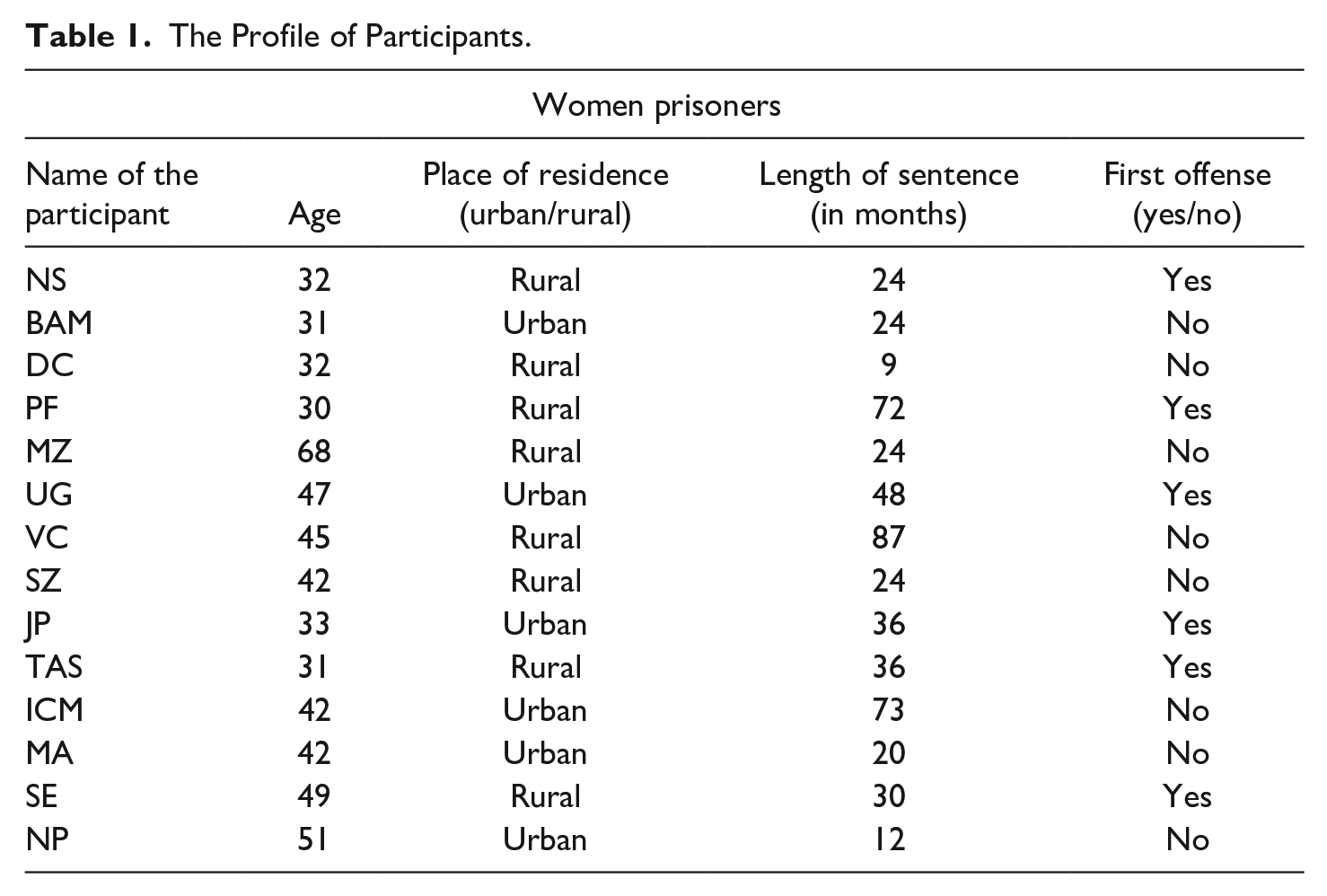
The average age of the participants was 41 years, and the average sentence duration was 37 months. These statistics are broadly representative of the general female prison population in Romania, indicating that the study sample is reflective of the larger demographic trends within the prison system.
Data analysis involved transcribing observation notes and interviews verbatim, followed by thematic analysis (Wolcott, 1994). Themes were generated inductively (Boyatzis, 1998) and discussed among the research team to ensure inter-rater reliability and minimize subjective bias.
Findings
In this section, the paper will describe how structural intersectionality represented by intersecting systems of oppression—such as trauma, abuse, loss, separation, poverty, illiteracy, ethnicity, and gender—shape the experiences of Roma women prisoners. As we shall demonstrate, these interconnected factors act towards exacerbating the challenges faced by Roma women after release.
To better illustrate how intersectionality manifests in real-life contexts, we will begin with one case study and then expand our observations and conclusions based on the insights from the other 14 participants.
Case Study: NP
NP is a 51-year-old Roma woman from Bucharest, living in Rahova district. 1 She has four children, with the eldest being 16 years old. Her husband is deceased, and her children live with her sister without any formal arrangements for their care. NP has prior convictions and has faced numerous challenges during her current incarceration. She graduated 4 classes in school and can hardly read and write.
During her sentence, NP did not receive any visits and had very limited resources. At one point, she showed that she had only 0.48 lei on her card (approx. 9,6 eurocents), insufficient to make a phone call or purchase basic necessities from the prison commissariat.
NP’s health also deteriorated during her time in prison. She reported discovering a lump in her breast but chose not to seek medical attention for fear it would hinder her chances of conditional release. This fear reflects a broader distrust of the prison medical system, where many inmates feel their health issues are inadequately addressed
NP’s economic situation is dire. Upon release, she received only 15 lei from her prison account (approx. 3 Euro) and no additional support for transportation. She faced significant difficulties in finding employment, largely due to her criminal record and the discrimination she expects to encounter. NP expressed a willingness to work in cleaning jobs but had no clear plans or understanding of how to secure employment.
The loss of her husband and the separation from her children have profoundly impacted NP. She remains in contact with her children and her sister, who currently cares for them, but the lack of formal guardianship arrangements complicates her family dynamics. NP’s sense of identity is deeply tied to her role as a mother, and the separation from her children during incarceration has been a significant source of emotional hardship.
Based on this case study and the other 14 experiences captured in this research, we have identified eight key intersectional factors, which we will describe below. These factors are critical for understanding the complex and multifaceted nature of the issues faced by our group of participants.
Motherhood and Family Separation
Motherhood is a central aspect of identity for many Roma women, and separation from their children during incarceration deeply impacts their mental health and post-release experiences.
My life is to be with my kids . . . Nobody is like a mother to cook for them and look after them. (TC)
Motherhood holds a central place for most incarcerated women. However, for Roma women, the pain of being separated from their children is exacerbated by economic fragility and social instability. In nine cases, the participants’ children were dispersed across various arrangements—some living with grandparents, others placed in the child protection system, or traveling abroad. In many instances, the children were cared for by relatives on an informal basis.
Abuse and Trauma
Many women face abuse and trauma both before and during incarceration. The lack of support perceived by the participants exacerbates their vulnerability.
After moving with her partner (held currently in Giurgiu Prison) she described her home environment as deeply abusive and toxic saying that she was beaten severely by her in-laws (the new relatives) and partner. The cycle of abuse repeated throughout the years with little efforts from her behalf to escape. (Extract from the research diary).
At least half of the women reported experiencing physical or emotional abuse, either in their original families or in their new households. Additionally, two participants shared experiences of profound loss and trauma due to the death of their children.
Health Issues and the Lack of Trust
Health issues are often neglected, leading to severe consequences. Women express distrust in the prison medical system, which further complicates their situation.
I recently noticed a lump in my breast but didn’t tell anyone. I’m going home; I want to go home. I didn’t want to go here in the consulting room. I kept pulling to go to work and thought if I go to the surgery and something is discovered, I’m saying goodbye to any chance (of being conditionally released). (NP) SG is 40 years old from Pitesti. Her appearance is clean but has serious dental problems. She also mentions Hepatitis C following her drug addiction. (Extract from the Research diary).
Our observations revealed severe dental problems affecting the majority of the women. At least half of the participants displayed clear signs of neglected dental care. This was frequently attributed to the substandard dental services available in the prison and a widespread lack of trust in the prison healthcare system.
Mental health issues or intellectual deficits were frequently observed during detention or after release. However, in all cases, these concerns were not officially documented by the authorities. In at least two instances, we were seriously concerned about the participants’ ability to travel home safely after their release. In one case, this fear was tragically validated when a woman was recruited by her old “friends” for drug trafficking at the Iași railway station before even reaching her home.
Shame and Expected Stigma
Shame and the expected stigma associated with being an ex-prisoner and a Roma woman are significant barriers to reintegration.
If I go home now I’m ashamed to go out with friends. Cause I’ve done time. We’re ashamed. It’s a shame for me that I did time. I feel offended too. (TC)
While it is challenging to quantify how many participants explicitly articulated such distrust, it can be inferred that this attitude was pervasive within our sample, deeply intertwined with feelings of shame and marginalization.
Illiteracy and Limited Education
Limited educational opportunities severely restrict employment prospects post-release, perpetuating cycles of poverty and criminal behavior.
I do not have any qualification. I did work some time in Ireland in a factory. I hardly graduated 5 classes. I am thinking of rejoining school. (MA)
Out of 15 participants, 10 had completed less than 8 years of formal education, which significantly limited their eligibility for most vocational courses offered in the prison. The few courses they were able to attend, such as those focused on agriculture, were poorly aligned with labor market demands. This mismatch, combined with their low level of formal education, placed the participants at a considerable disadvantage in the job market. Of the participants, only three managed to secure employment within the first 6 months after release. These jobs were primarily in the cleaning industry, characterized by instability and low wages.
Extreme Poverty
Poverty compounds other factors of exclusion, making it difficult for women to access basic necessities and support their families.
A significant number of women interviewed for this study faced financial hardship, sometimes verging on severe poverty, and reported not being able to afford basic items such as soap, shampoo, or cigarettes. (Extract from the Research diary)
Extreme poverty was a persistent factor observed both during detention and after release. In most cases, women reported a significant level of economic dependency on their relatives, including husbands, parents, or even their children.
Unemployment and Economic Inactivity
Securing employment post-release is challenging due to criminal records, low level of education, and discrimination. Many women express a desire to work but face numerous barriers. “Going abroad” is a reoccurring topic among women participants. Especially, if the children are already there.
I would like to find employment. I tried at the city hall but with my criminal record I found nothing. They gave me some social benefit for the kids and that was my only source of income. With that I pay electricity, water etc. With what is left, I buy groceries to cook for the kids. (MA)
As previously noted, only three women were able to secure employment within 6 months of their release. This highlights their marginalized position in the labor market.
Lack of Identity Papers
According to Romanian legislation (Emergency Ordinance 97/2005), securing identity papers requires individuals to present their birth certificate along with proof of residence or property papers. A study supporting the National Inclusion Strategy, cited in the Literature section, reveals a significant disparity: 42% of Roma people report living in a house without property papers, compared to just 13% of Romanians facing the same issue.
Securing identity papers is a time-consuming and challenging process for research participants, made even more complicated for former prisoners who face additional barriers due to lack of property papers. Most research participants need approximately two to three months to secure identity papers, but there are instances where securing identity papers is still not achieved. (Extract from the Project report)
Eight women reported challenges in obtaining or renewing their identity documents. The absence of valid identity papers had a profound impact on various aspects of their social life, including the inability to acquire a passport, lack of access to medical services, and exclusion from social benefits.
Discussion. Applying Intersectionality to Roma Women Prisoners’ Reintegration
Crenshaw’s intersectionality framework provides valuable insight into the compounded disadvantages faced by Roma women, stemming from the intersection of gender, ethnicity, socio-economic status, trauma, and health issues. The NP case study highlights these challenges, which, as discussed earlier, are widespread among Roma ex-prisoners. In this section, we will explore how these individual factors intertwine and intersect, creating complex and often tragic realities for Roma women. The examples presented here are illustrative and not exhaustive, as we believe that many more such configurations are possible.
Motherhood and Family Separation + Poverty + Health Issues + Gender + Ethnicity
NP experienced significant distress from being separated from her children during incarceration, exacerbated by gender norms and Roma cultural expectations that place the caregiving burden on women. Post-release, she received only 15 lei ( approx. 3 Euros) with no additional support, making it impossible to provide for her children or secure stable housing. NP discovered a lump in her breast but avoided seeking medical attention due to fear and distrust of the prison medical system. These intersecting factors—emotional distress, poverty, and health issues—hamper her reintegration and ability to care for her children.
Abuse and Trauma + Lack of Trust + Stigma + Gender + Ethnicity
NP faced a deeply abusive home environment, contributing to severe psychological trauma. Roma women are more likely to experience gender-based violence and ethnic discrimination, both in their communities and within the prison system. NP’s distrust in the prison medical and legal systems, feeling that her health issues and grievances were not adequately addressed, is heightened by her experiences of gendered and ethnic discrimination. As an ex-prisoner and a Roma woman, NP faces significant stigma, with gender stereotypes portraying incarcerated women as morally deviant and Roma women facing additional ethnic stigma. These factors further isolate her, complicating her reintegration.
Illiteracy and Limited Education + Unemployment + Discrimination + Gender + Ethnicity
NP, having only completed 4 years of schooling (only primary school—while the minimum legal requirement is 10 classes), can barely read and write. Women from marginalized communities like the Roma often have limited access to education due to gender norms prioritizing male education and systemic ethnic discrimination. Post-release, NP struggles to find employment due to her criminal record and lack of qualifications. Gender discrimination in the labor market further limits her opportunities, and Roma women face additional barriers due to ethnic discrimination. These intersecting factors perpetuate cycles of poverty and economic dependence, significantly hampering her reintegration efforts.
Health Issues + Lack of Identity Papers + Poverty + Gender + Ethnicity
NP’s health deteriorated during incarceration due to neglected medical issues and distrust in the prison medical system. Securing identity papers is particularly challenging for Roma women, who may lack necessary documentation due to bureaucratic processes. Severe poverty limits NP’s access to healthcare and other necessary services. Gender-specific health concerns are often overlooked, and Roma women face additional barriers to accessing healthcare due to ethnic discrimination. These intersecting factors create significant barriers to stable reintegration.
The intersectionality framework reveals that gender and ethnicity significantly compound the disadvantages faced by Roma women prisoners. Each factor—motherhood, abuse, trauma, health issues, lack of trust, illiteracy, poverty, or unemployment—intersects with gender and ethnicity to create a complex and challenging reintegration process. Addressing these challenges requires a gender-sensitive, culturally aware approach that considers the multifaceted nature of these women’s experiences and provides comprehensive support to mitigate the impacts of these intersecting forms of discrimination and oppression.
Conclusion
This research provides an in-depth analysis of the reintegration trajectories of Roma women post-incarceration using Crenshaw’s (1989, 1991) intersectionality framework. The findings of this study align closely with existing literature on the challenges faced by women post-incarceration, such as negative social support, parenting stress, housing instability, and employment difficulties (Baldry, 2010; Begun et al., 2016; Pettus-Davis et al., 2019; Salem et al., 2013). However, this research uniquely emphasizes the compounded disadvantages experienced by Roma women, highlighting the intersectionality of gender, ethnicity, socio-economic status, and systemic discrimination. The compounded disadvantages faced by Roma women uniquely position them among women who face challenges post-incarceration. Unlike the general challenges of negative social support, parenting stress, housing instability, and employment difficulties documented in broader post-incarceration studies, Roma women confront a specific convergence of oppression.
Studies on minority women’s post-release experiences reveal systemic barriers deeply rooted in structural inequalities (Baldry & McCausland, 2009; Covington, 2007). These systemic issues often manifest in limited access to housing, employment, and healthcare (FRA, 2014; van Baar, 2011). Specifically, Roma women face significant challenges due to intersecting factors such as pervasive anti-Roma prejudice, gender-based discrimination, and socio-economic marginalization. This intersectionality deeply shapes their experiences in distinct ways. For instance, systemic anti-Roma prejudice exacerbates the challenges of reintegration by limiting access to housing and employment while fostering social stigma. As noted in the literature, Roma women are disproportionately affected by extreme poverty, which intertwines with their ethnic identity and gendered expectations of caregiving, placing unique burdens on them as mothers. Their roles as primary caregivers are compounded by economic instability and cultural expectations, leaving them marginalized in both Roma communities and broader societal frameworks.
Moreover, the literature identifies a higher prevalence of domestic violence among Roma women, with family dynamics often complicating reintegration efforts (Dan & Banu, 2018). Similarly, the systemic exclusion of Roma women from educational and employment opportunities perpetuates cycles of poverty and limits post-release options (Trehan & Kóczé, 2009). These barriers are compounded by the stigma of incarceration, further marginalizing Roma women in both their communities and the broader society.
This study extends these observations by illustrating how these intersecting disadvantages manifest in the lived experiences of Roma women, as evidenced by the narratives and case study presented.
The intersectionality framework offers several distinct advantages. It brings to the forefront the often-overlooked experiences of Roma women in academic research and policy-making, challenging single-axis frameworks that fail to capture their complex lives. By revealing how multiple forms of discrimination—gender, ethnicity, socio-economic status, and trauma—interact to exacerbate their challenges, the framework provides a more comprehensive understanding. For instance, NP’s case study demonstrates how her role as a mother, combined with severe poverty and health issues, significantly hampers her reintegration efforts.
Thus, this approach could inform the development of more inclusive and effective policies and social interventions. By acknowledging and addressing the compounded forms of oppression faced by Roma women, policymakers can create targeted support mechanisms that better meet their unique needs. More concretely, governments and NGOs should establish comprehensive reintegration programs specifically tailored for Roma women ex-prisoners. These programs should address key intersecting disadvantages such as education, vocational training, and healthcare access. They should also prioritize mental health services and trauma-informed care to support these women in overcoming compounded challenges and ensuring long-term stability. Moreover, policymakers should implement stronger legal frameworks and social support mechanisms to protect Roma women from systemic disadvantages and abuse. This includes facilitating easier access to identity documentation, promoting culturally sensitive victim assistance services (maybe employing victim assistance staff from this minority), and ensuring protection from domestic violence and trafficking. Special attention should be given to reducing bureaucratic barriers and increasing awareness about available resources within Roma communities.
While the intersectionality framework offers significant insights into the compounded disadvantages faced by Roma women, it is not without its limitations. Scholars have critiqued the concept for its lack of clarity in operationalization and its tendency to focus on descriptive analyses rather than providing actionable pathways for policy change (Carbado, 2013; Hancock, 2016). Intersectionality has also been critiqued for its Western-centric origins, which may overlook the unique historical and cultural contexts of marginalized groups in non-Western societies (Bilge, 2010). In the context of Roma women, the framework risks homogenizing their experiences, potentially obscuring the diversity within Roma communities and reinforcing essentialist narratives (Yuval-Davis, 2006). However, the lived experiences of Roma women vary significantly based on factors such as geographic location, socioeconomic status, and educational background, which intersect to shape their unique realities. For instance, Roma women in urban areas may navigate different challenges and opportunities compared to those in rural regions, highlighting the need to avoid monolithic representations. Moreover, the framework’s broad applicability can dilute its analytical sharpness, making it challenging to prioritize specific interventions or identify causal mechanisms of disadvantage (Cho et al., 2013). These limitations are fully acknowledged also in this study and highlight the need for more localized studies that can focus on the structural and policy-specific challenges faced by marginalized groups, particularly within justice and reintegration systems.
Looking forward, future research can further explore several areas to deepen our understanding and enhance support mechanisms for this marginalized group (Molnar, 2023). The impact of tailored support programs, the role of community and family dynamics, and the existing cultural competence in correctional institutions are vital areas of inquiry. Additionally, in the context of the existing macro-social trends, it is crucial to explore the impact of digitalization and access to technologies on the post-release experiences of vulnerable groups, including Roma women. As the world becomes increasingly digitized, the ability to navigate digital environments and access technology has become essential for reintegration into society. This dimension adds another layer to the intersectionality framework and can significantly influence the success of post-release trajectories.
This research, despite its limitations, underscores the critical importance of adopting an intersectionality framework to comprehensively analyze the post-release trajectories of Roma women. By highlighting the compounded effects of gender, ethnicity, socio-economic status, and other forms of discrimination, it provides a more comprehensive and nuanced understanding of the challenges these women face. This approach not only enhances the theoretical framework surrounding their experiences but also offers practical implications for developing more effective and inclusive policies and interventions to support their reintegration.
Footnotes
Acknowledgements
The authors used AI (ChatGpt) for grammar revision.
Data Availability
Transcripts and observations are available in Romanian and can be disclosed to other researchers upon request.
Declaration of Conflicting Interests
The author declared no potential conflicts of interest with respect to the research, authorship, and/or publication of this article.
Funding
The author disclosed receipt of the following financial support for the research, authorship, and/or publication of this article: This paper is based on research co-funded by the European Commission—Project No. 881970—ROMA OFF-IN.
Ethics Approval
Ethical approval was not required for this research.
Consent to Participate
All participants included in the sample have signed a consent form and a GDPR agreement.
Consent for Publication
Not applicable.
