




Abstract
This study aimed to compare fear of terrorism and fear of crime among backpackers and investigate the differences between Israeli and Western backpackers. A cross-sectional questionnaire was administered to 120 Israeli backpackers and 109 backpackers from Western countries. Findings showed no significant differences in fear of crime between the groups, with 40% reporting exposure to crime in their home country. Israeli backpackers had higher exposure to terrorism events. While most backpackers did not experience harm during their trip, they reported higher levels of fear of crime while traveling. Israeli backpackers expressed greater fear of terrorism in their home country, while the Western group reported higher fear levels during their trip. These findings suggest the need for safer messaging and the provision of anti-crime and anti-terror information by tourism industry stakeholders and government agencies. Further research is required, particularly in understanding the impact of terrorism on travelers from diverse backgrounds.
Introduction
Backpacking is a distinct form of tourism popular among young, budget-conscious travelers seeking affordable accommodations. It is seen as a rite of passage and an essential experience before adulthood (Refaeli et al., 2022). The adventurous nature and desire for new experiences among backpackers have fueled its global growth (Melamed et al., 2020). In Israel, backpacking has paralleled the growth seen in Western countries, becoming a prominent social phenomenon over the past two decades (Bonny-Noach & Mell, 2015). Many young Israelis view it as a crucial rite of passage after their mandatory military service, often embarking on extended journeys, known as the “great trip,” to far-flung destinations, particularly in Southeast Asia and South America (Melamed et al., 2020).
Backpackers face a higher risk of experiencing criminal activities, attributed to their relaxed demeanor and willingness to tolerate greater risk compared to mainstream tourists (Adam, 2015; Botterill et al., 2013). Extensive research has shown their vulnerability to crimes like assault, theft, and fraud (e.g., Botterill et al., 2013). However, it is important to note that backpackers are not at a higher risk of terrorist attacks compared to other tourists, as such incidents target individuals regardless of their demographics (Shechory Bitton & Silawi, 2019).
The relationship between tourism, safety, and security has been addressed by both tourism researchers and criminologists (Mawby & Vakhitova, 2022). As globalization exposes the tourism industry to various risks, including crime and terrorism (Agarwal et al., 2021; Fennell, 2017), this study aims to understand the factors contributing to fear of crime and terrorism among Israeli backpackers and those from Western countries like Germany, England, Belgium, and the USA. Safety and security are significant concerns for backpackers, making it crucial to delve deeper into these aspects.
Within the tourism context, the fear of victimization encompasses concerns about various crimes while traveling and the interplay between risk and fear associated with security (Mawby et al., 2020) and terrorism (Agarwal et al., 2021). The literature acknowledges the strong connection between risk and fear in adventure tourism, using the term “fear” directly (Dolnicar, 2005; Fennell, 2017). Factors such as travel experience (e.g., views of local people; assessments of tourist venues and facilities; and perceptions of the police) (Mawby et al., 2020), nationality, culture, gender, and the desire for novelty influence tourists’ perceptions of safety (Mawby & Ozascilar, 2023), Particularly for backpackers, their perceptions of safety and security are influenced by their country of origin, with individuals from safer countries typically having higher security expectations (Shokoohyar, 2019).
Crime and terrorism evoke different types of fear but share a common basis of fear of victimization. The fear of crime centers around the possibility of being a victim of property crimes or interpersonal physical offenses, including sexual crimes (Alfaro-Beracoechea et al., 2018). On the other hand, the fear of terrorism relates to concerns about being targeted in various acts of terrorism, such as suicide bombings, shootings, and rocket attacks (Shechory Bitton & Laufer, 2021). Despite their distinctions, both crime and terrorism significantly impact individual behavior, attitudes, and lifestyles. They impose personal and societal costs, disrupting daily routines, compromising well-being, and instilling fear not only in direct victims but also in the broader public (Alfaro-Beracoechea et al., 2018; Shechory Bitton & Laufer, 2021).
To comprehensively explore variations in the perception of fear, our study delves into the distinctions between fear of terrorist attacks and fear of criminal offenses. Specifically, we aim to compare the levels of fear of crime and fear of terrorism among backpackers from diverse geographical backgrounds, including Israeli backpackers and their Western counterparts. Our investigation is grounded in an examination of both residential area factors, such as neighborhood characteristics, and personal factors, like exposure to crime and terror events, as well as one’s sense of safety.
The Broken Windows Hypothesis, as proposed by Wilson and Kelling in 1982, focuses on neighborhood disorder and contends that visible indicators of disorder may have a more pronounced impact on fear levels than the actual incidence of crime. In line with this theory, neighborhoods with subpar physical conditions, marked by issues such as loitering, the presence of gangs, and property vandalism, tend to exhibit heightened levels of fear of crime (Cook & Fox, 2011; Franklin et al., 2008). Substantiating this perspective, numerous studies have indicated elevated levels of fear of both crime (e.g., Franklin et al., 2008; Vilalta, 2011) and terrorism (e.g., Shechory Bitton & Cohen Louck, 2018) in troubled residential areas beset by various hazards, such as vandalism, the presence of criminal elements, and traffic-related problems.
Regarding personal factors, prior research has uncovered a positive association between self-reported exposure to crime and elevated fear levels (Tillyer et al., 2011). Similarly, a few studies have identified heightened levels of fear and anxiety among individuals exposed to missile attacks and terrorist incidents (Benzion et al., 2009; Braun-Lewensohn & Mosseri Rubin, 2014). Nevertheless, other studies have indicated a relatively weak relationship between these two factors, attributing this to the phenomenon of habituation that occurs after prolonged exposure to security-related events (Shechory Bitton & Laufer, 2017; Stein et al., 2018).
Our exploration of the association between geographical locations (Israeli backpackers vs. Western counterparts) is based on the assumption that varying levels of crime and terrorism in different regions impact the fear experienced by residents. This comparative analysis is highly valuable for several reasons. Given the distinct nature of fear in response to terrorist attacks and criminal offenses, depending on one’s geographical location and residential area (e.g., Shechory Bitton & Cohen Louck, 2018), comparing these fears in our study allows us to delve into their nuanced differences. As mentioned previously, crime and terrorism, while both posing threats to travelers, stem from different origins and motivations, with varying societal implications. Our examination of these fears in tandem offers a deeper understanding of how individuals perceive and respond to these safety concerns during their travels.
This comparison also serves to identify potential disparities and commonalities in the factors contributing to fear, both on an individual and contextual level. We aim to discern whether the same variables influencing fear of crime apply when considering fear of terrorism. Additionally, by focusing on Israeli backpackers and their Western counterparts, we can account for potential variations in fear perception influenced by cultural, geographical, and historical factors. Israel’s historical context, marked by instances of terror attacks (Bensimon et al., 2013; Shechory Bitton & Cohen Louck, 2020), provides a unique backdrop for our investigation, shedding light on the experiences and perceptions of Israeli backpackers regarding terrorism. This context allows us to anticipate potential differences in how Israeli backpackers navigate and interpret terrorism-related concerns compared to their Western peers.
However, our research is not solely focused on highlighting disparities. Equally significant is our expectation of discovering meaningful parallels in the realm of crime-related experiences. By conducting a comparative analysis of these two distinct groups, we aim to uncover universal and culturally specific factors that influence perceptions of safety during travel. The comprehensive examination of fear levels among backpackers from diverse countries is crucial for a deeper understanding of the factors that shape fear during travel. This approach informs more targeted and effective safety measures and interventions, contributing to a broader discourse on tourism safety and security, ultimately enhancing safety standards within the global tourism industry.
Based on the literature review, we hypothesized that there would be no differences in objective and subjective exposure to crime between backpackers from Western countries and Israel. However, we expected Israeli backpackers to report higher levels of exposure to terrorism. Furthermore, we hypothesized that during the trip, both crime and terrorism fears would be higher compared to the backpackers’ country of residence, with Israeli backpackers expressing lower levels of fear than their counterparts. We also expected a positive correlation between perceived risk, fear, and neighborhood disorder. Additionally, we anticipated that women would report higher levels of concern and fear compared to men, as gender consistently predicts fear (For a review, see: Alfaro-Beracoechea et al., 2018).
Methods
Participants
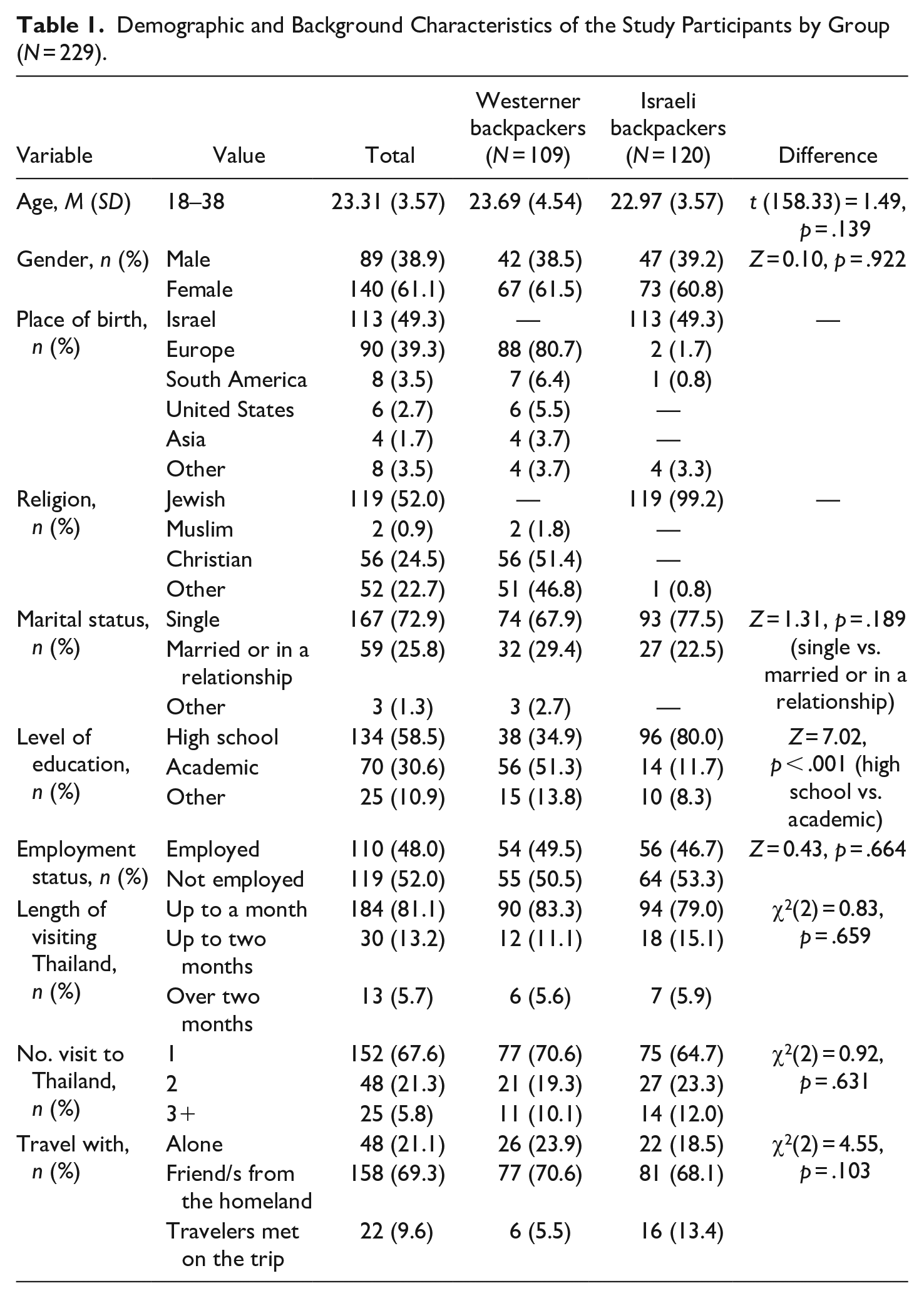
The study sample included a total of 229 backpackers, with 140 women (61.1%) and 89 men (38.9%). The participants were divided into two groups: 120 Israeli backpackers and 109 backpackers from Western countries such as Europe and the USA (from now on: Western group). As shown in Table 1, no significant differences were found between the two groups, except for education level. The majority of Israeli backpackers had a high school diploma, whereas most Western tourists had a higher level of education. The mean age of the participants was 23.31 (SD = 3.57), with most being single, and approximately half having jobs back home. Most of the participants were visiting Thailand for up to a month, and it was their first visit to the country. Most had traveled with a friend or friends from their homeland.
Demographic and Background Characteristics of the Study Participants by Group (N = 229).
Measures
Demographic characteristics and trip information: The participants provided information on their age, race, gender, marital status, country of origin, level of education, employment status, social status, and income level. Additionally, participants responded to questions about their travel details, such as the duration of their trip and whether they were traveling alone or with friends from their home country.
Generally: Questionnaire for Objective exposure to crime and terror events, fear of crime and fear of terrorism, sense of safety and neighborhoods disorder are listed in Appendix.
Objective exposure to crime and terror events: were assessed using a six-question survey. Participants were asked about personal experiences or those of their friends and family in the past 12 months in their home country as well as abroad. A total score was calculated for both crime and terror exposure, ranging from 0 (no exposure) to 7 (exposure experienced personally, by family, and by friends).
Fear of crime and fear of terrorism: Examined both at home and during the trip using established instruments (Franklin et al., 2008; Klar et al., 2002; Senn & Dzinas, 1996). Participants rated their level of worry for 11 situations (e.g., being hurt in a terror incident, being sexually assaulted). Ratings were provided twice, once for their country of residence (home) and once for their stay during the trip. The rating scale ranged from 1 (not at all worried) to 4 (very worried). Principal component factor analysis revealed four factors: fear of property crime (3 items), fear of violent crime (3 items), fear of sexual assault (3 items), and fear of terrorism (2 items). Cronbach’s alpha coefficients indicated good internal consistency for each fear variable in both home and trip conditions (ranged between 0.70 and 0.83). The fear variables were also moderately intercorrelated. To generate a combined score for fear of crime, responses to all items related to fear of crime and terrorism were averaged for both home and trip conditions. Higher scores indicated higher levels of fear for each fear variable.
Sense of safety: Participants assessed their sense of safety twice: once in their country of residence and once during their trip. They rated their level of safety on four dimensions: going out alone during the daytime, going out alone at night, going out with friends during the daytime, and going out with friends at night. Responses were given on a 4-point scale ranging from 1 (very unsafe) to 4 (very safe). The total score for a sense of safety was calculated by averaging the relevant items for safety at home and during the trip. Higher scores indicated a greater sense of safety. The internal consistency indices for safety at home and during the trip were α = .71 and α = .81, respectively.
Neighborhood disorder: Was measured using a set of questions based on previous studies (Franklin et al., 2008; Gray et al., 2011). Participants rated the severity of seven incidents of neighborhood incivility, such as vandalism and litter, on a scale of 1 (no problem) to 4 (a serious problem). Ratings were provided for both their country of residence and their stay during the trip. The internal consistency were α = .82 at home and α = .73 during the trip. A total score was calculated by averaging the relevant items for neighborhood disorder at home and during the trip, with higher scores indicating greater disorder.
Procedure
For this study, a non-probability convenience sampling method was used to select participants. Backpackers were defined as independent or group travelers who stay in affordable accommodations, dine in inexpensive restaurants, and seek unique experiences. The study took place in Khao San Road, a renowned backpacker enclave in Bangkok (Batra, 2019). Potential participants were identified by the authors of the study at various locations, such as budget hotels and restaurants, and approached during walks. Eligible participants needed to be able to speak and read Hebrew or English, and the questionnaires were administered accordingly. Informed consent was obtained from all participants, ensuring their right to withdraw and guaranteeing anonymity. The study, conducted from February to March 2019, was voluntary and not compensated. Approval was obtained from the institutional review board (IRB) of Ariel University.
Data Analysis
The study data were analyzed using SPSS version 26. Descriptive statistics such as means, standard deviations, and intercorrelations were calculated for the study variables for both home and trip conditions by group. To assess the differences in the study variables by condition (home/trip) and group (Israeli backpackers/Western backpackers), analyses of covariance were conducted, controlling for gender. The contribution of exposure to crime and terror events, sense of safety, and neighborhood disorder to fear of crime and terrorism was assessed using mixed hierarchical models. Condition was considered a within-subject factor with values of 0 (home) and 1 (trip), while group was a between-subject factor with values of 0 (westerns) and 1 (Israelis). The variables were standardized, and the interactions between condition, group, sense of safety, and neighborhood disorder were defined as their multiplications. All second- and third-order interactions were defined, and gender was defined dichotomously as 0 (women) and 1 (men).
Results
Objective Exposure to Crime and Terror Events
Approximately 40% of the backpackers (N = 91, 39.7%) reported experiencing exposure to crime, while 44.5% (N = 102) reported having a family member who had been exposed to crime. More than half (53.3%, N = 122) reported having a friend who had been exposed to crime, with no significant difference between the Israeli backpackers and Western backpackers. The total score for exposure to crime did not differ significantly between Israeli backpackers (M = 3.37, SD = 2.92) and Western backpackers (M = 2.89, SD = 2.90), t(227) = 1.26, p = .210. Approximately 30% of the Israeli participants reported personal exposure to terrorism (N = 35, 29.2%) or having a family member who had been exposed to terrorism (N = 36, 30.0%). Approximately 55.8% (N = 67) reported that a friend had been exposed to terrorism. In contrast, the other group reported much lower levels of personal exposure (N = 8, 7.3%), exposure of family members (N = 8, 7.3%), and exposure of friends (N = 16, 14.7%), with significant differences found for all categories (self: Z = 4.22, family: Z = 4.35, friends: Z = 6.47, p < .001). The total score for exposure to terrorism was significantly higher for Israelis (M = 2.32, SD = 2.59) than for Westerners (M = 0.59, SD = 1.52) (t(195.59) = 6.26, p < .001). Participants from both groups reported that they had experienced exposure to both criminal events (92%) and terrorist events (98.3%) in their home countries.
Correlations for the Study Variables
The study found that fear of crime and fear of terrorism were highly and positively correlated for both Israelis and Westerners, both at home and during their trip. As shown in Table 2, for Israelis at home, fear of crime was positively related to exposure to crime and neighborhood disorder, and negatively related to sense of safety, while fear of terrorism was positively related to exposure to crime and exposure to terror. For Western backpackers at home, fear of crime and fear of terrorism were both positively related to neighborhood disorder, and negatively related to sense of safety, with fear of terrorism also being positively related to exposure to terror. During the trip, fear of crime and fear of terrorism among both Israelis and Westerners were positively related to neighborhood disorder and negatively related to sense of safety.
Means, Standard Deviations and Correlations for the Study Variables, by Group and Condition (N = 229).
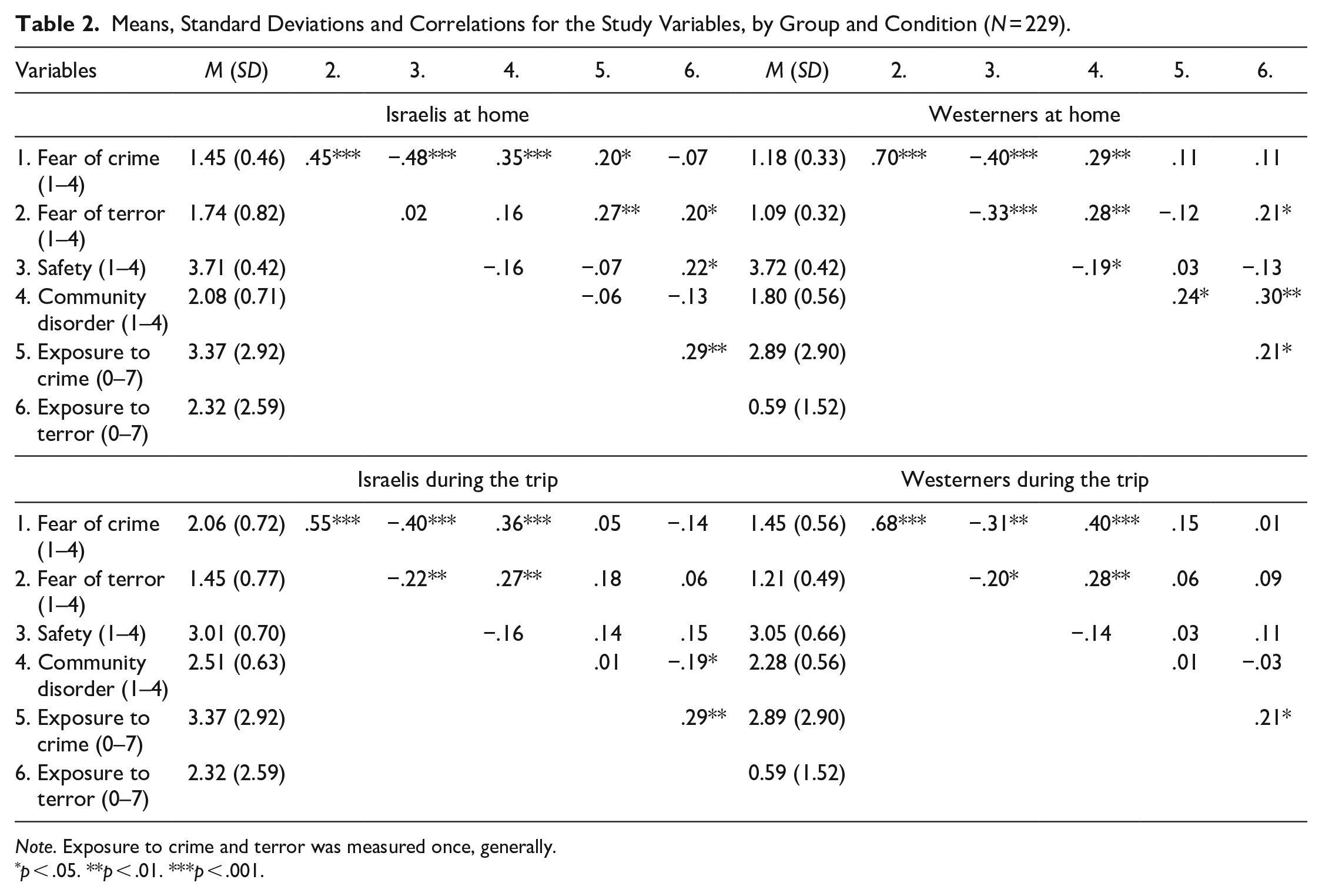
Note. Exposure to crime and terror was measured once, generally.
p < .05. **p < .01. ***p < .001.
Differences Between Israeli Backpackers and Western Backpackers in the Research Variables
The study found that women reported higher levels of fear of crime at home (M = 1.40, SD = 0.48) than men (M = 1.20, SD = 0.28), t(218.97) = 4.00, p < .001. Similarly, fear of crime during the trip was also higher for women (M = 1.90, SD = 0.81) than for men (M = 1.56, SD = 0.49), t(213.88) = 3.34, p < .001. However, there were no gender differences in fear of terrorism. Men reported feeling a greater sense of safety than women, both at home (M = 3.84, SD = 0.35 vs. M = 3.63, SD = 0.44, t(215.80) = 3.91, p < .001) and during the trip (M = 3.38, SD = 0.58 vs. M = 2.82, SD = 0.65, t(225) = 6.61, p < .001). Women also reported higher levels of neighborhood disorder during the trip (M = 2.47, SD = 0.61) than men (M = 2.29, SD = 0.59), t(225) = 2.27, p = .024. However, there were no gender differences in neighborhood disorder at home or objective exposure to crime or terror. Age was not found to be correlated with any of the study variables. Therefore, gender was controlled for in all subsequent analyses (1 = men, 0 = women).
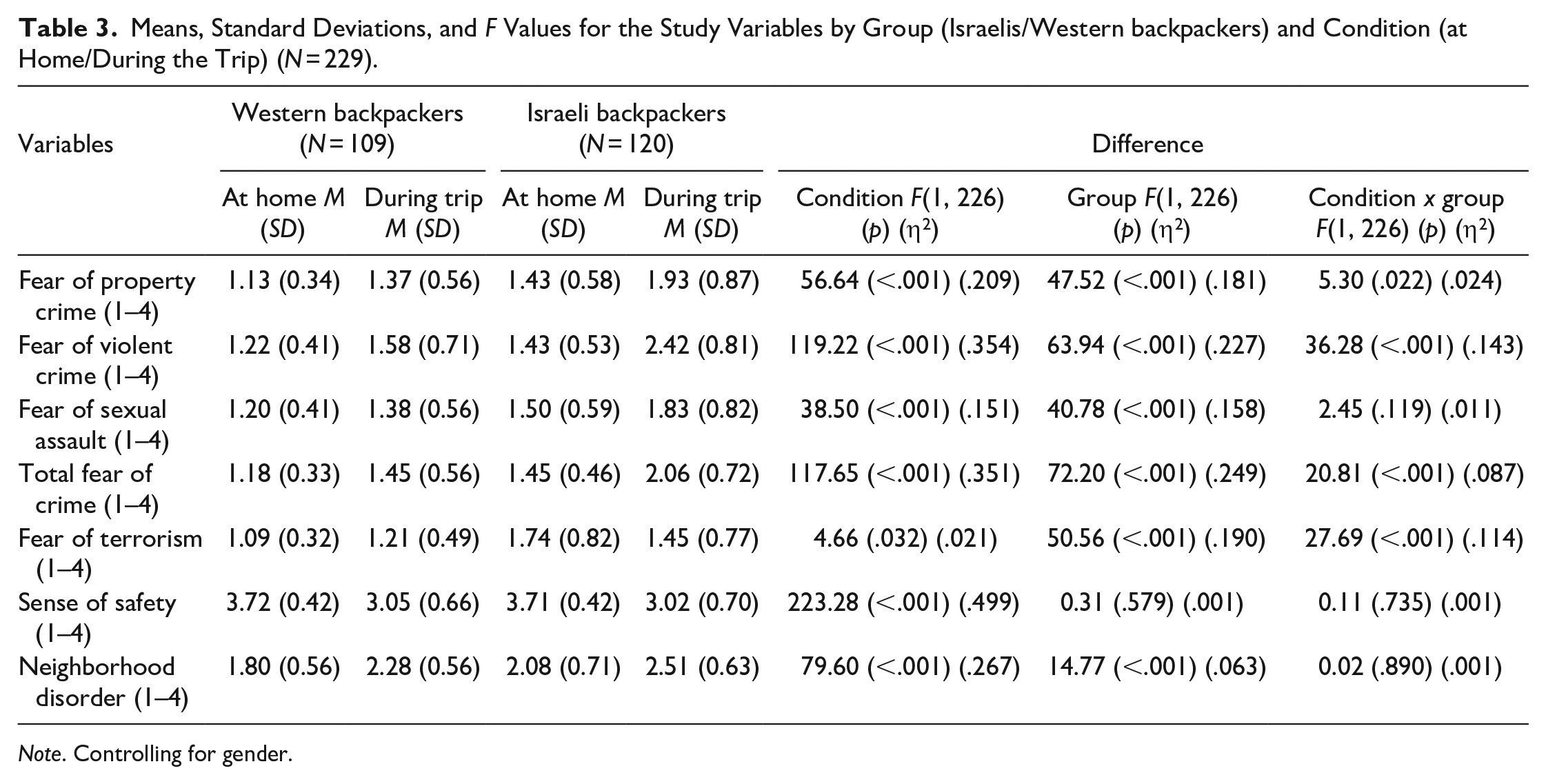
Repeated measures analyses of covariance (2 × 2) were conducted to examine differences by group and condition (at home/during the trip), with gender controlled for. As shown in Table 3, fear of crime (property crime, violent crime, and sexual assault) was generally higher during the trip than at home and was generally higher among Israelis than among Westerners. Significant interactions were found for fear of property crime, violent crime, and the total score. In all cases, the difference between home and trip was greater among Israelis than among Westerners (fear of property crime: Israelis: F(1, 226) = 59.61, p < .001, η2 = .217, Westerners: F(1, 226) = 17.10, p < .001, η2 = .074; fear of violent crime: Israelis: F(1, 226) = 211.28, p < .001, η2 = .492, Westerners: F(1, 226) = 30.40, p < .001, η2 = .122; total score: Israelis: F(1, 226) = 167.18, p < .001, η2 = .434, Westerners: F(1, 226) = 36.05, p < .001, η2 = .142).
Means, Standard Deviations, and F Values for the Study Variables by Group (Israelis/Western backpackers) and Condition (at Home/During the Trip) (N = 229).
Note. Controlling for gender.
Fear of terrorism was generally higher among Israelis than among Westerners. The significant interaction revealed that fear of terrorism was higher during the trip than at home for Westerners, F(1, 226) = 4.32, p = .039, η2 = .020, but lower during the trip than at home for Israelis, F(1, 226) = 29.62, p < .001, η2 = .121. The sense of safety was higher at home than during the trip, with no group difference. Neighborhood disorder was generally higher during the trip than at home and was higher among Israelis than among Westerners.
Mixed Hierarchical Models for Fear of Crime and Terrorism
Mixed hierarchical models were utilized to analyze the contribution of exposure to crime and terror, sense of safety, and neighborhood disorder on fear of crime and terrorism (Table 4). The condition was defined as a within-subject factor (0 for home and 1 for trip) and group as a between-subject factor (0 for Westerners and 1 for Israelis). Variables were standardized, and the interactions between condition, group, sense of safety and neighborhood disorder were defined as their multiplications. Second- and third-order interactions were defined (condition by group, condition by sense of safety and neighborhood disorder, group by sense of safety and neighborhood disorder, condition by group by sense of safety and neighborhood disorder). Gender was defined dichotomously (0 for women and 1 for men). As the third-order interaction and the second-order interactions by group were all non-significant, they were excluded from the final model. Thus, the final model included the condition by group interaction and the condition by sense of safety and neighborhood disorder interactions.
Hierarchical Mixed Models for Fear of Crime and Terrorism (N = 220).
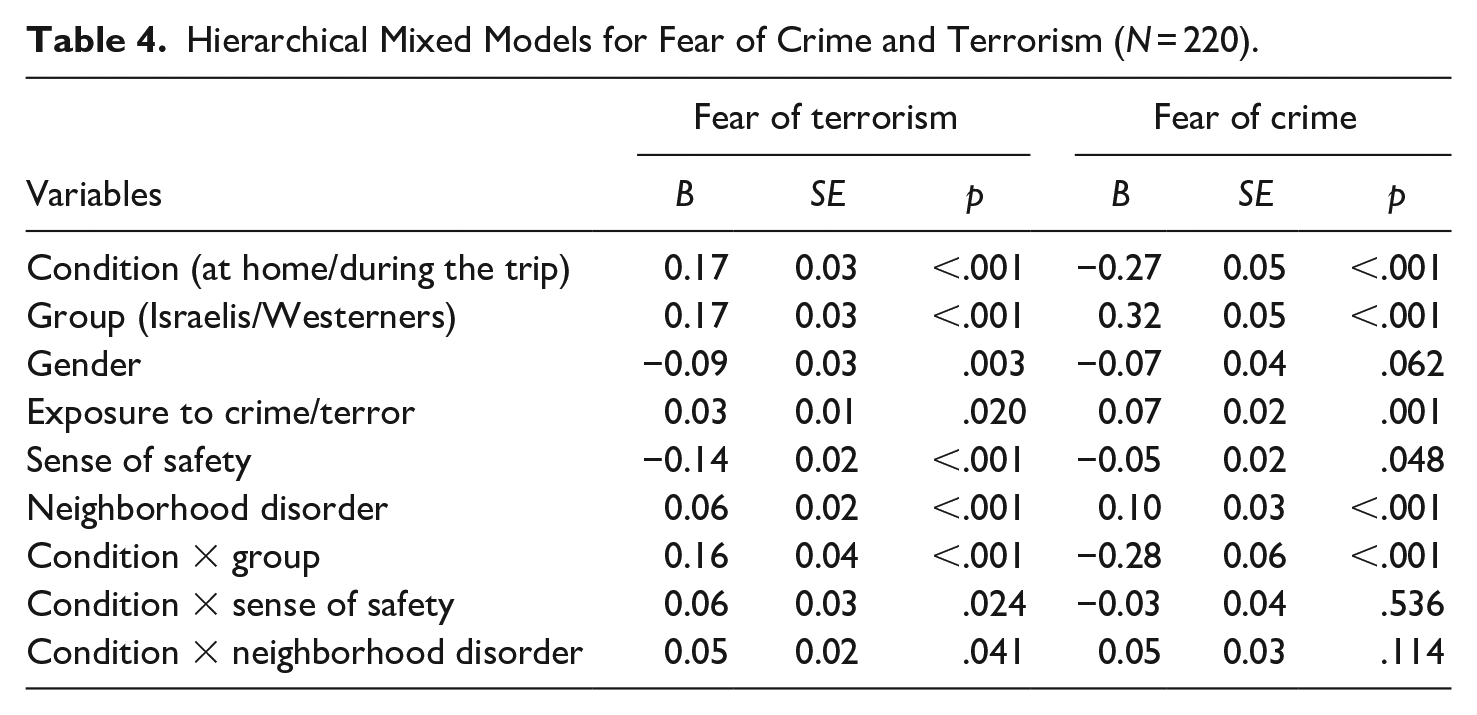
Results indicate that fear of crime was significantly higher during the trip compared to at home, especially among Israelis and women. The interaction between condition and group was also found to be significant, as explained previously. Exposure to crime and neighborhood disorder showed positive associations with fear of crime, while a sense of safety exhibited a negative association, independent of condition and group.
The significant interaction between condition and sense of safety on fear of crime was analyzed (Dawson, 2014). The significant interaction between condition and sense of safety on fear of crime was analyzed (Dawson, 2014). Results showed a stronger negative relationship between sense of safety and fear of crime at home (coefficient = −0.13, t = −5.50, p < .001) compared to during the trip (coefficient = −0.07, t = −4.85, p < .001), with both relationships being significant (Figure 1). The significant interaction between condition and neighborhood disorder on fear of crime indicated a stronger positive relationship during the trip (coefficient = 0.11, t = 5.90, p < .001) than at home (coefficient = 0.06, t = 3.71, p < .001), with both relationships being significant (Figure 2). The level of fear of terrorism was higher for Israelis and was significant by the interaction of condition by group, as interpreted above (Table 1). The results also revealed that exposure to terror and neighborhood disorder were positively associated with fear of terrorism, while sense of safety was negatively associated with it. However, the interactions by condition were not significant.
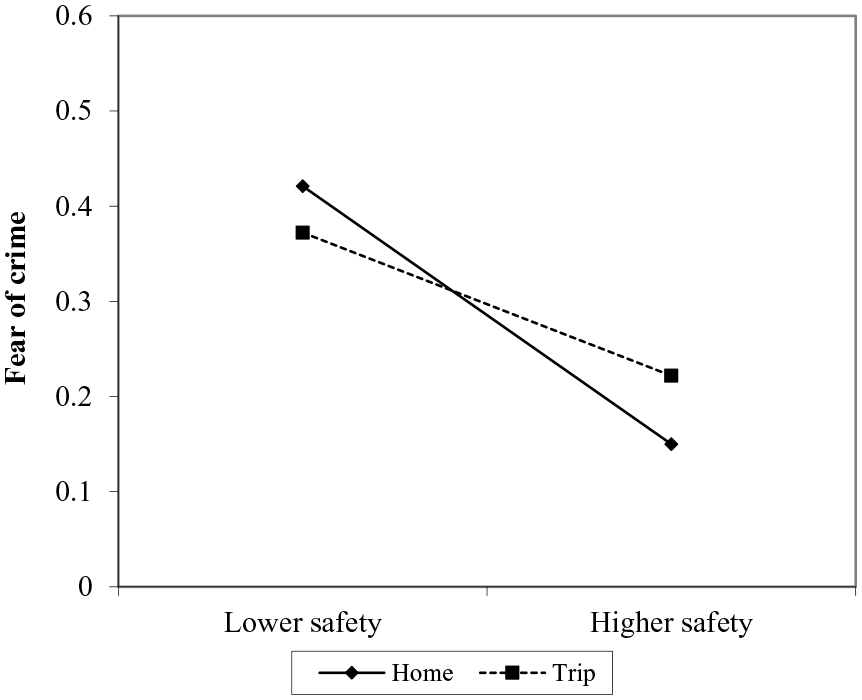
Fear of crime by condition and sense of safety.
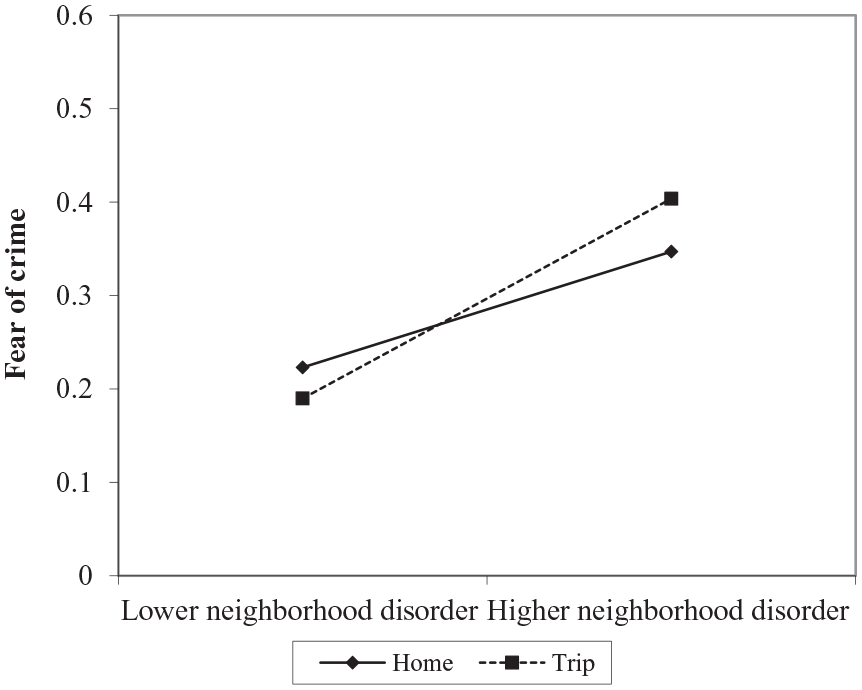
Fear of crime by condition and neighborhood disorder.
Discussion
The aim of this study was to investigate the differences between fear of terrorism and fear of crime (such as burglary, theft, and sexual assault) among backpackers during their “big trip.” We compared the populations that are susceptible to frequent security threats (Israeli backpackers) with those that are not exposed to safety risks to the same degree (backpackers from different Western countries). The objective exposure rates provided a justification for comparing the two groups. Israeli backpackers had a significantly higher rate of exposure to terrorist events (30%) compared to backpackers from other countries (7%). However, both groups reported a similar rate of exposure to crime events (approximately 40%). The majority of backpackers reported experiencing both criminal events (92%) and terrorist events (98%) in their home country. Israel, due to its political and security instability, faces an ongoing and heightened threat of exposure to terror and security events (Shechory Bitton & Laufer, 2017), unlike many other Western countries.
The research findings on fear of crime align with numerous previous studies (Shechory Bitton & Cohen Louck, 2018; Vilalta, 2011). Factors such as the fear of experiencing different types of crimes and feeling insecure during various activities (e.g., going out alone or with friends, especially at night) as well as visual indicators of disorder (e.g., littering, vandalism, presence of drug users), are elements that contribute to an individual’s overall fear of crime. In other words, the fear of specific criminal incidents and the general sense of insecurity collectively shape an individual’s fear of crime. These associations hold true regardless of one’s residential location or travel destination. Lower neighborhood order has consistently been linked to higher levels of fear of crime (Franklin et al., 2008; Vilalta, 2011) and fear of terrorism (Shechory Bitton & Cohen Louck, 2018). Our findings align with previous studies that have demonstrated reciprocal predictions for fear of crime and fear of terrorism (Shechory Bitton & Cohen Louck, 2018; Shechory Bitton & Shachaf Friedman, 2018).
Analyzing the data based on condition (home/trip) and group (Israelis/Western countries), both groups perceived their trip destinations as more neglected (higher neighborhood disorder) and less safe compared to their country of residence. Interestingly, despite most backpackers not experiencing any harm during their trip, they reported higher levels of fear of crime in the visited location compared to their home country. This finding may seem paradoxical, considering that a significant portion of backpackers (approximately 40%) reported exposure to crime in their country of residence. However, it supports the notion that feelings of fear are subjective and not solely based on objective exposure to crime (Jackson, 2011; Shechory Bitton & Silawi, 2019). Unfamiliarity with the new environment and its cultural context can contribute to feelings of fear and suspicion. Being in a foreign and unfamiliar country amplifies the fear of the unknown and the fear of harm, which may not necessarily correlate with actual exposure to crime. This is particularly relevant when traveling to countries vastly different from the tourists’ country of origin.
The study underscores the significance of physical characteristics in tourist destinations, shedding light on their influence on the fear of crime among backpackers. For backpackers, personal safety and the security of their belongings are paramount concerns, as evidenced by previous research (Melamed et al., 2020). It highlights that addressing factors such as litter, graffiti, and vandalism can significantly alleviate fear, aligning with the broken windows theory (Wilson & Kelling, 1982). This theory posits that maintaining order and addressing minor signs of disorder can contribute to a safer environment, a concept supported by other studies in the field (Cook & Fox, 2011; Franklin et al., 2008). The relevance of these findings extends to popular destinations like Khao San Road in Bangkok, where the current study was conducted, making them particularly pertinent for backpackers exploring such vibrant locales.
Findings indicate that fear of terrorism is complex, with Israeli backpackers reporting greater fear at home compared to during their trip, while the Western group experienced higher fear during their trip. The increase in global terrorist attacks, including incidents in Bangkok, influenced the perceived threat for the Western group (Yue, 2020). Individual selective attention to risk, shaped by worldview and beliefs, may explain why Israelis are less fearful abroad. Their previous experiences with targeted terrorist events contribute to these differences, aligning with the sensitivity to risk model (Warr, 1990; Warr & Stafford, 1983) and prolonged exposure to security threats (Nuttman-Shwartz, 2014; Shechory Bitton & Silawi, 2019; Vilalta, 2011).
The current findings challenge a held assumption regarding habituation processes that typically occur after prolonged exposure to security events, thus offering a perspective that contradicts the findings of previous studies that focused on ongoing threats and habituation among populations exposed to terrorism events (Shechory Bitton & Laufer, 2017; Stein et al., 2018). An intriguing alternative explanation arises, suggesting that habituation might be intricately related to the specific location of the trip. It is conceivable that Israelis, given their extended exposure to terrorism in their home country, may experience a form of habituation that is more relevant to their experiences when traveling abroad, which, in turn, results in lower levels of fear. However, it is essential to acknowledge that this explanation remains speculative and warrants further research to establish its validity. Importantly, it should be noted that habituation processes related to ongoing threats may still manifest among populations exposed to sustained security and terrorism events, as indicated by Stein et al. (2018).
Cultural differences may account for the observed variations between the two groups in perceiving and responding to risks. The military training in Israel emphasizes situational awareness and risk assessment, leading Israeli backpackers to be more cautious and vigilant in unfamiliar environments. This heightened vigilance may contribute to their perception of the travel destination as less safe and more threatening, resulting in a greater fear of ordinary crime while traveling compared to terrorism. The study highlights the importance of individual differences and previous experiences in shaping fear and perceived risk among backpackers. Further research is needed to delve into the factors influencing individual responses to security threats and terrorism events. Additionally, cultural differences should be considered in future studies examining perceptions and responses to fear of crime and terrorism (Shechory Bitton & Shachaf Friedman, 2018).
The last finding worthy of attention is the participants’ gender. Gender was found to predict fear of crime in both groups, with women reporting higher levels of fear compared to men, irrespective of their origin or location (at home or on a trip). This aligns with numerous studies demonstrating that women often feel less safe than men in various situations, regardless of ethnic background (Chui et al., 2012; Shechory Bitton & Cohen Louck, 2021). Women are more likely to avoid walking alone and meeting strangers after dark (Roberts, 2019). This discrepancy between fear and actual victimization is known as the fear-victimization paradox (Ferraro, 1996; May et al., 2010), and several theories attribute it to gender expectations, socialization, and perceived vulnerability (Riggs & Cook, 2015). However, it is interesting to note that there were no significant gender differences in the fear of terrorism, which contradicts previous studies reporting greater fear among women (Shechory Bitton & Cohen Louck, 2021). Socialization processes and the shared sense of vulnerability within a community could explain the absence of gender differences in the fear of terrorism ((Eichenberg et al., 2022; Perry & Alvi, 2011). Nonetheless, research suggests that women may have more intense emotional reactions and long-term consequences following traumatic events, including terrorism (Shechory Bitton & Cohen Louck, 2020). Thus, while the current study did not find gender differences in the fear of terrorism, the individual impact of such fear may still vary.
Limitations, Conclusion, and Implications
The study has several limitations that should be considered. Convenience sampling and the cross-sectional design restrict the generalizability and causal inferences of the findings. The study focused on a relatively small sample of Israeli backpackers without differentiating between countries of origin among other backpackers. It primarily relied on data collected in English and Hebrew, which may limit the inclusivity of our findings to individuals proficient in these languages. Broader research involving diverse samples from various countries would provide a more comprehensive understanding of the results. The study’s exclusive focus on one tourist destination may limit generalizability to other destinations with different safety perceptions and risks. Future studies should examine a wider range of tourist destinations to uncover factors influencing fear among backpackers.
Despite its limitations, this research has important implications for enhancing the safety and travel experiences of backpackers and advancing understanding of terrorism’s impact on tourism. The study underscores the need for tailored safety measures and interventions that cater to the diverse backgrounds and experiences of travelers, ultimately contributing to enhanced safety standards within the global backpacking tourism industry. The study’s findings offer practical insights for the tourism industry, enabling tailored safety measures and improved communication strategies to address specific concerns and enhance traveler safety. Further research is needed to explore the impact of terrorism on travelers from diverse backgrounds, aiding in the development of effective prevention and response strategies. The study contributes to theoretical knowledge by highlighting the influence of previous experiences and cultural factors on travelers’ perceptions and fears. Overall, the study underscores the significance of improving safety measures, communication strategies, and the overall travel experience for backpackers, while emphasizing the need for future research in this field.
Footnotes
Appendix A: Questionnaire for Objective Exposure,Levels of Fear,Sense of Safety and Neighborhoods Disorder Relating to Country of Residence and Their Stay During the Trip
Declaration of Conflicting Interests
The author(s) declared no potential conflicts of interest with respect to the research, authorship, and/or publication of this article.
Funding
The author(s) received no financial support for the research, authorship, and/or publication of this article.
