




Abstract
Within the Criminal Justice System, using animals for therapeutic or rehabilitative purposes has garnered momentum and is extensively researched. By contrast, the evidence concerning the impact of farm animal work, either on prison farms or social farms for community sanctions, is less well understood. This review sought to explore the evidence that exists in relation to four areas: (1) farm animals and their contribution to rehabilitation from offending; (2) any indicated mechanisms of change; (3) the development of a human—food/production animal bond, and (4) the experiences of forensic service users working with dairy cattle. Fourteen articles were included in the review. Good quality research on the impact of working with farm animals and specifically dairy cattle, with adult offenders, was very limited. However, some studies suggested that the rehabilitative potential of farm animals with offenders should not be summarily dismissed but researched further to firmly establish impact.
Introduction
There is compelling evidence that engaging with nature is beneficial for humans. Described in Wilson’s (1984) Biophilia Hypothesis as an “innate tendency to focus on life and lifelike processes” (p.1), human beings have a reliance on, and emotional connection with, nature for survival and reproduction. Nature is also deemed restorative (Kaplan, 1995) and its importance underpins the movement known as Green Care. This term encompasses a number of different activities designed to address a variety of social needs through direct interactions with natural environments (Moriggi et al., 2020). Whilst not used consistently, the Green Care concept commonly refers to nature-based activities undertaken for a variety of different purposes to benefit the recipients, for example, to improve physical and psychological wellbeing and to increase social inclusion. Green Care initiatives include care farming (also known as social farming), therapeutic horticulture, nature-based recreation and therapy, and interventions that involve animals.
Within the Criminal Justice System, the use of animals in custodial and community settings for people with offending histories (hereafter also referred to as forensic service users) appears to have garnered momentum over the last two decades, alongside an explosion of other Green Care activities (e.g., horticulture programs in prisons, Lee et al., 2021). Animal programs with incarcerated populations have been designed to address a variety of aims including: reduction of post release recidivism (Cooke et al., 2021); improved custodial behavior (van Wormer et al., 2017); increased psychological wellbeing (Kunz-Lomelin & Nordberg, 2020); achievement of vocational qualifications and therefore increased employability (Mims et al., 2017), and a calming influence on the overall correctional environment (Cooke & Farrington, 2015).
Furst (2006) described programs where individuals with offending histories are working with or training animals (as opposed to an animal being present primarily for a therapeutic aim) as Prison Animal Programs (PAPs). In a survey of 36 US states, Furst (2006) identified eight different types of PAPs: the use of companion animals (i.e., an animal introduced to an individual to provide short-term benefits while they are together); wildlife rehabilitation; pet adoption; service animal socialization; vocational achievement; community service (care and training of animals); multimodal (combination of vocational and community service), and livestock care programs focusing on farm animal care and husbandry. Across these different categories there is research on programs with dogs (Cooke & Farrington, 2016; Flynn et al. 2020; Villafaina-Dominguez et al., 2020) and horses (Bachi, 2013; Morgan, 2020) and their impact on rehabilitation from offending. By contrast, the livestock care and farm work subset of PAPs does not appear to have been subject to rigorous scrutiny, despite being the fourth most common type identified by Furst (2006) and one which she suggested should be considered as a distinct type of PAP. In particular, Furst queried whether prisoners working with farm animals could develop empathetic relationships in the same way observed in PAPs involving companion animals. The impact of working with farm animals on people with offending histories is the topic under study here, with a particular focus on work with cows.
A preliminary search for existing reviews on farm animals and people with offending histories was conducted. No reviews were identified and any relevant literature that was indexed was within the context of social farms only (e.g., Artz & Davis, 2017). These did not include prison farms and did not focus specifically on the population of interest for this review, namely adults with criminal convictions, nor the specific concept of farm animal work and offender rehabilitation. Furthermore, whilst cows were the second most common animal involved in the PAPs reviewed in Furst’s study, there is a notable deficit in the literature focused specifically on forensic service users working with cows.
Given the paucity of literature on farm animal programs for people with offending histories, this scoping review is concerned with the following questions: (1) Does evidence exist to suggest that farm animal work can contribute to the rehabilitation of adults with criminal convictions? (2) If so, which mechanisms for change are indicated and might be worthy of further exploration? (3) Is there evidence that a human-animal bond can be developed with a food or production animal? (4) What evidence exists about the experiences of forensic service users working with dairy cattle in particular?
Method
Peters et al. (2020) highlighted the value that a scoping review can bring to a field of research where it is not yet possible to ask precise questions about the effectiveness of an intervention and when there are clear gaps in knowledge about a particular topic. The scoping review for this study followed the protocol proposed by Peters et al. (2020) contained in the latest version of the Joanna Briggs Institute (JBI) Manual for Evidence Synthesis (Aromataris & Munn, 2020). This protocol is consistent with Tricco et al.’s (2018) PRISMA (Preferred Reporting Items for Systematic reviews and Meta-Analyses) extension for scoping reviews (PRISMA-ScR). The overarching goal was to map and evaluate the research literature on farm animal work and its contribution to rehabilitation from offending in adults.
Inclusion and Exclusion Criteria
The population of interest (participants) is adults who have acquired a formal criminal conviction and consequently received either a community or custodial sanction. For the purpose of this review and according to legal classification, adults are individuals over 18 years of age. The concept being explored within the scoping review is farm animal work and its potential for rehabilitation from offending. Farm animal work refers to animal husbandry tasks with food or production animals, for example, cows, goats, sheep, pigs, and chickens, as well as those used for this purpose in other countries such as rabbits, buffalo, and ostrich. However, fish farms are excluded from the scoping review as this would be classed as aquafarming not traditional livestock farming. The context to the review is on research that has been conducted on prison farms (including those run by both private sector and public sector prisons) and community social farms (a farm using farming practices in a structured, supervised way for a specific purpose, such as rehabilitation and education). Within this context, dairy farms are of particular interest. Any PAP that is established primarily for therapeutic intent (whether within a formalized intervention or not) is also excluded.
The types of sources of evidence included in the scoping review were peer reviewed journal articles published in English over a 15 year period between 2006 (when Furst’s study on PAPs was published and when she recommended that livestock care programs should be viewed as a unique subset of PAPs) and 2021. The topic of interest is very narrow and, as such, there was a need to ensure that relevant evidence was not omitted. The review therefore considered a broad range of literature including primary research studies using quantitative, qualitative or mixed methods design, textual papers and reviews (both published and unpublished) and gray literature. The searches were conducted between 7th July and 29th July 2021.
Search Strategy
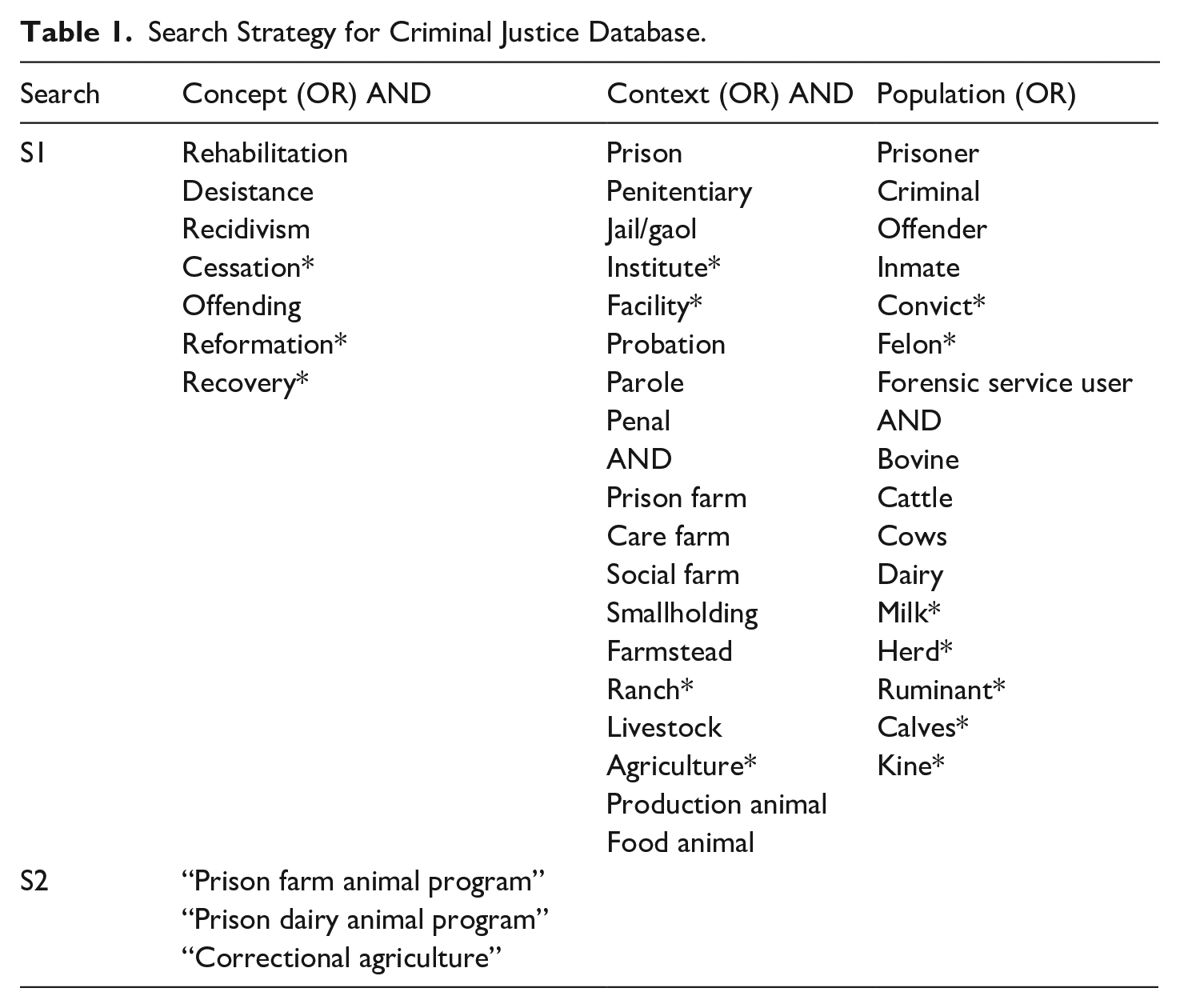
The search strategy followed the recommendations from Peters et al. (2020) and Tricco et al. (2018). Peer reviewed publications were captured from the following databases: SCOPUS, Psychinfo, Medline, and Criminal Justice Database (Proquest Central). Gray literature was accessed via Google Scholar, the Research and Statistics webpage of published research from UK Government agencies, and email communication designed to capture any additional relevant research from Her Majesty’s Prison and Probation Service. The Human Animal Bond Research Institute (HABRI) Central on-line database was hand searched, along with the Journal of Correctional Education and reference lists were reviewed for any additional papers of relevance. The searching for this scoping review was an iterative process and as such, two searches were performed for each source, the second search removing less helpful terms and introducing terms of more potential utility. Table 1 demonstrates the complete search strategy for one database and includes the Boolean operators and terms that were removed for Search 2 as indicated by *. Limiters were put on the searches to only include studies written in English.
Search Strategy for Criminal Justice Database.
Evidence Screening and Selection
The searches identified 27,251 records (see Figure 1 flow diagram). Following the Peters et al. (2020) guidance, a minimum of two reviewers (LP and JM) undertook the screening and selection stage of the protocol, with a third reviewer (CG) available to resolve any disagreements. The search results were initially reviewed according to title and abstract, with 35 screened in records transferred to and managed within the Endnote V.20 reference software. The selected articles were then subject to full text retrieval and review which resulted in the loss of one further record which did not focus on the population of interest. A further 20 sources were removed in the de-duplication process and as a result of records not meeting the inclusion criteria, leaving 14 studies for review. There were no disagreements between the two reviewers which necessitated the contribution of the third reviewer.
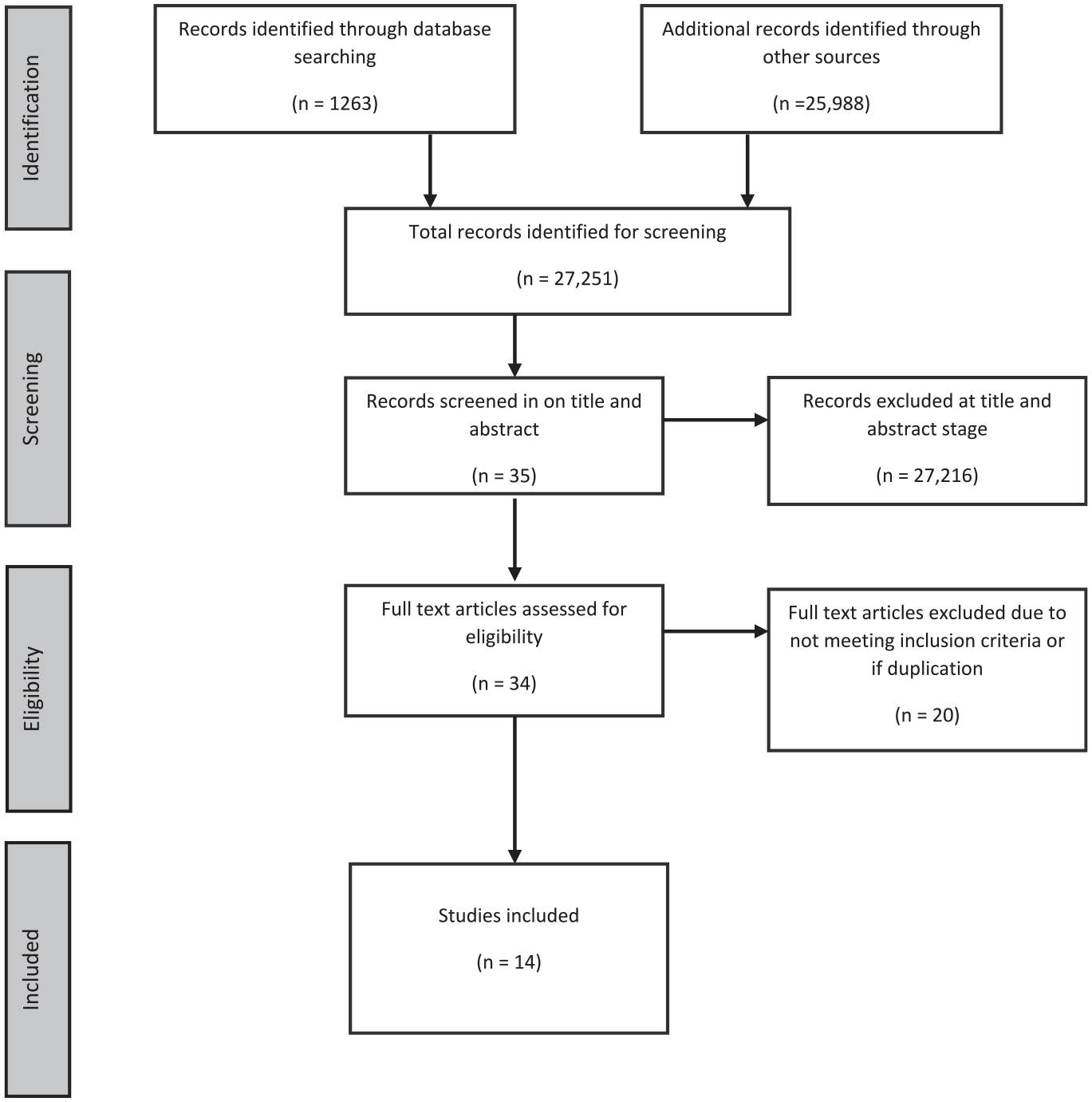
Preferred Reporting Items for Systematic Reviews and Meta Analyses (PRISMA) flow diagram for the scoping review study selection process (adapted from Moher et al., 2009).
Data Extraction
During the data extraction process, the authors sought to understand the purpose of the article, country of origination, the method employed (if appropriate) and to what extent the article addressed the four scoping review questions. A data extraction template was developed to capture this information, minimize bias and was reviewed regularly by the first two authors to maintain its utility and to meet the objectives of the scoping review.
Results and Discussion
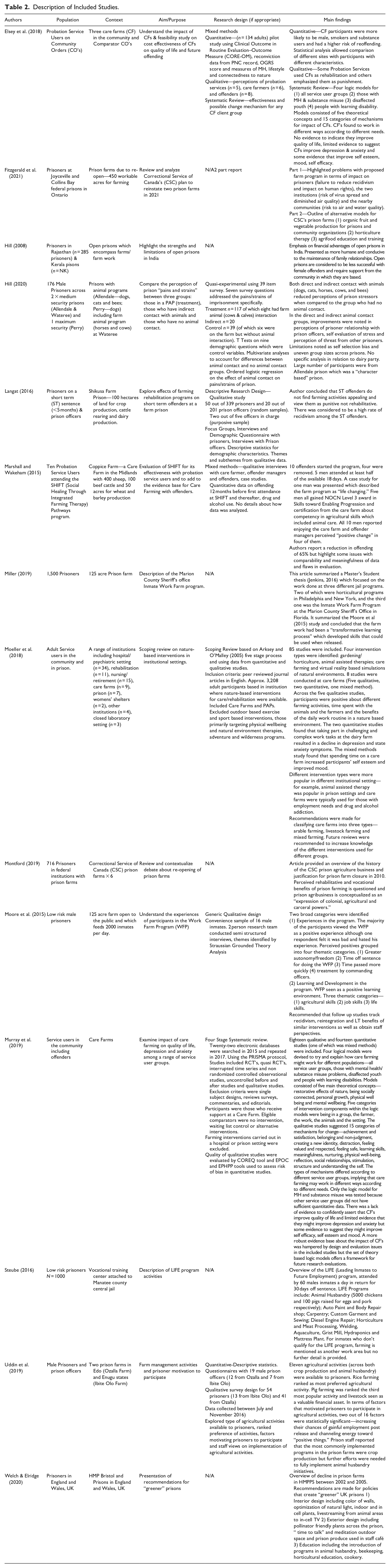
Table 2 summarizes the 14 records that were included in the scoping review. The articles originated from the UK (n = 5), the USA (n = 4), Canada (n = 2), India (n = 1), Kenya, (n = 1) and Nigeria (n = 1). Nine of the studies were published in peer reviewed journals (most of which were rooted in criminal justice disciplines) with the remaining records coming from magazine publications (n = 2) and reports affiliated with specific organizations (n = 3).
Description of Included Studies.
Evidence of the Impact of Farm Animal Work on the Rehabilitation of Adults With Criminal Convictions
The history of prison farms and their contribution toward rehabilitation from offending (reducing risk of recidivism) through increased employability skills and the positive impact of working outdoors was mentioned in several of the articles (Welch & Eldridge, 2020; Moore et al. 2015; Langat, 2016). However, the evidence about farm animal work specifically (as opposed to broader areas of agriculture not dependent on interactions with farm animals) was limited.
Four of the included records made no or very limited specific reference to the rehabilitative potential of farm animals (Hill, 2008; Steube, 2016; Miller, 2019; Uddin et al., 2019). Within the Moeller et al. (2018) review, studies based on a care farm involved participants who sought rehabilitation from mental health challenges, as opposed to reoffending, and there was little emphasis on the farm animal side of the work. This was a common theme throughout the review. Where rehabilitation from offending was considered, most studies did not explore the contribution of working with farm animals distinctly. Moore et al.’s (2015) qualitative study on the Inmate Work Farm Program at the Marion County Sheriff’s Office (MCSO) in Florida did not provide any detailed insights that were unique to those working with cows, pigs and chickens for meat and eggs. Nevertheless, the authors concluded that alongside the crop production and ornamental horticulture aspects of the program, a transformative learning experience was enabled for participants, alongside the opportunity to develop technical knowledge and interpersonal skills which “should reduce recidivism” (p. 25). Langat’s (2016) study with short term offenders on a Kenyan prison farm, considered the impact of the farming program on recidivism but the farm animal work (which included dairy production, cattle, poultry, and rabbit rearing) was not explored separately to other activities such as crop production and recidivism data was not available. Hill’s (2020) quasi-experimental study indicated that both direct and indirect contact with animals reduced the negative aspects of imprisonment by improving the relationship between correctional staff and prisoners, reducing the perception of stress and reducing institutional violence. While not evidenced within this study, the author highlighted the links between improved custodial environments, of which animal contact can be a conduit, and decreased recidivism post release. Although there was a small cohort of prisoners working with cows and calves at one of the participating prisons, this sub-group was not analyzed separately. Elsey et al.’s (2018) study of care farms in the UK, including a family run cattle farm, for those on a community probation order showed no significant difference in recidivism risk between those on a care farm and those in other programs, such as anger management or working in a second-hand clothes shop. Specific recidivism data on participants from the cattle farm was not delineated from the other care farm participants. Marshall and Wakeham (2015) reported a 65% reduction in offending as a result of participation on a care farm where probation service users had direct contact with sheep and cattle, alongside participation in a range of general farm activities such as tractor driving, hedge cutting, and wall building. This data was derived from the Police National Computer database about recorded convictions 12 months before their first attendance at the farm and recorded offenses 12 months after their first attendance at the care farm. The extent of participants’ contact with farm animals is unclear and the authors’ do not say how they handled their data on recidivism.
Fitzgerald et al.’s (2021) commentary directly challenged the rationale for the re-opening of prison farms within Ontario, Canada, one of which was that there would be a rehabilitative and therapeutic impact on prison participants working with farm animals. The authors stated that “claims of the rehabilitative impacts of working in intensive livestock operations need to be supported with empirical research” (p. 11). The lack of empirical evidence about this issue is also mentioned in Montford’s (2019) commentary, where the rehabilitative potential of penal animal agricultural programs is again questioned. Montford (2019) interpreted the distinction made by Furst (2006) between PAPs and prison based animal agriculture programs as a refutation of the rehabilitative potential of prison farm animal programs.
In summary, the review process has revealed scant evidence regarding the rehabilitative potential of farm animal work with adults who have offended, compounded by a lack of focus on the interactions with the farm animals themselves.
Farm animal Work and Rehabilitation From Offending: Mechanisms for Change Requiring Further Exploration
Only five articles addressed the mechanisms for change in farm animal work done by people with offending histories. One of the sources discussed mechanisms for change with animals in rehabilitation programs generally but without a specific focus on farm animal work. With reference to General Strain Theory, Hill (2020) discussed animals as the conduit to strain reduction in prison and as a “social lubricant” (p. 448) between prison staff and prisoners which can ultimately improve their relationship and assist in decreasing recidivism. Moore et al.’s (2015) research included quotations from prisoner participants where self-identity and labeling issues appeared important (e.g., “I don’t feel so much of an inmate”). Montford’s (2019) article indicated that the farm animal—empathy connection had been considered important by participants in the consultation events held about the re-opening of Canada’s prison farms. A former prisoner is quoted as saying “the cows taught me so many skills and they taught me patience, compassion.” Finally, Murray et al.’s (2019) paper addressed the concept of potential mechanisms for change in four groups of participants (those with mental health problems, those with substance misuse problems, disaffected youth and people with learning disabilities). Adults with criminal convictions were not represented sufficiently across the qualitative studies to constitute their own client group and to develop a distinct logic model. Nevertheless, 15 categories of mechanism for change explained how care farming might work across all the client groups and the three most common mechanisms for change were understanding the self, social relationships and belonging, and non-judgment. Murray et al. (2019) concluded that care farming may work in different ways according to different needs but that further evaluations are needed. Marshall and Wakeham’s (2015) study about probation service users’ attendance at a care farm was not designed to explore mechanisms for change specifically. Nevertheless, the evaluation mentioned the relationship and trust between the offenders and the care farmer and the connection with a rural environment as key success factors.
In summary, and not surprisingly, given the limited evidence more generally about farm animal work with an offending population, this review found that evidence regarding the potential mechanisms for change linked to farm animal work was very limited. Whilst some studies had alluded to broad mechanisms for change from farm work done by forensic service users, this was not the primary focus of the research.
The Development of a Human—Animal Bond With Food or Production Animals
Only three studies addressed the bond with food or production animals. In Uddin et al.’s (2019) Nigerian study, the food or production animals at the two participating prison farms were pigs, goats and sheep. There was no mention of prisoners preferring activities involving these animals because of a developing bond. Any preferences appeared connected to other reasons, for example, pig farming was described as being very lucrative and goat rearing was less stressful than other available activities. Two articles written in response to the Correctional Service of Canada’s (CSC) decision to re-open two of its prison farms in Ontario addressed the issue of the development of a human—food or production farm animal bond. Montford (2019) presented the position that farm animals are not considered relational, sentient beings but rather input/output machines that convert animal feed into food products such as milk, eggs, or meat. It was acknowledged that some participants at CSC’s prison farm re-opening consultation events believed that interacting with farm animals could develop empathy, patience and compassion. However, Montford (2019) presented an alternative view that focused on the potential for traumatic stress if farm animal work involved slaughtering and butchering. Fitzgerald et al. (2021) argued that industrialized animal agriculture required the animals to be objectified and an emotional distance maintained. In rejecting the notion that there are any rehabilitative or therapeutic benefits for prisoners interacting with livestock, Fitzgerald et al. asserted that “meaningful engagement with individual animals is impractical, and indeed, not encouraged” (p. 14). The authors point out that in contrast to animals used in therapeutic interventions, farm animals are numbered instead of named. It is theorized that “interactions with animals that are commodified and objectified are likely not conducive to facilitating empathy and rehabilitation” (p. 15). Fitzgerald et al. (2021) recognized that some prisoners might speak positively of their work with livestock animals in prisons but urged a balanced evaluation which also included evidence of serious emotional and physical challenges for prisoners working within intensive livestock operations.
In summary, the evidence focusing specifically on the development of a bond between forensic service users and farm animals is not only scant but requires further evaluation in terms of both positive and potential negative effects.
The Experiences of Forensic Service Users and Dairy Cattle Work
This review sought to explore the evidence about the experiences of forensic service users with dairy cattle in particular. The distinction between dairy cattle and beef cattle is important because of the higher level of daily physical contact that farm workers have with dairy cattle compared to beef cattle. Within articles in this review, the distinction was not always clear (e.g., Elsey et al., 2018; Steube, 2018). Limited research on people with offending histories who work with dairy cattle was identified. In Hill’s (2020) study, only one of the three participating prison farms (Wateree Correctional Institution) had a dairy farm where eight prisoners took care of the cows and their calves. While they were included as part of the animal work treatment group which was compared with indirect animal contact and no animal contact farm work, Hill (2020) did not investigate their experiences as a standalone group. Fitzgerald et al. (2021) noted that the re-opening of the two CSC prison farms included plans for a herd of 90 dairy cows on site by August 2023. Whilst no specific evaluations of previous prison dairy farm work were referenced, the authors included quotations from former dairy party prisoners to challenge the wisdom of the re-opening plans. The fear factor of working with cows (linked to their size and nature) was emphasized as well as the specific risks posed to prisoners and the deleterious impact on them when they were required to take calves from their mothers. Montford’s (2019) paper included references to some benefits (increased skills, patience and compassion) reported by former prison dairy farm workers as a result of working directly with the dairy cattle.
Strengths and Limitations
This scoping review followed a structured and transparent search process, which included a broad range of studies from a number of different databases and search engines. This facilitated a thorough understanding of the current international evidence base. Nevertheless, it is possible that some studies may have been missed from databases that were not searched, for example those specific to farming and agricultural literature. It is also possible that the focus on adults with offending histories has resulted in the omission of some relevant research in the area of farm animal work conducted with young people who have offended and either been incarcerated or subject to youth justice community sanctions. Whilst the scoping review methodology excludes an assessment of the quality of the included records, there were some clear methodological shortcomings with many of the studies included in this review and so comment on implications for policy or practice is not appropriate.
Conclusions and Recommendations
In summary, this review of the evidence from the last 15 years suggests that farm animal work and dairy cattle work specifically and its potential impact on rehabilitation from offending is considerably under-researched. This is perhaps unsurprising given that this area of criminal justice practice is one which has historically been positioned primarily within the employment and labor spheres. Despite recognizing the controversy surrounding livestock and their contribution toward climate change, farm food and production animal work is likely to continue to feature in the rehabilitative or vocational pathways of people who have offended. Good quality research is needed to expand the knowledge base in this area to establish rehabilitative and recidivism outcomes. Positive outcomes are suggested in the literature but more rigorous research is needed to clarify this. Careful attention needs to be paid also to negative outcomes from working with animals who may have to be slaughtered or who may be seen to be distressed by farming processes. It is important to identify mechanisms for change to begin to develop a theoretical perspective to inform the effective use of this type of work in rehabilitation efforts. The broad question to be addressed is, what type of animal-based farm work rehabilitates which types of offenders and how does it have this effect? Given the heterogeneity of farm animals, this research should delineate between different types of farm animals (e.g., goats, sheep, cattle) and their impact on rehabilitation from offending. This review has also illustrated that the concept of a human—food or production animal bond should not be summarily dismissed but instead researched further to understand under what conditions and with which farm animals, a bond might develop, alongside any benefits and challenges this might bring. Despite the advent of modern machinery, there remains a need for a high level of physical contact with humans when moving dairy cattle into milking parlors and within general care for them and their offspring. These intimate and nurturing activities should specifically be investigated further and negative as well as positive outcomes should be studied.
Footnotes
Declaration of Conflicting Interests
The author(s) declared no potential conflicts of interest with respect to the research, authorship, and/or publication of this article.
Funding
The author(s) received no financial support for the research, authorship, and/or publication of this article.
