




Abstract
Adverse childhood experiences (ACEs) are prevalent and have long lasting effects. There is evidence of gender differences in exposure to different types of ACEs, with women experiencing higher levels of sexual abuse and cumulative adversity than men. Despite this, most research examining patterns of adversities have used joint samples, assuming that men and women have comparable profiles. The current study examines if distinct profiles of childhood adversities exist for men and women and analyzes their associations with multiple forms of interpersonal victimization during adulthood. Participants were 2,709 residents (91.6% men and 8.4% women) from eight prisons in Spain, who completed a self-administered survey. Latent Class Analysis revealed different patterns of childhood adversities for men and women. For both groups, higher adversity was associated with interpersonal harm during adulthood.
Exposure to childhood harm happens to both girls and boys although the literature clearly shows that the levels and patterns of harm are gendered: Girls are exposed to more harm than boys during childhood (Arnow et al., 2011; Evans et al., 2018; May-Chahal, 2006). Indeed, girls and women, compared to boys and men, are more likely to report experiencing inappropriate sexual contact and non-consensual sexual acts, as well as emotional and physical harm (Finkelhor et al., 2015; Haahr-Pedersen et al., 2020; Stoltenborgh et al., 2011). Studies examining the harm histories of youth and adults involved in correctional systems have also found similar asymmetries (Baglivio & Epps, 2016; Ford et al., 2013; Moore et al., 2015).
Despite the evidence on harm disparities across genders, it is most common when analyzing the patterns of harm types to blend the experiences of men and women during analysis. For example, latent class analysis (LCA)—a person-centered approach—is increasingly used to investigate typologies of different types of childhood adversity (Cavanaugh et al., 2015). With two exceptions (Cavanaugh et al., 2015; Haahr-Pedersen et al., 2020), community-based studies applying LCA to examine patterns of childhood adversity have used sex-blended samples (Ho et al., 2020; McLafferty et al., 2015; Merians et al., 2019; Roos et al., 2016; Ross et al., 2018). Researchers conducting similar analyses of childhood harm histories based on incarcerated adult samples, with one exception, have either used sex-blended samples (Azimi et al., 2019; Henry, 2020a) or single sex samples (Debowska & Boduszek, 2016; Wolff et al., 2020; Zhang & Zheng, 2018).
The exception is the US-based study conducted by Wolff et al., (2020) that estimated separate latent class structures for incarcerated males and females. This study (Wolff et al., 2020) found that, while both males and females were optimally assigned membership to four harm classes, varying from low to higher adversity, there were sex patterns within the higher harm classes. Specifically, females, compared to males, were more densely clustered in the more severe harm classes and males, compared to females, were more likely to experience all 10 types of childhood harm in the most severe harm class and more likely to experience physical abuse in the two highest harm classes. Their findings align with those by Haahr-Pedersen et al. (2020) based on a nationally representative sample in the U.S., showing that males and females have distinct profiles of childhood adversities, with females experiencing more complex and varied patterns of adversity. These results, however, are in contrast to those found by Cavanaugh et al. (2015) based on a general population sample. Cavanaugh et al. (2015) found more similar characteristics between the four-class structures estimated separately for males and females, with roughly equal proportional representation of males and females across the sex-specific classes and the types of harm within each class (except for sexual abuse).
Assignment specificity to classes matters because class structures are used to predict outcomes that inform prevention and therapeutic interventions. Latent classes of childhood adversity based on general population samples have been used to predict incarceration risk (Roos et al., 2016; Ross et al., 2018), anxiety and PTSD (Ho et al., 2020), mental health and emotional wellbeing (Cavanaugh et al., 2015; Haahr-Pedersen et al., 2020; Merians et al., 2019), and substance abuse (Cavanaugh et al., 2015; Ross et al., 2018). For incarcerated samples, they have also been used to predict personality traits and self-esteem (Debowska & Boduszek, 2017), mental health disorders (Azimi et al., 2019; Henry, 2020a; Wolff et al., 2020), PTSD (Ford et al., 2013), depression (Ford et al., 2013), substance use disorders (Ford et al., 2013; Henry, 2020a), and suicide ideation (Ford et al., 2013), as well as criminal justice outcomes: prison-based rule violations (Henry, 2020b) and violent crimes (Azimi et al., 2019).
Blending of genders is problematic if the unique patterns of childhood adversity for women are lost in the larger patterns of the overrepresented group of men. This is very likely the case for women in incarcerated samples because they often represent less than 10% of the overall sample (they are an underrepresented group in corrections) (World Prison Brief, 2021). During the averaging process, critical information about the unique risks and needs of women may be misspecified in predictive analyses. Whether and to what extent it matters if gender-specific or blended LCA classes are used to predict outcomes is unknown. It is most likely to matter if (1) men and women have sufficiently different harm histories to yield different class structures or membership patterns; (2) men and women are unevenly represented in the sample; and (3) the class structures are significantly correlated with outcomes in ways that are gender sensitive.
This paper fills gaps in the literature by examining whether gender matters in the construction of latent class structures, proportional representation within the classes, and predicting outcomes in a sample of incarcerated individuals in Spain that represents the unequal representation of women within correctional populations. We use a person-centered approach to account for the interrelations among childhood harm and estimate separate models for men and women because previous research conducted in the U.S. suggests that patterns of childhood harm are gendered (Haahr-Pedersen et al., 2020; Wolff et al., 2020). Based on previous research, we test two hypotheses:
H1: Childhood adversity profiles will differ between genders.
H2: For both men and women, profiles characterized by higher adversity will be associated with more interpersonal harm experiences during adulthood.
These hypotheses are consistent with the literature on childhood harm, gender differences, and the interpersonal transmission of harm over the life cycle. The first hypothesis tests gendered patterns of childhood abuse in samples outside of the U.S., while the second hypothesis extends prior research identifying links between childhood harm and negative outcomes in adulthood (Haahr-Pedersen et al., 2020; Wolff et al., 2020) by focusing on interpersonal harm. While there is increasing evidence of a relationship between childhood and adult adversity, most of this research is based on data collected in the U.S., with questionnaires administered in English. Examining the extent to which these findings replicate in other contexts is an important avenue for future research.
Method
Spanish Prison Population
At the end of 2020, the Spanish prison system held approximately 55,200 prisoners (Spanish Prison System, 2020). The incarceration rate is about 122 prisoners per 100,000 inhabitants, which is approximately five times lower than that the U.S. (639 per 100,000) (World Prison Brief, 2021). In Spain, men make up most of the prison population, with 92.6% of them being men and 7.4% women. This share is similar to the United States where 90.2% of the prison population are men (World Prison Brief, 2021). In terms of the representation of foreign persons, in Spain approximately one in five prisoners (28.1%) are foreign, which is higher than the 5.2% of foreign prisoners in the United States. Unlike the U.S., where the majority of incarcerated people are held in state-controlled and operated prisons, the Spanish prisons System is centralized (with the exception of Catalonia, where the regional administration is responsible for managing the prisons) and there are no private prisons.
Sampling Procedure and Participants
Residents of eight prisons (out of a total of 107 prisons in Spain at the time of data collection) located in the autonomous regions of Andalucía, Castilla-la Mancha, Murcia, and Valencia (selected for their geographic proximity to the university where the Principal Investigator was located in order to minimize fieldwork costs) were invited to participate in this study from January through August 2014. To be eligible, residents were required to be: (1) in general populations; (2) incarcerated for at least 6 months; and (3) literate in Spanish or French (the languages of the questionnaire). Of the 5,545 residents in the eight selected prisons, 5,122 (4,718 men [92.1%] and 404 women [7.9%]) met the eligibility criteria, which represents approximately 92.4% of the entire population in the eight prisons at the time of data collection. The final sample included 2,484 men (91.6%) and 225 women (8.4%); approximately 53% and 56% of the eligible population, respectively. When the fieldwork took place, the total Spanish prison population consisted of 66,614 residents, of which 61,565 (92.4%) were men and 5,049 (7.6%) women (Spanish Prison System, 2014).
Data collection took place in semiprivate room units and was monitored by four research assistants and the Principal Investigator without the presence of prison staff. It took residents approximately 45 minutes to complete the self-administered survey and completed questionnaires were returned directly to the research staff. Participants did not receive any compensation or benefits for their participation in the study and questionnaires were anonymous. The contact and administration protocols, as well as survey content, were approved by the institutional review boards of the University of Murcia and the Spanish Prison System (authorization number 2,768 received on October of 2013).
Measures
Community-based childhood harm
For the current research, seven questions were adapted from the Childhood Trauma Questionnaire (Bernstein et al., 1998). Specifically, respondents were asked if any of the following situations occurred to them before turning 18: (1) a parent had an alcohol problem, (2) their parents divorced, (3) a parent died, (4) a parent left the home, (5) they experienced emotional abuse, (6) physical abuse, and (7) sexual abuse. Specific wording of the questions can be found in the Appendix. Each item was coded using a yes or no scheme.
Community-based adulthood harm
Adapted from the Lifetime Trauma and Victimization History (Widom et al., 2005) were three types of community-based harm after age 17 but prior to incarceration. They were: “Has anyone ever threatened you in a face to-face confrontation?” (emotional harm); “Has anyone ever shot at, stabbed, struck, kicked, beaten, punched, slapped around, or otherwise physically harmed you?” (physical harm); and “Has anyone ever forced or coerced you to engage in unwanted sexual activity?” (sexual harm). Each question was answered using a yes or no format.
Prison-based harm
Questions regarding prison-based harm were previously used in other published studies; the emotional harm question was used by Listwan et al., (2014) and the physical and sexual harm questions by Wolff et al., (2020). Specifically, participants were asked if during the past 6 months while incarcerated: “Have you been insulted and/or threatened by another inmate/staff?” (emotional harm), “Have you been physically assaulted by another inmate/staff?” (physical harm), and “Have you been sexually assaulted by another inmate/staff?” (sexual harm). Each question was answered using a yes or no format.
Demographic and criminal (control) variables
Demographic and criminal history variables relevant to the current study were participants’ age (measured as a continuous variable), nationality (Spanish or foreigner), education level (primary school or less and high school or more), type of offense distinguishing between violent, property, and drug-related offenses (coded each as yes or no), prior incarceration (yes or no), and penal status (remand-sentenced). Gender was measured by asking respondents if they identified themselves as women or men.
Analytic Strategy
Descriptive statistics were computed for all study variables. Differences between men and women were explored using chi-square and t-tests and assessing their effect sizes (Cramer’s V and Cohen’s d). Latent Class Analysis was used then to identify groups of residents based on their adverse childhood experiences. LCA is a person-centred approach designed to identify latent subgroups (classes) of individuals based on a set of variables. The LCAs were performed for the full and the disaggregated samples using a total of seven variables measuring household dysfunction and maltreatment. Models with increasing number of classes were estimated (1–7 classes) and multiple indices were used to determine the optimal number of classes. These included: log likelihood (LL), Bayesian Information Criterion (BIC), Akaike’s Information Criterion (AIC), and entropy. In interpreting these indices, lower values of BIC, AIC, and entropy indicate superior fit of the models. Based on simulation studies indicating that AIC tends to over-extract the number of classes, we prioritized BIC over AIC when determining the optimum number of classes (Q. Chen et al., 2017; Nylund et al., 2007). The final models were selected based on the model fit, as well as the meaningfulness of the response patterns. Once classes were determined and individuals were assigned to them, logistic regression models were used to assess the association between class membership and six forms of adult victimization. The examination of variance inflation factors suggested no multicollinearity problems in any of the models (VIF < 1.8).
Results
Childhood and Adulthood Harm among Incarcerated Men and Women
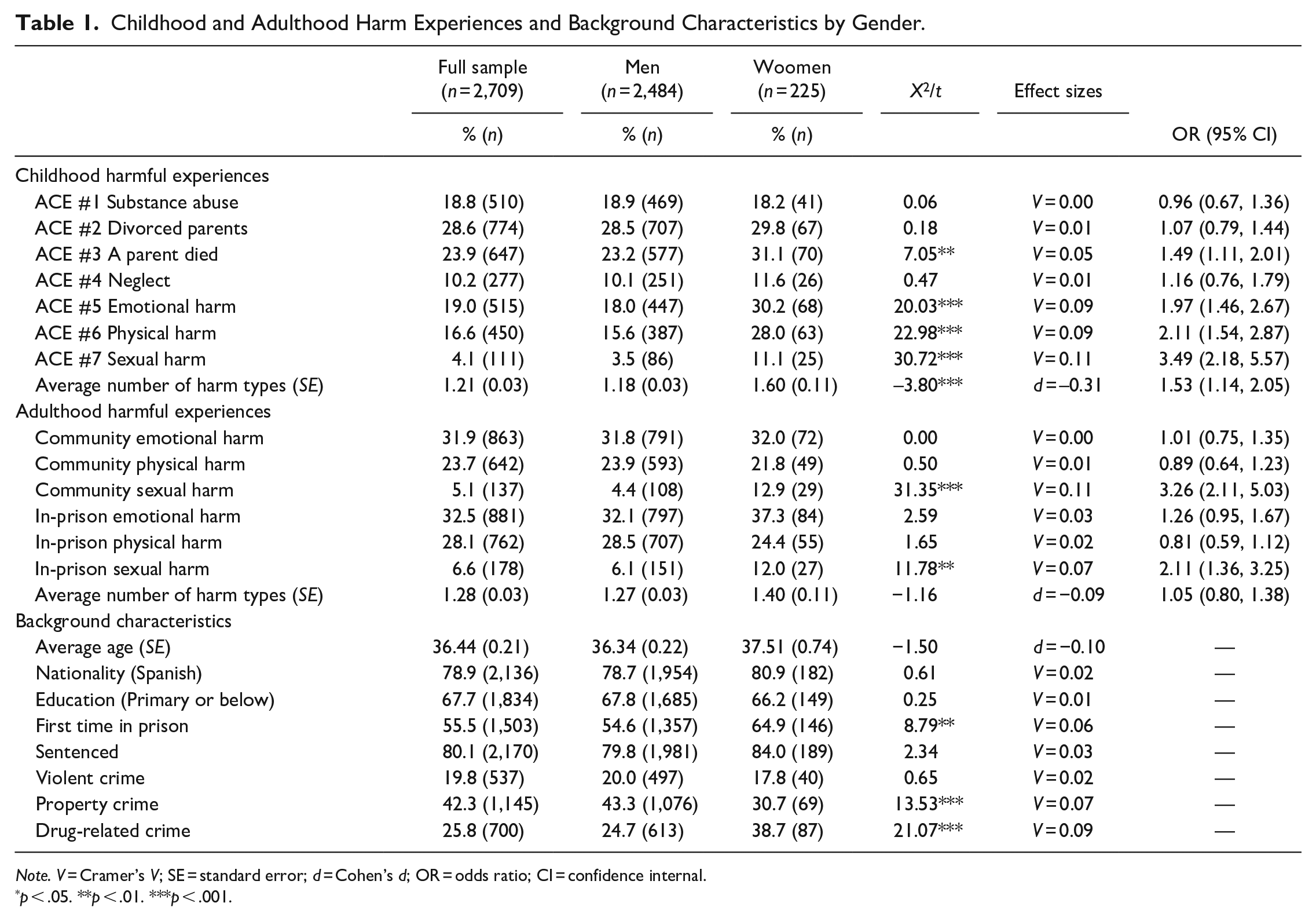
Descriptive statistics for the full and disaggregated samples are presented in Table 1. One type of harm was reported by nearly 4 in 10 residents (39.5%), two types of harm were reported by 3 in 10 (29.3%), and the remaining residents (31.2%) reported three or more types of harm. On average, women reported significantly more types of harm than men (M = 1.60 vs. M = 1.18, t = -3.80, p < .001, Cohen’s d = −0.31), although the effect size was small. For both genders, parental divorce and death were among the top types of childhood adversity. Women reported significantly higher rates of emotional, physical, and sexual harm, as well as parental death when compared with men. Rates of household neglect, divorce, and substance adversity were comparable across genders.
Childhood and Adulthood Harm Experiences and Background Characteristics by Gender.
Note. V = Cramer’s V; SE = standard error; d = Cohen’s d; OR = odds ratio; CI = confidence internal.
p < .05. **p < .01. ***p < .001.
In terms of adulthood harm, slightly over half of the sample reported one or more types of harm (54.1%). The most commonly reported experiences by both genders were emotional harm prior to and during imprisonment. Rates of sexual harm prior to incarceration were approximately three times higher for women than men (12.9% vs. 4.4%, X2 = 31.35, p < .001, Cramer’s V = 0.11), while rates of sexual harm during incarceration were two times higher for women when compared to men (12.0% vs. 6.1%, X2 = 11.78, p < .01, Cramer’s V = 0.07). The prevalence of other harmful experiences (emotional and physical harm prior to and during incarceration), as well as the diversity of experiences were comparable across genders. Bivariate correlations between types of harm for men and women can be found in the Appendix.
Regarding sample composition, respondents were in their mid-late thirties (M = 36.44, SD = 11.17). Roughly 8 in 10 participants were Spanish (78.9%) and were sentenced (80.1%) at the time of data collection. Approximately two-thirds had completed less than high school (67.7%), and one in five had committed violent offenses (19.8%). More women than men were incarcerated for the first time (64.9% vs. 54.6%, X2 = 8.79, p < .01, Cramer’s V = 0.06) and were imprisoned for drug-related offences (38.7% vs. 24.7%, X2 = 21.09, p < .001, Cramer’s V = 0.09). Conversely, a higher proportion of men were serving time for property offenses (43.3% vs. 30.7%, X2 = 15.53, p < .001, Cramer’s V = 0.07).
Latent Subgroups based on Childhood Harm
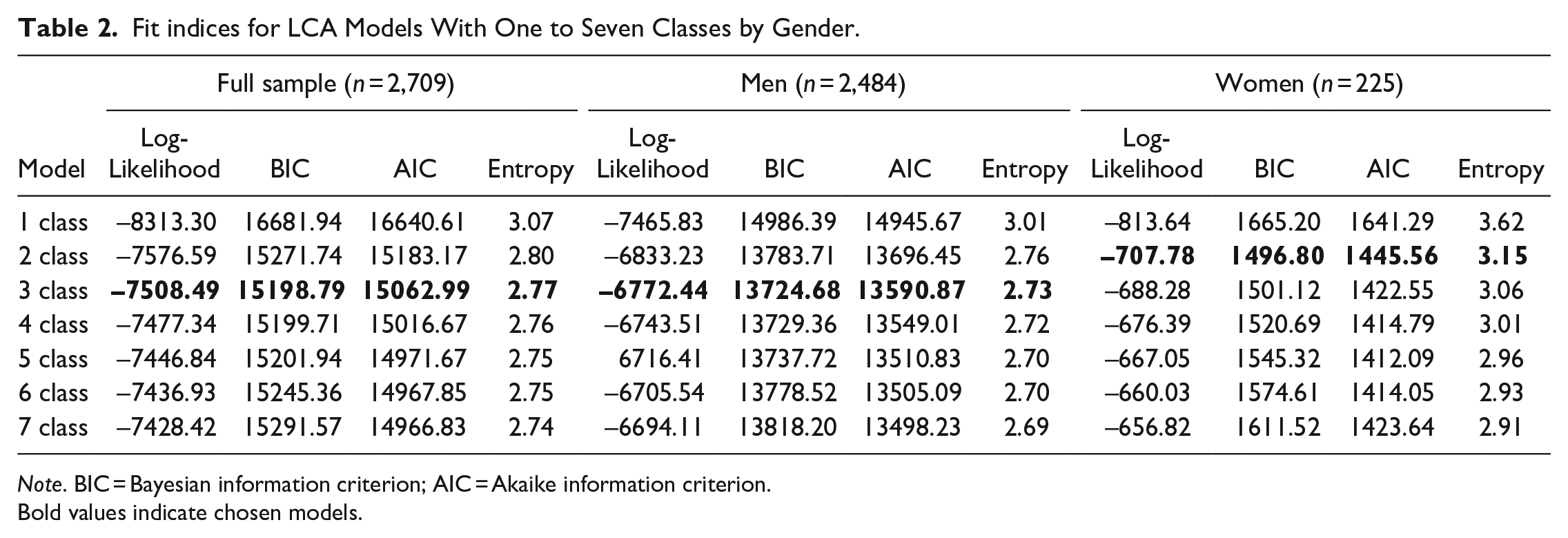
The results of the LCA models estimated with increasing numbers of classes are presented in Table 2. The three-class model had the lowest BIC values for the full sample as well as for the men sample. Although the seven-class models presented the lowest AIC values, the decrements were very small between the three- and the seven-class models. Therefore, and taking into account that reductions in entropy values were negligible in models with further classes, the three-class models were selected as optimal for the full and the men-only samples. In the case of women, the two-class solution fitted the data best, exhibiting the lowest BIC value. 1 From a theoretical and interpretability perspective, these models provided good-sized distributions of residents among classes and resulted in interpretable classes.
Fit indices for LCA Models With One to Seven Classes by Gender.
Note. BIC = Bayesian information criterion; AIC = Akaike information criterion.
Bold values indicate chosen models.
The resultant classes for the full and disaggregated samples are depicted in Figure 1. Compared to the other classes, Class 1 had relatively low probabilities across all types of harm and was therefore named “Low adversity”. Across the samples, this class was the largest of all (74.9% full sample, 75.7% men sample, and 71.6% women sample). Class 2 of the full and men-only samples was named “High dysfunction with low physical and sexual harm.” Residents in this class had moderate and high probabilities of endorsing household dysfunction (substance use, parental divorce and death, and neglect), moderate probabilities of endorsing emotional harm, and low probabilities of endorsing physical and sexual harm (≤3%). This class was the smallest in both samples, representing approximately 1 in 10 residents (10.3% of residents in the full sample, and 10.4% in the men sample). Finally, Class 3 of the full and men sample and Class 2 of the women sample was named “High harm with moderate household dysfunction.” Residents in this class had high probabilities of endorsing the abuse indicators, particularly emotional and physical harm, and moderate probabilities of the household dysfunction indicators. This subgroup was larger than the High dysfunction with low physical harm, comprising between 13.9% of residents in the men sample and 28.4% in the women sample (14.9% of residents in the full sample).
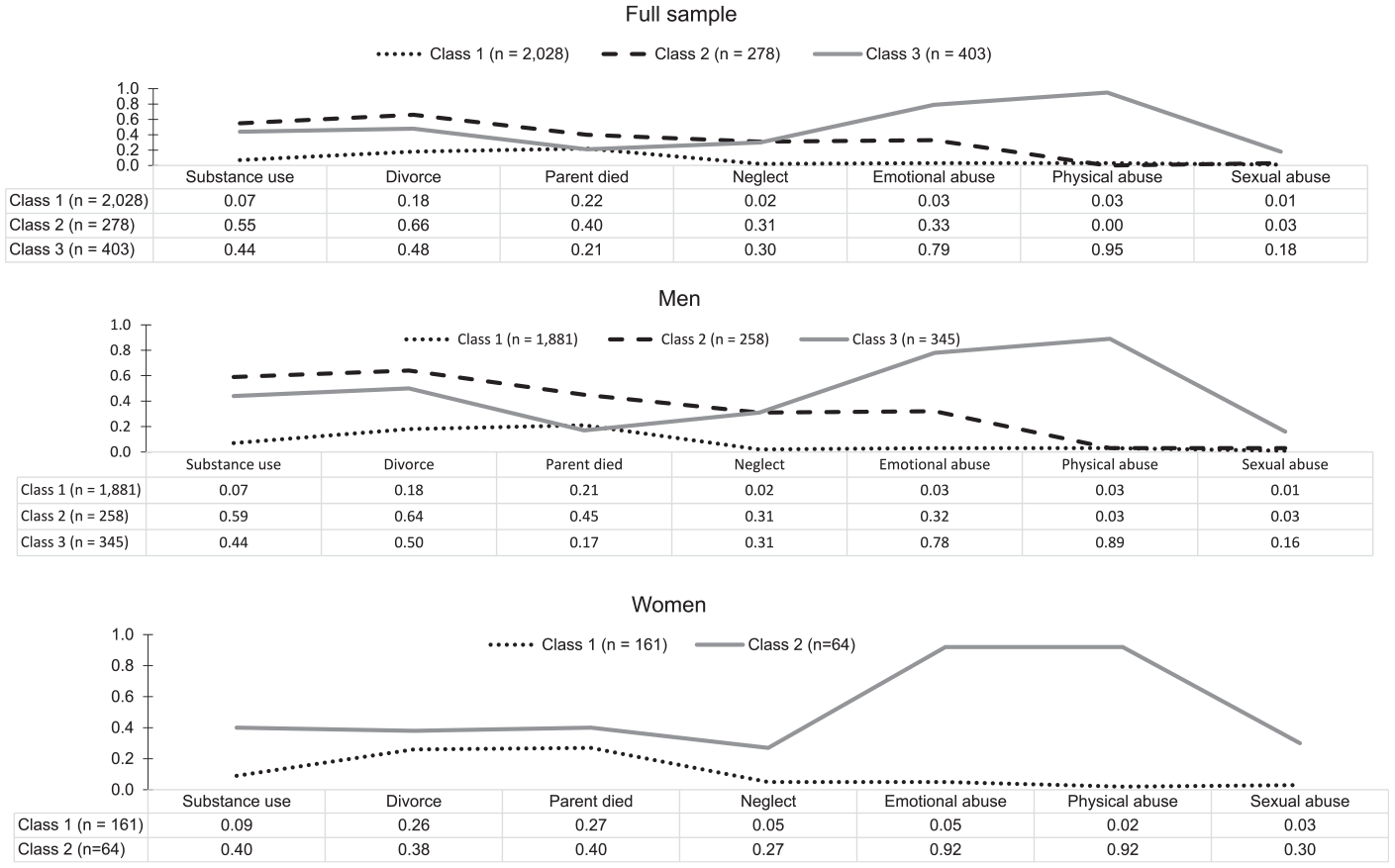
Predicted probabilities by class.
Class Membership and Adult Harm Experiences
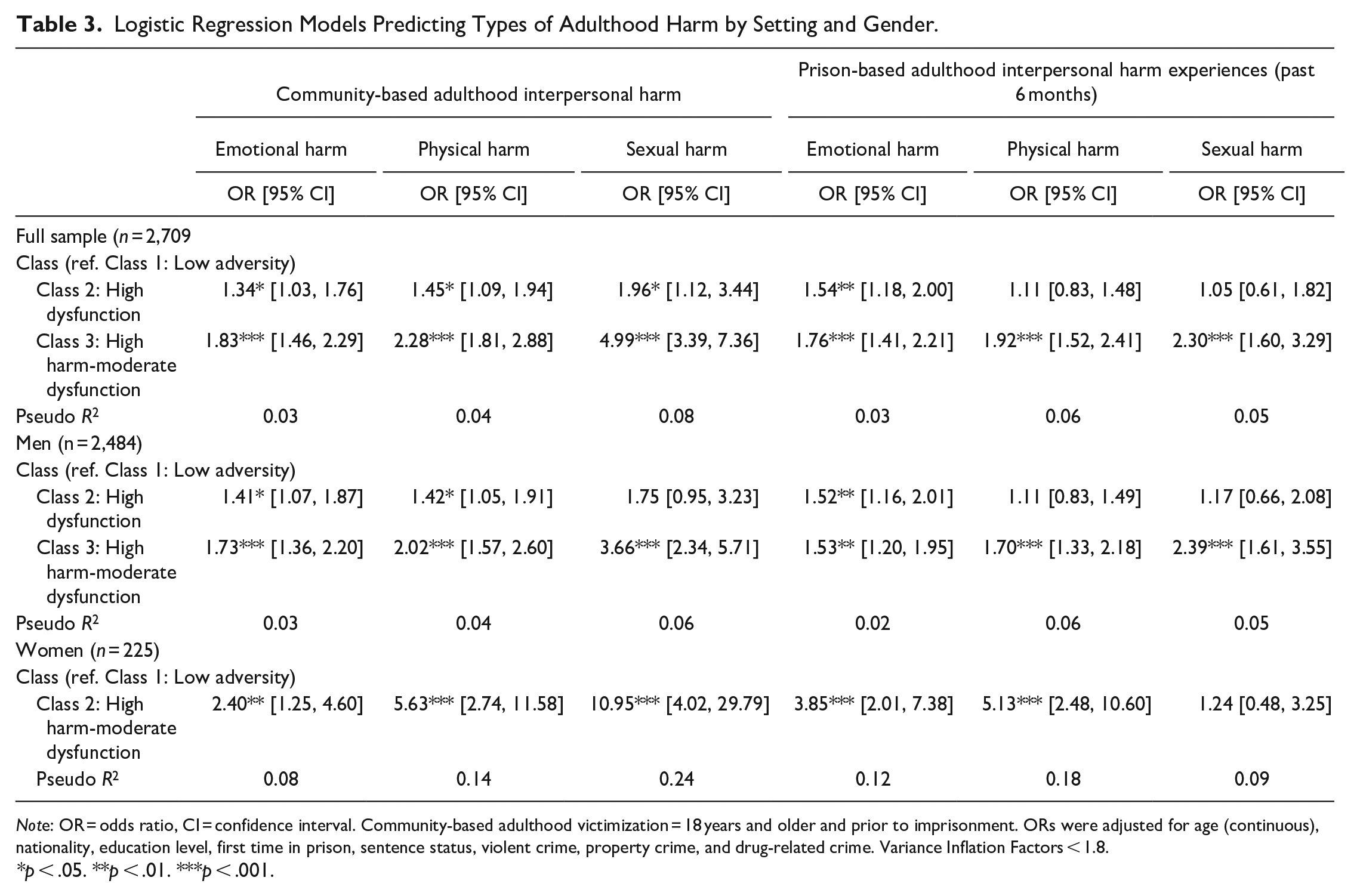
To explore the relationship between latent class membership and interpersonal harm experiences during adulthood, logistic regression models were estimated. The results from the regression models, including adjusted odds ratios (ORs) and 95% confidence intervals (CI) are presented in Table 3. The results of the regressions show that, when controlling for demographic and sentence-related variables, individuals categorized into the High harm with moderate household dysfunction class had higher odds for all types of interpersonal harm prior to incarceration relative to the Low adversity class. Across the samples, members of this group were between 1.7 and 2.4 times more likely to have experienced emotional harm, between 2.0 and 5.6 times more likely to have experienced physical harm, and between 3.7 and 11.0 times more likely to have experienced sexual harm. For the full and men-only samples, individuals in the High dysfunction with low physical and sexual harm class were between 1.3 and 2.0 times more likely to have experienced emotional, physical, and sexual harm than the Low adversity class.
Logistic Regression Models Predicting Types of Adulthood Harm by Setting and Gender.
Note: OR = odds ratio, CI = confidence interval. Community-based adulthood victimization = 18 years and older and prior to imprisonment. ORs were adjusted for age (continuous), nationality, education level, first time in prison, sentence status, violent crime, property crime, and drug-related crime. Variance Inflation Factors < 1.8.
p < .05. **p < .01. ***p < .001.
In terms of in-prison interpersonal harm, a similar pattern emerged. When compared to the Low adversity class, members of the High harm with moderate household dysfunction class were between 1.5 and 3.9 times more likely to have experienced emotional harm, between 1.7 and 5.13 times more likely to have experienced physical harm, and between 1.2 (women-only sample, non-significant) and 2.4 times more likely to have experienced sexual harm. The High dysfunction with low physical and sexual harm class (full and men-only samples) was only significant in the case of in-prison emotional harm, increasing the risk of experiencing this form of harm when compared to the Low adversity class.
Discussion
The current study investigated potential differences in profiles of childhood adversities between men and women using a large sample of incarcerated individuals in Spain. Consistent with previous research (Caravaca-Sánchez & Wolff, 2016; Chen & Gueta, 2016; Greene et al., 2014; Villagrá et al., 2019; Williams et al., 2012), women were more likely than men to report experiences of childhood emotional, physical, and sexual abuse. As a result, their levels of cumulative adversity during childhood were higher, with slightly over 4 in 10 women (41.8%) and 3 in 10 men (30.2%) having been exposed to multiple childhood adversities. Beyond gender differences, our findings highlight the pervasiveness of childhood harm among incarcerated populations and the benefits of developing trauma-informed policies (Miller & Najavits, 2012).
Consistent with previous research conducted with general populations (Haahr-Pedersen et al., 2020), the results of our Latent Class Analysis revealed that incarcerated men and women have distinct profiles of childhood adversity. These findings suggest that results from gender-blended samples might obscure important differences. Three- and two-class solutions provided the best fit for men and women, respectively. Across genders, two comparable subgroups were found: Low adversity and high harm with moderate household dysfunction. Despite this overlap, some gender differences were noticeable. Similar to previous research conducted in the United States (Wolff et al., 2020), incarcerated women were overrepresented in the group characterized by highest levels of adversity, with women being twice as likely than men (28.4% vs. 13.9%) to be clustered in the High harm with moderate household dysfunction class. For men, an additional class was identified, which was characterized by high levels of household dysfunction with low levels of physical and sexual harm.
As expected, higher adversity was associated with interpersonal harm experiences during adulthood. For both men and women, in-prison and prior to prison victimization was highest for the class representing high levels of abuse and moderate levels of household dysfunction. For men, the high dysfunctional class with moderate abuse was also associated with emotional and physical abuse prior to incarceration as well as emotional abuse in prison. These results align with previous research indicating that childhood poly-victimization and interpersonal harm increase the risk of a range of difficulties later in life (Haahr-Pedersen et al., 2020; Richards et al., 2017; Voith et al., 2016; Widom et al., 2008)
While our study makes a substantial contribution to the growing body of literature analyzing gender differences in histories and consequences of childhood adversities, several limitations should be acknowledged. First, we rely on self-reported measures of childhood harm and adult victimization, which may be subject to recall bias and other forms of measurement error (Bifulco & Schimmenti, 2019). Second, it is also important to note that we used a non-exhaustive set of harm and victimization experiences and did not account for the severity or the persistency of such experiences. Third, although we controlled for multiple demographic and sentence-related variables, we could not exclude potential bias due to omitted variables that might be associated with both class membership and adult victimization. Finally, the size of the women sample, although proportional to the size of the total prison population (Spanish Prison System, 2014) and worldwide with a representation of 6.9% (Walmsley, 2017), was small. Although no estimation issues emerged, and the size of the classes was adequate, future research will benefit from replicating these findings with larger samples of incarcerated women.
Despite these limitations, the results presented here have a number of theoretical and practical implications. On a theoretical level, this study represents an important step in furthering knowledge about gender similarities and differences regarding childhood adversities and the impact that those experiences might have later in life. As for the practical implications of the findings, they suggest the need to develop trauma-informed programs that address the complex harm histories of incarcerated populations. The identification of unique subgroups of individuals with similar risk factors may facilitate the design of tailored strategies. Our results also point to the benefits of gender-responsive treatments that account for the specific needs of incarcerated men and women.
Conclusion
Connecting literatures is critical for advancing science. The victimization literature clearly shows gendered patterns in abuse histories during childhood. Yet this literature has largely been ignored when exploring more deeply into the patterns of adversity through latent class analysis and then predicting risks and needs. The current study highlights the importance of taking gender into consideration when identifying profiles and examining factors associated with them. We found two common patterns of childhood adversity in men and women: Low adversity and High harm with moderate household dysfunction, but also an additional unique pattern among men: High dysfunction with low physical and sexual harm. Both men and women in the high adversity classes were at increased risk of interpersonal harm during adulthood. The next step is translating the gendered patterns of abuse into practice. That childhood patterns of harm heighten the risk of adult harm during incarceration suggests a need to screen for childhood adversities at admission and classify those at risk in ways that increase their safe placement and priority for appropriate treatment. Proactive screening may be an effective way to reduce episodes of interpersonal violence in correctional facilities.
Supplemental Material
sj-docx-1-ijo-10.1177_0306624X221102845 – Supplemental material for Patterns of Childhood Adversities and Their Associations With Adult Victimization Among Incarcerated Men and Women in Spanish Prisons
Supplemental material, sj-docx-1-ijo-10.1177_0306624X221102845 for Patterns of Childhood Adversities and Their Associations With Adult Victimization Among Incarcerated Men and Women in Spanish Prisons by Eva Aizpurua, Francisco Caravaca-Sánchez and Nancy Wolff in International Journal of Offender Therapy and Comparative Criminology
Footnotes
Declaration of Conflicting Interests
The author(s) declared no potential conflicts of interest with respect to the research, authorship, and/or publication of this article.
Funding
The author(s) received no financial support for the research, authorship, and/or publication of this article.

Supplemental material
Supplemental material for this article is available online.
Notes
References
Supplementary Material
Please find the following supplemental material available below.
For Open Access articles published under a Creative Commons License, all supplemental material carries the same license as the article it is associated with.
For non-Open Access articles published, all supplemental material carries a non-exclusive license, and permission requests for re-use of supplemental material or any part of supplemental material shall be sent directly to the copyright owner as specified in the copyright notice associated with the article.
