




Abstract
The aim of the present research is to examine the relationship between participation in the Enlightened Youth project for youths at risk and integration in employment at the end of the process, type of employment, dropout from school, and enlistment in the army. A database was prepared containing information on all the youths (499 in number) who were admitted to a multidisciplinary day Centre for Youths at Risk in Israel, of whom 86 participated in the project. To match a comparison group to the youths participating in the project, the propensity score matching method was operated. The research findings show a significant correlation between participation in the project and all the parameters examined, with implications regarding employment as a contributing factor among youths at risk, in terms of their personal lives, as well as financial and social well-being.
Keywords
Introduction
The Enlightened Youth project was inaugurated in 2005 by the Patrizio Paoletti nonprofit organization with a view to providing a fitting solution to youths at risk in Israel. The project includes a holistic program that incorporates therapeutic-educational tools (among other things, life skills such as shouldering responsibility, accepting authority, and working in teams). As part of the effort to return youths to a normative community framework (school, army, etc.), the project places emphasis on preparing them for the world of work, with employment in a candle production plant serving as the flagship enterprise for this purpose.
The focus in the present evaluation research is investigation into the integration in work, schools, and the army of youths at risk who have participated in an Enlightened Youth project.
Israel has a population of more than two-million children and youths, of whom some 330,000 are at risk and in distress, manifested in some cases by an alienation from normative frameworks (Ministry of Labour, Social Affairs and Social Services, 2006).
The concept of youths at risk refers to a youth population that is or could be at risk in terms of physical, mental, or spiritual well-being, indulging in violence, criminal activity, and substances use. The definition of a population at risk has evolved against the background of ongoing efforts by welfare and education services to develop effective prevention programs for coping with social problems in youths based on early identification of populations with risk factors and determination of ways for community services to deal with them (Lahav, 2000).
Risk factors among youths are generally a function of the ecological-social environment in which they live—family, friends—as well as personality variables (Gruper & Romy, 2014; Monahan et al., 2010). Risk boundaries are determined based on evaluations by welfare agencies and care providers with a view to placing the young man or woman in an appropriate therapeutic or prevention framework (Banai, 2008; Lahav, 2000).
Work as a Rehabilitation Tool Among Offenders
Integration in the work force constitutes an important means of normative integration in society, attainment of financial independence and prevention of social exclusion (Lahusen et al., 2013). The research literature deals extensively with the correlation between a state of employment or unemployment and crime, while presenting various theories to explain this correlation. The notion of an offender as a rational individual would, for example, regard unemployment as a situation that leaves the offender at risk as the loss of income is nothing compared with the gains to be had from committing an offence, especially a property offence (Uggen & Thompson, 2003).
In similar vein, the theory of desistance from crime (Bersani & Doherty, 2018; Laub & Sampson, 2001; LeBel et al., 2008) views employment as a key component contributing to the discontinuance of crime due, among other things, to the offender fraternizing with normative people at work, thus raising the likelihood of his adopting pro-social attitudes and values that could eventually lead to his incorporating a normal lifestyle (Lattessa, 2011, 2012).
As stated, numerous research studies refer to the correlation between a person’s state of employment and their likelihood of committing a crime (Bellair et al., 2003). Even after a crime has been committed, employment is one of the principal factors responsible for desistance from crime (Duwe, 2015; Farrall & Calverley, 2006). Employment has been shown to produce cognitive changes (Giordano et al., 2002) as well as changes with respect to identity (Maruna, 2001).
The question of whether employment is in itself rehabilitating or the result of rehabilitation is still controversial (Skardhamar & Savolainen, 2012). Despite the considerable influence of employment on rehabilitation, some claim that the influence is indirect (Gottfredson & Hirschi, 1990) or that employment in itself does not serve as a factor in bringing about a change (Aaltonen et al., 2016; Visher & Courtney, 2006). The different attitudes regarding the influence of employment appear to stem from differences in methods of measurement and ways of defining successful integration in employment (stable, worthy, and meaningful employment). The relationship between employment and desistance from crime appears to be complex and is related to age, social status, and other factors.
Irrespective of whether or not the influence is a direct one, active and willing participation in employment programs and their successful completion can signify rehabilitation and desistance from crime (Bushway & Apel, 2012). Moreover, employment can provide the necessary resources for building a family and ensure a framework of new social behaviour (Bersani et al., 2009). The family can also provide motivation for finding and persevering in work (Savolainen, 2009). In contrast, unemployment can be a source of stress within the family, serving as fertile ground for criminal activity.
Youths at Risk and the Job Market
Employment plays a significant role in the lives of youths in general, and youths at risk in particular, with research studies showing that the integration of youths in work holds multiple advantages including moulding of an employment identity, consolidation of personal objectives and attitudes, experience in decision-making, formulation of academic preferences, development of self-confidence, acquisition of work skills, inculcation of responsibility, and exposure to significant adult figures who serve as models for emulation (Lahav, 2005; Modestino & Paulsen, 2019; Zimmer-Gembeck & Mortimer, 2006).
In addition, the work environment provides youths with an opportunity to acquire social capital or, in other words, build relations that allow them access to information, social support, and other aspects (Lahav, 2005; Zimmer-Gembeck & Mortimer, 2006). Work experience during adolescence is also essential for the youth’s occupational development, establishment of identity, and development of autonomy (Zimmer-Gembeck & Mortimer, 2006).
Despite the high importance of youth participation in the work force, the structure of the job market also involves risks for youths, including exploitation by employers. Research studies have pointed to the fact that inordinately long working hours can have a destructive effect on a youth’s conduct and performance (Apel et al., 2006).
The modern job market, competitive and dynamic in makeup, poses a considerable challenge to youths in general, and youths at risk in particular. Tripney et al. (2013) claim that youths bear a threefold greater risk of facing unemployment or of being employed in the informal sector—one that offers no financial security, training, or social benefits—as compared with adults. The situation may be exacerbated by social and environmental changes such as globalization, migration, and rapid advancements in science and technology. These changes can be especially injurious to youths with low levels of education (Treskon, 2016).
Relationship Between School Dropout and Integration in Employment
The school plays a significant role in the lives of youths. For most, it is the principal framework for acquiring scholastic skills and for maintaining social contacts with peers. Dropout by youths from formal learning systems is a complex social problem that has both social and financial implications for students who have dropped out as well as for society as a whole (Maclean & Hill, 2015). The phenomenon, a familiar one in Israel and the world over, is considered to be a key factor in perpetuating and expanding social gaps, manifested, among other things, in low future incomes, difficulties at work, health problems, and low self-esteem (Carlson & Martinez, 2011; Theunissen et al., 2012). Research has found that youths who have dropped out of educational frameworks were more exposed to risk behaviours such as drug usage, alcohol consumption, violent conduct, and involvement in criminal activities (Cohen-Navot et al., 2001).
A number of characteristics have been identified as advancing or delaying alienation from the school system. Heading the list are social-demographic characteristics: It was found that the likelihood of a student feeling alienated from school increases with the age of the student (Tam et al., 2012), especially in the case of boys, migrants (Tam et al., 2012), and students from a low socioeconomic background (Ross & Berger, 2009). Stehlik (2013) adds that in many cases an absence from school does not stem from a lack of desire on the part of the student, but rather from factors that are beyond his control, such as lack of transport, dysfunction in the family, and parental neglect (Stehlik, 2013). Second, there are the characteristics associated with the school: Willms (2003) found that among different schools in the same country, a variance is seen in the frequency with which students feel an alienation from and lack of affiliation with the school. It was found that diverse aspects in school policy influence the sense of alienation, including openness to parental intervention, type of contact with the teachers, and the atmosphere in the school. Thus, for example, Ross and Berger (2009) show that a relationship exists between the strictness of the school laws and emphasis on academic achievements on the one hand, and the feeling of alienation from and lack of affiliation with the school on the other. Third, there are the personal traits of the student: A number of research studies have found that a correlation exists between alienation from school and serious behavioural problems (violence, involvement in fights, property offences, arrests, use of drugs and alcohol, and smoking) (Henry et al., 2012; Tam et al., 2012).
Youths at risk who are at different stages of dropout from school experience in most cases a sense of failure, leading them to express doubts about their own abilities and undermining their belief in their future gainful employment. Youths at risk, with no employment vision, tend to invest less effort in integrating into other normative learning and employment frameworks (Deluca et al., 2008; Rose & Akas, 2014). In addition, youths who have dropped out of school or who have terminated their studies with no graduation or matriculation certificate encounter a slew of difficulties in the job market because they lack the basic skills needed by employers (Cahan-Stravchinsky & Yeruvitch, 2009).
Educational systems worldwide cope in different ways with the challenge of integration in future work by youths at risk through systems that combine learning and technical training at different stages in their education. The United States has institutionalized a number of programs that have constituted the basis for development of the concept of education for a career. For example, the No Child Left Behind program is intended for students at risk while the Career Start program is aimed at establishing the concept of education for a career in schools and assimilating it in the curriculum as early as in middle school. This is predicated on the assumption that exposure to education for a career has considerable potential in the latency years. The program combines content from the world of employment with core subjects in the school curriculum, with the educators being perceived as agents of change and the dialogue on career issues being viewed as an integral part of the lesson plan (Baram, 2014).
Israel’s educational system includes two different tracks to ensure integration in work by youths at risk: a vocational track, involving training for a profession in agriculture, industry, or technology; and a formal track, including special frameworks for youths at risk (Vorgan & Nathan, 2008).
Relationship Between Enlistment in the Army and Integration in Employment
Enlistment in the army in Israel is perceived by the majority of youths as a duty as well as a privilege, enabling them to make a contribution to country and society. With some, however, this privilege is not self-evident. Thus, for example, in certain population groups—such as youths who have dropped out of the educational system, those with criminal records, those who have been removed from their homes and sent to out-of-home frameworks, and those from low socioeconomic backgrounds—service in the Israel Defence Forces (IDF) is an opportunity to integrate into a normative social framework that paves their way into the higher education system and work force in the future (Sharar, 1997).
Non-enlistment in or dropout from army service by youths at risk who fail to meet IDF criteria could be experienced by them as yet another rejection and a relegation to the fringes of society (Kansky, 2016).
As part of the effort towards meaningful enlistment and contribution to the army and the state, the Ministry of Welfare’s Youth Rehabilitation Service operates a number of programs geared to preparing youths for enlistment as part of an overall process of individual and group rehabilitation, culminating in the enlistment itself (Rabinovitch, 2009).
Intervention Programs for Integrating Youths at Risk in Israel’s Job Market
The public dialogue in Israel emphasizes, on one hand, the social need to cultivate the human capital required in industry while reducing the unemployment rate among youths who have not graduated high school and, on the other, to improve the educational system with a view to helping the individual to successfully integrate into society (Ben David, 2009; Gronau, 2002). In this context, government institutions in collaboration with various nonprofit organizations, such as JDC Israel, provide special intervention programs to encourage initiatives for successful integration of youths at risk in the job market.
A number of preparatory programs for careers as well as business initiatives have been implemented in recent years. One of these, Assured Future, imparts employment competence to youths at risk by focusing on expanding the work tools available to them, thus enabling them to find their place in the work force. Its features include individual and group guidance, inter alia, in professional training, academic enrichment, and preparation for meaningful service in the IDF and a positive employment experience.
An evaluation research study that examined the effectiveness of the program through self-reporting by participants and staff members (Lifshitz et al., 2015) found that about 70% of the participants reported on the contribution of the occupational elements of the program in helping them to integrate in employment. The staff members reported significant progress on the part of the youths in various domains, among them an improvement in acquisition of work-related skills as well as a better self-image, more focused inner control, and greater resourcefulness.
An additional initiative in Israel is Turning Point, a project that comprises five programs geared to youths at risk using occupational and entrepreneurial tools. The project is aimed at boosting the preparation of youths for the job market. It includes programs such as NFTE and King’s Road, a mentoring effort that combines training with placement in employment. Vasen-Sikron et al. (2012) conducted an evaluation research study that included integrative analysis of the action plans in Turning Point. Interviews were carried out with key personnel associated with the program, and a comparison was made between the principles underlying program implementation and the work principles appearing in the professional literature on preparatory programs for youths at risk in transitioning to the job market. The research pointed to a number of factors that are known in the literature to be instrumental in raising the probability of success and that exist in Turning Point, for example, soft skills and support by a significant adult.
The Framework Under Study—Enlightened Youth Project
The centre where the research was conducted is a multidisciplinary day Centre for Youths at Risk that accepts ages 12 to 18. Intervention in the Centre is of a short-term nature (up to a year and a half) and is intended to return the youths as soon as possible to normative systems in the community.
The Centre operates according to the “therapeutic environment” principle, based on a holistic approach to youths and therapeutic, rehabilitative, and educational interventions in various walks of life. Against the background of the concept that the most suitable time for consolidating an attitude towards an employment career is adolescence, the Centre aims to incorporate employment as a key therapeutic tool alongside the importance of building a significant vision of the future and imparting skills suited to the future job market. The Enlightened Youth project, the first to have begun at the Centre as an occupational enterprise, is the subject of the present research.
The central aim of the project is to impart to youths at high risk life skills in order to integrate them in society as active, contributing citizens. Short-range goals include the elimination of risk behaviours (violence, criminal activity, and use of alcohol and drugs), development of work proficiency, social interaction, emotional abilities, and cognitive powers. Long-range goals include integration into society, exemplified by completion of studies, meaningful and worthy vocations, enlistment in the army or National Service, and desistance from criminal activity.
The Enlightened Youth project brings together young men and women above age 15, an age at which the law allows them to work. Admission to the project is based on a number of criteria, including suitable age and prior stay of at least 1 month in the Centre, during which time they begin the therapeutic process and act in accordance with the Centre’s rules (among them, acceptance of authority, regular attendance, and observance of the agenda).
The youths who are accepted to the project, unlike those who are not accepted, participate in a preparatory workshop where they learn about the working world, including the rights and obligations of working youths and the layout of payslips, while receiving guidance and support in proper financial organization, and preparing for admission to jobs (writing up of curricula vitae, readiness for job interviews). In addition, at the end of the project, which generally signals completion of the process at the Centre, occupational coordinators help the youths find work. The average age on completion of the process is 16.5.
The core activity in the project is an enterprise for the production of candles. The youths take part in all production stages, from preparation of the candles, to packaging, marketing and sale, and receive a wage for their effort. The youths work for 3 days a week on average, in 4-hr shifts, under the supervision and guidance of the project coordinator. Each youth conducts a personal dialogue with the project team at least once a month. In the private meetings, the talk centres around personal goals, needs, aspirations, and expectations from the staff.
An appreciable number of research studies have been carried out to examine the effectiveness of programs geared to youths at risk (Edelstein, 2018). However, to the best of our knowledge, few studies have been conducted in Israel and elsewhere that are aimed at examining the effectiveness of occupational programs geared to youths at risk. Most of the research on the occupational programs carried out has been based on data relating to offenders, principally released prisoners. Those conducted in Israel on youths at risk (Lifshitz et al., 2015; Vasen-Sikron et al., 2012) were based primarily on subjective indices (self-reporting on feelings by the participants and staff vis-à-vis the program) and were less controlled. The research presented herein is based on objective success indices using advanced statistical methods that enhance the internal validity of the findings.
Based on the literature review, a number of hypotheses were formulated:
Among the youths who took part in the Enlightened Youth project, a lower rate of dropout from school will be found in comparison to youths in the same framework who did not take part in the project.
Among the youths who took part in the Enlightened Youth project, a higher percentage of integration in employment will be found in comparison to youths in the same framework who did not take part in the project.
Among the youths who took part in the Enlightened Youth project and found employment on completion of the project, a higher rate of youths will be found in legal employment in comparison to youths who did not take part in the project and found employment.
Among the youths who took part in the Enlightened Youth project, a higher rate of enlistment in the army will be found in comparison to youths in the same framework who did not take part in the project.
Method
To examine the effectiveness of the Enlightened Youth project, a database was constructed by the researchers in collaboration with the Centre’s staff, containing information on all youths who were admitted to the Centre during the period 2017–2019—a total of 499 young men and women. The database contained sociodemographic and sociolegal information on the youths, including gender, year of birth, place of residence, characteristics (alienated/non-alienated), criminal records, integration in employment, means of employment, enlistment in the army or National Service, and prevention of dropout from school or, alternatively, reintegration into the school system. Data on the youths were collected by the Centre’s staff by locating the youths and obtaining their own reports on their status. The original database contained 637 youths who had been in the Centre from the time of its establishment, of whom 138 could not be located. Of the 499 youths who were in the Centre, 86 (both boys and girls) were admitted to the project.
To match the control group to the youths who participated in the project, the propensity score matching (PSM) method was used. Thus, from among the 413 youths who sojourned at the Centre but did not participate in the Enlightened Youth project, a comparison group was matched to the group that had participated in the project and had a similar propensity to join it but for various reasons was not included in it. The choice of this method was intended to minimize the selection bias and increase the likelihood of the subjects in the control group being as similar as possible to the research group, except for the fact that they had not participated in the Enlightened Youth project (Jordan, 2012).
The first stage in calculating the propensity score was the selection of variables that served for determining the likelihood of participating in the project. These included age, gender, characteristics of the youths (alienated/non-alienated), criminal records (yes/no), place of residence (north/central/south), and residence at home or in a youth hostel. The variables were selected based on the existing data in the literature regarding risk/protection factors and their availability.
The propensity scores were calculated with the help of a statistical model that predicted the propensity using the subjects’ background characteristics. The scores ranged between 0 and 1, the score received by the participant indicating the probability of his participation in the project.
For selection of subgroups use was made of the Best Match Approach, which includes matching of a participant from the group that had been admitted to the project to a participant with the closest propensity score from the group that had not been admitted to the project (Best Match Approach). A 0.01 calliper was used for the purposes of selection.
The Sample
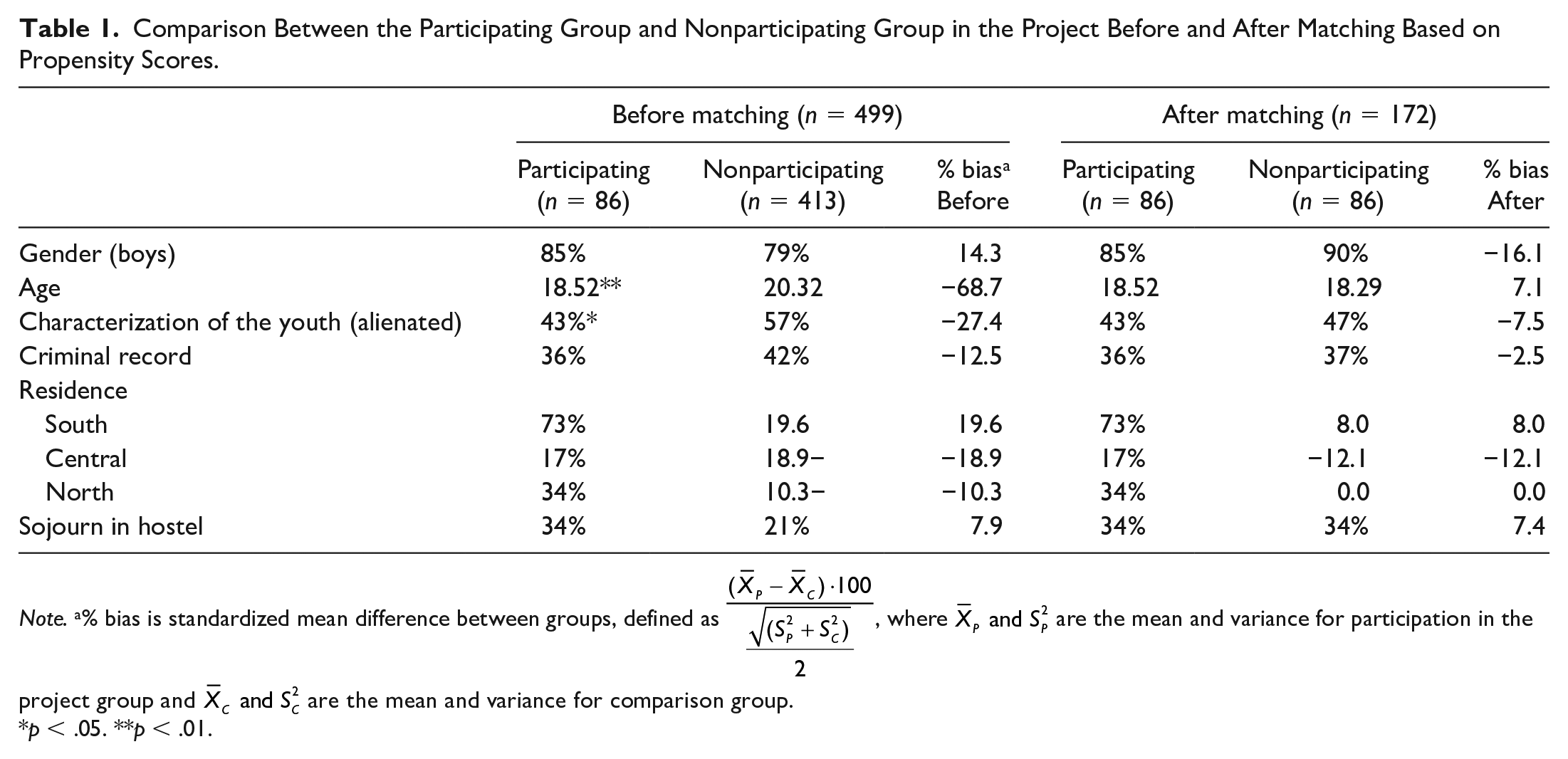
Table 1 shows that the participating group included 85% boys of average age 18.5 (SD = 1.65) and 43% alienated youths. A total of 36% of the participants in this group had criminal records, and most of them (73%) lived in a city in southern Israel. In contrast, in the nonparticipating group, 91% were boys of average age 20.32 (SD = 1.87), 48% were alienated youths, 37% had criminal records, and most of them (67%) lived in the same city in southern Israel.
Comparison Between the Participating Group and Nonparticipating Group in the Project Before and After Matching Based on Propensity Scores.
Note. a% bias is standardized mean difference between groups, defined as
p < .05. **p < .01.
Table 1 also shows that before matching the groups according to the PSM method there were significant differences between the groups in terms of the age of the youths and their characterization (alienated/non-alienated). In the nonparticipating group, the average age was higher while the percentage of alienated youths was also higher. After matching, the above differences were eliminated: Two groups of youths were formed, similar in all demographic and age variables, by means of which they were compared. In addition, after matching, the percentage bias is less than 20 for all variables, while the groups are also balanced in terms of the standardized differences index (Haviv & Hasisi, 2019).
The comparisons in Table 1 were made using the chi-square tests of independence for nominal variables and the independent-sample t test for continuous variables. In the first sample, before matching, the average propensity score in the participating group was 0.22 (SD = 0.08, min = 0.07, max = 0.45). In the nonparticipating group, the average propensity score was 0.16 (SD = 0.11, min = 0.01, max = 0.55), t (152.25) = 6.24. p < .01. After matching, the average propensity score in the participating group remained at 0.22 (SD = 0.08, min = 0.07, max = 0.45) and in the nonparticipating group the average propensity score was 0.23 (SD = 0.08, min = 0.07, max = 0.45), t(170) = 0.20, p < .05. In other words, after matching no significant differences remained.
To examine a possible correlation between participation in the project and the four indices selected—integration in employment following completion of the process in the Centre, type of employment (legal or black market), dropout from school, and enlistment in the IDF or National Service—chi-square tests were conducted.
Findings
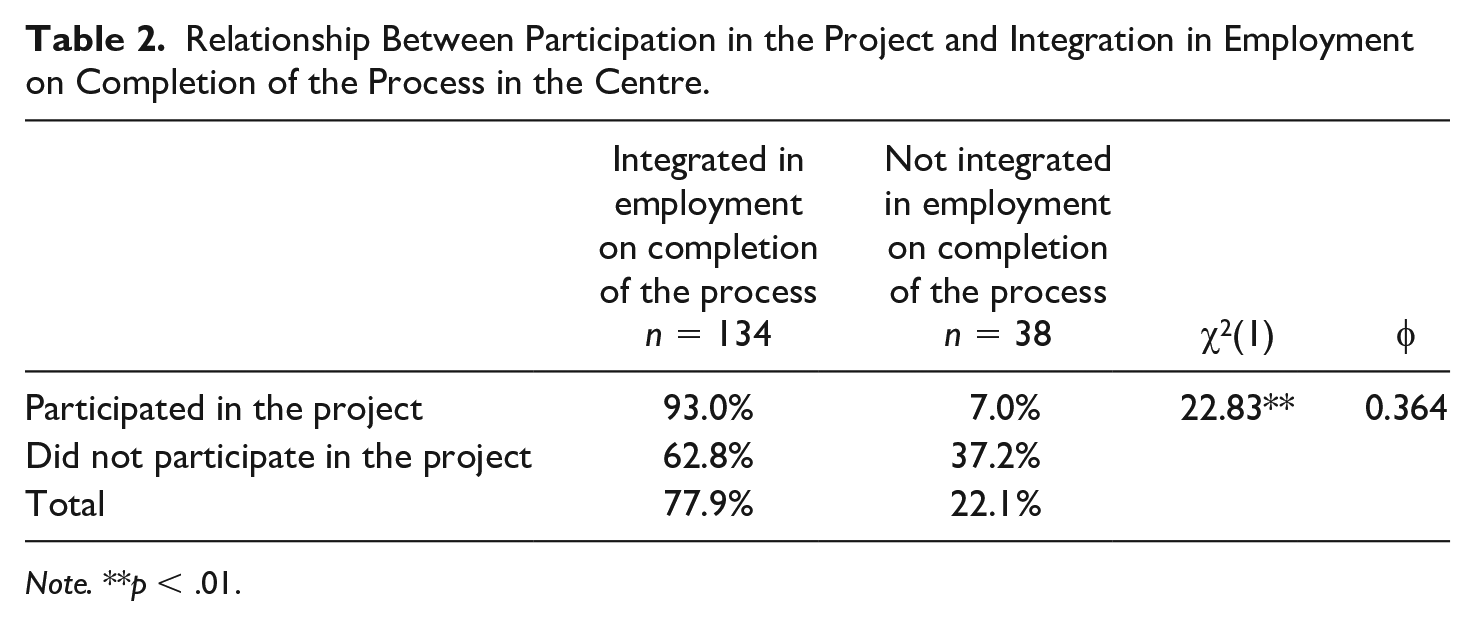
Table 2 shows that most of the participants in the research (77.9%) were integrated in employment on completion of the process. At the same time, the percentage of those integrated in employment on completion of the process in the group that participated in the project (93%) is significantly higher in comparison with 63% in the group that did not participate in the project.
Relationship Between Participation in the Project and Integration in Employment on Completion of the Process in the Centre.
Note. **p < .01.
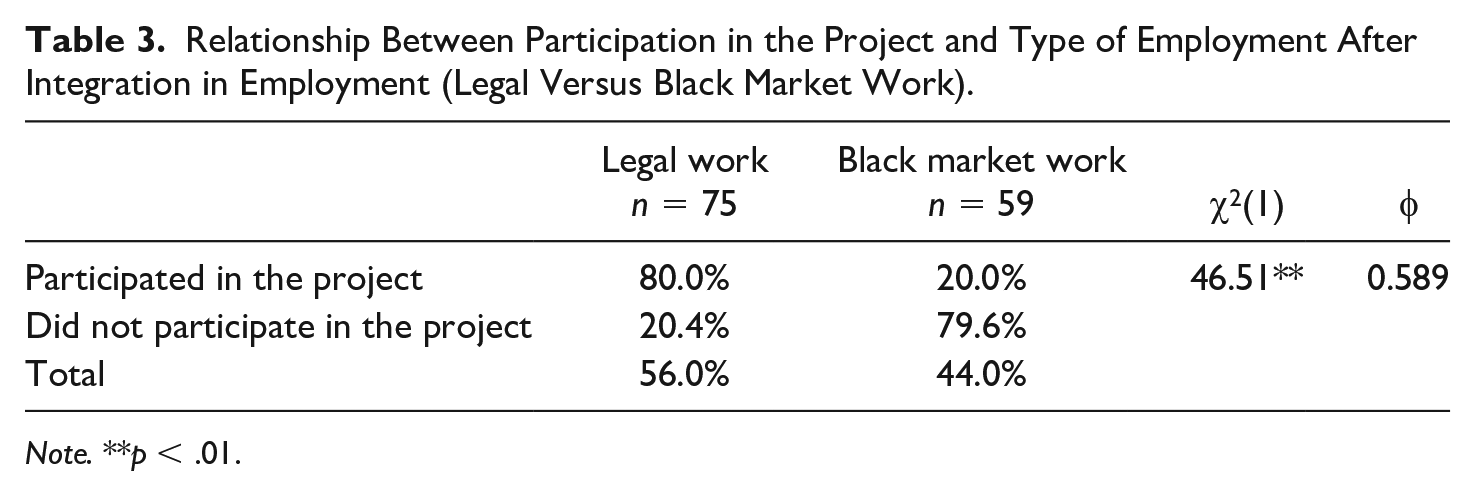
It may be seen from Table 3 that slightly more than half of the participants in the research (56%) were employed in legal work after completion of the process in the Centre. Here too the percentage of youths employed in legal work in the group that participated in the project is significantly higher, being 80%, versus 20.4% in the group that did not participate in the project.
Relationship Between Participation in the Project and Type of Employment After Integration in Employment (Legal Versus Black Market Work).
Note. **p < .01.
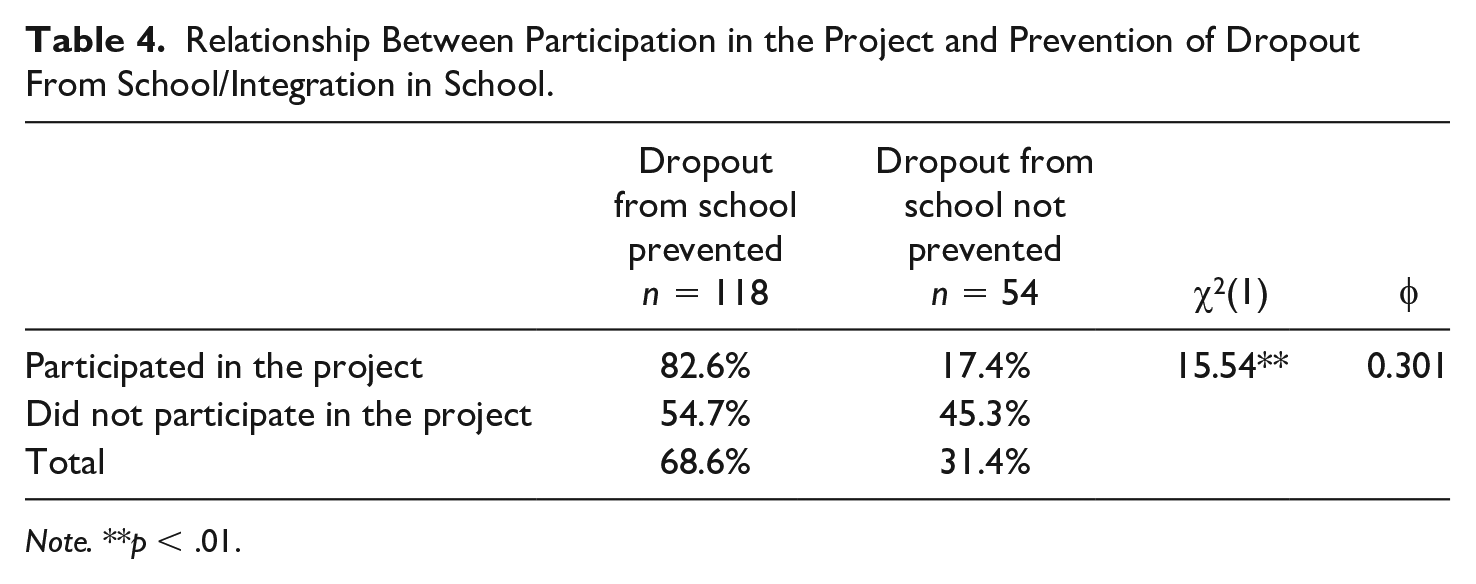
It may be seen from Table 4 that two thirds of the participants in the research persevered in their studies (those whose dropout from school was prevented or who were reintegrated in schools). Among the group that participated in the project, the percentage of those persevering was 82.6%, versus 54.7% in the group that did not participate in the project.
Relationship Between Participation in the Project and Prevention of Dropout From School/Integration in School.
Note. **p < .01.
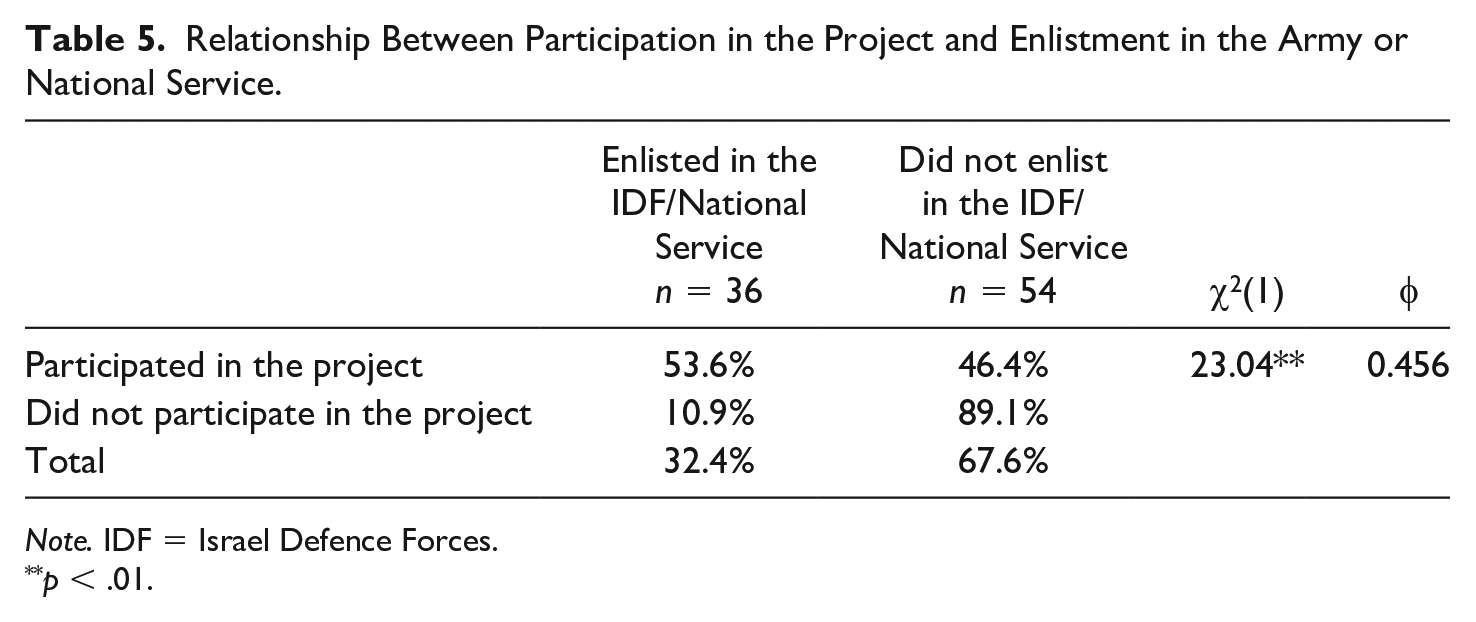
Table 5 shows that only one third of the participants in the research enlisted in the IDF or National Service. In this fourth index too, it was found that the percentage of those enlisting in the group that participated in the project was 56.6%, significantly higher than the 10.9% in the group that did not participate in the project.
Relationship Between Participation in the Project and Enlistment in the Army or National Service.
Note. IDF = Israel Defence Forces.
p < .01.
Discussion
The present research examined the results of participation by youths at risk in the Enlightened Youth project operating at a multidisciplinary day Centre for Youths at Risk. Apart from other activities in the Centre, the project provides support and guidance to youths at risk, with the emphasis on training and integration in employment.
The theory of desistance from crime (Bersani & Doherty, 2018; Laub & Sampson, 2001; LeBel et al., 2008; Maruna, 2001) describes a gradual process that eventually culminates in a cessation of criminal activity. A distinction is made between “primary” desistance, which is merely a hiatus in the individual’s life of crime, and “secondary” desistance, which marks a change in the individual’s criminal lifestyle and identity. One of the key elements in secondary desistance is integration of the criminal in employment and normative living.
It was found that in line with the above theory, integration in the Enlightened Youth project did indeed have a significant effect in causing the youths at risk to adopt a normative lifestyle to a far greater extent than youths at risk in the same framework who did not take part in the project.
The percentage of employed youths in the Enlightened Youth project on completion of the project was significantly higher than that of the comparison group. It was also found that of the youths who were integrated in further employment, the percentage of those employed in legal work among the participants in the project was significantly higher than that of those who did not participate in the project. This finding may be considered in the context of the common view that working in the black market is tempting for youths, principally because they receive immediate and ready cash, despite the fact that it is a criminal offence and the wage is not accompanied by a payslip. In addition, research findings have shown that because of the few employment opportunities available to them, youths will take advantage of any opportunity that comes their way and find themselves on the bottom rung of the job ladder: employed in temporary work, with employers enjoying cheap labour with no tax or insurance obligations (Levine & Hoffner, 2006).
Despite the few employment opportunities available and the temptation to earn a living in the black market, the findings of the present research show that the youths who participated in the project and underwent the relevant training were integrated principally in legal employment. This finding is significant not only in terms of the protection of the rights of youths, who constitute bona fide labour, but also because of the negative implications of inferior or informal work which, like unemployment, is equated to low personal welfare and high mental stress. In addition, employment in an informal job is injurious in terms of career satisfaction and the adoption of behaviour patterns toward career improvement. Finding a formal, worthy job is especially important during the interim period between studies and work because this can decide an individual’s future employment horizon (Koen et al., 2012).
As stated, participation in the project is intended not only to increase the likelihood of integration in formal, worthy employment, but in parallel also prevent or reduce dropout from school. Indeed, the findings of the research show that among the youths who participated in the project there is a higher percentage who finished school without dropping out, as well as those who were reintegrated in a school framework, compared with youths who did not participate in the project. Youths at risk who are in various stages of dropout from school experience in most cases a sense of failure, causing them to doubt their own capabilities while eroding their belief in their employment horizon. Youths at risk with no employment identity or horizon tend to invest less effort in integrating in further normative study and employment frameworks (Deluca et al., 2008; Rose & Akas, 2014). This finding is in line with the research literature on the subject, which points to the fact that employment encourages further studies and enhances motivation on the part of youths at risk (Kahan-Stravchinsky & Yurovich, 2009).
In addition to the absence of dropout from school and absorption into a suitable job, one of the research hypotheses stated that owing to the considerable normative social importance attached to enlistment in the army—a process that boosts a person’s esteem and greatly improves his chances of finding a job following discharge—a correlation would be found between participation in the project and the rate of enlistment in the army or the National Service. It was indeed found that the percentage of youths enlisting in the IDF or the National Service was higher among those who had participated in the project than that of those who had not—notwithstanding the fact that the enlistment rate generally among all the youths who had taken part in the research was low (see Table 5).
Although no meaningful preparation is made for the army at the Centre in general, this finding can be also explained through the theory of desistance from crime (Bersani & Doherty, 2018; Laub & Sampson, 2001; LeBel et al., 2008; Maruna, 2001), which refers to a general change in lifestyle and perceptions regarding integration in social frameworks and adoption of a normative way of life.
In attempting to explain the success of the Enlightened Youth project, reference may also be made to a recent review of evaluation research studies conducted by Ben et al. (2017) where a description is presented of the characteristics of successful intervention programs for youths at risk in the realm of employment and obstacles in implementing them.
As a unique intervention program using employment as a therapeutic tool, the Enlightened Youth project includes all the characteristics referred to by Ben et al. (2017). First, the project is intended for a defined target population, with a distinction being made between youths who have dropped out of school and require assistance in reintegration into the community, and youths who are not alienated from school but who are at risk, including the risk of dropout from school and the need of a safety net and orientation. Second, the project is an all-encompassing one, combining theoretical learning with practical training and paid work. The project also focuses on intervention by the youths’ parents while emphasis is also placed on intervention by the community as an example of participation in volunteer activities.
On completion of theoretical learning, a formal diploma is awarded to each participant. The program includes accompaniment by the program staff even after completion of the process, with the participant receiving assistance in looking for a good job that will meet all his needs. The award of a formal diploma could made a real difference in terms of the opportunities available to the youths (Hasisi et al., 2014; Ohlin & Cloward, 2013). The project also provides solutions to obstacles in the youths’ way that prevent them from participating in such programs, including, inter alia, provision of transport, food, emotional help, and assistance from a social worker.
The project appears to provide an environment that is protective, nurturing, and enriching, allowing the youths to develop the potential inherent in them while receiving a wage at the same time. In the work environment, they develop a job acumen and acquire life skills and several other aptitudes, including personal conduct and values that allow them to effectively manage their environment, give of their best in the workplace, and achieve the goals they have set themselves.
Finally, the project provides a program that offers youths opportunities to demonstrate leadership and develop a relationship with adults based on trust. A supportive relationship with a significant adult is key to achieving positive results in terms of successful employment and acquisition of the means to earn a livelihood (Vasen-Sikron et al., 2012). The program is also characterized by long-term support by the program staff to youths who have completed the process, even after their integration in the community. The importance attached to support on completion of the process may be learned from the literature on released prisoners, which refers to social support, assistance in finding work, and effective employment contacts—these being the most important factors helping the individual to find work in the community and maintain it over time (Gillis & Andrews, 2005).
It may be concluded from the above that education for a career and preparation of youths, especially youths at risk, for the job market constitute important social issues in view of the implications that unemployment and financial instability hold for the individual, the community, and society as a whole. The findings of the research underscore the importance of integrating youths in occupational projects which put into practice the material learned in the training programs. Alongside this, the work environment in the framework of the project—one that is supportive and containing, and one in which the youths earn a wage—constitutes a model for emulation for the youths ahead of their induction into the job market when they are no longer minors.
The present research addressed the selection bias using the PSM method. Although the possibility cannot be ruled out that the significant findings in favour of the youths who participated in the project are also linked to other variables which were not taken into account, the study’s positive findings, even after matching (which raises the certainty that the groups were equal), point to the importance of support and guidance to youths at risk, with the emphasis on training and integration in employment.
It should be noted that the present research, despite its positive findings, could have a number of limitations. First, the dependence on self-reporting by the youths could produce data that do not necessarily describe the reality. Another limitation is the fact that the research was based on examination at a single point in time—see the Maryland Scale of Scientific Methods (MSSM; Seiter & Kadela, 2003).
In summation, most of the research conducted in the field of employment as a rehabilitative tool have referred to offenders, mainly released prisoners, while to the best of our knowledge, research on youths at risk is lacking. Accordingly, the present research is exploratory in nature, serving as fertile ground for learning and experimentation in the employment of youths at risk.
Footnotes
Declaration of Conflicting Interests
The author(s) declared no potential conflicts of interest with respect to the research, authorship, and/or publication of this article.
Funding
The author(s) received no financial support for the research, authorship, and/or publication of this article.
