




Abstract

In a move to defend freedom of speech against Duterte’s attacks, Index became one of 78 civil society and journalist organisations which comprise the #HoldTheLine Coalition. The coalition demanded that the authorities in the Philippines dropped trumped-up tax evasion charges against Rappler and its founder, Maria Ressa. Ressa appeared in court on 22 July and pleaded not guilty.
At the time of writing, she is waiting on the judge’s decision. If found guilty, Ressa could be sentenced to 44 years behind bars.
In another attack on Rappler, Ressa was found guilty of cyber-libel on 15 June and could face six years in prison. She is currently on bail.
Speaking in the wake of Ressa’s court appearance, Go said: “The attacks have been about casting doubts on the credibility of the news organisation – having gender-based attacks on our reporters, things like that. We knew it could worsen over time, so when they filed the cyber-libel charge against Maria, although it was filed by a businessman, we knew that the businessman had connections to the government and it came with other cases filed by the government.”
Asked if the attacks had caused a chilling effect in the Rappler newsroom, Go said “we were prepared for this battle”, but added that there could be a ripple effect. “The smaller news operations would think that if the government can do this to Maria and to Rappler, who have international support, then they can easily do that to smaller newsrooms.”
Speaking about the tax charges, Go said that, ironically, Rappler has been acknowledged as a high corporate taxpayer by the city where the court trying them is based.
“You can see the irony, you can see the contradiction, but you will also see that this government will do what it wants to do to intimidate media organisations,” she said.
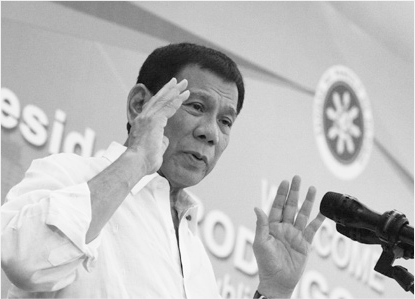
Filipino President Rodrigo Duterte. Duterte has carried out a sustained attack on Rappler, a Manila-based news outlet
CREDIT: (Duterte) public domain / (Newsroom) Maria Ressa
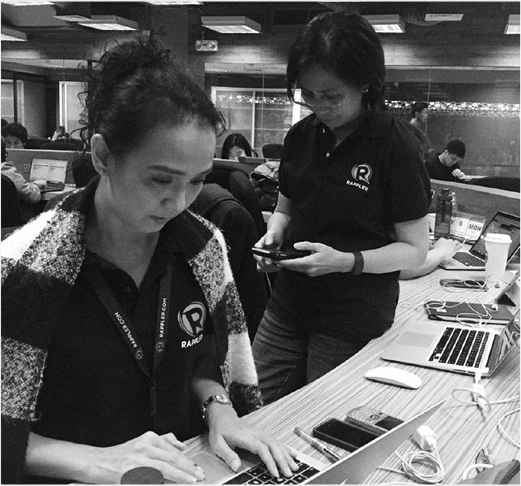
Rappler news editor Miriam Grace Go (left) with investigative editor Chay Hofileña in the Rappler newsroom
CREDIT: (Duterte) public domain / (Newsroom) Maria Ressa
The use of legal channels to attempt to silence journalists is also an issue in Europe. Jessica Ní Mhainín, senior policy research and advocacy officer at Index, has authored a second report on strategic lawsuits against public participation (Slapps), which will be published this month (see the preview in this issue on page 66). The report is based on discussions at an Index-organised roundtable of some of the top lawyers on this issue from Europe and the USA, and their recommendations for taking action to stop lawsuits being used in this way.
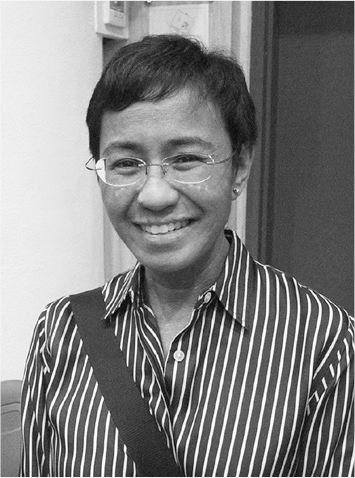
Maria Ressa, founder of Philippines news organisation Rappler. Ressa is facing trumped-up tax charges which could see her behind bars for 44 years.
CREDIT: Orna Herr/Index on Censorship
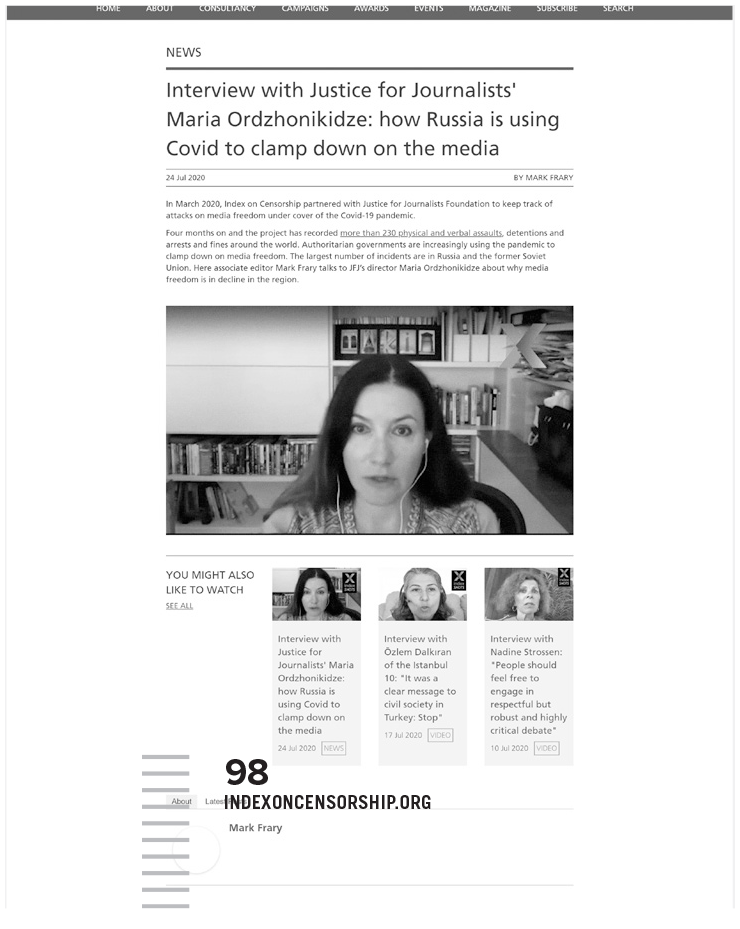
JFJ director Maria Ordzhonikidze interviewed by associate editor Mark Frary for Index Shots. JFJ have partnered with Index for a mapping media freedom project
CREDIT: Joshua Lim/Wikimedia Commons
Ní Mhainín says action is needed across Europe to stop this attack on the freedom of the media.
“Even in the media, some are unaware that the law is being used to intimidate and silence critical voices,” she said. “Most people have heard about growing inequality, but few realise the extent to which some wealthy and powerful entities are using their vast means to restrict access to certain information or curtail their freedom of speech.”
To highlight global attacks on press freedom, Index has launched Index Shots, a series of video interviews on freedom of expression issues.
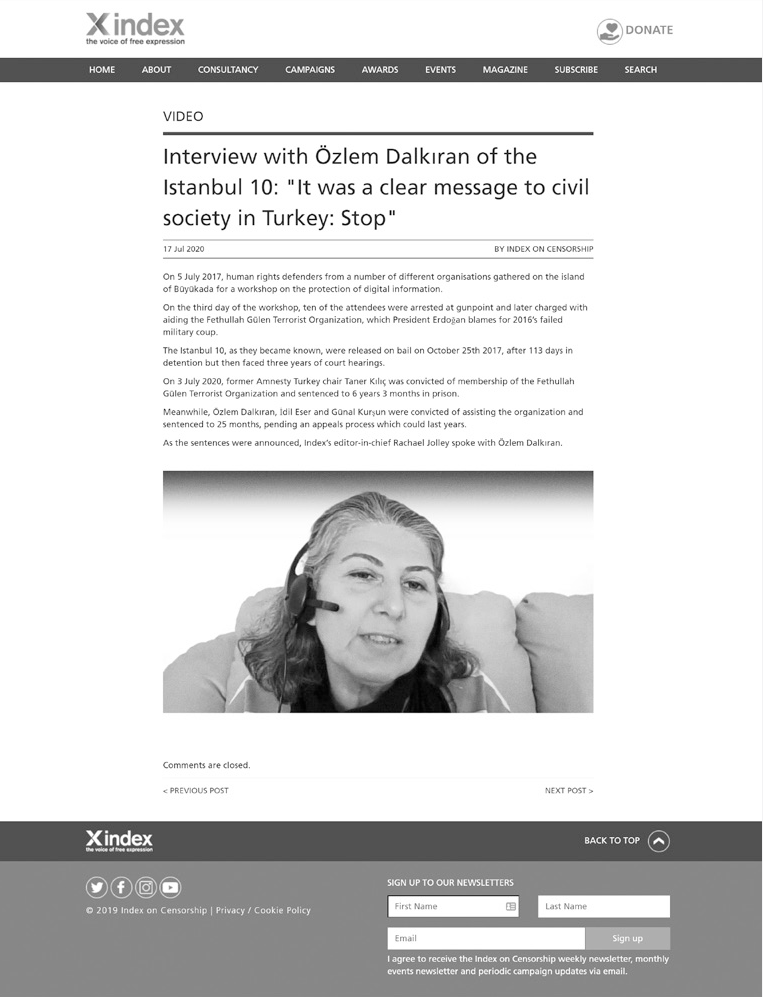
In one of the first in the series, editor-in-chief Rachael Jolley interviewed Özlem Dalkıran, a Turkish human rights activist and a member of the Citizen’s Assembly, who was arrested in 2017 during a workshop about social media and digital security.
On 3 July, Dalkıran was sentenced to 25 months in prison on charges of aiding terrorism. She had been arrested with nine other activists.
Dalkıran said: “It was a shocking experience because we were not arrested through a demonstration… or for something that you actually did as part of your job.”
When Jolley asked what impact the case had on those who might speak out against the government, Dalkıran told her: “From the day we were arrested and the smear campaign by government media started, it was a clear message to the whole of civil society – and especially human rights defenders in Turkey – saying ‘Stop!’”
She continued, addressing how government surveillance of online activity can make ordinary citizens targets: “It’s not just human rights defenders [it’s] basically anybody in Turkey right now. Before it was, OK, you tweeted against something so you are investigated; now if you like tweets you are at risk.”
Another video in the series is an interview conducted by Mark Frary, associate editor for Index, with Maria Ordzhonikidze, director of Justice for Journalists Foundation.
JFJ has partnered with Index on a project to map attacks on media freedom under cover of the Covid-19 pandemic.
Ordzhonikidze explained how the governments in Russia and countries in the former Soviet Union have taken different approaches to curbing press freedom on the pandemic, from the denial of any coronavirus cases and the criminalisation of people who deviate from this line, to warnings and short-term detentions for journalists judged to have “spread panic” with their reports.
Russia, Kazakhstan, Azerbaijan and Uzbekistan take what Ordzhonikidze calls a “hybrid approach”.
“In these countries the journalists, the independent journalists, and [the] media workers are punished and arrested for spreading fake news, for violating quarantine rules,” she said. “They are forced to delete publications and they are beaten up.”
On fake news laws, Ordzhonikidze echoed Dalkıran in saying that the oppression of free speech is not limited to traditional journalism.
“Anyone can be fined – not only the publication can be fined but any person, any blogger, any person who just retweeted the information or commented on the information.”
Asked if this level of curbs on press freedom would be the new normal, Ordzhonikidze said: “Yes, I believe so. In countries like Russia definitely, there is no instrument to curb the authorities… I don’t see any indication of how this situation can be improved. I think it will only be worsened.”
Index has recently appointed a new CEO, Ruth Smeeth (see more on page 50). Smeeth is a former MP for Stoke on Trent, England.
On joining Index, Smeeth said: “I’m excited to be joining Index on Censorship at a time when the organisation’s work to protect free speech is more important than ever.”
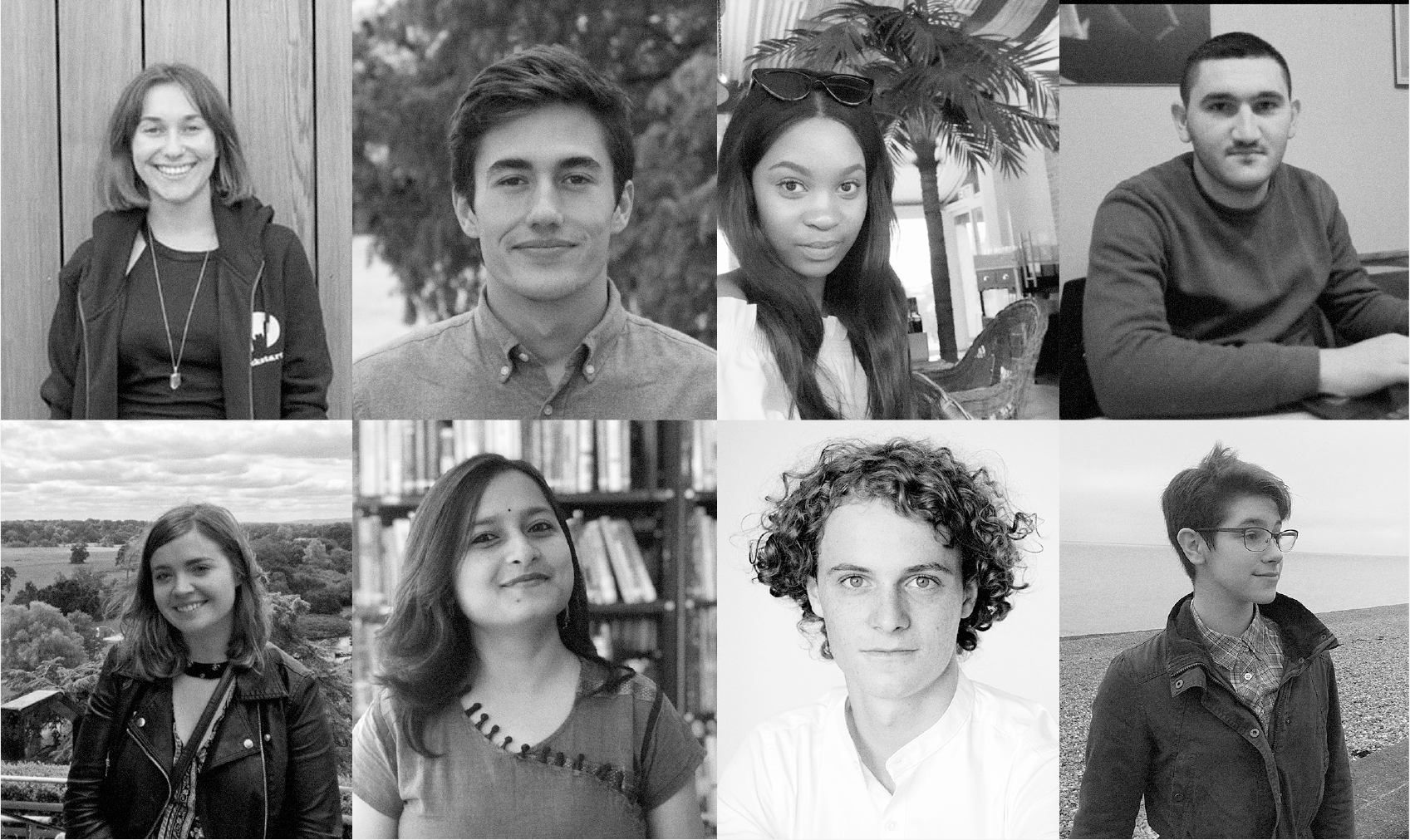
Index has also recruited a new youth advisory board which will sit until December. The board comprises eight people aged between 16 and 25 from around the world.
It includes Siphesihle Fali, an English and media student at the University of Cape Town, in South Africa; and Subhan Hasanli, a human rights lawyer in Azerbaijan, among others from countries including India, Spain and the USA.
Index has just appointed a new youth advisory board for July to December 2020
CREDIT: Index on Censorship
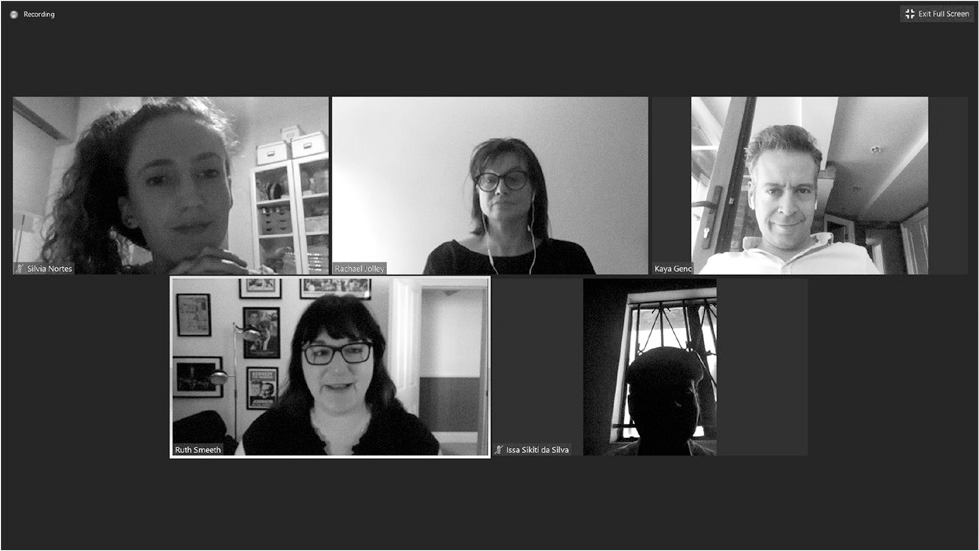
Index’s first online magazine launch on Zoom was a discussion of privacy concerns in a new era of heightened surveillance. From left going clockwise: Spanish journalist Silvia Nortes; Index editor-in-chief Rachael Jolley; Turkish author Kaya Genç; African journalist Issa Sikiti da Silva; Ruth Smeeth, Index CEO
CREDIT: Index on Censorship
Özlem Dalkıran interviewed by Index editor-in-chief Rachael Jolley for Index Shots. Dalkıran is one of the Istanbul 10 who was accused of supporting a terrorist organization
CREDIT: Index on Censorship
A returning member of the board is AK Orr, a student from the UK. Speaking to Index about what they gained from sitting on the board in the previous term, Orr said: “Part of me had always imagined activism as being a solitary pursuit, but the youth board showed me that activism is inherently communal.”
Orr added that it was vital for young people to engage in discussion about freedom of expression, saying: “We have to learn how to listen, fully listen, not just hear enough so that we retort to an argument we don’t agree with.”
In the midst of social distancing rules, Index held its first online magazine launch for the summer issue, where panellists discussed how surveillance could be used to curb freedom of expression.
“Here, in this kind of Zoom event, you never know. Maybe your event is screened in the headquarters of the government, maybe 10,000 people are watching and you don’t know, so that’s a bit unnerving.” said Kaya Genç, contributing editor at Index and a panellist at the event.
Joining Genç were Spanish journalist Silvia Nortes and Issa Sikiti da Silva, a journalist based in the Democratic Republic of Congo, who reports from across Africa. The panel was chaired by Index’s Rachael Jolley.
Nortes commented on how older generations in Spain took a sceptical, critical view. “They are blaming the government for hiding information, for not being transparent with death data,” she said. “As a consequence, they do not want to be controlled by a government that is lying.”
Addressing the reality that in some African countries journalists cannot openly criticise those in power, Sikiti da Silva said: “You have your choice to make. You take it easy or become a government enemy. Some people are giving up on journalism because of that kind of behaviour.”
Genç discussed how state surveillance and punishment could cause people to self-censor. “I think that’s the biggest danger here – if we become self-surveillers.”
Leah Cross, senior events and partnership manager at Index, emphasised the importance of the launch and similar online gatherings.
“These events are needed now more than ever,” she said. “As we see governments using the pandemic to further stifle free speech, it’s crucial that Index continues to provide a free, open and secure platform for discussion and debate.”