



Abstract

Bestselling author
“We’re living through a period of such lunacy that it can’t be described without one’s head exploding,” he told Index.
Still, he gives it a bash.
“Here in the USA, the Republican party has lived in a parallel universe of highly refracted truth for some time,” he said.
“They manufactured the war in Iraq based on wholly fabricated information, and they got away with it. Since then, there has been no significant inquiry about the war, and not one American lost their job over an unjust war that cost about a million Iraqi lives.”
The situation has become much worse due to Covid-19. Eggers says that the level of “incompetence at work here is breathtaking” and even though many would have died irrespective of leadership, “the current misinformation campaign related to the virus, coupled with weak and dithering leadership,” is definitely part of it.
“The GOP’s indifference to truth, science and common sense has made possible an extremely reckless and radical agenda for a party that had heretofore been known as ‘conservative’.”
At the same time as the Republicans might be undercutting truth, our privacy is being eroded – a topic Eggers is particularly concerned about.
He broke into the literary scene in 2000 with his first book, A Heartbreaking Work of Staggering Genius, a partly fictionalised memoir of losing both his parents to cancer when he was 21 and having to then raise his younger brother.
But it was The Circle that turned Eggers into a household name. Released in 2013, it was a time when “Google it” was a firmly established term and stories of the endless perks of working at Google’s California headquarters filled column inches. Eggers imagined a Google-type company whose well-meaning idea to connect the world takes a very sinister turn. It was based on aspects of the present, but was also a projection of the future.
“I was trying to scare myself,” Eggers said of the writing process.
“I envisioned a few dozen developments that I found terrifying but not 100% likely. But, then, so many of those things happened within months of the book being published. I thought I was projecting some near-ludicrous scenarios that might happen 10 years out, but instead they unfolded in weeks.
“The core of my fear, and the factor that’s driving us into a near-total panopticon of our own making, is that no one cares in any real way about privacy, and that the right to know will always trample the right to privacy.
“That drives most of the more nefarious innovations of the last 20 years and will continue to drive us towards a society of total surveillance and zero privacy. It’s a fast-running river that can’t be turned back.”
Eggers says it’s “nearly impossible” to find a company with “any innate sense of boundaries”.
The author Dave Eggers
CREDIT: Em-J Staples

No one – neither corporation nor consumer –cares to set them.
“No one reads the small print, and the small print changes daily, and daily we’re presented with 10 new implicit or explicit contracts, all containing small print,” he said. “It’s too much to track.
“In general, I really do believe that people on the whole see the collection of data as an inherent good. The collection of data recently, to track the movement of people during Covid-19, is universally seen as helpful. But it’s all done without anyone’s consent. Governments and corporations are taking note of the utter lack of resistance.”
Eggers believes that there will be an exponential increase in data collection without consent over the next five years. This is based in part on our response, or lack thereof, to data collection so far.
“I haven’t seen much outrage in the last 20 years,” he said. “There is, instead, a brief roll of the eyes at every new privacy violation.”
This must irk him, and yet he’s remarkably understanding and non-judgemental.
“I personally use all kinds of tech that is inherently exploitive and privacy-trampling, and it’s always driven by expedience and convenience,” he said.
CREDIT: Michael Villegas/Ikon
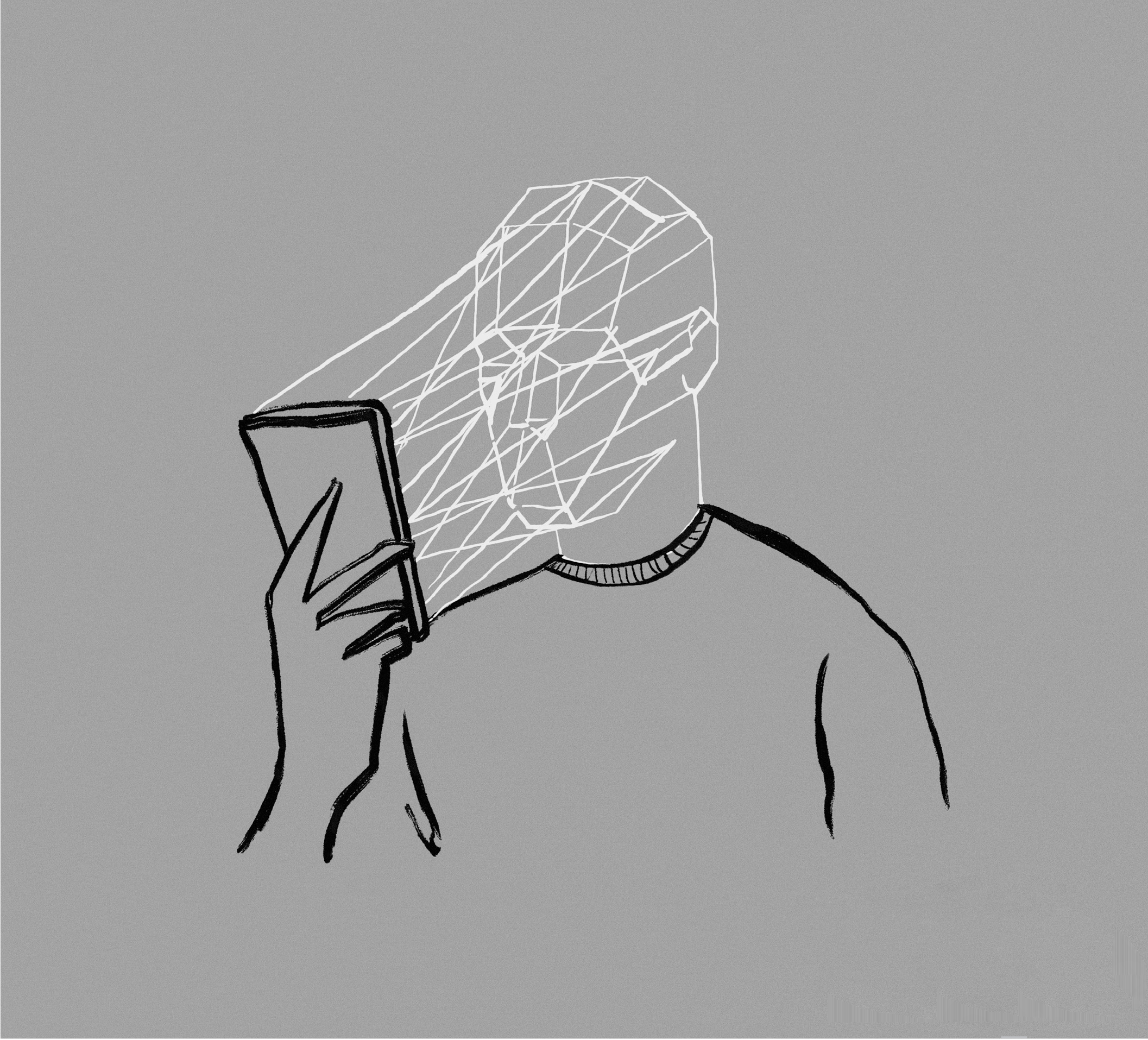
Many of us in Western democracies, Eggers says, are lucky to have not experienced “the truly nefarious outcomes from surveillance”.
“We don’t have so many examples of police knocking down doors and arresting people en masse due to warrantless surveillance. There are some cases that fit that profile, but not so many. In general, we’re just changing from one species into another. Twenty years ago, we valued privacy as an inherent right and necessity. That principle will be largely gone in our lifetimes.”
Eggers, whose background also includes writing a comic strip and running a magazine, has written often of the importance and value of non-digital, analogue lives. Is that aspect becoming more dream than reality?
“In our lifetimes, cash will largely be abolished and nearly all media will be experienced via digital means,” he said. “There are no powerful interests that stand to gain by defending analogue living. We should not have to have smartphones and laptops to get an education, interact with our government, or vote. But increasingly, in the interests of cost-savings and efficiency, democracy will be accessed only through screens and digital means.”
For Eggers, this is not just a shame. He believes, damningly, that “it’ll make us far less interesting as a species”.
The Covid-19 pandemic, with its associated restrictions, has accelerated this negative trend and Eggers highlights online schooling, which has been carried out during lockdown.
“Even 10 years ago, teachers during a pandemic might have said, ‘read a chapter of this book each day, and let’s talk at the end of the week’. Now there is this never-severed digital tether, and children are on their screens eight to 10 hours a day… It works against a child’s sense of daily balance and diversity of experience. Even in terms of physical education, children in the USA are required to send their phys-ed teachers videos of them exercising. It’s loony.”
Despite his concerns, Eggers is still positive. Indeed, he is a firm believer in the over-riding good of humanity.
In addition to his own writing, Eggers is co-founder of 826 National, a network of youth writing and tutoring centres, as well as ScholarMatch, a non-profit organisation designed to connect students with resources, schools and donors to make college possible for those from low-income backgrounds.
He also runs McSweeney’s, a non-profit publishing company with a mission statement of championing “ambitious and inspired new writing” and challenging “conventional expectations about where it’s found, how it looks, and who participates”. A publishing house to help others, at this stage McSweeney’s appears to be a tonic for Eggers.
“I’ve been editing a lot of short essays lately by two groups – healthcare workers and citizens over 60. These are two platforms we started on the McSweeney’s website. Every day, we post a few short essays and, I have to say, hearing directly from so many people, most of them non-professional writers, has been a balm,” he said.
“People are so good. When you take time to listen to them they are gorgeous and brave.”
He jokes that this positivity is at odds with the cynical take of the rest of the interview – and, perhaps, with the works he is most widely known for – but for Eggers, all is not ultimately lost.
“The truth is that I think we still have options,” he said. “We can, for the time being, make choices that give us more control and balance in our lives. We just need the will to make those choices. The will is everything.”