Abstract

Lebanese playwright
“Is it hopeful? I would say it’s realistic,” he told Index.
“If you are a pessimist, I would say you’ll see it in a pessimistic way. If you are an optimist, you will see it in an optimistic way – that there is hope.”
Despite spanning just minutes of two characters’ lives, The Video captures the nuances of their world views. Salim, an activist who posted – then quickly deleted – a video of himself decrying the death of a protester at the hands of the army, is anxious after discovering it has gone viral. His friend, Walid, sees the positive difference Salim’s words could make.
The Video encapsulates an atmosphere of censorship, the fear of repercussions for speaking out, dismay at how the coronavirus lockdown is being used by the authorities to crush dissent, and belief that activism can make a difference. It is a Pandora’s box – hope is present among apparent abject hopelessness.
Does the playlet hold up a mirror to the current situation in Lebanon, where there have been protests since October 2019 and which, at the time of writing, is on Covid lockdown?
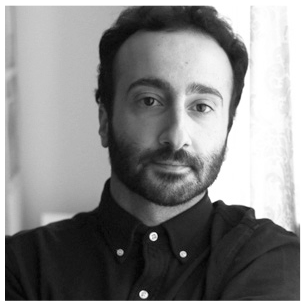
Award-winning playwright Lucien Bourjeily
CREDIT: Marco Ribali
“It was very noticeable that they used the health emergency, which is of course a very serious one, but I mean they used it to enforce things that they couldn’t do before… imprisoning people and even torturing people. They used torture against protesters which is something you didn’t hear about in the last five months before Covid-19, so they increased the level of brutality,” Bourjeily said.
Through The Video, Bourjeily also examines censorship through what he calls “psychological violence”.
Salim deleted his video after receiving confrontational comments online, and Bourjeily knows from experience the impact these can have.
“Because I believe in freedom of expression I’ve never blocked anybody in my life, but you wouldn’t imagine the comments I get on Twitter,” he said. “Some people cannot take it, and this is what the government and people in power know is effective. People think that oppression is only about a policeman with a baton hitting you on the head. It’s not only that.”
However, Bourjeily’s work is starkly honest about the dangers activists face. Salim’s anxiety about his anti-establishment video going viral is not played as cowardice but as pragmatism. Bourjeily says the playlet speaks to the inner conflict every activist and protester has: “How hard will I be willing to go or to sacrifice for my ideas?”
They feel that change is so difficult, so costly, it might affect their daily lives or they might be killed. So, are they willing to take that chance?
“There hasn’t been any kind of big change in any country in the world unless some people in one way or another sacrificed the most precious thing, which was their lives,” he said. “This is the ultimate censorship – they are killed. The ultimate censorship is when somebody actually dies because they are trying to advocate certain ideas or certain changes or certain political aspirations.”
But Bourjeily, who is currently working on Vanishing, a film about a journalist investigating the disappearance of her friend, ended on a positive note on the future.
“There is hope because, ultimately, history tells us that such oppression cannot last f ever,” he said.
The Video
By Lucien Bourjeily
Salim, 45, sits on a small toilet seat browsing through his phone. The bathroom is of compact size, barely fitting his large, tall body.
Suddenly, he gets a WhatsApp notification.
He clicks on it and a video plays.
Salim zaps through the video.
He holds the phone and pushes on it with his thumb and speaks into the mic.
A beep confirming the message was sent, then Salim takes a long and deep breath. He then calls a number and puts the phone on speaker mode.
There are many noises coming in from the phone and the connection is bad.
Loud children’s noises can be heard from Walid’s house through the phone. Salim stands up, puts his clothes back on, and steps out of the bathroom and into the living room.
He holds the phone closer to his mouth and paces up and down the room while talking.
The sounds of kids fade off.
Silence.
Such a powerful video my friend, it really made my blood boil. These corrupt motherfuckers are really sucking us dry: they don’t allow people to make a living, nor to protest, nor do they give out proper financial support.
I published it, then I deleted it like half an hour later. Suddenly, today, I get it back from you here.
Someone must have downloaded and started sending it on WhatsApp.
You summarised it all perfectly: how they are using the corona lockdown to consolidate their power, the story of the protester who died by a rubber bullet, and all said in a very spontaneous and emotional way.
Why? Is it because he and I are both vocal and critical of the establishment?
(Sarcastic)
This is what they said on TV.
Beat.
They barely covered the story. That was one more reason that got me infuriated!
The guy died while protesting the living conditions, corruption, and devaluating lira while all TV stations were broadcasting a romantic series!
You are not wearing any shoes, stay inside!
In the current lockdown if they execute people in the middle of the street, no one would rise up against it.
People would barely come to the funeral!
They forget it after a couple of minutes or a maximum of an hour and move on.
Finally, it’s me in the video not them! My life will be forever affected and not their lives.
One viral video released and you’ve suddenly become a typical Lebanese politician!
Let’s put it in perspective: in the past, there have been many other people who shared somehow similar political videos and they are still alive… and kicking.
I called the municipality, three mayors, the army, even the offices of political parties but none got back to me. My name is not on “the list”. How to add it to “the list”? No one knows.
When I put the video on Facebook, five minutes later I started getting comments and messages from government and army supporters about the “sanctity of the army”, “the army is a red line”, the army this, the army that… I think the most unnerving one was “your army is right even if it oppresses you”.
that you should be grateful for their “kindness”.
Let’s at least applaud them for something: the government is very proficient in switching things
around and making the people feel as if they are the cruel oppressors and that those in power are the soft-hearted oppressed.
Look, if I was sure my video will make a difference I would have left it and sacrificed for it. But unfortunately, I felt I just hurt myself and didn’t help anyone, this is what raced in my mind as soon as I posted it.
I agree this video might not make one iota of difference in the greater scheme of things but its true impact simply can’t be measured.
In an ongoing uprising, we cannot predict which speech, which video, or which death will be the straw that breaks the camel’s back.
I still remember the Egyptian revolution there was a video of a middle-aged man in the street, very emotionally charged, I can still remember his face even after years of watching it.
He was just saying that he could not take it anymore that they had suffered more than they can endure, he cried and ripped part of his shirt off. A very simple video but it travelled the world and I watched it and I remember very well when I did that I felt that Mubarak will fall.
I felt it: this video will galvanise millions in Egypt and it somehow did. It didn’t do it by itself but it was a part of the final push. A straightforward but heartfelt video.
Silence.
Salim’s phone vibrates.
Lights out.
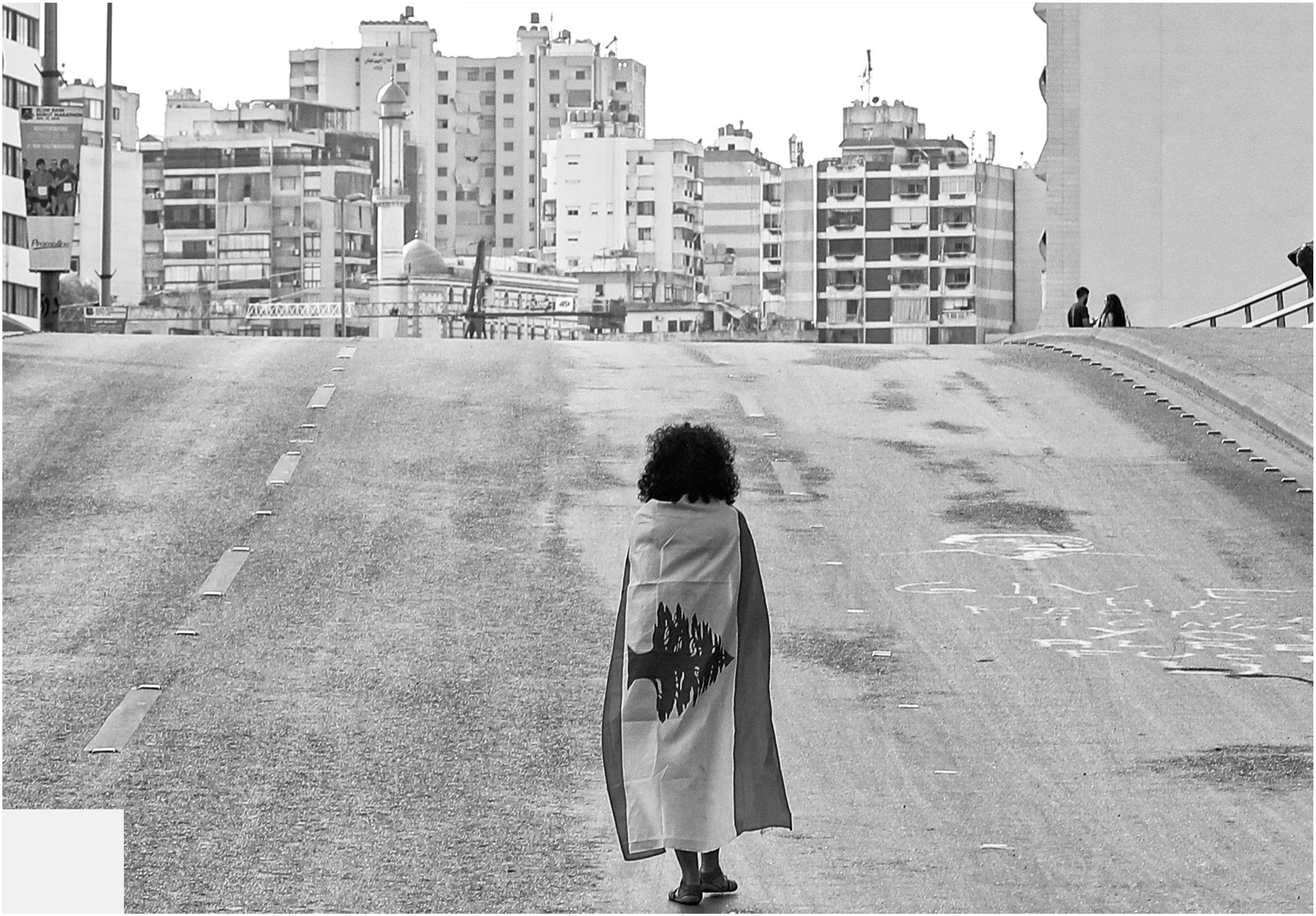
A protester walks the deserted streets of Beirut, Lebanon
CREDIT: Joseph Eid/Getty