




Abstract

Turkmen writer-in-exile
Today, Turkmenistan is ruled by Gurban-guly Berdimuhamedov, a former dentist who rose to the lofty position of health minister under his predecessor, the dictator Saparmurat Niyazov, who took to styling himself as Turkmenbashi, or head of the Turkmen.
Under Berdimuhamedov, Turkmen’s censors have been given carte blanche. Internet access is only available through the state provider Turkmentelecom and is one of the most expensive and slowest in the world. Today only one fifth of the population of Turkmenistan can access the internet.
All popular social media platforms, including YouTube, Facebook, Telegram and WhatsApp, are completely blocked. Those who try to evade the ban can expect three to five years in prison. Even when abroad, Turkmen citizens are afraid to visit opposition websites, as any disobedience leads to the immediate detention of their relatives in the country.
Yet one writer has been incredibly profilic in the Berdimuhamedov era and that is the Turkmen president himself. He has managed to “create” more than 60 books over the past 10 years.
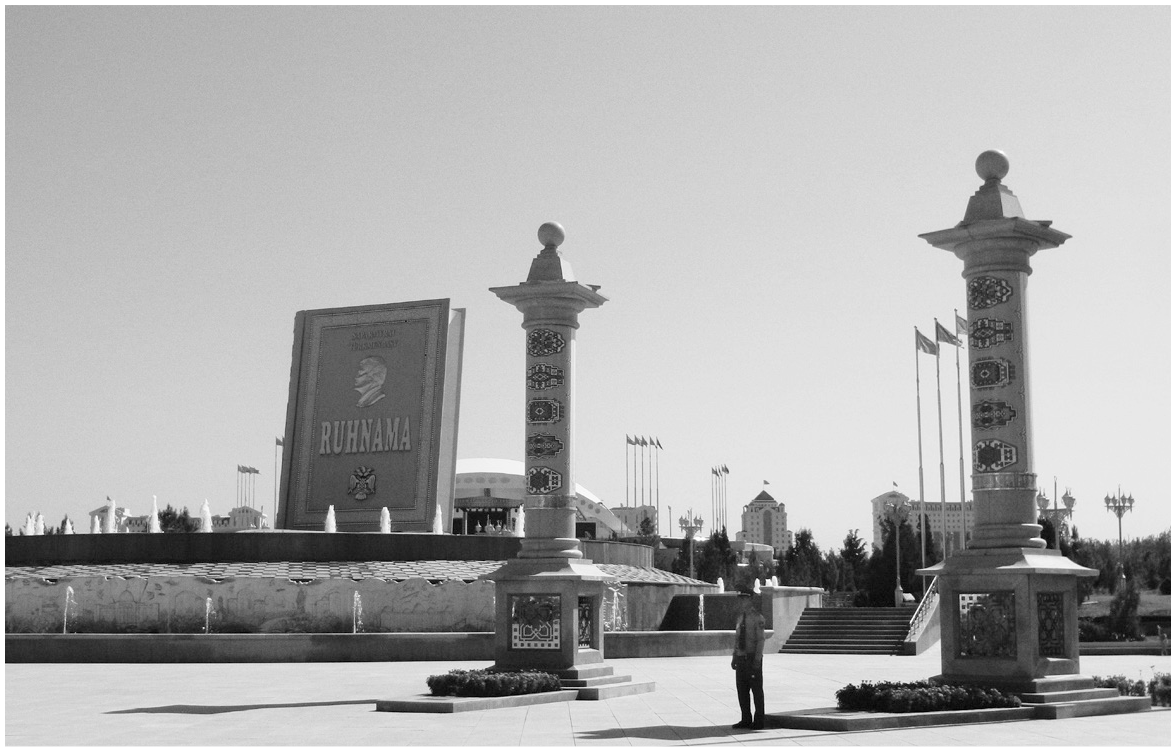
In this he follows in the literary footsteps of his predecessor Niyazov who was also the only permitted writer. Nizayov’s most infamous work is his book of preachings, Ruhnama.
Censorship in Turkmenistan today is even stricter than in the bad old days of the Soviet Union.
Just like sex, there was never censorship in the USSR – no one talked about either. And yet there was Glavlit, the general directorate for literature and publishing. Established in 1922 by decree of the Council of People’s Commissars, Glavlit was entrusted with “the preliminary review of all works and other printed materials intended for publication” and made official gatekeeper of the “list of information prohibited for publication in open press, radio and television programmes”.
A statue in Ashgabat, capital of Turkmenistan, celebrates former dictator Niyazov's infamous book Ruhnama
CREDIT: Ljuba brank Creative Commons BY-SA 3.0
Glavlit was intended to protect communist ideals from criticism and sheltered millions of Soviet people from free thinking, tantamount to thoughtcrime. The very name Glavlit echoes Massolit, from the satirical novel by the great Mikhail Bulgakov, The Master and Margarita. In the book, Massolit – a corrupt trade union for writers whose name stands for “literature for the masses” – is satirised for its excesses.
Perhaps ironically, Bulgakov himself, along with such writers as Babel, Pilnyak, Zamyatin, Fedin, Zoshchenko, Leskov and Merezhkovsky, drew the special attention of Glavlit.
Soviet writers achieved breathtaking heights in world literature despite the best efforts of Glavlit, although what was published was largely adapted from the original.
Censorship, a KGB responsibility, could permanently cure the itch of disobedience from most writers. A few stubborn truth-lovers either ended up in correctional camps, like Osip Mandelstam, or were incarcerated for life in mental hospitals, like the Turkmen poetess Annasoltan Kekilova, or were forced into exile, such as Aleksandr Solzhenitsyn, Iosif Brodsky and Vladimir Voynovich.
In Soviet-era Turkmenistan, for instance, one could not say that the Turkmens had written before the Bolshevik revolution, even though they had a rich tradition of literature. It was also impossible to write the truth about the bloody conquest of the Turkmen land by the tsars. Instead, it was recommended to speak only of how the country had voluntarily joined the USSR.
I described these obvious discrepancies in my novel The Melon Head. It won a prestigious prize in 1984 in the Closed Literary Contest but had to wait until 1988 to be published – and even then only thanks to the policy of perestroika. Glavlit did not want the novel’s themes of undermining the foundations of Soviet society to shake the trust of ordinary people in Soviet power.
Not all writers had the courage to defend their work. Plenty got on well with the communist regime, choosing a quiet life instead of fighting for justice. For example, the leadership of the Writers’ Union in Moscow consisted entirely of writers who made a voluntary deal with the communist authorities – a Faus-tian pact subordinating their talents to the strict ideological requirements of the regime. These writers served the Soviet regime in exchange for profitable positions, awards and material goods.
Censors did sometimes favour the authors in places where the harm of their words was not proven. This, together with the occasional good-natured censor, sometimes caused unprecedented upsurges in Soviet literature.
I remember the effect of the novel The Day Lasts More Than a Hundred Years by the great Kyrgyz-Russian writer Chinghiz Aitmatov. It talked about the time of Joseph Stalin’s repressions, but the reader could easily extrapolate this into the 1970s and the first half of the 1980s when totalitarianism prevailed.
It is not surprising, therefore, that my preferred literary style – magical realism – was formed as protection against censorship. When perestroika started and the USSR dissolved, my books started to be published.
Censorship – which did not exist – was finally abolished by the Supreme Soviet of the USSR’s Law On Press and Other Mass Media; it decreed that “censorship of mass media is not allowed”.
Yet this openness was shortlived and worse was to come – the national Turkmen censor was established in the same year as the dissolution of the USSR and, mirroring the old Soviet tradition, Turkmen censorship was not acknowledged.
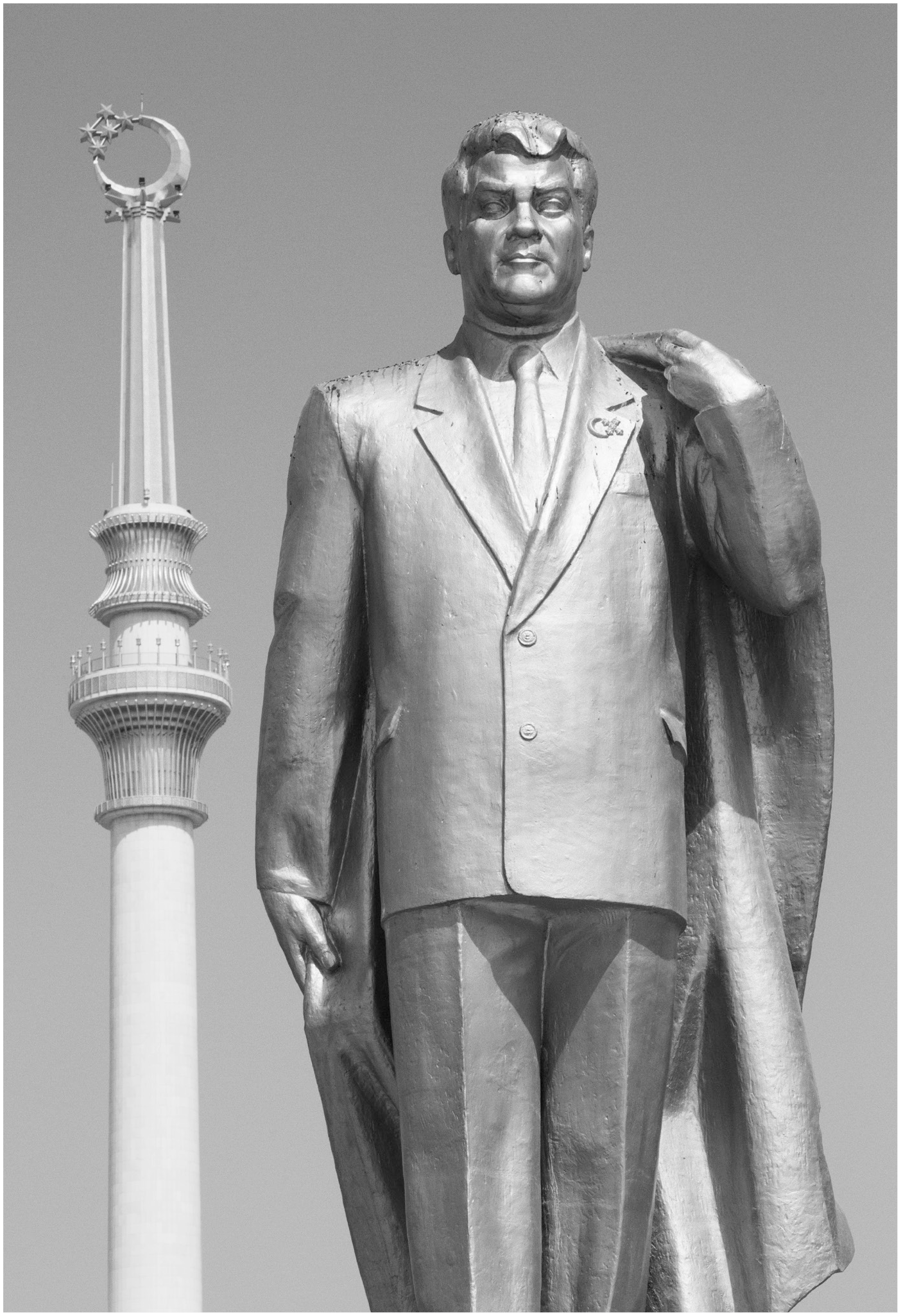
Turkmenistan’s former dictator Saparmurat Niyazov Turkmenbashi
CREDIT: Laurie Noble/Getty
Eventually the censor took offence to my articles on infant and maternal mortality in Turkmenistan caused by the super-chemicalisation of agriculture and the drying-up of the Aral Sea and the publication of my books stopped.
I must admit I preferred the “human face” of the late Soviet censorship.
In late 1991, my satirical novel A Curve of a Sabre Hanging on an Old Carpet was printed in the bilingual magazine Yashlyk-Yunost, subject to censorship by the national authorities. The censor especially disliked that its characters kept dislocating their arms and sought help not from a doctor but from the village bone healer. In one episode, a man is asked how he managed to dislocate it. He answers: “I fell off a donkey.” The healer asks what sort of donkey it was. “Why, a Turkmen-Soviet donkey!” The censor banned this and other funny episodes, leaving almost no life in the text.
In an attempt to save the mangled text, I asked to see the head of Turkmenistan’s offical censorship body, who had been a communist functionary throughout his career. He explained Turkmen-Soviet donkeys did not exist in nature. The censor did not understand – or did not want to understand – any of my arguments on metaphors and allegories in literature.
I asked for a list of forbidden topics to help me write within the rules. The answer upset me: “We do not have any list. President Niyazov fully trusts us. We decide for ourselves what to allow and what not to allow.”
It was at that moment that I realised that literature and art in Turkmenistan were over for the foreseeable future. No one can ever get around censorship without rules.
Soon my fears were confirmed: the Writers’ Union and the Academy of Sciences of Turkmenistan were disbanded, libraries in villages and district centres were closed, books were scrapped.
Only those Turkmen writers who left the country for political reasons, as I did, have not given up hope for a bright future for Turkmen literature.