




Abstract

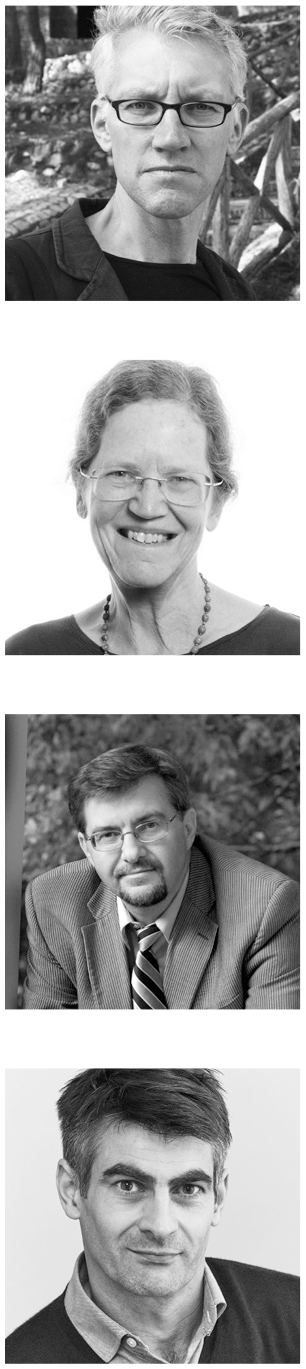
(top to bottom) Historians Tom Holland, Mary Fulbrook, Serhii Plokhy and Daniel Beer
But what about those who choose to be silenced, to give away their right to free speech because it means they will be safer, or richer, or given better jobs – or even that they can simply stay alive? We spoke to four historians to explore situations when people have agreed to be silenced, and the consequences this can have.
For the award-winning historian Tom Holland, the “primal” example of this in the west is the Roman empire. Initially a republic founded on the ideal of freedom of speech, Rome became an autocracy, and its people stopped having the right to say what they wanted.
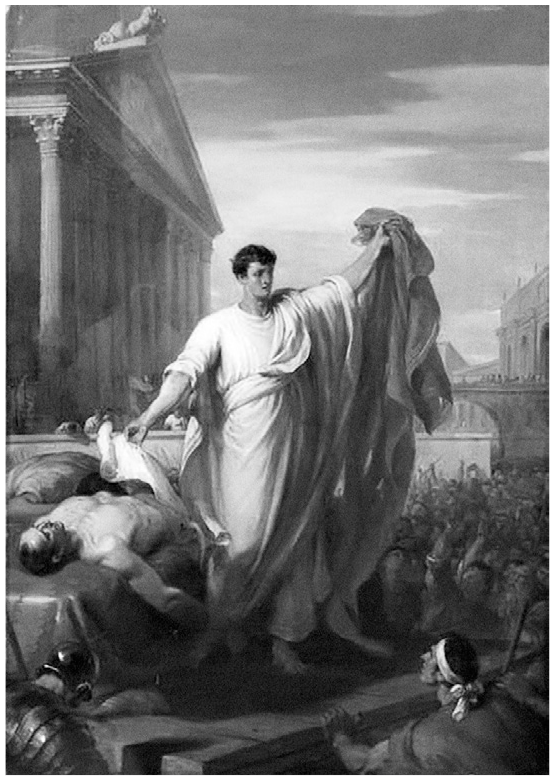
CREDIT: (Tom Holland) Sadie Holland; (Caesar’s assassination) Credit: R. Weibezahl/AKG (left) & William Hilton/Trustees of Sir John Soane’s Museum/Bridgeman; (Nazi troops) dpa picture alliance/Alamy

“The emblematic symbol of the end of the republic is the murder [in 43BC] of Cicero, who was the greatest orator in Rome, a man who was naturally inclined to a mingled arrogance and timidity,” he said. “After Caesar’s assassination, Cicero stands up and is counted and attempts to stand firm against what he sees as the reintroduction of tyranny by Caesar’s followers, particularly Mark Antony, and then, in due course, Julius Caesar’s adopted son, who will end up becoming Augustus.”
When Mark Antony and his triumvirate agree to murder those who have opposed them, Cicero is cornered and killed, his hands nailed to the rostra in the forum. “His head is delivered to Mark Antony’s wife, and she pulls the tongue out and stabs it with her hairpins. So you have both the tongue and the hands being symbolically abused. And this becomes an emblematic symbol,” said Holland.
The poet Ovid is then exiled, which “has a chilling effect on subsequent generations”.
“[They] make a choice not to speak out and you don’t really have someone like an Ovid again,” Holland added. “Under Nero you have Lucan and you have Petronius, both of whom are great writers and both of whom end up committing forced suicide. So there’s a definite sense that every time any writer in Rome seems to be given any slack under the emperors, if they go too far, then you know that then it’s curtains for them.”
Holland highlights Tacitus, who he feels is the writer who “reflects on this with the greatest sense of guilt”.
The assassination of Caesar led by Brutus and Cassius
Members of the Reich Labour Service march at the Nuremburg Rally, 1934

“Tacitus is a senator, well-born, has provincial commands [and] serves within the framework of the Roman state under Domitian, who is another terrifyingly tyrannical emperor. Under Domitian he’s essentially kept quiet, kept his head down, taken the rewards. Tacitus has a political career, so in that sense he collaborates. He keeps his head down, but he also collaborates. And he’s aware of that,” he said.
After Domitian’s assassination in 96AD, Tacitus went on to write his great works, the Histories and the Annals. “Tacitus portrays [earlier emperor] Tiberius’s reign as one in which the shadows darken and darken, and lengthen and lengthen. He traces the way in which, slowly, people are brought to compromise themselves. It’s a brilliant and timeless anatomy of how that process happens. And because it’s Rome, and Rome stands at the wellspring of the western political tradition, it’s had a huge, huge influence on the way that people in subsequent generations and periods of crisis have seen it; on the way that people thought about Stalinism and fascism.”
Mary Fulbrook, whose Reckonings: Legacies of Nazi Persecution and the Quest for Justice won the 2019 Wolfson History Prize, highlights the silencing of the poor, uneducated classes who were called up to Germany’s Reich Labour Service in 1940 and ‘41. “They found themselves being sent to work at the sanatoria for the mentally and physically disabled that were being used as euthanasia institutes,” she said. “They had to pledge in advance that they would keep completely silent about what it was they were going to do in advance of being sent there, [without] knowing what they were going to do. They’d get there, they’d find themselves being care assistants, helping undress people who were about to be gassed.
“The Reich Labour Service would say: ‘there are a couple of jobs available, a pretty lousy job in a factory, and a rather better one in a sanatorium in south-west Germany, how do you fancy it? But you have to sign this pledge to keep silent about what it is you will see and do.’ So, the silence could advance, not knowing what it is they’re going to be silenced about. They then go and discover what it is they’re involved in.”
German women who have been drafted into the Reich Labour Service, on their way to an agricultural posting, 1938
CREDIT: akg-images

Men at work in the nuclear power plant in Chernobyl where there was a massive nuclear accident in 1986
Credit: Chuck Nacke/Getty

One young woman, named as Erna Sch, Fulbrook says, was “so shocked and horrified and upset to be the ‘care assistant’ to people about to be gassed” that “she really couldn’t bear it and wanted to leave”. She wasn’t allowed to. She got herself pregnant twice, in the hope that two successive maternity leaves and two small children might stop her employment, but she still couldn’t escape it.
“And after the war, she was sentenced to three years’ imprisonment by an East German court,” said Fulbrook. “One of the arguments made in the post-war German courts was that if you signed a pledge of silence you knew that what you were about to do must be criminal, illegal, immoral, wrong in some way. So, the pledge to remain silent was used in post-war courts as proof of knowledge of wrongdoing for these very low-level people, who got given sentences of two to three years in prison, while those who were actually doing the stuff – the doctors, the people who were higher up in the hierarchy – usually managed to wangle their way out of these cases.”
In one “particularly vile” case, says Fulbrook, a doctor successfully argued in the West German courts “that he had ‘only killed 90 children’ in order to keep his job and prevent somebody worse taking his job, who would have killed all 180 he was supposed to kill”.
“The silencing of the very low-level care assistants, the ordinary workers, was subsequently misused as evidence of their knowledge of wrongdoing,” she said. “Whereas at the time, I think it was evidence of their total powerlessness, and being offered a rubbish job or a better job, on the basis that they kept quiet about what the job entails.”
Russia specialist Daniel Beer, whose The House of the Dead: Siberian Exile Under the Tsars won the 2017 Cundill History Prize, highlights a similar period, albeit a very different situation.
“In the 1930s, in the Soviet Union, during what’s become known as the Great Terror, people could be accused of being enemies of the state on the most spurious of grounds, just denounced by rivals in the workplace. Often, these denunciations took place at meetings, in front of hundreds of people sitting in the aisles. Someone would stand up, a denunciation would be made, and then the assembled people would be invited to speak in favour of either the prosecution or the defence,” said Beer.
“There are countless examples where people were understandably terrified to raise their voices in defence of those they knew to be to innocent because they were concerned that they themselves would be singled out next. People who quietly toed the line because if you want job security, if you want promotion, if you want your own research institute to be looked upon favourably by the authorities, you just keep your head down, you don’t say things that anger those in power.”
There is a “sliding scale” here, says Beer, from times when it “really was a matter of life and death”, to more latterly, “when you weren’t going to be pulled off to the firing squad or the gulags, but you might find your promotion at work blocked, or find it very difficult to get your journalism or your fiction published”.
“People in those positions just sort of quietly kept their heads down and toed the line, rather than taking positions that would bring them into political dissent,” he said.
“One of the mechanisms clearly at work in Russia in the 20th century was also self-censorship. People don’t sit there and think: ‘I am now making a pointless decision to suppress the truth.’ They are so personally and professionally and ideologically invested in the success of a particular kind of project, they find themselves inflating their successes and glossing over failures and shortcomings because they don’t want to bring the system into disrepute.”
And this sort of censorship, or self-censorship, continued well into the 1970s and 1980s. “There is this long afterlife of Stalinism. One of the sources of the regime’s power is that if you visit such horrendous violence on your own population, as the Soviet state did in the 1930s and 1940s, you have then traumatised generations. Even though, objectively, the threat is maybe not of the same magnitude, they are so habituated to the requirements of not speaking out, keeping your head down, that it becomes almost embedded in the cultural DNA and survives long after the regime has loosened up again [and] is no longer as terroristic as it used to be,” said Beer.
Serhii Plokhy, whose history of Chernobyl won the 2018 Baillie Gifford Prize, points to a similar dovetailing of censorship and self-censorship for those working in nuclear energy facilities in the Soviet Union.
“People were involved during the Cold War in all sorts of nuclear projects, and most of them – at least originally – were linked to the bomb. That culture, at least in the Soviet Union, was then transferred to the nuclear energy facilities, which were not involved with the bomb anymore, but the technology was still considered to be secret,” he said. “And these people were signing all sorts of papers saying that they would not talk about what they have seen or what they experience – they wouldn’t talk to their partners, to their children, to their neighbours.”
The reward was that you kept your job; the threat was that if you did speak out, you could end up in a gulag. “People were keeping silent partially because they believed they had no other choice. They were obliged, according to whatever regulations and laws were in place,” he said. “But also, some of them truly believed that, as patriotic citizens, they couldn’t [speak publicly] because the enemy could get all sorts of important information. Our secrets are our secrets. That was very much in the air at the time.”