



Abstract

Bangladeshi writer
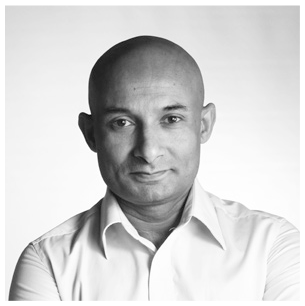
The writer Neamat Imam, whose first book on Bangladesh has yet to find a publisher in the country due to its criticisms of the government
The author of two books, one of which will be released later this year, the Bangladesh-born writer is now working on his third, with an excerpt published below. This novel looks at the real-life disappearance of one of the most important writers from Bangladesh, Zahir Raihan, who went missing in 1972 at the age of 36. Raihan disappeared shortly after he released a documentary, Stop Genocide, which was made during the Bangladesh Liberation War. Imam believes that Raihan was likely to have unreleased footage showing Bangladesh in a bad light and that was, perhaps, behind his disappearance and presumed murder.
“How secure am I?” is a central question which Imam says he is addressing in the book.
“People disappear all the time in Bangladesh,” he added, explaining that today people censor themselves a lot and the whole society lives in fear. Over the decades, he says, the state has created a number of tools that control people.
But there are other questions, as the extract shows. The book imagines what might have happened to Raihan through a series of fictionalised characters who, in this instance, assassinate him in what Imam says is a moment of “political madness”. Following their cover-up of the crime, they are exiled into a world of silence where they can’t discuss the truth. Their guilt eats away at them just as the rats, in one part of the book, eat at their feet.
“When we talk about an assassination, we talk about who is killed and who has killed… but we do not actually understand what goes through the mind of the assassin after the crime has happened,” said Imam.
“If you think about the Saudi dissident Jamal Khashoggi, who has been killed in Istanbul, we know that five people have been sentenced to death in Saudi Arabia, but do we know what is going to happen to the people who have actually masterminded the killing? We don’t know; we’ll never know.”
Originally from a remote part of Bangladesh, Imam encountered his first newspaper at the age of 14, when his elder brother returned with a weekend supplement. Imam was immediately transfixed.
“That newspaper was a kind of invitation to me from the world beyond.”
Imam got his brother to bring back a newspaper every weekend, and from that moment he developed a thirst to know as much as possible.
This thirst eventually led him to university in the capital, Dhaka, (something frowned upon by his brother at the time, who thought that such a path was “spoilt”) and then abroad.
But his quest for knowledge has come at a cost. Imam now lives in a form of self-imposed exile in Canada. His award-winning 2014 book, The Black Coat, was a bold and critical look at the early years of Bangladesh.
“It was very political, and Bangladesh is not a good place for writers who want to speak their mind,” he said.
Imam has not been back to Bangladesh since the book was released.
“I am very afraid of my life because even bloggers are not very free in Bangladesh. It made international headlines that one American blogger was chopped [up] with a machete, in Bangladesh,” he said, referencing Avijit Roy, an American-Bangladeshi online activist who was murdered in 2015. Roy was one of several writers in Bangladesh who have been killed in recent years for taking a less orthodox stance (see Summer 2015, 44.02, p76-77).
Renowned Bangladeshi activist, film director and writer Zahir Raihan, who disappeared in 1972
CREDIT: Wenshu He

Unsurprisingly, in a country where publishers can also find themselves at the wrong end of the machete, The Black Coat has yet to find a publisher there – a great sadness for Imam.
“This book is not for the world; it is for Bangladeshis,” he said. Does Imam have any hope about his country and his writing prospects there? Despite it all, he does.
“I believe that one day it will be published and a new government will come. Or maybe, one day soon, someone will take a chance.”
For The Sake of Future Books
Neamat Imam
They took turns with the stick, removed the pail from Zahir Raihan’s head, menacingly asked him a few questions, and violently placed the pail on him again when he refused to answer to them at all or provided them an answer that they were not satisfied with. At about 8 o’clock, after eating a swift breakfast and with a cup of tea standing right before him, they blindfolded him with a black cloth to transfer him from the darkened underground apartment to a white van idling about an hour in the front yard of the building. In the soft light of day, their eyes stopped momentarily on his sprained wrists, his busted lips, the restraint markings on his neck and the bruises on his arms. But the moment of taking a final decision about him had arrived for them, and they had no time to waste. Quietly, they drove through narrow neighbourhood streets that were strewn with litter and a mess of garbage, and accelerated once they reached the high street, to transport him to Burman House in the centre of the city.
CREDIT: Andrew Baker/Ikon

Although the operatives had constantly deprived him of food and drink up to that point, and they had subjected him to an extraordinary amount of torture, to hand over to them the rumoured manuscript of his new novel, Stop Genocide, Zahir Raihan did not show any sign of cracking up. Instead, he maintained his usual graciousness and moved with a supremely pronounced air of dignity that was only possible for a person of his stature. He honestly believed his highest treasure in life was his own mind and he would, under no circumstances, permit anyone to pollute or poison it. He faced his visitors with great patience and reiterated to them boldly, as he had done innumerable times before in the past few days, that there existed no such manuscript that he was hiding from them, and that he would not have hidden it by any means had he written one, even if he believed he would be considered fiercely disloyal to the authority for doing so. He had difficulty speaking, but he managed to lift his face and say concretely that he was very clear about his expectation from himself as well as from those around him: there was no need to ask him the same questions again and again.
One of his visitors was Dr Karim Chaudhury. Dr Chaudhury was deeply disturbed by Zahir Raihan’s non-cooperation regarding the manuscript. He had coordinated his abduction and incarceration so far, although he had been a friend of his since their high school days together, and now he needed to come to a conclusion about him. He came forward in a few reluctant steps to request Zahir Raihan for the last time to change his mind. Zahir Raihan would definitely undergo further incarceration, he said with extreme irritation, and he may even be tortured to death, if he did not hand over the manuscript to the authority. As far as he knew, it was a manuscript that could not fall into the hands of the public in its present form, he said; if it did, it would undermine anything and everything that New Leadership stood for and that the revolution was about. Because of his long contribution to the revolution, he said, there was a slim possibility that Zahir Raihan would be banished, instead of being killed, to the island of St Martin’s in the Bay of Bengal for the rest of his life. But he was not sure how that would be of any help to Zahir Raihan in achieving what he wanted to achieve by going against the authority. “St Martin’s is full of venomous pit vipers and saltwater crocodiles,” he said, “not many people I know of survived there more than a few hours.”
When Dr Karim Chaudhury’s intense effort resulted in mere silence on the part of Zahir Raihan, Manobika Raihan, Zahir Raihan’s third wife and a prominent businesswoman, was called into the room.
A valuable member of the inner core of the New Leadership, she was, in fact, the first person to alert the authority about the existence of Zahir Raihan’s manuscript. To assist Dr Chaudhury in his interrogation, she abruptly ended her long, confrontational telephonic conversation with someone from New Leadership’s central command, and, stepping ahead of Dr Chaudhury, began by commenting that Zahir Raihan had a dark soul, one that was darker than the soul of any enemy of the New Leadership she was aware of. He was an emotionless and complicated person, she said, and she had known it from the beginning that it would not be easy to extract any information from him regarding the manuscript. His writing had poisoned their conjugal life, she claimed; she would forgive him for that, but she was determined to accept any amount of hardships to help New Leadership govern the country without distraction. She wanted Zahir Raihan to reconsider his position for his own sake and for the sake of the many beautiful books he could write in the future if he remained alive.
Zahir Raihan lifted his face to speak to them. “I’m an author,” he said. “I’m an author and if I write a book it means that that book is long overdue in the world. Nothing more. Nothing less.”