




Abstract

Festival directors warn that the new trend of turning writers and artists away at the UK border threatens the nation’s understanding of the world as
The London International Festival of Theatre was keen to bring his internationally renowned ensemble to the UK for a performance in 2018. The production is about their own experiences of war, bringing deeply personal stories to the wider world, including photographs from the prison where their own writer, Antoine Vumilia Muhindo, was incarcerated and tortured.
Kris Nelson, artistic director and CEO of Lift, was therefore shocked when the UK Home Office rejected the application for one of the dancers on the grounds that it should be possible for a UK-based dancer with the skills to perform instead. After an expensive, embarrassing and time-consuming appeal, Lift did manage to get the performer over in time – just. It is getting much harder for people to cross borders – even when they are special guests of major festivals.
“Over the past three years, the UK government has succeeded in brewing a poisonous cocktail: the tightening of short-stay visa regulations mixed with the devastating impact of Brexit dithering on our credibility worldwide,” Nick Barley, director of the Edinburgh International Book Festival, told Index.
Deidre Brock, an Edinburgh MP, said: “The hostile environment has created huge concerns over performers visiting the UK and threatens the very existence of some of our world-leading events.”
Festival directors and publishers warn that there is a damaging and dangerous trend against the international exchange of ideas and shared understanding, amounting to a form of cultural censorship that risks turning the UK into a no-go area for many artists.
Ra Page, the founder and editorial manager of publishing house Comma Press, told Index: “This is a version of cultural censorship, and it demeans and reduces us, our understanding of the world and our claims to be aware of what is going on in the world.
“The news mostly tells us things we can’t relate to. We also need the person behind that. When we deprive ourselves of hearing from writers who are living there we deprive ourselves of their normality, and their ordinary humanity, and everything we can relate to.”
Performers including Wazimbo and Sabry Mosbah have had to cancel performances at the Womad music festival, and a show by Eurovision Song Contest winner Conchita Wurst at the Edinburgh festival was cancelled after the support band were refused entry.
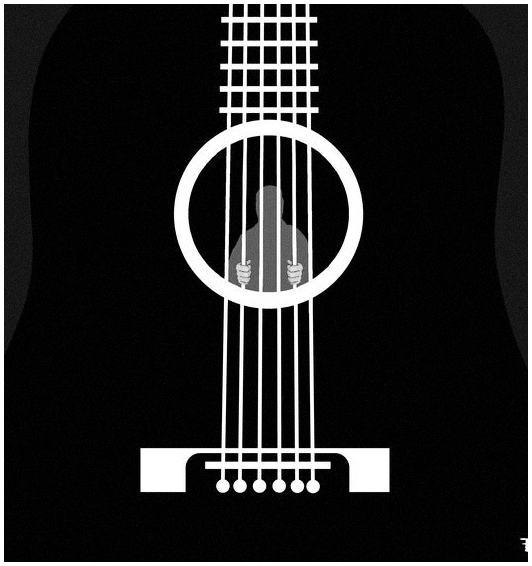
CREDIT: Pete Kreiner / Cartoon Movement
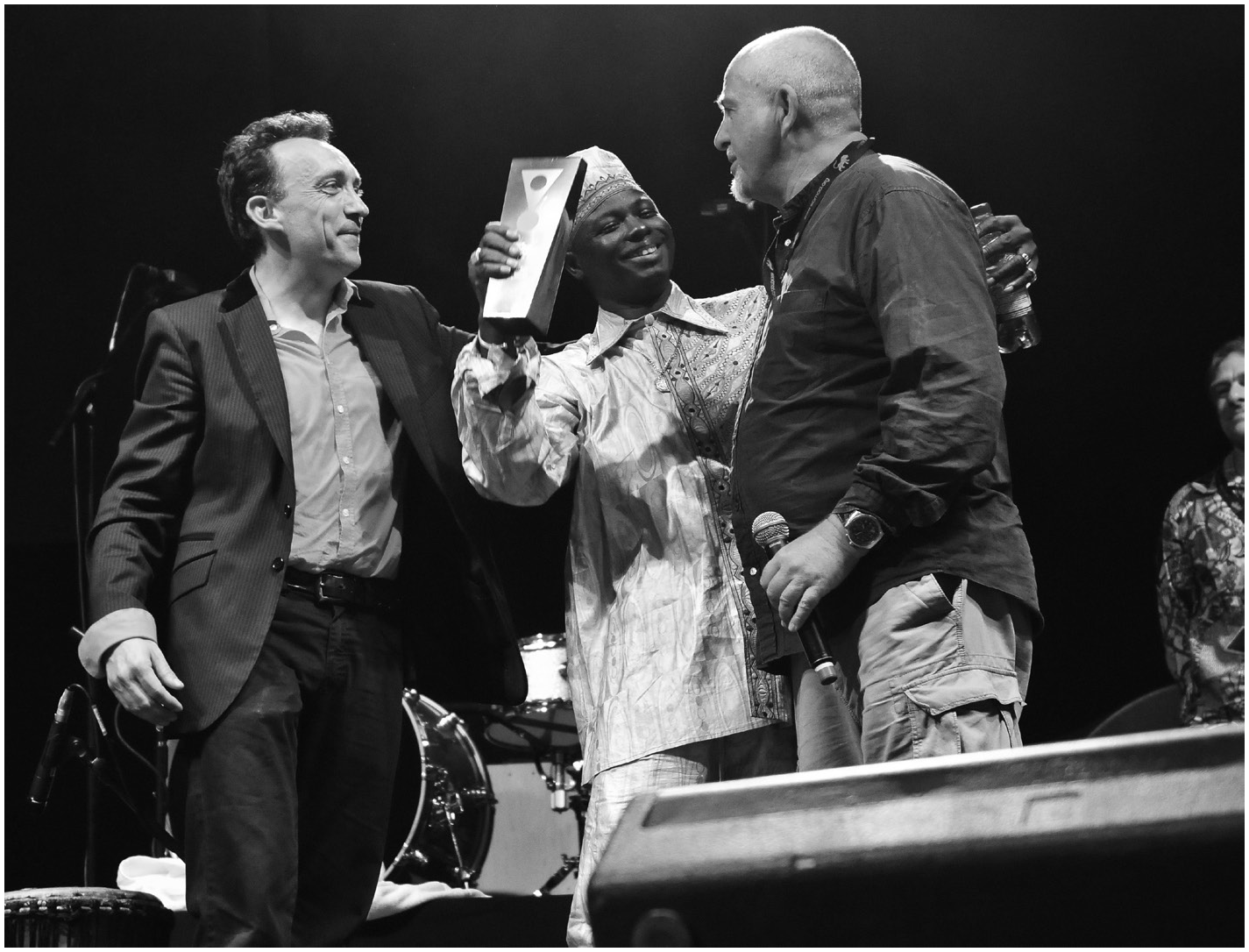
Womad Festival co-founder Peter Gabriel, (pictured right) with musicians Justin Adams and Juldeh Camara, has criticised UK policy that refuses artists entry to the UK to perform
CREDIT: C Brandon/Redferns/Getty
The movement of people across borders is a contentious issue around the world, with anti-immigration parties and candidates rising to prominence in places including the USA, Europe, India and Turkey. Restrictions have been toughened up on travel, even when people are visiting on holiday or are invited to perform or speak at major festivals.
“It is a global problem,” said Page, adding that, in his experience, the UK and USA currently had the toughest conditions to overcome.
In the UK this anti-immigration trend is manifested by the government’s “hostile environment” policies – now referred to as the “compliant environment” – which aim to create a situation where immigrants cannot access services, either public (healthcare, welfare) or private (employment, rented housing, bank accounts) unless they can prove their right to be in the country.
Critics have said the policies have meant that legal, temporary visitors – such as artists and writers – are also being punished.
Data on the exact number of artists whose applications have been rejected is hard to come by, largely because there is no specific visa for cultural visits. But cultural leaders who spoke to Index say the problem is significant.
Outright rejections can be humiliating for artists – many of whom are famous in their own countries – but festival organisers’ criticisms go beyond this.
The complex and arduous process often results in delays, so even when an application eventually results in success, it is often too late for a particular event. This means many people just give up – or don’t even try in the first place.
Some festivals are beginning to resist booking international artists at all.
“They don’t programme them because they can’t guarantee their attendance sufficiently far in advance. This effectively results in the non-programming of writers from Africa and the Middle East,” said Page.
And Nelson, of Lift, said: “I was in Kampala in June and I met a lot of artists who told me, ‘I’m not really fussed about the UK any more. I’m working across Africa, and if I tour in Europe, I wouldn’t want to jeopardise my other European tour destinations by putting in a UK date, when the Home Office could hold up my passport indefinitely’.
“Lots of events are moving out of the UK entirely. ‘Don’t bother with the UK’. That’s the message I’m hearing.”
Paradoxically, as the challenges for staging international artists in the UK grow, so is the demand from those wanting to see them. “There is an enormous and growing appetite for these types of international events,” said Hannah Trevarthen, interim director of English PEN.
And, arts leaders say, the bigger picture is that the UK is missing out on a whole school of thought. “It is not just about getting a band for a certain music festival. It is a global conversation we are cutting ourselves off from,” added Nelson.
An All-Party Parliamentary Group report published in July showed that Africans were twice as likely to be rejected for visits to the UK, though cultural leaders told Index that they also had particular difficulties with Middle East-based artists. Dan Gorman, director of the Shubbak festival, which celebrates art and literature from the Middle East and North Africa, says failing to provide a platform for these voices when there is such demand amounts to a freedom of expression issue.
Eman Abdelrahim, a German-based Egyptian writer, who we featured in Index recently (vol 48.2 p89), was looking forward to travelling to the UK to talk about her new short story at an event at the Liverpool Arab Arts Festival in July this year. She missed the event due to delays at the Home Office. For her, the ability to see audience reactions and understand how they interpret her writing is invaluable.
“I learn from others,” she said. “When I write something, sometimes people take something completely differently from how I intended. I want to know how audiences interpret my work.”
And Palestinian writer Nayrouz Qarmout was unable to attend the Edinburgh International Book Festival last year, also due to visa delays.
“Seeing me talk in person will always be so different from just reading an interview with me in a newspaper,” she told Index. “With humour and body language, I try to let audiences see who I really am, so they can understand my writing from a different perspective.”
Barley adds that the risk of missing out on cultural dialogue goes beyond the cultural sector, and has an impact on global trade and international relations.
In response to this story, a Home Office spokesman said: “We welcome artists and performers coming to the UK to perform, and appreciate the important contribution they make to our creative sector.” The Home Office has also launched a year-long engagement process with businesses and stakeholders on a future skills-based immigration system, and is talking to the creative sector as part of that.
Barley is a proponent of a new form of “cultural passport” system which would enable trusted organisations to vouch for visitors in return for a simpler, less costly and less onerous visa application system. The organisations would stake their reputations on the fact that their visitors would return to their home countries, and a breach of that trust would lead to sanctions against an organisation.
If it works, it’s a system that could potentially be rolled out to other UK cultural, academic and sporting organisations that arrange short-stay visits.
Many arts leaders who spoke to Index said they would welcome any simplification to the process of attaining visas for their performers, and are calling on the government to introduce simpler electronic visas for artists.
Barley said: “The result is a serious blow to this country’s international reputation for openness: a justifiable assertion that we were open for business and open for tourism. Unless we can rapidly reassert that openness, the damage to the UK’s reputation and business interests could be irreversible.”
Who Has Been Refused?
SABRY MOSBAH
Mosbah is a Tunisian folk-rock singer, songwriter and guitarist. After he was unable to secure a visa to perform at the Womad festival, his performance had to be cancelled.
WAZIMBO
Humberto Carlos Benfica, better known as Wazimbo, is a marrabenta singer from Mozambique. He was denied a visa and had to cancel his performance at Womad.
TAL NATIONAL
Several members of Niger’s Tal National were denied visas, resulting in the group having to perform a stripped-down set. Tal National are ubiquitous pop stars in their home country.
EHSAN ABDOLLAHI
The Iranian illustrator was denied, then granted a visa in 2017 only after a public outcry. The following year he was named the 2018 Edinburgh Festival’s artist-in-residence. However, despite this honour, his visa for that year’s festival wasn’t approved until just days before the event itself.
Sophia Paley