




Abstract

A new media monitoring project and outrageous folk tales in the forest were just two of the things happening this quarter.
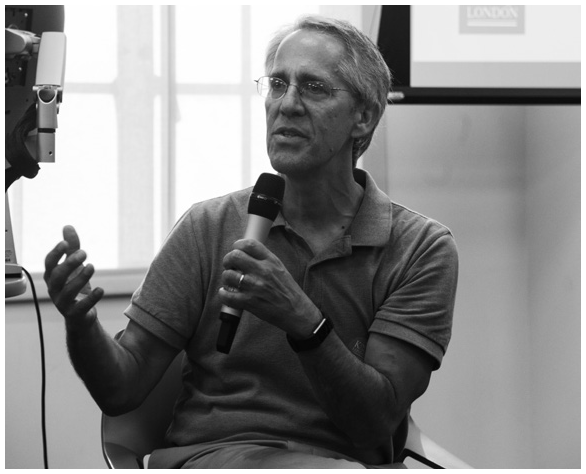
Jeff Wasserstrom speaking about the Tiananmen Square massacre 30 years on at King’s College, London
CREDIT: Sean Gallagher
“
One of Kaye’s major points was one of transparency. Platforms such as Facebook and Twitter have stringent terms and conditions for users and can interpret them as they like. But there is no way to hold the companies to account, because it is hard to know what their processes are.
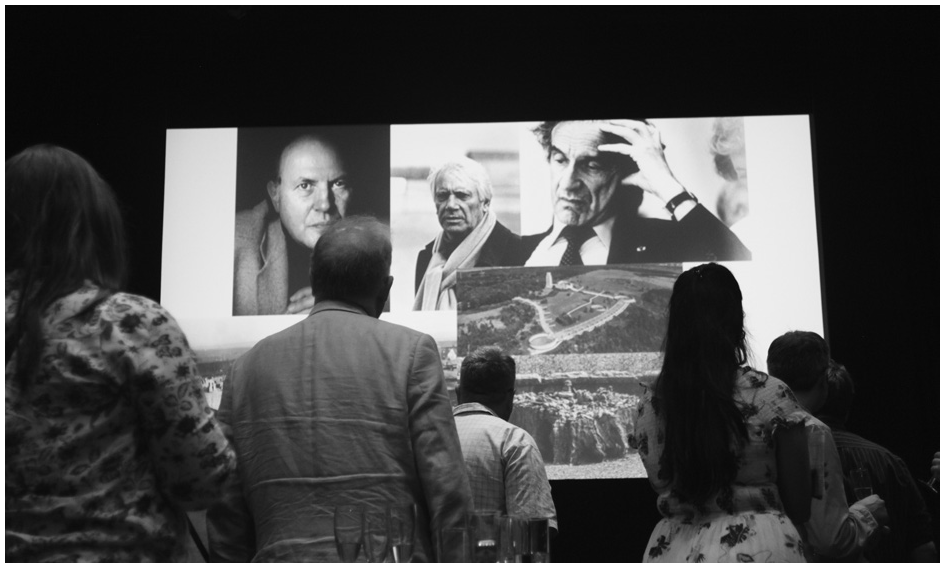
A slideshow illustrates different images of Weimar shown at Index’s summer party and magazine launch at the Goethe Institute in London
CREDIT: Rosie Gilbey
Without necessarily acting as censors, those companies are determining the boundaries of what we see online, Kaye told the audience.
Kaye said the danger was that companies could be leaned on to remove content that governments did not like, without being accountable.
Under repressive regimes, US companies might well be more liberal than the state, he said, but no platform was truly neutral and the companies that run them have entrenched interests, which can be murky.
There was more discussion about how technology and free speech interact at the Orgcon19 conference in London, run by the Open Rights group. Index was an exhibitor and our head of content, Sean Gallagher, gave a flash talk on freedom of expression. “I spoke about how you cannot get a more equal society by putting restrictions on what people can or cannot say,” he said.
Workshops at Orgcon looked at subjects ranging from how companies were using people’s shopping habits to predict voting behaviour to unregulated facial recognition technology. London’s Metropolitan Police came under fire from Big Brother Watch for its use of facial technology on a “trial basis” without government oversight.
The chairman of the Metropolitan Police staff association Ken Marsh recently said that he thought China’s use of facial recognition was “spot on” and “absolutely correct”, prompting fears from human rights defenders.
Another conference Index was involved in was run by the UK Foreign Office. The Global Conference for Media Freedom was held in July and brought together organisations from around the world. Ahead of the conference Index CEO Jodie Ginsberg criticised the organisers’ decision not to allow RT and Sputnik TV to attend. She said they should not be “cherry picking” which media outlets were allowed to come and added: “[Index is] extremely concerned about the message this decision sends about the UK’s genuine commitment to a free and independent media worldwide.”
Ginsberg chaired a panel at the conference called Taking A Stand, How We Defend Media Freedom Around the World, and Index was a main exhibitor. And Index’s 2019 Freedom of Expression Journalism Award winner, Mimi Mefo, spoke about her experience working in Cameroon, where she has been persecuted for her news reporting. She told the audience how she had been jailed and said how important it was that the outside world knew about journalists’ imprisonment because it helped get them released.
Past fellows also attended, including Honduran journalist Wendy Funes; internet freedom mappers Netblocks; Al Jazeera journalist and former Maldives Independent editor Zaheena Rasheed; Saudi Arabian journalist and filmmaker Safa Al Ahmad; and Syrian journalist Zaina Erhaim.
Index fellowships and advocacy officer Perla Hinojosa said: “It was wonderful that many of our fellows from around the world were able to come to the conference and it was great to see how their work was of significance to media freedom in the countries where they operate. They are brave advocates for media freedom and many of them face threats, harassment and intimidation for their work.”
Index runs programmes for its annual fellows to help them operate more safely and to address freedom of expression issues. It offers help with digital security, physical protection and advice on how to get round internet blockages, for instance. Index also helps them create networks around the world with other campaigners, artists and journalists under threat.
Hinojosa added: “We had another two fellows, Zaina [Erhaim] and Zaheena [Rasheed], and they also spoke about their issues on the ground and how that affected them: how sometimes not getting access to training is really bad; how organisations take too long to act; the importance of solidarity between the international community; and ensuring that journalists are not forgotten, even in countries that are not always high profile.”
Index on Censorship’s summer magazine launch was held at the Goethe Institute in London. German crime author and the chair of German Pen Regula Venske flew over from Hamburg to talk on the 100th anniversary of Weimar Republic. She told the many friends of Index who attended about the various meanings of Weimar to Germans. Weimar is remembered variously in Germany as the home of classical authors Wolfgang von Goethe and Friedrich Schiller; a period of failed democracy and economic collapse which led to Nazism; and the site of a concentration camp Buchenwald.
Chinese experts also remembered 30 years since the Tiananmen Square at a panel discussion run by Index at King’s College, London. Jeff Wasserstrom, professor of history at the University of California, and Tania Branigan, foreign leader writer for The Guardian and its former China correspondent, talked about the silence around the massacre in China today. Not only does the state censor public discussion about it, but there is silence in families where parents will not tell their children about their experiences then. One of Index’s new projects, which has been running since the beginning of 2019, involves mapping attacks on journalists in Russia, Ukraine, Azerbaijan, Turkey and Belarus. This is at the heart of our Monitoring and Advocating for Media Freedom Project.
Radio presenter Timandra Harkness who talked with UN special rapporteur on freedom of opinion and expression David Kaye at an event hosted by Index about how to govern the internet and guarantee free speech
CREDIT: Sean Gallagher
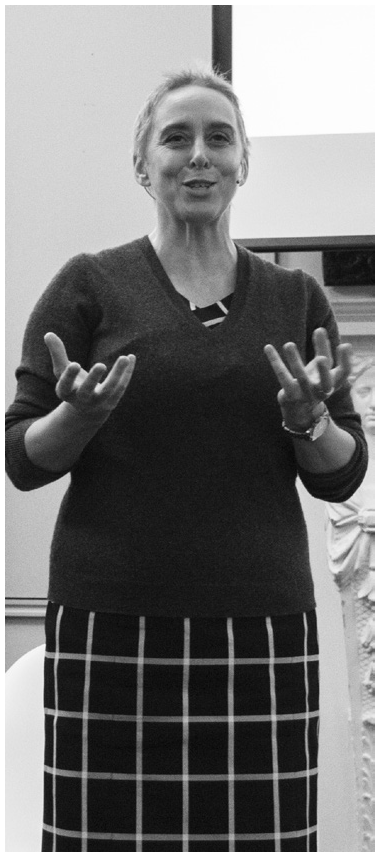
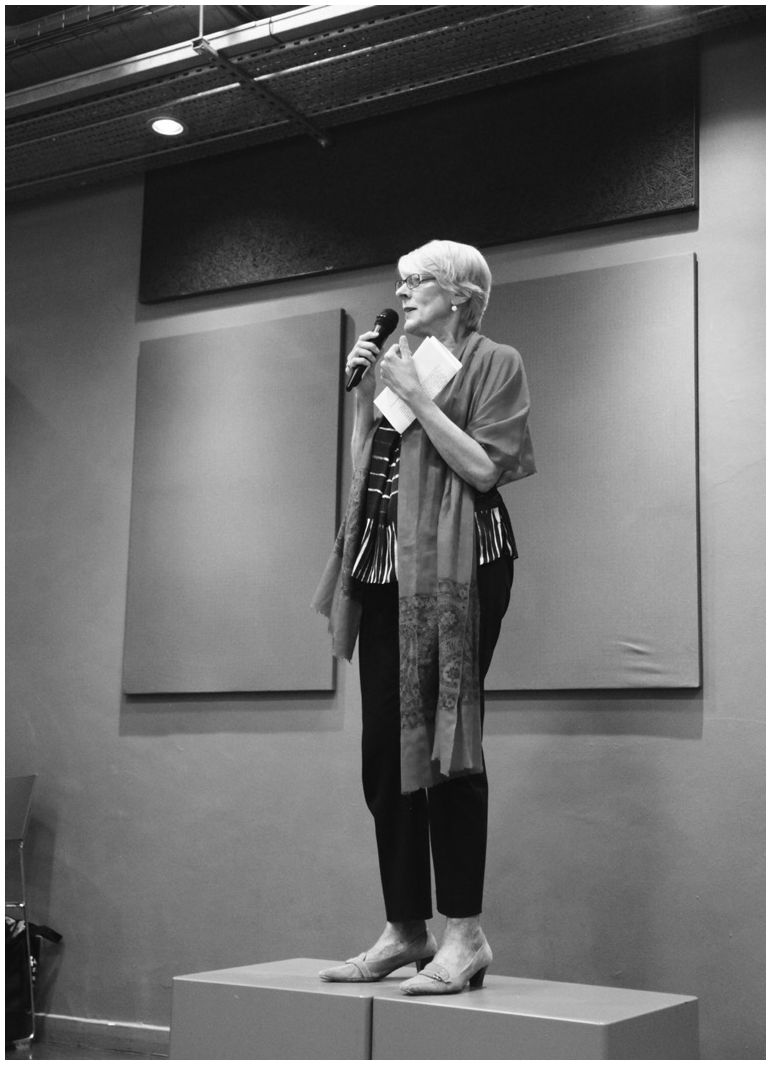
German crime writer and chair of German Pen Regula Venske speaking about what Weimar means to Germans at Index’s magazine launch and summer party at the Goethe Institute in London
CREDIT: Rosie Gilbey
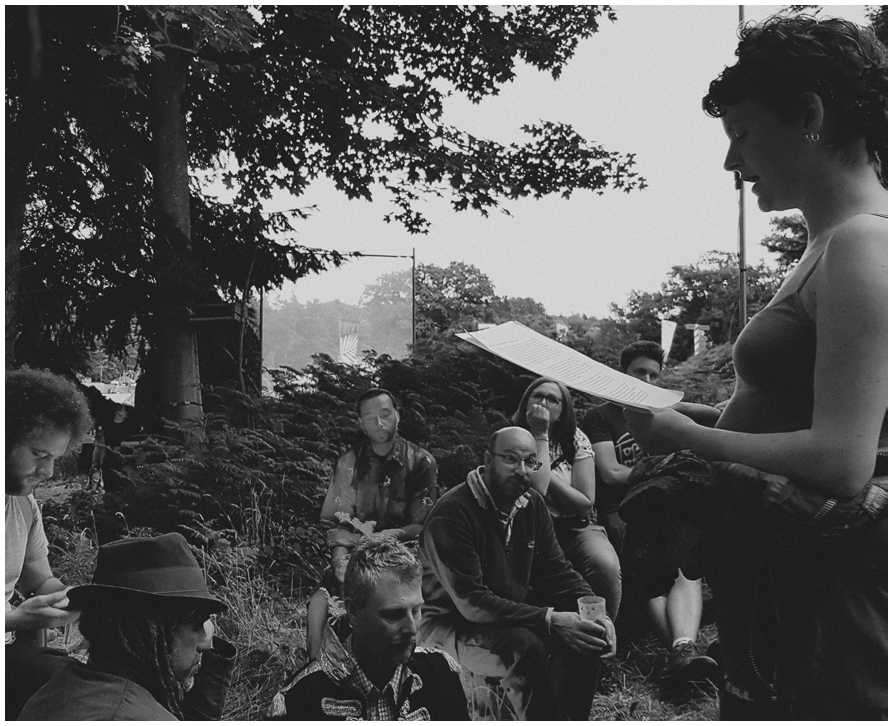
Performance artist Jemima Foxtrot at Index’s Forest Folktales at Latitude Festival in Suffolk, England
CREDIT: Helen Galliano
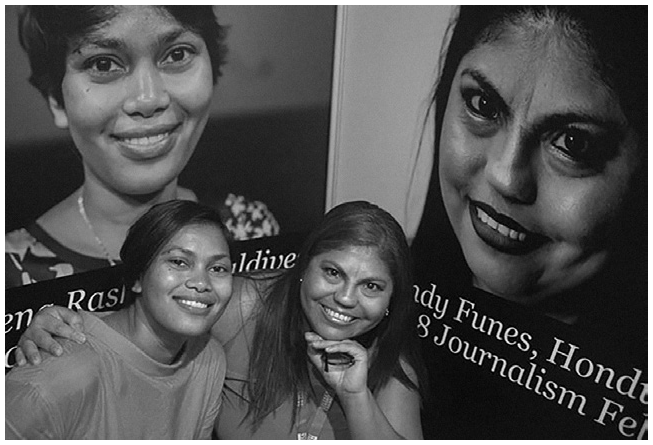
Previous Index Freedom of Expression award fellows Zaheena Rasheed (left) and Wendy Funes (right), at the Global Conference for Media Freedom in London
CREDIT: Sean Gallagher
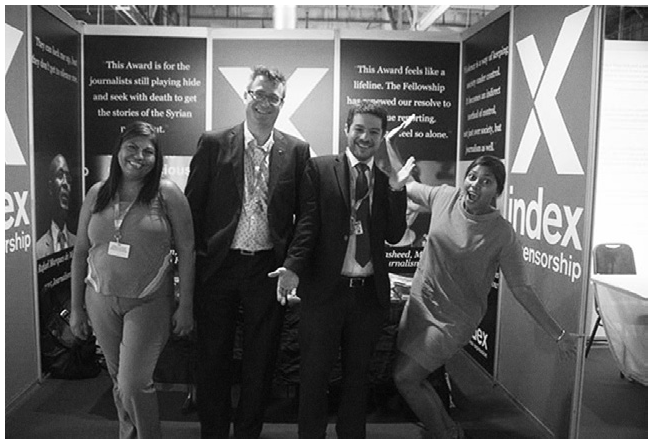
Funes and Rasheed with Terry Anderson, deputy director of 2019 Index award winner Cartoon Rights Network International, and Alp Toker of NetBlocks
CREDIT: Sean Gallagher
Between February and April 2019 Index mapped 116 incidents across the five countries, ranging from newspaper offices being raided to physical attacks on journalists. So far in 2019 we have tracked rises in the number of fines journalists have faced, the intimidation to which they have been subjected and physical violence. Tensions are particularly marked in Russia, where newspaper offices have been ransacked and raided by the police, computers and hard drives have been destroyed and newspapers have been put out of businesses for days at a time. Sometimes this takes the form of a traditional police raid, as in the case of the local Pskov newspaper, Pskovskaya Gubernia, where a newspaper hard drive was confiscated by the police. In other cases, newspapers have found their offices destroyed by vandals who have left threats and destroyed hard drives.
The Russian government has also recently passed laws that criminalise spreading “fake news” and ban online shows of “disrespect” against the government, its officials, society and state symbols. In Azerbaijan, where media freedom is so restricted that many reporters self-censor, journalists frequently face detention and travel bans, and are often blocked from covering events.
The physical attacks on journalists have been so severe in Russia and Ukraine that Index has published a special report on the subject.
Index research manager Kira Tverskaya said: “The 20 June death of journalist and blogger Vadim Komarov, after he was attacked with a hammer in the centre of Cherkasy on 4 May, is a severe and frightening example of the violence.”
In March, Index on Censorship deputy editor Sally Gimson went to the WAN-IFRA (the World Association of Newspapers and News Publishers) congress in Glasgow.
“Much of the discussion was about how newspapers are going to be funded in the future and how they are adapting. Some are developing TV stations to go with their print editions, others are experimenting with podcasts and ‘voice’ technology,” she said. “It was generally felt that funding for infrastructure was more important than funding for individual investigative projects.”
The summer finished with a flurry of activity, with Index out and about at Latitude festival in Suffolk and the Cambridge Folk Festival. Here we launched a new project, Forbidden Folktales: Uncensored.
Index head of events Helen Galliano said: “Bringing uncensored folktales to the forests of Latitude this summer was an incredible experience. We were joined by some brilliant writers including Scarlett Curtis, Max Porter and Jade Cuttle, who brought a subversive spin to well-known fairytales, including extracts from Angela Carter’s gory collection of short stories The Bloody Chamber. At Cambridge Folk Festival, people joined in and brought their own uncensored versions of folktales to share at dusk in the flower tent.”