




Abstract

Musician and opposition politician
Wine’s lyrics are sung to an upbeat melody of ragga dancehall, a popular style of music that originates from Jamaica. They had a haunting resonance when, in May, he was arrested and charged for protesting last year against Uganda’s social media tax which charges Ugandans for going onto social networking sites.
He was released on bail, while a hashtag campaign, #FreeBobiWine, went viral during his imprisonment.
“It’s very important to get our message across to young people in Uganda because the regime was able to successfully keep young people away from the politics,” 37-year-old Wine told Index.
Ugandan musician Bobi Wine visits the Kibera slums in Kenya, October 2018. Wine is known for leading a political party called People Power
CREDIT: Donwilson Odhiambo/Sopa/Zuma/Alamy
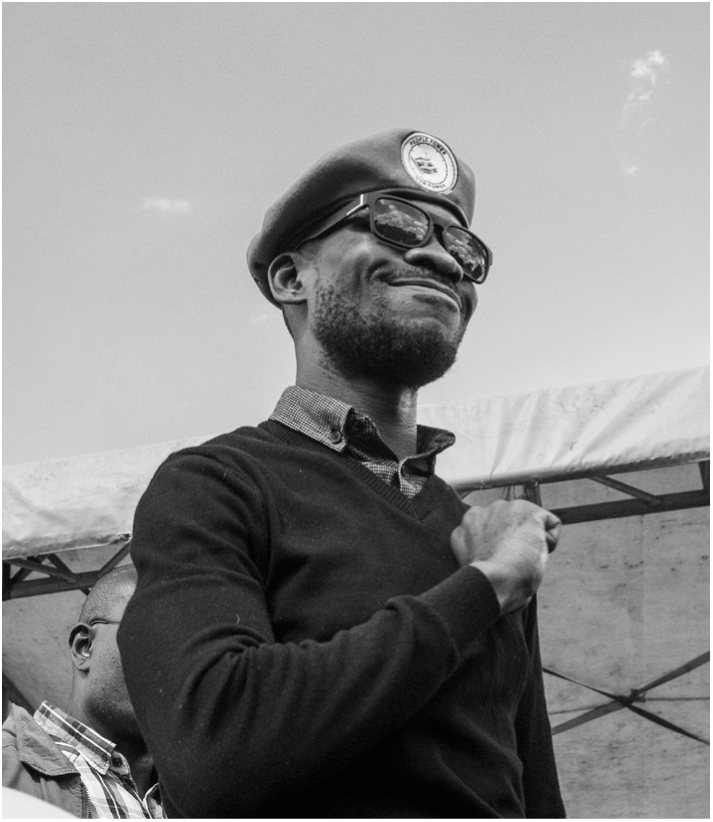
Wine, whose real name is Robert Kyagu-lanyi, has a huge following as a musician and as leader of the People Power party. He speaks for many young people in Uganda and his outspoken lyrics and activism have led to him being repeatedly arrested.
“We talk about the injustice that happens,” said Wine. “When you put it into music it awakens the people and they get concerned about the government of their country. We have a following and music is [how] we get in touch with the people. We create awakening and tell them to take responsibility for their country.”
Wine, who joined parliament as an independent in 2017, is a prominent critic of President Yoweri Museveni. More than 120 of his concerts in 2017 were cancelled by security forces, who use teargas and water cannons to break up his rallies. A draft censorship law, often referred to as the “anti-Bobi Wine law”, demonstrates the threat the authorities consider him to be. The law places various restrictions on artists and filmmakers, including making them seek government approval for song lyrics and for when they want to perform abroad.
“If I have to travel outside [the country] to perform, I have to ask for permission,” he said. “If I have to shoot a video, I have to ask for permission. They did all that to stop [me] and limit [me] from reaching the people musically [but] by doing that, it affected the whole music industry.”