




Abstract

International support for individuals living under oppressive regimes is a vital step towards change, argues
These are scary times. Supposedly democratic countries look increasingly like authoritarian ones. Far-right extremism is on the rise. The space for civil society is shrinking. That has given organisations such as ours pause for thought. If governments are no longer bending to international moral pressure – especially pressure from other governments – should we abandon some of the old ways of effecting change: joint letters to those in power, petitions, media clamour, protest? Does any of it make a difference?
The answer is, yes. Yes, it does.
In April, Murad Subay, a Yemeni street artist and the 2016 Index on Censorship Freedom of Expression Awards Arts Fellow, made a visa application to study at a French university as part of a one-year grant for threatened artists. It was rejected. Subay, who creates murals protesting against Yemen’s civil war, was given a grant to study under a fund that places artists at risk in safe countries where they can continue their work and plan for their future. Such support is vital in ensuring artists can continue to flourish. It gives them much-needed respite, but also stresses to the artists’ host country that they have international support.
Incensed by France’s decision, Index issued a statement urging the authorities to change their minds. “A growing number of supposedly democratic countries such as the UK frequently refuse visas to foreign authors, musicians and activists for events or training,” I said at the time. “This reinforces the notion that constraining artistic freedom is acceptable.”
We emailed the French embassy. Other organisations protested. Two weeks later, France reversed its decision.
We had a similar experience last year when the UK twice refused visas to our 2018 Freedom of Expression Award winners, the Museum of Dissidence. The second time, when the UK refused a visa for the Cuban artists to take up an artistic residency in South-end, we kicked up a fuss, issuing a statement condemning the decision. A few days later, Luis Manuel Otero Alcántara and Yanelys Nuñez Leyva were called to the UK embassy in Havana and told the visas would be granted after all. Their application had been “re-evaluated”.
These changes of heart may seem like small victories but they are important. Visa practices send an important message to other states about a country’s attitude to human rights and the kinds of individuals they are willing to support. Denying visas to individuals who have faced oppression in their own countries emboldens the oppressors.
Making noise internationally about those targeted by authoritarian regimes can offer protection. In 2012, journalist Idrak Abbasov was brutally attacked while he reported on the demolition of houses in his village. Just weeks before, he had given a powerful acceptance speech on winning an Index Freedom of Expression Award.
“In Azerbaijan”, he said, “telling the truth can cost a journalist their life”. He suffered broken and fractured ribs, damage to his internal organs and injuries to his eyes. Abbasov says he believes the international support he received kept him alive. “Without international support, it would have been worse,” he said of the attack. “Maybe the… award kept me from getting killed.”
Appreciation for receiving support is something we hear often from those facing threats from governments. Zimbabwean activist and pastor Evan Mawarire, repeatedly arrested for his criticism of the government, was nominated for an Index award in 2016. “The nomination made the government back off,” he said. “You don’t realise it, but you buy people more time with the work you do.”
Speaking out can have an impact even on those in prison. UK-based Bahraini activist Ali Mushaima spent more than 45 days on hunger strike outside his country’s embassy in London. He was calling for better treatment of his imprisoned father, Hassan Mushaima. Though Hassan remains in prison, Ali believes the protest has helped improve conditions not just for his father but for other prisoners, too.
“I came out here because I fear for my father’s life, and I will continue fighting to save his life,” Ali said when he announced an end to the hunger strike. “But I feel now as a result of my protest and hunger strike, I have many people helping me do that, and that is why I see my protest as a success – not because it exposed how horrible the Bahraini regime and its allies can be but because it showed me the good in all those who support justice.”
Protests and letter-writing are traditional ways of calling out governments. Social media can also play a key role in making the kind of fuss that can bring about change. Take the case of Saudi teenager Rahaf Mohammed al-Qunun, who tweeted her demands for asylum after barricading herself in a Bangkok airport hotel room.
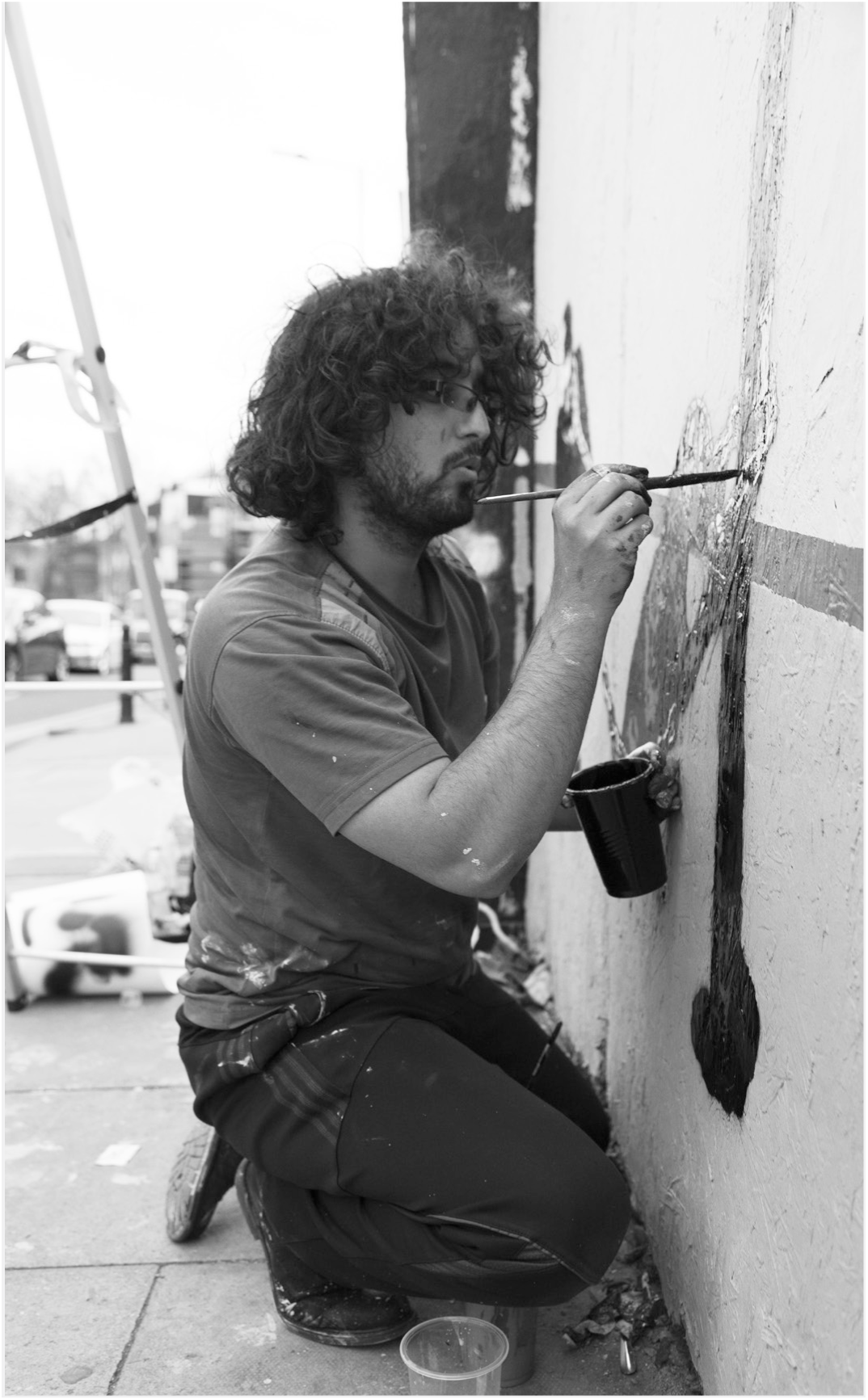
Yemeni street artist Murad Subay, Index’s Freedom of Expression Award Arts Fellow for 2016, paints a mural in Hoxton during his fellowship in London
CREDIT: Sean Gallagher
The plight of the 18-year-old, who said she faced death if she returned to Saudi Arabia, was picked up in real-time by prominent activists such as Mona Eltahawy and quickly escalated into a global public online furore that forced governments and UN agencies into action. She has now been given asylum in Canada. The gloom-mongers would argue that all these examples are of individuals. That they don’t make a difference. But I disagree. A journey of 1,000 miles begins with a single step, and effecting major change – whether it is shifting the discourse on violence against women via movements such as anti-FGM or #MeToo, or climate change through the actions of movements such as Extinction Rebellion – begins with the actions of one or two individuals calling for change. Our job is to continue to magnify their voices.