




Abstract

A film about the Egyptian Arab Spring is winning international plaudits, but still cannot be seen in the country it wants to appeal to the most.
Formally released a little over a year ago, In the Last Days of the City has garnered awards around the world. The film is set in Cairo in the two years which preceded the revolution of 2011.
A still from In the Last Days of the City, a film about the years running up to the Egyptian revolution and starring Khalid Abdalla
CREDIT: Big World Pictures
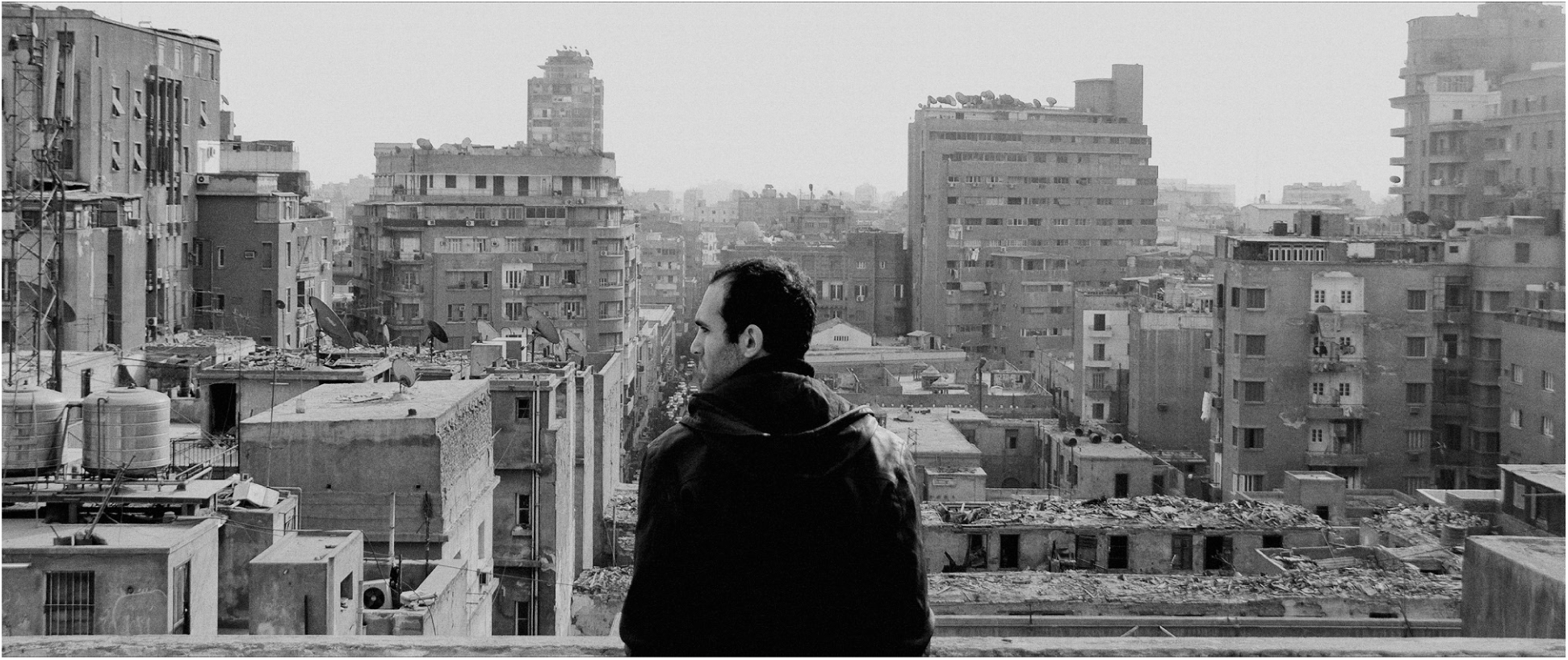
But it has not found favour in the country to which it was dedicated. It was pulled from the Cairo International Film Festival and is currently banned in Egypt.
“We have an ongoing court case against the censorship board, and we’ll see where that takes us. [The trial date] keeps moving – that’s part of the way it works,” Abdalla said.
Asked whether they would show the film surreptitiously, to an invitation-only audience in a private venue, he responds with a firm “No – it would be too much of a risk.”
“The laws right now are Draconian and they can be dangerous if you break them. So doing something like that would be a liability,” he told Index.
Instead, they are fighting within the legal system “because part of our struggle is not to be pushed outside spaces that we should have a right to be in”.
In the meantime, they satisfy themselves with screenings outside Egypt, such as the sell-out one Index attended recently in London, at Arab arts centre the Mosaic Rooms.
The day after the screening, Abdalla said it was “incredibly painful” not being able to show the film in Cairo, “in the city that it’s so clearly a love letter to”.
Conceived in 2006, the film took around a decade to make. Slow and melancholy in nature and featuring documentary footage of Cairo, it follows the narrative of aspiring filmmaker Khalid, played by Abdalla. In between shots within shots, you see him with his friends, his ex-girlfriend and his unwell mother, and embarking on the mundane task of finding a new apartment.
What exactly riled the censors? As Abdalla says, the film is a love letter to Cairo. And with films such as Clash – a fictional take on real-life protesters across the country being forcibly taken into vans where many were never seen again – being shown in Egypt, it’s not obvious why Abdalla’s film became movie non-grata. Abdalla can only speculate.
“The film was made legally with the knowledge of the authorities,” he said. “That’s not to say that that was an easy process to get it made. But it was also made under one political circumstance and it was released under another political circumstance. It’s arguable as to whether that issue would have been there or not had there not been a revolution – there might very well have been the same problems.”
Perhaps it is the signs of discontent, which boil beneath the surface like a volcano ready to erupt, such as scenes of workers striking, Islamist marches and police brutality. At the Mosaic Rooms screening, Abdalla told the audience that it captured elements of “a kind of slow war, if you want to call it that, where you end up having buildings destroyed, you end up with thousands of people dying, you end up with the slow manifestations of war. We didn’t know obviously that things would explode later”.
He added: “We finished filming six weeks before the revolution in Egypt broke out… We shot it before things exploded, we finished it as they exploded, we edited it during, if you like, the heyday of the revolution and we continued editing as the revolution turned to counterrevolution, and we finished it when the counter-revolution became a new order. Throughout that period the footage kept reflecting different intensities.”
What’s the situation like now for filmmakers in Egypt? Abdalla says it has become much more difficult to work there, although it’s not completely lights out for the industry.
“It’s a lot harder being on the streets of Cairo now with a camera than it was and it’s harder to get permission to film. And beyond the relationship with the authorities, there’s also a much greater social mistrust here of the camera than there was,” he said, adding: “There were times when literally just putting up your mobile phone could attract attention from anyone, and particularly the authorities.”
He concludes he probably couldn’t make In the Last Days of the City now. “You could make other films which are worth making and indeed are being made, but it’s a lot harder.
Khalid Abdalla in a shot from the film
CREDIT: Big World Pictures
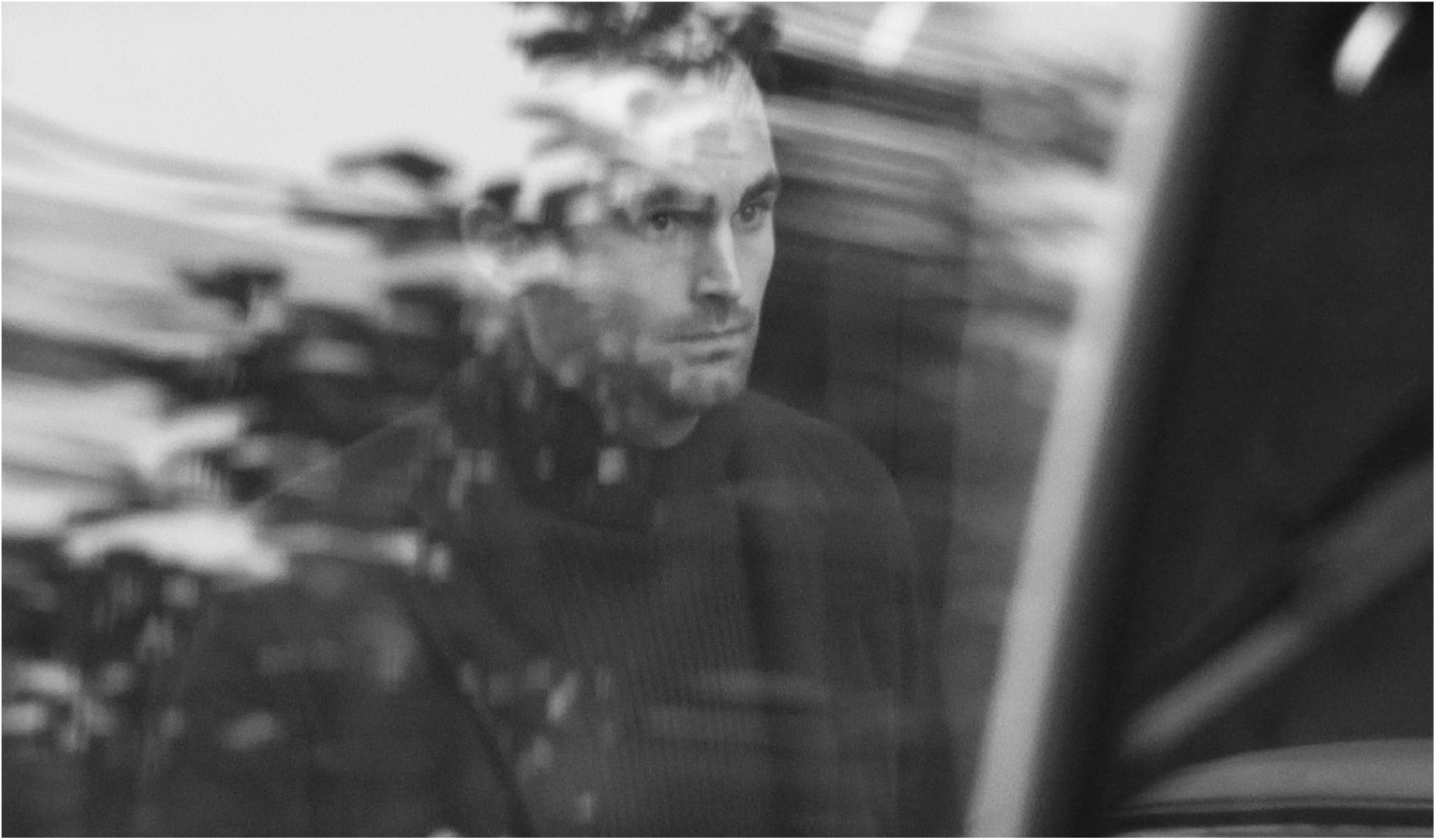
“There has been a massive decrease in the amount of films being made, there has been a closing down of spaces, there has been a kind of de-facto expulsion of people – not a direct one, but you know if you can’t do what you want to do then it makes you leave…”
Given this, he’s not hopeful for the immediate future, saying that people’s artistic capacity is “severely limited and restricted”. But nor has he completely abandoned all optimism.
“What I am hopeful about is the way in which these last 10 years have oriented people’s minds and experiences and what that will produce in various different cultural and artistic forms,” he said.
If anything, this film is a case in point. “It was a film that built other spaces,” he explained. One of these spaces is the Mosireen collective in Cairo, which Abdalla helped found in 2011. Made up of a group of revolutionary filmmakers and activists, Mosireen is dedicated to supporting citizen media across Egypt. Three months after it began, it became the most watched non-profit YouTube channel in Egypt. In January 2012, it took the title of most watched globally.
For Abdalla, while Egyptian filmmakers currently struggle with the blunt end of censorship, there are other, subtler, silencing tactics at work. He says that people “tend to think of censorship at the end of it”, adding: “The most powerful form of censorship is infrastructural because it begins to seep into your imagination as well, and censorship of your imagination is the point at which you go ‘well, it’s impossible to make it, or if we make it no one will ever see it, so why bother?’ and that has an incredible sway on what stories do end up being told and not.”
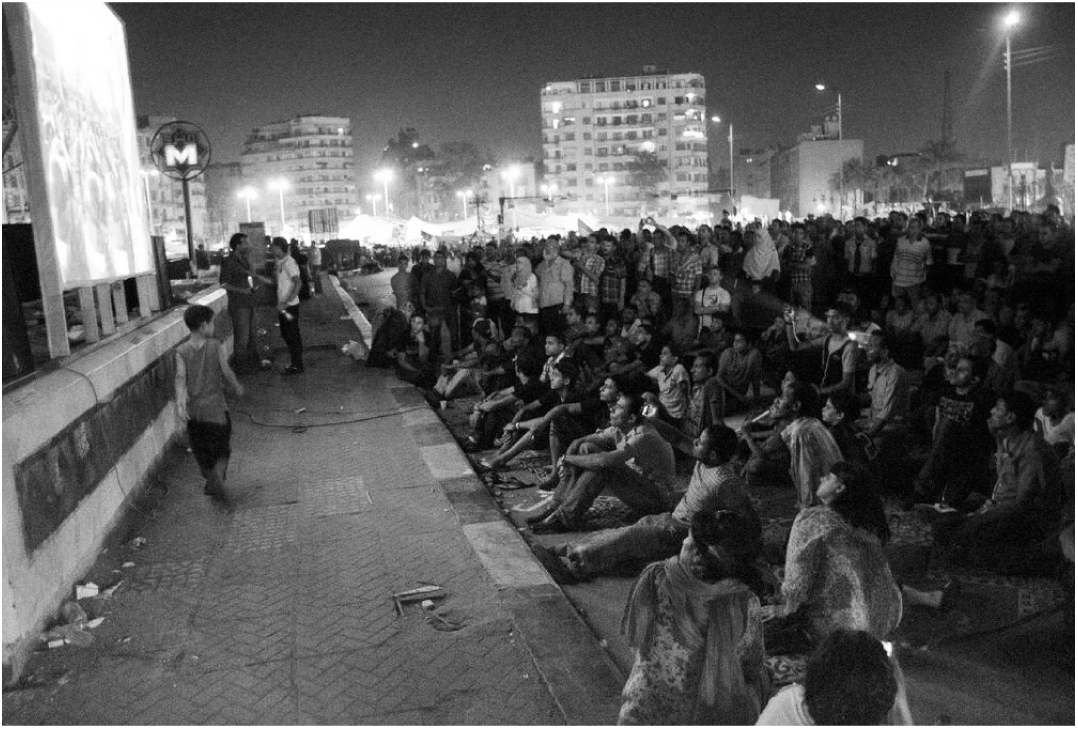
Tahrir Cinema: people on Cairo’s Tahrir Square in 2011 watching videos of the revolution
CREDIT: Big World Pictures
Abdalla says this is a problem Western film studios share, of which he has extensive experience.
“A big part of me wanting to do a story in Egypt is that there are stories you cannot tell about other parts of the world in Western cinema broadly speaking, whether that’s European or American,” he said.
“You can’t tell them, they will never be funded, the stories are considered not to appeal to people and you end up with either a kind of parochial view of elsewhere or a version of elsewhere that fits your idea of how it makes you comfortable to believe that it is. And the obvious manifestations of that are stereotypes.
“From the perspective of you wanting to work, and wanting a career that’s fulfilling in which there are the roles available, every minority – not just Arabs, women as well – are in that struggle to change the ground on which you can tell stories.”
The ground is certainly shifting, though not always in the most positive direction. At least when it comes to In the Last Days of the City, the film has been made and the story is slowly being told. It just needs to be screened in Egypt.