




Abstract

As the Trump administration introduces the “gag rule” this winter, conversations about contraception and abortion are going to be even more difficult for Asian-American women, reports
“It’s heartbreaking that we can’t talk about these things in families. There’s a very real fear culture around it – of being disowned, of bringing guilt and shame on the family. If we talked to our parents they might surprise us and be OK with it, but we don’t know how they will react so we just can’t take the risk. They grew up in a different world so I understand, but it doesn’t make it any easier,” she added.
This often results in living dual lives.
“Because we can’t freely express ourselves about sexuality, we present as one person to our community but have ‘other lives’ with different personalities we show in different situations. Reputation is everything in our culture and how people perceive you and your family is vital, so we can’t even share things with the closest friends sometimes.”
Winnie Ng, 36, a video editor living in Seattle, was born in Hong Kong and emigrated to New York with her parents as a baby.
“It was definitely taboo to talk about anything to do with sex when I was growing up. My parents just told me: ‘You shouldn’t date’ when I was in high school so I never told them I had a boyfriend, even in my 20s. I was dating the man who is now my husband for two years before they knew. Luckily I had good sex-ed at school in New York because it was the early ’90s and there was a lot of talk about AIDS.”
Jaclyn Dean is policy associate for the National Asian Pacific American Women’s Forum. The daughter of Taiwanese immigrants, Dean wasn’t as lucky on the sex education front.
“I grew up in Texas where the lack of sex-ed in schools didn’t help. In ninth grade we were just shown graphic photos of people with STDs [sexually transmitted diseases] like gonorrhea. It was super awkward to talk about sexual health at home, and even now it’s not considered mainstream as a health topic when you’re growing up Asian-American.”
Another Sasmha co-founder, comedian Sriya Sarkar, had a similar experience: “I self-censored when I was young, like never even telling my parents that my friends were dating because I didn’t want them thinking I was hanging out with ‘wayward’ people.”
It’s the reason Sarkar has not been able to tell her parents to this day that she had an abortion.
“After college I had started doing volunteer work and unexpectedly became pregnant and had an abortion. By then I was old enough to do it on my own insurance so I didn’t have to tell anyone,” she said.
She decided to turn the experience into a stand-up comedy show.
“I had started doing stand-up about a year before and I just decided to do stuff on abortion. For me it’s the way to combat stigma – comedy helps manage things and makes things more accessible and the show, which is poignant as well as funny, has had a really good response, although I’m mostly preaching to the choir. My parents know I do a lot around reproductive rights through my work, and I would really love to tell them about my abortion, but there’s that perceived fear very much at play.”
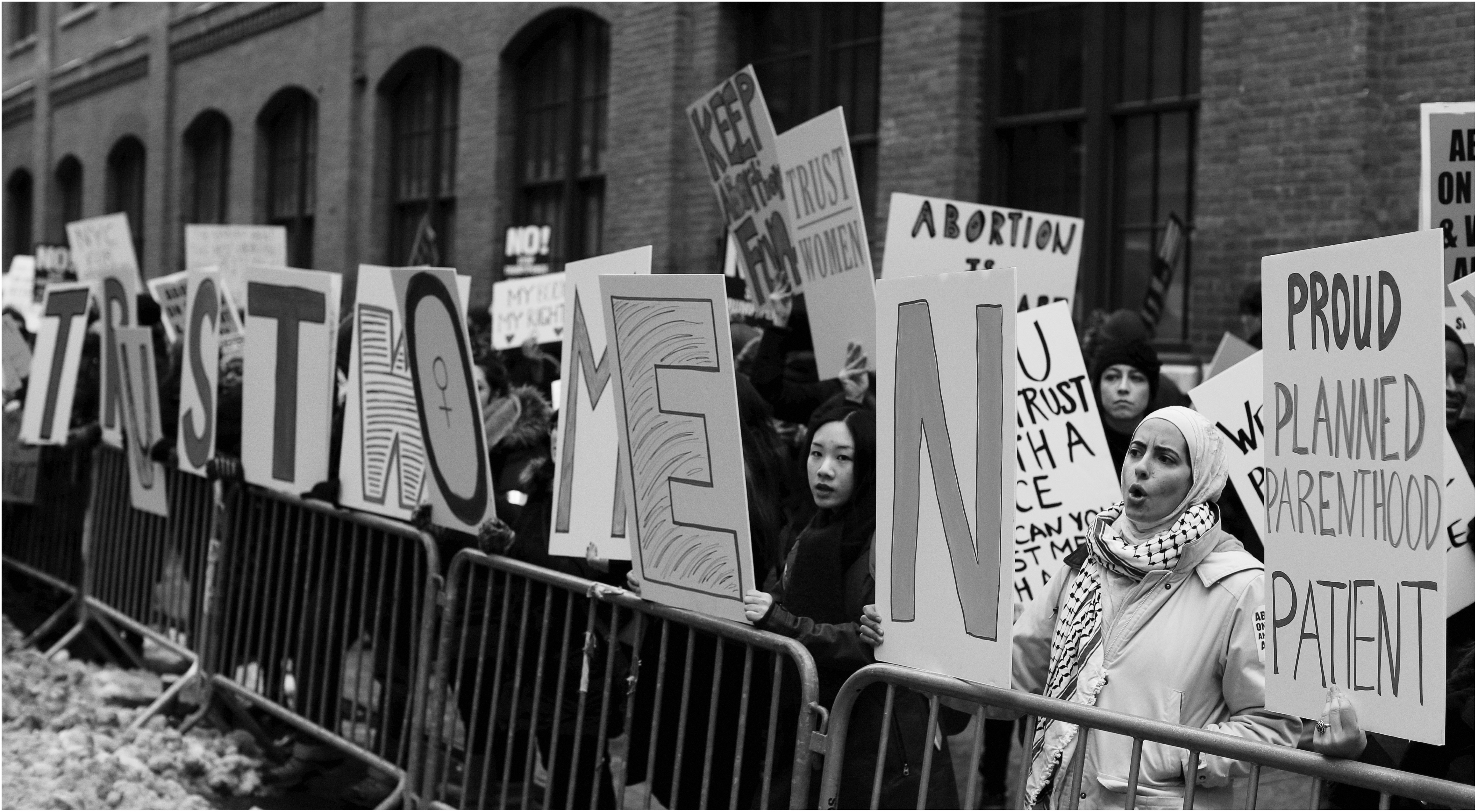
Pro-choice campaigners demonstrate in New York, 2017
CREDIT: Andrew Kelly/Reuters
The silencing of these conversations has a very negative effect on Asian-American and Pacific Islander women. Dean says they are less likely to use effective contraception: “If you look at AAPI women’s contraception usage, it’s lower than that of white women and tends to be the cheaper, less effective kind. For example, the pill is effective, but only 57% of AAPI women have ever used it compared with 89% of white women… Condoms – used by 24% of AAPI woman as against 10% of women – are cheap, but not so effective but they are easier for AAPI women to access because they don’t have to make an appointment or ask a family member to make an appointment with a doctor to get them. The calendar or rhythm method is also used.” How much worse can US President Donald Trump’s administration’s proposals make things?
“Asian-American women are already silenced on reproductive health by their culture, by lack of good sex education and sometimes by language barriers, too, which is why Planned Parenthood is so important and why it will be really scary if the Title X domestic ‘gag’ rule on family planning takes effect,” said Dean.
Established in 1970, Title X offers affordable birth control and reproductive health care, mostly to people on low incomes. Earlier this year Trump proposed a nationwide “gag” rule, which would make it illegal for any provider in the Title X programme to discuss abortion or tell patients how to safely and legally access abortion.
“If clinics receiving Title X funding (such as Planned Parenthood, who also use it for access to birth control and STD testing) can’t use the money to perform, or refer women for, abortions, what does that look like for someone who needs one?. … The crisis health clinics opening up often right next door to Planned Parenthood are funded by conservatives and religious groups and their aim is to talk women out of abortions. If you are an immigrant with limited English and you’re already finding it hard to know where to go and what to do, how are you supposed deal with that kind of pressure? This gag rule is about silencing doctors and limiting options for women.”
Dean is also very concerned about the Sex and Race Selective Abortion Ban, which is already law in eight states, including Arizona. It requires women to give a reason why they want an abortion and has been criticised for stigmatising Asian-American women through the false stereotype that Asians might choose boys over girls.
“It’s asking what is a ‘good’ and what is a ‘bad’ reason for an abortion and it criminalises doctors and patients and puts a lot of Asian-American women in an uncomfortable situation. Why would they want to tell someone why they want an abortion? It’s a hard enough decision. This kind of fear shouldn’t apply to women in this position,” said Dean.
There is some hope on the horizon, though. Dean welcomes the recent appointment of the first Asian-American president of Planned Parenthood, Leana Wen. Wen, a Chinese immigrant, showed her fighting spirit in her previous role as health commissioner for Baltimore by suing the Trump administration when they cut Title X funding from a teenage pregnancy prevention programme and won the case. On her appointment to Planned Parenthood she declared on their website:
“Reproductive health care is health care… and healthcare has to be understood as a fundamental human right… We have to do everything that we can to fight.”
Chatterjee, who co-founded Sasmha in 2016 to provide a safe space for young south Asian women and men to talk about taboo issues related to sexual and mental health, also has hope.
“We didn’t know what to expect when we launched, but we’ve had a very good response from both women and men looking for a space to talk about these issues that they can’t talk about within the family,” she said.
“Sasmha helps young south Asian women (and men) to know they are not alone and we need to create more safe spaces like it. I’m also hoping the amount of resilience and passion around politics right now is going to make women braver about having this conversation.”