




Abstract

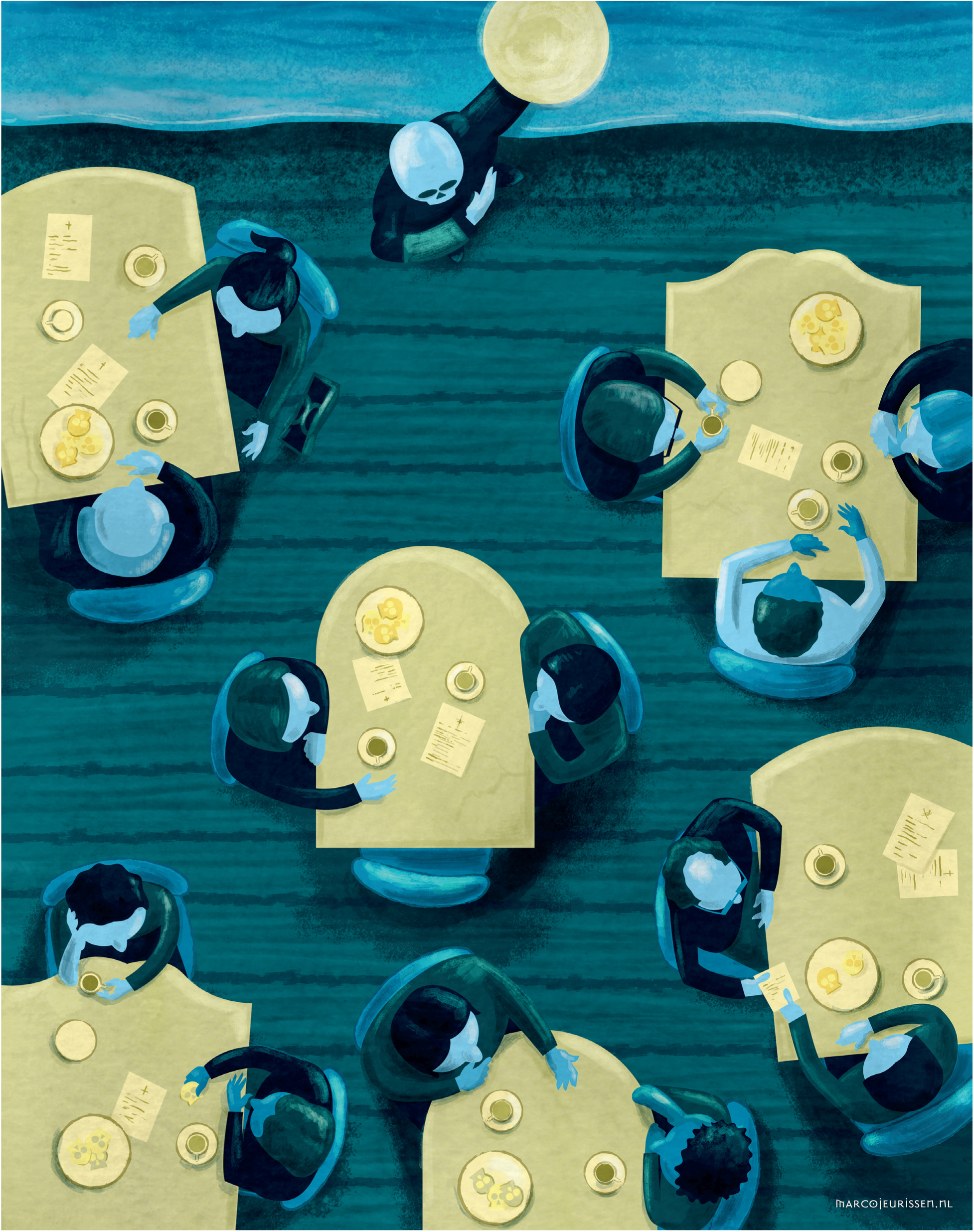
Death cafes are popping up across the UK.
The cafes are based on the work of anthropologist Bernard Crettaz, who held the first café mortel in Switzerland in 2004. His aim was to break the “tyrannical secrecy” surrounding the topic of death; the idea soon caught on around the world.
The first in the UK was held in 2011, and Su Squire facilitates the one in Norwich.
More pop-up events than permanent cafes, they attract people from all walks of life for tea and cake (an important aspect of the more than 7,000 cafes worldwide), and aim “to increase awareness of death with a view to helping people make the most of their (finite) lives”.
“We talk about everything that comes up,” said Squire. “People talk about funerals, whether there’s an afterlife, what a good death would be, living wills, the right to die, legacies… They are actually very life-affirming events.
“It’s all about connection. The only thing we all share is death.”
The Co-op, a leading funeral provider in the UK, has just completed the first national survey of its kind into attitudes towards death, with over 30,000 people taking part. Managing director Robert Maclachlan says he hopes the survey will show that “there is a huge opportunity to reduce the emotional and financial burden that occurs following a death, simply by people opening up more about these issues”.
According to the research, the average age when people in the UK experience the loss of someone close to them for the first time is 20. A quarter (24%) first experience it by the age of 10, but only 16% have been to a funeral at that age, which suggests that many youngsters are kept away from death. And yet research carried out at the University of East Anglia shows that children are keen to discuss death from a very young age. They are fascinated by dead animals they come across and are inquisitive, but parents often bat their questions away, making death scarier than it needs to be.
And so we try not to think about it.
Only around a quarter of us (27%) have made wills, a mere 5% have funeral plans and just 19% have put something aside to pay for our funerals, making for potential financial trouble ahead.
Aside from funerals, there are few rituals around death in traditional British culture. But there is bureaucracy to cope with and funerals have to be arranged – usually with no real idea of what to do.
Sarah Jones started Full Circle Funerals two years ago. She encourages people to talk about their funerals well in advance.
“Somehow we think that if we talk about death, it will make it more likely, or we don’t like talking about it because we don’t want to upset the person we are talking to,” she said. “It’s also a coping strategy to deny its existence. But talking about death, as well as planning for it, can give peace of mind.”
When she is out socially, people love to ask her questions about death: how is the body prepared? What happens to it? She says that while many agree that talking would be a good thing, we haven’t quite got there yet.
CREDIT: Marco Jeurissen
“It’s a downwards spiral,” she said. “We don’t talk about it because we can’t deal with it and because we don’t know how to deal with it, we don’t talk about it. …”
But we surround ourselves with death all the time. Some of the bestselling books over the past few years have been about terminal illness – The Fault in Our Stars, Me Before You and Before I Die, for example. Crime novels fly off the shelves and music takes death in all its forms as a common subject. Clothing featuring skulls entwined with roses or snakes is mainstream, and tattooists report a rise in people asking for designs featuring memento mori (a symbol to remind us that death is always nearby). Our fashion choices are bringing our mortality to the fore, albeit unwittingly, as tattooist Gee from Norwich studio Enter the Void explains.
“We don’t have people who come in and ask for things about death,” he said. “On the whole it’s less morbid and more about the artwork. Skulls are beautiful things.”
So if we are happy to be surrounded by images of death, why are we still so reluctant to talk about it?
Earlier this year, the charity Sue Ryder started the #FacingLossTogether campaign, calling for an open conversation about death after a study revealed how little most people knew about it – and how much it worried them. The campaign is in its early days; hospice director Elise Hoadley says it is presenting opportunities to broach the subject, including on social media, and hopes that more people will open up as a result. She says death never used to be such a taboo subject.
“As a nation, we don’t talk about death like we used to. The Victorians were very into death. Now we are more clinical because death isn’t around us so much. Babies died, mothers died in childbirth, people lived in family units and watched people die in the same house, so they were more used to it.”
Our love of death as entertainment has probably not helped.
“Death on TV is all about murders, war, terrorism, violence,” she added. “Most death is not like that.”
Working in hospices, Hoadley sees both the dying and their families. She says they all react differently, but the stiff-upper-lip approach is often applied on both sides.
“Some patients hold it all together, being strong because they don’t want to be a burden or upset their family, then fall apart when they have gone. Some families don’t want to talk about it because they don’t want to upset the person who is dying.”
Today’s Britain is made up of people of many cultures and faiths, but there is still a common thread around death. David Colling-wood, director of funerals for Co-op Funer-alcare, told Index that Hindus are the most uncomfortable talking about their own death, with 51% saying this is the case. And, despite being encouraged by Islam to accept death and make plans, one in five Muslims is frightened of it. Jews were shown to be the most comfortable, with a quarter saying they considered their own mortality when they were less than 10 years old. Maybe for that reason, one in five (18%) has a funeral plan in place.
Death is an everyday topic for Laura Baker. In her work as a Church of England vicar she talks to parishioners who are dying, worried relatives and people arranging funerals.
“When someone dies, we are all at sea,” she said. “We don’t know what to do. Most of us never see a dead body – I haven’t seen a dead body – but that’s normal. Most people are 40 before they see one. For the first time in history we are so detached from death.
“I would say I am still scared of it, but it has got a lot easier for me to talk about it. I’m 29 and I have made a will and decided whether I want to be buried or cremated.”
Belief in the afterlife can be a comfort, Baker says. And even those who say they are not religious lean on its imagery.
“They say someone is looking down on them, or that they are smiling down and protecting them, or they are with someone else who has died,” she said. “Saying things like that give some comfort that their loved ones are not alone.”
Still, as Squire of the Norwich cafe says, we see it as something to be beaten rather than embraced.
“Advances in science mean we can live longer and people are brought back from the brink of death. It’s become a challenge, something we fight against,” she said. “When you allow yourself to accept that death is part of life, it’s incredibly liberating.”
Day of the Protesting Dead
WITH SKELETON PARADES, sugar skulls and candlelit altars, Mexico’s Day of the Dead is a feast for the senses. But the annual celebration – which runs from 31 October to 2 November – also serves a freedom of expression purpose. As well as challenging taboos around death, the festival has become an occasion for protest in Mexico.
While historians say the celebration has Mesoamerican origins, many of its modern elements developed in the late 19th century. With Mexico in the grip of a repressive dictatorship, newspapers would publish poems, known as calaveras, to mark the festivities. These mock eulogies offered a rare opportunity to poke fun at politicians and the clergy. The poems were often printed alongside cartoons depicting public figures as skeletons.
José Guadalupe Posada was a noted calavera printmaker. His most famous creation, La Catrina, has become an iconic Day of the Dead image. The cartoon depicts a skeleton in a European-style dress – a satirical stab at the Mexican elite.
Women in Mexico dressed as La Catrina during the Day of the Dead festival
CREDIT: iStock by Getty Images
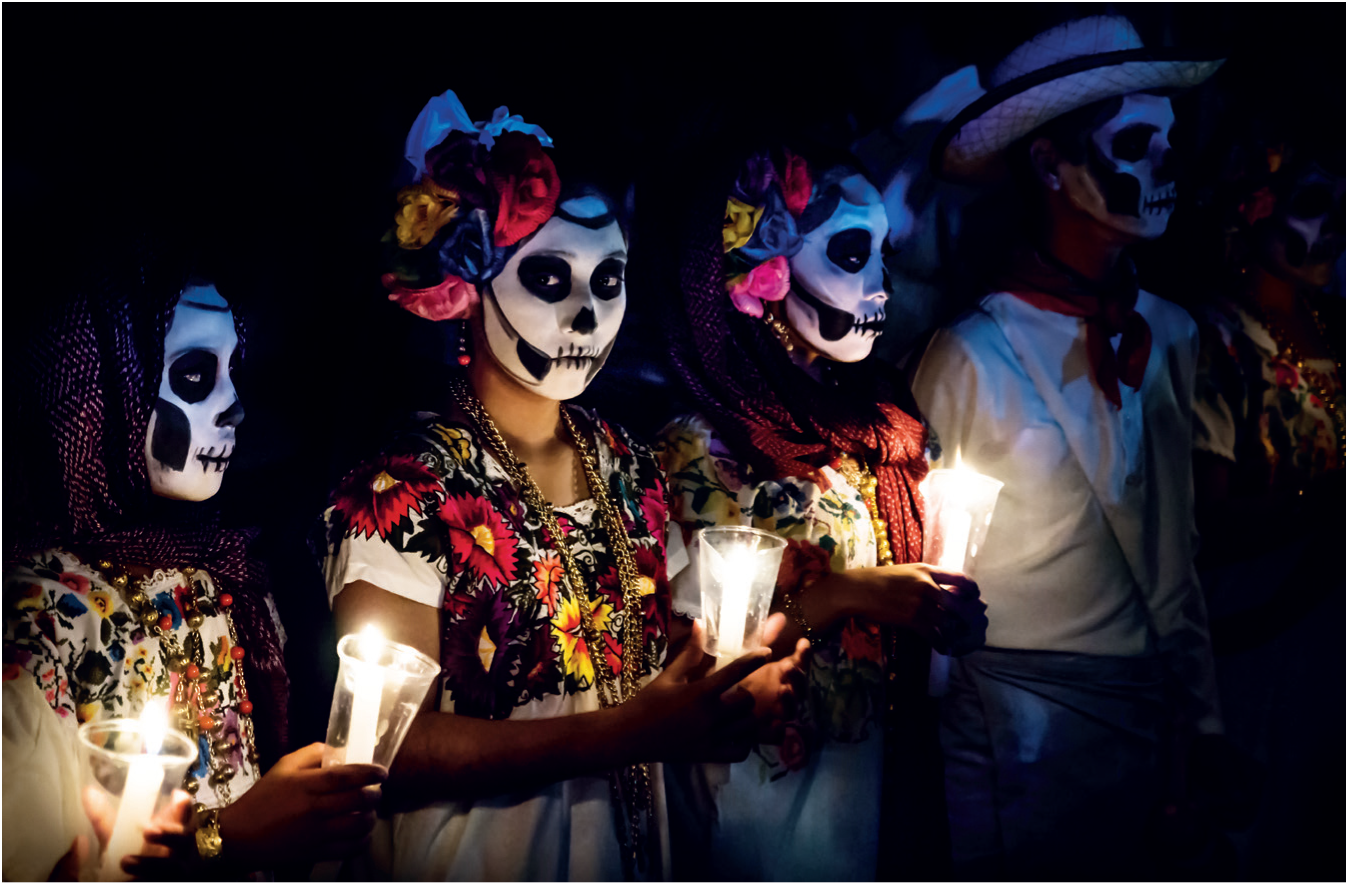
“The vantage point is death as a leveller,” said Claudio Lomnitz, the author of Death and the Idea of Mexico. “The contrast is always between the quality of the bones and the pretension of the dress.”
The Day of the Dead reflects Mexico’s unique openness to the topic of death. Mexican literary icons such as the novelist Juan Rulfo and the poet Octavio Paz deal with the theme extensively in their work, while newspapers still splash highly graphic photos of crime scenes across their front pages. The celebration also encourages people to think about their own mortality. Food and altars for the deceased bring representations of death into the home.
The festival has taken on a political dimension, too, as death and bereavement have become central issues. In 2006, the government deployed troops to fight the country’s drug cartels, triggering violence that has left more than 215,000 dead. Low conviction rates fuel this cycle of bloodshed. According to the 2017 Global Impunity Index published by Mexico’s Universidad de Las Américas, the country has the highest rate of impunity on the American continent. Against that backdrop, protesters use the festival to draw attention to the victims of the bloodshed.
For last year’s Day of the Dead, campaigners marched in Mexico City to commemorate women murdered in the country. The previous year, protesters placed an altar at a train station in the capital to honour the murdered transgender activist Alessa Flores.
“The radical root [of the festival] runs very deep,” Lomnitz said. “I do believe there’s a recovery of that tradition… The Days of the Dead have become a space for protest.”