



Abstract

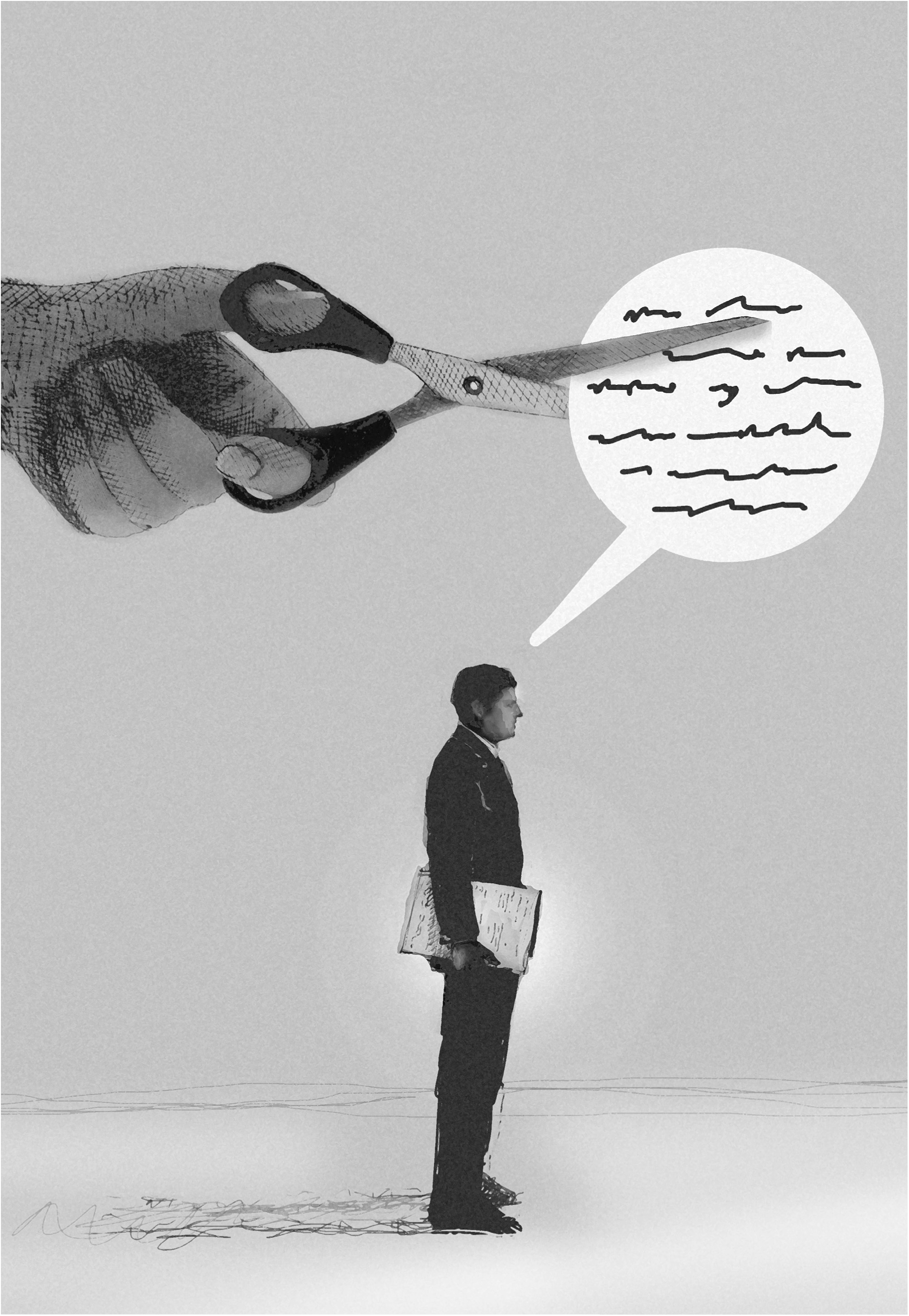
Anonymous, threatening letters are being sent to UK homes to try to stop activities that the Chinese government disapproves of.
Rogers was just one UK resident who has spoken to Index about receiving threats after doing work that the Chinese government would rather did not happen – and UK MPs are due to discuss the new tactic in the autumn.
While no one is 100% sure who is behind the letters, or if they are connected to the Chinese government, the senders certainly have enough power to be able to access personal information, including home addresses. And the recipients have one thing in common – they are amongst Hong Kong’s leading advocates of free expression.
CREDIT: Gary Waters/Ikon
Rogers, who founded human rights NGO and website Hong Kong Watch in 2017, described what it was like to receive the letter and to realise that people nearby had received it, too.
“It obviously is an uncomfortable feeling knowing that, basically, they know where I live. They’ve done the research and I don’t quite know what is going to happen next,” he said.
“The ones [neighbours] I spoke to were very, very sympathetic. And they were actually not neighbours who knew me personally, so I was initially concerned about what on earth they were going to make of this. But they saw immediately that it was something very bizarre... they’d never experienced anything quite like it before,” said Rogers of the first tranche of letters that arrived on his street in March.
“And then [in June] my mother received a letter sent to her own address. It specifically said to my mother to get me to take down Hong Kong Watch.”
Rogers, who lived in Hong Kong between 1997 and 2002, has already encountered problems arising from his promotion of democracy there. In October last year, he was refused entry to the city on arrival at the airport and put on a flight out. The letter to his mother referenced this October incident, saying that being “barred from entering the Chinese territory” has not “deterred or humbled him to realise the consequences of interfering in the internal politics and nature” of another society.
Then in mid-July, more letters were sent to his neighbours. They had all the hallmarks of coming from the same sender and included screen-shots of Rogers at a recent Hong Kong Watch event. “I am writing to give you a quick update about your neighbour the Sanctimonious Benedict Rogers and his futile attempt to destabilise Hong Kong/China with his hatred of the Chinese people and our political system,” the letters read.
The imprisonment of pro-democracy activists, the abduction of booksellers, the assault on newspaper editors all show the dangers of challenging Beijing’s line in Hong Kong. It appears that China is now extending its reach further overseas, sending a message that you are not safe outside the country. Hong Kong publisher Gui Minhai, for example, was kidnapped in Thailand in 2015, after reportedly preparing a book on the love life of Chinese President Xi Jinping. These letters to UK residents are further proof of the limits some will go to in order to silence those who want to promote autonomy and basic freedoms in Hong Kong.
Evan Fowler was born and raised in Hong Kong and is moving to the UK because his life, he says, has become impossible there. We are sitting in a cafe in central London while he recounts intimidation tactics that have been used to try to silence him. It’s a tough conversation.
Fowler wrote for a popular Cantonese news site, House News, which was forced to close down in 2014. Its principle founder disappeared for four days. Fowler was consequentially accused by some pro-establishment press as representing “foreign forces” and of helping organise the 2014 protests, a line which he said left him isolated among many of the Hong Kong social circles in which he was raised. In late 2015 he attempted suicide and was hospitalised. Diagnosed as suffering from major depressive disorder, he was unable to function for two years.
He, too, recently received letters to his home in Hong Kong, and is aware of several people who have received them in the UK.
“The interesting thing about these letters is that, to my understanding, the letters all contain similar phrases – no direct threats are made, but [there is] an identification of you as an enemy of the Chinese people,” he said.
Fowler speaks of how “the threat level has been increasing in Hong Kong” and says that “Hong Kong pre-2014 is different from Hong Kong after”.
“It’s a city that is being ripped apart,” he said.
Another recipient of the letters, Tom Grundy, is editor-in-chief of Hong Kong Free Press, based in the city. His mother, who lives in the UK, also received a letter late last year.
“I am slightly concerned that Tom has taken to a path that has become unsavoury and unhelpful to the some of the people of Hong Kong (sic),” the letter read. “However, in politics, when one does not know one’s enemies clearly, one could get hurt.”
It added: “I and many people would really regret if something happened to Tom in the next few years.”
When Index spoke to Grundy, he said he was concerned about how they found the addresses of family members, and that the incident had upset his mother.
But, having reported it to the Hong Kong police, he is hopeful that it has been dealt with – the letters stopped immediately upon doing so.
“Journalists aren’t walking around Hong Kong fearing that they are going to be plucked from the streets,” he said.
“Hong Kong has had the promise of press freedom and it’s been a bastion of press freedom for Asia for decades, and NGOs like you and us are concerned and we raise the alarms because we want the civil liberties and freedom to be maintained.”
This does not mean Grundy doesn’t have his concerns about press freedoms in Hong Kong. It’s just that, for now, the letters aren’t as troubling compared with other issues, such as the yet unresolved kidnapping of the booksellers.
But for others, these letters have been hard to shake off. Will they have their desired silencing effect? The picture is complicated.
“I think it’s highly unlikely that they would try any physical harm in London, so I don’t feel scared,” said Rogers, adding that it is, however, “not a pleasant feeling”. At the same time, he is keen to stress that he won’t be silenced. “It’s actually, if anything, made me more determined to carry on doing what I’m doing because I don’t think one should give in to tactics like this.”
His view is echoed by Catherine West, a British MP who is a patron of Hong Kong Watch and has frequently raised the issue of freedoms there in the UK’s parliament.
“This sort of intimidation is very unpleasant,” she told Index. West is aware of the two incidences connected to Rogers and encouraged him to go to the UK police, which he did (Index spoke to London’s Metropolitan Police, who said they received a report of malicious communications in March and are due to meet the victim to follow up).
West has also raised the issue of the letters with the UK foreign secretary in writing and is planning to raise it again when parliamentarians return this autumn after the summer parliamentary recess.
“Whoever is doing this should realise this will only embolden us to promote human rights,” she added.
Speaking of Hong Kong specifically, West said: “We would like to be sure that freedom of expression is not curtailed and that young people in particular can express it without being curtailed.
“We feel it’s important for parliamentarians around the world to be involved, to be standing in solidarity with one another.”
Corrections
The name of the translator of this article was not credited. The translator was Sue Copeland.