



Abstract

Indian Prime Minister Narendra Modi is ramping up pressure on the media in the runup to the general election. Expect more, writes
During a Facebook chat Modi held with farmers from across India in June, a farmer from Chhattisgarh state claimed her earnings had doubled, thanks to government schemes. On 6 July, Master Stroke, a prime-time show on Hindi satellite news channel ABP News, debunked her claim, suggesting that it was coerced.
In July and early August viewers across India found that when they turned on ABP News to watch Master Stroke at 9pm, the channel was off air. In August, the channel’s editor-in-chief, Milind Khandekar, and Master Stroke anchor Punya Prasun Bajpai announced their resignations. Senior news anchor Abhisar Sharma was also reportedly sent on leave for a report that juxtaposed Modi’s claim of peace in Uttar Pradesh with two recent brutal murders in the northern state.
Their exits have exposed how Modi is leaning on the Indian media to be less objective and more supportive of his agenda.
“In the media, the control is either overt, as with the abusive and threatening trolling of journalists... by online armies of the ruling BJP (several of whom are followed by the prime minister), or through the much more insidious pressure put on pliant media managements to ease out dissenting voices,” said Geeta Seshu, senior journalist and consultant editor of TheHoot.org, a media watchdog website.
“ABP News is merely the latest in a long list of such instances. [The journalists’] departure from the channel, when the next general elections are clearly on the agenda, is alarming and simply doesn’t impose any confidence in the way the media will be allowed to operate. The ABP resignations serve as a warning to senior editors to behave, or else...”
In June, Barkha Dutt, one of India’s best-known journalists and a vehement critic of Modi, formerly with NDTV, alleged on Twitter that she had received threats – “indirect, insidious intimidation” – from a section of the ruling Bharatiya Janata Party. And she tweeted: “Over the last few months those associated with the ruling party have warned me – politely, impolitely – not to work on new TV projects and told me – “we will never allow them to happen”.”
The prime minister’s attempt to control the message is evident in all sorts of ways. Modi has not addressed a single press conference since assuming office in 2014 and has selectively given interviews to news outlets where journalists ask pre-approved questions.
He also addresses his electorate from time to time through his radio programme, Mann Ki Baat. And, of course, he tweets to his 43.7 million followers.
Indian Prime Minister Narendra Modi meets schoolchildren after addressing the nation during Independence Day celebrations, Delhi, August 2018
CREDIT: Adnan Abidi/Reuters

Modi is betting big on social media. His government is raising a cyber sena (army) of cyber yoddhas (warriors) – about 200,000 in Uttar Pradesh state alone. The BJP IT Cell, which is overseeing the exercise, headed by Amit Malviya, has faced allegations of spreading misinformation. Malviya himself has been caught several times sharing false information.
This summer The Wire published a report on media-tracking “war rooms” set up with an eye on the 2019 general election. In Delhi, at the old headquarters of the BJP, two private “political consultancy” companies have employed 250 people (mostly journalists) to monitor “pro-BJP” and “anti-BJP” news coverage. They also track social media interactions and maintain files on journalists, editors and writers.
India remains a democracy, if an imperfect one, but thorough reporting on the government and the BJP is becoming increasingly difficult. Genuinely free and inquiring news media are under constant attack from the government and its agencies.
“Any investigative reporting that annoys the ruling party or any criticism of Hindutva, an ideology that blends Hindu nationalism with an almost fascistic rhetoric, elicits a torrent of online insults and calls for the death of the reporter or writer responsible, most of it coming from the prime minister’s troll army,” stated the most recent annual Reporters Without Borders’ report in 2018, which ranked India 138 out of 180 for press freedom.
The current atmosphere has resulted in lots of Indian media shying away from difficult stories.
“This is most alarming,” Mrinal Pande, the former chair of public broadcaster Prasar Bharati, told Index. “In earlier days, [the] media fought back whenever there were attempts by the government to curtail press freedom. Now, most of the mainstream media owners are openly supporting the actions of the government, instead of protesting. A small section, mainly the digital media, is showing any resistance.”
A protester at a rally against the killing of Gauri Lankesh, an Indian journalist who was shot outside her home last September, New Delhi, September 2017
CREDIT: Adnan Abidi/Reuters (left); Mario Panico - International Journalism Festival 2013

The threats come in many forms – physical assault on journalists, lawsuits, institutional intimidation and worse. Gauri Lankesh, editor of the Bangalore weekly Lankesh Patrike, was fatally shot when she opened the door of her home on 5 September last year. Reporters Without Borders wrote that “she was known for the courage and determination with which she defended women’s rights and criticised the caste system and Hindu nationalism. . . Her last editorial explained how fake news had contributed to the BJP’s election victory in 2014”.
“There is now an underlying fear everywhere,” Arun Shourie, former editor of the Indian Express, told NDTV last year. The interview was conducted soon after the authorities carried out raids on the offices of NDTV and the homes of its founder, Prannoy Roy, and his wife over allegations of defrauding a bank. The broadcaster described the move as a “witch-hunt against independent media”.
Self-censorship has since become the norm, and incidents that could show the government in the wrong light are mostly avoided. Cases likely to draw more government criticism, such as the lynching of Muslims and Dalits (the lowest castes in the Hindu caste hierarchy), are seldom reported in full. Most reporting on these subjects serves only to blame the opposition parties, or anyone but the prime minister.
“The political class is able to get away with murder, literally,” said Pande.
For example, on 10 January, an eight-year-old Muslim girl was abducted, confined in a temple for days, starved, tortured, gang-raped and brutally murdered by a group of Hindu men. The incident only became national news three months later when the charge sheet was filed, arousing the attention of the foreign press. Most Indian media chose not to report it, and a rally was organised by BJP-backed politicians in February demanding justice – not for the dead girl but for the accused in police custody with further rallies in April.
“The role of the media to continue to report and uncover is becoming more and more compromised,” said Seshu.
“One has little or no hope in media institutions and representative bodies, statutory or non-statutory regulatory bodies, the owners of media houses (that, barring fewer and fewer exceptions, are crawling and unabashed about it) and the professional associations and guilds,” she added.
So what has been the impact of this on people’s ability to judge what is trustworthy news and what is propaganda?
Two years ago Paranjoy Guha Thakurta, former editor of the Economic and Political Weekly, said in an interview for The Diplomat that a section of the news media – mainly English-speaking television anchors – “are whipping up hysteria”. When asked how seriously viewers took these journalists and their reports, he said: “A section of the audience may start believing in the delusions that these channels propagate in the name of patriotism, in the name of upholding and preserving national security. But we must give viewers more credit than we do.
“I personally believe the viewers are smarter than we think, and they do not treat these news channels any different from entertainment channels. They watch them with the same willing suspension of disbelief as they do potboilers at the movie theatres. A more mature section of the TV audience is able to see what these programmes are up to. They are able to call their bluff. Over time, these channels also expose themselves for what they are.”
He couldn’t have been more wrong. A January 2018 survey by Pew Research Center revealed that 80% of Indians thought their country’s media was fair and objective. Another Pew survey, from 2017, quoted 85% of Indians as trusting their national government.
The run-up to the elections will be challenging, Pande said, adding: “It’s really hard to predict anything without being an astrologer.”
That might be true, but if the current situation is anything to go by then Modi won’t allow much, let alone the truth, to stand in the way of his re-election.
Why I Worry About India’s Media
Journalist John Lloyd
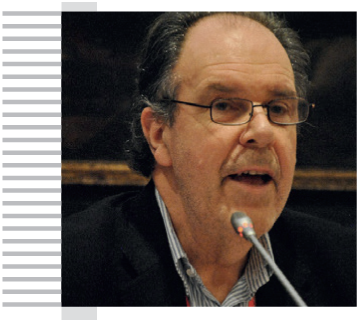
US papers and TV channels are routinely vilified by President Donald Trump, and this is both an astounding and a serious matter. So why is India more concerning?
Because the US news media can take care of themselves. And in doing so, take care of the business of truth seeking and telling.
India’s news media, with brave exceptions, are not in that position. The formidably disciplined prime minister, Narendra Modi, came to power in 2014, a deserved victory. But in power, Modi made clear that he believes the media need calling to heel.
Hence the litany of proprietors suppressing what might annoy him and the harassment of those who still seek to get out some version of the truth. The phenomenon is familiar: I saw it in Russia, as Vladimir Putin closed in on a chaotic but relatively free journalism.
Modi cannot shoulder all the blame. Corruption – coverage bought by politicians and corporate leaders – long predates him, but has not diminished. The hundreds of news channels, which claim to hold power to account, more often provide space for shouting bouts.
Poverty, violence against women and discrimination against the Muslim minority are often unreported because they are not part of the dominant narrative. The desire of owners, at every level, to pander to the powers that be, seeking to profit by doing so, is too strong.
India claims to be the world’s largest democracy. It is one still: governments change in broadly free elections; opposition can be fierce; the media are curbed but not silenced. The trend, however, is negative. And for what will be soon the world’s largest state, with a prime minister tending to the authoritarian, that matters greatly.