




Abstract

Rappler’s news editor
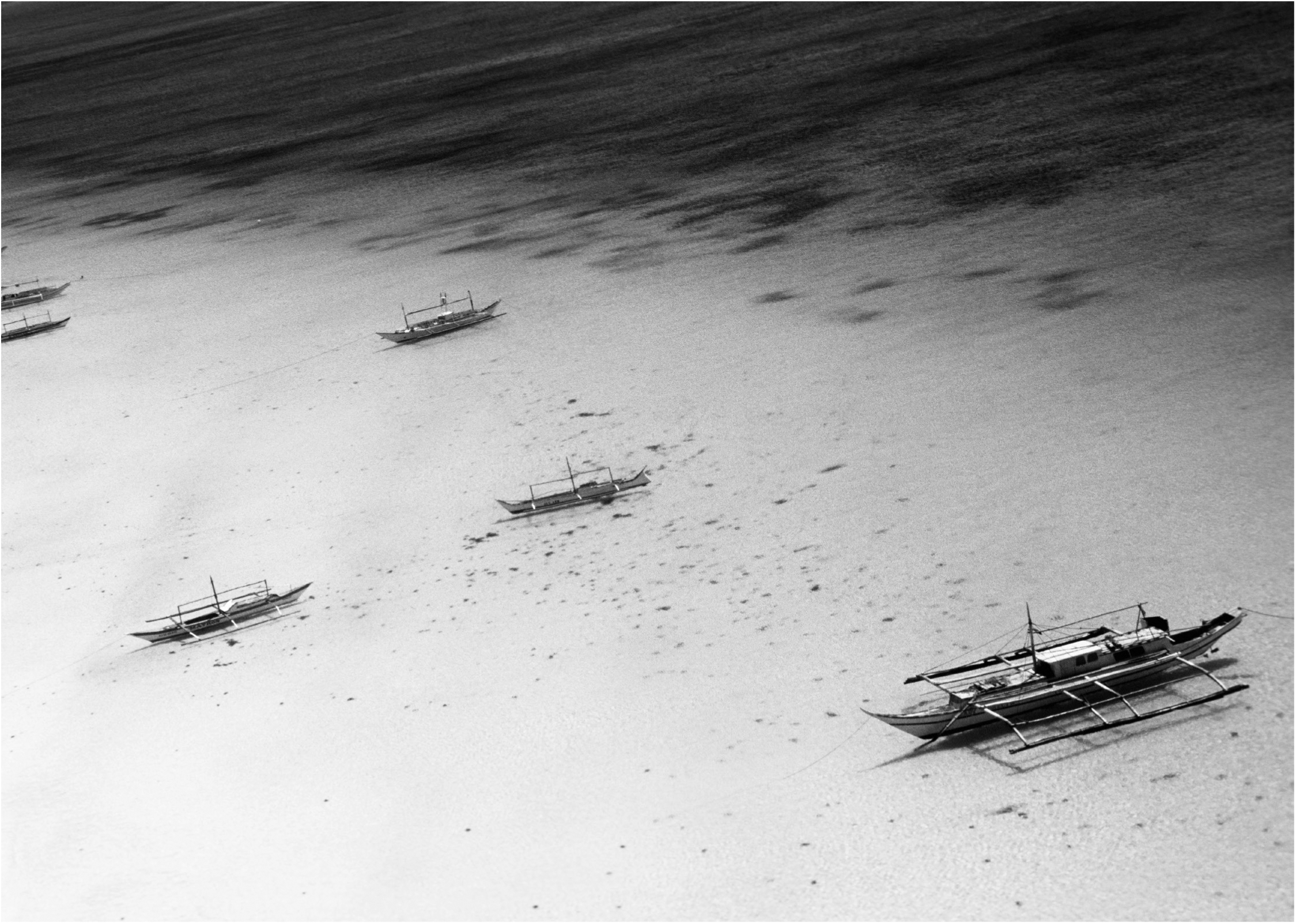
The perfect sea off the coast of popular tourist island Boracay in the Philippines
CREDIT: Jon Delorme/Picfair
Pia Ranada, our reporter covering Philippine President Rodrigo Duterte, was live on Facebook and Twitter documenting how a presidential guard wouldn’t let her into Malacañang, the presidential compound, where she had regularly gone since this administration began. There had been an order, but the guard couldn’t say from whom.
After 20 minutes, Ranada was allowed into the building where the press office was. She was in for a long day, though. It was the president himself who had ordered the ban, the head of the internal house affairs told Ranada. In fact, she’d been banned from all the buildings in the compound, including the press office. A bit later, it was announced that the ban would cover even our chief executive officer and executive editor, Maria Ressa.
Ranada told me later that she was scared. Her hands were shaking while taking the video. But she was also angry and wanted answers. “I didn’t want them to get away with what they were doing,” she said.
What happened that day was the culmination of nearly two years of intensified attacks on Rappler, our news website. Those attacks had gone on practically since Duterte had taken office.
Such a twist of fate.
On 9 May 2016, the night of the election, Duterte granted his first interview to Rappler. By October 2016, however, Rappler had gathered solid data to show that his administration was engaging in systematic disinformation, carrying out “social media campaigns meant to shape public opinion, tear down reputations and cripple traditional media institutions”, Ressa said as an introduction to a three-part series on the weaponisation of the internet.
A deluge of nasty, personal attacks flooded into her Facebook accounts, inboxes and Twitter. Ressa, the person in the newsroom who most preferred to engage even obvious trolls (a lot of times against our advice), didn’t take long to realise that she was talking to people who didn’t intend to listen or understand.
“They were just trying to bash me into silence,” she said, looking back.
It was ugly. “Maria, you are waste of sperm! Your mother should have swallowed you!”; “Me to the RP Government: Make sure Maria Ressa gets publicly raped to death when Martial law expands to Luzon. It would bring joy in my heart.”
The Facebook accounts of some staff, editors and regular contributors were stalked by trolls. Photos of their families were stolen and posted with messages wishing they were murdered and raped. There was one time when a proclaimed Duterte supporter got a photo of our office building on Google Maps and posted it, telling other diehard supporters of the president that this was where they should go in order to harm Rappler employees.
“The whole thing was shocking because we’d never lived through anything like that before,” Ressa told me. Yet, she asked, which self-respecting journalist wouldn’t have written about it? “The data was all there. It was clear. The reason they attacked us was because we were right. In retrospect, it was extremely important for us to have done that story; otherwise, more Filipinos would have been misled.”
“What made it difficult was,” Ressa realised after the backlash, she was a journalist who “also ran a company.”
And, indeed, the government stepped up its attacks and went after the company itself. In Duterte’s State of the Nation address in July 2017, he accused Rappler of being foreign-owned. By insisting in subsequent speeches that we were “funded by the CIA” and “fully American-owned”, he was laying down the argument that we were violating the constitution, which requires media companies to be wholly owned by Filipinos.
By January this year, the Securities and Exchange Commission ordered the company’s licence to operate to be revoked (we’re still here because we appealed the decision in court). We have also had a cyber libel case filed against us.
“The charges are ludicrous,” said Ressa, “but they are complex enough that people can get lost.”
Snide remarks designed to make the public doubt Rappler’s credibility are loosely made by government officials. During their daily coverage, our reporters have to parry cabinet officials who stop them at press conferences with “Rappler? Haven’t you shut down?”.
At events attended by the president, organisers must check their lists of journalists coming and strike off any Rappler reporters. In April, one of our reporters, who insisted on covering the National Games in a city more than 400km from Manila, was booted out of a press conference and told by education officials to listen instead to the loudspeakers installed outside.
Lately, state auditors have been releasing reports on individual agencies. Rappler, like many other news outlets, reported on the findings about questionable contracts, misused funds and unexplained releases. Yet, every time, Duterte’s officials would issue a statement singling out Rappler and calling our report “fake news” instead of trying to clear their names of mishandling taxpayers’ money. Daily, our journalists receive messages calling them paid hacks who deserve to lose their jobs and get jailed, raped or murdered.
Yet, even in these times, we continue to produce exclusives, getting documents from agencies, inside stories from cabinet officials and briefings from those who remain professional and non-partisan in government. And when reporters worry about losing access to officials, I share with them my principle from when I myself was a reporter: there will always be one other person who knows the information, one other source of those same documents, one other expert who knows an issue like the back of his hand.
The administration may think that it can slow us down with these distractions – yes, the cases are distractions – but what it didn’t realise was that, by targeting Rappler, it had roused a bigger enemy. #StandWithRappler has quickly given way to #DefendPressFreedom. Media organisations, here and abroad, have banded together to guard more aggressively against what they see as a creeping attempt to silence dissent here. Campus organisations, even those in schools, and civil-society groups have started organising forums on media literacy and press freedom, requesting to hear from Rappler and other journalists who have experienced the battle with lies and disinformation firsthand.
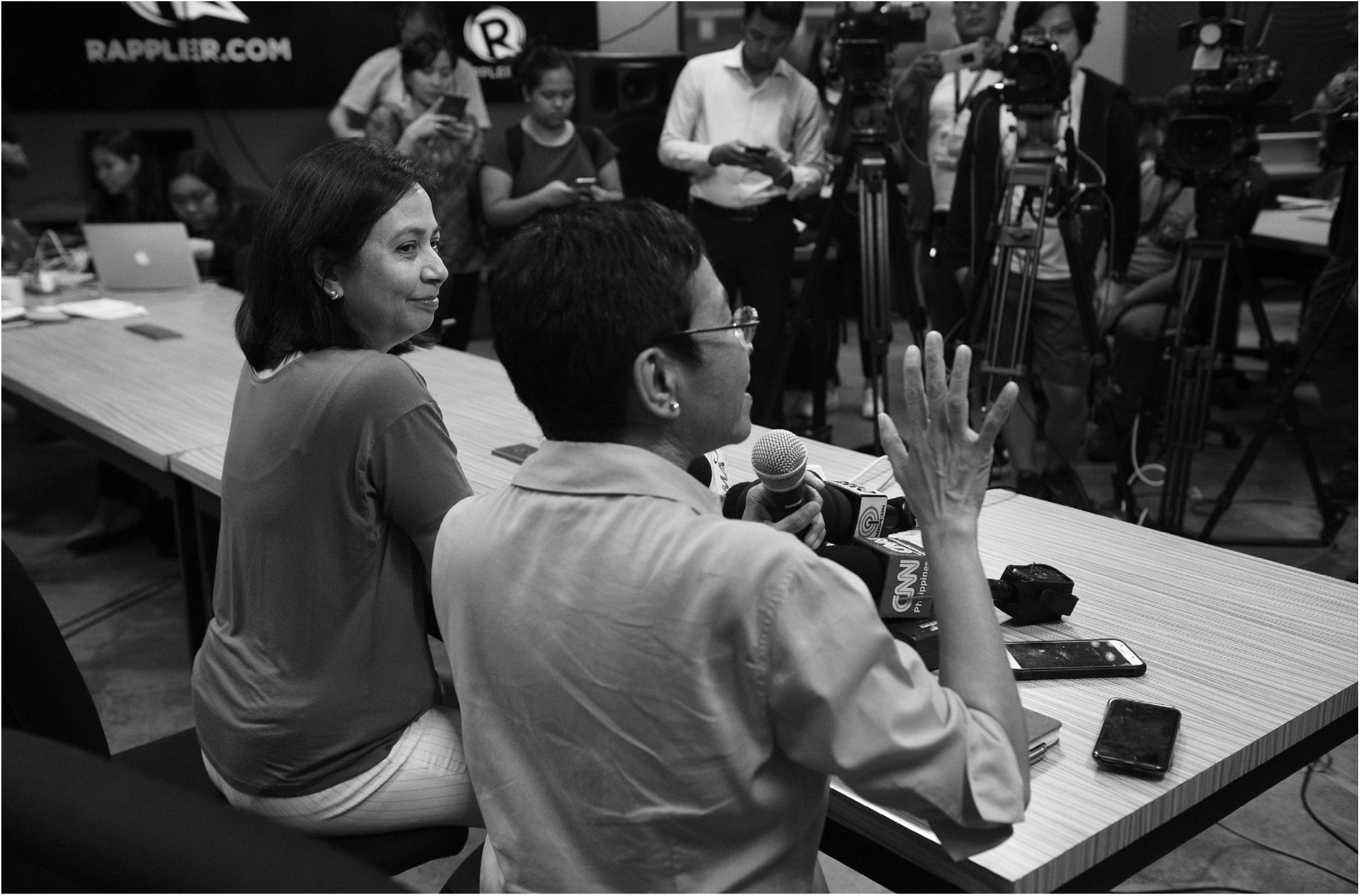
Rappler CEO Maria Ressa at a press conference at Rappler’s office in Manila, speaking in the wake of the government’s decision to revoke their operating licence, January 2018
CREDIT: Ted Aljibe/Getty
Something else the administration didn’t realise was that when a reporter is freed from physically following Duterte around and sitting through, sometimes, three speeches a day, she has time to work on more substantial stories that scrutinise the government.
When we say it’s business as usual at Rappler, we mean it. Sure, we have additional security, both physically and digitally, and there are contingency plans in place, but it’s the same newsroom where you find people working practically 24/7. Some days, we’re crowded at the office when almost everybody has decided to hold meetings at the same time. Some days, someone could bring a skateboard and glide through the newsroom without knocking anybody down because three-quarters of our 100-or-so workforce have decided to work from home.
The reporters jog at night in the park just outside the office. Sometimes I cook for them. Sometimes I remind them to get a day off and recharge.
In between the banter, though, we also ask each other: Why are we holding the line? Why do we keep moving the line? There’s a spirit that Rapplers see and reinforce in each other, Ressa points out, that says: “We’re not scared of these things.”
I had shared with the team how the testing (I don’t want to call it a “crisis”) of Rappler had made me draw confidence from the fifth verse of the 23rd Psalm: “You prepare a feast for me in the presence of my enemies. You anoint my head with oil.” I think it has encouraged some of them, too.
So when, amid the attacks on us, international recognitions come, one fellow manager would say, “So this is the feast?” I would tell her, “Brace yourself, it’s just the appetiser.”
And when government agents came to our office to serve notices of investigations and subpoenas, some staff would say, “For clarification, is this still part of Psalm 23?” And they would be told, “This is the ‘walking through the valley of the shadow of death’ part.” And guess what? We are able to laugh and then focus on our work again.
“The mission of journalism has never been needed as much as it is today,” Ressa likes to say. “That’s why Rapplers have come back day after day with the best hard-hitting stories they can find. We’re stubborn.”