




Abstract

Spain’s Canary Islands are popular with European tourists seeking out winter sunshine. But attempts to limit freedom of expression also happen in stunning locations,
Their sub-tropical climate and attractive landscape make the archipelago, off the coast of north-western Africa, a great destination for tourists from northern climes. According to statista.com, the Canaries are the second favourite destination in Spain for international tourists. The industry generates more than 35% of the region’s employment and accounts for 34.3% of the GDP.
But beneath the colour and the parades are threats to freedom of expression.
Last year, the Canary Islands Communist Party, the Canary Nationalist Alternative, Canarian United Left (ICU) and the Canary Student Movement Assembly (AMEC) reported that protesting students were dragged out of a room during a visit of King Felipe VI and Queen Letizia to La Laguna University in Tenerife. The students were taken to a nearby hospital “due to the aggression”.
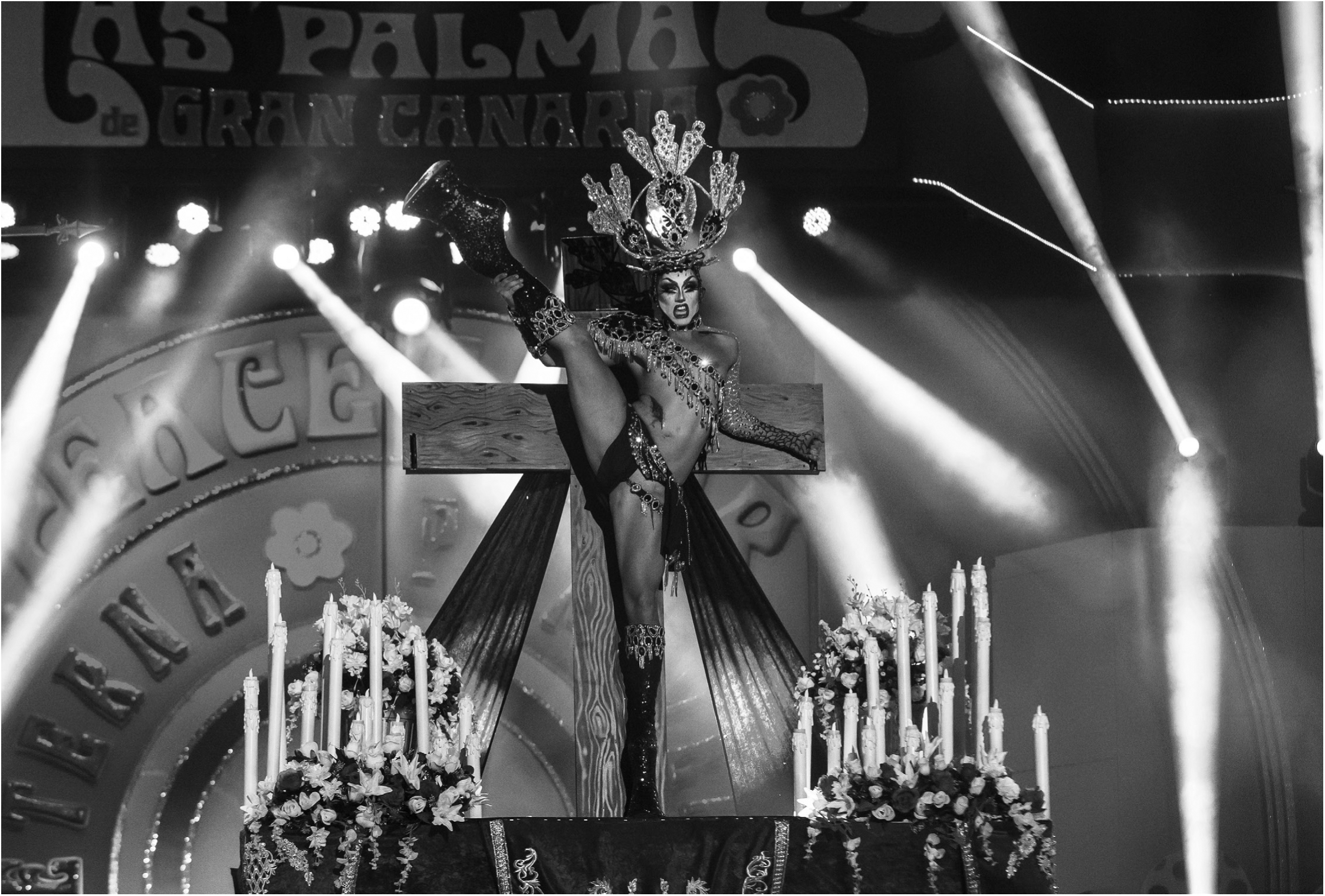
One of the famous attractions is the carnival celebration every February. This year, drag queen Sethlas (Borja Casillas Toledo) appeared on stage in the Drag Queen Carnival Gala in Las Palmas de Gran Canaria dressed up as the Virgin Mary and parodied the crucifixion of Christ. He won the contest, but his performance led the Spanish Christian Lawyers Association to file a complaint against him with the prosecutor’s office. He was then investigated for having allegedly committed the crimes of incitement to hatred and offence to religious feelings.
“This association think theirs are the only valid beliefs and their ideology is above any other. They have filed other complaints before – against 20 Spanish abortion clinics, for instance – and I don’t know what they are fighting for. Is it for defending their beliefs, or because it is in their own interest?” Casillas said.
“We did it after receiving continuous calls from members of the association, volunteers and people that barely knew us. Christians should not be a springboard for anyone seeking to be famous,” said Alejandra Soto, who works for the association’s judicial department. “Had this kind of performance involved a different religion, such as Islam or Judaism, it [would have] been banned by public powers to avoid a scandal.”
Francisco Cases, Bishop of the Diocese of the Canary Islands, reacted via a public letter in which he claimed that the performance had been more upsetting than the crash of a Spanair plane from Barcelona to Gran Canaria in 2008, in which 154 people died.
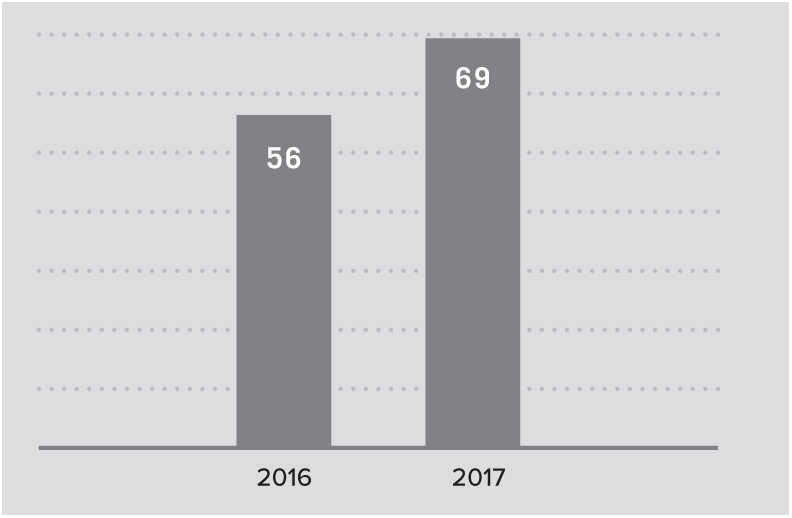
SPAIN
Censorship/Attacks on the Media
Source: Mapping Media Freedom
“A blasphemous frivolity has succeeded in […] the gala. It has succeeded in votes, and in the cheers of a heated audience.” His words led to a wave of criticism, especially from the Association of Victims of the JK5022 flight. The bishop later said he regretted his words.
The case was filed in December 2017 by a judge at Las Palmas de Gran Canaria’s Court of Instruction, Estela María Marrero, who considered that it may have offended some people, but was not against the law.
Nevertheless, the Christian Lawyers Association complained that “more and more people are exceeding the limits of satire by trying to humiliate, to scorn, and even to incite discrimination. They are spreading the idea that anything can be done to Christians, turning us into buffoons”. Alejandra Soto claimed “many Christians will not watch or attend the gala after Borja’s performance”.
In spite of everything, Borja believes “the Canary Islands are indeed a paradise. People are open-minded, tolerant, permissive…”. He added: “Carnival means a lot to us, and I don’t think our image is being damaged. Quite the contrary, our carnival is like a huge movie set for people around the world to watch our talent.” And he does not consider these legal actions are a threat. “One may feel a bit constricted sometimes, but this feeling is enough to keep doing what you do,” he said. “In the end, it is people that have the final say and take their own decisions.”
But his has not been the only case of this kind in the Canary Islands recently.
Tenerife activist Roberto Mesa was detained earlier this year for having allegedly committing a crime of insulting the crown. On 7 March, during King Felipe VI’s visit to the island, Mesa posted the following comments on his Facebook wall: “Let’s feed sharks with the Bourbons” and “Screw Monarchy, the King, and all its repressive bodies.”
“A group of policemen broke into my place, broke the door down, handcuffed me and violated my privacy and [that of] my flatmates,” Mesa told Index. “They took every electronic device they found. Even notebooks and flags. And now I am afraid. I don’t want to spend the rest of my life behind bars.”
Drag queen Sethlas performs in a drag queen competition in Las Palmas, Gran Canaria
CREDIT: Boja Suarez/Reuters
More than three weeks after being arrested, he had not yet been informed of the charges on which he was arrested. “The police did not explain a thing during the arrest,” he said. “Once in the police station, I was informed a part of the case is being kept secret and I cannot know what I am accused of. They have been investigating me for six months now and apparently they still don’t know enough. I am waiting to be called to testify in Santa Cruz de Tenerife court.”
Mesa has faced arrests before. In 2012, he was charged with crimes including public disorder and resistance to the authorities during a plenary session of Santa Cruz de Tenerife’s Council. He was also arrested for having allegedly attacked a reporter who was covering a march against oil prospecting works in 2014.
Mesa feels he is in the spotlight. “I don’t understand. I am just behaving and thinking as many others,” he said.
“This is the third time I have been arrested in the last few years, each new arrest being more disproportionate than the previous one. On the first two occasions, there wasn’t even a trial, so it is not unreasonable to think that, for the repressive forces, I am the enemy.”
And he is not as positive as Borja regarding the islands’ idyllic atmosphere. “Tourists come and go and have fun, but freedom of expression is only there for some,” he said. “People who steal, lie, threaten … do whatever it takes to continue committing atrocities.”
Freedom of expression is getting worse throughout Spain, according to many rankings, so the Canary Islands are not a special case. Mesa said: “There is freedom of expression, but only for some. And this is not new, it is only becoming more evident through social media”.
And he believes repression will get worse. “The longer we are governed by the right, the more repression we will suffer,” he said. “That is why these powers are so afraid of groups of people organising horizontally, without any leaders they can take action against.”
But he tries to remain hopeful, saying: “What they don’t understand is that arresting one person does not mean people will stop marching and fighting to defend their rights.”