




Abstract
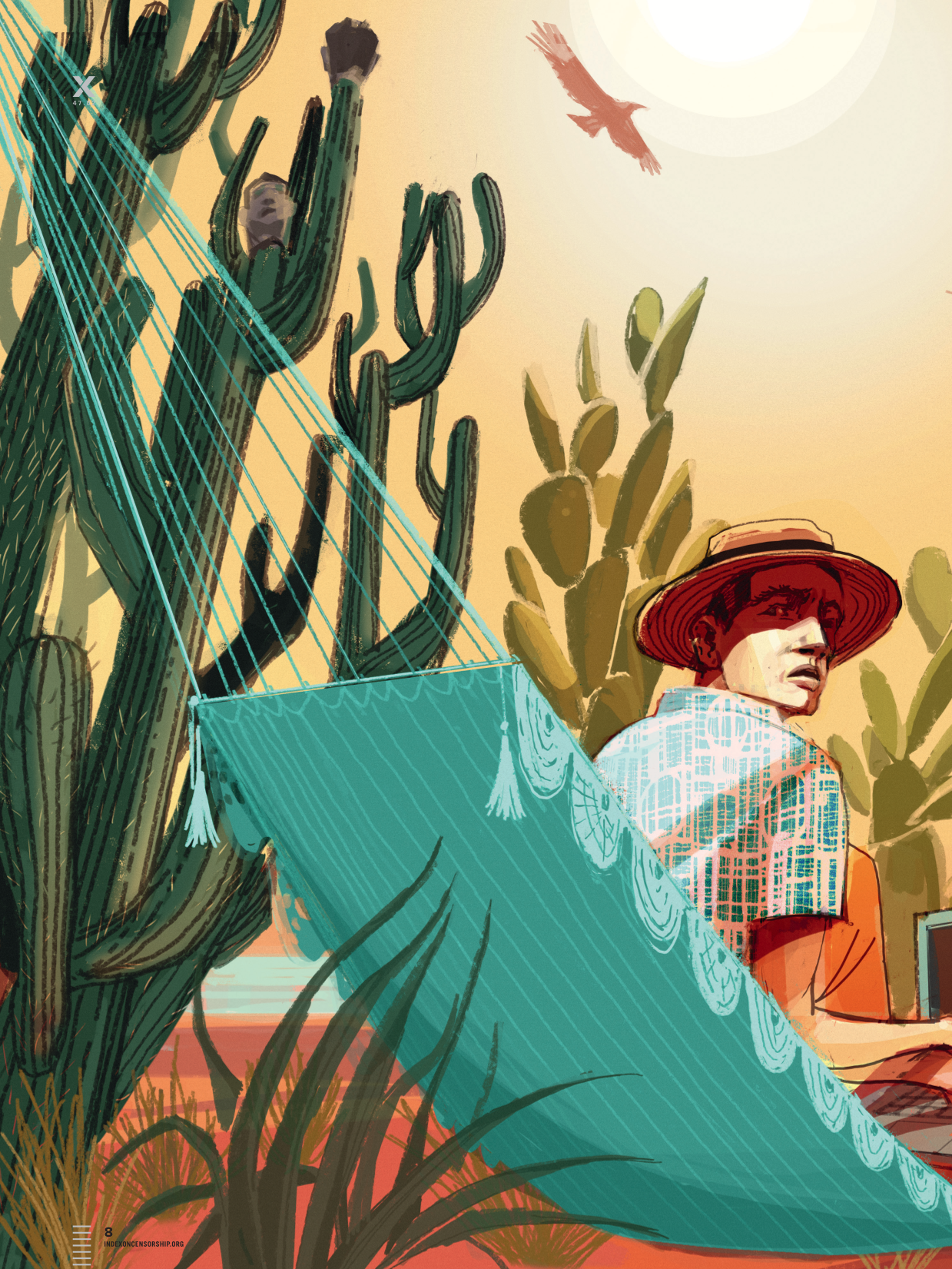
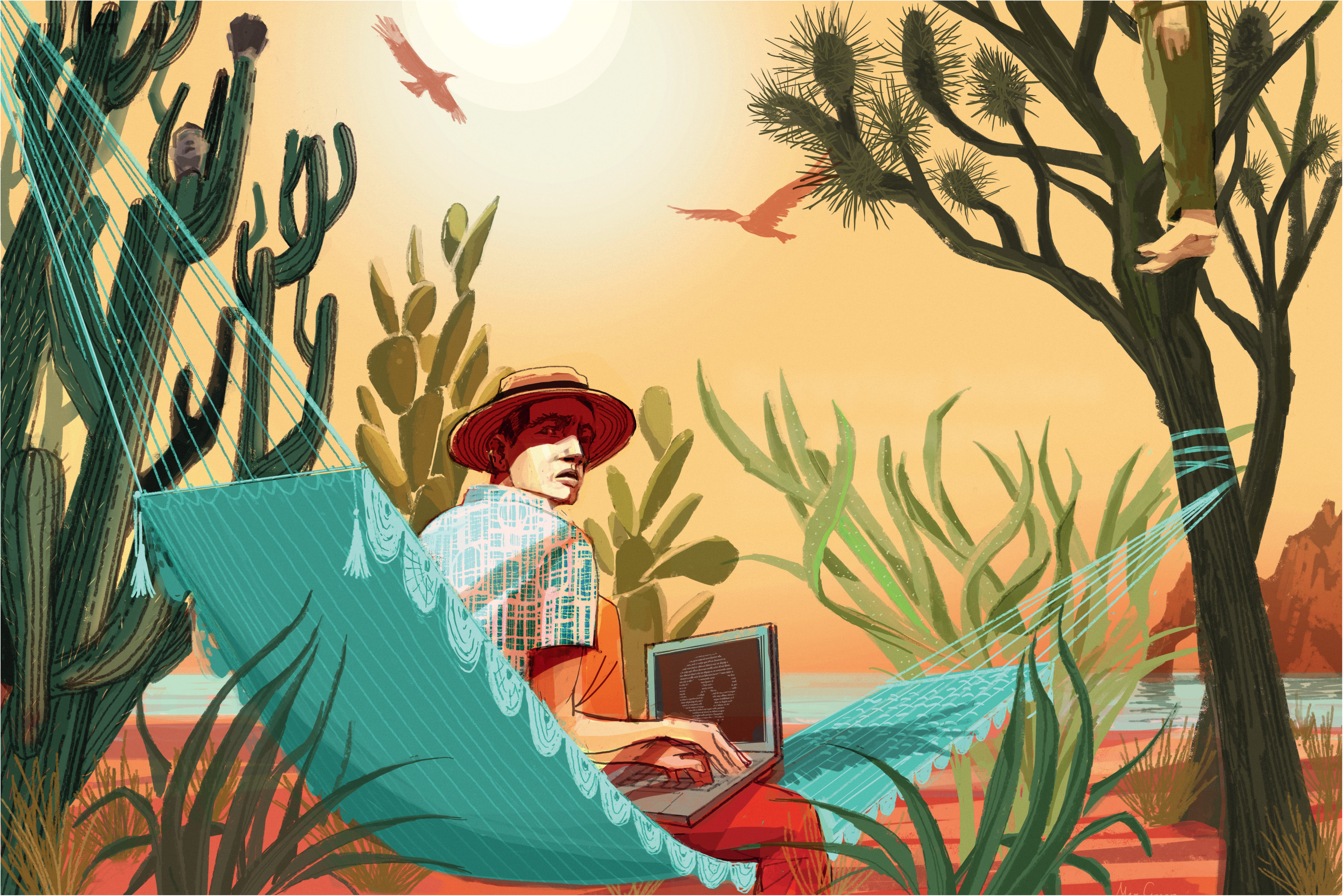
Tourists flock to beautiful Baja California Sur, but it is also at the forefront of Mexico’s drug wars. The government doesn’t want the holidaymakers to find out, writes
CREDIT: Alex Green
Gomez, 38, is not the only journalist to have faced violence in Baja California Sur, a state which recently suffered a sudden spike in drug cartel-related crime. Although tourists still flock to its pristine beaches and high-end hotels, the destination has come to highlight the fragile state of the free press in Mexico – a country which celebrates its own Freedom of Expression Day on 7 June.
“The security profile of Baja California Sur has changed enormously, but because it’s a tourist spot the government wants to hide that,” Gomez told Index. “I told the stories of innocent victims and the mothers of sons who had disappeared. These articles tarnish the destination, but that’s the reality.”
Gomez is currently living in a safe-house provided under Mexico’s Mechanism to Protect Human Rights Defenders and Journalists. Established in 2012, this programme offers panic buttons, bodyguards and safehouses to media and human rights workers.
But Gomez has not found relief from his anxieties.
His protected status is up for review every six months, so he constantly worries about being removed from the programme. He also suspects a politician was behind the numerous attempts on his life and fears he will never be safe in Mexico.
After leaving Baja California Sur, Gomez battled suicidal thoughts and a mental health specialist put him on medication.
“Every day I feel a little less human, living on a cocktail of psychiatric drugs,” Gomez said. “Surviving three attacks and then battling to survive day after day is not living at all. I want to live again.”
Gomez became a target because of his website, 911 Noticias, which traced the gunfights and kidnappings that rocked the region.
Long regarded as a safe haven from drug violence, Baja California Sur hosts a tourist industry that has become the main pillar of its economy. The jewel in its crown is the municipality of Los Cabos – where Gomez lived and worked – which is currently Mexico’s fourth most popular holiday spot for foreign visitors. At the southern-most point of the Baja California Peninsula, the municipality is a famed destination for whalewatching and fine-dining. Yet last year, there was an explosion of violence as competing criminal factions battled for control.
An edgy calm has returned since murders began to decline at the turn of the year, but the spike in violence still haunts the state. According to government data collected on Mexico’s National Public Security System, the death toll rose from 192 in 2016 to 560 last year, giving Baja California Sur the second-highest murder rate in Mexico behind the western state of Colima.
Sheltered in the region’s all-inclusive resorts, tourists have largely avoided the spiralling violence, although grisly scenes of bodies hanging from bridges and the fatal shooting of three men on a beach in Los Cabos last year have triggered alarm.
Conditions for journalists and human rights defenders also deteriorated as the drug war flared.
A fatal attack on the president of the state’s human rights commission last November drew the condemnation of the United Nations. Assailants in the state capital, La Paz, fired into a car carrying Silvestre de la Toba Camacho, killing him and his son and injuring his wife and daughter.
Between 2009 and 2016, Article 19, the international press freedom campaign group, documented five acts of aggression against journalists in Baja California Sur.
By last year, that figure had soared to 16 acts of aggression, including the murder of Gomez’s mentor Maximino Rodríguez, a crime reporter who was shot dead in La Paz in April 2017.
Rodríguez was one of 11 Mexican journalists press freedom watchdog Reporters Without Borders says were murdered in connection with their work last year, putting Mexico ahead of Syria as the most dangerous country for reporters in the world.
The perpetrators have enjoyed complete impunity in 37 of the 45 killings monitored by the Committee to Protect Journalists since 1994.
Last May, in the face of rising national and international criticism, Mexican President Enrique Peña Nieto promised to better protect the press. In June 2017, the government offered a reward of up to 1.5 million pesos ($78,769) for information on those responsible for attacks on several media workers, including Rodríguez.
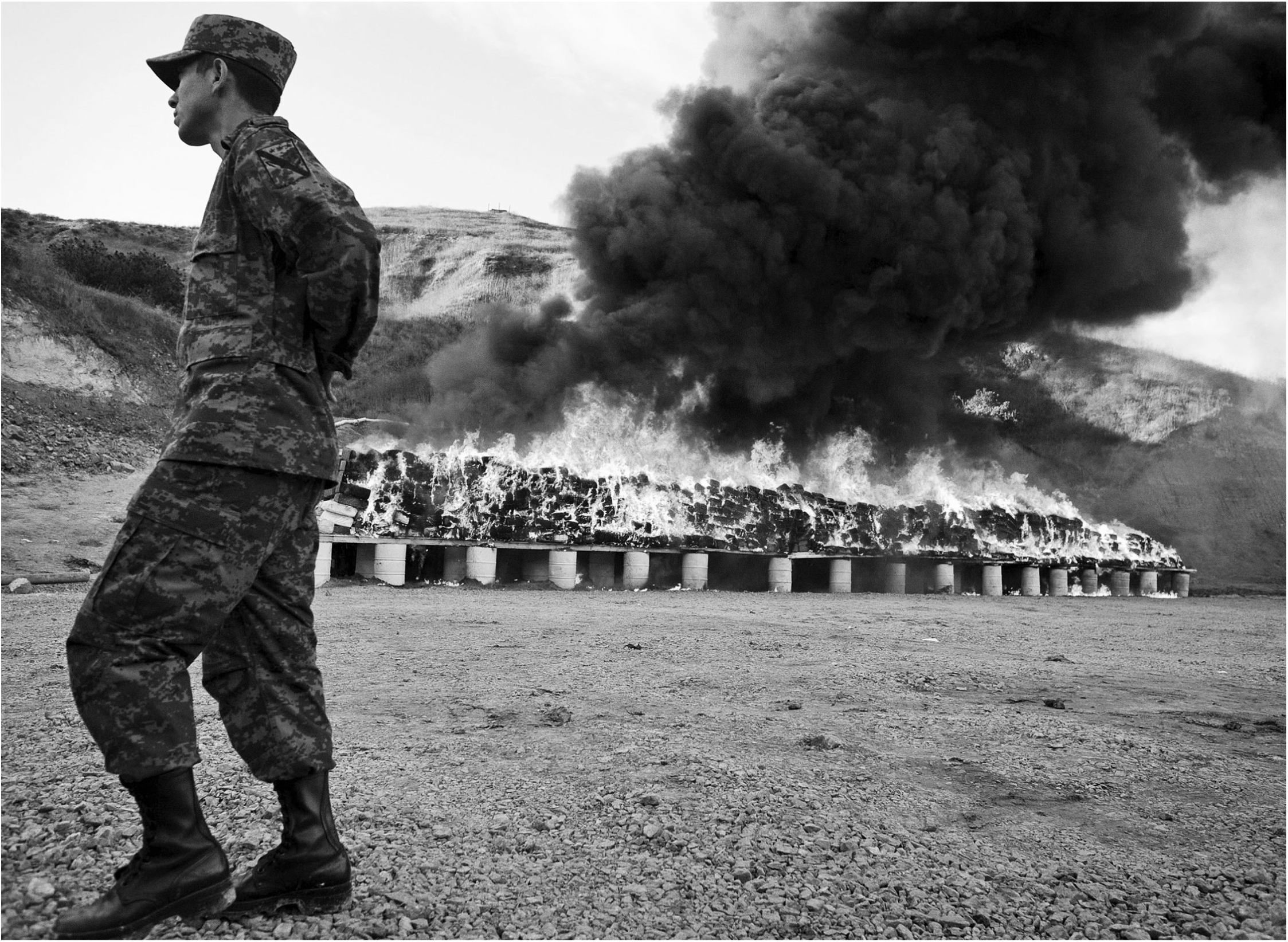
Marijuana being incinerated at a military base in Tijuana, Baja California Sur, 2010. Drug cartelrelated crime is currently on the rise
CREDIT: David Maung/Bloomberg/Getty
In total, five suspects have been detained for their roles in the murder.
“One aspect that has not been clarified is who ordered the killing?” said Cuauhtémoc Morgan, the editor of Colectivo Pericu, the website which employed Rodríguez. “As an outlet we are still not satisfied.”
However, Morgan welcomes the advances in the investigation and the state government’s recent adoption of a more vocal stance on attacks against the press.
The motto “the right to the freedom of expression” was added to the wall of the state congress in June 2017.
After police aggression towards reporter Arturo Corona in the city Ciudad Constitución this April, state attorney general Daniel de la Rosa met him to offer support.
The attorney general’s office did not respond to interview requests, but has previously declared in a statement that freedom of expression was “a basic tenet of the administration”.
Although this rhetoric is a welcome change, it stops a long way short of guaranteeing press safety.
In fact, authorities are the main culprit in attacks against the press in Mexico. Article 19 says public servants have been implicated in 48% of aggression against journalists since 2009.
“The government kills you if it can’t silence you. That is their solution,” said Rafael Silva, another reporter who fled the state for his life.
In November 2016, Silva, then 51, was standing at a petrol station in La Paz when he turned to see a man reaching for a gun. Shots rang out as he started to run and a passing bullet grazed his skull. Shaken and bloodied, the reporter managed to escape by running into a house and clambering over the roofs of nearby buildings.
It was the third attempt on Silva’s life in a campaign of terror that he blames on corrupt politicians with ties to organised crime.
“Many public officials are active, or have family members who are active, in drug trafficking organisations,” Silva said. “Few journalists are willing to explore that.”
Like Gomez, Silva is living under the government’s protection outside of Baja California Sur. He laments the press freedom crisis that has gripped his home state.
“Journalists turn up at a crime scene and write about the event,” he said. “They don’t investigate who it was or what really happened.”
According to Gladys Navarro, a reporter for El Universal newspaper, Rodríguez’s murder fostered a climate of fear among reporters in the state, with coverage of cartel-related crimes coming to a standstill for several weeks.
She adds that media self-censorship also has economic roots. Few private companies spend much on advertising in Baja California Sur, so local outlets are dependent on government advertising to survive.
“Authorities take advantage of this situation,” Navarro said. “They don’t just buy advertising space, they buy the publication’s editorial objectivity.”
Navarro notes that independent websites such as Colectivo Pericú have forged a path for critical voices, despite the threatening environment behind the state’s picture postcard image. She adds that attacks against journalists “violate society’s right to inform itself” and threaten democracy.
“In Baja California Sur, we need to know when a hurricane is coming and what category it is,” she said. “It’s equally important that we are informed about the authorities.”