




Abstract
As the UK approves new measures to tackle money laundering in the British Virgin Islands,
Few know the difficulties associated with the absence of these laws better than broadcast journalist Zan Lewis, who has been reporting there for more than 18 years.
“Getting information has always been difficult, particularly when you’re getting information from government. Government is known to sift certain information,” he said.
Cultural protocol for getting information on matters of governance and public record usually requires journalists to contact the government departments responsible for that subject. The reporter then talks to officers who are often wary of providing any information.
This unrelenting reluctance stems from a fear of government retaliation, which could mean losing their jobs. So, to fend off enquiring reporters, public servants occasionally use the phrase: “We’ve been instructed not to speak with the media.”
“There might be information that, probably, would be public information that nobody is trying to hide,” said Freeman Rodgers, editor of the BVI Beacon newspaper. “But, in the absence of a clear-cut system and a law saying ‘this is public’ and ‘this is not public’, then I think public officers tend to err on the side of caution and would usually prefer not to give you whatever information you might be after.”
Of course not all information is necessarily harmless, and without freedom of information it’s hard to know where corruption lies.
This country has already witnessed a scandal – albeit one away from government control – in which difficulty in accessing information was pivotal. These small Caribbean islands, with a population of roughly 30,000, were at the centre of the Panama Papers offshore tax haven revelations back in 2016. Last month, it was announced that British overseas territories, including the BVI, would be forced to reveal ownership of companies based there after the UK approved new measures to tackle money-laundering and corruption. The move will force them to make public the owners of all companies registered there by the end of 2020.
There have also been personal instances where contacting government departments for records resulted in passing the proverbial buck. On one occasion I was directed to the minister responsible for the subject. The minister was keen to redirect me to the permanent secretary in the ministry, who then directed me to a sub-departmental head. Before long, and without making much headway, I was rerouted back to the original minister.
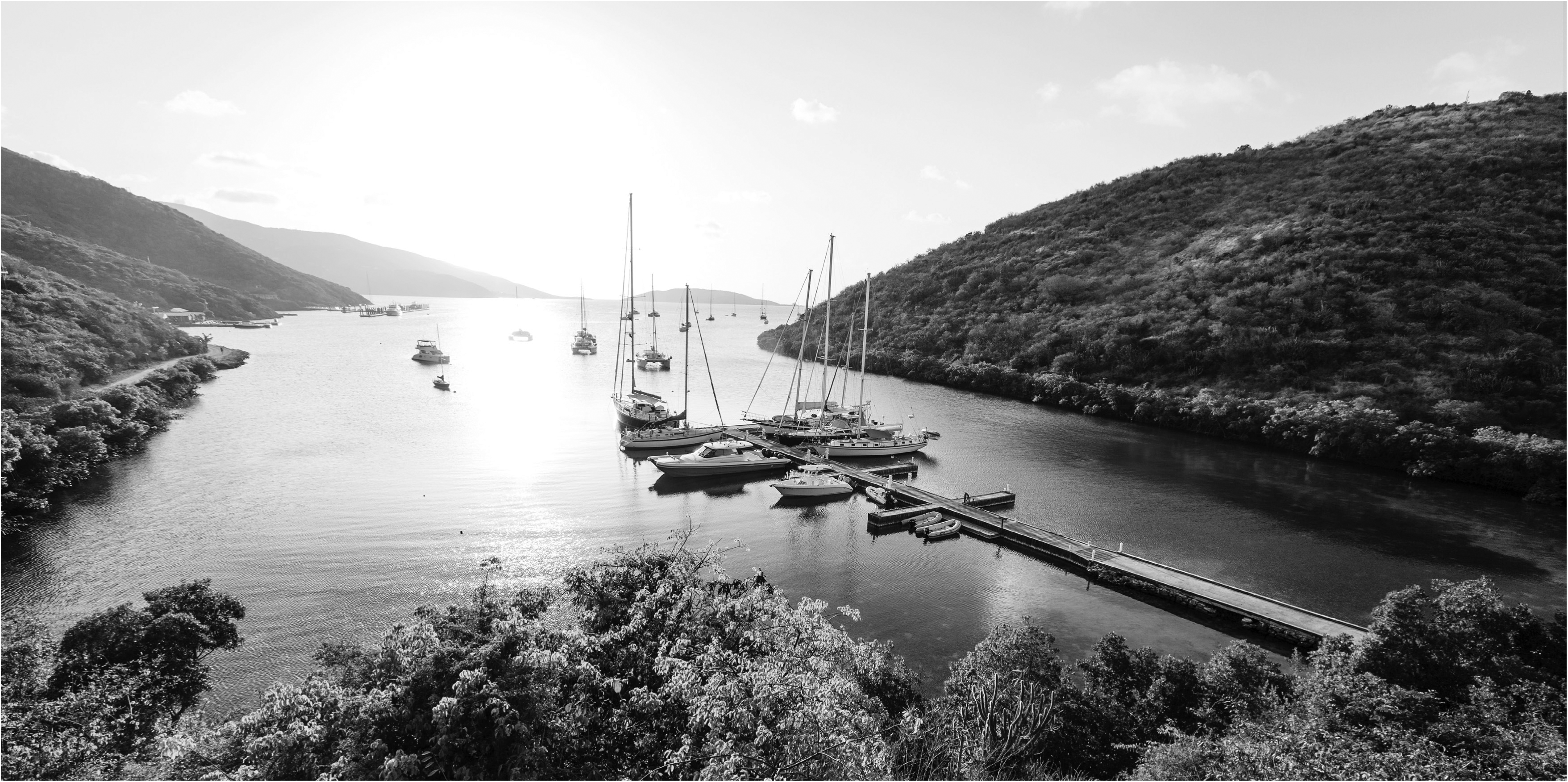
Yachts in a bay in the island of Virgin Gorda, British Virgin Islands
CREDIT: Alexey Stiop/Picfair
With this way of life, investigating operations of government here in the British Virgin Islands has sometimes resulted in superficial reporting. Practising in what can be described as an unfriendly media environment BVI journalists rely on information from whistleblowers who often insist on speaking anonymously. This has caught the attention of the Premier of the Virgin Islands, Daniel Orlando Smith, who noted increased occurrences of whistleblowing and has claimed the territory does have “freedom of information”.
“Even if I don’t put a document out there it gets out there, so that is freedom of information,” he argued, while speaking at a media conference earlier this year.
Despite the absence of these fundamental laws, and despite the associated challenges, Freeman and Lewis have both reported that the ease of accessing information on these islands has improved over the years. They attributed this improvement to the increase in calls for freedom of information legislation.
“When I first got here 12 years ago, we always made this call for it. For a while, it seemed like we were just asking for it and nobody was really listening, but now I think people are starting to listen and people are starting to understand the importance of it and I think that has helped make information more accessible,” said Freeman, who migrated from the USA to practise in the BVI.
Over the years, calls for the legislation have come from former complaints commissioner the late Elton Georges and former governor John Duncan, among others.
Recently appointed BVI Governor Augustus Jaspert has taken on the mantle to have the law implemented. While delivering his Speech from the Throne, a tradition where the government sets out its upcoming implementing these laws, the current government faces numerous criticisms about lack of transparency and accountability.
These criticisms are not without merit, given that the press – and, by extension, the public – has been unable to exhaustively scrutinise the operations of the BVI government for roughly a decade. Up to 2017, the government had not produced financial audits or reports for some 10 years and is now in the process of drafting retroactive reports.
Criticisms have even come from within the Smith administration and have subsequently caused a rift between members in government. According to a March 2018 BVI News agenda, in the BVI parliament in March, Jaspert pledged to have a Freedom of Information Bill introduced in the territory’s House of Assembly before the end of this year.
“This piece of legislation will allow for increased transparency and accountability of public affairs,” he said. “The bill includes recommendations for the establishment of a Freedom of Information Unit to provide the public with the appropriate administrative mechanism to make and receive requests.”
However, this is not the first time such a bill has been promised. According to the BVI Beacon archives, promises to implement this law date as far back as 2004.
The paper reported that, in 2004, a Law Reform Commission had submitted a report to the BVI government recommending freedom of information legislation.
Since that time, two administrations have been in power, but neither appears to have made any headway in implementing the law. And while the BVI still lags behind in online report, members within the government claimed the BVI premier had initiated certain activities in government ministries and departments “without the knowledge and consent of ministers who constitutionally hold responsibility for those subjects”.
The government has also faced criticism from the parliamentary opposition. Other Caribbean nations such as St Kitts and Nevis, Jamaica, Guyana, Trinidad and Tobago and the Dominican Republic have already implemented freedom of information laws.
With what can be described as glaring examples of questionable governance in the BVI, the calls for freedom of information legislation continue to grow. This increase is welcomed among the small fraternity of journalists who argue that freedom of information promotes accountability, transparency and good governance.