




Abstract

The historians of the 21st century have to sift through social media to verify their sources, but it can be complicated by attempts to spin the facts, says
CREDIT: Klaus Meinhardt/Ikon
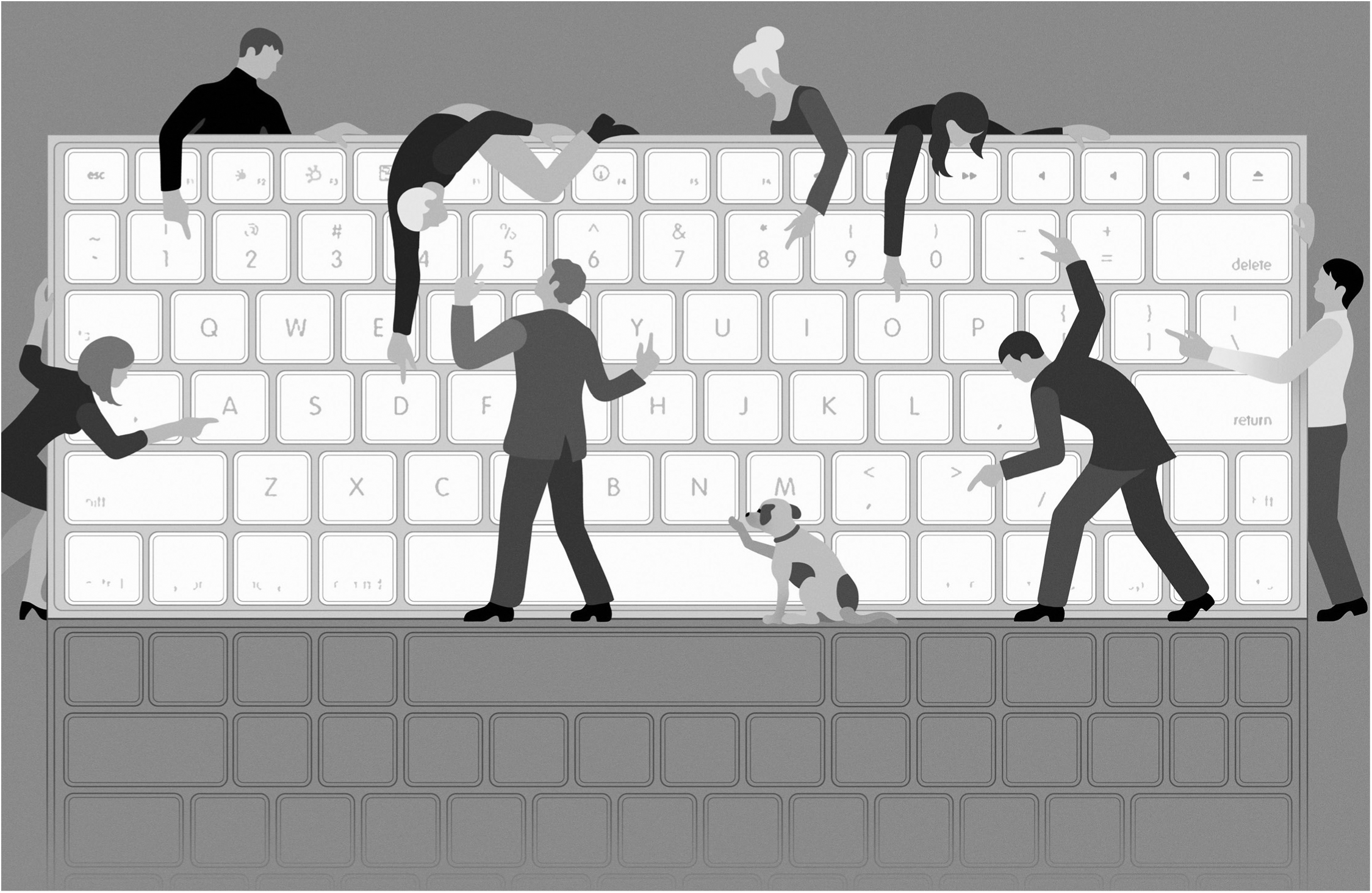
The rise of social media means that analysts and historians trying to understand the outcomes of conflict now have access to more primary sources, on all sides, than ever before.
The quote about winners being the ones to write history – frequently attributed to Winston Churchill, almost certainly erroneously – no longer rings true. Social media-users are trying to write the rough draft of history all day, every day.
In today’s world, people get their news and analysis of conflicts in real-time from Twitter, blogs and Facebook Live. This coverage of conflicts – a far cry from the days of delayed postal despatches from war correspondents in far-flung corners of the world – means that public opinion can be influenced on a global scale almost immediately. In the same way that 24-hour TV news influenced opinions of the Iraq War, social media is also affecting how conflicts are viewed. What is considered history may be highly dependent on what media sources are used, and those that use multiple sources for their news are likely to get a truer version of the facts.
The problem for historians analysing and trying to source the “truth” at arm’s length is that users of social media are likely to have their beliefs about an event, a battle or a change of government underpinned by seeing only similar content that supports their view from within the social-media bubble.
“Whether a claim (either substantiated or not) is accepted by an individual is strongly influenced by social norms and by the claim’s coherence with the individual’s belief system – ie, confirmation bias,” wrote Michela Del Vicario in one study, published by the National Academy of Sciences of the United States of America.
Knowing this, actors in conflicts are pressing social media into service as propaganda tools.
Peter Hough, associate professor of international relations at the University of Middlesex, said that social media is being widely used by governments to put their own spin on events, leaving historians to try to sort the spin from the reality.
“As an example, the Russian government made extensive use of Twitter to deny their military presence in Ukraine and portray the government in Kiev as neo-Nazis,” he said.
Damian Radcliffe, professor of journalism at the University of Oregon and a fellow of the Tow Center for Digital Journalism at Columbia University, said: “Separating fact from fiction, intent to deceive versus human error, will only become more important as social news consumption – and news gathering – continues to grow.”
The ability of social media to influence opinion and enable history to be written “on the fly” means that regimes are deliberately blocking, either temporarily or permanently, distribution networks.
Turkish president Recep Tayyip Erdogan ordered the shutdown of Twitter, Facebook, WhatsApp and YouTube in Turkey in the aftermath of the unrest there in 2016, for example. The BBC and other media now routinely solicit stories via chat apps and Twitter and the eyewitness accounts gathered through these channels regularly appear in their output.
What has remained the same is that revisionism always takes place through the filter of the mores of the time when the later history is written.
And there are still concerns about whose version of history you should believe, said Hough.
“Social media helps good, independent historians by helping them expose falsehoods and establish the facts [but] it gives an unprecedented platform for poor historians peddling post-truth fantasies and conspiracy theories.”
The challenge for historians is that they are now required to make their analysis faster than ever before (often on news channels) and in full view of the public, who have already used social media as their news channel.
So it is no surprise that states and other combatants are keen to exert their influence over the historians attempting to record events of today and yesterday.
To paraphrase US jazz poet Gil Scott Heron, the revolution will not be televised, but will be live-tweeted, snapped and posted.