




Abstract

A century after an independent Armenia was born,
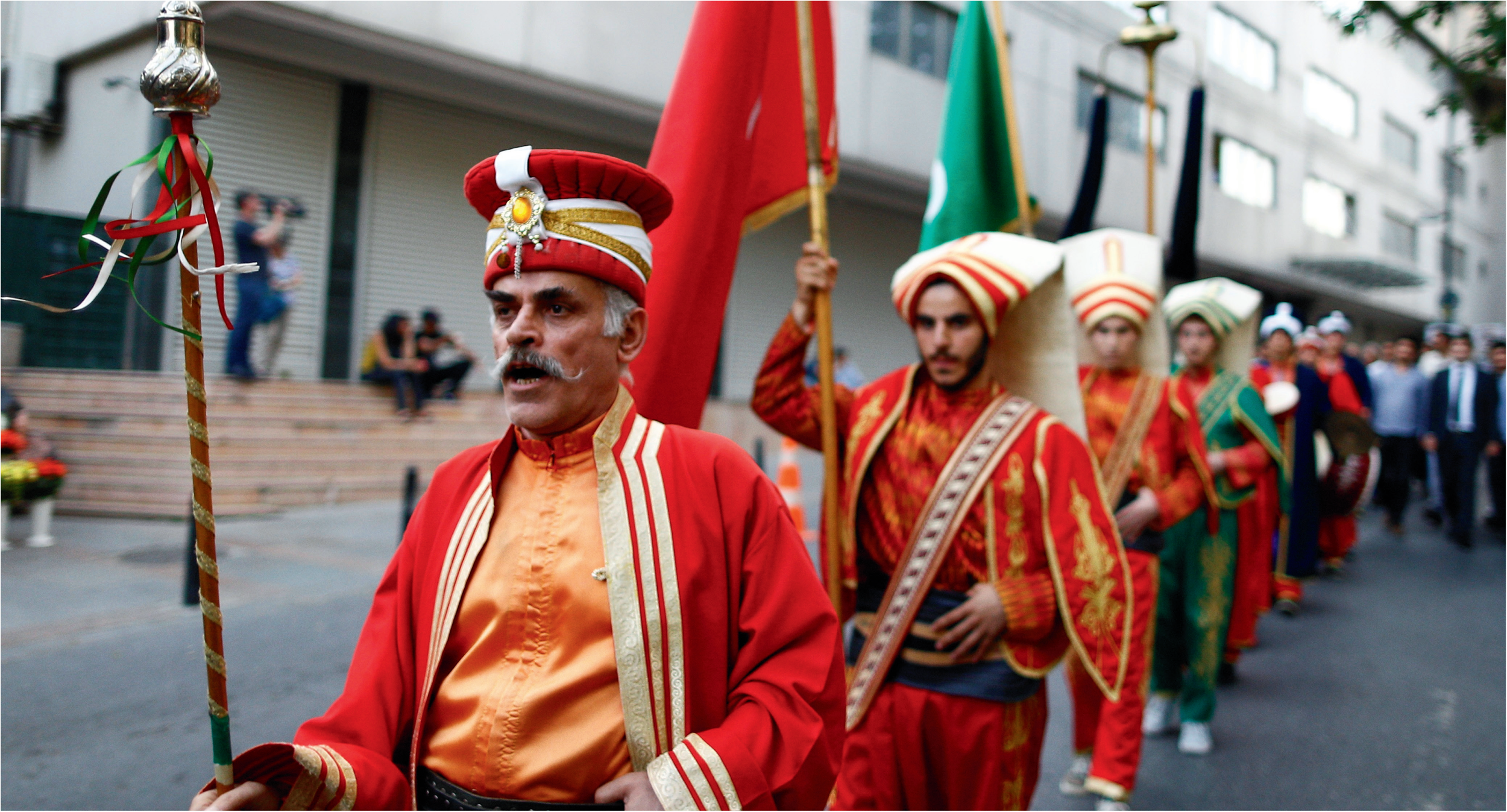
A traditional Ottoman band protest the approval of a resolution by Germany’s parliament to call the 1915 massacre of Armenians a “genocide”, Istanbul 2016
CREDIT: Osman Orsal/Reuters
The word “genocide”, when applied to the expulsion and killing of Armenians that took place between 1915 and 1917, remains contested, as do the numbers of those who died.
Meanwhile, a new bill, passed by Turkey’s constitutional committee on 21 July 2017, has even gone so far as banning any mention of this episode by parliamentarians. Those who talk of it in parliament can now have deductions made from their salaries and can be barred from attending parliamentary sessions.
This year is a particularly significant year for Turkey-Armenia ties. A century ago, in 1918, Armenians formed a sovereign state for the first time since 1375. The First Republic of Armenia, as it is now known, took land away from the Ottoman Empire and was home to more than one million people. It lasted for just a few years. In 1922, Armenia was incorporated into the former Soviet Union and it lost independence until 1991. In April, Turkey’s president, Recep Tayyip Erdogan, will likely send a message to Turkish Armenians to “respectfully commemorate the Ottoman Armenians who died under the tough conditions of World War I and offer my condolences to their grandchildren”, as he has been doing since 2014.
Armenians and governments of more than 29 countries label the deaths of Armenians during this period as genocide. The Turkish state calls it tehcir, or forced displacement. This has resulted in a lot of animosity between both sides. In the past, many Armenian nationalists portrayed Ottoman Turks as culpable and barbaric, while Turkish nationalists have accused Armenians of lying about their extermination, some saying they deserved being massacred because of their disloyalty to the Ottoman Empire. (Armenians were accused of sympathising with invading Russian forces during the war when Turkey was allied with Germany.)
This polarisation was challenged by the intellectual Hrant Dink. In columns for Agos, the newspaper he edited for years – the only one published in both Turkish and Armenian at the time – he pointed to a third, humanistic way of dealing with past atrocities.
“I challenge the accepted version of history because I do not write about things in black and white. People here are used to black and white; that’s why they are astonished that there are other shades, too,” he said.
While Dink used the word “genocide”, he acknowledged that it was politically loaded and called for conciliation between the two sides, effectively rewriting the history of Turkish-Armenian animosities.
“In the past, Armenians have trusted the West to save them from the oppression they suffered at the hands of Ottoman officials,” Dink said in 2006. “But they were mistaken. Foreigners came, made their own calculations and left brothers and sisters at each other’s throats.”
Dink wanted Turks and Armenians to come together to figure out their histories, to ask why, how and what, rather than point fingers.
His willingness to bridge two cultures was brutally punished in January 2007, when a 17-year-old nationalist shot him in the back in broad daylight in central Istanbul.
Dink’s assassination and the outrage it produced sparked a massive interest in the Armenian question among Turkish readers.
In 2010, Tuba Çandar, a seasoned journalist and editor, wrote his biography, Hrant, a 700-page tome that became a bestseller.
“We can say that it is easier for historians and journalists to write about the Armenian issue in today’s Turkey,” Çandar told Index. “Turkish intellectuals began discussing the Armenian issue in the second half of the 1990s. The process began with Vahakn Dadrian’s The History of the Armenian Genocide, a book published by Belge Publishing.”
Turkish censors reacted swiftly to this attempt at uncovering a hidden history. Dadrian’s book was confiscated, Belge Publishing was bombed and the publisher was put on trial. But the book reached readers through pirated editions and broke a Turkish taboo.
“The two-decades-long struggle to openly discuss the issue, and the murder of Hrant Dink, made the Armenian genocide discussable among intellectuals in Turkey,” Çandar said. She considers Dink’s funeral in Istanbul in 2007 – attended by 250,000 people who cried “We are all Armenians, we are all Hrant!” – as a watershed moment. “The word ‘Armenian’ had been used pejoratively in Turkey until Dink’s murder. But not since.”
This new atmosphere was strengthened in 2008 by a petition, signed by 30,000 people, which apologised for the treatment of Ottoman Armenians. The international Hrant Dink Association was formed and numerous high-profile intellectuals including Noam Chomsky and Naomi Klein visited Istanbul to deliver annual Dink lectures.
In their hands, Dink’s legacy of reconsidering history and its links to politics survived.
Despite all public marches being banned in Turkey in the aftermath of the attempted July 2016 coup, on 19 January this year, I walked with thousands in central Istanbul to commemorate the 11th anniversary of Dink’s assassination. The government did nothing to stop the march.
But Çandar is pessimistic about the future. She thinks the mass purges of Turkish scholars in the aftermath of the 2016 coup attempt may result in the return of the official state line about the Armenian issue – that Armenians had it coming – and the new parliamentary bill is another sign that the recent openness about Armenia might be nearing an end. “The government now views Kurds, rather than Armenians, as the inner threat, but that does not mean the Armenian issue will be freely debated in public in the future,” she said.
Freedoms in the Turkish publishing world remain fragile. When, in 2007, an Istanbul publisher released a Turkish version of Robert Fisk’s The Great War for Civilisation: The Conquest of the Middle East, there were fears of prosecution under Article 301 of the Turkish penal code that made “insulting Turkishness” a crime. These fears proved unfounded. Still, publishers feel they need to be careful about the Armenian issue, and Ragıp Zarakolu, a writer, publisher and activist who has been targeted in Turkey for publishing books on minority and human rights, is aware of the remaining restrictions.
“Nowadays, it is easier to study and publish on the issue,” he told Index. “Article 301 is no longer used, but it remains in the penal code and is the major legal threat on the issue.”
In 1987, Zarakolu won a court case and successfully defended his right to put out a book on Ottoman Armenians. His win paved the way for other books on the subject.
“With Belge Publishing, we expanded the limits of the debate about the Armenian genocide through civil disobedience,” he said. The publisher bypassed bans by distributing books in the form of photocopies and within a small but influential readership Belge books reached their audience.
“We were influential in turning taboos into subjects that the public could analyse and discuss,” Zarakolu added. “But we paid the price of that with bans and trials.”
Because of social pressures, Zarakolu believes books that explore the issue bravely sometimes can’t find space in bookstores.
“In the 1990s, young people had little knowledge about the issue. Nowadays, they are largely under the influence of the official narrative about heinous Armenians betraying the nation. But among intellectuals, refusal to acknowledge the issue is no longer an option.”