



Abstract

Attacks on journalists are escalating in areas formerly seen as safe, including the USA and the European Union, says
Verified through a number of correspondents, partners and other sources across 42 countries, reports featured assault or injury, criminal charges and lawsuits, as well as psychological abuse and sexual harassment.
Six journalists were killed as a result of their reporting in 2017, including Daphne Caruana Galizia, a Maltese journalist known for exposing government corruption.
Her son Matthew called for other journalists to document threats made against them at the Free European Media conference in Gdansk, Poland, on 15 February 2018, encouraging them to file violations on the MMF platform.
Murdered outside her home on 16 October, when a bomb exploded under her car, Galizia’s work linked many of Malta’s high-ranking officials to various corruption scandals, making her the target of a number of lawsuits and threats before her death.
Also speaking at the conference was Index CEO Jodie Ginsberg. She said the mapping project was highlighted by other speakers and organisations during the conference for its importance in helping journalists.
Co-funded by the European Commission and undertaken with the European Federation of Journalists, the MMF platform has been identifying threats, violations and limitations against the media throughout Europe since 2014.
“When we started the project, it was a pilot and we could not predict, for example, that Turkey would become the place with the most journalists in jail,” said Ginsberg. “The focus on Mapping Media Freedom will still be documenting threats; what we want to make sure is that we’re doing it in a way in which we can deal with the increasing number of things we report.
“Because we never expected this volume of reports, we’re having to make adjustments to make sure we can keep up with the amount of information that’s being provided to us and keep making sure that we maintain the same degree of quality and verification.”
Ginsberg also travelled to the USA on the first mission to the country by international press freedom groups, along with Index’s Sean Gallagher.
Six organisations, including Article 19 and Reporters Without Borders, visited Houston, Texas, and Washington DC to speak to journalists about the changing nature of press freedom under the Donald Trump administration.
Journalist April Ryan, who says she received death threats over reporting of the US president, appears on SiriusXM radio
CREDIT: Larry French/Getty
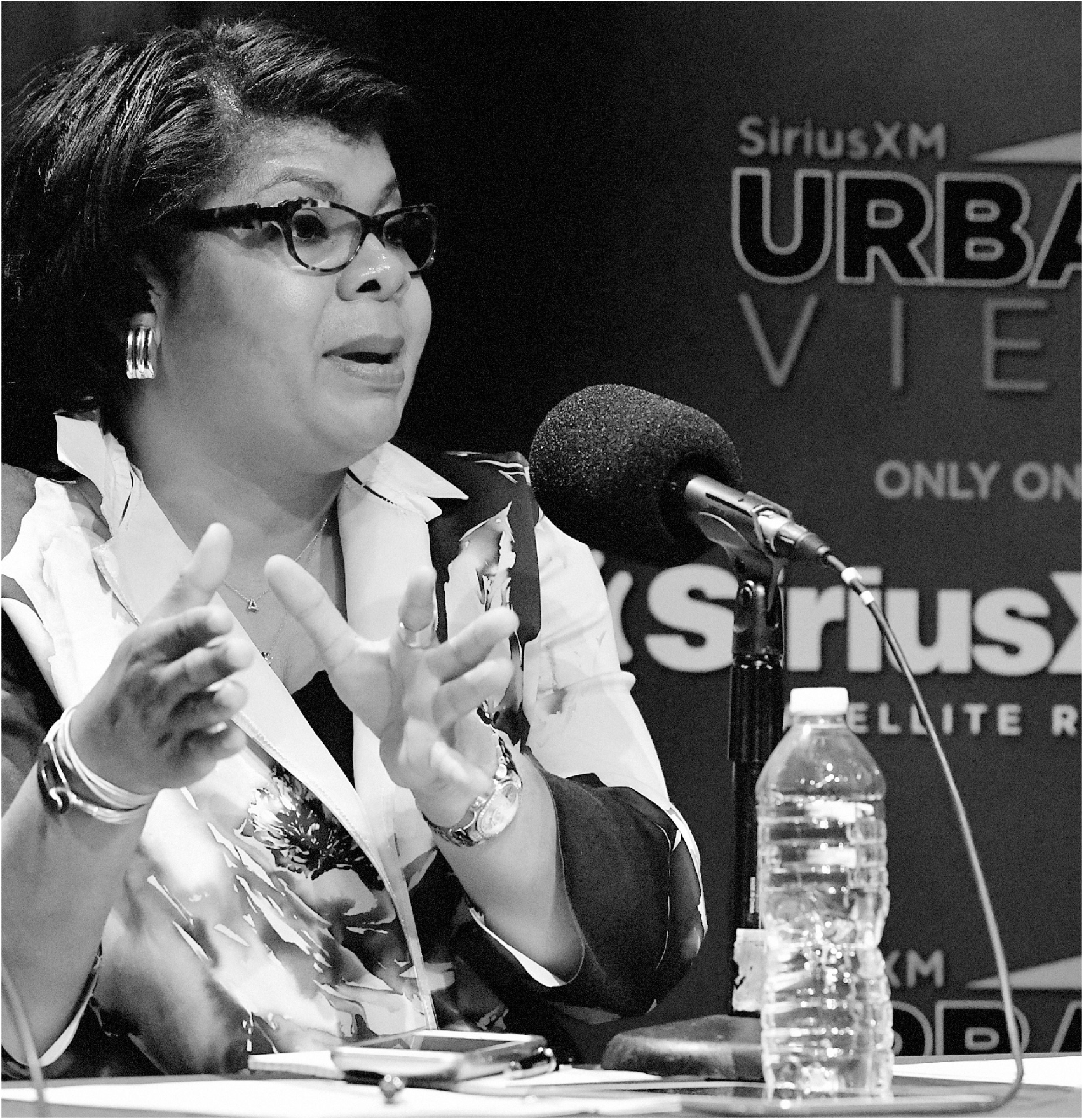
“I think it’s clear that journalists are under a lot of pressure, and what’s worrying is how normal threats against journalists have become,” said Ginsberg. “Journalists talk about receiving death threats as if that was a normal part of their everyday life, and that really, really worried me.”
American Urban Radio Networks White House correspondent April Ryan is one journalist who has received threats as a result of her reporting on the US presidency.
Speaking on a panel in Washington, Ryan told the crowd she and other journalists had the police on speed dial as a result.
“It’s very real for some of us,” she said. “For me, it’s real. I’ve been getting death threats for asking a question, a logical question, as the press will do, and we have the right to do under the First Amendment. This is our job, we call out and ask questions.
“I’m making sure I am secure. The FBI is on speed-dial, so is the Secret Service and local police department.”
Statistics from Freedom House reveal press freedom in the USA declined in the last year, reaching its lowest point in 13 years. The Committee to Protect Journalists’ US Press Freedom Tracker found that at least 44 physical attacks took place against journalists in 2017.
In awards news, the nominees for the 2018 Index on Censorship Freedom of Expression Awards have been announced.
The 16 shortlisted nominees were chosen from more than 400 crowdsourced nominations for their work in their respective fields, covering the arts, campaigning, journalism and digital activism categories.

The awards highlight those who work against heavy censorship, with many facing regular death threats and criminal prosecutions. Previous winners include exiled Chinese artist Rebel Pepper, Syrian journalist Zaina Erhaim and Yemeni artist Murad Subay.
One of the nominations in the campaigning category this year is Team 29, an association of lawyers defending those whose free speech rights are threatened in Russia.
Ivan Pavlov, lawyer and head of Team 29, told Index that it was “a great honour for the whole Team 29 to be nominated for the Freedom of Expression Awards”, adding that it had come at a really important time as Russia was tightening its grip on civil society.
“Several years ago, it seemed not so dangerous to be a human rights defender or activist in Russia; we just didn’t know about a lot of cases of violence towards activists before. However, today, we hear more and more news about torture by the police, people vanishing, or security services’ secret prisons,” he said.
“The more people know about our work, the better protected we become and the more chance we have to achieve our objectives, and to help people whose rights to information access are abused in Russia. A nomination for an international award is not only something to be proud of, but also a significant piece of support for our work.”
Another nominee, in the digital activism category, is Mèdia.cat, a Catalan website devoted to highlighting media freedom violations and investigating under-reported stories. Ferran Casas, president of Grup de Periodistes Ramon Barnils (the non-profit organisation of journalists that promotes Mèdia.cat), said: “Freedom of expression is at stake in Catalonia and the Spanish state. Journalists have suffered physical aggressions, threats and other restrictions to their jobs. Some artists have been censored, and even retweeting a critical message can get you accused.
“We need to fight against this situation, unique in western Europe, and this nomination is a great encouragement to do so.”
The winners will be announced on 19 April at an event in central London. Winners receive a full year of support from Index, focusing on promoting their work, building partnerships and receiving expert support in areas such as personal safety, mental health and legal protection.