




Abstract

Not since World War I has the First Amendment been under as much pressure as it is now,
Leading First Amendment lawyer Floyd Abrams, who defended The New York Times in the Pentagon Papers case (1971), expressed concerns. “We might not be at ‘Defcon1’ yet,” he joked, “but these are certainly very trying times.”
He believes the First Amendment is being tested in a way it hasn’t been since World War I. Designed to protect against overreaching government, the First Amendment was added to the US Constitution in 1791 and was challenged at several points in its early history, notably by the Sedition Act of 1798, a repressive, anti-free press move by President John Adams, and the suspension of habeas corpus by President Abraham Lincoln a number of times during the Civil War.
“But World War I changed the perception of the First Amendment when a number of US critics of war who gave speeches were jailed and their cases went to the Supreme Court,” said Abrams.
Discussion started among the courts, the public and government, who wondered how far the First Amendment went.
“What is unique in American history, however, and what we haven’t had until now, is the current effort to discredit the press as a whole and to portray [it] as un-American,” he added.
But Trump’s attack on the press is just one facet of an increasingly complex picture.
In 2017, First Amendment free speech has seen some of its greatest challenges at college campuses and on public streets. College students across the USA have demonstrated against speakers they object to, effectively shutting down debate in some cases. The Charlottesville white supremacist demonstrations in August, in which a counter-protester was deliberately mown down by a car and killed, left a scar that threatened to further polarise US society.
But the real battle lines have been drawn on the internet. The alt-right and associated groups have been rallying support in a way not seen to this extent before. In a backlash following the incidents in Charlottesville, white supremacists, neo-Nazis and the alt-right found themselves increasingly cut off from the social media platforms they had been using. Google and GoDaddy both banned white-supremacist website Daily Stormer. In response, other digital homes for these groups, such as the alt-right’s Gab (started in August), have been springing up. Writing in her article The Internet of Hate for Slate magazine this summer, journalist April Glaser looked at a proposed Free Speech Tech Alliance, which would build its own internet where alt-right sites could thrive.
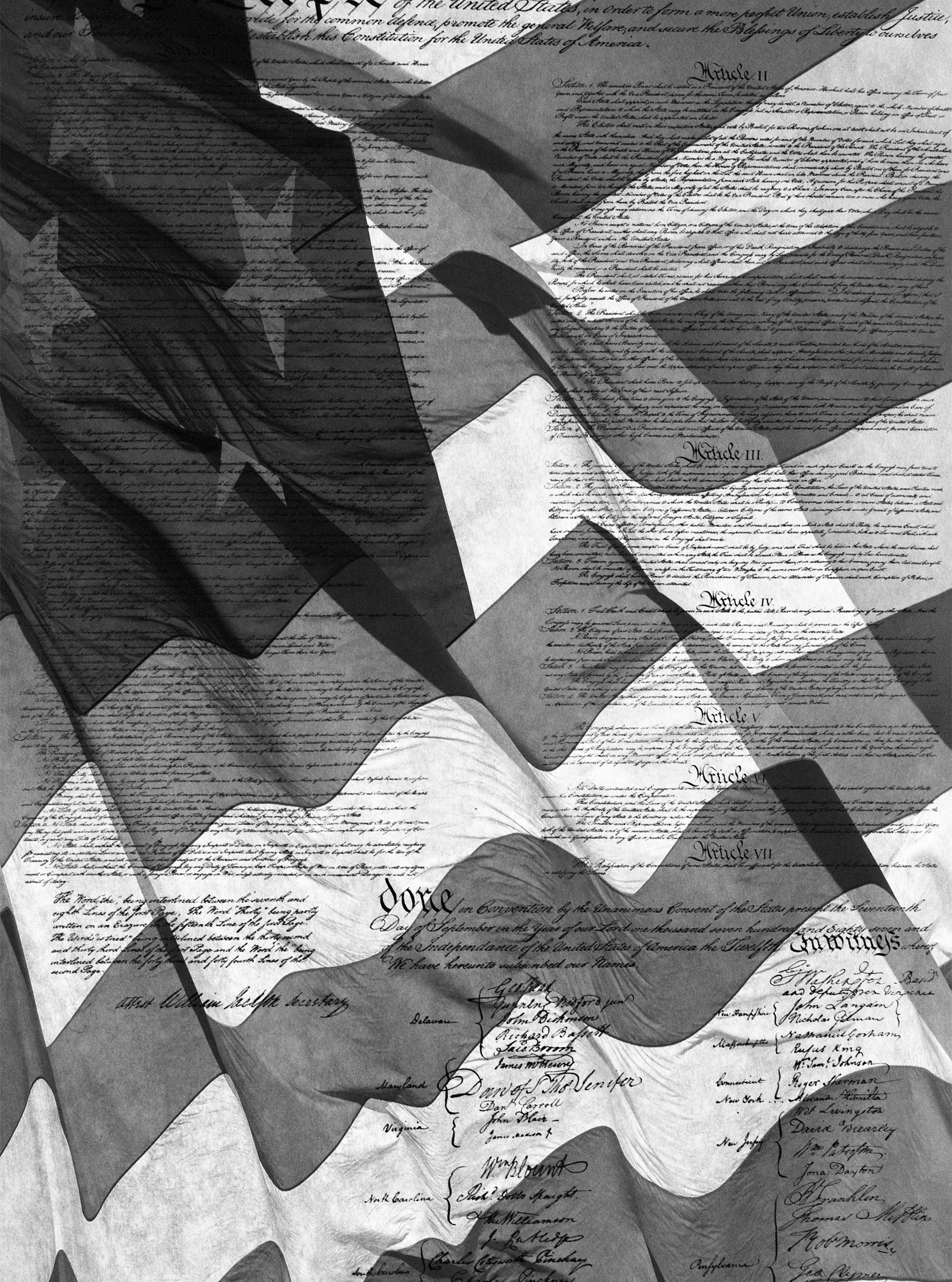
Collage of US flag and the US Constitution
CREDIT: Andrea Izzotti/Picfair
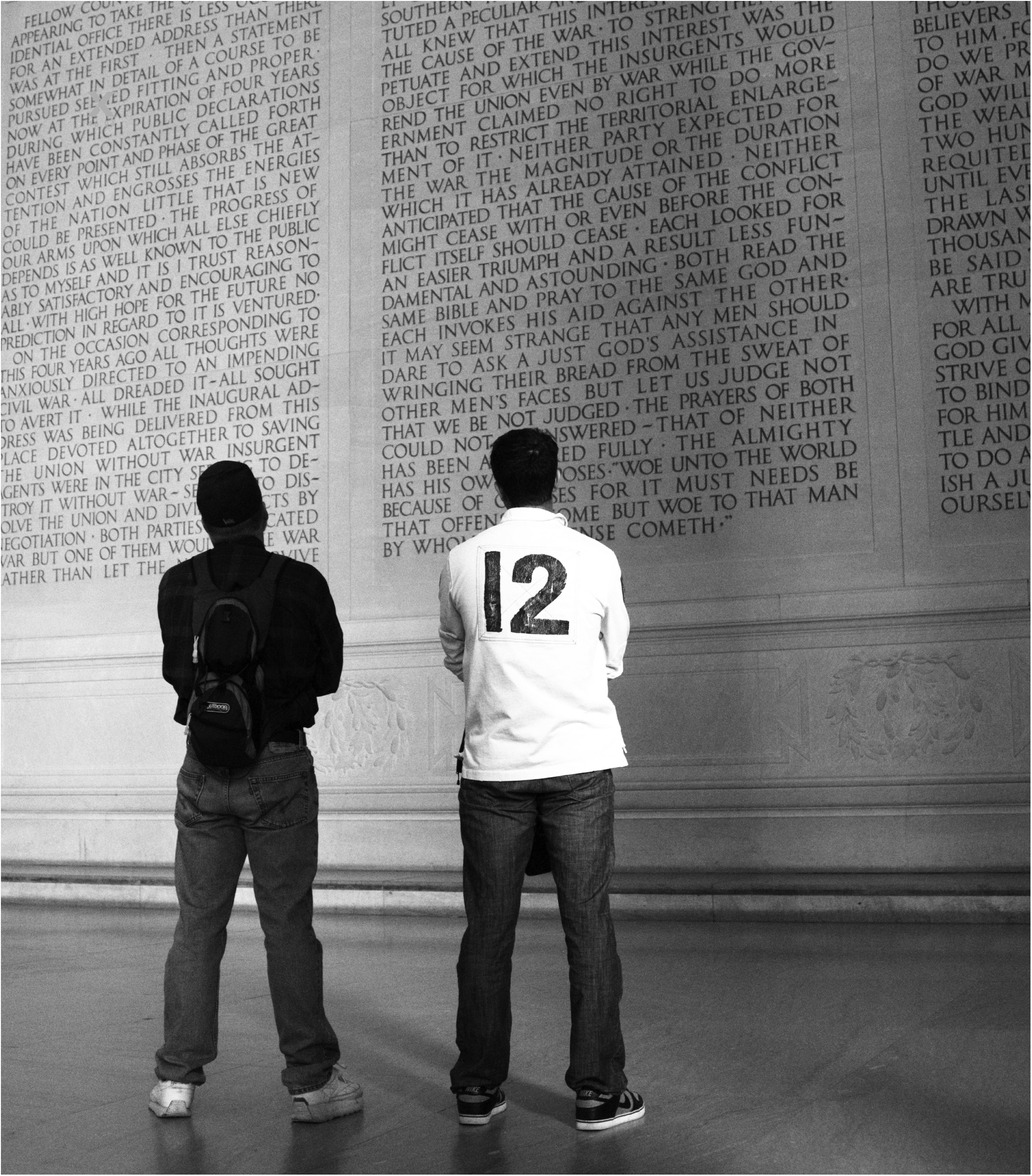
Two people read the US Constitution at the Lincoln Memorial, Washington DC
CREDIT: James Gritz/Picfair
“This year, emboldened by the Trump presidency,” wrote Glaser, “they’ve [communities of alt-right neo-Nazis and white nationalists] made a show of spilling onto the streets, too, making it impossible to pretend that they were ever merely constrained to an online sandbox. It’s this real-world presence that is provoking louder calls for the major internet companies to do something about it. For better or worse, they are.”
Is the “weaponising” of free speech damaging the First Amendment? Susan McGregor, assistant director of the Tow Center for Digital Journalism at Columbia Journalism School, said: “There is no question that this year has seen an increase in polarising language and attitudes. We already know there were very intentional campaigns to sow discord and create [negative] conversations from authors both inside and outside the US. The fracturing of conversation, and the echo chamber effect of forcing people of like mind to retreat to their own corners, is a real problem for the First Amendment.”
Abrams agrees. “People are limiting themselves to news sources with which they agree and it’s become easy and commonplace to do so. We may have a less educated public than some years ago because of this,” he said. “On one hand, what could be more First Amendment successful than more ways to speak and access free speech than the internet? But on the other hand, it was not foreseen that we would move more and more towards a situation where the ability of users to shape the information leads to more closed minds.”
McGregor said: “No one complained that the National Enquirer ran fake news because you recognised, by a number of visual signals [including photos, headlines, style], that it was a certain kind of publication. In newspapers we saw facts and bylines which helped us identify reputable sources. We don’t get most of these visual cues on social media because of the uniformity of presentation, and that puts a lot of extra burden on the information consumer and judgment can become muddled.”
Ujala Sehgal, communications director of the Knight First Amendment Institute at Columbia University, agrees that new technology is presenting new challenges to the First Amendment. The institute was set up in 2016, before Trump was elected, to challenge threats to First Amendment freedoms of speech and the press in the digital age, through litigation, research and public education.
“With the growth of new technologies, many more threats to the First Amendment have come to light: new types of censorship and su rveillance, private companies like Facebook and Twitter influencing the public square, and now we have this new demonisation of the media by senior government officials,” she said.
“Regardless of President Trump and his contentious relationship with the press, we would still be catching up with the wider issues at stake regarding First Amendment threats in the digital age, but he has created a perfect storm and in some ways it’s bringing many First Amendment weaknesses to the fore and helping our work.”
The institute has filed a lawsuit challenging Trump’s practice of blocking Twitter users who have criticised him or his policies, saying the account is a public forum and that the president is therefore violating the Constitution when he blocks people.
“It brings up questions about the visual sphere,” said Sehgal. “The White House on one hand says it’s a personal account and then the Department of Justice suggests immunity should apply because it’s used for official business. We disagree with both of them. It can’t be both a private and an official account.
“Surveillance is also a very large issue at the moment. We are very concerned about US border searches of laptops and other electronic devices and new proposals to collect and store the social media accounts of foreign visitors to this country. Who will be collecting it? Why? And where are they storing it?”
Press freedom has been high on the list of threats to First Amendment rights in a year in which the press has also been shut out of White House briefings, shouted at by the president from the podium and told to “be quiet”. The USA is currently ranked 43rd (down from 41st last year) in the list of press freedom around the world, according to Reporters Without Borders.
The president lashed out at reporters on 11 October, saying: “It’s frankly disgusting the way the press can write about whatever they want to write and people should look into it.”
“[Trump’s] daily denigration of the press is to a degree that no other president in US history has exhibited,” said Abrams.
“It’s common for a president to be upset about the press, but to devote so much time, energy and passion to denouncing the press you’d have to go back to the Sedition Act of 1798, which was an attack on freedom of expression by President Adams. But I think we’ve never had a sustained attack as part of a presidential campaign with the message that the press is not to be trusted.”
Stony Brook University journalism lecturer and political writer Jon Friedman agrees. “This is unique. Nixon vented privately about the press and we’ve subsequently learned a lot about what he really thought from tapes, but with Trump we are in uncharted waters. The White House press room could even disappear altogether,” he said.
Abrams added: “Candidate Trump issued a series of threats about taking overt action including that he wanted changes to the libel laws, journalists shouldn’t be allowed to use confidential sources [and] people who burned the flag should go to jail or lose citizenship.
“Of course, he can’t do any of these things (there are no federal libel laws, only state ones, and flag burning is protected under free speech), but I do find the ‘fake news’ accusation a serious First Amendment problem.”
Trump’s threats to revoke broadcasting licences because of the “fake news” he claims they are broadcasting are not quite that simple, said Abrams: “The TV networks and cable are not licensed in themselves; it’s individual TV stations that have licences. However, NBC does have stations that it owns and operates so a challenge could be mounted and that would be tantamount to broadcasting ‘capital punishment’, that is, ending the speech of the entity.
“A radio station without a licence is speechless. Historically, it has been tried before. President Nixon threatened the Washington Post at the risk of having the licences of two of its TV stations revoked. When I represented The New York Times in the Pentagon Papers case, their previous lawyers told them they would lose their TV licences if they published.
“It’s extremely unlikely, but if it were really fake news, that could be the basis under law for licence revocation, but it can’t happen just because the president thinks it’s awful. However, I don’t take lightly any such threat when articulated by a president. Who’s to say what he would try to do if some truly threatening story about him was published and he followed his usual reaction of trying to hit back harder than the one who hit him?”
There could be other problem areas ahead for the First Amendment which are not yet to the fore, warned Abrams: “One reason to be concerned is confidential sources and ‘leaks’, which the president has repeatedly objected to with a tone that we have not seen before, so I would not be surprised if major disputes may come in this area.
“It’s also 100 years since the Espionage Act came into effect. It was phrased very badly and it’s never been used to put at risk journalists engaged in professional activities, but the risk of that happening is real. It could start, for example, with a prosecution of [Julian] Assange, which was a very close call during the Obama administration. Such a prosecution would put at risk The New York Times and The Washington Post for gathering the information and publishing it, and that could have a chilling impact on our press.”
Jim Newton, political author, UCLA lecturer in journalistic ethics and former Los Angeles Times desk editor, is not surprised at what he calls the Trump administration’s “reckless” behaviour.
“I’ve spoken to many journalists in White House circles and it’s safe to say we have never seen this level of open hostility by a president towards the press,” he said. “So it’s even more vital now to support good journalism – it’s not free and it’s important to recognise that fact, as good journalists hold powerful institutions to account.”
The president’s dismissal of rights has also extended this year to US football players. In a stream of invective against National Football League players protesting during the national anthem against the treatment of black civilians by police, the president said he would love to hear team owners say: “Get that son of a bitch off the field right now. Out! He’s fired.” He subsequently ordered Vice President Mike Pence to leave an Indianapolis Colts versus San Francisco 49ers game on 8 October if players knelt. Several 49ers players did so and Pence left. NFL team owners have since reached a consensus with players that they must be allowed to exercise their First Amendment freedom without penalty.
So, has the public’s faith in the First Amendment been shaken by events this year?
McGregor said: “I think that the protections for free speech – even speech that may be offensive or counterfactual – are still quite strong in this country. That said, it does not mean that such speech will, or should, be met with complacency, but challenging such speech is not the same thing as saying it should be disallowed. What I find ironic is that what is defended as ‘free speech’ in one context (for example, onslaughts of ‘free speech’ on social media that succeed in silencing certain voices) is denounced as ‘censorship’ in another (e.g. protesters shouting down a speaker on a college campus).
“All of that said, the First Amendment is so important precisely because its principles are not always comfortable. And while private groups or actions may threaten it, it is always up to the public and our judicial processes to ensure that it gets the best defence.”
Abrams is cautious about what happens next. “I’m generally confident that the expansive reading of the First Amendment will continue and it’s unlikely that rights will be overcome in the immediate future,” he predicted. “That said, the stakes are higher now than ever before, incursions are greater and the willingness of students left and right to shut down speech of which they disapprove has been getting worse. These problems are real and the risks are real.”