




Abstract

Indonesian poet
Wiji Thukul pictured (right) with his brother Wahyu Susilo, circa 1990
CREDIT: Wahyu Susilo
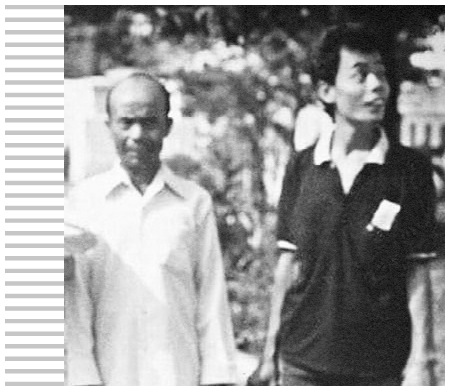
Born Widji Widodo in Solo, central Java, on 26 August 1963, the son of a pedicab driver, Thukul read any book he could find and took various jobs. “A bookworm” was how Fitri Nganthi Wani, his daughter, used to describe her father when Index asked her about him. “He is also a creative and fun storyteller,” she added.
Thukul’s poems capture the everyday struggle of the poor, including police harassment. In an era where defying the authorities could land you in jail or worse, Thukul wrote: “Come join us. Let’s be a nightmare for the president.”
The influence of his poems, which he read at workers’ and farmers’ rallies, attracted the authorities’ attention. In 1995, during the Independence Day celebration, the police took him from an art space he’d opened in his neighbourhood. Also that year, during a workers’ protest, a rifle butt struck his right eye, causing permanent damage.
In 1996 he joined the People’s Democratic Party, Indonesia’s first opposition party in the authoritarian New Order regime. That cemented his status as a wanted man. He fled to Borneo, moving from town to town, before his disappearance in 1998. His last contact was with his wife in February of that year. To this day his whereabouts are unknown, although there are suspicions that he was abducted by government forces.
To some Thukul remains a controversial figure. Last May in Semarang, central Java, the art show based on Thukul’s works by painter Andreas Iswinarto (one work pictured p90-91) was stormed by radical Islamic groups. In Yogyakarta the same art show was attacked by Pemuda Pancasila, a paramilitary group.
Thukul was married with two children. His daughter, Fitri, was eight when he disappeared and his son, Fajar Merah, was five. Fitri told Index that the last time they were together she distinctly remembered feeling unsafe and that there were people watching them. Her last contact with him was a note-style poem he wrote to her, in which he explained why he had to leave.
After Thukul’s disappearance, the family had to scrape by. They also faced harassment. All of this makes for very painful memories and Fitri feels uncomfortable answering many questions about him.
Fitri is now a poet and Fajar is a musician. Following their father’s example, they write critically about the nation’s challenges, which recently have been many, especially when it comes to free speech. In May, for example, there was international outcry when the Christian governor of Jakarta was sentenced to two years in prison for blasphemy against Islam. This was linked to a video in which he was recorded telling voters they were misled if they believed a verse in the Koran forbade them from voting for a non-Muslim.
When asked what her father would say about the current climate where extremist groups disband cultural events and terrorise individuals, with impunity, Fitri said: “Today we are freer, but we still need to fight. We need to read a lot, be smart and not get too emotional. Don’t let doubts keep you from speaking up, but think thoroughly before you act.”
The first three poems, translated below for the first time, are by Wiji Thukul and the last is by his daughter Fitri Nganthi Wani.
Note 95
again you arrested me I wrote about it again you twisted my arms I wrote about it again you clubbed my head I wrote about it do it until I spit blood let there be proof do it in front of a crowd show them your guns and your sticks and let them see again you’re abusing me I’ll write about it my body is the evidence that you beat again and again the crowd has seen it for themselves and I’ve written about it I keep writing
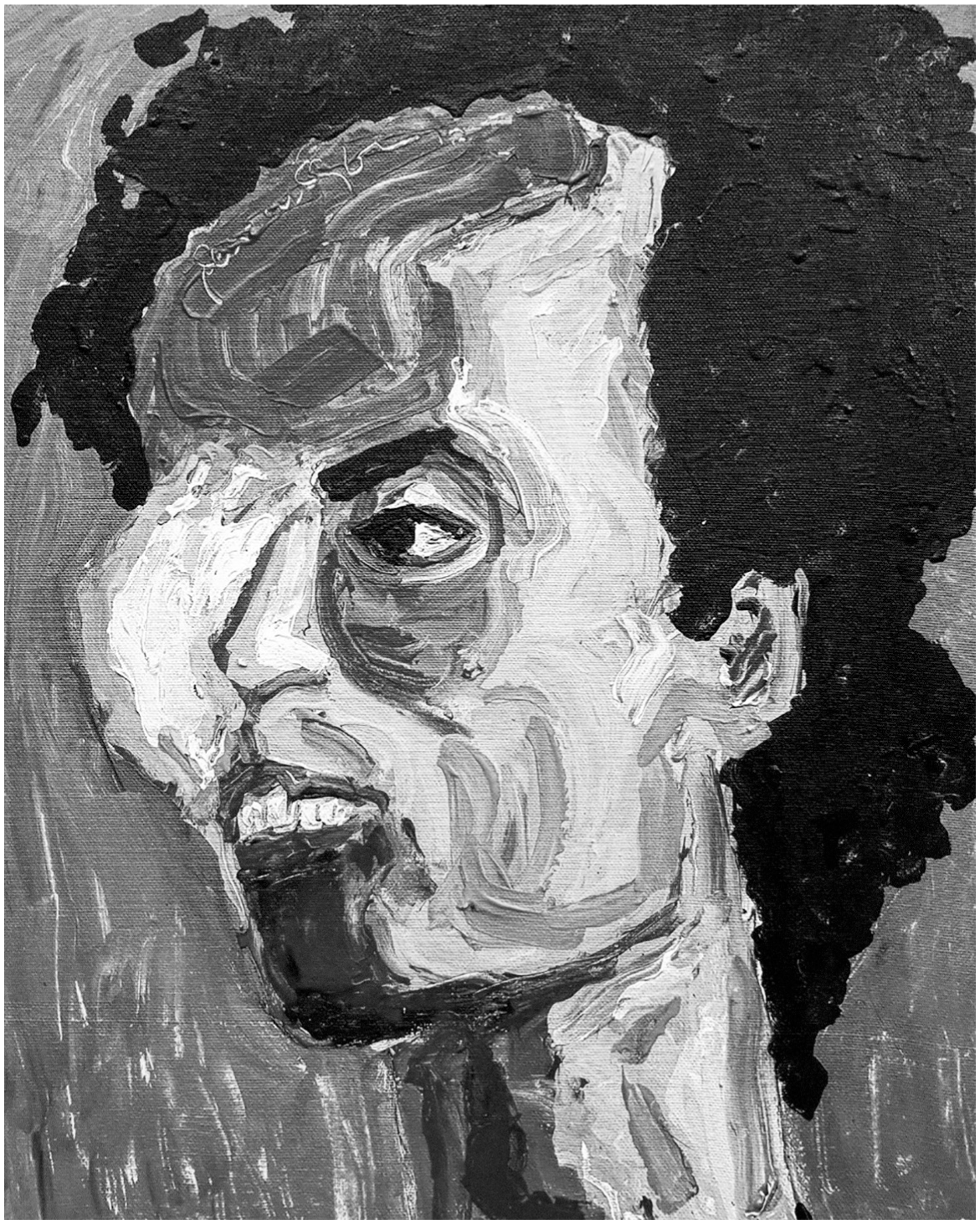
A painting of Wiji Thukul by Indonesian feminist activist and painter Dewi Candraningrum
CREDIT: Dewi Candraningrum
I travel through the air
I travel through the air hopping across radio waves on the air you cannot lie radio waves cannot be silenced by knives and guns on the air there is no ban the minister of foreign affairs, the minister of information, the president can’t talk as they please on the air a thousand voices speak they can’t be made uniformed when a bullet explodes its echoes travel to all continents violence rings to millions of world citizens the stink spreads far, no one can bury it on the air the tyrant is a naked emperor old, fat and ridiculous
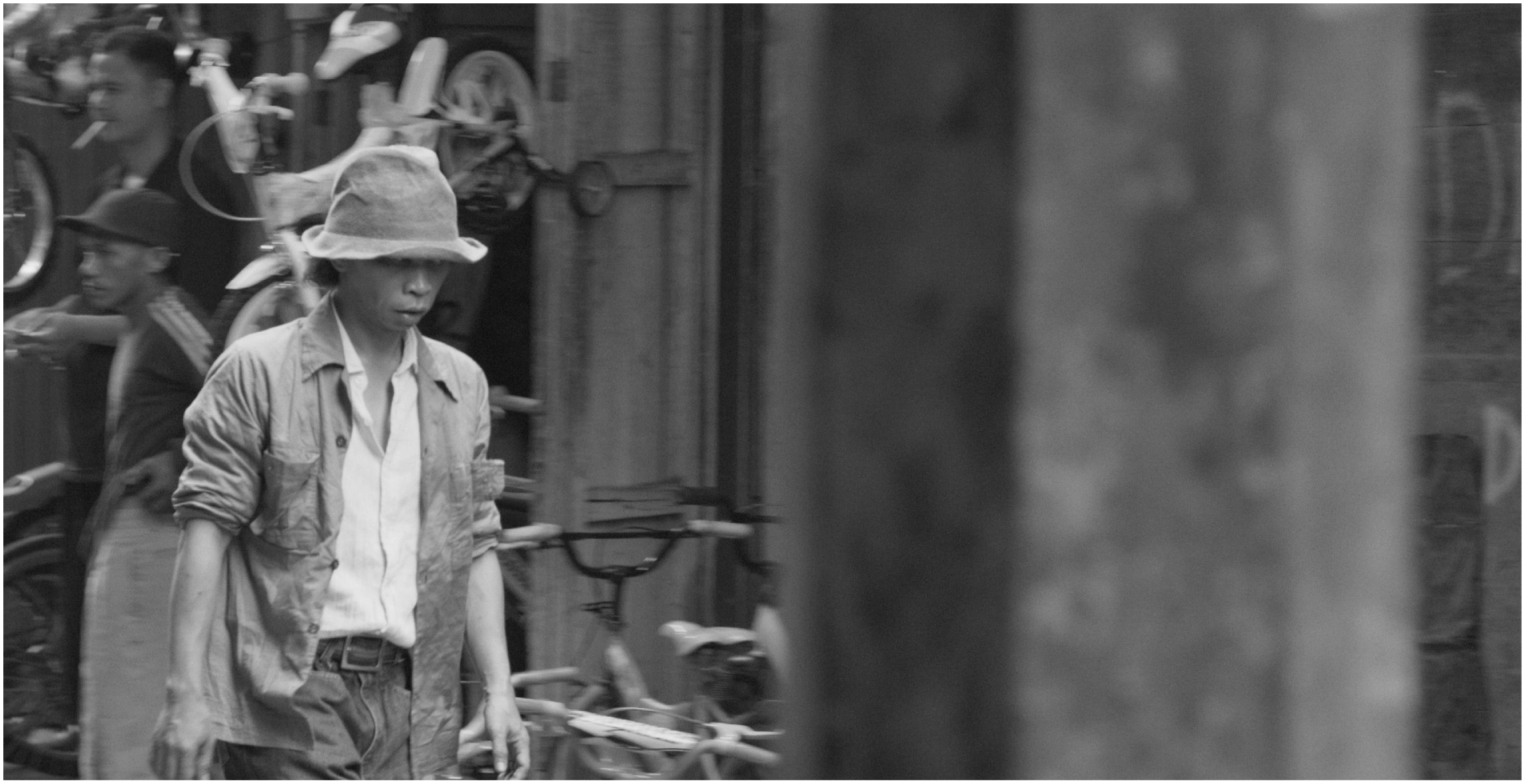
A film still from the recently released Solo, Solitude
CREDIT: KawanKawan Media
Green grass
green grass grows again even though you cut us down again and again even though you burn us up again and again green grass grows again a hundred times you mow us down you torch us with the fire of riots green grass grows again my hope conquers my fears that you breed with your speeches and your rifles I see green grass Everywhere oh in vain the powers that be put up boards to block green grass keeps growing
In the stones of eternity
From you, my oppressor, my general I humbly learned to cook up weapons From the gunpowder of humble words I learned to prepare my ammunition And you’re stunned When my bullets Prove more deadly Than yours You vaporised me Yet my words survived They fly around the world Spreading the poet’s spirit, the seed of her soul They take root in today’s children’s memory And grow strong in their maturing body In the past I was oppressed Nevertheless Over time and space You are hopeless In the past I was oppressed Nevertheless Over time and space You are helpless My words breed more words Until the truth is etched firmly In the stones of eternity
Footnotes
Poems translated by