




Abstract

A new London members’ club aims to democratise the political landscape using the latest digital tools. It even claims to have influenced the general election.
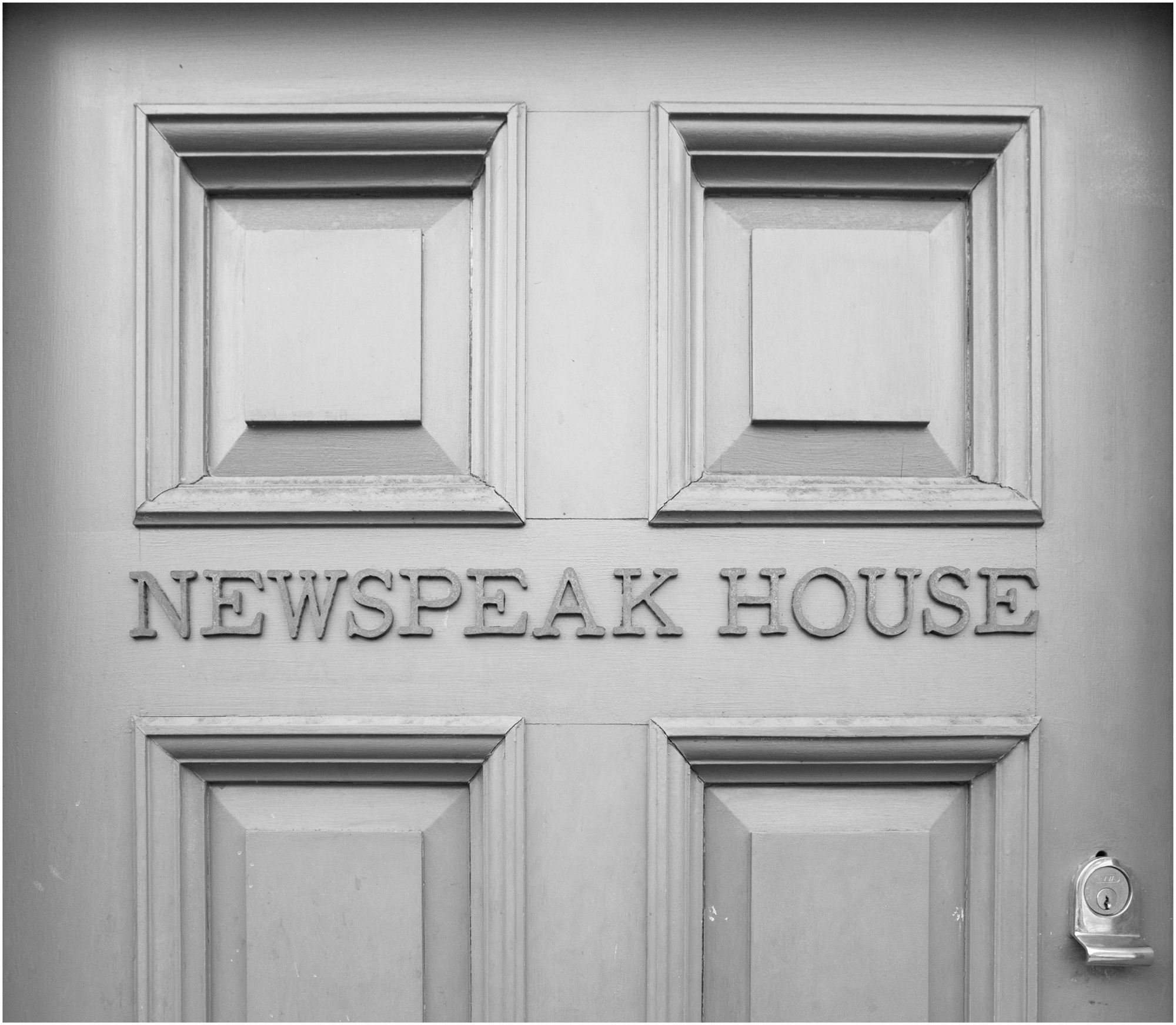
Newspeak House in London’s Shoreditch neighbourhood connects entrepreneurs from different industries
CREDIT: Sean Gallagher / Index on Censorship
In the UK’s recent general election, it claims to have influenced millions of people through a series of digital products it released in the run-up.
Painted dark grey on the outside, the Newspeak building is devoid of leather upholstery and suits; hoodies and exposed brick are the order of the day. It hosts civic tech events and a communal workspace for the “political technologists” and “hacktivists”, who make up the house’s membership, as well as providing living space for “fellows”, who work full-time and are partially funded by the membership fees (currently £25 per month).
“When you start talking seriously about technocratic approaches to politics, media, government, prospects of Orwellian dystopias are never far behind. The name Newspeak House serves as a constant reminder and warning of what we’re working to avoid,” club founder Edward Saperia told Index. Newspeak is the government-controlled language spoken in the totalitarian state of George Orwell’s 1984.
On a recent visit to a community dinner event open to the public, I headed upstairs to find Saperia making vegetarian burritos for everyone. In a club with a bottom-up mentality, it makes perfect sense that the founder is also serving everyone dinner. There are no butlers in sight.
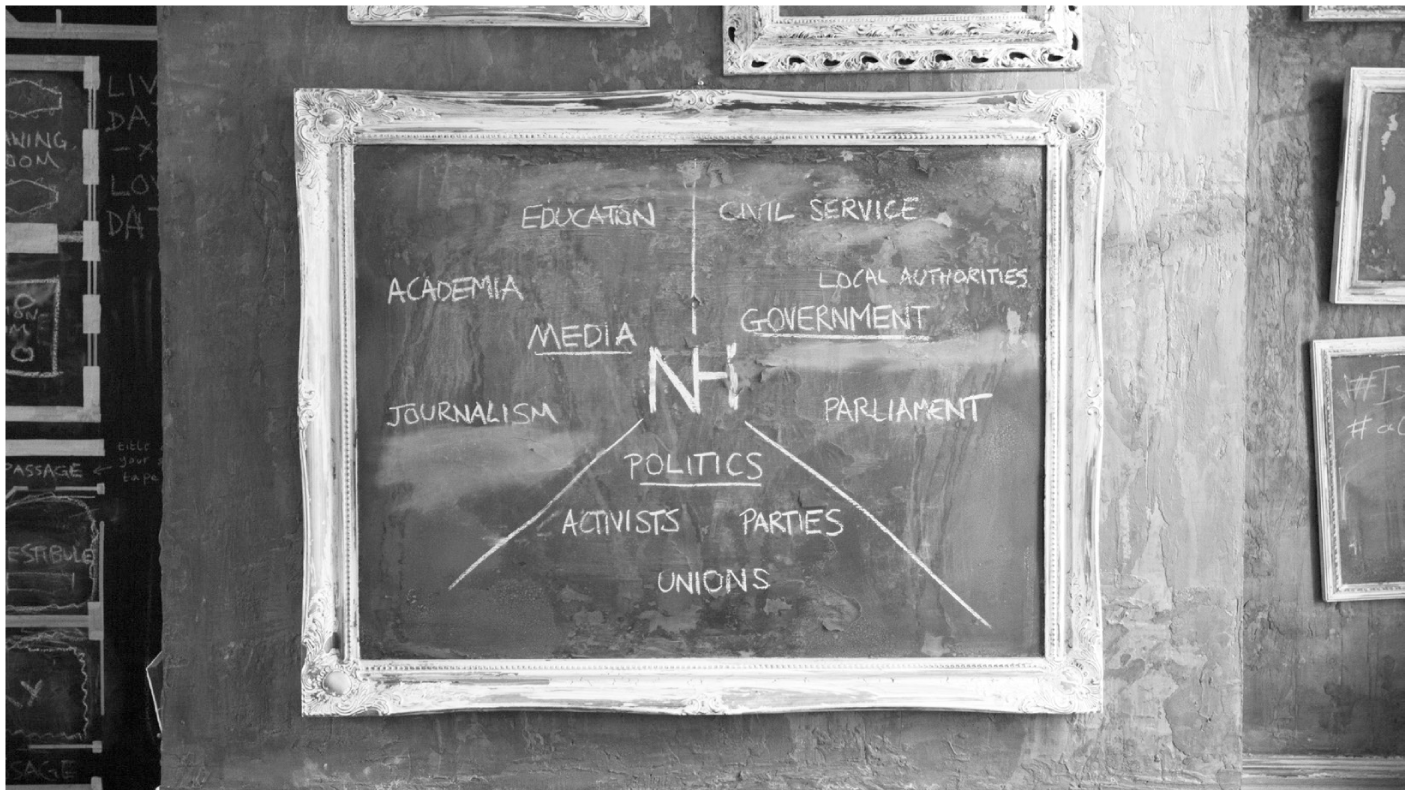
Opposite the entrance, the words “media, politics, government” are written in a giant gold frame in the centre of the club’s “NH” logo, identifying the areas the club seeks to target with technology.
“It’s all about freedom of expression,” Saperia said, seeming almost taken aback when I asked about the club’s mission. “The ecosystem is purely about how society makes decisions,” he continued, explaining how he thinks the systems are currently broken because all of the power has accumulated at the top of the pyramids.
“What happens now is that we can connect every person in the world… and this needs new models of communication and interaction,” he added. Saperia believes that traditional media employ a “few-to-many” model, in which content is disseminated by a relatively small number of organisations, because this is the best option given the technology they were built on. With digital technology, he aims to create new forms of interaction that enable “many-to-many” communication, which is closer to pure democracy. He says this could be applied to government and academia as well.
A number of the fellows are researching whether artificial intelligence is influencing communication. Shad Mughal is the founder of Newspeak’s event series on AI and politics; his sessions look at questions like Does AI Mess With Democracy? and Is There Actual AI That Will Make People Change Their Minds? The group’s most popular debate so far was titled Does Facebook Win Elections?
Debate and discussion are central to the Newspeak ethos. Jonnie Penn, a founding fellow who studies AI at Cambridge University, talks about the importance of face-to-face communication there. “Not everyone here agrees about things. When you’re dealing with people online you’re only getting tidbits. It’s easy to miss the human being on the other side of the debate and to just see them as headlines,” he said.
Newspeak House supports grassroots digital activism
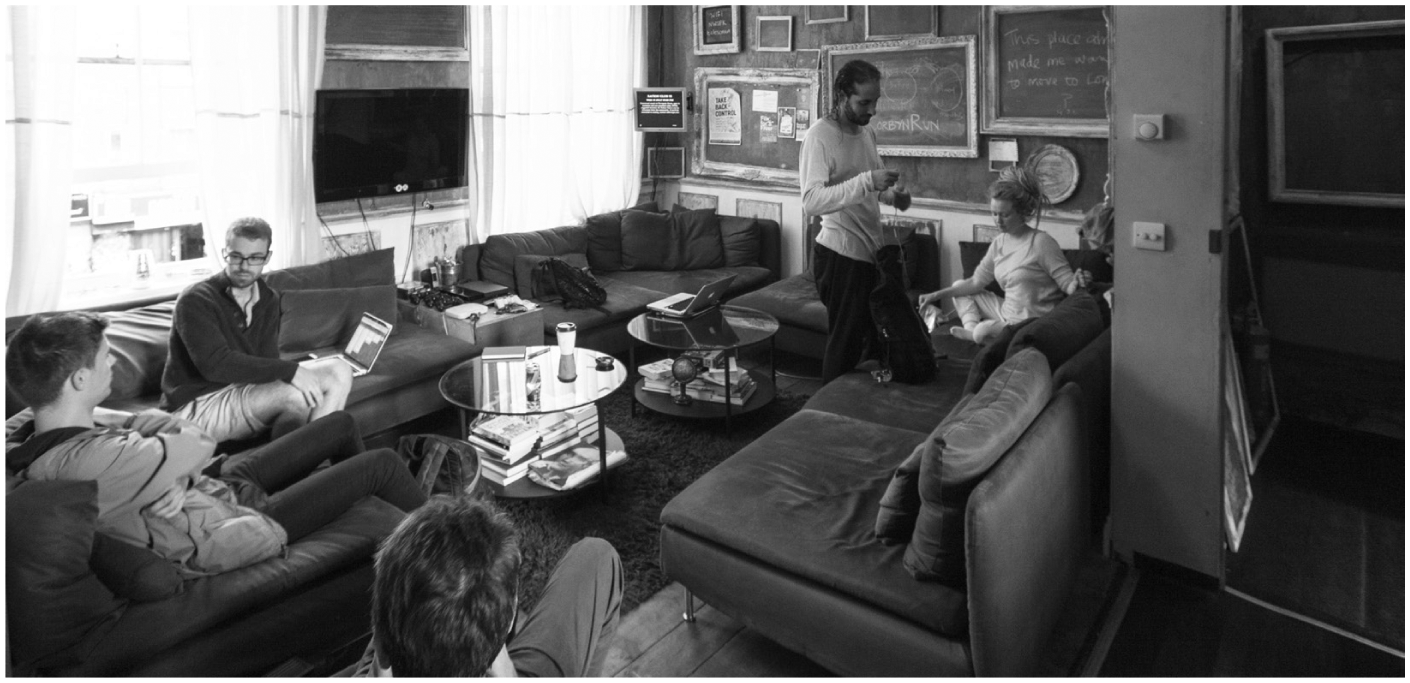
Members and fellows use the space for meetings and brainstorming
CREDIT: Sean Gallagher/Index on Censorship
Newspeak doesn’t have an explicit political affiliation. During interviews, members and fellows talk about goals like “engaging more voters” and “helping people participate” rather than party allegiance. Saperia worked briefly for the Green Party on digital strategy. “The parties are all the same – some are richer than others – but they’re still obviously closed organisations,” he said. “They’ve never heard of open [technology] and don’t know how to do these things.”
Nevertheless, many of the club’s successes can be viewed as aiding left-leaning causes. One headline-grabbing project is the satirical smartphone videogame Corbyn Run, a spoof on a popular game called Zombie Run. Players play as the UK’s opposition leader Jeremy Corbyn, shaking down baddie bankers and taking on Theresa Mayhem (a play on the name of the UK’s prime minister) as she hurls bottles of champagne. According to the BBC, it was downloaded 2,000 times within the first three hours of being released.
In an environment where everything feels serious and yet not serious, the house is creating projects that are wielding real political influence. Corbyn Run, GE2017.com, WhereDoIVote.co.uk and WhoCanIVoteFor.co.uk were all created by Newspeak members, who claim the four sites had over 2.5 million visitors during the UK general election period combined and took credit for registering 100,000 voters after the snap election was called. Civic tech efforts like these seek to ensure voters are empowered by the data governments create at the tax payer’s expense.
During the run-up to the election New-speak was focused on mobilising and empowering voters, but work on fighting misinformation is also under way. A current project is Who Targets Me?, a browser addon that alerts readers when political ads are targeting and potentially manipulating them.
Meanwhile Sophie Chesney, a Newspeak fellow and PhD student at Queen Mary University London, is investigating the automatic detection of misleading headlines in mainstream news. “I am looking at whether a headline represents the article with which it appears, given that so much of news consumption happens at the headline level,” she said. “Through Newspeak, I’ve been in touch with fact checkers, journalists and others working with news and the media, in an effort to work in a direction most relevant to the industry this project will affect.”