




Abstract

Following the death in custody of dissident and Nobel Peace Prize winner Liu Xiaobo, bestselling author
People read messages on China’s Democracy Wall in Beijing, 1978
CREDIT: Orlando Henriques/Alamy
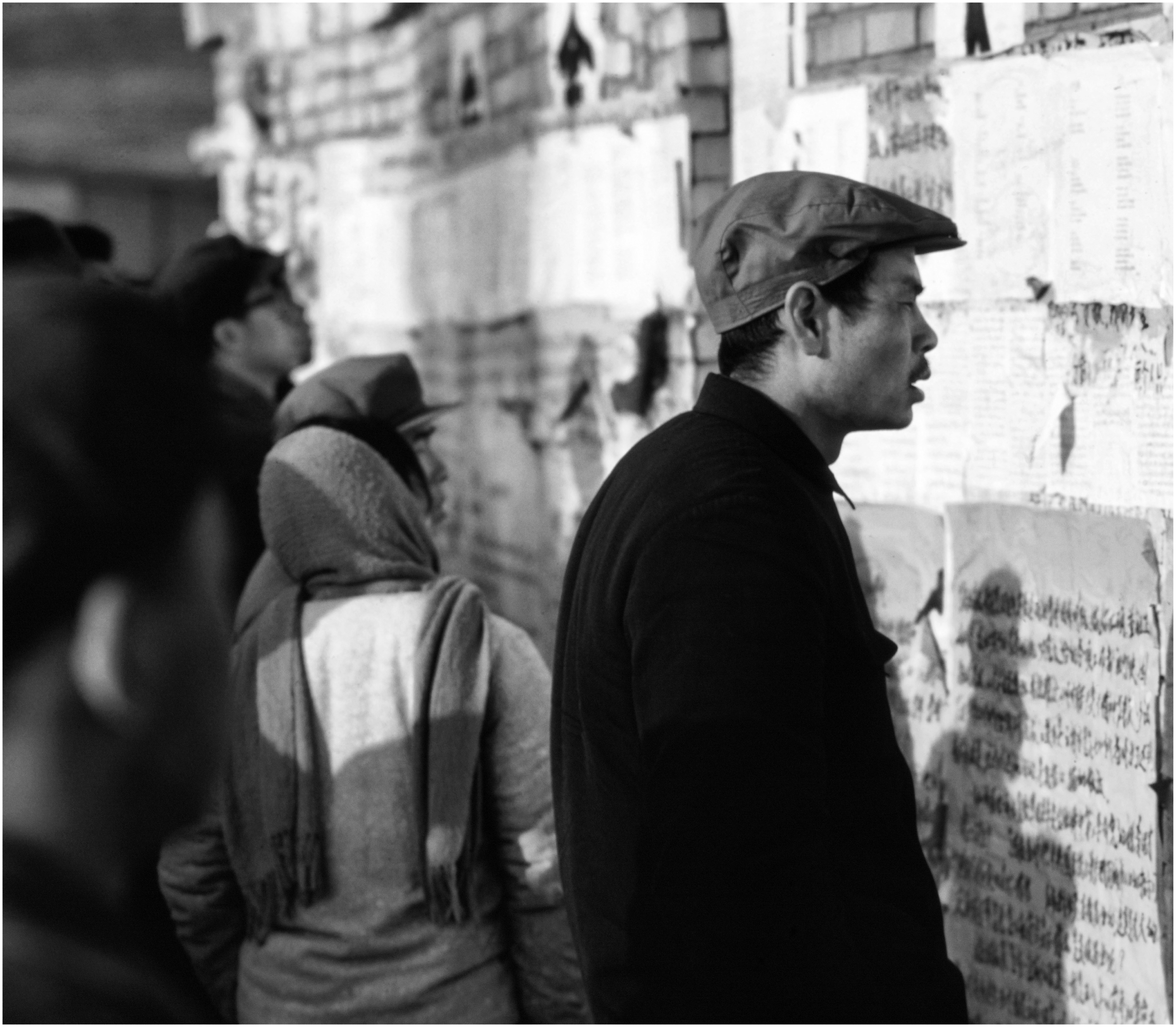
Wei Jingsheng’s public essay, The Fifth Modernisation, challenged Deng Xiaoping’s stated priorities in the new era of economic reform. “We want no more gods and emperors; no more saviours of any kind,” Wei famously wrote. “Democracy, freedom and happiness are the only goals of modernisation. Without this fifth modernisation, the four others are nothing more than a newfangled lie.”
Democracy Wall took place in the wake of Mao Zedong’s political campaigns – including the Great Leap Forward and the Cultural Revolution – that were directly responsible for the deaths of at least 60 million Chinese citizens. But despite Deng Xiaoping’s economic reforms having signalled the start of a new era, the Chinese government began a crackdown.
Wei, an electrician at the Beijing zoo, would eventually serve 18 years in prison for his political beliefs, including five in solitary confinement, before being granted medical parole in the USA.
In 2008, when more than 2,000 Chinese citizens signed Charter 08, they signed a document that directly referenced the hopes and aspirations of Democracy Wall. Charter 08 is shocking because it asks, in moderate language, for something extraordinarily basic: the rule of law.
Such a simple thing for which to advocate – equality before the law. Yet the Chinese government’s response to The Fifth Modernisation and Charter 08 has revealed an equally simple truth: the rule of law poses the greatest existential threat to authoritarian regimes. The rule of law and due process stand in the face of dictatorship, impunity, fabricated crimes, corruption and the unimpeded power of the state to destroy individuals. Without the rule of law, the justice system becomes a tool of dictatorship.
Charter 08 reads, “We should end the practice of viewing words as crimes.” Liu Xiaobo, one of its more than 2,000 signatories, called for “politics without hatred and without enemies”. He was immediately denounced as an enemy of the state. The government directed its massive resources to Liu’s silencing, condemnation and ultimately his death in custody this July, while invoking a justice system over which it had full control. His wife, Liu Xia, remains cut off from the world, despite never having been charged with a crime.
I think often of these documents, their simplicity, clarity and courage. The rule of law – which belongs to all of us, regardless of class, race, gender or any number of differences – is something to which we must hold fast and strengthen in each of our countries. Once undermined, civil society loses itself; every individual is entirely alone, a solitary branch, at the mercy of forces that have no shame.
Footnotes
Read an essay by Chen Wei on the Chinese democracy movement in the Index on Censorship magazine archives (Spring 2012, 41.01, p107-112)